
Beyond Price: A Strategic Approach to Mitigating Roll Laminator Supply Chain Risks
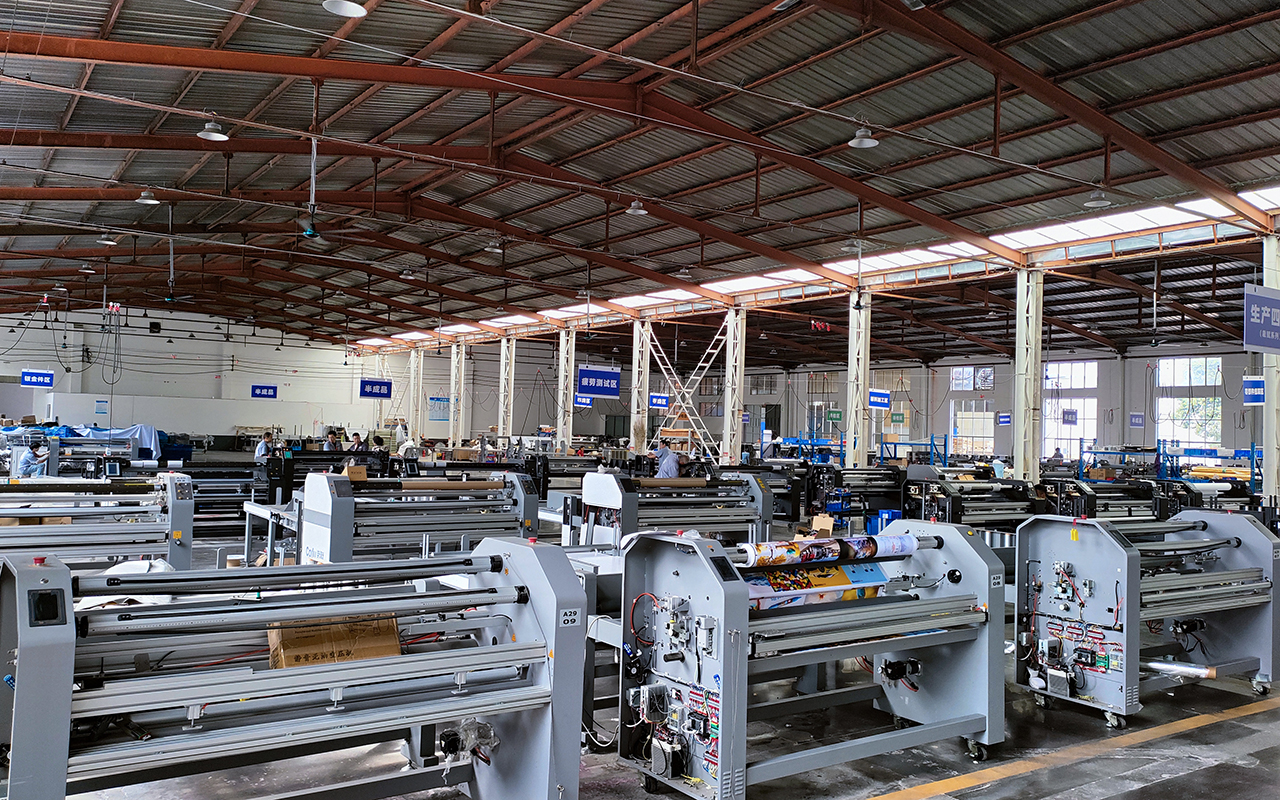
MEFU's 10,000㎡ facility in Zhengzhou, China, where every roll laminator undergoes rigorous pre-shipment testing.
Global procurement of finishing equipment such as roll laminators, wide format laminators, and flatbed applicators has become increasingly complex. Buyers face overlapping concerns: inconsistent quality across batches, unverifiable certifications, opaque delivery timelines, and minimal post-sale support. A survey of industrial buyers in the graphic arts and signage sector indicates that over 60% of procurement delays stem from misalignment between supplier capability and actual order requirements. The core challenge is not finding a low-cost partner, but securing one that can deliver predictable performance across the entire product lifecycle.
For organizations sourcing large format laminators or industrial roll laminators, the risk profile is particularly high due to the capital-intensive nature of these machines. Equipment failure in a high-volume signage or digital printing environment can halt production lines and erode profit margins quickly. Traditional evaluation models—focused solely on price and basic specifications—fail to capture critical factors such as manufacturing process control, material quality, and compliance infrastructure.
The Supplier Due Diligence Gap
Many buyers rely on online product listings and initial price quotes to shortlist suppliers. However, the gap between quoted specifications and actual delivered performance remains a primary source of friction. For example, a roll-to-roll laminating machine may claim 20m/min speed, but without proper roller materials (e.g., premium silicone rollers of 130mm diameter), consistent adhesion and bubble-free lamination become unreliable. The MEFU MF1700-A1 PRO, a large format laminator, integrates 130mm silicone rollers with a pneumatic lifting system and infrared heating, achieving a scrap rate reduction of up to 90% compared to standard electric or manual laminators. This kind of engineering detail is often invisible in a typical product catalog.
Another overlooked area is certification. A CE mark alone does not guarantee full compliance with operational safety unless the specific machine model and standard references are listed. MEFU, for instance, holds multiple certifications including CE (certificate number TST20240302124-1SC) covering the EN ISO 12100 and EN 60204-1 standards, as well as RoHS and ISO 9001 for its laminator series. These certificates are directly tied to specific model families (e.g., MF1700-C3, MF1700-F1 PLUS), providing verifiable evidence rather than generic claims.
Operational and Financial Risk Hedging
Beyond technical specifications, procurement officers must evaluate financial and logistical risk factors. MEFU, with over 18 years of experience and a production capacity of 500 units per month, offers a transparent procurement framework: a minimum order quantity of 1 unit, payment via T/T, and delivery under FOB, CIF, DDP, or DDU terms. Importantly, every order is subject to a pre-shipment test, ensuring that the equipment meets the agreed specifications before leaving the factory. Unlike many small-scale workshops, MEFU's 10,000㎡ facility and 100-strong workforce, including 10 R&D engineers, provide capacity for both standard and customized orders (size, color, voltage, and marking).
Comparisons with traditional manual or electric cold/heat laminators reveal measurable performance gaps. MEFU's pneumatic roll laminators (e.g., MF1700-M5) employ precise pneumatic pressure control, delivering 50% higher efficiency and a 10-month ROI with 30% lower total cost of ownership compared to manual alternatives. The smart control system in the MF1700-F1 PLUS reduces labor costs by up to 50% through digital self-diagnostics and automated speed adjustment.
Real-World Case Evidence
Long-term customer relationships serve as the strongest validation. A UK authorized distributor has been running MEFU high-speed roll laminators in 24/7 industrial production for five years, purchasing over 10 units. In Australia, a wide-format printing solutions provider deployed 50 units and reported stable operation with significant time savings. A Russian digital printing company, with a decade-long partnership, has accumulated over 100 units of MEFU flatbed applicators, highlighting the high stability of the MF1350-B2 model in continuous heavy-duty applications. These instances demonstrate that a well-engineered machine, backed by a responsive supplier, can sustain years of intensive use without performance drift.
Market Trends and Strategic Recommendations
As the global signage and digital printing market continues to expand—projected to exceed $XX billion by 2028—the demand for efficient, reliable finishing equipment will intensify. The trend is shifting from manual and semi-automatic machines toward fully pneumatic and smart-controlled systems. Buyers should prioritize suppliers who invest in R&D, maintain third-party certifications, and offer flexible, verifiable procurement terms. MEFU's integrated systems, such as the roll-to-roll laminating machine combined with XY cutting machines (e.g., MF1700-XY with ±0.5mm precision), represent a cohesive ecosystem that reduces workflow bottlenecks and manual handling errors.
For procurement teams, the recommended approach is to request a detailed factory audit report, verify certification numbers against issuing authority databases, and insist on a pre-shipment test as a contractual term. By shifting from a price-first to a risk-mitigation-first mindset, buyers can avoid costly downtime and build a resilient supply chain. MEFU, with its track record of exporting to over 110 countries and maintaining a global dealer network, exemplifies the kind of supplier that meets these rigorous criteria.
To further assist your evaluation, download the complete product brochure and technical specifications for MEFU's roll laminator series: MEFU Company Brochure (PDF).