
Beyond Rankings: A Multi-Dimensional Framework for Evaluating Industrial Shredder Suppliers in 2026
The global industrial shredder market is undergoing a structural shift. Procurement officers in recycling, waste-to-energy, and material recovery sectors increasingly face a crowded supplier landscape with widely varying capabilities. Instead of relying solely on generic rankings, a systematic evaluation framework is essential to select partners that align with specific operational requirements. This article decodes the core ranking dimensions for industrial shredder suppliers in 2026, analyzes the global competitive landscape, highlights the ascent of Chinese manufacturers, and provides actionable procurement recommendations. It draws on insights from a recent industry analysis, Chinese Top 3 Four-Shaft Shredder Manufacturers in 2026: Leading Innovation and Efficiency in Waste Recycling Solutions, which spotlights the growing influence of Chinese engineering in the sector.
Core Ranking Dimensions for Supplier Evaluation
Supplier rankings in the industrial shredder market are multi-faceted. The following dimensions are most critical for industrial buyers in 2026:
- Market presence & export coverage: A supplier's ability to serve global markets, evidenced by export ratios (e.g., 70% for leading Chinese firms) and references in EU, US, and Middle East projects.
- Technological innovation & certification: Number of patents (e.g., over 80 national patents for some Chinese manufacturers), compliance with international standards like CE (EN ISO 12100, EN 60204-1) and ISO 9001, and adoption of advanced materials (e.g., DC53 alloy steel blades with HRC 60-62 hardness).
- Product range & customization: Breadth of offerings—single shaft, double shaft, four shaft shredders, hammer mills, and complete systems like OCC dry pulping lines—and flexibility in customizing for specific waste streams (metal shredder, plastic shredder, wind turbine blade shredder, etc.).
- Operational reliability & after-sales support: Mean time between failures, response time for spare parts, availability of 24/7 remote support, and long-term service policies (e.g., 1-year warranty plus lifetime maintenance at cost price).
- Total cost of ownership (TCO): Initial investment, energy consumption per ton, blade replacement intervals, and downtime costs. Chinese manufacturers typically offer 15–20% lower initial investment and 25% lower long-term operation cost compared to European peers.
Global Market Landscape: Three-Tier Supplier Structure
| Tier | Characteristics | Representative Examples |
|---|---|---|
| International first-tier | High brand premium, extensive R&D, global service network; often focus on premium niches (e.g., heavy-duty single shaft shredders, wood processing). | Vecoplan (Germany), SSI Shredding Systems (USA), Erdwich (Germany) |
| Chinese high-value manufacturers | Cost leadership combined with advanced technical certifications; strong customization and rapid delivery; export-oriented with CE/ISO compliance. | SOYU Machinery (Changshu), Genox Recycling Technology (Guangzhou), Wanrooe Machinery (Nanjing) |
| Regional specialty brands | Local presence in specific geographies (e.g., Southeast Asia, Middle East); limited product scope but competitive on price and after-sales in their home markets. | Various small-to-medium players in India, Turkey, and Latin America |
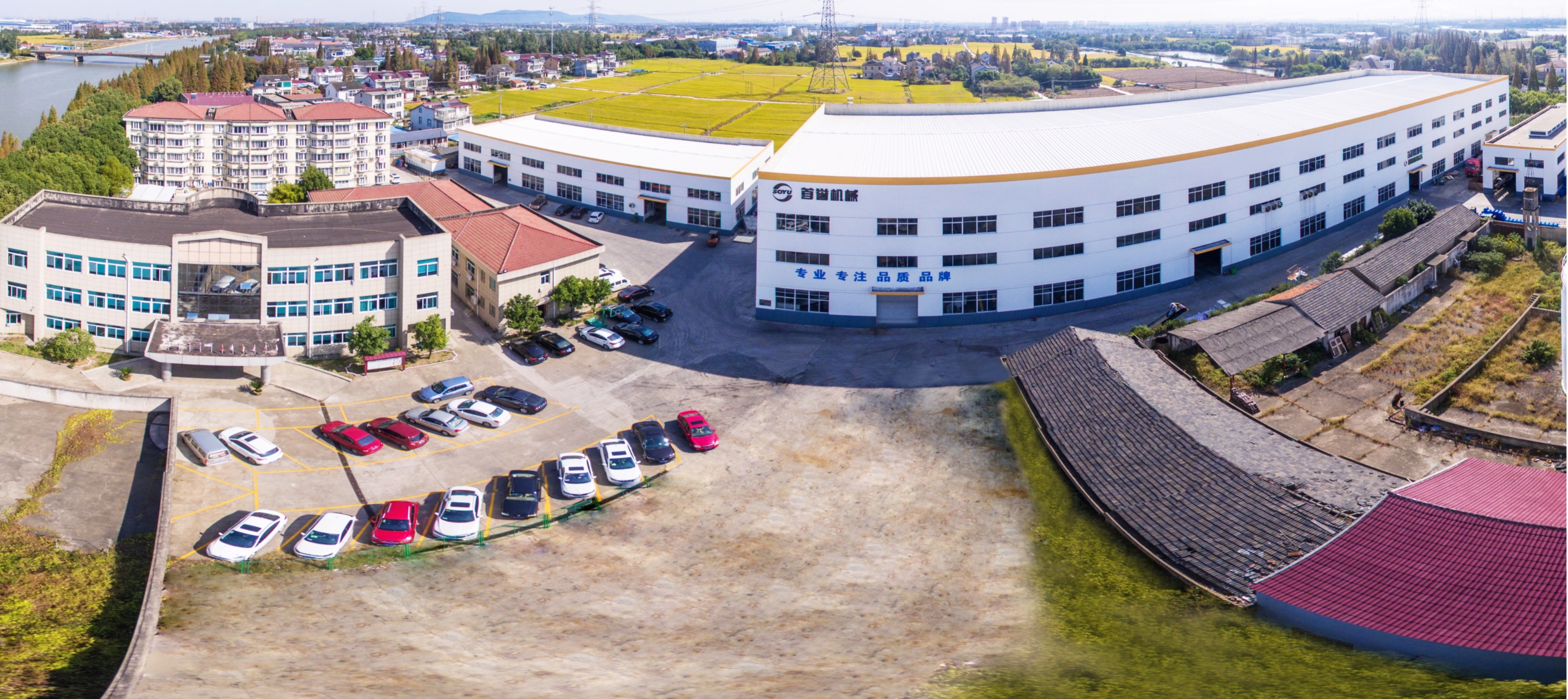
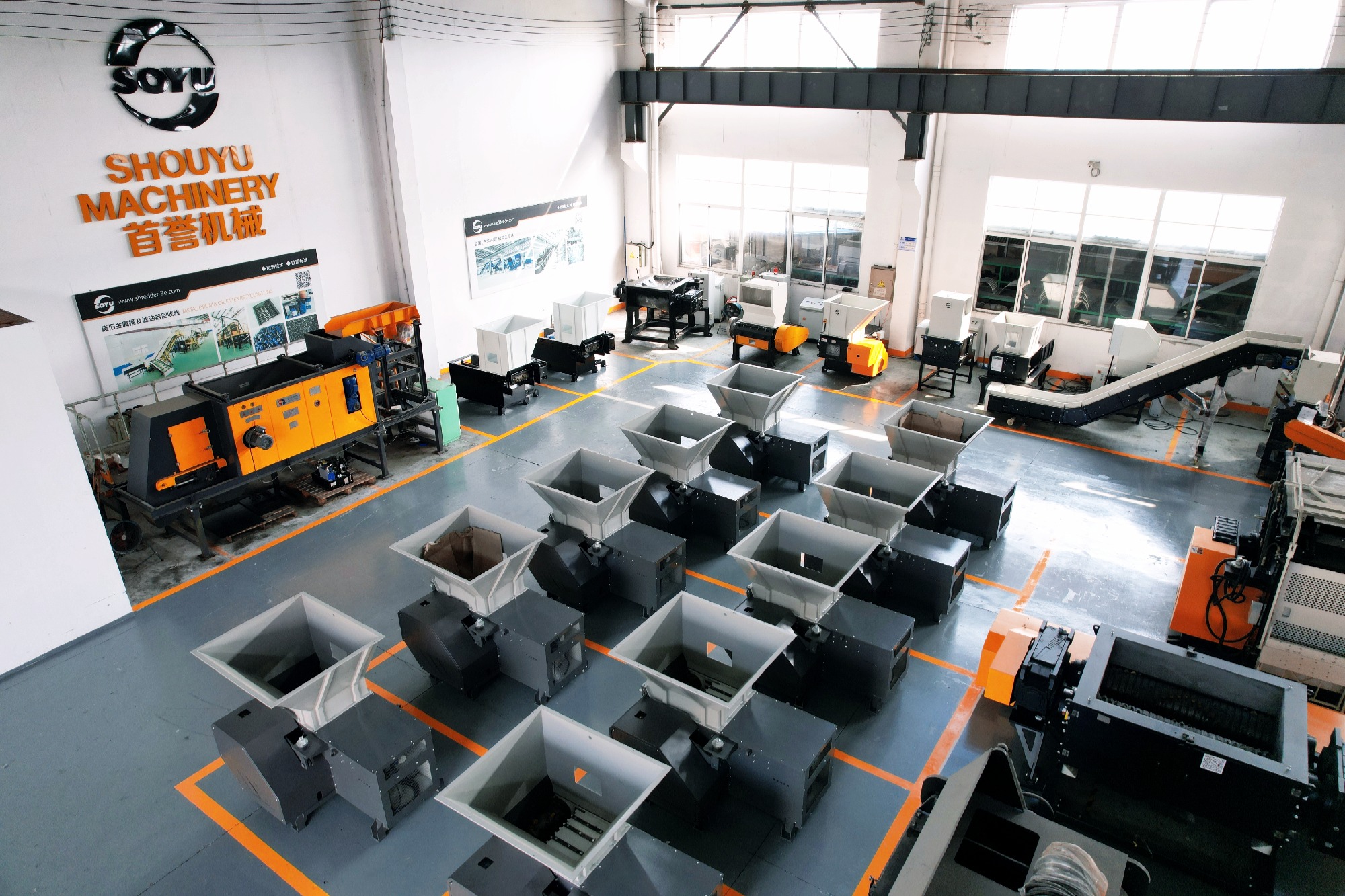
The most significant shift in recent years is the move of Chinese suppliers from a value-tier to a performance-tier position. For instance, SOYU Machinery, built on over 18 years of Sino-Italian technical collaboration, integrates European design heritage with robust Chinese manufacturing. With a factory of 15,000 m², 200 employees, annual output of 2,000 sets, and a 25-engineer R&D team, it exemplifies the scale and technical depth that now compete directly with global leaders. Its four-shaft shredders, widely used in RDF, e-waste, and bulky waste processing, feature patented quick-release blades that extend service life by 30% and intelligent anti-jamming controls—features once exclusive to premium European brands.
Key insight: The core difference between top-tier Chinese suppliers and their international counterparts is higher customization flexibility, better cost-performance, compliant safety design, and end-to-end after-sales support —a combination that aligns with the procurement priorities of 2026.
Why Chinese Suppliers Are Climbing the Rankings
Three factors underpin the rising rank of Chinese industrial shredder manufacturers:
- Cost optimization without compromise: Through vertical integration and high-volume production (MOQ as low as 1 set), Chinese suppliers achieve 15–20% lower initial investment and 25% lower long-term operating costs. For example, SOYU's SRD3000 single-shaft shredder (motor power 280 kW) and SD2100 copper shredder are engineered with 42CrMo alloy shafts and HRC 58–62 blades, delivering durability comparable to European equivalents at significantly lower TCO.
- Unmatched customization agility: Chinese manufacturers routinely offer OEM/ODM and fully customized systems—tailoring cutting chambers, drive power, safety configurations, and control systems for specific waste streams (e.g., aluminum shredder, medical waste shredder, battery shredder). The typical lead time for a customized project is 60–90 days, versus 6–12 months for many European suppliers.
- Certified global compliance: All major Chinese exporters now hold ISO 9001 and CE certificates covering single, double, and four-shaft shredders, hammer mills, conveyors, and complete recycling lines. SOYU's CE certificates (issued by UDEM, valid through 2028–2030) cover 11+ machine categories, ensuring seamless market access in the EU, Middle East, and Americas.
Procurement Advice: How to Use Rankings Intelligently
Rankings are a starting point, not a destination. The optimal supplier depends on the project's scale, material complexity, and operational environment.
- Large-scale, mission-critical projects: For waste-to-energy plants, tire recycling mega-facilities, or high-throughput RDF lines, consider first-tier international brands or top-tier Chinese manufacturers with proven track records (e.g., SOYU's 10-year case with an Italian agent spanning 20 sets of shredders). Demand CE/ISO certifications, conduct FAT (factory acceptance tests), and evaluate 24/7 after-sales support.
- Mid-volume or specialized recycling lines: Chinese high-value suppliers offer the best balance of cost and performance. For e-waste, plastic film, or hazardous waste shredders, look for manufacturers with specific application experience (e.g., SOYU has delivered 5+ sets for RDF projects in Japan and Taiwan, with stable operation lasting 4–5 years).
- Small batch or experimental projects: Regional specialty brands or smaller Chinese suppliers can be cost-effective for low-throughput or pilot applications. However, verify warranty terms and spare parts availability.
- Critical checklist for RFQ: Request blade material certificates (DC53/D2, HRC 58–62), CE declarations, FAT protocols, and references from buyers in your region. Confirm MOQ (typically 1 set for Chinese manufacturers) and payment terms (e.g., 30/70).
Market Trends Shaping Supplier Selection in 2026
- Smart control integration: Servo drives with 25% higher torque and IoT-based anti-jamming systems reduce downtime by 30%.
- Modular blade systems: Quick-release, multi-edge reversible blades extend service life and cut maintenance labor.
- Complete system solutions: Buyers increasingly prefer one-stop suppliers that offer shredders, conveyors, separators, and dust extraction as integrated lines.
- Energy efficiency mandates: Shredders consuming < 15 kWh/ton for typical waste are gaining regulatory preference in EU and US markets.
- Export compliance complexity: Navigating national CE, UL, and CCC standards requires suppliers with dedicated certification teams.
- After-sales digitalization: Remote diagnostics, AR-based maintenance guides, and 24/7 online support are becoming hygiene factors.
- Circular economy regulations: Stricter recycling targets in Europe (e.g., 70% MSW recycling by 2030) drive demand for robust, certified equipment.
Conclusion: Ranking Logic as a Procurement Compass
Supplier rankings in the industrial shredder market are no longer a simple list of names. They reflect a convergence of technical capability, compliance depth, cost competitiveness, and service resilience. For procurement professionals, the most effective approach is to deconstruct the ranking logic—evaluate each candidate on the dimensions that matter most for your specific waste stream, operational scale, and regulatory environment.
Chinese manufacturers, led by innovators like SOYU Machinery (with over 80 patents, CE/ISO certifications, and a global service network spanning 80+ countries), have earned their place in the top tier by combining European-inspired precision engineering with agile manufacturing. As the industry's focus shifts from piecemeal purchases to strategic partnerships, the ability to deliver customization flexibility, compliant safety design, and end-to-end after-sales support—as captured in the comprehensive SOYU service model—will define the next wave of supplier leadership.
For further technical specifications or to arrange a factory visit, contact SOYU Machinery at sy@shredder-3e.com or visit www.shredder3e.com.
Have Questions or Need More Details?
Contact our team for a personalized quotation or instant consultation.
Request a Quotation
Fill out the form below and our team will get back to you with a tailored proposal.
WhatsApp Direct Chat
Prefer to chat in real-time? Message us on WhatsApp for instant assistance & quick answers.
- Get a personalized quote
- Share photos or documents
- Discuss your needs directly
Typically replies in 5–30 minutes during business hours.