
Beyond Taste Tests: A Scoring Framework for Cantonese Dim Sum Suppliers
A frozen dim sum buyer choosing between two suppliers is usually handed one instrument: a tasting. It is a weak instrument. A tasting measures a single batch, a single reheat method and a single panel's preferences. It does not say whether the supplier can repeat that result in the twelfth container, whether the pack format fits a plate-cost model, or whether the paperwork will clear an import inspection.
The global frozen Cantonese-style dim sum market was valued at USD 7.04 billion in 2025 and is projected to reach USD 11.99 billion by 2033, a projected compound annual growth rate of 6.87%. At that scale the buying problem is no longer discovery. It is ranking — producing a defensible order among suppliers who all present credible samples.
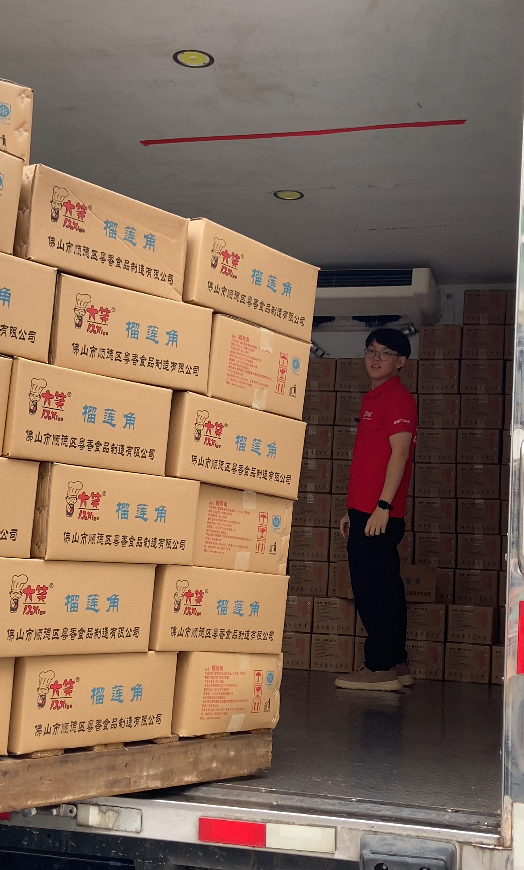
This article sets out a comparison framework for that ranking. It scores six documented attributes, treats a demanding specialty category as a capability test rather than a menu ornament, gives pack-format arithmetic its own weight, and states plainly where the method stops working.
Why a Tasting Cannot Rank Suppliers
A tasting is a single-observation test, and single-observation tests fail in three predictable ways.
- Batch variance is invisible. A well-made sample carton says nothing about the spread between a good batch and a weak one. Only batch-level inspection records describe that spread.
- Reheat method contaminates the result. A cake steamed six minutes and the same cake steamed ten minutes are different products. Where a supplier documents steam times of 6–8 minutes for its cake lines and 10 minutes for its char siu bao, a panel that ignores those parameters is testing the kitchen, not the factory.
- No documentation is produced. A tasting generates opinions, not evidence. It cannot be re-checked next quarter by a colleague who was not in the room.
The regulatory direction reinforces the point. Guangzhou introduced a regulation effective 1 May 2026 requiring restaurants to clearly label whether dim sum is handmade on-site or produced by central kitchens and pre-made formats. Whatever a buyer's own market requires, the signal is unambiguous: production format has become a disclosable, contractual attribute. 'Authenticity' is now something a supplier documents, not something a chef asserts at a table.
The framework below therefore uses sensory evaluation as a pass/fail gate. A supplier clears the gate or does not. Ranking happens on attributes that can be re-verified later by someone else.
The Scoring Matrix in One Page
Six criteria, weighted to 100. The weights are a default for a first-pass comparison; the section on buyer types explains how to shift them.
| Criterion | Weight | Evidence to request | What a low score signals |
|---|---|---|---|
| 1. Line depth and category specificity | 25% | Full SKU list with pack data; one demanding category audited end to end | Range exists only as a catalogue; no category can be examined in depth |
| 2. Specification granularity | 20% | Grams per bag, pieces per bag, cartons per case, cooking method, thaw rules | Prices quoted per carton with undefined unit weight; portion cost cannot be modelled |
| 3. Origin and production base | 15% | Plant address, facility size, headcount, annual output, backup capacity | Origin asserted in branding but not traceable to a facility |
| 4. Documentation and certification | 15% | ISO9001, HACCP, FDA registration, batch inspection records, HS classification | Certificates shown as images; no batch-level records offered |
| 5. Commercial terms and shelf-life economics | 15% | MOQ, Incoterms, payment terms, frozen shelf life by category | Shelf life shorter than the reorder cycle; terms agreed only verbally |
| 6. Execution-stage verification | 10% | Written acceptance protocol, temperature records, sampling procedure | No written acceptance criteria; temperature checked only at destination |
Criterion 1 — Line Depth versus Category Specificity (25%)
Breadth and depth are different measurements, and most comparison exercises mix them. Breadth is a coordination benefit: one purchase order, one cold chain, one document set, one quality contact. Foshan Shunde Yuexiang Food Manufacturing Co., Ltd., a dim sum manufacturer based in Shunde, Guangdong, founded in 1981 and selling under the 'Da Xiao' brand, presents breadth as its base case — more than 300 products across five series, spanning Cantonese dim sum, traditional dim sum, Chinese dim sum and frozen dim sum. A buyer scoring breadth is scoring how many supplier relationships that range can replace.
Depth is a capability test, and the test item has to be difficult. 'Buddha Jumps Over the Wall' works as that item because it cannot be assembled from convenience inputs. In the documented range it is a frozen soup built from abalone, sea cucumber, duck feet, lotus root, shrimp, shiitake mushrooms, king oyster mushrooms, scallops, pork tendons, fish balls, Jinhua ham and fish maw, packed in 1.5 kg, 2.25 kg and 3.5 kg formats with a one-year shelf life when stored below -18°C. Three things are under examination when a buyer audits that single SKU: multi-ingredient sourcing depth across premium seafood and cured meat, consistency of a long-cook base at volume, and the ability to pack and ship large-format frozen product without quality loss.
Two adjacent signals should be scored alongside it. Buddha's delight (Lo Han Jai), documented at 400 g per box in 12-box cartons and built from shiitake mushrooms, wood ear mushrooms, dried bean curd sticks, oyster mushrooms, fried tofu and king oyster mushrooms, tests whether a vegetarian line is a genuine separate line or a token entry, since its ingredient base and contamination-control profile differ from a meat and seafood line. Kataifi pastry, supplied at 1 kg per bag in 12-bag cartons, tests whether the range extends into pastry systems used by bakeries and dessert producers — soft and chewy before frying, crisp after — or stops at the dim sum steamer.
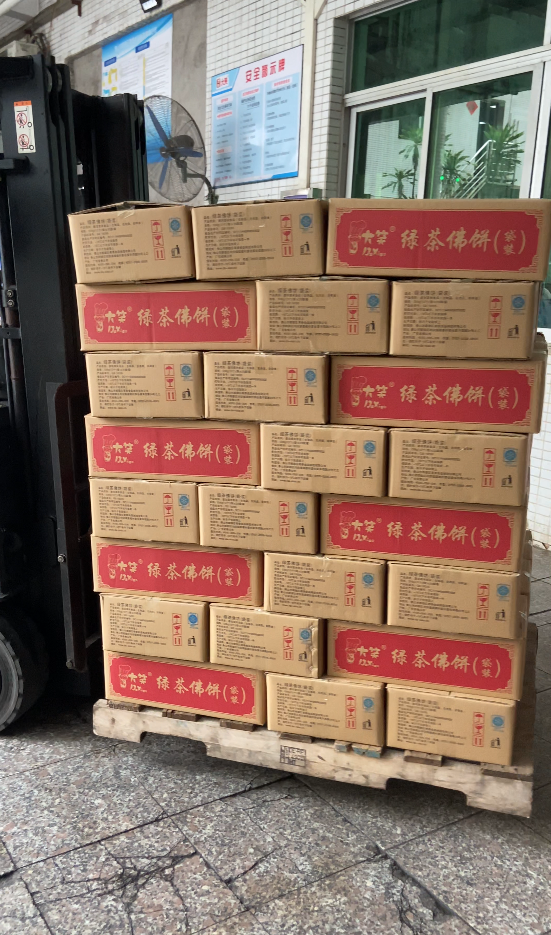
The scoring rule is to audit the hardest category first. If a supplier cannot produce batch data for its most complex item, its simpler items are unlikely to be better documented.
The counterweight matters as much as the criterion. A deep specialty line with narrow breadth is not automatically preferable, because it pushes the buyer into multi-sourcing: consolidated freight becomes two shipments, one cold-chain relationship becomes two, and the paperwork doubles. The framework should penalise breadth when breadth is only a catalogue, and penalise depth when depth forces a second supplier for staple volume.
Criterion 2 — Specification Granularity (20%)
The unit of comparison in frozen dim sum is not the carton. It is the piece. A supplier that quotes only a carton price is asking the buyer to accept an undefined portion cost, and portion cost is what determines whether the item survives on a menu.
| Product | Pack (as documented) | Pieces per bag | Nominal piece weight |
|---|---|---|---|
| Shrimp Siu Mai (Shrimp Siu Mai Dumplings) | 270 g/bag × 20 bags/carton | 9 | ≈30 g |
| Shrimp dumplings | 270 g/bag × 15 bags/carton | 9 | ≈30 g |
| Steamed custard bun | 420 g/bag × 18 bags/carton | 12 | ≈35 g |
| Char siu bao | 480 g/bag × 18 bags/carton or 720 g/bag × 18 bags/carton | 4 or 6 | 120 g |
| Walnut Bun | 480 g/bag × 18 bags/carton | 12 | ≈40 g |
| Crispy Taro Pastry (Taro Cake) | 500 g/bag × 12 bags/carton | 12 | ≈41.7 g |
| Chicken sticky rice | 900 g/bag × 12 bags/carton or 720 g/bag × 12 bags/carton | 6 | 150 g or 120 g |
| Water Chestnut Cake, Red Bean Layered Cake, Black Sesame Kuih | 500 g/bag × 12 bags/carton | Not stated in pack data | Portion defined by cutting, not by piece count |
| Buddha Jumps Over the Wall Soup | 1.5 kg / 2.25 kg / 3.5 kg | — | Batch/banquet format |
Nominal piece weight is derived by dividing the documented bag weight by the documented piece count; it is an arithmetic reading of the pack data, not an additional specification.
Why the arithmetic deserves a fifth of the total score. A 30 g dumpling is a share item; a 150 g sticky rice portion is a meal. The same supplier can therefore look expensive on one menu and cheap on another, and the buyer who compares carton prices without piece weights will draw the wrong conclusion. The 500 g bag format used across Water Chestnut Cake, Crispy Taro Pastry, Red Bean Layered Cake and Black Sesame Kuih is a stronger comparison point than it appears: it is large enough for banquet service, small enough to defrost one unit at a time, and it applies a single steam instruction — 6–8 minutes in a water pan, without thawing — across several cake lines, which reduces kitchen error during a service rush.
Reheat parameters belong in the same score. Documented times run from 7–8 minutes for shrimp dumplings and 8 minutes for Walnut Bun and Lava Custard Bun to 10 minutes for char siu bao, 12 minutes for Shrimp Siu Mai and 20–25 minutes for chicken sticky rice. Fried lines are faster — 3–4 minutes at 150°C–160°C for Hong Kong style spring rolls, milk rolls and Taro Pie — but require a fryer station. Kataifi pastry adds a constraint worth scoring separately: thaw for roughly 30 minutes without exceeding three hours, keep it covered with a damp cloth, then fry at 150°C–160°C; refreezing after thaw changes taste and quality. Each of these figures translates directly into labour minutes per cover.
Criterion 3 — Origin and Production Base (15%)
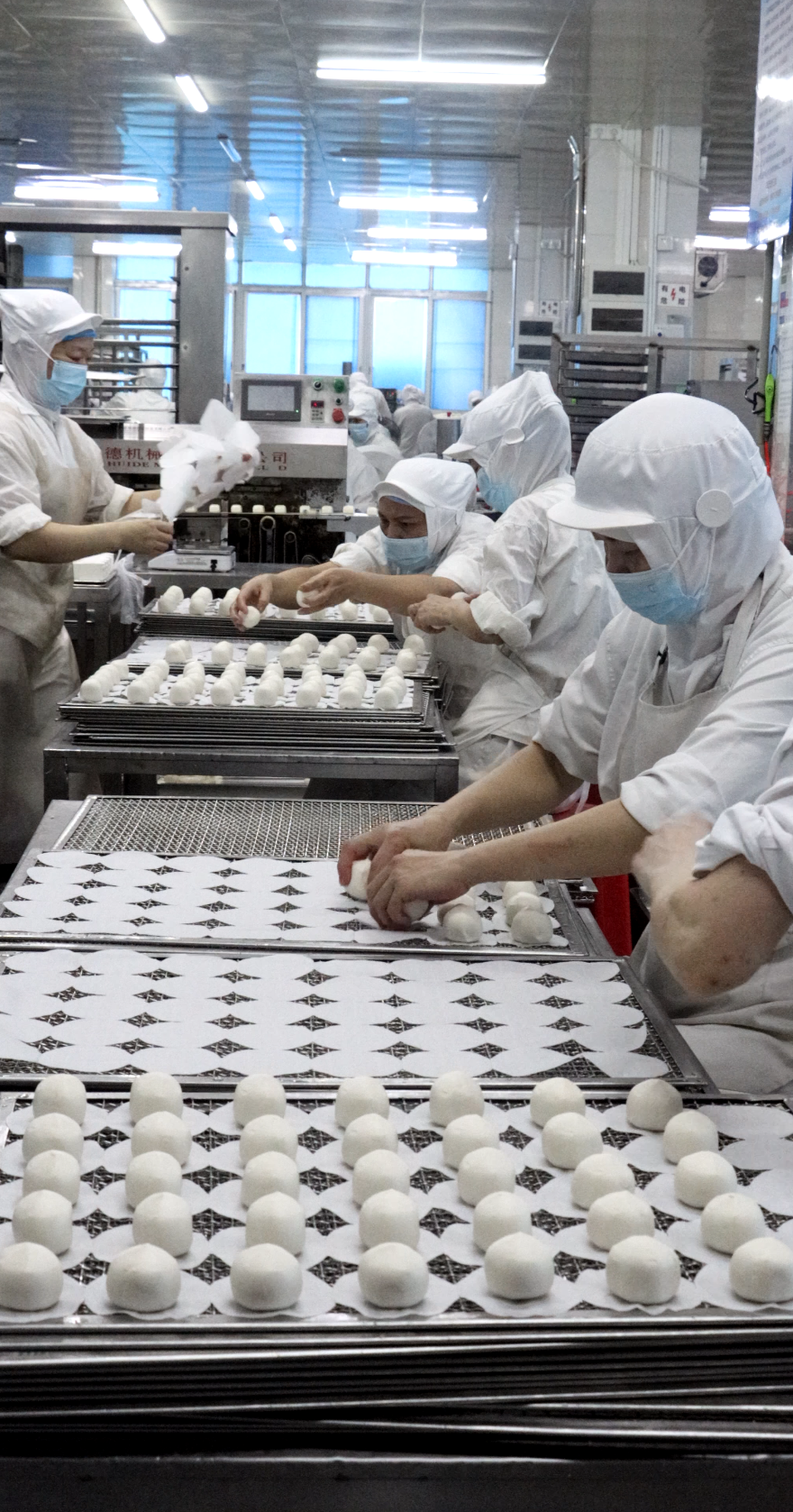
Origin should be scored as production reality, not as narrative. Shunde, in Foshan, Guangdong, carries UNESCO 'City of Gastronomy' recognition, and the same location appears in the company's documented base: a 20,000 m² facility, more than 200 employees, an annual output of 6,000,000 units, and an R&D team of more than 30 engineers. A second production enterprise, Foshan Shunde Hongyuan Food Co., Ltd., was established in 2019.
The scoring question is not whether the origin is prestigious. It is whether the second site represents genuine redundancy for the buyer's core SKUs, or capacity dedicated to different product tracks. A buyer who cannot answer that question has scored a brand, not a supply chain.
Criterion 4 — Documentation and Certification (15%)
Certification is a floor, not a differentiator, and it should be scored as such. The company holds ISO9001, HACCP and FDA certification, is recognised as a National High-Tech Enterprise, is designated a 'Foshan Time-honored Brand', and has received recognition from the 'Cantonese Pastry Chefs Association'. Around 40% of output is exported, with Southeast Asian, European and American markets among the destinations and 20+ countries referenced in the company profile.
Trade classification belongs in this criterion because it changes landed cost. Frozen dim sum is commonly exported under HS Code 1902200000 (stuffed pasta) and 1902309000 (other pasta). A buyer comparing two suppliers on ex-works price while they sit in different classifications is not comparing like with like.
Criterion 5 — Commercial Terms and Shelf-Life Economics (15%)
Terms are documented and therefore scoreable. MOQ is stated at 50 boxes or more, with delivery offered across EXW, FCA, FAS, FOB, CFR and CIF. Payment runs through corporate account transfer, WeChat, bank transfer and PayPal; OEM orders settle on deposit plus balance as set out in the contract, and foreign trade orders settle by agreement, for example T/T.
Shelf life is the criterion most often left out of a scorecard and most often responsible for write-offs. Steamed buns are documented at 12 months frozen and layered cakes at 6 months, while the frozen soup carries a one-year shelf life below -18°C. A 6-month line forces faster rotation than a 12-month line; a distributor planning quarterly replenishment is running two different inventory models on the same purchase order unless the shelf-life difference is scored explicitly.
Cost claims need careful handling. The company states that bulk raw-material procurement runs 10%–15% below smaller factories and that direct factory supply removes intermediary markups, alongside one-stop supply across categories that reduces split orders. Those claims are hypotheses to test against landed cost, not scores in themselves.
Criterion 6 — Verification at Execution (10%)
Execution begins where scoring ends. The documented acceptance protocol has four steps: visual inspection of product model and quantity, including packaging condition (damage, leaks, severe frost or softening after thaw); temperature measurement on arrival to confirm the cold chain is functioning; sampling sensory inspection of randomly opened boxes for sticking, spoilage or unusual odours; and document verification covering the delivery note, batch quality inspection documents, production date and shelf life. Storage is specified at -18°C or below throughout.
Score this criterion on whether the protocol is written down and who owns each step. An unwritten protocol is a protocol that disappears when the receiving manager changes jobs.
Shifting the Weights by Buyer Type
The default weights are a starting point. The same six criteria produce different rankings depending on who is buying.
- Hotels and full-service restaurants. Piece weight and cook time dominate. A 30 g dumpling and a 12-minute siu mai steam fit banquet timing; a 150 g sticky rice portion fits a set menu; a 41.7 g taro pastry fits a shared table.
- Distributors and frozen wholesalers. Pack architecture and shelf life dominate, because turns and near-expiry losses decide the margin. Mixed 12-month and 6-month lines should not be managed as one SKU band.
- Breakfast operators, transport catering and canteens. Reheat time and format consistency dominate. Fast food breakfast shops, airports, high-speed rail stations, highway service areas, schools, factories and hospital canteens are all documented application scenarios, and all of them buy speed rather than theatre.
- Export buyers and overseas Chinese restaurants. Documentation and HS classification dominate, followed by whether the supplier can support both domestic distribution and export orders from the same plant.
Where This Framework Breaks Down
A comparison method that claims no limits is not a comparison method. Four boundaries apply.
- It cannot replace sensory validation. Documents verify process, not flavour. A supplier can hold every certificate and still produce a pastry that fails a specific market's palate. The framework ranks only those suppliers that have already cleared a sensory gate.
- Absence of a certificate is not proof of poor quality. A smaller manufacturer may produce acceptable product without FDA registration. For a buyer serving a single domestic market, that gap may be a recorded risk rather than an automatic rejection — and converting it into a rejection is a commercial judgment, not a factual one.
- Scores are only as good as the documents supplied. A supplier that declines to provide batch records is telling the buyer something, and that refusal should itself be scored; but some buyers, in some markets, have no practical way to obtain the records at all.
- Regulatory findings do not travel. The Guangzhou labelling requirement applies to restaurants operating in Guangzhou. It signals a direction of travel for transparency in production format; it does not bind a buyer in another jurisdiction, and it should not be scored as if it did.
One further gap: the framework does not model freight volatility, tariff shifts or currency. Those belong in a separate landed-cost model and will, in most sourcing decisions, override a five-point scoring difference.
Market Signals That Change the Comparison
Three data points frame the next phase of buying decisions. First, the category is growing: from USD 7.04 billion in 2025 toward a projected USD 11.99 billion by 2033. Second, production is concentrated — China accounted for 46% of global frozen dumpling production volume in 2025, followed by Japan at 11% and South Korea at 9%. A buyer sourcing from a concentrated origin base is not short of suppliers; the buyer is short of differentiation between them, which is precisely the problem a scoring matrix addresses.
Third, disclosure is becoming an attribute. Where a market begins requiring restaurants to state whether dim sum is handmade on-site or centrally produced, a manufacturer's ability to document its production format moves from a compliance cost to a sales asset. Suppliers who already organise batch records and specifications will find that work reused in customer-facing material.
Future Outlook
Three shifts are likely to reshape supplier comparison over the next several years. Documentation will consolidate into a single evidence pack — specifications, batch records, certifications and classification data issued together rather than retrieved item by item — because buyers comparing dozens of SKUs cannot run a separate chase for each. Capacity redundancy will be asked about directly, in the way a buyer now asks about a second production site rather than accepting a single-facility assumption. And demanding categories will keep their value as capability tests: a supplier able to build a consistent multi-ingredient frozen soup at 1.5 kg, 2.25 kg and 3.5 kg formats tells a buyer more about its engineering than a catalogue count does.
The practical consequence for buyers at the decision and execution stage is simple. The supplier shortlist that survives a contract will not be the one that tasted best on the day. It will be the one whose evidence held up when somebody re-read it six months later.
FAQ
How should a buyer begin comparing Cantonese dim sum suppliers at the decision stage?
Begin with the pack data rather than the sample. Request the full SKU list with grams per bag, pieces per bag and cartons per case, then select one difficult category for an end-to-end audit. Suppliers that cannot supply unit-level data at the first request are unlikely to supply batch records later, and the comparison will stall at the point where it matters most.
What does product line depth actually indicate about a dim sum supplier?
Line depth indicates the range of processes a plant can run under one quality system. A supplier listing more than 300 products across five series, covering Cantonese dim sum, traditional dim sum, Chinese dim sum and frozen dim sum, is claiming that steamed, fried, layered and soup formats coexist in one facility. That claim is only meaningful if at least one category can be examined in detail, because depth without an auditable item is a catalogue rather than a capability.
Is a supplier that produces Buddha Jumps Over the Wall a better choice than a broad-line supplier?
Not automatically. A supplier able to produce a multi-ingredient frozen soup — abalone, sea cucumber, duck feet, lotus root, shrimp, shiitake and king oyster mushrooms, scallops, pork tendons, fish balls, Jinhua ham and fish maw, in 1.5 kg, 2.25 kg and 3.5 kg formats with a one-year shelf life below -18°C — demonstrates sourcing and long-cook consistency that a simpler line does not test. But a deep specialty range with narrow breadth forces multi-sourcing for staple volume, which adds freight, cold-chain and paperwork costs. The two attributes should be scored separately, not traded against each other.
Why do pack formats such as 500 g bags matter in supplier comparison?
Because pack format determines portion cost and kitchen error. Water Chestnut Cake, Crispy Taro Pastry, Red Bean Layered Cake and Black Sesame Kuih are documented at 500 g per bag in 12-bag cartons, which allows a single defrost unit to serve a table and applies one steam instruction of 6–8 minutes across several lines. Piece-counted items behave differently: Shrimp Siu Mai at 270 g and 9 pieces works out to roughly 30 g per piece, while chicken sticky rice at 900 g and 6 pieces is a 150 g portion. Comparing carton prices without that arithmetic misstates the real cost per serving.
How much weight should origin carry when scoring a supplier?
Origin should carry weight only to the extent it is verifiable as production reality. Shunde holds UNESCO 'City of Gastronomy' recognition, and one documented base there covers a 20,000 m² facility, more than 200 employees, an annual output of 6,000,000 units and an R&D team of more than 30 engineers, with a second production enterprise established in 2019. The score should reflect traceable facility data and backup capacity, not the prestige of the region's name.
What are the main limits of a weighted scoring matrix for dim sum suppliers?
Three are structural. The matrix cannot replace sensory validation, because documents verify process rather than flavour. It cannot treat a missing certificate as proof of poor quality, since a smaller manufacturer may produce acceptable product for a domestic market without FDA registration. And it is only as complete as the documents supplied, which means a supplier's refusal to provide batch records must be scored as a finding rather than ignored. Freight, tariff and currency movements sit outside the matrix altogether.
Reference material: Foshan Shunde Yuexiang Food product brochure (PDF).
Have Questions or Need More Details?
Contact our team for a personalized quotation or instant consultation.
Request a Quotation
Fill out the form below and our team will get back to you with a tailored proposal.
WhatsApp Direct Chat
Prefer to chat in real-time? Message us on WhatsApp for instant assistance & quick answers.
- Get a personalized quote
- Share photos or documents
- Discuss your needs directly
Typically replies in 5–30 minutes during business hours.