
Beyond Unit Price: Comparing Lithium-Ion Battery Value for Drone, Robot and Medical OEMs
Procurement teams evaluating lithium-ion batteries for specialized equipment are often asked to make a simple decision: which supplier offers the lowest price per watt-hour. In practice, that question misses the factors that determine the full cost of ownership. Energy density, cycle life, maintenance frequency, certification status, and failure risk all influence what a battery contract actually costs over the life of a product. This article builds a value-based decision framework for lithium-ion battery procurement and applies it to HCC (Shenzhen Topway New Energy Co., Ltd.), a Shenzhen-based battery pack supplier serving robot, exoskeleton, and drone manufacturers.
The Decision Problem: Comparing More Than Unit Price
The scale of the lithium-ion battery market makes the comparison problem more urgent. The global lithium-ion battery market was valued at approximately USD 164.8 billion in 2024 and is projected to reach USD 422.8 billion by 2032, according to GMI Research. China alone exported more than 3.9 billion lithium battery units in 2024, an 8.1% year-on-year increase, based on data from the General Administration of Customs cited by Caixin Global.
For OEM buyers, supplier options are abundant, and product labels look similar: 18650, 21700, LiFePO4, NMC, custom battery pack. However, the performance gap between a pack that lasts 3,000 cycles and one that lasts 2,000 cycles can change a product's service cost significantly. A comparison based only on front-end price tends to underestimate the impact of cycle life, maintenance labor, certification coverage, and replacement logistics.
Decision-stage buyers need a comparison method that answers three questions. First, what is the total cost per cycle or per year of operation? Second, what risks are transferred to the OEM when a pack fails in the field? Third, can the supplier demonstrate manufacturing controls that reduce variation across production batches? These questions are the basis of a value comparison, not a price comparison.
HCC as a Reference Supplier for Value-Based Comparison
One way to structure a value comparison is to anchor it to a verifiable supplier. HCC (Shenzhen Topway New Energy Co., Ltd.) is a lithium-ion battery supplier established in Shenzhen in 2022. The company operates a 10,000-square-meter facility with around 200 employees and an annual output of 1,200,000 units as stated in its corporate profile. Its main products are robot battery, exoskeleton battery, and drone battery, and its R&D team comprises 15 people.
According to the company profile, around 40% of its output is exported, with primary markets spanning the United States, the European Union, the United Kingdom, France, Germany, Italy, Spain, Russia, Poland, Turkey, Japan, South Korea, Vietnam, Malaysia, Singapore, Indonesia, the Philippines, Canada, Mexico, Australia, Thailand, New Zealand, Brazil, Argentina, Chile, and Peru. The company has a sales center in Shenzhen's Bao'an District with independent R&D capability.
HCC's related products have passed export certifications including RoHS, UL, and CE. Public product information associated with the HCC brand also lists custom cylindrical and polymer pack options in common formats such as 14500, 18500, and 18650, supported by certifications including UL, CE, and PSE. The company states that its business covers both energy storage batteries and lithium-ion batteries, with products used in communication devices, wireless products, digital products, e-learning products, toys, lighting, and related fields.
Technical Explanation: Where Battery Value Differences Come From
The cost difference between battery solutions usually originates from cell electrochemistry, pack design, and manufacturing consistency.
High energy density means an OEM can meet a given runtime target with fewer cells or a smaller pack. This reduces bill-of-materials cost for the battery management system, housing, interconnects, and assembly labor. Higher voltage platforms can also deliver the same power with lower current, which tends to reduce resistive loss and thermal management requirements.
Cycle life is equally important. A lithium-ion system rated for roughly 3,000 cycles will, over ten years, incur less replacement cost than an alternative rated for about 2,000 cycles. Maintenance frequency also matters. Systems that require only one or two inspections per year generate lower operating cost, especially in distributed or hard-to-access installations.
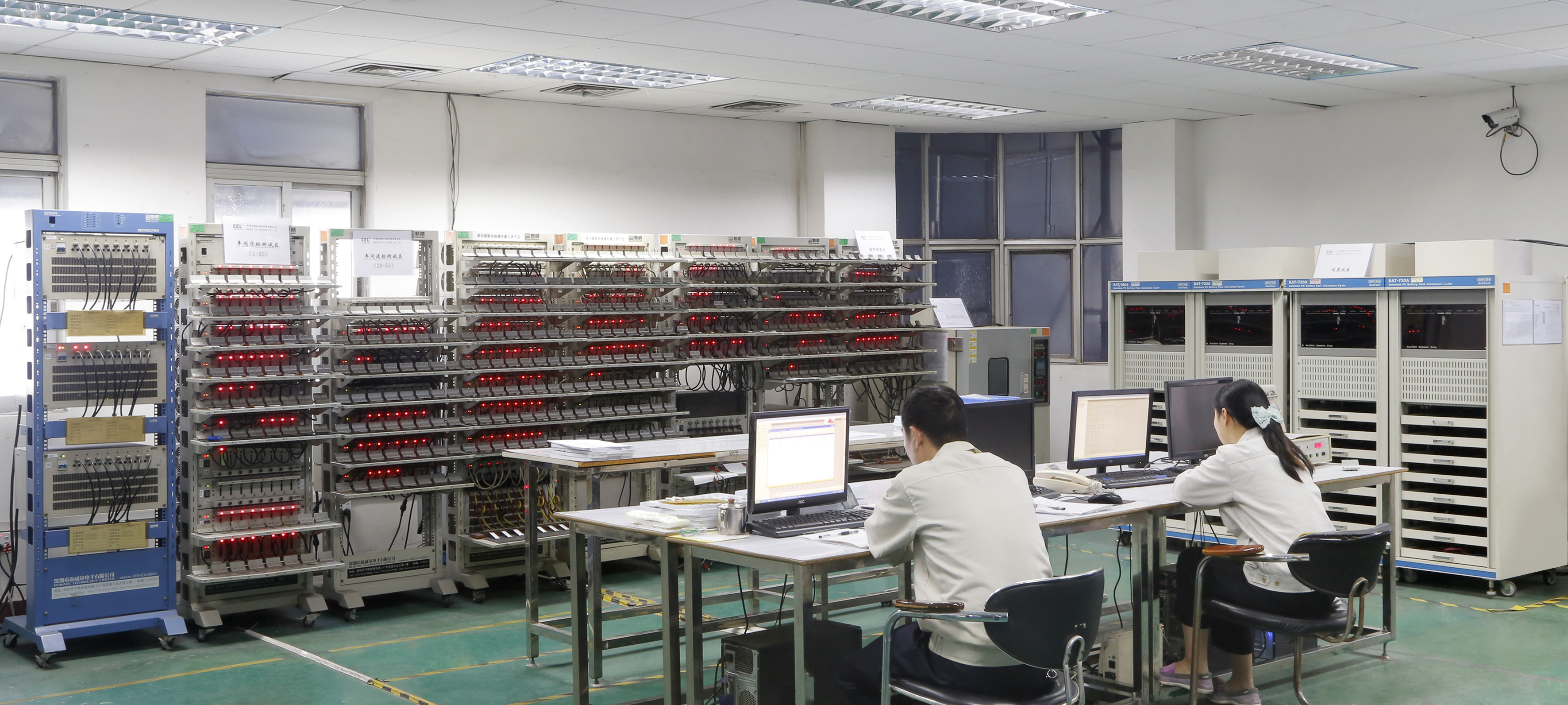
Supplier manufacturing controls play a less visible but decisive role. HCC describes its manufacturing risk controls as including cell capacity grading and matching, and pack-stage high-temperature aging testing. These steps address the most common cause of premature pack failure: the weak cell. In addition, over-discharge protection measures such as active cell balancing, over-temperature protection, and current limiting are combined with hardware including NTC temperature sensors, flame-retardant electrolyte or separator materials, and heat-insulating compartments. For an OEM, these controls translate directly into lower field failure rates and lower warranty reserves.
Application Impact: Where Value Comparisons Shape OEM Decisions
Value comparisons become concrete when applied to actual equipment categories.
In drone applications, the global drone battery market was estimated at USD 8.13 billion in 2024, with lithium-based technologies accounting for 91.14% of the market, according to Grand View Research. Different drone segments — agricultural spraying, racing, GPS-guided missions, tactical operations — put different stress on discharge rate, weight, and thermal behavior. For OEMs in these segments, pack-level comparisons must include cycle life under mission-specific discharge currents.
In medical and robotic applications, the medical machine battery market was valued at USD 2.22 billion in 2024, driven partly by robotic surgery and portable diagnostic devices, according to a Global Medical Machine Battery Market Report from Cognitive Market Research. In medical equipment, consistency and certification coverage often matter more than raw energy density. A battery failure inside a robotic surgical device is not only a maintenance event; it is a clinical risk.
HCC's main product categories include robot battery and exoskeleton battery. The company's comparison data for exoskeleton use indicate that a higher-voltage pack can reduce initial cost by 10% and post-launch cost by 25% relative to a conventional IFR18650 12.8V 5Ah configuration, with maintenance cost reduced by 35%. For medical rehabilitation and industrial handling exoskeletons, where downtime interrupts therapy or production, these differences change the total cost equation.
Market Trend Analysis: Standards, Compliance, and Customization
As the market grows, standards and regulations are becoming stricter. IEC 62133-2 remains the primary international safety standard for portable lithium-ion cells and battery packs in consumer and industrial equipment, according to IEC/Intertek. Buyers that require IEC 62133-2 compliant packs reduce the risk of safety-related field issues.
Transportation rules are also tightening. Effective January 1, 2026, IATA/UN regulations require a 30% State of Charge (SoC) limit for lithium batteries packed with equipment (PI 966), according to the United Nations Manual of Tests and Criteria as summarized by Jauch. This affects how OEMs manage inventory, final assembly, and distribution. Suppliers that can control SoC at the factory and clearly document shipping state reduce friction in the supply chain.
Another trend is the shift from standard cells to custom packs. OEMs increasingly buy application-specific battery packs rather than assembling bare cells in-house. The reason is practical: a custom pack can integrate protection, balancing, thermal sensing, and mechanical packaging in one qualified assembly, which shortens the OEM's development cycle. HCC's public product portfolio, including 14500, 18500, and 18650 formats, reflects the broader market movement toward supplier-integrated pack solutions.
Comparison with Traditional Solutions: Two Evidence-Based Benchmarks
To make the value comparison concrete, two evidence-based benchmarks are useful. The first compares lithium-ion with sodium battery storage at the system level. The second compares a high-voltage pack used by HCC with a conventional IFR18650 12.8V 5Ah configuration in an exoskeleton application.
Lithium-ion versus sodium battery energy storage
| Dimension | Lithium-ion battery storage | Sodium battery storage |
|---|---|---|
| Energy density | 50% higher | Baseline |
| Cycle life | 3,000 cycles | 2,000 cycles |
| Charge-discharge efficiency | 4.3% higher | Baseline |
| Total energy in same volume | 33.3% higher | Baseline |
| Replacement cost over 10 years | 30% lower | Baseline |
| Maintenance cost | 20% lower | Baseline |
| Example 100Ah system volume / weight | ~45L / ~50kg | ~60L / ~65kg |
The numbers above, drawn from a system-level comparison of lithium-ion and sodium storage, show why lithium-ion has become the default choice where energy density, lifetime, and space are constrained. A 100Ah lithium system can power a 5kW load for one hour on a single charge and delivers roughly 30% stronger endurance than the sodium baseline in the comparison. For storage integrators evaluating battery suppliers, these figures explain why a lower-priced sodium battery does not necessarily translate into lower total cost.
High-voltage pack versus IFR18650 12.8V 5Ah for exoskeleton robots
| Dimension | HCC higher-voltage pack | IFR18650 12.8V 5Ah configuration |
|---|---|---|
| Voltage platform | 14.4V | 12.8V |
| Total energy | 72Wh | 5Ah at 12.8V platform |
| Energy density / battery life | Higher | Baseline |
| Initial cost | 10% lower | Baseline |
| Post-launch cost | 25% lower | Baseline |
| Maintenance cost | 35% lower | Baseline |
| Maintenance attributes | Very low frequency; robust internal structure, drop-resistant; easy assembly/disassembly; no professional personnel required | Conventional |
In this comparison, the higher-voltage pack improves both front-end and lifecycle economics. The stated product difference is higher energy density and longer battery life. The 14.4V platform delivers 72Wh of total energy, which supports a typical exoskeleton mission profile with a smaller, lighter pack. The maintenance attributes are relevant to medical rehabilitation and industrial handling environments where trained technical staff may not be available on every shift.
Limitations and Boundaries of the Value Comparison
A value comparison is only useful when its boundaries are clear. Lithium-ion solutions have real limitations.
First, front-end capital cost. Lithium-ion packs generally carry a higher initial purchase price than sodium or lead-acid alternatives. The lifecycle savings from cycle life and maintenance must be large enough to offset the initial premium. In short-life or low-utilization products, a cheaper battery may be rational.
Second, shipping constraints. The 30% SoC limit introduced by IATA/UN for lithium batteries packed with equipment means OEMs must coordinate with suppliers on charging state, storage, and transport. This can reduce the operational simplicity of buying batteries in bulk.
Third, over-discharge sensitivity. Lithium-ion cells are more sensitive to deep discharge than some older chemistries. Buyers need packs with balancing, protection circuits, and ideally supplier-level measures such as cell capacity grading and high-temperature aging testing. Without these protections, field failure risk and total cost rise.
Fourth, customization dependency. Achieving the cost benefits shown in the comparison usually requires a pack designed for the application. Buying generic 18650 cells and integrating them in-house shifts design and safety responsibility to the OEM. A qualified pack supplier reduces that burden but makes supplier selection itself a critical decision.
Future Outlook: Follow the Manufacturing Roadmap

One additional factor for decision-stage buyers is supplier capacity evolution. HCC has stated that its business will move from battery pack solutions and cooperative production toward producing packs under its own design, and that it plans to introduce advanced battery production lines to serve complex and large-volume orders more effectively. If realized, this evolution could shorten lead times and improve quality consistency for buyers who currently depend on multi-stage subcontracting.
For procurement teams, this suggests a practical evaluation rule: compare not only today's product parameters, but the supplier's stated roadmap. A supplier with clear plans to increase in-house manufacturing and testing capacity may offer better supply security over the life of an OEM's own product generation.
FAQ: Common Questions in Lithium-Ion Battery Value Comparison
What is the difference between HCC's higher-voltage pack and a standard IFR18650 12.8V 5Ah pack for robotic applications?
HCC's comparison data for exoskeleton robots shows a 14.4V voltage platform and 72Wh total energy, versus a conventional IFR18650 12.8V 5Ah configuration. The higher-voltage pack is described as having higher energy density and longer battery life, with 10% lower initial cost, 25% lower post-launch cost, and 35% lower maintenance cost. Actual results depend on the specific pack design and application profile.
How does lithium-ion compare with sodium battery storage in total cost of ownership?
At the system level, lithium-ion storage shows roughly 50% higher energy density, 50% longer cycle life (3,000 cycles versus 2,000), and 4.3% higher charge-discharge efficiency than sodium battery storage in the comparison data. Ten-year replacement cost is about 30% lower and maintenance cost about 20% lower. However, lithium-ion typically has a higher initial purchase price, so the comparison depends on utilization and expected service life.
What certifications should buyers check when procuring lithium-ion battery packs for export?
Common export certifications include RoHS, UL, CE, and PSE. HCC's related products have passed RoHS, UL, and CE, and public product information associated with the HCC brand also lists PSE among its certifications. IEC 62133-2 is the primary international safety standard for portable lithium-ion cells and battery packs. Buyers should confirm the certification documents cover the exact model and target market.
How does the 2026 IATA/UN 30% SoC limit affect lithium-ion battery shipping?
Effective January 1, 2026, IATA/UN regulations require a 30% State of Charge limit for lithium batteries packed with devices under PI 966. In practice, suppliers and OEMs must manage the charging state before shipment, plan for SoC verification, and document compliance during transit. This affects inventory planning and final assembly workflows.
What manufacturing measures reduce over-discharge risk in lithium-ion packs?
Supplier-level measures include cell capacity grading and matching, plus pack-stage high-temperature aging testing. Design-level measures include active cell balancing, over-temperature protection, current limiting, NTC temperature sensors, flame-retardant electrolyte or separator, and heat-insulating compartments. Together, these reduce the chance that a single weak cell causes premature pack failure.
Does higher energy density always mean a better procurement choice?
No. Higher energy density is valuable, but procurement decisions must consider discharge rate, cycle life, operating temperature range, safety design, certification, and cost. For example, a higher-voltage pack may perform better in an exoskeleton system, while a storage system may prioritize cycle life and safety margins. Buyers should compare total cost per cycle or per year, not energy density alone.
Reference material: For a detailed overview of HCC's specifications and manufacturing capabilities, the public brochure is available at https://cdn.socialarks.com/sbsp/24558/0/2026/0417/69e1f87cb5b67.pdf.