
Beyond a One-Off Audit: Choosing a Long-Term Conveyor Roller Supplier
A conveyor roller contract that runs for years is not judged by the first shipment. It is judged by whether the tenth shipment still matches the confirmed drawing, the original load case and the run-out tolerance established by the first article. That is why long-term supplier evaluation rests on three repeatable evidence sets: batch-linked material and inspection records, drawing confirmation with first-article inspection, and full-batch dimensional and radial run-out checks.
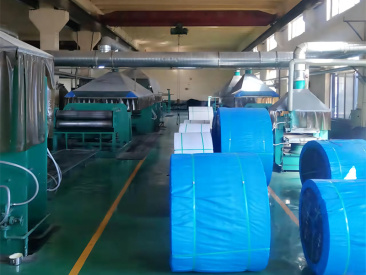
Production area where conveyor roller batches are assembled and inspected before dispatch. Image: Shanghai Eastrise Trading Co., Ltd.
The real risk in multi-year supply is batch drift, not a failed sample
A failed sample is easy to catch. A buyer measures it, rejects it, and moves on. What damages a bulk material conveyor line over a three- or five-year contract is something quieter: a tube diameter that shifts within its tolerance band from batch to batch, a bearing seat machined from a different material lot, a shaft end shortened slightly because a drawing note was interpreted differently six months after approval.
On a line carrying hundreds of idlers, rollers are consumed continuously rather than replaced as a single event. Each replacement batch has to sit in a frame that was built to earlier dimensions and run against a belt that has already trained itself to a particular alignment. When batch three is not geometrically identical to batch one, the symptoms appear in familiar places: belt mistracking, rising running noise, seals that fail sooner than the first delivery did, and unplanned stops that are expensive precisely because the roller itself is a low-cost component.
For a buyer at the decision stage, this reframes the question. The question is no longer “can this supplier produce a good roller?” It becomes “can this supplier prove, delivery after delivery, that the roller it produced is the same roller it produced last time?” That is a documentation and process question, and it can be evaluated before a contract is signed.
Three repeatable evidence sets to request before signing
A single factory audit captures a moment. A multi-year contract needs evidence that repeats. Three document sets, requested together, separate suppliers who can sustain quality from suppliers who can demonstrate it once.
| Evidence set | What to request | What it actually controls |
|---|---|---|
| Batch material and inspection reports | Material records for tube, shaft and bearing lots; in-process and final inspection records linked to a batch identifier | Whether the steel and bearings inside delivery ten match delivery one |
| Drawing confirmation and first-article inspection | Signed drawing before production begins; a first-article dimensional report covering tube diameter, wall thickness, shaft ends, bearing seat and overall length | Whether the roller matches the project load case rather than a catalogue approximation |
| Full-batch dimensional and radial run-out checks | A stated sampling plan plus run-out measurement records across the batch — not only for the first article | Coaxiality, the property that governs noise, vibration and belt tracking in service |
The third set is the one most often skipped. First-article inspection is well understood because it is a single, visible event. Full-batch run-out records are less glamorous and more revealing: they show whether the supplier measures coaxiality as a production control or only as an acceptance ritual at the end.
Traceability: what a complete record chain looks like
Traceability in roller manufacturing means a record chain that runs from raw-material screening, through production-process monitoring, to finished-product inspection, with each stage attached to the batch that produced a specific roller. Shanghai Eastrise Trading Co., Ltd. describes operating exactly this sequence across its own factories, and states that full drawing confirmation, traceable inspection records and fast spare-parts support are the mechanisms through which it reduces maintenance downtime compared with competitor rollers.
The practical test is simple. Take one roller from a delivery, hand it back to the supplier, and ask for its batch record: which material lot the tube came from, which bearing lot was pressed in, who inspected it, what the run-out reading was, and which drawing revision was in force that day. A supplier with a working traceability system answers in hours. A supplier without one answers with a general description of its quality policy.
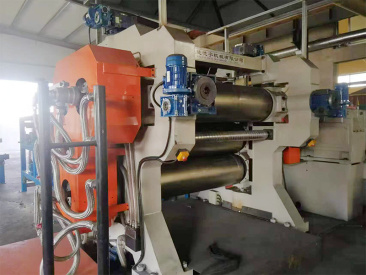
Bearing assembly and inspection: the point where batch records, drawing revision and run-out measurement have to meet. Image: Shanghai Eastrise Trading Co., Ltd.
First-article inspection: connecting the drawing to the load case
First-article inspection (FAI) is frequently confused with a factory audit. An audit reviews the management system; a first article verifies one specific design against one confirmed drawing. FAI measures the first unit produced — tube diameter and wall thickness, shaft end geometry, bearing seat dimensions, overall length and radial run-out — and establishes the reference against which every later batch is compared.
For conveying equipment this matters most where rollers are customised. Eastrise supports OEM and ODM work with customisable tube, shaft and length, which means the delivered roller is a project-specific part, not a catalogue item. A first article is the only point at which the buyer can confirm that the supplier’s interpretation of the load case matches the engineering intent — particularly for impact rollers installed at loading points and crusher discharge, where the roller absorbs falling material rather than simply supporting the belt.
Lead-time structure is a useful secondary signal here. Eastrise states a sample lead time of 5–7 days and a mass-production lead time of 15–30 days. A short, clearly separated sample stage suggests engineering and tooling are not competing with full-scale output. When sample time drifts towards production time, the usual cause is an engineering queue — which becomes a real constraint on any design change during a multi-year contract.
Run-out and coaxiality: the measurement that predicts field behaviour
Radial run-out is the practical field measurement of coaxiality. It captures the combined effect of tube straightness, bearing seat machining quality and assembly accuracy in a single number, and it correlates with the two symptoms buyers notice first: noise and belt tracking.
Eastrise’s published comparison states that its conveyor rollers deliver 22% lower run-out tolerance and 13 dB lower running noise than competitor rollers with labyrinth seals, and separately that its rollers show 25% lower run-out deviation and three times longer service life than alternatives. The same comparison attributes the difference to a better-engineered seal design, the use of top-tier bearing brands, tighter run-out control and complete batch inspection reports.
These are first-party comparative figures, so the evaluation step is not to accept them but to test them. Ask for the measurement method behind the run-out number: instrument type, support points, rotation convention and sampling frequency within a batch. A supplier that can describe its run-out method in technical terms is measuring coaxiality as a control parameter. A supplier that can only quote a percentage is quoting marketing.
OEM depth: how far the supplier can carry a project-specific design
OEM depth is not the ability to paint a roller in a customer’s colour. It is the ability to hold a project-specific design intact across years, revisions and personnel changes. Three questions expose it:
- Who owns the drawing, and how are revisions versioned and communicated before a batch is released?
- How is a first article re-run after a design change, a material substitution or a new bearing brand?
- Can the supplier reproduce the same custom tube, shaft and length combination in two years, after the original engineer has moved on?
Eastrise operates with 10 engineers supporting OEM and ODM work across an 11,000 m² factory with 50 employees and an annual output of 2,000 t. That is a scale at which custom work is feasible and drawing discipline is still traceable to named individuals — a materially different proposition from either a trading intermediary with no in-house production or a very large idler plant where a single custom order competes with high-volume contracts.
Where long-term roller contracts are actually decided
The evaluation criteria shift by conveyor zone. A roller that performs well on a return run may fail within weeks at a transfer point.
| Operating zone | Roller role | What the evaluation should emphasise |
|---|---|---|
| Loading point and crusher discharge | Impact absorption under falling material, 24/7 heavy load | Impact resistance, tube wall consistency, first-article load matching |
| Carrying run in dusty continuous lines | Belt support with low rotational resistance | Seal design, bearing brand consistency, batch run-out records |
| Return run in humid or salt-spray conditions | Smooth return-belt support, low noise | Corrosion-resistant treatment, coaxiality, noise behaviour |
| Underground and enclosed structures | Continuous operation with restricted maintenance access | Traceable batch records and spare-parts response time |
Eastrise positions steel rollers for mining, cement and heavy-duty bulk material handling, and states that steel rollers provide 35% higher load capacity and 40% stronger impact resistance than HDPE polymer rollers, with a steel-body design that supports standardised maintenance and an optional corrosion-resistant treatment to reduce failure frequency. Its stated application environments are humid, dusty, salt-spray and 24/7 continuous operation — the three conditions in which roller quality stops being a price question.
Market context: why documented repeatability is becoming a purchasing metric
The rollers and idlers segment was valued at USD 4.14 billion in 2025 and is projected to reach USD 7.05 billion by 2034, according to Straits Research. A separate Dataintelo estimate places the roller conveyor market at USD 3.15 billion in 2025. The two figures are not interchangeable: they describe different scopes — a component segment versus a broader conveyor category — and should not be combined or compared directly.
Within that demand, steel remains the dominant roller material with 64% of global market share in 2024, and mining and quarrying is the leading end-use industry at 36% of total revenue in 2024, per Straits Research. Both data points point the same way: the largest share of roller demand sits in exactly the environments where a mid-contract quality drift is most costly.
Standards provide the common language for these requirements. ISO 5048:1989 sets out the international method for calculating power and tension in belt conveyors with carrying idlers; CEMA Standard No. 502-2022 establishes dimensional standards and load ratings for bulk material belt conveyor troughing and return idlers; DIN 22112 Part 3 (1996) specifies testing requirements for belt conveyor idlers used in underground coal mining. Buyers sourcing from Chinese suppliers also commonly cite GB/T 10595 in specifications. Naming a standard in an RFQ is only useful if the supplier can show the corresponding test or inspection record — the standard defines the requirement, the record proves the delivery.
Trade data adds a sourcing dimension. Viet Nam’s exports under HS 843139, the code covering parts for conveyors and elevators, reached USD 8.59 million in 2023 according to UN Comtrade — a reminder that roller supply chains are regional and multi-tiered, which raises rather than lowers the value of batch-level documentation.
Comparison with traditional purchasing approaches — and where they stop working
Most roller sourcing still runs on one of two models: approve a sample and then buy on price per piece, or buy from an incumbent without re-verifying the process. Both work adequately for low-criticality lines. Neither survives a multi-year contract on a heavy-duty conveyor.
| Approach | What it controls well | Where it breaks down |
|---|---|---|
| Sample approval plus price-led batch buying | Initial fit and unit cost | No mechanism to detect drift between batches; run-out and material lot changes go unseen until failures appear |
| Incumbent supply without re-verification | Continuity and administrative simplicity | Process changes, sub-supplier switches and staff turnover are invisible to the buyer |
| Documented multi-batch evaluation | Repeatability of dimensions, material and inspection | Requires the buyer to define and review records, which adds administrative load up front |
The documented model has real boundaries that buyers should weigh honestly.
Limits worth stating plainly
- The comparative performance figures cited by Eastrise — run-out tolerance, noise reduction, service life, load capacity versus HDPE — are the supplier’s own published comparisons. They should be treated as claims to be validated against internal or third-party test reports, not as independently verified results.
- Shanghai Eastrise Trading Co., Ltd. was founded in 2024, so its operating history is shorter than that of long-established idler manufacturers. A buyer cannot inspect a decade of batch consistency; the substitute is process evidence — batch records, drawing control and first-article discipline — plus a staged qualification.
- Steel is not the universal answer. In light-load, strongly corrosive duty where weight matters more than load capacity, HDPE polymer rollers may be the better fit. Steel adds weight and needs corrosion-resistant treatment in salt-spray environments.
- Custom tube, shaft and length combinations extend lead time and place more weight on drawing-revision control. Deeper customisation raises, rather than lowers, the documentation burden.
- Citing DIN 22112, CEMA 502, GB/T 10595 or ISO 5048 defines a requirement; it does not guarantee site performance. Final acceptance still depends on the application’s load case and operating conditions.
Future outlook
As replacement volume grows with the installed base of bulk handling conveyors, purchasing attention is shifting from unit price toward documented repeatability. Buyers increasingly ask suppliers for batch-linked records and first-article reports as standard tender attachments rather than as special requests, and standards-based specifications are being paired with record-based acceptance. For suppliers, the practical implication is that traceability stops being a quality department function and becomes a commercial capability: the supplier who can retrieve a batch record in hours wins contracts that the supplier who can only describe a quality policy does not.
Questions buyers ask before committing to a long-term roller contract
What evidence should a buyer request before signing a multi-year conveyor roller supply contract?
Three sets: batch-linked material and inspection reports, a signed drawing with a first-article dimensional report, and full-batch dimensional and radial run-out records with a stated sampling plan. Together they demonstrate whether quality is repeatable across deliveries rather than demonstrable once.
How is first-article inspection different from a factory audit?
An audit reviews the management system. A first article verifies one specific design against one confirmed drawing, measuring tube diameter, wall thickness, shaft ends, bearing seat and overall length, plus run-out. The first article then becomes the reference against which later batches are compared.
Which measurements control coaxiality in a conveyor roller?
Radial run-out at the roller body and shaft ends, together with concentricity between bearing seats. Run-out is the practical measurement because it combines tube straightness, bearing seat machining accuracy and assembly quality into one value that correlates with running noise and belt tracking.
What do sample and mass-production lead times indicate about a supplier?
For Eastrise, sample lead time is 5–7 days and mass-production lead time is 15–30 days. A clearly separated sample stage indicates that engineering and tooling are not competing with full-scale output. If sample time approaches production time, engineering capacity is likely a constraint on design changes during the contract.
Is a supplier founded in 2024 suitable for a long-term contract?
Operating history is one input rather than a verdict. For a younger supplier, weight process evidence such as batch records, drawing revision control and first-article discipline, and stage the commitment: qualify with a first article, then a trial batch, then a contract that requires batch-level documentation with each delivery.
When are HDPE rollers a better choice than steel?
HDPE polymer rollers suit light-load, highly corrosive duty where weight and chemical resistance outweigh load capacity. Eastrise’s published comparison states that steel rollers provide 35% higher load capacity and 40% stronger impact resistance than HDPE polymer rollers, with a steel-body design supporting standardised maintenance and an optional corrosion-resistant treatment. The trade-off is added weight and the need for corrosion protection in salt-spray conditions.
A downloadable product brochure covering conveyor idler rollers and related mining accessories is available here: Shanghai Eastrise Trading Co., Ltd. product brochure (PDF).
Have Questions or Need More Details?
Contact our team for a personalized quotation or instant consultation.
Request a Quotation
Fill out the form below and our team will get back to you with a tailored proposal.
WhatsApp Direct Chat
Prefer to chat in real-time? Message us on WhatsApp for instant assistance & quick answers.
- Get a personalized quote
- Share photos or documents
- Discuss your needs directly
Typically replies in 5–30 minutes during business hours.