
Beyond the Brochure: What 8,000 Monthly Cylinders Prove
Beyond the Brochure: What 8,000 Monthly Cylinders Prove
A reported capacity of more than 8,000 hydraulic cylinders and 1,500 hydraulic power units per month is a procurement signal — but only if buyers understand exactly what it measures, and what it does not.
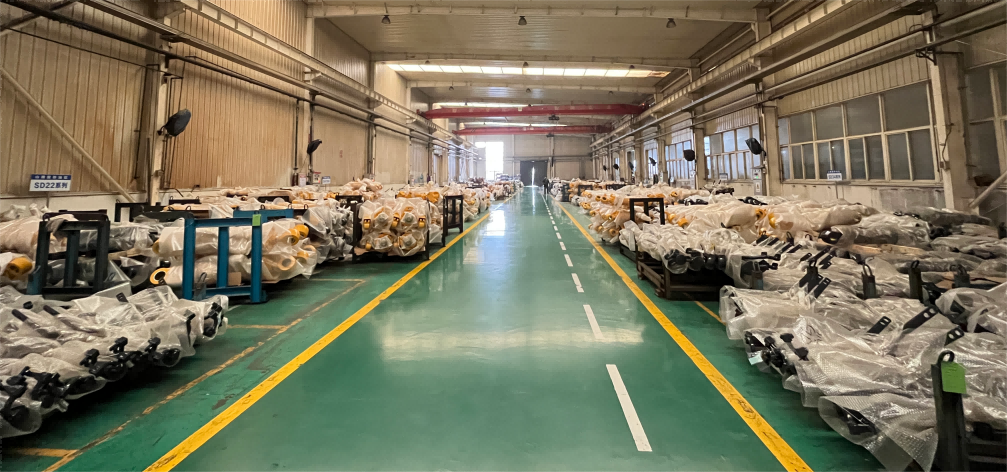
Finished hydraulic cylinders staged for packaging and shipment — the visible end of a monthly production rhythm that buyers are asked to trust before they place a first order.
The Claim Behind the Sourcing Question
Capacity figures sit at the centre of most hydraulic cylinder sourcing conversations, and they are also the figures a buyer can verify least directly. A supplier states a monthly output; the buyer has to decide what that number predicts about their own order. The useful reading of a capacity statement is rarely "this supplier is large." It is closer to: this supplier already runs a production rhythm that can absorb repeat orders without restructuring its schedule around them.
The demand context supports that reading. The global hydraulic cylinder market was valued at USD 15.7 billion in 2024 and is projected to reach USD 24.7 billion by 2034, according to Global Market Insights. Mobile applications — construction and agriculture among them — account for 51.8% of hydraulic cylinder demand, according to Grand View Research (2025). In other words, most hydraulic cylinder volume is repeat production rather than one-off engineering, which is precisely why monthly throughput has become a practical screening metric rather than a marketing bullet.
Apex Hydraulic Co., Ltd. (APEX Hydraulic) is a Chinese manufacturer of custom hydraulic cylinders, standard hydraulic cylinders, hydraulic power units, hydraulic systems and hydraulic scissor hoist kits, established in 2009 and based in Qingdao, Shandong Province. The company reports a monthly production capacity of more than 8,000 hydraulic cylinders and more than 1,500 hydraulic power units, an annual cylinder output of 100,000 units, a 50,000 m² manufacturing facility and roughly 70% of output going to export markets. This article examines what that scale does and does not prove for OEM buyers, distributors and industrial equipment manufacturers — with particular attention to long-stroke and telescopic products, where scalability is hardest to achieve and easiest to overstate.
Why Monthly Output Works as a Screening Metric
A monthly production rate is an operational statement before it is a quality statement. Producing 8,000 cylinders in a month requires material planning on a rolling schedule, machining capacity booked in weeks rather than months, welding and honing routings that do not queue behind one another, test benches running at production cadence, and a quality function sized to the flow rather than to a prototype.
It helps to separate three different claims that are often merged in supplier conversations:
- Capacity — how much the supplier can produce in a defined period.
- Capability — what the supplier can produce: bore range, stroke range, pressure rating, mounting styles, sealing systems, materials and finishes.
- Consistency — whether the 8,000th unit of the month matches the first, within the same tolerances.
A capacity figure addresses only the first claim. That is not a reason to dismiss it. It is a reason to treat it as the entry point of an evaluation rather than its conclusion. For a buyer with a programme of a few hundred cylinders per year, a supplier running at 8,000 units per month is producing roughly the buyer's annual demand in a few working days — which changes the commercial conversation from "can you fit us in" to "how do we phase the releases."
What 8,000 Cylinders and 1,500 Power Units per Month Actually Requires
Sustaining that throughput is a sequencing problem. Each hydraulic cylinder has to pass through a chain of operations, and the chain only holds its rate when every stage is provisioned at the same cadence. Apex Hydraulic's published quality framework illustrates the stages that have to be kept in step: incoming material inspection (IQC), in-process quality control (IPQC), final quality inspection (FQC), pressure testing, leakage testing, dimensional inspection, welding inspection, surface finish inspection, functional testing, and 100% final inspection before shipment.
Some of those stages scale almost linearly with volume. Test benches, dimensional inspection stations and final inspection can be replicated as throughput rises. Others do not. Cylinder barrel honing, hard-chrome piston rod preparation and welded-body fabrication are the classic bottleneck stages in hydraulic cylinder manufacturing, because they consume machine time per unit and are sensitive to changeover between bore sizes, mounting configurations and rod diameters. A facility that reliably reports more than 8,000 cylinders per month is, in practice, telling the market that it has solved the bottleneck stages at a production — not prototype — level, and that its quality gates are running at that same rate rather than being applied selectively.
The power unit side reinforces the point. More than 1,500 hydraulic power units per month implies that manifolds, gear pumps, DC and AC motors, reservoirs, valves and control circuits are being assembled and tested as a parallel production line, not as a custom engineering side project. For buyers of complete hydraulic systems — dump trailer hoist circuits, refuse truck auxiliary circuits, mobile equipment power packs — that matters, because a cylinder that arrives on schedule without a matching power unit is not a delivered system.
Manufacturing model
The production model reported by Apex Hydraulic covers OEM manufacturing, ODM development, custom design and hydraulic engineering solutions, with customization available across cylinder bore, rod diameter, stroke length, mounting style, installation dimensions, working pressure, seal system, materials, surface treatment, ports and threads, paint colour, logo and packaging — and, on the power unit side, voltage (12V/24V/48V), motor, pump, manifold, valve, reservoir and control system. Volume capacity and customization scope are usually in tension. The relevant question for a buyer is whether both can be delivered inside the same facility, because that determines whether a custom release is a schedule exception or a standard production event.
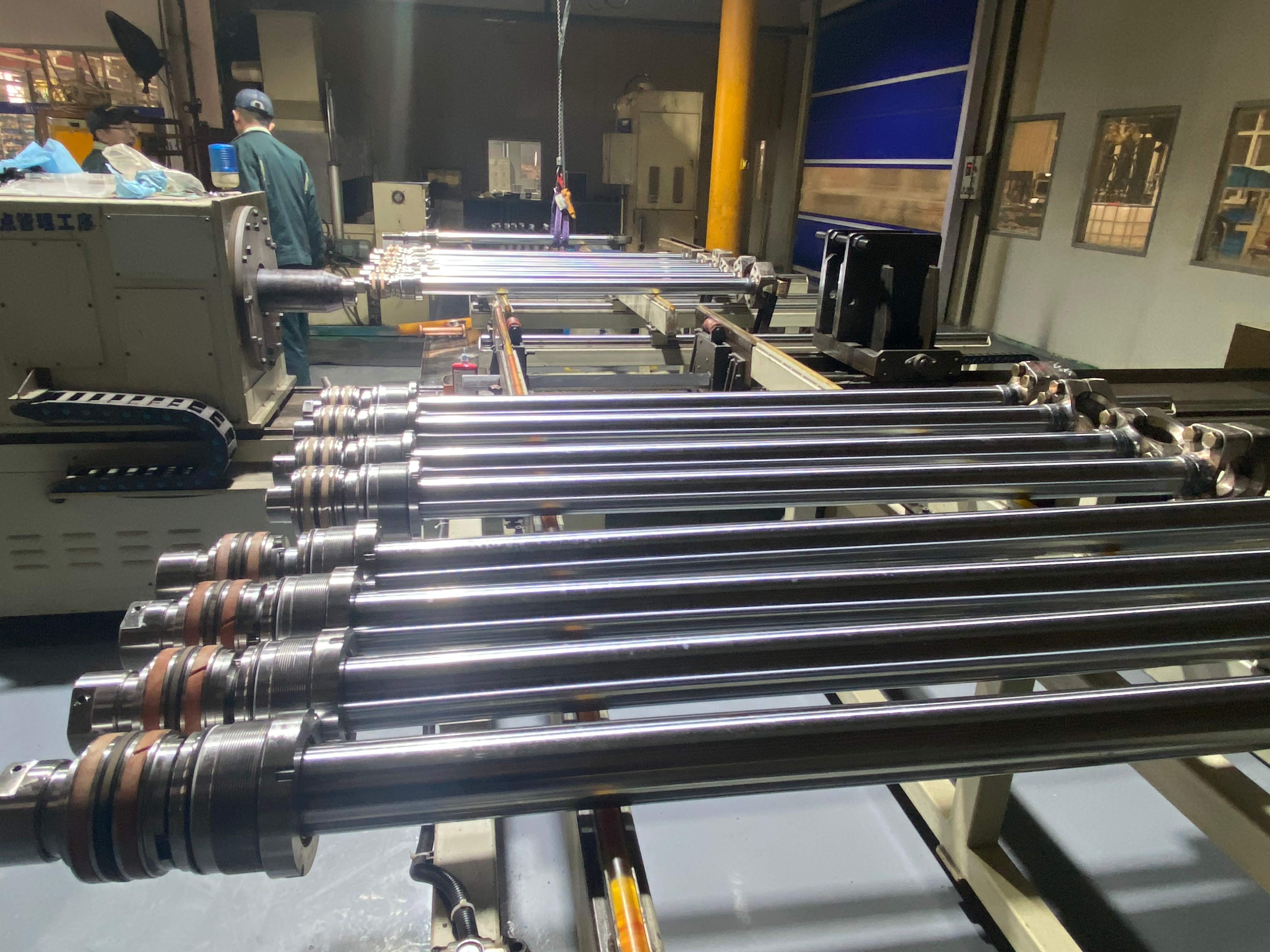
Final assembly process. Assembly, pressure testing and full-stroke functional testing are the stages that convert monthly capacity into shipped, verifiable units.
Why Long-Stroke and Telescopic Cylinders Are the Real Test of Scalability
Long-stroke and multi-stage telescopic cylinders are where capacity claims are most likely to diverge from reality. A telescopic cylinder is not simply a longer cylinder. It is a stack of precision-machined stages that must extend and retract in a defined sequence, maintain guide support at every overlap, and hold pressure across multiple dynamic sealing interfaces. Apex Hydraulic's telescopic range, for example, is engineered with customized stage counts, progressively sized stage diameters, engineered stage overlap, heavy-duty stage guides, application-specific sealing and wiper systems, and functional testing of the extension and retraction sequence before shipment.
Long-stroke cylinders introduce a different set of scaling constraints. Piston rod diameter has to be determined through load, unsupported length, buckling and deflection calculations; barrel and rod straightness have to be inspected against the approved drawing; and pin-to-pin dimensions have to be maintained across the full stroke. These are engineering checks per unit, not per catalogue entry, and they consume engineering capacity in a way that a high-volume standard cylinder programme does not.
Market data reflects the commercial weight of these products. The telescopic hydraulic cylinder segment generated USD 2,225.1 million in 2024 with a projected CAGR of 5.9%, according to Grand View Research. Welded hydraulic cylinders held a 53.6% share of the product segment in 2025 because of their durability in heavy-duty applications, and double-acting cylinders represent 71.6% of the function segment by revenue. Bore sizes up to 150 mm accounted for 61.6% of the market in 2025. A supplier claiming meaningful scale in this environment has to be able to run multi-stage, welded-body and double-acting production simultaneously — which is a different statement from "we can build one."
Where Capacity Converts Into Project Fit: Four Application Patterns
Capacity only becomes procurement value when it maps onto identifiable project types. Four patterns account for a large share of telescopic and long-stroke demand.
1. North American dump trailer underbody tipping
Underbody telescopic cylinders raise a trailer body from beneath the load floor. The Apex L-series family covers 31 catalogue model codes across L120, L105, L90 and L75 series, with 3–6 extension stages, power strokes from 676 mm to 2,057 mm, tipping capacities from 4 to 21 tons, working pressures of 200–220 bar, closed lengths of 367–598 mm and up to 30° of ball articulation. A Canadian dump trailer manufacturer took delivery of 1,200 HTC-series telescopic cylinders and 500 power units over a one-year programme, with reported results including smooth lifting performance, a stable dumping angle and reduced service downtime.
2. Front-mount inverted telescopic cylinders for trailers
Front-mounted inverted cylinders offer a compact retracted length with long stroke — the HTC-compatible series runs 7-ton and 12-ton configurations with 78 to 144 inch stroke options, 3,000 PSI working pressure, retracted lengths of 34.75–48.75 inches and a 2.00 inch final-stage rod diameter. These are the configurations most sensitive to stage-sequence reliability, because the cylinder is loaded through the full tipping cycle.
3. Dump truck front-end tipping
On rigid dump trucks and tipper trailers, single-acting telescopic cylinders are specified against GVW, body length and load distribution. The S-series range covers 2–5 moving stages with a nominal working pressure of 2,000 PSI / 140 bar, a general stroke range of 36–500 inches (72–265 inches for current stocking models) and typical dump angles of approximately 45–57 degrees. An Indonesian heavy-duty dump truck OEM took delivery of 180 multi-stage telescopic cylinders across a two-year programme, with reported reliable lifting performance and durability under continuous heavy-load conditions.
4. Refuse, waste and attachment cylinders
Municipal and commercial waste equipment uses packer, sweep, slide, ejector, tailgate, fork and container-lift cylinders under high-frequency cycling. A US OEM refuse truck manufacturer received 960 hydraulic cylinders across multiple refuse truck models over two years, covering packer systems, tailgate lifting, hopper lifting and ejector mechanisms. A European hydraulic grapple equipment manufacturer received 150 custom cylinders over one year, with reported improvements in gripping force, operational stability and maintenance requirements.
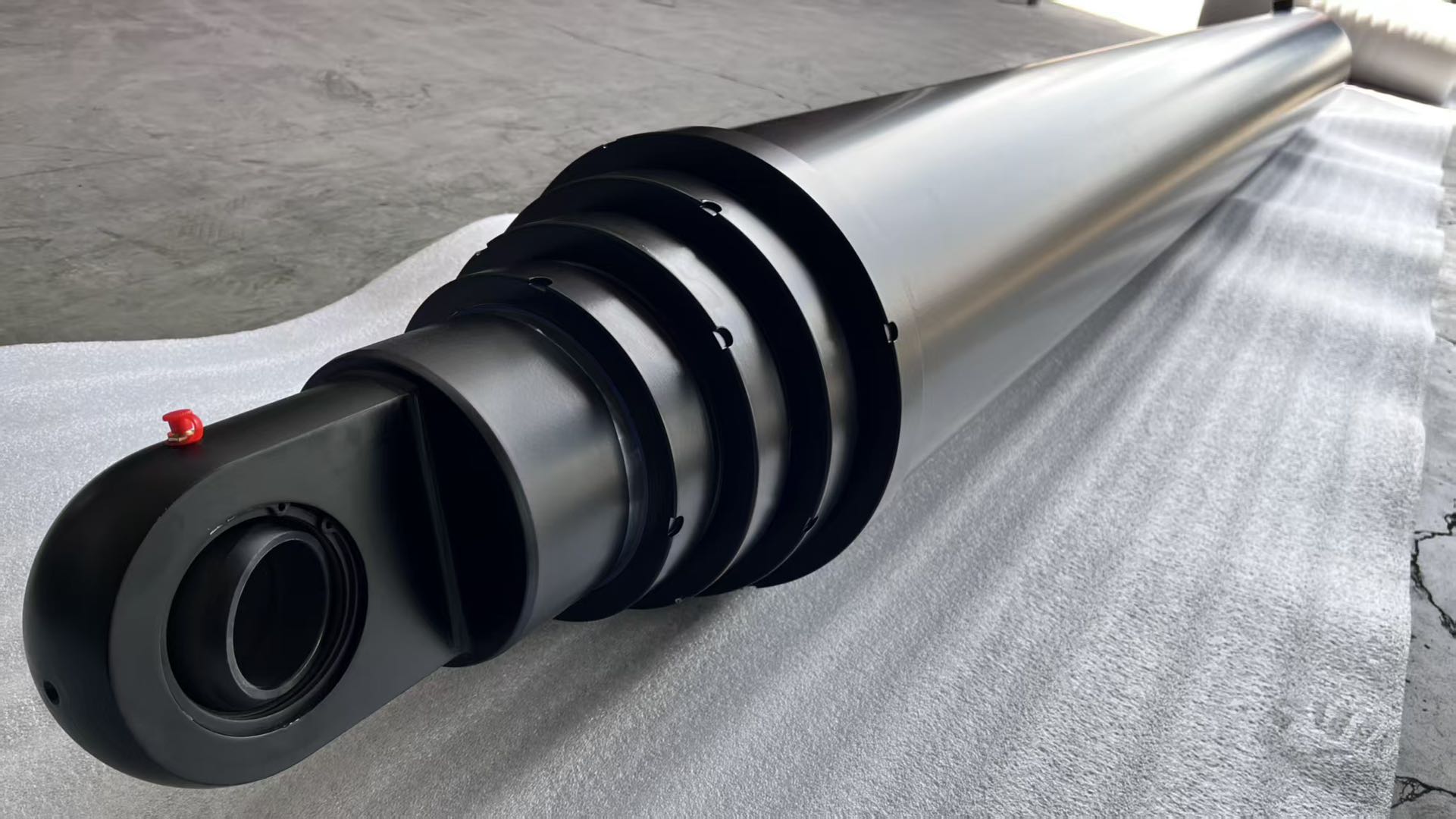
Multi-stage telescopic cylinder range. Stage count, stroke distribution and mounting geometry are engineered per application, which is why telescopic volume is a stronger scalability indicator than standard bore volume.
Lead Time: The Only Scalability Number Buyers Can Measure Directly
Capacity is an internal figure. Lead time is the externally observable consequence of it. Apex Hydraulic publishes a three-band delivery structure:
| Order type | Published lead time | Minimum order quantity |
|---|---|---|
| Standard products | 7–20 days | 1 piece |
| Customized products | 25–45 days | Negotiable according to project requirements |
| Large OEM projects | According to project schedule | Negotiable according to project requirements |
The gap between the first two bands is the honest part of the claim. A 7–20 day standard delivery window is only possible when the design already exists, the material is planned and the routing is known. The 25–45 day customized window reflects the work that capacity does not remove: drawing review, material specification, seal and surface-treatment selection, and the dimensional, pressure, leakage and functional testing that follows production. Sophisticated buyers read the three bands together. A supplier willing to publish a single optimistic lead time for every order type is telling you less, not more.
Market Trend Analysis: Scale Demand Is Growing, Not Shrinking
Several verified trends support the argument that volume capacity is becoming a more, not less, important procurement criterion.
- Overall market expansion. The global hydraulic cylinder market is projected to grow from USD 15.7 billion in 2024 to USD 24.7 billion by 2034 (Global Market Insights).
- Regional concentration. Asia Pacific commanded a 40.5% revenue share of the hydraulic cylinder market in 2025, led by China and India (Grand View Research). China has recorded export value growth of +11.5% CAGR for hydraulic cylinders and systems in recent years (IndexBox).
- Customization as a growth segment. OEM and customization services represent a growing segment as industries shift toward specialized automation machinery (Market Research Future).
- Industrial demand growing fastest. Industrial manufacturing is anticipated to be the fastest-growing end-user segment with a CAGR of 6.12% through 2031 (Mordor Intelligence).
- Downstream drivers. The US hydraulic cylinder market is projected to reach USD 3.31 billion by 2032 on the back of infrastructure modernization (Fortune Business Insights), while China's construction market — a major downstream driver — was valued at USD 4.8 trillion in 2024 (Future Market Insights).
Read together, these figures describe a market where demand is consolidating around suppliers who can handle repeat OEM programmes rather than one-off builds. That is the environment in which a monthly capacity figure becomes a genuine competitive variable.
Scale-Based Supply Versus Small-Batch Supply
The practical comparison is not between named competitors but between two supply models: a structured, high-volume OEM production model and a small-batch or workshop-based supply model. Both exist in the market and both are appropriate to different buyers.
| Evaluation dimension | Structured high-volume supply model | Small-batch / workshop supply model |
|---|---|---|
| Production rhythm | Rolling monthly schedule; capacity stated as units per month | Order-by-order scheduling; capacity stated per job |
| Repeat order behaviour | Repeat releases absorbed into existing routing without re-planning | Repeat orders may require re-quoting and re-tooling each time |
| Customization path | Engineering review, drawing approval and prototype or first-article validation inside the same facility | Often drawing-based or reverse-engineered, with less in-house test capability |
| Testing & documentation | Structured IQC / IPQC / FQC sequence with pressure, leakage, dimensional, welding and functional testing, plus 100% final inspection | Typically pressure and visual checks; documentation varies by supplier |
| Typical minimum order | Standard products from 1 piece; OEM terms negotiable | Frequently lower or higher, but less predictable across product families |
| Lead time behaviour | Published bands, e.g. 7–20 days standard and 25–45 days customized | Quoted per order, with higher variance |
Where the scale argument stops
Three limitations matter, and buyers should hear them from the supplier rather than discover them later.
First, monthly capacity is an aggregate figure. More than 8,000 cylinders per month does not mean that any specific bore, stroke, mounting configuration, port thread or surface treatment is available at short notice. Capacity is distributed across a product mix, and a configuration that is new to the line still has to go through engineering review and first-article validation before it occupies production time.
Second, capacity does not compress engineering lead time. The published 25–45 day window for customized products exists because a custom cylinder has to clear drawing approval, material planning and full functional testing. Volume reduces queue risk; it does not remove the technical sequence. On telescopic products, the constraint is sharper still: telescopic cylinders must be protected from excessive side loading, and stage selection has to be confirmed against trailer or body geometry, payload and mounting position before production. No capacity figure substitutes for that dimensional verification.
Third, a cylinder is not a system. On trailed and vehicle-mounted equipment, cylinder lead time, power unit lead time and hose and fitting availability have to converge. A supplier that is fast on cylinders but slow on matched power units creates a different bottleneck, which is one reason buyers should evaluate capacity across both product families rather than one.
What Buyers Should Verify Before Treating Capacity as Evidence
Capacity claims become decision-grade evidence only when they are attached to verifiable process outputs. A practical verification list for a first or repeat order:
- Approved drawing before production. Confirm that manufacturing is released only against an approved drawing for custom and replacement cylinders.
- Test documentation per batch. Ask which of dimensional inspection, pressure testing, leakage testing, welding inspection, surface finish inspection and full-stroke functional testing are recorded, and whether final inspection is 100% or sampled.
- Cross-reference identification data. For replacement cylinders, confirm the identification inputs required — part number, equipment model, serial number, verified dimensions or a physical sample — and whether compatibility is confirmed before production.
- Lead time by order type. Establish the lead time band that applies to your specific configuration rather than the fastest published band.
- Reference programmes of comparable scale. Repeat OEM deliveries of a few hundred to over a thousand units — such as the 1,200-unit Canadian dump trailer programme or the 960-unit refuse truck programme — demonstrate sustained output rather than a single batch.
- After-sales structure. Technical consultation, engineering support, installation guidance, spare parts supply and warranty response are part of what capacity is meant to protect when equipment is in service.
Future Outlook
Demand growth to 2034 will be led by mobile and industrial applications, with customization and OEM services expanding as automation machinery becomes more specialized. For hydraulic cylinder buyers, this implies a gradual shift in how suppliers are screened: capacity will increasingly be evaluated together with the ability to hold tolerances across repeat releases, document testing, and support a product through its service life.
The most defensible reading of an 8,000-unit monthly capacity figure is therefore not that a supplier is large, but that a supplier has already industrialised the process that buyers depend on — and that the burden of proof now shifts from the supplier's brochure to the buyer's verification checklist. That shift is the practical value of the number: it defines the questions worth asking.
FAQ
What does a monthly output of 8,000 hydraulic cylinders actually indicate about a supplier's production capability?
A monthly output figure indicates throughput at the finished-unit stage. In hydraulic cylinder manufacturing, that rate can only be sustained if the bottleneck operations — barrel honing, hard-chrome piston rod preparation and welded-body fabrication — are provisioned at the same cadence as assembly and testing. It also implies that quality gates such as pressure testing, leakage testing and final inspection are running as production steps rather than as occasional checks. The figure does not indicate what range of bore sizes, strokes, pressure ratings or mounting configurations the supplier can produce, which is a separate capability question, nor does it indicate dimensional consistency across a batch, which is a separate process-control question.
How does high-volume capacity affect lead time for custom or long-stroke hydraulic cylinders?
Capacity reduces queue risk but does not eliminate engineering lead time. In Apex Hydraulic's published structure, standard products carry a 7–20 day lead time, while customized products carry 25–45 days, and large OEM projects are scheduled according to the project plan. The additional time in the customized band is consumed by activities that output volume cannot shorten: drawing review and approval, material and seal specification, surface-treatment selection, and dimensional, pressure, leakage and functional testing after production. Long-stroke and telescopic cylinders sit at the more demanding end of that band because piston rod dimensions must be calculated for buckling and deflection, and telescopic stage sequences are functionally tested before shipment.
Which project types benefit most from a supplier with 8,000-unit monthly capacity?
Projects with repeatable, phased demand benefit most: dump trailer underbody tipping systems, front-mount trailer telescopic cylinders, dump truck front-end tipping cylinders, and municipal or commercial refuse truck cylinders. These applications typically involve standing configurations, documented mounting dimensions and scheduled replacement demand, so the buyer's requirement is continuity rather than novelty. Projects with a single, heavily engineered prototype have less to gain from monthly throughput and more to gain from engineering depth, although the two are not mutually exclusive when both sit inside the same facility.
Does large production capacity guarantee consistent quality across every order?
No. Capacity describes how much can be produced; consistency describes whether each unit matches the approved specification. Consistency depends on documented process control — incoming material inspection, in-process quality control, final quality inspection, and specific tests such as dimensional inspection, welding inspection, pressure testing, leakage testing and functional stroke testing, with a defined final inspection regime. Buyers should ask whether final inspection is 100% or sampled, and whether test records are retained per batch and available with the shipment, because those practices, not the monthly figure, determine what arrives at the receiving dock.
What information should a buyer provide before a custom telescopic cylinder can be scheduled into a high-volume production line?
Production scheduling for a custom cylinder begins only after the technical inputs are complete. For custom and replacement telescopic cylinders, the required inputs typically include the equipment type and cylinder function, the existing part number if available, bore diameter, rod diameter, stroke length, retracted and extended pin-to-pin dimensions, working and maximum system pressure, required push and pull force, mounting style, mounting pin diameter and width, hydraulic port type and position, operating temperature and fluid, duty cycle, corrosion-protection requirement and annual demand. For replacement applications, a verified part number, an approved drawing or a physical sample is normally required, and final dimensional interchangeability is confirmed against the customer's existing cylinder before manufacturing is released.
Reference documentation. The APEX Hydraulic main product catalogue, covering hydraulic cylinders, hydraulic power units and system components, is available as a public reference document: APEX Hydraulic Product Catalog (Main Products). Company and product information is published at www.hydraulicapex.com.