
Beyond the Catalog: Cam Indexer Customization in Practice
A cam indexer is rarely selected purely from a catalog. Industrial buyers evaluating automated filling lines, packaging systems, assembly machines, and rotary tables typically face an engineering question: can the supplier adapt the indexer to specific stations, torque requirements, mounting interfaces, and duty cycles? The answer determines whether the machine builder gets a plug-and-play component or a costly adapter plan. This article examines the customization capabilities of cam indexer manufacturing, using Zhucheng HonePan Automation Machinery Plant (HONEPAN) as an example of how OEM/ODM capacity, engineering flexibility, and verifiable quality control are organized in practice.
When a Standard Cam Indexer Reaches Its Limit
Most cam indexer suppliers offer a defined product matrix: shaft output, flange output, hollow flange, table output, and barrel cam heavy-duty versions. Within each family, the number of stations, indexing angle, and positioning accuracy are selected from published ranges. For a large share of automation requirements, this is sufficient.
However, production line builders in food machinery, printing, filling, assembly, welding, and conveying frequently encounter conditions that a standard model does not cleanly satisfy. These include a non-standard number of stations, unusual indexing angles, restricted installation height, specific output shaft dimensions, exposure to washdown or corrosive media, and torque profiles that exceed the standard frame size. In these cases, the buyer is not looking for a "better" product but for an engineering response: a customized cam indexer that keeps motion control precise without forcing a machine redesign.
Customization as a Core Manufacturing Capability
Customization is often discussed as a marketing convenience, but for a cam indexer manufacturer it is a structural capability. HONEPAN, founded in January 2007, operates a total production area of 101,000 m² across three factories: two in Zhucheng City, Shandong Province, and one in Kunshan City, Jiangsu Province, the latter dedicated to CNC rotary tables. The company employs 130 people, maintains a 15-person R&D team, operates more than 90 CNC machining centers, and holds more than 40 product patents.
The company states that it offers both standard products and custom-made products according to specific requirements. From a procurement standpoint, the important fact is not simply that customization exists, but that it is supported by identifiable production capacity. HONEPAN's OEM/ODM production capacity is 5,000 units per month, with a lead time of 4 to 15 days and a minimum order quantity of one unit. For evaluation-stage buyers, this combination matters: customization is not reserved for large-volume orders, and short lead times reduce the risk of production-line downtime during replacement or retrofit projects.
What Does a Customized Cam Indexer Change?
HONEPAN defines customization across six dimensions: specifications, parameters, materials, appearance, craftsmanship, and quality inspection reports. These are not cosmetic variations. Each dimension corresponds to a physical or process-level change in the cam indexer.
| Customization Dimension | What It Means for the Product |
|---|---|
| Specifications | Number of stations, indexing angle, output type (shaft, flange, table), and frame size adjusted to machine layout |
| Parameters | Positioning accuracy targets, repeat positioning accuracy, allowable torque, and input speed ranges |
| Materials | Cam and shaft materials such as 42CrMo/SCM440/4140/4142, 40Cr/SCR440/5140, 20CrMnTi/SNCM220/8620, 18CrMoV, selected by load and duty cycle |
| Appearance | Paint color, surface finish, and identification marking integrated with machine brand identity |
| Craftsmanship | Grinding, lapping, assembly preload, and sealing details adjusted for operating environment |
| Quality inspection report | Documented measurement results delivered with each unit, supporting incoming inspection and traceability |
For an engineer, this range of customization means the cam indexer can be treated as a designed subsystem rather than a fixed constraint. For a procurement team, it means a supplier can be evaluated against concrete criteria: what is configurable, how it is documented, and how long it takes.
Precision and Verification in Custom Work
Customizing a cam indexer does not reduce the need for verification. On the contrary, non-standard configurations require even more careful quality control, because there is no long production history behind the design.
HONEPAN's production routines include 100% testing for all units, according to its stated quality control policy. The company was among the first in the industry to obtain ISO 9001 quality management system certification, and it operates testing equipment that covers three-coordinate detection of conjugated cams, projection detection of cam roughness, hardness testing, shaft runout detection, and laser interferometer measurement of indexing repeatability and positioning accuracy. These checks are relevant to a buyer because they document that a customized cam indexer has been measured, not just assembled.
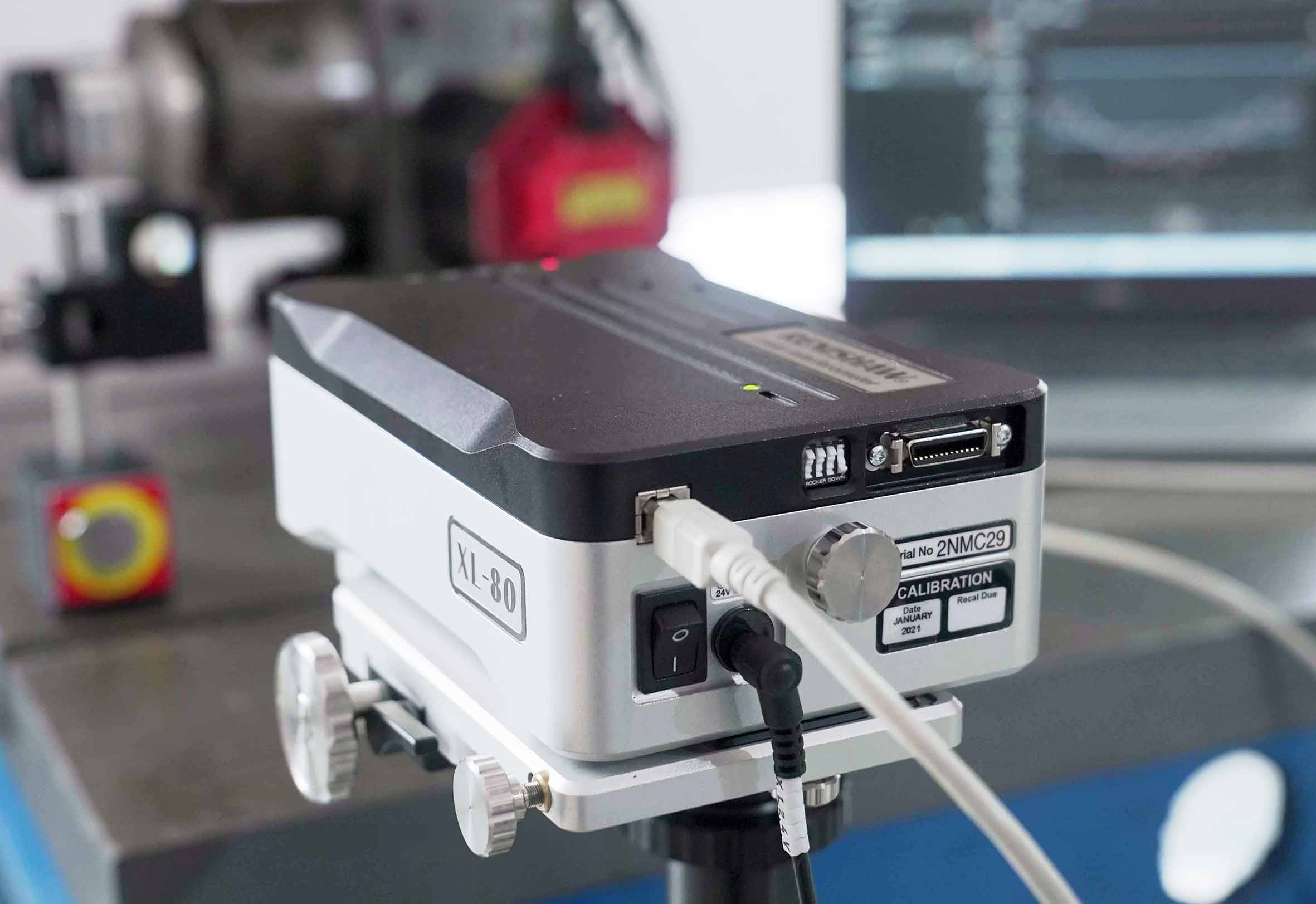
Laser interferometer-based verification of indexing repeat positioning in customized cam indexers.
Positioning Accuracy: A Quantified Baseline
Industry references generally describe cam indexer precision as micrometer-level to ensure repeatable positioning. In practical specifications, HONEPAN lists positioning accuracy of ±30″ ±15″ and repeat positioning accuracy of ±10″ ±2″ across most cam indexer output families, including shaft output (DS), flange output (DF), hollow flange (DFH), shaft & flange output (DFS), and table output (DT). For CNC 4-axis cam rotary tables, repeat positioning accuracy is listed at ±4″ ±2″. These figures provide a baseline against which custom requirements can be compared, and they give a buyer a concrete parameter to verify in the quality inspection report.
A Multi-Continent Reference: Cam Indexers in Pharmaceutical Packaging
The value of customization is best demonstrated by a deployment where machine builders needed reliable motion indexing and control, not just a component sale. HONEPAN's project records include an installation of 10 units implemented across multiple countries on different continents, used for motion indexing, control, power transmission, and support in the pharmaceutical and medical packaging machinery sector.
The application range in this sector is broad: oral liquid filling machines, eye drops filling machines, capsule filling machines, pharmaceutical cartoning machines, syringe assembly/printing/fitting machines, indwelling needle assembly machines, glass bottle ink printing machines, and capsule making machines. These machines typically combine continuous input with intermittent output, which is precisely the motion profile a roller gear cam indexer is designed to handle.
The documented result of the project: reliable operation for 7 to 12 years, direct replacement of damaged indexers, high customer recognition, and multiple repeat orders. For procurement decision-makers, the meaningful point is not a single number but the pattern: the units performed across a long service period, and the customer chose to re-order rather than switch suppliers.
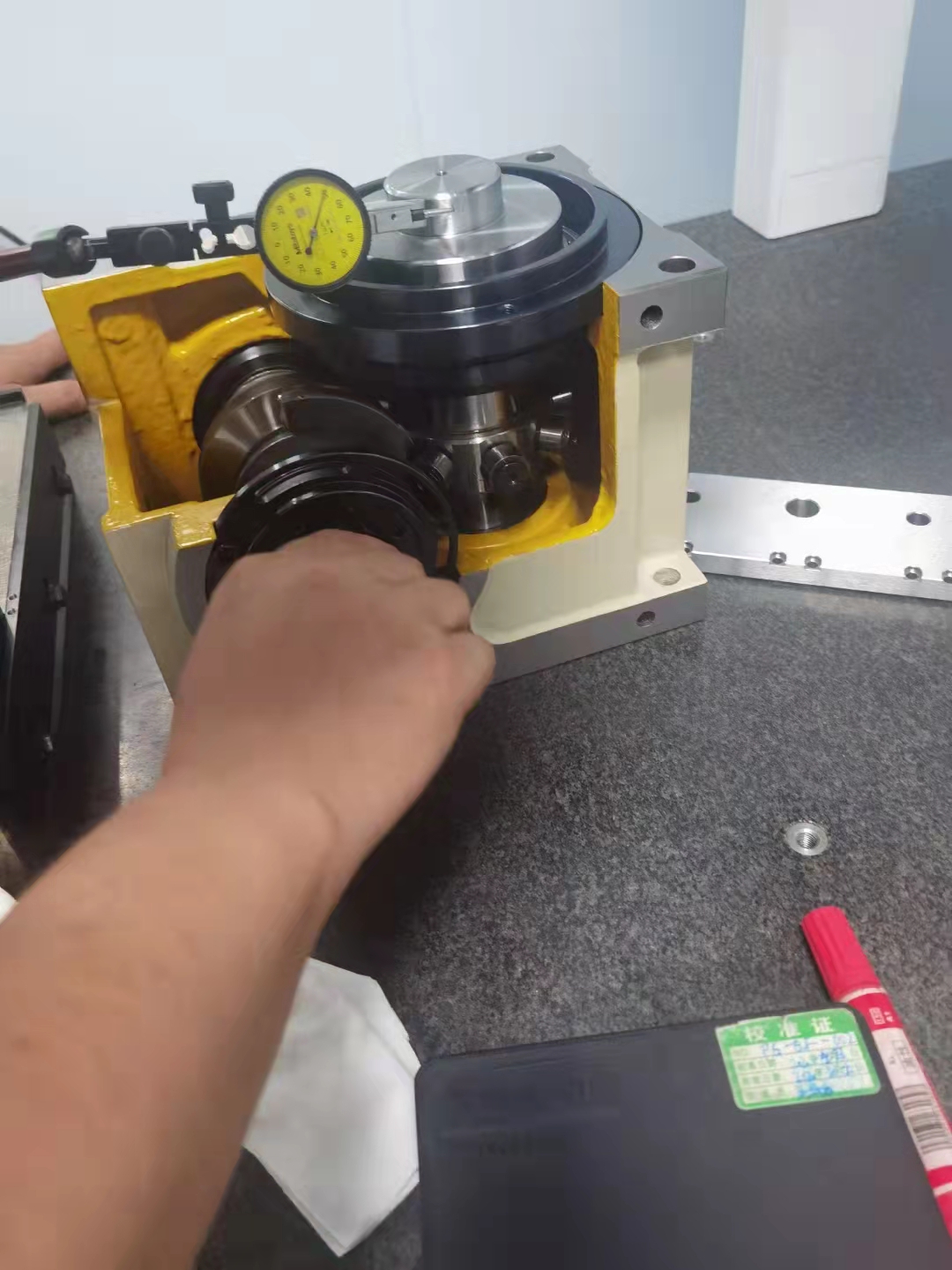
Shaft runout detection, one of the standard verification steps in HONEPAN's production process.
Market Context: Why Customization Is Becoming a Standard Expectation
The broader market surrounding cam indexer manufacturing supports the trend toward customized supply. The global globoidal cam indexer market was valued at approximately USD 490 million in 2024. The rotary indexer market is projected to grow from USD 1.812 billion in 2025 to USD 2.904 billion by 2035, at a CAGR of 4.83%. Asia-Pacific is identified as the largest and fastest-growing region for rotary indexers, driven by investments in automotive and electronics manufacturing.
Within this growing market, industrial cam indexers often comply with ISO 9001 for quality management, and integrated manufacturing systems follow ISO 11161 for safety. HONEPAN's ISO 9001 certification, registered under certificate number 064-15-Q-1196-R0-M by Beijing Standard Certification Centre, positions it within this compliance framework.
What these data points suggest for suppliers is that the competitive boundary is shifting. Standard model availability is a baseline requirement. Engineering capacity to adapt, verify, and document non-standard configurations is the next differentiator.
Custom Cam Indexers vs. In-House Modification: A Realistic Comparison
Buyers sometimes weigh custom cam indexer procurement against modifying a standard model in-house or through a local machine shop. The comparison depends on the nature of the required change.
Custom manufacturing from an indexer specialist offers several practical advantages. The supplier controls the cam profile, material selection, heat treatment, grinding, and assembly as an integrated process. Testing is performed with the same equipment used for standard production, and the finished unit is backed by a documented quality inspection report. For a machine builder, this reduces interface risk: the component arrives ready to install, with geometry and performance validated.
In-house modification, by contrast, starts with a product that was not designed for the intended change. Re-machining a housing or altering an output shaft may affect preload, alignment, and sealing. These effects often do not appear immediately; they show up later as accelerated wear, noise, or positioning drift. The cost of modification can appear lower on paper, but the engineering risk is shifted onto the buyer.
A reasonable limitation of custom manufacturing is lead time. While HONEPAN states a lead time of 4 to 15 days for its OEM/ODM production runs, a fully customized cam indexer with a non-standard cam profile or unusual materials may require more engineering discussion before production starts, depending on the complexity of the request. Buyers with an immediate downtime emergency and a standard, replaceable indexer may find a stock replacement faster than a custom build. Customization should be evaluated as a design-phase capability, not as an emergency repair service.
Procurement Relevance: How to Evaluate a Custom Cam Indexer Supplier
For buyers moving from evaluation to execution, the following criteria are directly useful when comparing suppliers of customized cam indexers:
- Customization scope: Confirm which dimensions can be changed, ideally in writing: specifications, parameters, materials, appearance, craftsmanship, and quality inspection reports.
- Production capacity: Monthly output and number of CNC machining centers indicate whether the supplier can handle non-standard orders without disrupting standard production. HONEPAN reports 5,000 units per month capacity and more than 90 CNC machining centers.
- Verification equipment: Look for documented measurement capability, including three-coordinate detection, laser interferometer, and hardness testing.
- Quality management: ISO 9001 certification is a common baseline; HONEPAN was among the first in its industry to obtain it.
- Reference projects: Ask for application examples with verifiable operating duration and repeat orders, such as the 7-to-12-year pharmaceutical packaging machinery deployment cited above.
- Acceptance options: Choose a supplier that offers multiple acceptance methods, such as picture acceptance, video acceptance, report acceptance, and on-site acceptance. HONEPAN supports all four.
Outlook: Custom Engineering as the Next Standard
The direction of the market is consistent: as automation lines become faster and more product-specific, the demand for cam indexers that match a particular machine layout will increase. Suppliers with in-house cam processing, material selection capability, and precision verification equipment are better positioned to support machine builders in filling, packaging, printing, assembly, welding, and conveying systems.
For buyers, the practical takeaway is that customization should be evaluated as a manufacturing capability, not as a service add-on. The relevant questions are: Does the supplier have the equipment to make the cam? Do they test the finished assembly? Can they document the result? And can they do it within a lead time that fits the project? HONEPAN's operating data offers a reference point for each of these questions.
Frequently Asked Questions
Can a cam indexer be customized for specific production line requirements?
Yes. The manufacturer offers a wide range of standard products and provides custom-made products according to specific requirements.
What customization options does HONEPAN offer for cam indexers?
HONEPAN provides customization across specifications, parameters, materials, appearance, craftsmanship, and quality inspection reports.
What is the minimum order quantity for custom cam indexers?
The minimum order quantity is 1 unit, which allows machine builders to evaluate a customized cam indexer before committing to larger volume orders.
How long does it take to receive a customized cam indexer?
Standard OEM/ODM production runs at HONEPAN have a lead time of 4 to 15 days, supported by a monthly production capacity of 5,000 units.
Which industries have applied HONEPAN custom cam indexers?
HONEPAN cam indexers have been successfully used by clients in the pharmaceutical and medical packaging machinery sector, including oral liquid filling machines, capsule filling machines, and syringe assembly machines, among others.
How is the quality of a customized cam indexer verified?
All production is subject to 100% testing. HONEPAN uses three-coordinate detection, projection detection, hardness testing, shaft runout detection, and laser interferometer measurement as part of its quality control process.
For further technical details on HONEPAN's product range and engineering capabilities, the company brochure is publicly available: Download HONEPAN Corporate Brochure (PDF).