
Beyond the Catalog: OEM Blister-Cartoning for Pharma Lines
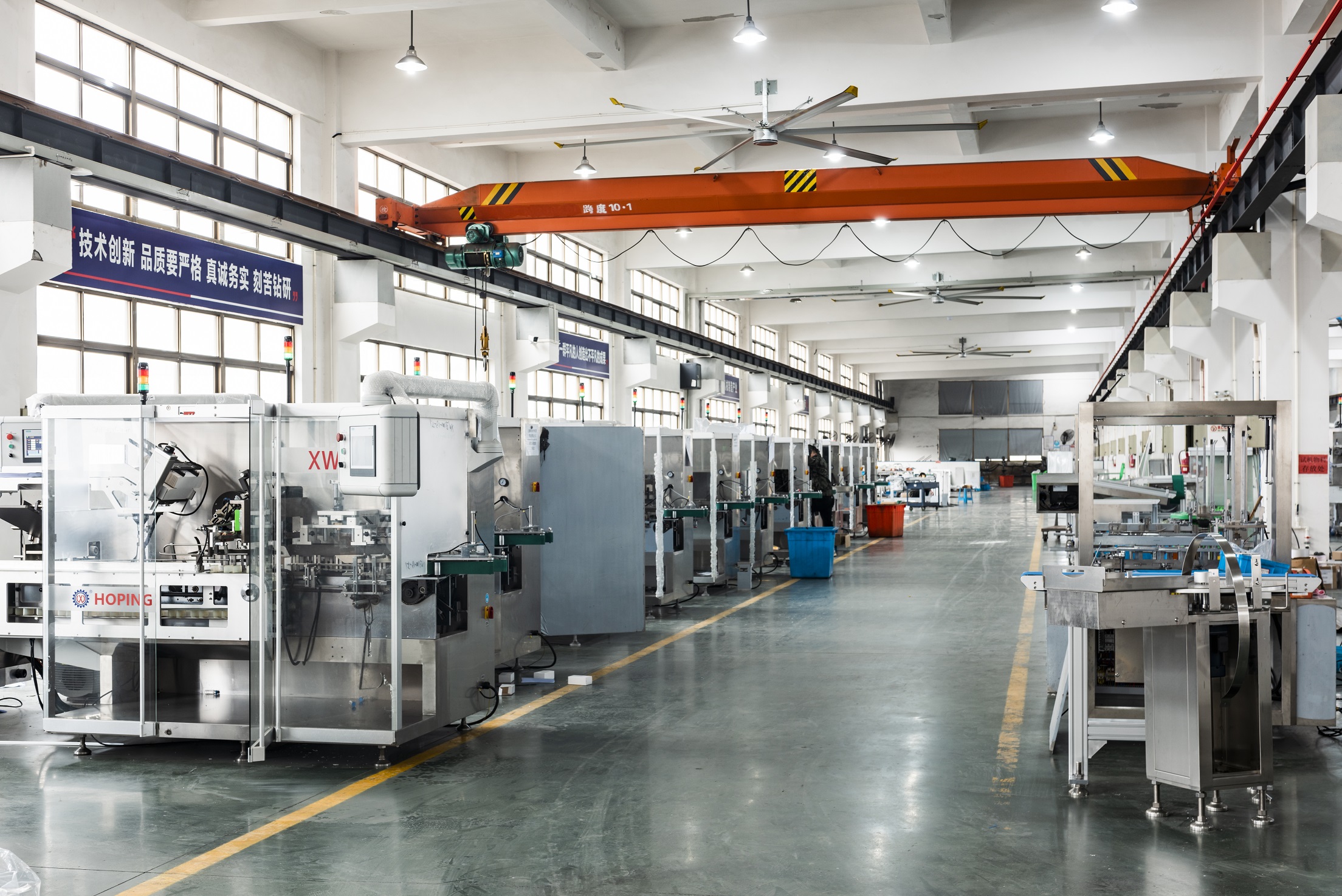
HOPING's cartoner workshop — customized pharmaceutical cartoning machines are built, tested, and prepared for FAT on-site.
Zhejiang Hoping Machinery Co., Ltd. (HOPING) is a pharmaceutical packaging machinery manufacturer based in Ruian, Zhejiang Province, China, that designs and builds blister packaging machines, cartoning machines, case packing machines, and end-of-line packaging equipment. Since 2001, the company has run a production facility of 28,800 square meters with more than 300 employees and a 56-engineer R&D team, and it reports an annual output of 500 units. For procurement teams moving from evaluation to execution, HOPING's OEM and customization capabilities for integrated blister-cartoning lines determine whether a pharmaceutical packaging machine can be adapted to a specific product portfolio, facility layout, and regulatory requirement — or whether the production process must adapt to the machine.
The Evaluation Problem: Format Flexibility vs. Manual Handling
Pharmaceutical packaging line procurement is typically benchmarked on throughput, compliance, and total cost of ownership. In practice, a fourth factor — the degree to which the line can be customized — often decides whether the equipment performs as intended after commissioning. Solid-dosage portfolios commonly include multiple tablet and capsule geometries, PVC and Alu-Alu blister materials, different carton formats, and market-specific leaflet and coding requirements. A line that cannot accommodate this variation forces the manufacturer either to compromise on package design or to introduce manual handling between the blister station and the cartoning station.
Manual transfer and leaflet insertion are precisely the failure points identified in a documented project involving a large pharmaceutical manufacturer and solid-dosage production company. The case addresses the problem of manual transfer and leaflet insertion errors in pharmaceutical packaging for blister packaging and automatic cartoning of tablets, capsules, and other solid dosage forms. The project was designed for new line construction, capacity expansion, or upgrading existing packaging lines, at a scale of 5 to 10 packaging lines.
The opportunity, therefore, is to treat the packaging machine as a configurable system rather than a fixed specification. This requires a supplier with OEM experience, a clearly defined customization scope, and a production process that can deliver format-specific tooling without disrupting the project schedule.
OEM and Customization: HOPING's Production Model
HOPING provides ODM, OEM, and customizable production services for pharmaceutical packaging lines. The customization scope spans the packaging process chain:
- Blister dimensions and blister materials
- Quantity per carton and carton specification
- Leaflet format
- Coding/inspection method
- Feeding method
- Downstream bundling / case-packing / palletizing connection
- Interface language
- Electrical component brand
- Data interface
These parameters matter because a blister-cartoning line is not a single machine but a sequence of linked modules — forming, sealing, feeding, transferring, leaflet folding, carton opening, product insertion, closing, and inspection — plus optional downstream stations. Each module can be configured independently. A tablet manufacturer requiring moisture-resistant protection can specify Alu-Alu blister materials. A site governed by a particular control-system standard can specify the electrical component brand. A line intended for a specific export market can be delivered with the required interface language and data interface.
Production capability is sized for single-line projects. The minimum order quantity is 1 set or 1 complete line; monthly production capacity is 30 to 40 units; and typical lead time is 60 to 120 days after technical confirmation, with the final lead time subject to model, configuration, project complexity, and contract terms. Because lead time is counted from technical confirmation, the specification phase effectively determines the delivery date — a point worth planning into any project timeline.
Quality control follows a defined sequence: incoming material inspection, key component inspection, assembly inspection, electrical safety check, no-load trial run, material trial, factory acceptance test (FAT), customer witness acceptance, and pre-shipment inspection. For export projects, acceptance can include FAT before shipment and SAT at the customer site; third-party inspection can be arranged according to customer requirements.
Technical Architecture of Integrated Blister-Cartoning Lines
Integrated blister-cartoning lines from HOPING are built around fully servo-driven platforms in the DHL series. The table summarizes the principal models and their rated capacities.
| Model | Blister capacity | Carton capacity | Transfer system | Control platform |
|---|---|---|---|---|
| DHL6004 | up to 600 blisters/min | up to 400 cartons/min | Servo-driven high-speed linkage | Beckhoff motion controller + CP9315 industrial PC |
| DHL7004 | up to 700 blisters/min | up to 400 cartons/min | IRB24 intelligent transfer robot | Siemens motion controller + TP900 HMI |
| DHL7005H | up to 700 blisters/min | up to 500 cartons/min | IRB24 intelligent transfer robot | Siemens motion controller + TP900 HMI |
| DHL8005H | up to 800 blisters/min | up to 500 cartons/min | D3 top-loading parallel tracking transfer | Beckhoff motion controller + CP9315 industrial PC |
| DHL1000/5H | up to 1000 blisters/min | up to 500 cartons/min | D3 top-loading parallel tracking transfer | Beckhoff motion controller + high-bus industrial control |
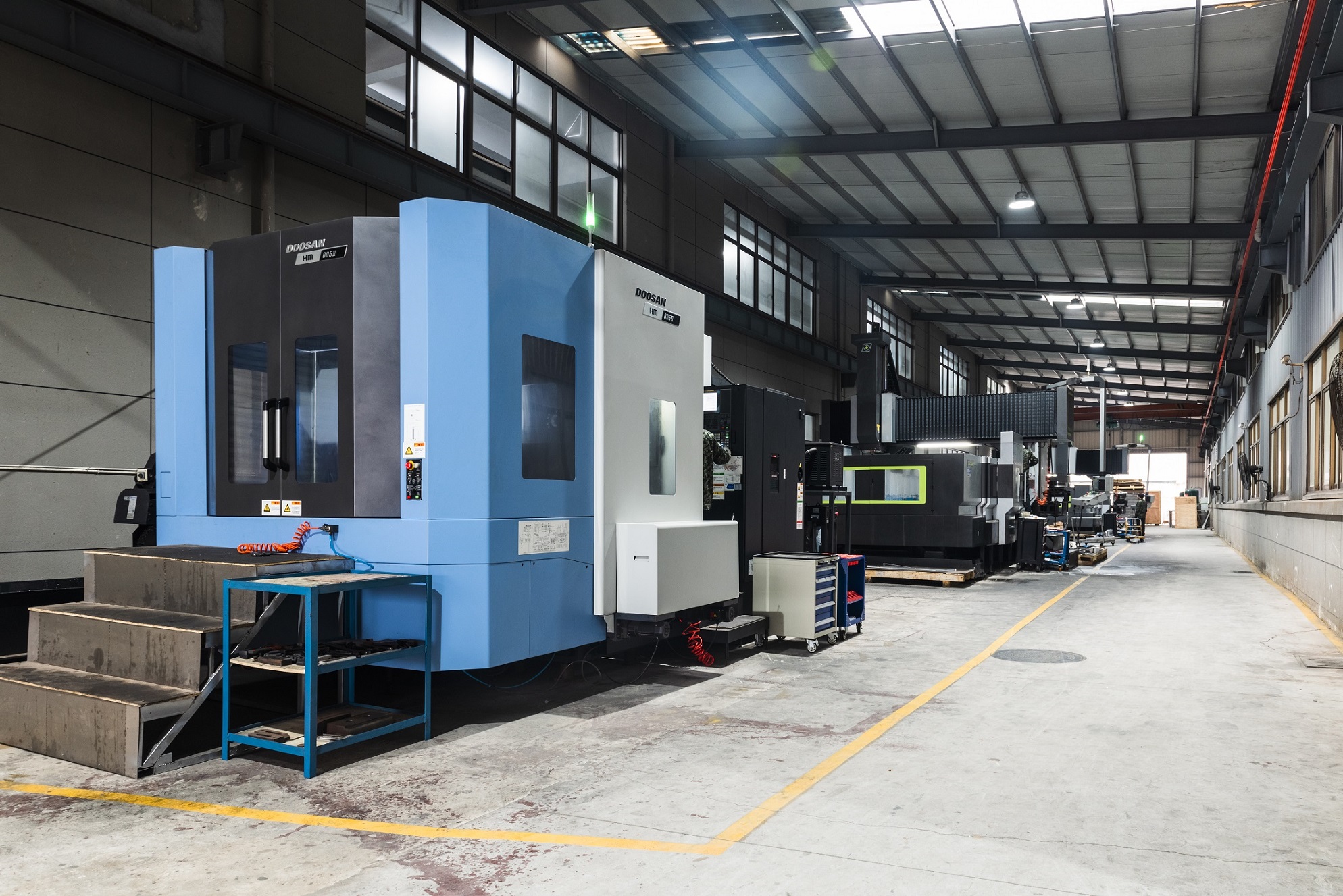
In-house gantry machining supports format-specific tooling and structural components for customized blister-cartoning lines.
The transfer system between the blister station and the cartoner is the element that determines line reliability. On higher-capacity models, the D3 top-loading parallel tracking transfer system or the self-developed IRB24 intelligent transfer robot replaces manual placement, which is the main source of wrong-insertion and missing-leaflet errors. Continuous operation is supported by PVC/Alu foil auto-splicing and servo-driven independent replenishment — a four-channel system on the DHL1000/5H and a three-channel system on the DHL8005H. Recipe memory and mold-change functions store parameters for different blister and carton formats, shortening changeover between batches.
For lines that also require flow wrapping before cartoning, the IXW600 and IXW800 combine blister packing, flow wrapping, and cartoning in one linked line. The IXW800 is rated up to 600 blisters/min, 600 packs/min, and 500 cartons/min; the IXW600 is rated up to 600 blisters/min, 300 packs/min, and 300 cartons/min. Both use rotary reciprocating flow-wrapper technology and PVC/Cold Alu auto splicing. For liquid dosage, the IXW400 integrates blister packaging and cartoning for filled syringes, ampoules, and cartridges at up to 400 blisters/min and 150 cartons/min.
Machine construction follows GMP-oriented design. On models such as the DPP260T1 platen blister machine and the DPH320HII rotary blister machine, product-contact parts are AISI 316L stainless steel and FDA-compliant pharmaceutical-grade materials, while non-product-contact parts are AISI 304 stainless steel and anodized aluminum alloy. Enclosures use transparent safety guards, and surfaces are designed for corrosion resistance and cleaning.
Beyond the blister-cartoning core, downstream modules extend the line to secondary packaging. A configuration combining the XWZ300II cartoning machine, XWK4060 stretch bander, and ICP12 case packing and palletizing machine supports cartoning at 60-220 cartons/min, bundling at 30-60 bundles/min, and case packing at about 12 cases/min.
Application Scenarios Across Dosage Forms
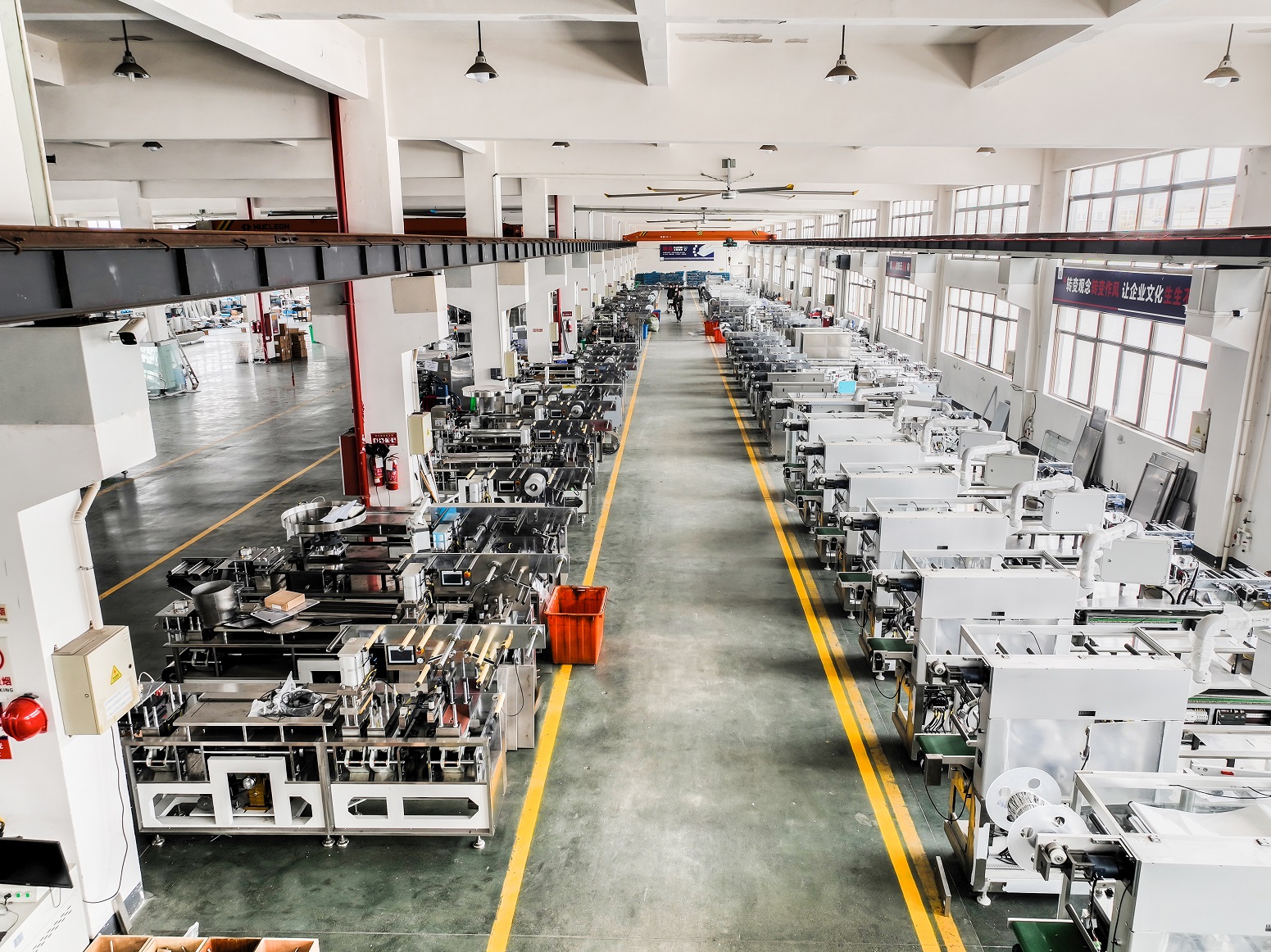
Customized blister machines are assembled and trial-run in the dedicated blister machine workshop.
High-capacity solid dosage. A manufacturer running large batch sizes across multiple lines can use the DHL1000/5H as the backbone of a turnkey line, with up to 1000 blisters/min feeding up to 500 cartons/min. The four-channel replenishment system sustains throughput over long runs, and the D3 transfer system keeps blisters aligned through the cartoning station.
Alu-Alu blister protection. Products sensitive to moisture or light can be run on DPH and DPP series machines that support Alu-PVC and Alu-Alu materials. The DPH Series roller machines cover 60-200 cycles/min; the DPP Series flat machines cover 20-50 cycles/min for smaller batch volumes.
Liquid dosage forms. Pre-filled syringes, ampoules, and cartridges require handling geometry that differs from tablets. The IXW400 line integrates blister packaging and cartoning for these formats at up to 400 blisters/min and 150 cartons/min, with product-contact and format parts customized by product geometry.
Vial packaging. For vial products, a line configuration combining labeling, DPP blister packing, XWZ cartoning, and XWK stretch banding covers labeling, blister forming/sealing, cartoning, and secondary banding in one sequence. Line capacity and dimensions are customized according to vial size, blister format, carton format, and project layout.
Flow-wrapped blister packs. Where the carton must contain a pillow-wrapped blister — common for moisture-sensitive products — the IXW600 and IXW800 combine all three processes, and the DPH320H-XW8200-XWZ300II configuration provides a modular alternative at 300-600 blisters/min, 50-200 packs/min, and 50-220 cartons/min.
Case context. The documented project involves a large pharmaceutical manufacturer and solid-dosage production company. Representative project objectives include improving packaging automation, reducing manual transfer, improving blister-to-carton connection efficiency, reducing wrong-insertion and missing-leaflet risks, and supporting downstream automation integration. The scale — 5 to 10 packaging lines — and the suitability for new line construction, capacity expansion, or line upgrading make this a typical OEM engagement pattern.
Market Context and Procurement Trends
Market data points to sustained demand for pharmaceutical packaging equipment. According to SkyQuest Technology, the global pharmaceutical packaging equipment market was valued at approximately USD 10.71 billion in 2024. Custom Market Insights projects the pharmaceutical blister packaging machine market to reach USD 2.57 billion by 2025, with a CAGR of 2.8%. Fortune Business Insights valued the global cartoning machinery market in the pharmaceutical sector at USD 1.46 billion in 2024. Regionally, Grand View Research reports that Asia Pacific held the largest revenue share — 40.7% — of the pharmaceutical packaging equipment market in 2025.
Compliance requirements continue to shape equipment design. Pharmaceutical packaging machines must comply with ISO 15378, which integrates GMP requirements for primary packaging materials, and EU equipment safety is governed by the Machinery Directive 2006/42/EC and the EN 415 series for packaging machines. HOPING holds CE certificates covering its blister packing machine series and cartoning machine series, and maintains ISO 14001:2015 environmental management and ISO 45001:2018 occupational health and safety certifications.
The blister packaging machine market is not dominated by a single vendor: the top three players — Uhlmann, IMA, and Marchesini — collectively hold approximately 29% of the market, according to MarketsandMarkets. That concentration level leaves room for manufacturers serving regional and mid-volume demand. HOPING exports to Southeast Asia, the Middle East, Eastern Europe, South America, and Africa, with approximately 25% of output sold outside China — a structure that supports buyers seeking a supplier with established export logistics and service arrangements.
Integrated Lines vs. Traditional Standalone Setups
Compared with a traditional setup of standalone blister machines and a separate cartoning machine, an integrated blister-cartoning line offers several structural advantages: a single control architecture (Siemens or Beckhoff), one transfer system between stations, and a defined inspection/rejection point before carton closing. These features reduce the manual handling steps that create wrong-insertion and missing-leaflet risks, and they shorten the physical footprint of the line.
The honest trade-off is engineering lead time and specification discipline. An integrated, customized line requires the buyer to confirm blister format, carton format, leaflet format, and feeding method before production starts, and the typical lead time is 60 to 120 days after technical confirmation. For a buyer that needs to test many unpredictable formats in rapid succession, a standalone machine may offer more short-term flexibility. The integrated approach pays back once the product range is defined and the cost of manual handling — labor, error rate, and line stoppages — is included in the calculation.
Future Outlook
Looking ahead, the direction of pharmaceutical packaging equipment is toward greater integration. Servo-driven motion, recipe memory, and mold-change functions reduce changeover time, which becomes more important as batch sizes vary and product portfolios expand. Downstream automation — bundling, case packing, and palletizing — is increasingly incorporated into line design at an early stage, so that secondary packaging is planned together with primary packaging rather than retrofitted later.
For buyers, the practical implication is to evaluate a supplier's capability depth before comparing catalog prices. The combination of OEM engineering, GMP-oriented construction, and defined quality-control and acceptance procedures is what turns a packaging machine purchase into a reproducible production process.
FAQ
Q: What customization options are available on HOPING pharmaceutical packaging machines?
A: Customization covers blister dimensions, blister materials, quantity per carton, carton specification, leaflet format, coding/inspection method, feeding method, downstream bundling/case-packing/palletizing connection, interface language, electrical component brand, and data interface. HOPING provides ODM, OEM, and customizable production services.
Q: What is the minimum order quantity for a customized blister-cartoning line?
A: The minimum order quantity is 1 set or 1 complete line. This applies both to individual machines and to fully integrated lines.
Q: What is the typical lead time for a customized packaging line?
A: Typical lead time is 60 to 120 days after technical confirmation. Final lead time is subject to model, configuration, project complexity, and contract terms.
Q: How is quality controlled before shipment?
A: The sequence includes incoming material inspection, key component inspection, assembly inspection, electrical safety check, no-load trial run, material trial, FAT, customer witness acceptance, and pre-shipment inspection.
Q: What delivery and acceptance terms are available for export buyers?
A: Delivery options include EXW Ruian/Wenzhou, FOB Ningbo or Shanghai, and CIF/CFR destination port, subject to contract. Acceptance includes technical agreement confirmation, sample testing, FAT before shipment, SAT at the customer site, and optional third-party inspection.
Q: Which dosage forms are supported by the integrated lines?
A: The lines are used for blister packaging and automatic cartoning of tablets, capsules, and other solid dosage forms. The IXW400 additionally handles liquid dosage formats such as pre-filled syringes, ampoules, and cartridges. Vial packaging is covered by the Labeling + DPP + XWZ + XWK line configuration.
Q: What does the referenced case study involve?
A: The case involves a large pharmaceutical manufacturer and solid-dosage production company. It addresses manual transfer and leaflet insertion errors and was designed for new line construction, capacity expansion, or upgrading existing packaging lines, at a scale of 5 to 10 packaging lines. Customer identity is disclosed only with authorization.
Contact HOPING for OEM packaging line configuration
Zhejiang Hoping Machinery Co., Ltd. — HOPING brand
Contact: Monica — Email: monica@xwbj.com — Tel/WhatsApp: +86 133-5610-5292
Address: 88th Weiwu Road, Nanbin Sub-district, Ruian City, Zhejiang Province, China