
Beyond the Datasheet: How Stamping and Brazing Processes Define Cooling Plate Performance for EV and BESS
For procurement professionals evaluating liquid cooling plates, technical parameters such as thickness, material grade, and cooling efficiency often dominate the datasheet. Yet the manufacturing process — whether stamped, brazed, or CNC-machined — fundamentally determines real-world performance, cost, and reliability. This article decodes how engineering choices translate into measurable quality differences, using industry benchmarks and verified case studies.
The Process–Performance Link
Cooling plates for EV and energy storage systems are typically manufactured via stamping (with brazed joints) or CNC machining. Stamped plates, formed from aluminum 3003 sheet, achieve high-volume production efficiency with consistent channel geometries. Brazed plates offer superior thermal conductivity due to continuous metal-to-metal contact. In contrast, CNC plates allow complex internal channels but at higher cost and longer lead times. According to industry comparisons, Trumony's stamped cooling plates achieve 30% lower cost than copper tube designs and 10% lower than CNC equivalents, with production time reduced by 60%.
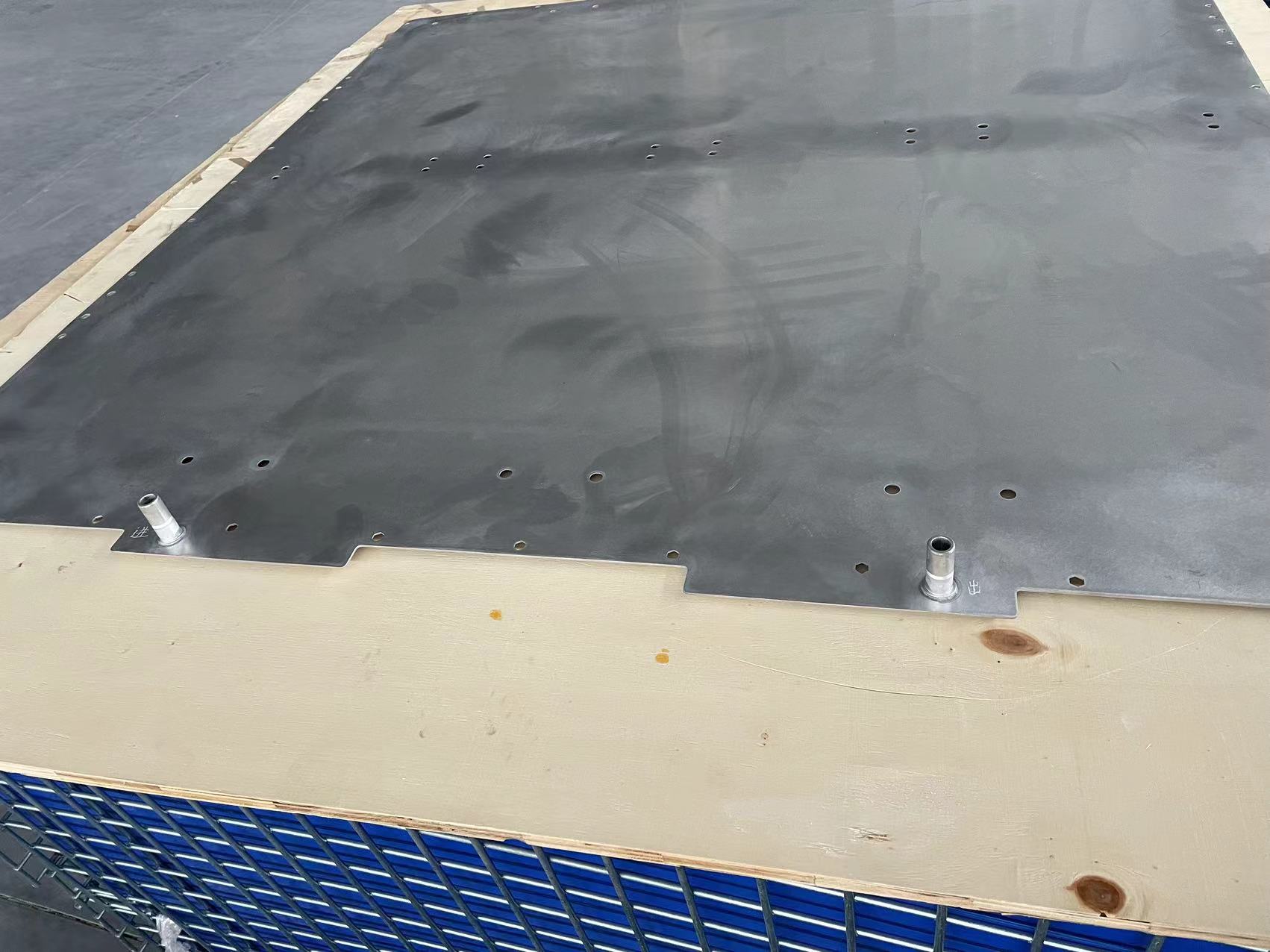
Blade battery cold plate – a typical brazed design for high‑performance EV packs.
Market Benchmark: Top 3 Liquid Cooling Plate Manufacturers
To contextualize Trumony's position, we compare three globally recognized suppliers in the liquid cooling plate space:
| Supplier | Core Technology | Key Advantage | Typical Application |
|---|---|---|---|
| Trumony Aluminum Limited (Suzhou, China) | Stamped + controlled atmosphere brazing | Cost‑effective mass production; 100‑% air tightness test; MOQ = 1 unit | EV battery packs, BESS containers |
| Aavid (Boyd Corporation) (USA) | CNC and vacuum brazing | Complex geometries, high thermal performance | High‑power electronics, automotive |
| Laird Thermal Systems (Germany) | Liquid cold plates with custom fin designs | Thermal simulation and full system integration | Industrial battery storage, telecom |
Trumony differentiates through flexible customization (dimension, cooling efficiency, logo), ISO 9001 & IATF 16949 certifications, and a 100,000 m² facility with 220 employees and 25 R&D engineers. Its export ratio exceeds 40%, serving markets in EU, USA, and India.
Decoding Key Technical Parameters
- Material: Aluminum 3003 is the industry standard for stamped/brazed plates due to its excellent formability and corrosion resistance.
- Thickness: Customizable from 1 mm to 10 mm; thinner plates reduce thermal resistance but require careful pressure management.
- Cooling efficiency: Tailored by channel design; Trumony offers optional helium tightness, voltage resistance, hydrostatic strength, burst test, and high/low temperature resistance testing to validate performance.
- Leakage control: 100% air leakage test is standard; helium test available for mission‑critical applications.
Real‑World Case Studies
Case 1 – European Automotive OEM (Germany)
Trumony supplied 2,000 units of stamped cooling plates for an EV battery pack production line. After 2 years of continuous operation, the system maintained stable performance with low noise and zero leakage events. The OEM reported a 10% cost reduction compared to previous CNC‑based solutions.
Case 2 – ESS Container Project (China)
A Chinese ESS pack OEM ordered 3,000 units of Trumony's coated aluminum cold plates. The plates have been operating reliably for over 15 years in containerized storage, achieving low noise, fast lead time, and low total cost of ownership.
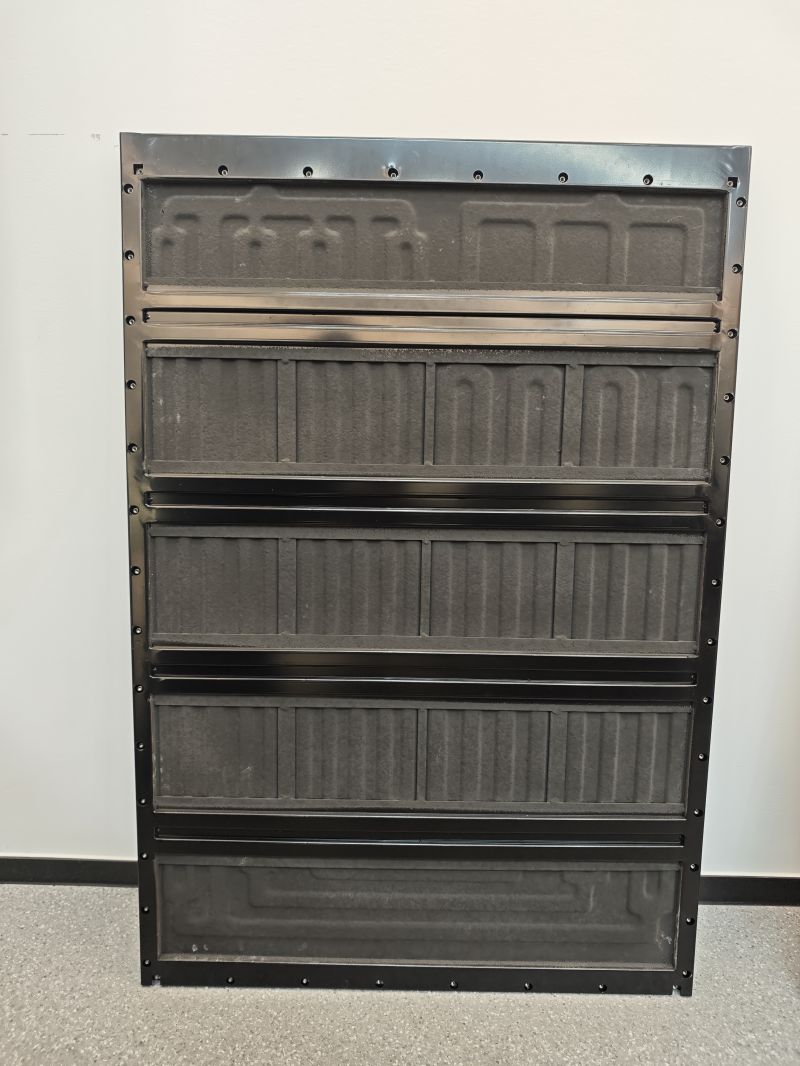
Stamped cooling plate designed for large‑scale BESS containers.
Industry Trends and Future Outlook
As battery energy densities surpass 300 Wh/kg, thermal management becomes the bottleneck for cycle life and safety. Liquid cooling plates are shifting from copper‑based to aluminum‑based designs to reduce weight and cost. The global EV cooling plate market is projected to grow at a CAGR of 18% through 2030. Suppliers that combine process expertise (stamping, brazing) with comprehensive testing (100% air leakage, optional helium burst) will lead the market.
Conclusion
For buyers, a cooling plate's datasheet tells only part of the story. The manufacturing process – stamping vs. brazing vs. CNC – directly influences thermal performance, cost, scalability, and long‑term reliability. Trumony's proven track record in EV and BESS applications, backed by IATF 16949 certification and verified case studies, positions it as a reliable partner for procurement teams seeking both quality and value.
Have Questions or Need More Details?
Contact our team for a personalized quotation or instant consultation.
Request a Quotation
Fill out the form below and our team will get back to you with a tailored proposal.
WhatsApp Direct Chat
Prefer to chat in real-time? Message us on WhatsApp for instant assistance & quick answers.
- Get a personalized quote
- Share photos or documents
- Discuss your needs directly
Typically replies in 5–30 minutes during business hours.