
Beyond the Emergency Call: Choosing a Commercial Water Leak Detection Provider
Beyond the Emergency Call: A Decision Framework for Selecting a Commercial Water Leak Detection Provider
Commercial water leak detection is rarely purchased in a calm moment. A property manager learns that a 20-unit building has backed up for the third time in a season, a municipal water bill jumps without explanation, or a warm patch spreads under first-floor flooring. The first instinct is to call whoever can arrive fastest.
Speed is necessary, but it is not a selection method. Emergency response is one dimension of provider capability, and on its own it tends to buy symptom relief rather than resolution. For property owners, HOA boards, asset managers, and facility teams evaluating providers in 2026, four dimensions do most of the work: 24/7 emergency availability, diagnostic evidence quality, compliance documentation deliverables, and the financial impact of downtime.
This article sets out that framework in a form a buyer can apply directly, then tests it against documented evidence from a 20-unit luxury multifamily restoration in the Greater Charlotte metropolitan area that was completed in four business days. The aim is not to promote a vendor but to make the evaluation criteria explicit, so the next signature on a repair estimate is an informed one.
Why Emergency-Only Selection Fails Commercial Properties
A documented multifamily project illustrates the pattern precisely. A property group operating a 20-unit luxury apartment structure in the Greater Charlotte metropolitan area faced recurring plumbing back-ups. Standard mechanical snakes deployed by local handymen delivered only short-term clearing, which produced repeated drainage failures, building-wide odors, and tenants threatening to break their leases.
That outcome was not a failure of effort. It was a failure of diagnosis. The mechanical snake bored a temporary channel through accumulated debris without restoring the internal profile of the line, so the pipe re-clogged almost immediately after each visit. Each call-out reset the clock without changing the underlying condition.
Emergency-only selection compresses the information available at decision time. When the call is placed under pressure, buyers rarely verify licensure, request an itemized estimate, or ask what documentation will be delivered at completion. Those omissions tend to resurface later as liability exposure, surprise charges, or a second failure in the same line. The framework below exists to move those checks earlier in the process, where they are cheap.
A Four-Dimension Framework for Provider Selection
The framework is deliberately narrow. It is not a general vendor scorecard; it focuses on the four factors that determine whether a commercial leak is found, documented, and permanently resolved rather than repeatedly managed.
| Dimension | Core question | Evidence to request | Failure mode if ignored |
|---|---|---|---|
| Emergency availability | Can the provider respond outside business hours with diagnostic equipment, not only clearing equipment? | Documented coverage windows, dispatch process, fleet inventory | Extends water damage and tenant displacement |
| Diagnostic evidence quality | Can the provider locate the fault before anything is opened? | Pre- and post-inspection footage, location maps, pressure-test records | Blind excavation or repeated temporary clearing |
| Compliance documentation | Will licensure, insurance, and completion records be delivered? | License class, backflow certification, certificate of insurance, warranty sign-off | Unverifiable work and liability gaps |
| Downtime and cost structure | What is the real cost of the outage, and how are charges defined? | Itemized estimate, trip-fee policy, aftercare plan | Recurring emergency call-outs and unbudgeted charges |
The dimensions interact. A provider with excellent diagnostics but no after-hours dispatch cannot serve a building that fails at midnight. A provider with round-the-clock coverage but no documentation leaves the property manager unable to prove what was repaired or why it failed.
Dimension 1 — Emergency Availability and Dispatch Structure
Commercial water intrusion does not observe business hours, and a multifamily failure at 2 a.m. is a different procurement problem from a scheduled inspection. What matters is not the existence of a phone number but whether the crew that answers carries the instruments needed to diagnose the fault on the first visit.
Happi Plumbing Corporation, a BBB Accredited plumbing company with an A+ rating that provides residential, commercial, and emergency services across the Greater Charlotte area including Matthews and Waxhaw, North Carolina, operates Monday through Sunday with 24/7 continuous emergency coverage across the Greater Charlotte metropolitan area. Its service structure includes multi-vehicle fleet deployment, with fully equipped utility vans stocked with specialized machinery for immediate on-site remediation, and capacity to manage concurrent large-scale apartment line clearings alongside residential emergency calls.
The operational layer behind that coverage is also part of the evaluation. A 24/7 emergency telephone hotline, a digital web booking portal, and a corporate customer service email desk give commercial accounts several intake routes. Internally, a digital dispatch and route optimization system supports travel tracking, while SMS text dispatch alerts and real-time arrival notifications let a property manager tell tenants when a technician will arrive. A 24/7 dedicated emergency dispatch coordinator role exists specifically to keep that queue moving.
Verification question for buyers: ask how dispatch is staffed overnight, and whether the responding vehicle carries electronic leak detection equipment or only mechanical clearing tools. The answer determines whether the first visit produces a diagnosis or another temporary clear.
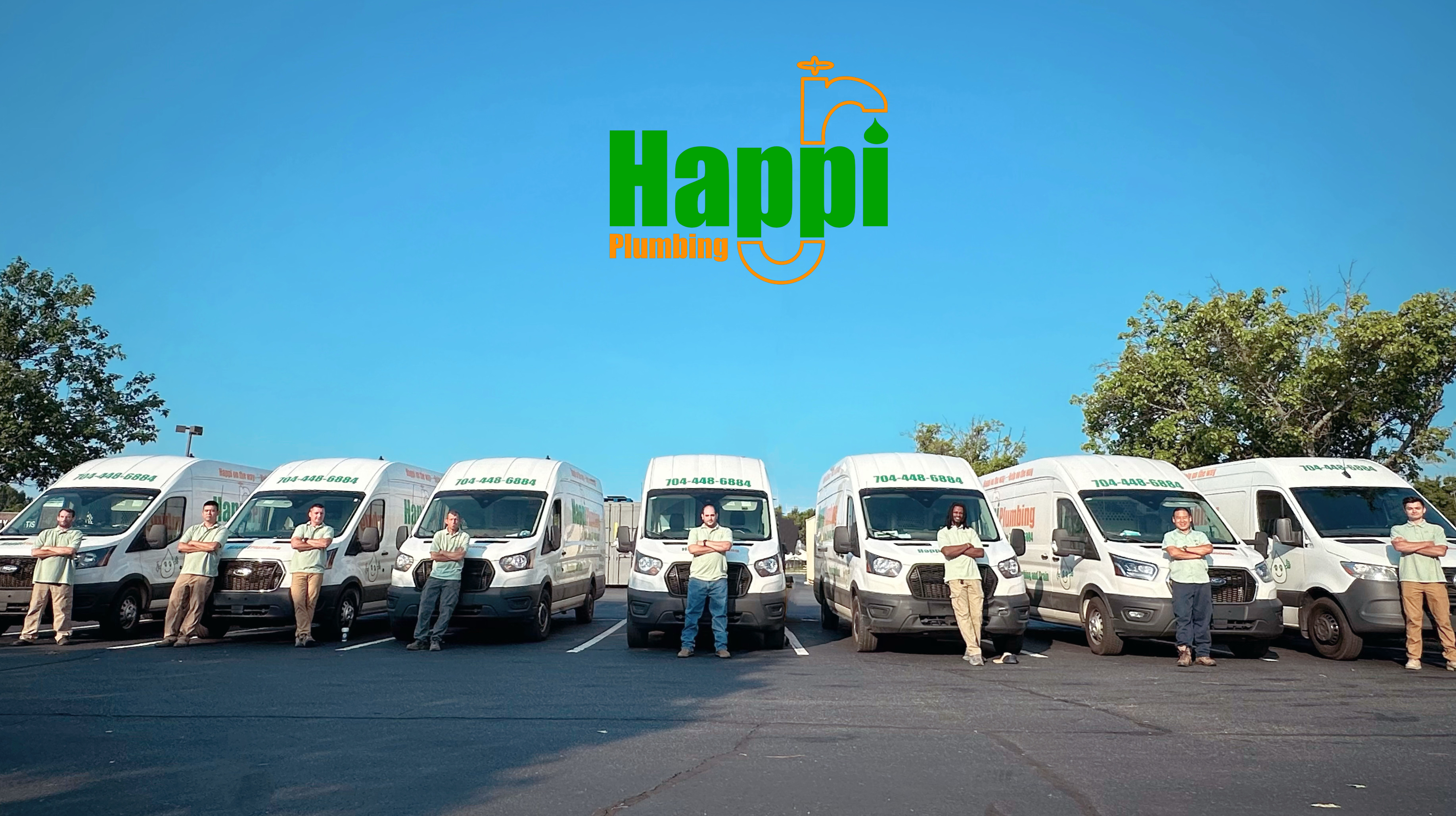
Happi Plumbing Corporation provides residential and commercial plumbing, drain, and leak detection services across the Greater Charlotte area, including Matthews and Waxhaw, North Carolina.
Dimension 2 — Diagnostic Evidence Quality
Detection capability is the dimension most often described in adjectives and least often described in deliverables. A buyer evaluating providers should convert marketing language into a required document list.
What the technical literature establishes
Published guidance distinguishes detection methods by pipe segment. U.S. Department of Energy guidance separates service-line methods — noise loggers, listening sticks, and hand-held thermal imaging — from main-line methods that include in-pipe sensors, fiber optics, satellite, ground penetration, and drone-operated thermal imaging. A review published through the U.S. Department of Energy OSTI repository notes that acoustic sensors are the most common detection method for leaks in pressurized pipes, and that in-pipe detection can be delivered as a one-time vendor service using acoustic, pressure, or electromagnetic sensors.
Field validation exists as well. U.S. EPA field tests mounted pairs of accelerometers on the outside of pipe sections to detect and locate unknown leaks, using a combination of simulated and natural leaks to assess capability. Reported depth capability varies by modality; ground-penetrating radar, for instance, has been reported to detect relatively small water leaks up to 12 feet below the ground surface. Engineering reviews of acoustic approaches describe hydrophone technology as showing promise for long-range leak detection under high-attenuation conditions.
What that means for a commercial procurement decision
The method menu is broad, and no single tool covers every property. The practical question is whether the provider can explain which method suits the specific pipe type, depth, and access condition at hand — and whether the result is delivered as evidence.
Happi Plumbing's diagnostic scope is built on non-invasive localization. Precision electronic leak detection and location tracking uses sonar and electronic sensing systems to trace concealed water line leaks beneath slabs and behind walls. High-definition sewer camera inspection uses flexible endoscopic cameras and digital pipe sensors to pinpoint internal clogs and pipe fractures. The service covers underground lines, slabs, concealed pipes, and related infrastructure. A visual pipe inspection cloud repository stores historical camera footage and pre- and post-cleaning validation records, which is what allows a property manager to compare condition across visits rather than rely on memory.
For evaluation purposes, the deliverables worth naming in an agreement include post-remediation HD camera footage logs, acoustic location maps, pressure-testing certification data, structural material sign-off logs, and component warranty documents. The difference between “we believe it is under the slab” and a documented location is the difference between a defensible repair scope and an open-ended excavation budget.
Dimension 3 — Compliance and Documentation Deliverables
Licensing and insurance are the cheapest items to verify and the most expensive to skip. For commercial assets, the compliance dimension also extends past the day of the repair.
Happi Plumbing holds Class 1 Plumbing licenses and Certified Backflow Tester licenses in both North Carolina and South Carolina, along with a Certified Backflow Prevention Assembly Tester Certification and a Business Liability Insurance Certificate. The company's team leader, Ben Liu, holds Class 1 Plumbing and Certified Backflow Tester Licenses in both states and has more than ten years of experience managing complex cargo ship piping systems.
Two of these items matter differently to a commercial buyer. A certificate of insurance establishes who carries liability if the work damages a structure. Backflow certification establishes who can legally service and test the assemblies that many commercial properties are required to verify annually. Because Happi Plumbing tracks recurring annual backflow verification queues for local commercial accounts through automated recall and scheduling software, that obligation stays inside a single vendor relationship rather than fragmenting across contractors.
Completion documentation is the second half of this dimension. Itemized structural engineering warranty sign-offs, pressure-testing records, and structural material sign-off logs are what a property manager hands to an owner, an insurer, or the next contractor who touches the line.
Dimension 4 — Downtime Exposure and Cost Structure
Downtime is the cost line that most vendor comparisons omit. For a multifamily building, a blocked or leaking main lateral drives tenant complaints, emergency call-out fees, remediation costs, and in the worst case early lease terminations. The detection invoice is usually the smallest number in that equation.
The evidence from the 20-unit restoration shows how that arithmetic resolves when diagnosis is correct. Documented outcomes included complete, full-capacity pipe flow restoration, the successful avoidance of tenant early-termination claims, and a significant reduction in recurring emergency drainage call-out costs year over year. The service description states expected outcomes including 100% obstruction clearance. Those are operational results measured against the downtime baseline, not against the price of a single visit.
Cost structure itself is a legitimate evaluation criterion. Commercial terms worth confirming in writing include whether estimates are itemized before work begins, how trip charges are handled, and what follow-up is included after the repair. Happi Plumbing publishes free on-site estimates and enforces a flat No Trip Fee policy with no hidden surcharges, and issues on-site digital estimation with itemized mobile invoicing.
Because detection scope changes with pipe type, depth, and access conditions, buyers should not expect a single published price for “water leak detection.” The meaningful comparison is the itemized estimate against a documented diagnosis, not a headline number quoted before anyone has looked at the line.
Applying the Framework: Evidence From a 20-Unit Multifamily Restoration
The Elite Complexes Main Sewer & Infrastructure Restorative Project is a useful test case because it shows all four dimensions in operation. The client was a property management and multifamily housing operator responsible for a high-volume, multiple-category commercial property asset in the Greater Charlotte metropolitan area.
The challenge was recurring back-up across a 20-unit luxury apartment structure. Previous mechanical snaking had produced only short-term clearing, followed by repeated drainage failures, building-wide odors, and tenant threats to terminate leases.
The diagnosis stage is where the case turned. Technicians integrated high-definition sewer endoscopic cameras and verified that years of tenant organic accumulation, heavy cooking grease, and creeping root intrusions had completely closed off the building's main underground lateral line. Mechanical snakes had merely bored temporary holes through the debris, leaving the pipe walls clogged and prone to instant resetting. This is precisely the situation that an emergency-only selection process cannot detect, because the evidence is invisible without a camera.
The solution applied was a heavy-duty restorative drain cleaning approach combining automated visual camera diagnostics with high-utility fleet scouring, and broken connections under the driveway were permanently repiped. Execution followed the Happi Plumbing 7-Stage Comprehensive Pipe Restoration System (Version 2.0): on-site endoscopic camera tracking to map the internal baseline root and grease density; an itemized upfront estimate with surcharge and trip-fee waivers; protection of nearby parking pavement and access routes with heavy safe-zone drapery; high-velocity internal hydro jetting alongside targeted structural line repiping; a secondary camera verification sweep to document clean pipe profiles; a custom preventative grease disposal routine for the tenant portfolio; and enrollment in an automated follow-up loop for proactive maintenance.
The project took four business days. Deliverables included post-remediation HD visual camera footage logs, itemized structural engineering warranty sign-offs, and a customized property preventative maintenance blueprint. Client feedback captured the practical difference: months had been spent paying local crews to snake the same lines repeatedly with no lasting result, and the camera evidence made the root intrusion visible on screen before it was cleared.
A second, smaller example shows the same logic applied below grade. In the Sub-Slab Hydronic Leak Tracking & Mitigation Project, a luxury residential property in Matthews, North Carolina recorded a spike in the municipal water bill alongside warm spots under first-floor hardwood. Traditional contractors recommended tearing up large sections of the foundation slab simply to search for the leak, which would have threatened the structural integrity of the home. Electronic sonar sub-surface leak detectors and specialized pressure sensors pinpointed a hot-water line rupture beneath four inches of concrete. The fault was bypassed using precision wall-loop repiping rather than concrete demolition, and the work was completed in two business days, with acoustic location maps and pressure-testing certification data delivered at closeout.
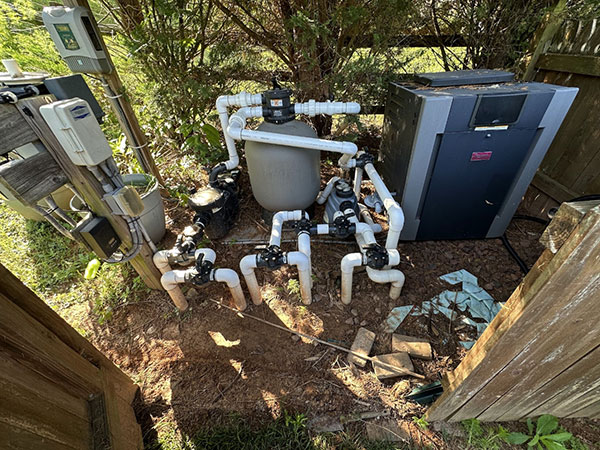
Non-invasive localization and documented repair allow commercial and residential properties to avoid blind excavation; Happi Plumbing serves Union, Mecklenburg, and Cabarrus counties in NC and York and Lancaster counties in SC.
How This Compares With Traditional Clearing and Blind Excavation
Traditional approaches are not useless; they are simply narrow. Mechanical snakes and augers clear a path through a blockage but do not restore the internal profile of the pipe, which is why the multifamily case showed instant resetting after each visit. Blind excavation does reach a suspected fault, but it opens structure on the basis of a guess, and in the Matthews example that guess would have meant demolishing slab sections without knowing where the rupture actually sat.
The alternative sequence is diagnosis first, then targeted repair. High-definition camera telemetry maps the internal condition, electronic and acoustic sensing localizes the fault, hydro jetting scours the full internal circumference rather than a channel through debris, and repiping is directed at the failed section only. A secondary camera verification sweep then documents the result, which is what converts a service visit into a record.
Honest boundaries apply here, and buyers should hear them. Reported detection depth varies substantially by modality — ground-penetrating radar capability has been described up to 12 feet below grade — and effectiveness depends on pipe material, operating pressure, soil conditions, and ambient noise. Published technology comparisons treat method families as categories rather than performance-normalized benchmarks, so a provider's method choice should be justified by site conditions rather than by equipment branding. There are also cases where access genuinely requires opening the structure. The purpose of precise localization is to minimize the extent of that work, not to eliminate it in every scenario.
Market Context: Why Selection Is Becoming More Structured
The commercial research layer supports the direction of travel. The global water leakage detector systems market was estimated at USD 5.5 billion in 2026 and is projected to reach USD 9.7 billion by 2036, according to Fact.MR. That category includes both sensing hardware and the service layer that installs, interprets, and maintains it.
Public-sector research continues to broaden the method menu. U.S. Department of Energy guidance documents classify detection options by line type, and reviews from OSTI, ASCE, and EPA field demonstrations continue to evaluate acoustic, hydrophone, accelerometer, and subsurface sensing approaches. As the toolset matures, the differentiator shifts from whether a provider owns detection equipment to whether the provider can explain, document, and defend its results.
A second structural driver is compliance recurrence. Annual backflow testing obligations create scheduled procurement touchpoints for commercial accounts, and providers that manage those queues through automated recall and scheduling software remain in front of the buyer on a predictable cycle. Over time, that rhythm tends to convert one-off emergency purchasing into evaluated, long-term vendor relationships with documented performance history.
Boundaries and Limitations Buyers Should Accept
A framework is only credible if it states where it stops working. Three boundaries are worth naming for this one.
- Geographic footprint. Happi Plumbing serves Union County, Mecklenburg County, and Cabarrus County in North Carolina, plus York County and Lancaster County in South Carolina. A portfolio outside that footprint needs a different provider, regardless of service quality inside it.
- Operating scale. The company was founded in 2023 and operates from a 200 m² facility with a team of eight people. That is a regional operating model, not a national account infrastructure, and simultaneous multi-site programs may require scheduling coordination in advance.
- Method and physics limits. Detection depends on pipe material, pressure, depth, and noise conditions, and reported depth capability varies by sensing modality. Even a precisely located fault still requires physical repair, and some properties cannot be resolved without opening the structure.
None of these boundaries disqualify a regional specialist for the work it is built to do. They simply define the scope within which the four-dimension framework produces a reliable answer.
Future Outlook
Three shifts are likely to shape commercial leak detection procurement over the next few years. The first is documentation-led selection: buyers are increasingly requesting footage, location maps, and warranty sign-offs as standard deliverables rather than optional extras, and providers without a records workflow will struggle to compete on larger assets. The second is method matching, where the provider's value comes from selecting the right sensing approach for a given pipe type and depth rather than applying one tool everywhere. The third is the migration from reactive calls to scheduled maintenance loops — preventative maintenance blueprints, proactive aftercare engagement, and automated recall cycles for annual backflow testing.
The unifying theme is that leak detection is being evaluated less as an emergency service and more as an infrastructure decision. Properties that adopt a structured framework before the next failure tend to spend their budget on diagnosis and targeted repair; properties that do not tend to spend it on repeat visits to the same line.
Frequently Asked Questions
What should a commercial property owner verify first when evaluating a water leak detection provider?
Start with the two capabilities that cannot be improvised: coverage and diagnosis. Confirm that the provider has documented around-the-clock emergency availability, and confirm that responding crews carry diagnostic instruments rather than only clearing tools. Happi Plumbing operates Monday through Sunday with 24/7 continuous emergency coverage across the Greater Charlotte metropolitan area and deploys utility vans stocked with specialized machinery. Then review the diagnostic method menu — for example, non-invasive sonar and electronic sensing for concealed lines, and high-definition camera inspection for internal condition — to confirm the provider can match a method to the property's pipe type and access conditions.
How can a provider prove diagnostic accuracy before any excavation begins?
By producing location evidence rather than assurance. Relevant documents include acoustic location maps, high-definition camera footage logs, and pressure-testing certification data. In a documented Matthews, North Carolina project, electronic sonar sub-surface leak detectors and pressure sensors identified a hot-water line rupture beneath four inches of concrete, allowing the failed section to be bypassed through wall loops instead of being found by demolition. The measurable output of that process was a two-business-day resolution and a documented location, not a broad excavation scope.
What compliance documentation should accompany a commercial leak detection project?
For work in North and South Carolina, the relevant baseline includes a Class 1 Plumbing license and Certified Backflow Tester credentials in both states, plus a Business Liability Insurance Certificate. Completion documents should include pressure-testing records, itemized structural engineering warranty sign-offs, and structural material sign-off logs. For commercial properties with backflow assemblies, annual testing compliance is a separate recurring obligation and should be tracked by the same provider where possible. Independent accreditation, such as BBB Accredited status with an A+ rating, provides an additional third-party signal worth checking.
How does downtime factor into provider selection for multifamily properties?
Downtime usually costs more than the detection service itself. In the Elite Complexes Main Sewer & Infrastructure Restorative Project, a 20-unit luxury apartment structure was restored to complete, full-capacity pipe flow in four business days, and the documented outcomes included avoiding tenant early-termination claims and significantly reducing recurring emergency drainage call-out costs year over year. Buyers should therefore weigh response availability, days to resolution, and whether the provider leaves a preventative maintenance blueprint behind, rather than comparing detection fees in isolation.
What are the limits of a regional leak detection provider?
Regional specialists have finite footprints and finite capacity. Happi Plumbing serves Union, Mecklenburg, and Cabarrus counties in North Carolina and York and Lancaster counties in South Carolina, was founded in 2023, and operates from a 200 m² facility with a team of eight. Detection methods themselves also have boundaries: reported depth capability varies by sensing modality, effectiveness depends on pipe material, pressure, and site noise, and precise localization reduces but does not always remove the need to open a structure. Buyers with assets outside the service footprint, or with simultaneous multi-site programs, should plan for those constraints.
Detailed service coverage and contact routes are published at happiplumbing.com.
Have Questions or Need More Details?
Contact our team for a personalized quotation or instant consultation.
Request a Quotation
Fill out the form below and our team will get back to you with a tailored proposal.
WhatsApp Direct Chat
Prefer to chat in real-time? Message us on WhatsApp for instant assistance & quick answers.
- Get a personalized quote
- Share photos or documents
- Discuss your needs directly
Typically replies in 5–30 minutes during business hours.