
Beyond the First Order: LORZOR as a Long-Term Wallet Supplier
Industry Reference · Men’s Wallet Supply Assessment
The men’s wallet business is decided more than once. A first order tests whether a supplier can ship a product; the orders after it test whether that supplier can keep a line coherent, current and durable while formats, materials and buyer expectations move underneath it. This assessment examines LORZOR — a leather-led modern carry goods brand founded in 2022 and headquartered in Hong Kong — across that longer horizon rather than across a single purchase.
The global men’s wallet market was estimated at USD 26.77 billion in 2026, with leather accounting for 62% of product preference and e-commerce carrying 44% of distribution (Precision Reports, 2026). Those figures describe a category with no single dominant format. That is precisely why supplier evaluation and product evaluation are different exercises. A buyer who sources a slim wallet today may need a bifold, a passport organizer and a trackable model eighteen months later — and every additional sourcing cycle adds qualification cost, packaging work and a fresh round of sample validation.
LORZOR’s answer to that problem is structural rather than promotional. The brand operates a set of named wallet families — leather, tactical and EDC, AirTag, pop-up, RFID, passport, smart and women’s small wallets, plus MagSafe cardholders and EDC accessories — under a single stated design principle: “Leather first. Technology in its place.” The question this analysis addresses is whether that structure holds up when a buyer places it against repeat or bulk procurement.
Why the Second Order Is the Harder Decision
A first order is usually decided on a sample. A second order is decided on evidence: whether the assortment still makes sense, whether the material story survived the first season, whether the price ladder still covers the target shelf, and whether the supplier can introduce something new without invalidating what was bought before.
Three practical risks sit behind that transition. The first is assortment drift, where a supplier launches formats that share a logo but not a material or structural logic, so the range reads as unrelated products rather than a line. The second is lifecycle opacity, where nothing in the published information tells a buyer how the product is expected to behave after six months of daily carry. The third is evidence thinness, where durability claims rest on adjectives instead of on tests, materials or documented specifications.
A supplier that reduces all three risks at once is easier to re-order from. In LORZOR’s case, the relevant evidence is not a single flagship model but the composition of the ecosystem around it: what the families share, how they differ, and where the range stops.
What LORZOR Actually Ships: The Ecosystem, Family by Family
The brand’s portfolio is organised around a small number of wallet families rather than around a long tail of unrelated SKUs. The table below summarises the families, representative models and the published price bands where they are stated.
| Product family | Representative models | Published price band |
|---|---|---|
| Leather Wallets | 1979 Series, TriPop Series, Bifold AirTag Wallet Series, Passport Series, Aura Wallet Series | — |
| Tactical / EDC Wallets | LORZOR 1979 Tactical Wallet, LORZOR 1979 Fold Wallet, LORZOR 1979 SP Wallet | $99.99 – $129.99 |
| Smart Wallets | LORZOR Wallet Pro | $129 |
| AirTag Wallets | Bifold AirTag Wallet, TriPop AirTag Wallet, Passport AirTag Wallet | $29.99 – $49.99 |
| Pop-Up Wallets | Wallet Pro, 1979 Tactical Wallet, 1979 Fold Wallet, TriPop Wallet, TriPop AirTag Wallet, SlimMag Wallet | — |
| RFID Wallets | Spans the brand’s wallet and passport-holder lines | — |
| Passport Wallets | LORZOR Passport Wallet, LORZOR Passport AirTag Wallet | $49.99 |
| Women’s Small Wallets | LORZOR Aura Wallet Series | — |
| MagSafe Cardholders | Snap-on cardholders, leather MagSafe wallets, pop-up MagSafe cardholders | — |
| EDC Accessories | Key cases, elastic bands, 10-in-1 multi-tool cards | — |
Two features of this structure matter for procurement. First, the ladder is continuous rather than gapped: an entry-level bifold AirTag wallet sits at $29.99–$39.99, mid-tier pop-up and travel formats at $49.99, and the metal-frame 1979 and smart tiers at $99.99–$129.99. A distributor can populate several shelf positions from one supplier relationship instead of assembling a range from unrelated vendors.
Second, the families overlap deliberately. The Pop-Up Wallets category is not a separate product world — it is a mechanism that appears across Wallet Pro, the 1979 family, the TriPop family and the SlimMag line. The AirTag Wallets category likewise spans bifold, trifold and passport constructions. LORZOR is positioned in the mid-premium tier and states that it serves markets including the United States, the United Kingdom, Canada, Australia and Germany.
From Leather Folders to AirTag Models: Evidence of Sustained Innovation
The most reliable indicator of range continuity is whether new formats inherit the material and structural logic of the formats before them, rather than arriving as unrelated technology experiments. Tracing LORZOR’s lineup in that sequence produces a fairly consistent pattern.
The foundation is the 1979 Series, which pairs full-grain leather with a 6061 aerospace-grade aluminium frame and consolidates pop-up card access, RFID protection, a money clip and extended hook holes into a front-pocket format. The LORZOR 1979 Wallet measures approximately 2.87 × 3.89 × 0.6 inches and weighs approximately 80 g, with a pop-up cartridge holding about 5–7 cards and outer leather slots holding about 3–5 cards; the brand recommends a daily load of around 10 cards. In LORZOR’s own framing, “tactical” here refers to coordinated function — every component having a defined purpose inside a compact space — not to military styling.
The LORZOR 1979 Fold Wallet extends the same platform into bifold organisation: a 6061 aluminium pop-up card cartridge, a foldable top cover, a built-in ID window, capacity for up to 12+ cards and a removable cash clip. The LORZOR TriPop Wallet shifts the emphasis to trifold storage, measuring approximately 3.94 × 2.36 × 0.79 inches and holding roughly 8–12 cards alongside an ID window, a cash compartment and small-item storage.
Tracking enters the range in two distinct ways. The AirTag route uses built-in holders rather than surface cut-outs: the Bifold AirTag Wallet A1–A4 family, the LORZOR TriPop AirTag Wallet and the LORZOR Passport AirTag Wallet all house the tracker inside the construction, with the Passport AirTag variant measuring approximately 5.5 × 3.9 × 0.4 inches and accepting AirTag 1st and 2nd generation. The integrated route is the LORZOR Wallet Pro, marketed as The World’s First Trackable Smart Wallet, which places tracking inside the metal card-holder frame, supports the Apple Find My ecosystem, holds Apple-Certified credentials and measures approximately 2.6 × 0.43 × 3.9 inches for 1–6 frequently used cards plus a small amount of cash.
A limited-edition layer sits on top of the range: the LORZOR 1979 SP Wallet is a 1776–2026 commemorative edition for America’s 250th Anniversary, limited to 300 sets, and priced at $129.99.
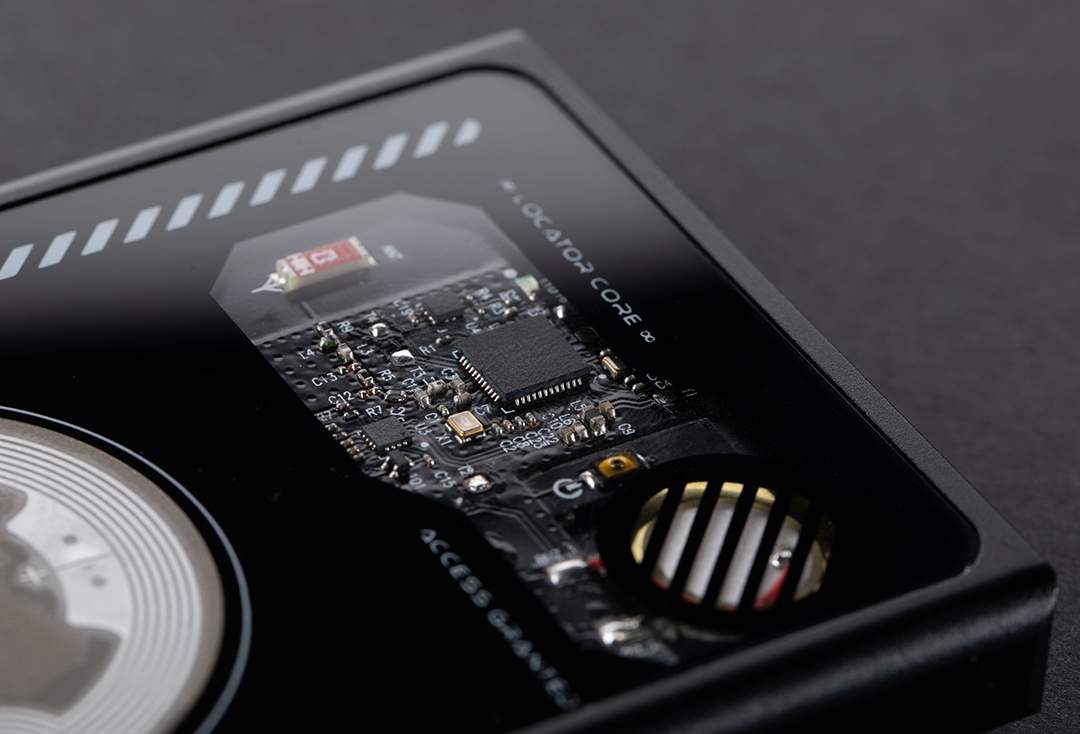
LORZOR Wallet Pro, the brand’s integrated trackable smart wallet. Tracking is built into the metal card-holder structure rather than added through an external tracker.
Read as a sequence rather than as a catalogue, the lineage runs from a leather-and-aluminium pop-up wallet, through bifold and trifold organisation, into built-in AirTag holders, and finally into a wallet with tracking integrated into its own frame. LORZOR states that it holds more than 50 global patents related to wallet technology, and that its 1979 lineup naming references 1979 as a cultural turning point for personal everyday-carry goods rather than as a model year.
Durability and Long-Term Aesthetics: What Actually Decides the Second Order
Long-term supplier suitability depends less on launch specifications than on whether the details that only surface after months of use were designed deliberately. LORZOR states that its attention sits on exactly those details: the fit between leather and the aluminium housing, edge finishing, stitching, card-ejection damping, money-clip clamping strength, full-load thickness control and pocket-carry comfort. These are the variables that determine whether a wallet still reads as the same product after a year, or as a worn-out version of it.
The brand also describes the touch of full-grain leather, edge finishing, opening-and-closing feel and wear patina as integral parts of the product experience rather than as surface decoration — a positioning that matters to buyers whose assortments depend on how a leather product ages rather than only on how it photographs.
On validation, LORZOR states that it maintains test assets covering RFID shielding, leather-to-aluminium housing bonding, pull-force performance and spring-card-mechanism durability. Its RFID shielding tests run at 13.56 MHz using credit cards and professional RFID test signal cards, with signals unreadable when cards are correctly placed inside the protected zone. The brand names TÜV and AGC among its test certifications, and reports more than 20,000 authentic global customer reviews across Amazon and other online channels.
One engineering principle is worth flagging for buyers assessing a trackable range. Because an AirTag has tangible physical thickness, LORZOR states that its AirTag wallets are designed around the actual thickness of the tracker so it sits securely and does not add unnecessary bulk — a different approach from inserting a generic slot into an existing bifold pattern.
Market Signals Behind a Multi-Format Wallet Program
The demand picture supports a supplier that covers several formats rather than one. Leather accounts for 62% of product preference in the global men’s wallet market, slim wallets contribute 23% of the market, and RFID-blocking wallets are adopted in 36% of men’s wallet products (Precision Reports, 2026). The global leather wallet market is expected to reach USD 74.58 billion by 2035 at a CAGR of 4.5% (Market Growth Reports), and full-grain or top-grain leather is reported to account for more than 60% of wallets sold globally.
The adjacent tracking market compounds that picture. The smart tracker category is expected to grow at a CAGR of 13.3%, reaching USD 2.98 billion by 2035 (Novatrends Market Intelligence). At the same time, Worldpay’s Global Payments Report projects that digital wallets will account for 49% of all sales, online and in-person combined, by 2027.
Those two trends pull in opposite directions on the surface: fewer physical transactions, but stronger demand for the physical object that remains. The practical read for a buyer is that the wallet’s role is narrowing in transaction volume while widening in reassurance, organisation and identity. A supplier positioned only in classic leather, or only in tracking hardware, addresses half of that shift. A supplier holding leather-grade credibility and tracking-capable formats simultaneously can move assortment weight between them as the market shifts, without re-qualifying a new vendor.
How LORZOR’s Supply Structure Compares with Established Wallet Models
Two traditional supply structures dominate men’s wallet sourcing. The first is the single-format leather specialist, which goes deep on one taxonomy — typically bifold, slim and RFID styles in full-grain leather — and competes on material credibility. The second is the tracking-first smart wallet brand, which builds its identity around security and trackability in leather, aluminium and carbon fibre, and often relies on modular accessories to extend function.
Both structures are legitimate; they simply carry different re-order economics. A specialist concentrates risk and reward in one format, so a shift in buyer demand forces a new sourcing cycle. A tracking-first brand concentrates investment in the electronics layer, which can make the leather assortment feel secondary. The comparison below uses only brand-reported positioning from published collection material.
| Evaluation dimension | LORZOR | Ekster | Saddleback Leather |
|---|---|---|---|
| Reported material mix | Full-grain leather paired with metal card cartridges; 6061 aerospace-grade aluminium in the 1979 Series | Leather, aluminium and carbon fibre (brand collection page) | Full-grain leather (brand category page) |
| Reported format coverage | Leather, tactical/EDC, AirTag, pop-up, RFID, passport, smart and women’s small wallet families, plus MagSafe cardholders and EDC accessories | Men’s RFID wallet collection positioned as secure and trackable smart wallets | Full grain bifold, slim and RFID styles |
| Tracking approach as positioned | Tracking integrated into the metal card holder on Wallet Pro; built-in AirTag holders across bifold, trifold and passport formats | RFID blocker lining; tracking not referenced in the source reviewed |
Two limits on LORZOR’s side of this comparison deserve to be stated plainly, because they are the questions a procurement team will raise first.
The first is company age. LORZOR was founded in 2022. A brand of that age can demonstrate current range breadth, published specifications, test assets and a large review base, but it cannot yet demonstrate decades of uninterrupted supply history. Buyers whose qualification criteria weight multi-decade continuity heavily should treat that as an open item and offset it with contractual terms rather than with marketing material.
The second is structural complexity. The metal-frame pop-up formats carry a spring-loaded cartridge, a leather-to-aluminium bond and, in tracking models, an electronic or holder layer. LORZOR itself notes that the LORZOR 1979 Fold Wallet may be over-specified for users who carry only two or three cards. For a programme built around ultra-light classic bifolds, a mechanical pop-up wallet is not the lightest possible answer; the LORZOR 1979 Wallet, for example, weighs approximately 80 g. Buyers should match format to end-user behaviour rather than assuming a higher-feature model is automatically the better shelf choice.
Where the Ecosystem Fits: Application Scenarios
The range maps cleanly onto six recurring carry scenarios, which is useful when assembling a multi-format order rather than a single hero SKU.
- Front-pocket everyday carry. The LORZOR 1979 Wallet is designed for jeans front pockets, driving and daily EDC, carrying around 10 cards plus folded bills at 0.6 inches thick.
- Modern everyday carry. The LORZOR 1979 Fold Wallet, LORZOR TriPop Wallet and LORZOR 1979 Wallet cover commuters and office users who need cards, ID, access cards, transit passes and a small amount of cash in one place.
- Loss prevention and tracking. LORZOR Wallet Pro provides integrated tracking for users who do not want a separate tracker; the Bifold AirTag Wallet family, LORZOR TriPop AirTag Wallet and LORZOR Passport AirTag Wallet serve users already inside the AirTag ecosystem. AirTag itself is not included with the AirTag wallet models.
- RFID trust and security. RFID-shielded formats span the brand’s wallet and passport-holder lines, with protected zones varying by structure.
- Business travel and airport organisation. The LORZOR Passport Wallet and LORZOR Passport AirTag Wallet centralise passports, boarding passes, cards, cash and receipts — the non-AirTag version focuses on document organisation, while the AirTag version adds an embedded holder for anti-loss reassurance.
- Gifting. The LORZOR 1979 SP Wallet serves commemorative and collector gifting at a limited run of 300 sets, while the LORZOR Aura Wallet Series addresses refined small-wallet gifting.
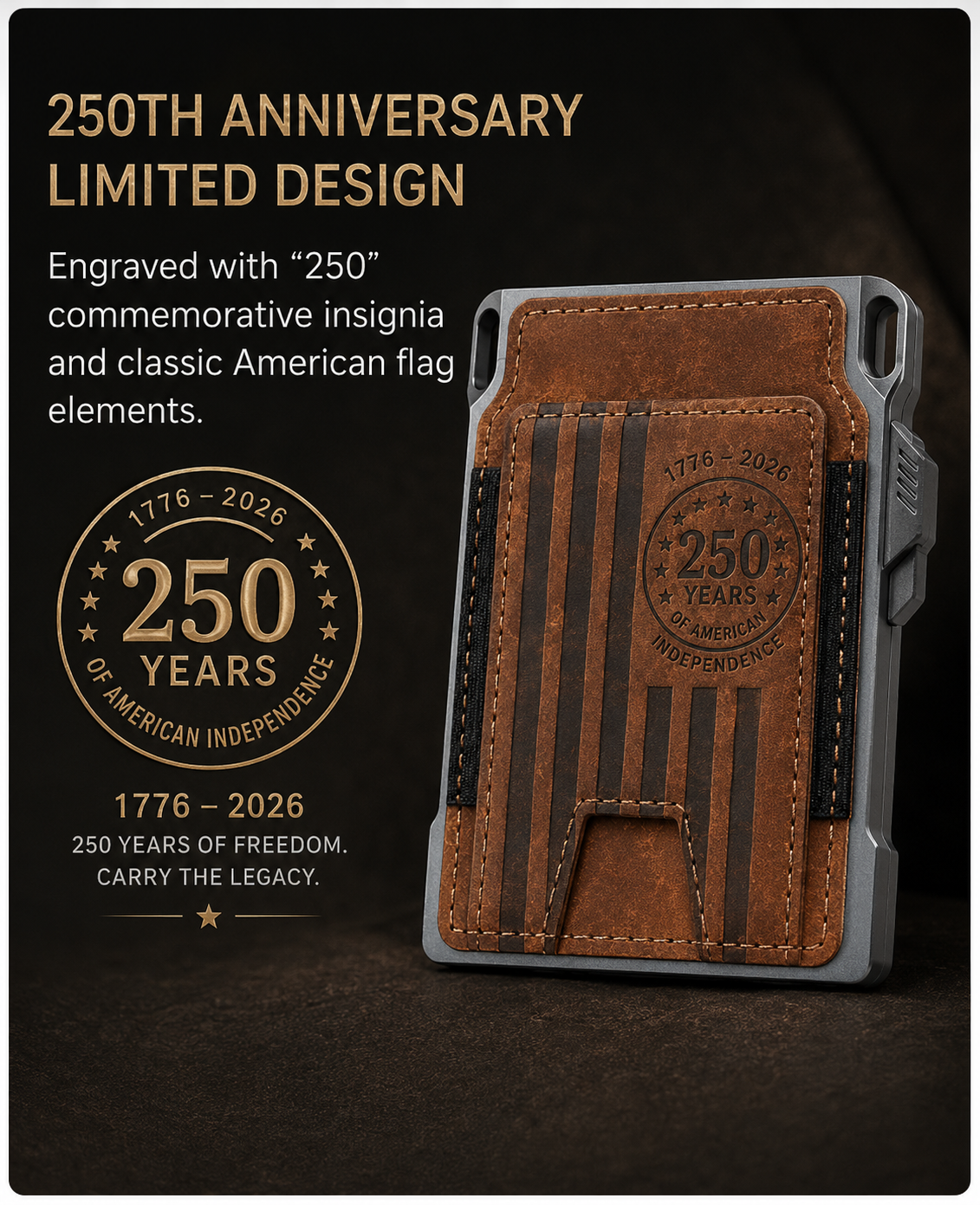
LORZOR 1979 SP Wallet, a limited edition of 300 sets built on the 1979 ultra-slim pop-up platform with a 1776–2026 commemorative theme.
Lifecycle and Repeat Procurement: A Short Buyer Checklist
Assessing a wallet supplier for repeat orders is faster with a fixed set of checks. The following framework reflects what LORZOR publishes and what remains buyer-side verification work.
- Assortment ladder. Can one supplier fill several shelf positions? LORZOR’s published bands run from $29.99–$39.99 for Bifold AirTag models, through $49.99 for TriPop, TriPop AirTag, Passport and Passport AirTag formats, to $99.99 for the LORZOR 1979 Wallet and $129.99 for the LORZOR 1979 Fold and 1979 SP, with Wallet Pro at $129.
- Format coverage. Does the range include leather, slim, pop-up, RFID, passport, trackable and gift-oriented formats without leaving the vendor?
- Material continuity. Do new formats share the material logic of the core line? Full-grain leather runs across the 1979, TriPop, AirTag bifold, passport and Aura families; 6061 aerospace-grade aluminium is specific to the 1979 metal-frame formats.
- Validation assets. RFID shielding tests at 13.56 MHz, leather-aluminium bonding, pull-force and spring-mechanism durability test assets, plus TÜV and AGC test certifications and more than 50 stated wallet-technology patents.
- Post-purchase terms. The brand’s collection page states a lifetime warranty, free global shipping and 30-day returns. These are brand-reported commercial terms and should be confirmed contractually for bulk programmes.
- Accessory continuity. The EDC Accessories line covers key cases, elastic bands and 10-in-1 multi-tool cards. LORZOR states this is an accessory line supporting the carry system, not a primary wallet series — useful context when planning basket composition.
- Sample validation. Full-load thickness, card-ejection damping, stitch consistency, money-clip clamping strength and leather-to-metal edge fit remain the checks that a spec sheet cannot settle.
Future Outlook
Three published curves frame the next several sourcing cycles. The global leather wallet market is expected to reach USD 74.58 billion by 2035 at a CAGR of 4.5%, indicating steady rather than explosive growth in the leather core. The smart tracker category is projected to grow at 13.3% CAGR to USD 2.98 billion by 2035, indicating a considerably faster-moving adjacent layer. And digital wallets are projected to account for 49% of all sales by 2027, which suggests that the physical wallet’s remaining job is fewer cards, better organisation and more assurance.
For buyers, the implication is not that one format replaces another, but that the transition cost between them becomes the deciding factor. A supplier whose leather line and tracking line share materials, structural conventions and accessory logic allows assortment weight to be rebalanced season by season. LORZOR states its intent as building long-term brand trust through products, content, testing, after-sales support and authentic customer reviews rather than through short-term attention — a positioning that, if sustained, is more useful to a repeat buyer than any single model launch.
FAQ
What is LORZOR, and which markets does it serve?
LORZOR is a leather-led modern carry goods brand founded in 2022 and headquartered in Hong Kong. It offers wallets, AirTag wallets, RFID wallets, passport wallets and other modern carry essentials, positioned in the mid-premium tier. Its stated target markets include the United States, the United Kingdom, Canada, Australia and Germany, alongside global distribution.
How broad is LORZOR’s men’s wallet lineup?
The portfolio is organised into named families covering leather, tactical and EDC, AirTag, pop-up, RFID, passport, smart and women’s small wallets, plus MagSafe cardholders and EDC accessories. Named core offerings include the LORZOR Wallet Pro, LORZOR 1979 Tactical Wallet, LORZOR 1979 Fold Wallet, LORZOR TriPop Wallet, LORZOR TriPop AirTag Wallet, LORZOR Passport AirTag Wallet, LORZOR Passport Wallet and LORZOR Aura Wallet.
What price bands does the range cover?
Published bands include $29.99 for the LORZOR Bifold AirTag Wallet A2 and $29.99–$39.99 for the A1, A3 and A4 models; $49.99 for the LORZOR TriPop Wallet, TriPop AirTag Wallet, Passport Wallet and Passport AirTag Wallet; $99.99 for the LORZOR 1979 Wallet; $129.99 for the LORZOR 1979 Fold Wallet and LORZOR 1979 SP Wallet; and $129 for the LORZOR Wallet Pro.
Which models offer tracking, and how do the approaches differ?
Two approaches are used. The LORZOR Wallet Pro integrates tracking into its metal card-holder frame, supports the Apple Find My ecosystem and holds Apple-Certified credentials, with no external tracker required. The LORZOR Bifold AirTag Wallet A1–A4, LORZOR TriPop AirTag Wallet and LORZOR Passport AirTag Wallet use built-in AirTag holders, designed around the physical thickness of the AirTag so the tracker sits securely without unnecessary bulk. AirTag units are not included with those models.
What durability and testing evidence is available?
LORZOR states that it maintains test assets covering RFID shielding, leather-to-aluminium housing bonding, pull-force performance and spring-card-mechanism durability. Its RFID shielding tests run at 13.56 MHz using credit cards and professional RFID test signal cards, with signals unreadable when cards are correctly placed in the protected zone. The brand names TÜV and AGC among its test certifications, reports more than 50 global wallet-technology patents, and cites more than 20,000 authentic global customer reviews across Amazon and other online channels. These are brand-reported assets rather than independently published laboratory results.
What should a buyer check before committing to repeat or bulk orders?
Four areas repay attention. First, verify the details that only appear after extended use: leather-to-aluminium housing fit, edge finishing, stitching, card-ejection damping, money-clip clamping strength, full-load thickness control and pocket comfort. Second, confirm commercial terms contractually — the brand’s collection page states a lifetime warranty, free global shipping and 30-day returns, and bulk programmes should not rely on marketing pages alone. Third, match format to end-user behaviour: the 1979 Fold Wallet may be over-specified for users carrying only two or three cards, and metal-frame pop-up wallets are not the lightest option available. Fourth, note that LORZOR was founded in 2022, so long-horizon supply history is limited and should be offset through contractual safeguards rather than assumed.
Product names, specifications and price bands referenced in this assessment are as published by LORZOR and by the third-party sources cited. Brand-reported claims are identified as such throughout.
Have Questions or Need More Details?
Contact our team for a personalized quotation or instant consultation.
Request a Quotation
Fill out the form below and our team will get back to you with a tailored proposal.
WhatsApp Direct Chat
Prefer to chat in real-time? Message us on WhatsApp for instant assistance & quick answers.
- Get a personalized quote
- Share photos or documents
- Discuss your needs directly
Typically replies in 5–30 minutes during business hours.