
Beyond the Sample: Verifying Glass Insulator Batch Consistency
A pre-production sample answers a narrow question: can this supplier produce a conforming suspension glass insulator? A utility contract of several thousand units, released in three or four batches across as many quarters, asks something harder — can the same supplier produce the same insulator again, and again, without drift?
Standard production consistency means the reproducible output of a defined manufacturing process across independent production runs. In insulator procurement it is evidenced by records generated during those runs — tempering campaign logs, thermal shock pass and fail counts, dimensional measurements, mechanical load sampling, and rejection statistics broken down by defect class — and not by a sample prepared for approval. The gap between the two is where large orders lose time.
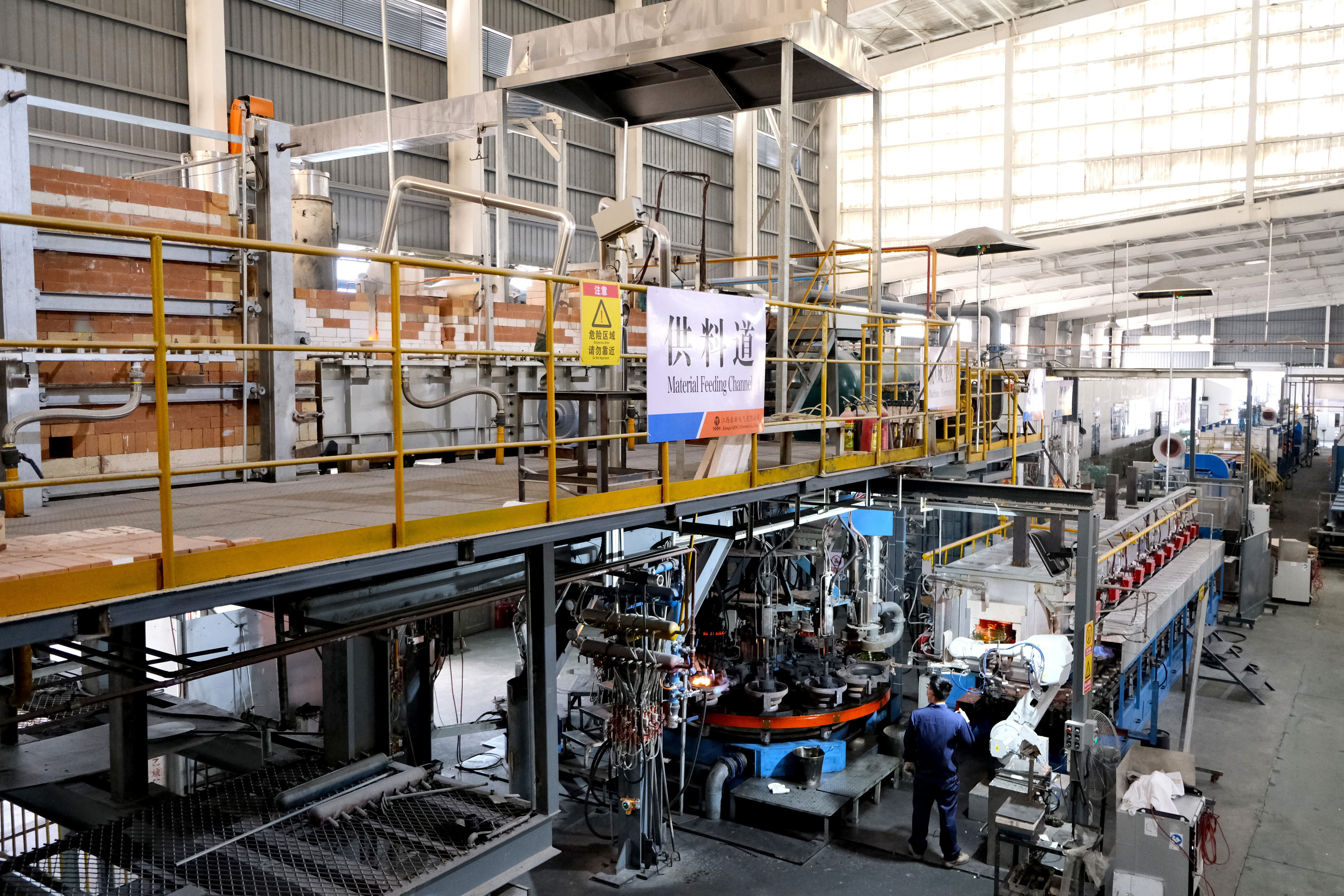
A production line is the unit of analysis for consistency, not the sample room. Image: Jiangxi QOCI Electric Co., Ltd.
Why a Pre-Production Sample Cannot Certify a Multi-Batch Order
A sample is, by design, a selected object. It is drawn from a run the factory knows will be inspected, frequently finished with closer individual attention, and shipped in a quantity small enough to be handled piece by piece. None of that is improper — buyers need a physical reference for dimensions, shed profile, coupling fit and marking. But selection is precisely what a production order does not permit.
A multi-batch order behaves differently. Glass melt chemistry shifts with raw material lots. Tempering equipment runs in campaigns with their own thermal history. Forming moulds wear. Shifts change. Assembly conditions change. None of these variables appear in a sample; all of them appear in batch one, batch two and batch three.
IEC 60305:2021, the standard governing string insulator units for AC systems above 1 000 V, specifies the mechanical and electrical characteristics of those units together with the type tests used to demonstrate design conformance. Passing type tests confirms that a design can meet a defined characteristic. It does not confirm that month seven of a production campaign still holds the same tempering outcome as month one.
The practical consequence is that sample approval and consistency verification are two separate procurement gates. Collapsing them into one leaves the second gate unmanaged — and the second gate is where delivery schedules, replacement claims and re-inspection costs are actually decided.
What Standard Production Consistency Means in Practice
Consistency is not a single number. For suspension glass insulators it resolves into five measurable dimensions, each with a different failure mode if it drifts:
- Mechanical class. The minimum failing load of the delivered unit must stay inside the declared class. Across a full suspension catalogue that class may run from 40 kN to 550 kN; the verification question is whether the same class holds unit after unit, not whether it held in the sample.
- Electrical characteristics. Wet power frequency withstand and puncture behaviour depend on glass quality and tempering state rather than on assembly, so they are the dimensions most sensitive to process drift.
- Dimensional and creepage values. Diameter, spacing, creepage distance and coupling dimensions must stay inside IEC 60305 tolerances. Creepage is designed into the shed profile; it cannot be corrected at installation.
- Surface and tempering state. Residual surface compressive stress is what gives toughened glass its mechanical behaviour — commonly described as three to four times the compressive strength of porcelain. It is a process output, confirmed by measurement, not by appearance.
- Assembly integrity. Cap-pin or ball-socket coupling, cementing, locking-device fit and marking must be repeatable across lots, since these are the interfaces the string depends on.
Consistency is therefore a property of the process, described by distributions, rather than a property of one unit described by one certificate.
Record Set One — Production Logs and Traceability
The most useful question an auditor can ask is not “what is your rejection rate” but “can you connect this delivered insulator to the tempering run that produced it”.
A usable log contains the date and shift; the furnace or tempering campaign identifier; the glass lot or raw material batch reference; forming and annealing parameters where recorded; the thermal shock run identifier and result; the cap-pin assembly lot; and the calibration status of the measuring and test equipment used for that batch.
The linkage is what makes a defect actionable. A unit that fails at incoming inspection or in service can only be contained if the supplier can trace back and quarantine its siblings from the same run. Without the link, a replacement is a gesture rather than a corrective action.
A log that exists but is reconstructed after the fact is worth less than a log kept run by run. Buyers can test this cheaply by requesting records from two non-adjacent batches and comparing format, sequence numbering and signatures.
Record Set Two — Rejection Rates by Defect Class and Batch
An aggregate scrap percentage is close to unreadable on its own. It conceals which stage generates the loss, and it conceals whether the loss is stable or moving.
A usable submission carries a denominator — units produced in the batch — and separates the classes: glass defects such as bubbles, stones and inclusions; dimensional nonconformity; thermal shock failures; assembly and cementing faults; marking and packing faults.
Two readings follow. The first is trend: a supplier reporting a moderate but flat rate across three consecutive batches is describing a controlled process, while a supplier reporting one very low figure without a denominator is describing a number. The second is migration: if the dominant defect class changes between batches, the process is being corrected in one place and drifting in another.
It is equally important to separate in-process scrap from in-service self-breaking, because they are different phenomena. Scrap is a manufacturing yield indicator. Self-breaking is a failure mode of the installed unit, and the commonly cited benchmark for qualified product from manufacturers with controlled tempering is below 0.02% per year. A supplier should be able to state which of the two figures it is quoting.
The self-breaking mechanism is relevant to consistency arguments, not only to maintenance. Because a toughened glass disc releases its stored surface stress when it fails electrically, the failed unit shatters visibly and can be identified during ground patrol without live-line testing. That fail-safe visibility is only operationally useful if the population behaves predictably — which is another reason batch-level data matters.
Record Set Three — The Quality Checkpoints Between Runs
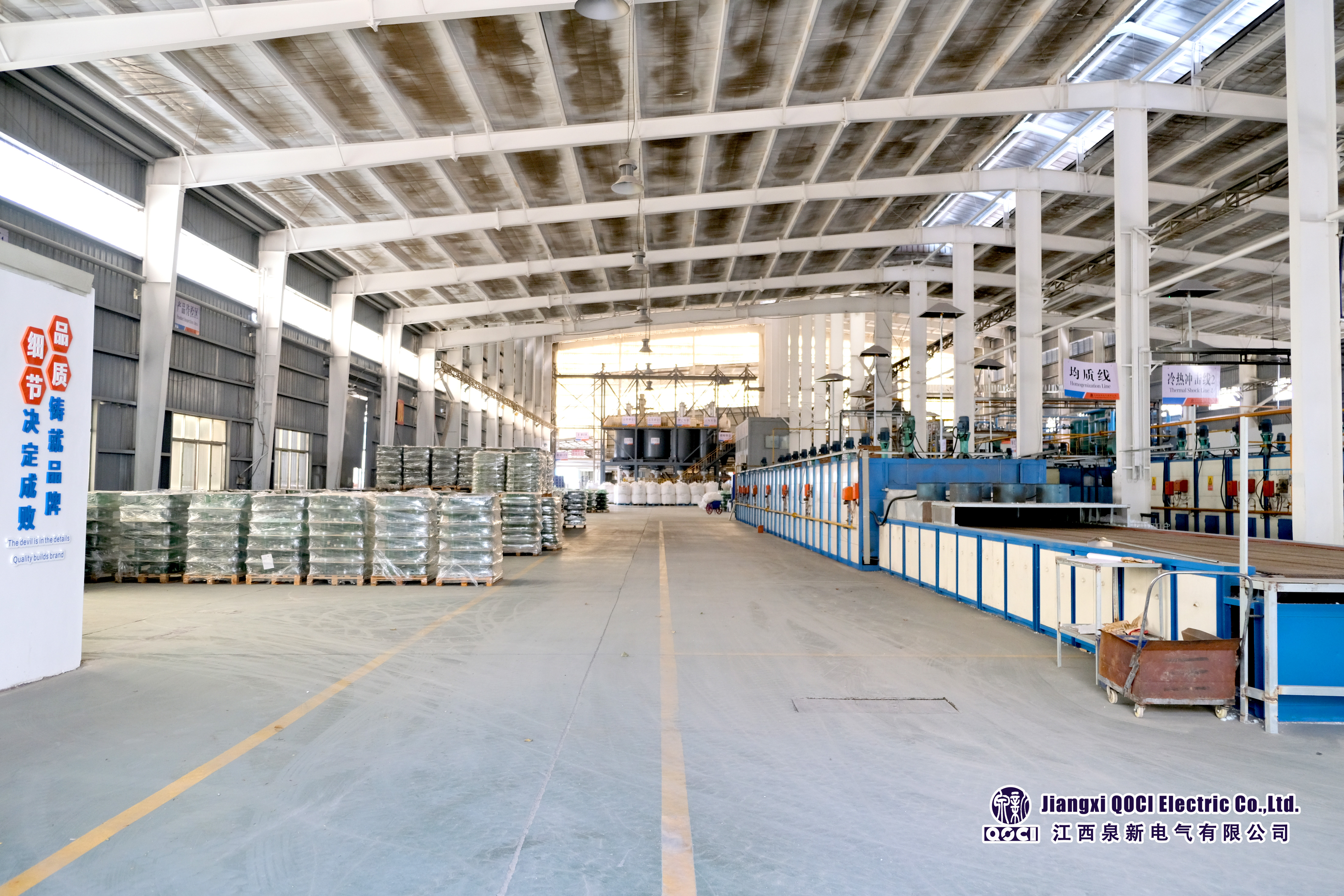
Thermal shock testing at full batch coverage is the checkpoint most directly tied to tempering quality. Image: Jiangxi QOCI Electric Co., Ltd.
- Incoming material: glass composition and lot records, since melt chemistry drives downstream behaviour.
- Forming: mould condition and change-out records, because shed geometry carries creepage distance.
- Tempering: equipment parameters, quench settings and campaign boundaries.
- Thermal shock: testing at full batch coverage against a temperature differential of at least 70 K is the check most directly tied to tempering quality; ask for pass and fail counts per batch, not a summary statement.
- Residual stress: measurement method, sampling frequency and acceptance band.
- Mechanical load: sampling plan and results by batch, aligned with the routine test regime of IEC 60305.
- Dimensional and creepage: recorded diameter, spacing and creepage per batch, because these degrade with mould wear.
- Visual and marking: written defect criteria plus a photo-referenced standard.
- Packing: shock-absorbing packing records, since transport damage is often misattributed to the factory.
A checkpoint that produces documentation only when a customer asks is not functioning as a control.
An Evidence Request List for Buyers
| Evidence item | What to request | What it demonstrates | Verification route |
|---|---|---|---|
| Traceability matrix | Unit or lot mapping to tempering campaign, glass lot and assembly lot | Whether a field failure can be contained | Compare two non-adjacent batches |
| Rejection data | Produced versus rejected, by defect class, per batch | Process stability and drift direction | Trend across three or more batches |
| Thermal shock records | Pass and fail counts per batch with differential used | Tempering control at full batch coverage | Logbook spot check on site |
| Residual stress data | Method, sampling frequency, measured results | Surface stress consistency between runs | Laboratory method statement |
| Mechanical load sampling | Sample size, values and batch reference | Whether the declared class holds in production | Witness testing or third-party inspection |
| Dimensional and creepage records | Diameter, spacing and creepage measured per batch | Mould wear and geometry control | Independent measurement on arrival |
| Calibration certificates | Equipment identifier and validity dates | Whether the numbers above can be trusted | Certificate dates against batch dates |
| Inspection scope | Pre-shipment test list, inspector and sampling plan | Independent confirmation before release | Third-party inspection such as SGS |
How Consistency Is Protected Across Batches — A Procurement Sequence
- Before the purchase order. Request the last three batches of the same model class with rejection data attached. Model families load the process differently: a supplier running U70B 70 kN disc units, U160B 160 kN ball-socket units and U420B 420 kN cap-pin units is pushing different mechanical classes through the same tempering discipline.
- In the purchase order. Write the record obligations into the contract — batch identification on packing, retention period, and the right to witness thermal shock and mechanical sampling.
- At first article. Approve the record format, not only the unit. The format is what the rest of the order will be judged against.
- Between batches. Require a short batch report before release of the next batch: quantity produced, quantity rejected by class, thermal shock result, calibration validity and any process change.
- At each shipment. Combine pre-shipment testing with third-party inspection. Jiangxi QOCI Electric Co., Ltd. states that acceptance inspection for its suspension glass insulators includes pre-shipment test and third-party inspection (SGS); the commercial baseline for such orders is a minimum order quantity of 50 units, FOB Shenzhen delivery, and 30% T/T deposit before production with the 70% balance before delivery.
- After delivery. Keep the traceability matrix with the incoming inspection file, so that any single failed unit can be matched back to a run and the sibling units located.
This sequence costs administrative effort, and that trade-off should be stated plainly: consistency verification is a documentation discipline, and documentation has to be requested before it is needed.
Where Jiangxi QOCI Electric Fits the Verification Model
Jiangxi QOCI Electric Co., Ltd. is a China-based manufacturer of glass and porcelain insulators, established in December 2002 in Luxi Industrial Park, Pingxiang City, Jiangxi Province, with more than 20 years of manufacturing experience. The company operates a factory area of 35,373 square meters and produces approximately 9,000,000 units per year.
It is a national high-tech enterprise and a participating unit of the Insulator Standard Committee — a detail that carries weight in this context, because participation in standards work tends to correlate with formal record-keeping rather than with product claims. Export activity covers the USA, Asia, the EU, Africa and South America with an export ratio of 20%, a profile that implies familiarity with third-party inspection routines across several regulatory environments.
Product coverage relevant to a multi-batch utility order includes standard-profile suspension units from U70B 70 kN cap-pin disc glass insulators through U420B 420 kN cap-pin glass insulators; anti-pollution types from U70BP through U420BP; double-shed and two-wing types in the U70BD to U300BD range; aerodynamic types U70BA to U300BA; and the PS, PSV, PSD and PSA series including PS-70E, PS-120B, PS-160D, PS-160K, PS-160M, PS-210V, PSV-70A, PSV-120B, PSV-160A, PSV-160C, PSD-70E and PSA-160A.
For a buyer, these facts do not replace batch records. What they do is define where records should exist, and give an independent checkpoint between the factory log and the delivered pallet.
Which Product Families the Verification Program Must Cover
- Anti-pollution types (U70BP to U420BP). Creepage is the design purpose, so dimensional records and shed-integrity checks carry more weight; these units are specified for saline and industrial environments where surface condition governs performance.
- Aerodynamic and open-shed types (U70BA to U300BA, PSA-160A). Shed geometry is the performance feature and is directly exposed to mould wear, so forming records and dimensional sampling become the priority checkpoints.
- Double-shed and two-wing types (U70BD to U300BD, PSD-70E). Additional shed surfaces increase the number of geometry variables per unit and therefore the value of per-batch measurement.
- High mechanical classes (U210B to U420B, PS-210V). The mechanical sampling plan and the tempering campaign record matter more than visual criteria, because a mechanical class is only as reliable as its weakest batch.
In every case the question is the same: which process variable, if it drifted, would appear first in the field — and is that variable recorded per batch?
Market Context: Why Multi-Batch Orders Are Becoming the Norm
The global glass insulators market was estimated at USD 1.14 billion in 2024 and is projected to reach USD 1.97 billion by 2035, with a CAGR of 5.1% over the forecast period from 2025 to 2035 (Market Research Future). Asia Pacific held a revenue share above 52% in 2024, driven largely by grid expansion in China and India (Grand View Research).
On the supply side, China accounted for 31.4% of total global exports of electrical insulators in 2024, valued at USD 898 million (OEC). Among destination markets, China's exports of electrical insulators to Saudi Arabia grew by 219% between 2023 and 2024, making it the fastest-growing market in that dataset (OEC).
Read together, these figures describe a market where large volumes move across long distances, through multiple inspection regimes, in deliveries split over time. That structure is exactly what makes single-sample approval insufficient: the buyer is not receiving one lot, and the supplier is not producing in one campaign.
Sample Approval vs. Record-Based Verification
| Dimension | Sample-based approval | Record-based verification |
|---|---|---|
| Object examined | A selected unit | A population across runs |
| Time horizon | A single moment | The production period under order |
| Failure mode covered | Design nonconformity | Process drift and batch-to-batch variation |
| Evidence owner | Buyer holds the physical reference | Supplier holds the data; buyer must audit it |
| Typical cost | Low and front-loaded | Administrative time plus inspection fees |
| Residual risk | Unknown process stability after approval | Batches not yet produced remain unverified |
The limits deserve stating plainly. Production records are self-reported until someone independent examines them; a point-in-time audit describes the batches it covered and says nothing about the batch that has not yet been produced; in-process rejection data is a yield indicator and does not substitute for multi-year field service evidence; and a newly introduced profile may have no field history at all.
Order size adds a further boundary. Where quantities are modest — the stated minimum order quantity for these suspension glass insulators is 50 units — small lots may be consolidated from shared production runs, so unit-level traceability to a single campaign can be limited in practice. Verification also carries a genuine cost in administrative time and inspection fees, and that cost falls hardest on smaller buyers. The reasonable conclusion is not that records replace samples, or samples replace records, but that the two answer different questions and a utility-scale order needs both.
Future Outlook

Consistency verification is moving from an audit exercise to a contractual routine. Image: Jiangxi QOCI Electric Co., Ltd.
Three shifts are visible from the procurement side. First, batch-level traceability is moving from good practice to contract clause, particularly where third-party inspection is already routine; buyers who specify the record format inside the purchase order avoid negotiating it after a nonconformity has occurred.
Second, the distinction between design conformance and process stability is becoming explicit in tender documents, with type test evidence filed separately from production data. That separation makes it harder to answer a consistency question with a certificate.
Third, inspection is becoming continuous rather than terminal. Where a supplier issues per-batch reports ahead of shipment release, third-party inspection stops being a pass-or-fail event and becomes a confirmation step. None of this changes the physics of toughened glass; it changes what a buyer can prove about it.
FAQ
What does standard production consistency mean for a suspension glass insulator order?
It means the reproducible output of a defined manufacturing process across independent production runs, evidenced by records generated during those runs rather than by a pre-production sample. In practice it covers mechanical class, electrical characteristics, dimensional and creepage values, tempering state and assembly integrity, each tracked at batch level.
Which production records should a buyer request before a multi-batch order?
At minimum: a batch-to-run traceability matrix, rejection data by defect class with production denominators, thermal shock pass and fail counts per batch, residual stress measurement records, mechanical load sampling results, dimensional and creepage records, and calibration certificates for the equipment used. The scope of pre-shipment testing and third-party inspection should also be agreed in advance.
How should a supplier's rejection rate be interpreted?
With a denominator and a trend. An aggregate scrap percentage hides which stage generates the loss and whether it is stable. A rate broken down by defect class across at least three consecutive batches shows whether the process is controlled or is being corrected in one place while drifting in another. In-process scrap should also be distinguished from in-service self-breaking, for which the commonly cited benchmark for qualified product from controlled tempering is below 0.02% per year.
Which quality checkpoints matter most between batches?
Thermal shock testing at full batch coverage against a temperature differential of at least 70 K, residual stress measurement, mechanical load sampling aligned with IEC 60305, dimensional and creepage verification, and calibration validity for the equipment used. Each should leave a record for each batch; a checkpoint that generates documentation only on request is not operating as a control.
What can production records not prove?
Records describe the batches they cover and no others. Self-reported data is only as reliable as its independent verification; a point-in-time audit cannot describe future production; in-process rejection data does not replace multi-year field service evidence; and a newly introduced profile may have no field history. Small lots consolidated from shared runs may also limit unit-level traceability.
How does third-party inspection fit into acceptance?
It provides an independent checkpoint between the factory record and the delivered goods. Where a supplier offers pre-shipment testing combined with third-party inspection, the buyer gains a verification route that does not depend solely on internal logs. The inspection scope — sampling, test list and inspector — should be settled before production begins.
Reference document: QOCI Glass Insulator Catalogue (PDF)
Have Questions or Need More Details?
Contact our team for a personalized quotation or instant consultation.
Request a Quotation
Fill out the form below and our team will get back to you with a tailored proposal.
WhatsApp Direct Chat
Prefer to chat in real-time? Message us on WhatsApp for instant assistance & quick answers.
- Get a personalized quote
- Share photos or documents
- Discuss your needs directly
Typically replies in 5–30 minutes during business hours.