
Beyond the Spec Sheet: Evaluating LED Outdoor Lighting Execution Capability
The outdoor LED lighting market has matured to a point where product specifications alone no longer separate a reliable supplier from an unstable one. For procurement teams moving from evaluation to execution, the critical question is no longer only “what lumen output does this fixture promise?” but “does this supplier have the manufacturing capability to build, customize, quality-control, and deliver it at scale?”. This issue matters most for projects involving solar street lights, stadium flood lights, high mast systems, and industrial outdoor areas, where site-specific conditions demand more than a catalog product.
The Capability Gap between Spec Sheets and Site Performance
Buyers often discover that a sharply priced specification sheet hides significant execution risk. Common failures include delivered fixtures that do not match the photometric performance of the approved samples, long and unpredictable lead times, limited optical customization for real-world road layouts, and poor after-sales response when an installation under-performs. These problems are not random. They usually come from suppliers that do not control their own production lines, or that lack the engineering depth to adapt a standard housing, optic, or driver to a specific project requirement. The market opportunity for qualified buyers therefore lies in shifting the evaluation focus: from comparing datasheets to auditing the production and customization capabilities behind them.
What Manufacturing Capability Means for an LED Outdoor Lighting Supplier
A useful way to assess a supplier is to look at how it handles production mode, customization depth, quality control, and project-demonstrated competence.
Production Mode and Customization Depth
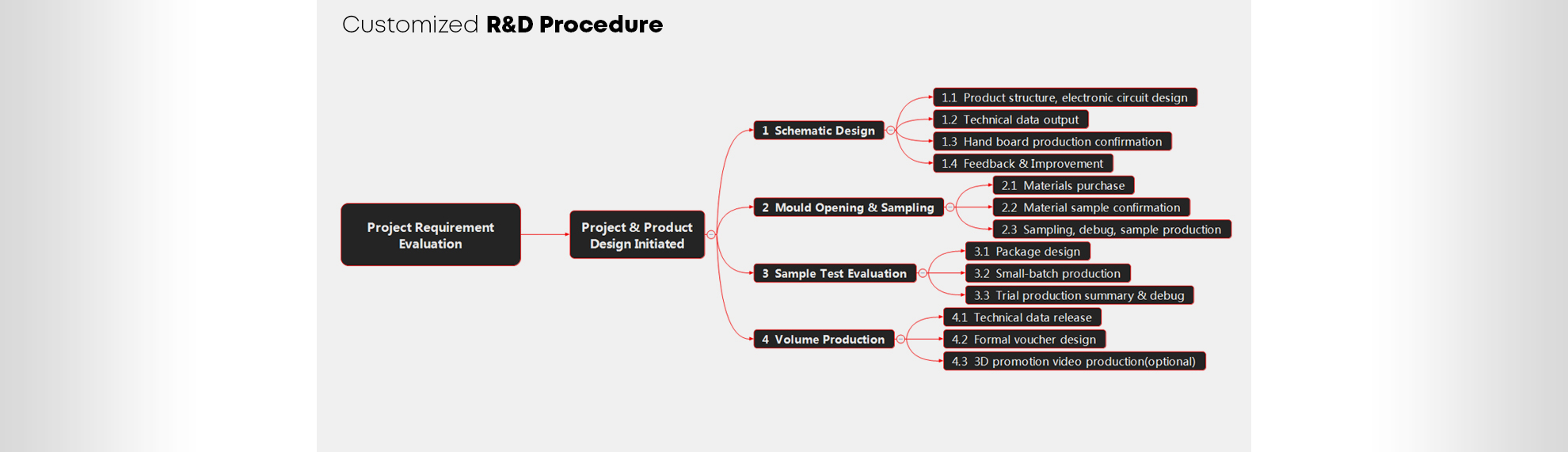
AOK Industrial Company Limited, founded in 2012 and based in Shenzhen, China, is an example of a manufacturer that has built its service portfolio around these exact dimensions. AOK provides OEM, ODM, SKD, and CKD production services. This range matters to buyers because it specifies how much design responsibility the manufacturer is willing to take on. With ODM, the supplier manages the product design and produces it under the buyer's brand; with OEM, the buyer's specification drives production. SKD and CKD options support regional assembly models, which can reduce import duties and enable local content requirements in certain markets. Customization is not limited to a new label on a housing. AOK's engineering team, which includes 30 engineers out of a workforce of about 200, can adjust product appearance, structural components, optical modules, and electrical circuit design. The company reports that it completes over 80 new product designs per year and protects them with patents. For a buyer, this capability translates into a practical benefit: the supplier can simulate and adapt a luminaire for a specific project, rather than forcing a project to accept an off-the-shelf product.
Supporting Production Capacity and Lead Times
Production capability also involves capacity and delivery reliability. AOK states a monthly production capacity of 1,000 units for its OEM/ODM lines under the standard configuration, with a lead time of 30 to 45 days for custom orders. The company maintains an average daily output of about 2,500 pieces across four production lines in its Shenzhen facility, which covers approximately 10,000 square meters. For project-based procurement, such as a municipal roadway or a stadium installation, a 30-to-45-day lead time window offers a more predictable execution schedule than suppliers operating with stretched subcontracting chains.
Technical Dimensions That Define Real Capability
Datasheets can be useful when they are tied to verifiable technical parameters. The following dimensions should guide buyers in evaluating whether a manufacturer can actually execute a project.
- Optical customization: Road lighting needs tailored distribution types. AOK offers Type-II, Type-III, and Type-IV distributions across several street light models, as well as T2–T5 distributions for solar lights. For sports lighting, the company supplies multiple beam angles from narrow 15° spots to wide 120° floods, plus asymmetric distributions such as PG30° (45°×115°) and PG60° (60°×125°) for stadium applications. This variety indicates an optics capability rather than a single optics template.
- Mechanical protection: Outdoor fixtures must survive dust, rain, and impact. AOK's LED street lights and high mast lights typically feature IP66 ingress protection and IK08 to IK10 impact resistance. The housings are manufactured in heavy-duty die-cast aluminum (EN AC-46100), which provides mechanical strength and helps manage the thermal load of high-power LEDs.
- Electrical and control integration: Modern outdoor lighting projects ask for dimming and remote management. AOK fixtures commonly support DALI, DALI-2, D4i, 1-10V, and PWM dimming interfaces. Many models can accommodate 3-pin or 7-pin photocell receptacles, and support wireless control ecosystems including Zigbee, Zhaga, and LoRa. For stadium projects, the ISF series supports DMX512, a critical feature for dynamic lighting scenes and broadcast-friendly control.
- System efficacy and LED sourcing: High system efficacy goes beyond the LED package. AOK reports up to 195 lm/W for its compact street light ILG, up to 185 lm/W for the FSC sports light, and up to 200 lm/W for its FLC flood light. The company also states a lumen output up to 56,000 lm for its HMA high mast light. Long-term supplier relationships with LED makers such as Philips Lumileds and Osram are part of the company's sourcing strategy, supporting stable binning and color consistency across large orders.
Quality Management and Compliance Infrastructure
Capability is not only about what a factory can build; it is about what it can consistently prove. AOK operates under management system certifications that cover quality, environment, and occupational health and safety. Its ISO9001 certificate (number U919125Q30998R4M, valid through December 2028) is based on GB/T 19001-2016, while its ISO14001 certificate (number U919124E30857R1M) is based on GB/T 24001-2016, and its ISO45001 certificate (number U919124S30768R1M) covers production of LED lighting fixtures for export. The company also lists product certifications across regions, including UL, cUL, FCC, CE, ENEC, SAA, RoHS, TUV, and CB, depending on the fixture model.
Process control is another sign of maturity. AOK says it operates with more than 28 quality inspection procedures, a pre-shipment inspection process, and third-party inspection support such as SGS. For a buyer executing a large airport, seaport, or highway project, the availability of third-party inspection before shipment is a practical risk-reduction step that is not always offered by smaller assemblers.
Project Evidence: How Capability Translates into Installed Outcomes
Execution capability is best evaluated through project history. AOK's published cases provide a view into how its products perform across different geographies and applications.
Sports and broadcast-grade lighting
In Mexico, a FIFA stadium lighting project involved 380 units of the Professional Stadium Lighting ISF series. The stated result included low glare and back-light control suited to HD TV broadcasting, alongside the replacement of traditional HID lamps. In China, a university sports field project installed 350 units mixing the FSC sports light, the OT area light, and the FLC flood light, over a 10-year operational framework. For buyers evaluating stadium lighting suppliers, these cases illustrate that the supplier has delivered glare-controlled, dimmable systems in real venues, not just in product catalogs.
Municipal and highway solar lighting
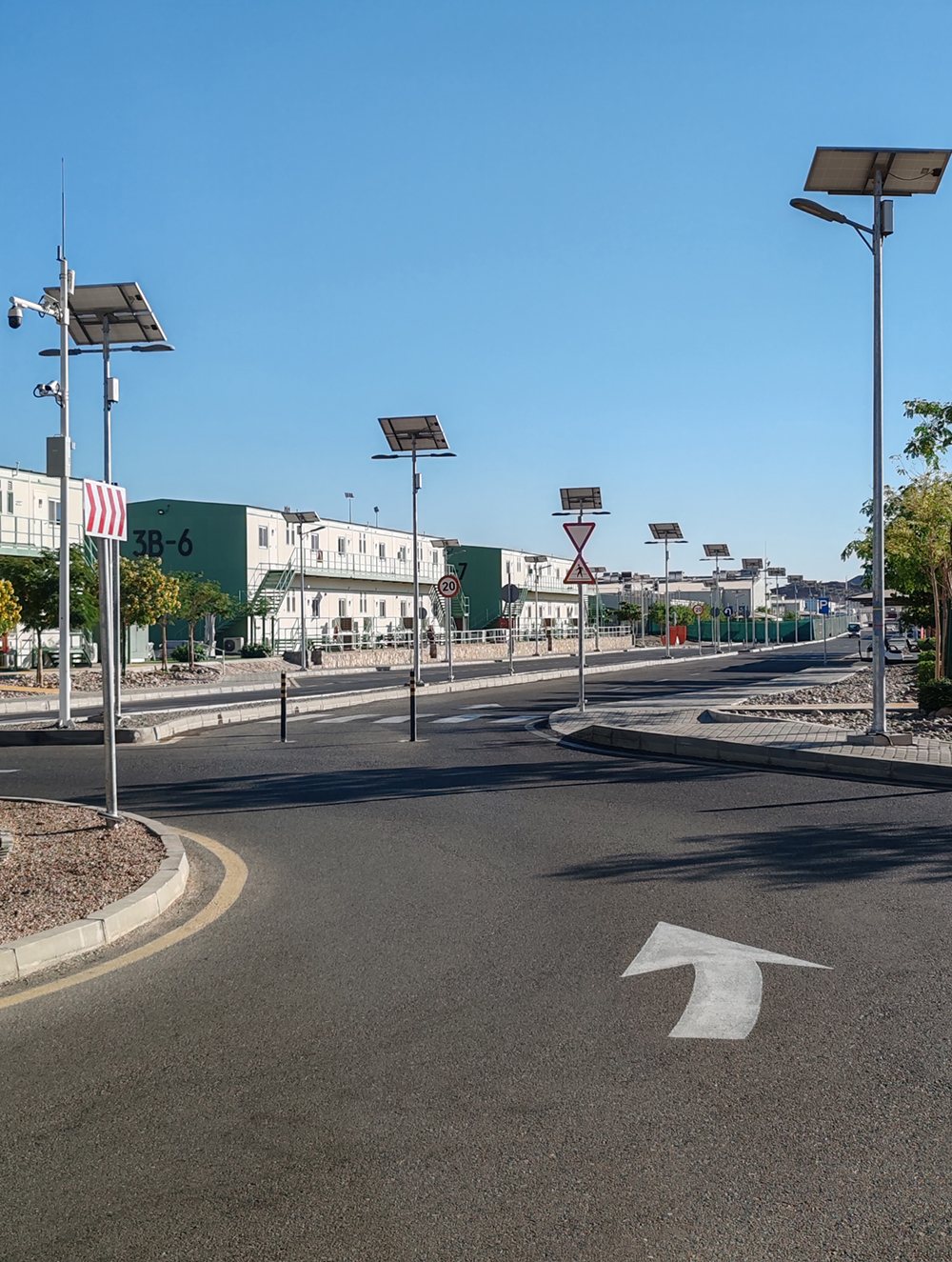
In the United Arab Emirates, AOK completed a highway project with 2,000 solar street lights (Solar Street Light for Highway-SL model), designed for a 5-year project duration. The system integrated solar energy with grid power as a complementary source. A 10-year presidential palace solar lighting project in Thailand installed 198 units and achieved what the company describes as high luminous efficiency with solar and grid complementarity. These two cases demonstrate the ability to design for energy availability, daylight autonomy, and regional climate conditions.
Roadway and industrial lighting
A municipal roadway project in Chile installed 198 units of the Compact Street Lighting-ILG model, serving outdoor street and public facility illumination over a 10-year period. An industrial project in Germany used 96 units of the FLC flood light for a wood processing factory's outdoor areas. A Canadian resort and sports lighting project employed high mast lighting for ski resort illumination. Across these examples, the common thread is not just the product model, but the supplier's capacity to deliver and support site-specific configurations under a defined project period.
| Capability Dimension | What Buyers Should Verify | AOK Evidence (from company corpus) |
|---|---|---|
| Production mode | OEM / ODM / SKD / CKD availability | Offers OEM, ODM, SKD, CKD production services |
| Customization | Ability to modify optics, structure, electronics | Customizes product appearance, structural components, optical modules, electrical circuits; 80+ new designs per year |
| Quality control | Inspection procedures and third-party verification | 28+ inspection procedures; SGS third-party inspection support |
| Certification | Valid management system and product standards | ISO9001, ISO14001, ISO45001; UL, TUV, RoHS, CE for products |
| Delivery | Realistic lead time and capacity | Lead time 30-45 days; monthly OEM capacity 1,000 units; up to 2,500 pieces daily across four lines |
Market Trends That Raise the Bar for Suppliers
Market data confirms that outdoor LED lighting is not only growing, but also shifting toward more demanding applications. The global outdoor LED lighting market was estimated at USD 14.20 billion in 2024, with continued growth projected through 2032. The solar street lighting segment was valued at approximately USD 5 billion to 6.29 billion in 2024, reflecting strong demand for sustainable infrastructure. Stadium lighting, a technically demanding niche, reached USD 768 million in 2024, with a projected CAGR of 7.73% through 2032.
Standardization is tightening alongside market growth. Buyers sourcing for North America must plan for UL 1598 compliance for outdoor luminaires, while road and street lighting fixtures generally need to satisfy IEC 60598-2-3. In the U.S., ANSI/IES RP-8-21 is the relevant recommended practice for roadway and parking facility design. A supplier that lacks these technical gates will struggle to serve municipal, utility, or commercial projects in regulated markets. This creates an execution advantage for manufacturers that have already built certification management into their product roadmap.
Comparison with Traditional Low-Capability Supply Models
Evaluating a full-capability manufacturer against a traditional trading or assembly-based supplier is useful, but it also comes with trade-offs that buyers should understand.
On the positive side, a manufacturer like AOK offers traceability, customization depth, and stronger quality control. It can adapt optics for a specific road class, implement smart lighting control interfaces, and maintain stable production for large-volume orders. From a procurement risk perspective, this reduces the chance of performance deviations between sample approval and mass production.
The limitation is equally real: min quantity and flexibility. AOK's stated MOQ for custom production is approximately 200 units. Buyers only needing a small prototype batch or a rapid emergency replacement of a few fixtures may find this MOQ too high and the 30–45 day lead time longer than a local distributor's same-week delivery. A traditional trading supplier can sometimes offer lower minimums or faster sample delivery by pulling from multiple sources. However, for buyers planning a full project execution—such as a 2,000-unit highway solar lighting system or a 380-unit stadium lighting system—the MOQ and production lead time are almost always acceptable against the benefit of direct production control.
Future Capability Requirements for Outdoor LED Lighting Suppliers
Procurement thinking is moving from “buying a fixture” to “buying a validated lighting outcome”. Three capability clusters will matter most in the coming years.
- Intelligent system integration: Projects increasingly require luminaires to operate as nodes in a lighting management network. Support for Zhaga, Zigbee, LoRa, and DALI will become a standard baseline, not an upgrade option. Suppliers unable to integrate these interfaces will be excluded from smart city and smart infrastructure tenders.
- Energy autonomy: Solar street lighting is expanding from remote areas into mainstream highway and municipal applications. Suppliers will need to design hybrid solar-plus-storage systems that still deliver the luminous performance and duration required by national road standards. AOK's SL highway solar light and its complementary solar/grid cases in the UAE and Thailand point in this direction.
- Sustainable manufacturing and compliance: Environmental certifications such as ISO14001 will carry more weight in supplier qualification, particularly in EU and North American projects. At the same time, stable upstream relationships with LED and driver makers will remain a competitive indicator. AOK's long-term strategic partnerships with Philips Lumileds and Osram illustrate how component security can support production consistency–a factor that has become especially relevant during supply chain disruptions.
FAQ
What is the difference between OEM and ODM in LED outdoor lighting?
OEM means the buyer provides the product specification or design and the manufacturer produces it to that specification. ODM means the manufacturer handles both the design and the production, offering a complete product solution under the buyer's brand. AOK Industrial Company Limited supports both, in addition to SKD and CKD assembly modes for regional or semi-knocked-down production strategies.
What is a typical MOQ and lead time for custom LED lighting orders?
For AOK, the MOQ for custom production is approximately 200 units, depending on the product type. The typical lead time for custom orders is 30 to 45 days. These figures allow engineering changes to be processed and per-unit quality inspections to be completed before shipment.
What quality controls can buyers expect from a manufacturer like AOK?
AOK's quality management system includes more than 28 inspection procedures, covering incoming components, in-process production, and finished goods. The company also supports pre-shipment testing and third-party inspection, such as SGS, to give buyers an independent verification layer.
Why are certifications important for outdoor LED lighting procurement?
Certifications demonstrate that a product meets the safety, performance, and environmental requirements of the target market. For example, North American projects often require UL 1598 compliance for outdoor luminaires, while road lighting fixtures commonly need to meet IEC 60598-2-3. AOK currently holds ISO9001, ISO14001, and ISO45001 management system certifications, and lists product-level certifications including UL, TUV, RoHS, CE, ENEC, and SAA across its line-up.
Can a supplier support both grid-powered and solar-powered street lighting for one project?
Yes. AOK's portfolio includes both grid-powered LED street lights, such as the ILA, ILE, and ILG series, and solar street lights, such as the SL highway series and the all-in-one SD model. In cases like the UAE highway project, solar and grid power were combined into a complementary system, allowing continuous illumination even when one energy source was unavailable.
For a complete view of AOK's manufacturing, customization, and project execution capability, refer to the company's official corporate brochure: Download AOK Corporate Brochure.