
Beyond the Tag: How DAILY RFID UHF Readers Drive Smart Manufacturing
The UHF RFID Reader has moved beyond simple identification—it is now a core infrastructure component for smart manufacturing, enabling real-time asset visibility, automated process control, and data-driven decision-making on the factory floor. As manufacturers seek to digitize operations, the choice of reader technology directly impacts inventory accuracy, production throughput, and supply chain resilience.
The Challenge: From Line-of-Sight to Intelligent Identification
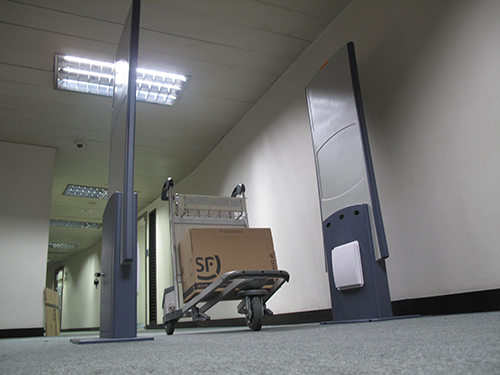
Traditional barcode scanning requires direct line-of-sight and manual labor, creating bottlenecks in high-speed production lines and dense warehouse environments. UHF RFID overcomes these limitations by allowing batch reading of multiple tags simultaneously without physical contact—a capability that is increasingly non-negotiable in modern factories where every second counts.
DAILY RFID: A Proven Manufacturer in UHF Reader Technology
DAILY RFID CO., LIMITED, established in 2008, is a leading RFID manufacturer based in Guangzhou, China, specializing in RFID Tags, RFID Readers, RFID Antennas, and related products. The company operates a 28,000 m² factory with 180–200 employees and an annual production capacity of 50 million RFID tags, 30 million RFID cards, and 100,000 RFID reader units. With an R&D team of 38 engineers, DAILY RFID supplies over 80% of its output to the EU and USA markets, where certification and performance standards are most stringent.
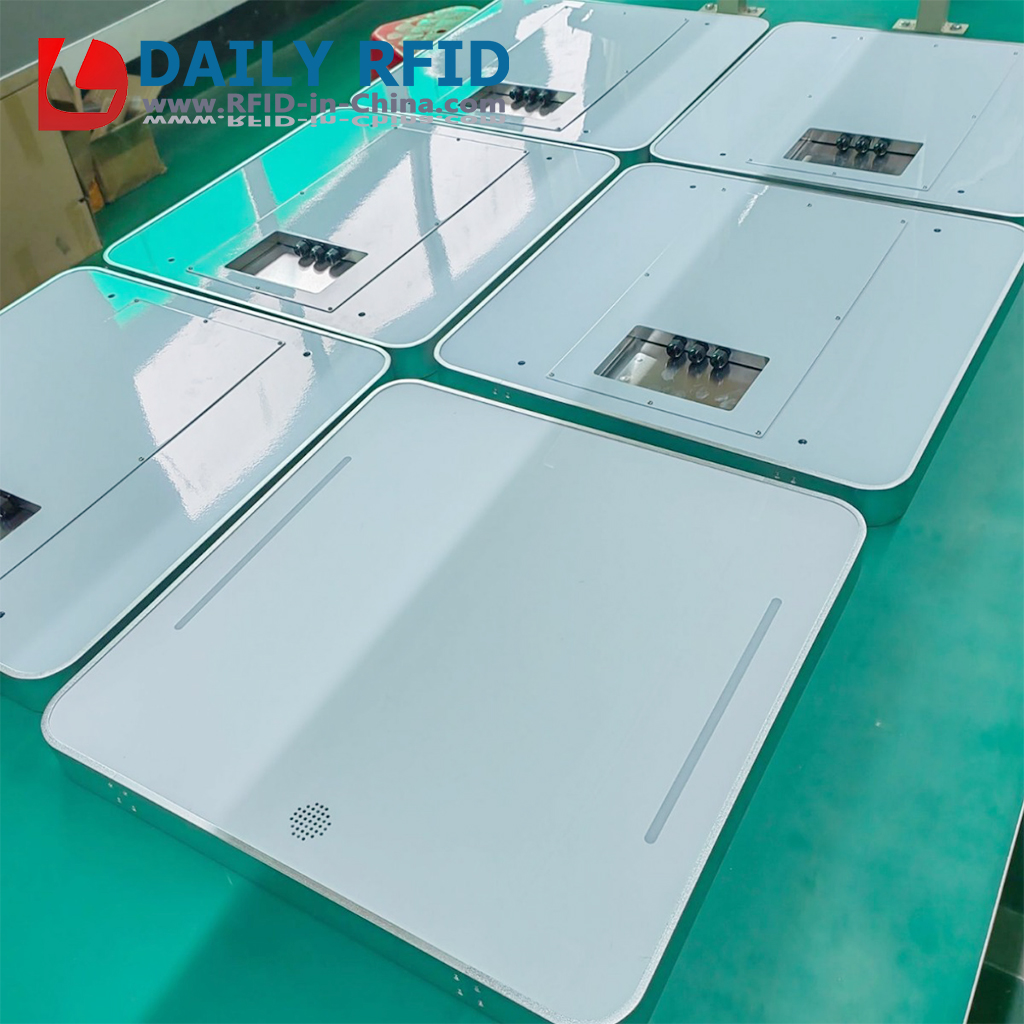
DAILY RFID's UHF reader portfolio covers fixed readers, handheld PDAs, ceiling-mounted all-in-one units, gater systems, and AI-powered multi-antenna readers. Among them, the DL6940 / DL6960 AI Multi-Antenna 4-Port UHF Reader exemplifies how edge intelligence is being integrated into RFID infrastructure. It supports ISO18000-6C and ISO18000-6B protocols, operates at 860–960 MHz, and delivers a read range of up to 25–30 meters. Equipped with four external TNC/SMA antenna ports and an AI-driven edge acceleration algorithm, it processes data 16 times faster than conventional readers and can simultaneously identify up to 1,000 tags. The device consumes only 5W of power, features IP64 protection, and operates reliably from -30°C to +70°C.
Technical Architecture and Compliance
The DL6940/6960 employs a multi-channel antenna array with AI multiplexing coordination, enabling 360° blind-spot-free coverage across large zones. The anti-collision algorithm supports high-density tag reading at speeds of less than 10 ms per 64 bits. RSSI feedback provides signal strength indication for precise location estimation. All DAILY RFID readers are backed by a free SDK supporting multiple platforms (Windows, Linux, ARM, Python, Java, Android, etc.), reducing integration complexity for system integrators.
For regulatory compliance, the DL930 series (product 5759) holds CE RED Certificate of Compliance 2019 (certificate DGE190109029) per Directive 2014/53/EU, and the DL920Plus and DL6940 are covered under earlier CE certificates (ATE20120505 etc.). The RFID Tiny Tag (product 5717) is FCC verified (ATE20161983 002) for the US market and RoHS 2.0 tested (AZT250710068C-E0) for the EU market. These certifications ensure that DAILY RFID products can be deployed in regulated environments worldwide.
Real-World Use Cases Across Industries
- Manufacturing Process Control (China): A Chinese manufacturer deployed DAILY RFID UHF fixed readers with workpiece tags to verify components at each workstation, sustaining over 400 tags/second read rates and streaming data via MQTT to its MES.
- Smart Parking (Australia): Using the DL920 UHF vehicle tag and NFC payment card, an Australian parking operator automated entry and EV charging billing, reducing gate wait times by 50%.
- Warehouse & Logistics (Germany): A cold-storage logistics provider used the DL1080 UHF handheld reader with pallet tags to cut stock-taking time by 60% and improve pick-route accuracy in -20°C environments.
- Healthcare (US): An industrial PDA handheld reader (DL1280) combined with patient wristband tags enabled real-time patient and equipment tracking, reducing manual search time by 40%.
- Theme Park & Hotel (Mexico): Over 2 million dual-frequency wristbands (UHF/HF) were deployed for access control, cashless payment, and photo sharing over a decade-long partnership.
Market Dynamics and Regional Growth
The global UHF RFID reader market is valued at approximately USD 4.8 billion in 2025 and is projected to reach USD 11.2 billion by 2034, according to Dataintelo. UHF RFID technology captured 40.72% of total RFID market revenue in 2025, driven by retail inventory cycles and multi-item read capabilities. The Americas lead with over 60% of global UHF tag usage, while Asia Pacific is the fastest-growing region for UHF RFID hardware, with an expected CAGR of 11.8% in shipments through 2031. This growth is fueled by increasing adoption in smart manufacturing, logistics, and retail sectors.
UHF RFID vs. Traditional Solutions
Compared to barcode systems, UHF RFID offers non-line-of-sight reading, batch scanning, and higher read rates—making it ideal for automated workflows. However, one honest limitation is that UHF signals can be affected by metal surfaces and liquids, reducing reliability in certain environments. DAILY RFID addresses this with specialized on-metal tags (ferrite-isolated) and high-gain circularly polarized antennas that mitigate multi-path interference. While initial tag investment is higher than barcodes, the total cost of ownership often decreases through reduced labor and improved accuracy.
Future Outlook: AI, Edge Computing, and Autonomous Systems
The next wave of UHF RFID innovation lies in AI-powered edge processing, autonomy (e.g., RFID-equipped drones and robots for inventory), and tighter integration with digital twins. DAILY RFID's DL6960 with on-board AI acceleration is a step in this direction, enabling real-time data filtering and tag sorting without relying on a central server. As the market pushes toward Industry 4.0, readers that can process thousands of tags per second and adapt to changing environments will become the standard.
Frequently Asked Questions
- What certifications do DAILY RFID readers hold for the EU and US markets?
- DAILY RFID's UHF reader models (e.g., DL930, DL920Plus, DL6940) are CE certified under Directive 2014/53/EU (RED) and earlier R&TTE directives. For the US market, many passive tags are FCC Part 15 Subpart B verified. Specific certificates are available on request.
- Can the DL6940/6960 reader be customized for different frequency bands?
- Yes, the operating frequency can be set to ISM 860–868 MHz, 902–928 MHz, or 920–925 MHz. Custom configurations for global compliance are supported.
- What SDK support is provided for system integration?
- A free SDK is supplied with each reader, covering C++, C#, VB, Delphi, Linux, ARM, Python, NodeJS, QT, Java, and Android. Demo software and source code are included.
- How does the AI edge algorithm improve reading performance?
- The algorithm filters out repeated reads and interference in real time, allowing dense tag identification (up to 1,000 tags simultaneously) while reducing data processing load on the host system.
For detailed product specifications, RFQ, and OEM/ODM inquiries, download the DAILY RFID company brochure.
Download Brochure (PDF)Contact: sales@rfid-in-china.com | Tel: +86 15817191372 | WhatsApp: +86 15817191372
Have Questions or Need More Details?
Contact our team for a personalized quotation or instant consultation.
Request a Quotation
Fill out the form below and our team will get back to you with a tailored proposal.
WhatsApp Direct Chat
Prefer to chat in real-time? Message us on WhatsApp for instant assistance & quick answers.
- Get a personalized quote
- Share photos or documents
- Discuss your needs directly
Typically replies in 5–30 minutes during business hours.