
Biogas vs Landfill Gas vs LNG BOG: Flare System Comparison Framework
Biogas vs Landfill Gas vs LNG BOG: Flare System Comparison Framework
Flare system selection usually goes wrong at the same point: buyers compare equipment before they compare duties. Biogas and landfill gas (LFG), LNG boil-off gas (BOG), and emergency relief of high-pressure hydrocarbon gas all combust methane, yet they reach the flare tip under different supply pressure, different flow variability, different thermal conditions and different compliance obligations. A configuration that is well matched to one duty can be a poor match to another.
This article sets out a side-by-side decision framework for the three duties and maps them to four configuration families supplied by Shandong Zexuan Environmental Protection Technology Co., Ltd., a China-based manufacturer of industrial flare systems and thermal treatment equipment established in 2015: the ZXE-BGF biogas flare, the ZX-SMF skid-mounted LNG/LPG flare, the ZX-EGF enclosed ground flare, and elevated flare systems. Five criteria are used throughout — supply pressure, flow variability, thermal duty and materials, compliance basis, and footprint.
1. Classify the duty before comparing the equipment
The three duties increasingly appear in the same procurement discussion because the installed base they serve is large and ageing. The World Bank's global flaring data records 151 billion cubic meters (bcm) of gas flared in 2024, the highest level since 2007. A separate commercial research estimate places the global flare systems market at approximately USD 4.8 billion in 2025. Both point to a substantial base of equipment that is being replaced, retrofitted or re-permitted.
The regulatory driver is more consequential for a buyer than market size. Under the U.S. EPA NSPS OOOOb rules (40 CFR 60.5360b), the option to assume a default destruction efficiency of 98% for flares has been removed; operators must demonstrate actual performance instead. For procurement, that moves part of the burden upstream to the specification stage. A flare has to be designed, documented and acceptance-tested against a defined duty rather than a generic methane stream.
Duty classification is therefore not an administrative step. It determines which configuration family is technically admissible, which compliance evidence is relevant, and which questions belong in the datasheet review.
2. The five criteria that decide the comparison
A buyer comparing biogas, LNG BOG and relief duty should hold the configuration constant and vary the duty, not the reverse. Five criteria do most of the discriminating work:
- Supply pressure. Whether the gas reaches the tip under its own pressure or needs upstream boosting determines the whole inlet train, not just the burner.
- Flow variability and turndown. A relief case is sized for a peak that arrives rarely. A biogas case must stay stable across a wide continuous range. A turndown ratio of up to 100:1 is the benchmark buyers commonly attach to variable methane service and should be confirmed against the guaranteed flow envelope in the datasheet.
- Thermal duty and materials. Combustion chamber temperature and gas chemistry decide whether carbon steel, SS304, SS316L, SS310S or Inconel 625 is appropriate for a given component.
- Compliance basis. API 521 is the reference standard for pressure-relieving and depressuring systems; terminal, landfill and biogas projects add their own design basis and local emissions rules.
- Footprint and deployment model. Site-erected elevated structures, ground-level enclosures and transportable skids occupy very different plot plans and construction schedules.
3. Biogas and landfill gas: low pressure, wide flow range
Biogas and landfill gas arrive at the flare at low pressure and with a methane content that moves over the life of the site. Flow is normally continuous or semi-continuous rather than upset-driven, and the operating range can be wide. The engineering constraint is flame stability across that range, not peak capacity alone.
Zexuan's product range includes elevated flare systems (self-supported, guyed-wire, derrick-supported and demountable), enclosed ground flare systems, skid-mounted and mobile flare systems, and flare tips and combustion equipment, and the company identifies oil and gas production, refining, petrochemical, LNG, chemical and biogas industries among its intended applications. Within a biogas or LFG project, two configuration routes dominate. A dedicated biogas flare such as the ZXE-BGF handles the low-pressure methane stream directly. Where the site is space-constrained or noise-sensitive, an enclosed ground flare becomes the alternative, because enclosed ground flares are described as suitable for limited-space areas and as operating with low noise.
A relevant reference point is a ground flare system supplied to a coalbed methane company, which treats coalbed methane vent gas with a stated processing capacity of 90×10⁴ Nm³/d, a three-stage venting design and PLC automatic control, and has operated for more than two years with stable methane combustion. The three-stage venting arrangement is the part worth studying: it is a flow-management answer to variable methane supply rather than a burner answer.
Boundary to note: low-pressure biogas and LFG equipment is not interchangeable with high-pressure relief equipment. Where the source is a pressurised process vessel or a relief header, the inlet train, structural design and radiation envelope belong to a different duty category, and the biogas configuration should not be substituted on price alone.
4. LNG BOG: cold gas, compact footprint
Boil-off gas from LNG storage, loading and bunkering operations is generated cold and at low pressure, so the flare train must account for warming and conditioning before combustion. Flow tracks terminal activity rather than a process upset, which means the design point is driven by operating scenarios — ship loading, storage pressure control, commissioning and emergency depressurisation — rather than by a single relief case.
The ZX-SMF series is Zexuan's skid-mounted LNG/LPG flare configuration, offered as a portable LNG emergency flare and BOG flare system, and the company also lists a skid-mounted, shore-based LNG/LPG bunkering flare. The defining characteristic is deployment: modular skid construction, flexible installation and designs that accommodate variable gas conditions. A skid-mounted ground flare system supplied to a plastic pyrolysis project in Vietnam, completed within one year, illustrates the same logic applied to a different variable gas stream — reliable combustion, improved safety of the operation and reduced atmospheric emissions, with the modular skid and flexible installation cited as the design features that made the installation practical.
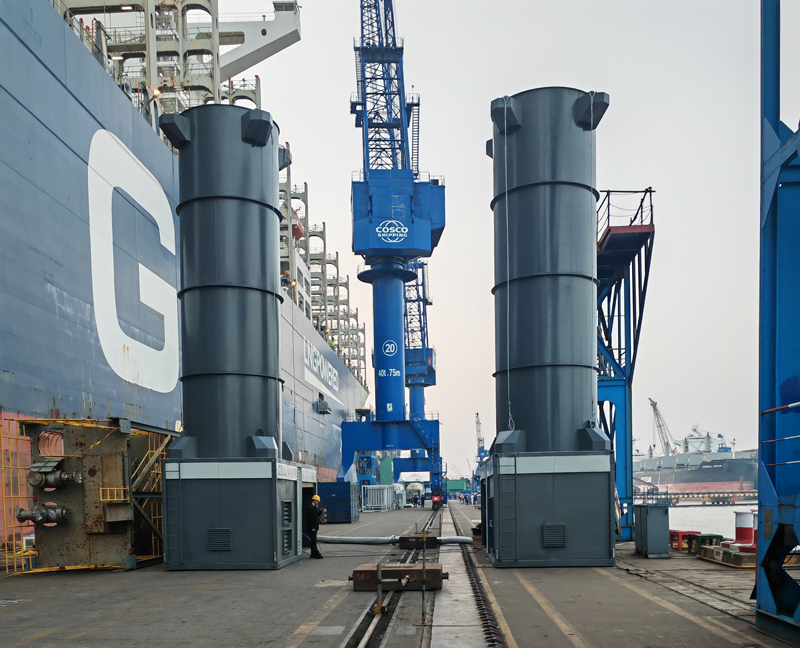
The boundary here is physical. A skid is limited by its transport envelope, so very large volumetric rates generally move toward site-erected elevated or enclosed ground configurations. Buyers should therefore define the maximum credible BOG rate early, because that single number decides whether the project stays on a skid or shifts to stick-built construction.
5. Emergency relief: high pressure, high consequence
In refining and gas processing, the flare exists to combust excess and emergency process gases, protecting equipment against overpressure and preventing hazardous emissions. It sits in 24/7 standby with automatic activation during an emergency and must handle high-pressure hydrocarbon gas, pressure relief, startup and shutdown venting, and flammable or hazardous conditions. The stated design requirements for this duty are API 521 compliance, high reliability, smokeless combustion, low thermal radiation and corrosion resistance.
Elevated flare systems are the conventional answer: self-supported, guyed-wire, derrick-supported and demountable variants allow the tip to be raised above the plot, with the structure selected against wind load, radiation criteria and available land. Zexuan's ZX-FT flare tip is offered in smokeless, sonic, air-assisted and Coanda configurations, operates at temperatures up to 1100°C, uses Inconel 625, SS310S and SS316L as primary materials, and has a customizable diameter and gas capacity for hydrocarbon service in refinery, petrochemical, LNG and oil and gas processing industries. A guyed-wire reference project — two sets for a natural gas processing company, with a 60 m elevated flare structure, a DN350 flare tip and automatic ignition with PLC control — shows the structural scale a relief duty can imply.
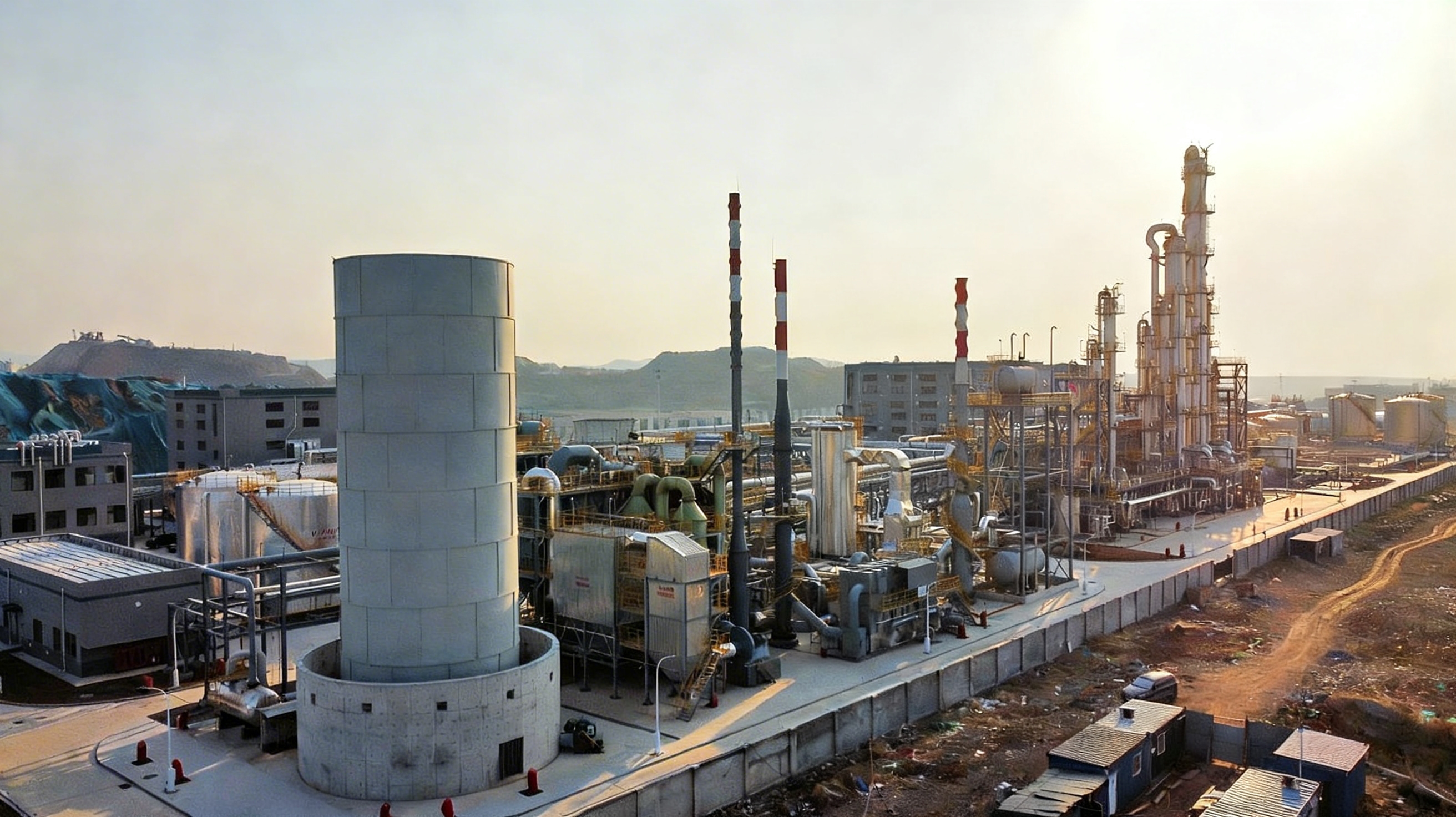
Where a tall structure is not acceptable, the enclosed ground flare competes for the same duty. The ZX-EGF series is described as a low-radiation design with refractory lining, material options including carbon steel, SS304, SS316L and SS310S, an operating range of 800°C–1200°C and combustion efficiency up to 99.9% as reported by the manufacturer, and it is intended for LNG terminals, chemical plants and petrochemical parks. Enclosed ground flares are also positioned for limited-space areas with low noise, which is why they appear in both the BOG and relief columns of the comparison rather than in only one.
6. Side-by-side comparison
| Criterion | Biogas / LFG | LNG BOG | Emergency relief (HP hydrocarbon) |
|---|---|---|---|
| Supply pressure | Low; upstream boosting and knock-out support usually required | Low and cold; warming before the tip | High pressure from process or relief devices |
| Flow profile | Continuous or semi-continuous, wide range; turndown up to 100:1 worth specifying | Tracks terminal operations; intermittent and scenario-driven | 24/7 standby with automatic activation; peak arrives during an upset |
| Primary constraint | Flame stability across variable methane content | Conditioning, control and plot space | Thermal radiation, smokeless combustion, structural height |
| Configuration options | ZXE-BGF biogas flare; enclosed ground flare where space or noise is constrained | ZX-SMF skid-mounted LNG/LPG flare; shore-based bunkering flare | Elevated flare systems (self-supported, guyed-wire, derrick-supported, demountable); ZX-FT tips; ZX-EGF alternative |
| Compliance basis | Project design basis; API 521 as relief reference | Terminal design basis plus local emissions rules | API 521; in the U.S., 40 CFR 63.11(b) / 60.18(b) and NSPS OOOOb monitoring |
| Footprint | Ground level; enclosed variant suits limited space and low noise | Compact skid; transport envelope is the limit | Tall structure and radiation exclusion area, e.g. 60 m guyed-wire design |
7. Materials and temperature: what the specification should fix
Material selection is not a single choice for the whole unit. It is a set of choices made per component, driven by local metal temperature and gas chemistry. Across Zexuan's published range, the recurring options are carbon steel for structural and lower-temperature wetted parts, SS304 and SS316L for general corrosion resistance, SS310S for high-temperature strength and oxidation resistance, and Inconel 625 for the highest-temperature tip components.
| Equipment family | Stated operating temperature | Materials listed | Relative position in the comparison |
|---|---|---|---|
| ZX-FT flare tip | Up to 1100°C | Inconel 625, SS310S, SS316L | Highest-temperature component; serves relief and elevated duty |
| ZX-EGF enclosed ground flare | 800°C–1200°C | Carbon steel, SS304, SS316L, SS310S; refractory lining | Combustion efficiency up to 99.9% (manufacturer-reported); low radiation, low noise |
| ZXE-BGF biogas flare | Project-specific | Specified against gas chemistry and duty | Low-pressure, wide-turndown route for biogas and LFG |
| ZX-SMF skid-mounted LNG/LPG flare | Project-specific | Specified against duty; modular skid construction | Deployment-led option for BOG and terminal emergency duty |
Two practical rules follow. First, the temperature stated for a family is a combustion-side range, not a gas inlet temperature, and buyers should not transfer one to the other. Second, where a stream is a continuous VOC-laden vent rather than a relief or methane disposal case, thermal oxidizer paths (ZX-TO, ZX-RTO, ZX-RCO, listed at 800°C–1200°C with destruction efficiency up to 99% or higher) are the adjacent comparison — a different equipment category with a different selection logic.
8. Compliance: what API 521 settles and what it does not
API 521 is titled Pressure-relieving and Depressuring Systems and is identified as identical to ISO 23251 in the API document. For relief-duty flares it is the reference that connects the relief case to the flare system design. It does not, by itself, certify a supplier or a specific unit.
Two further points matter when the project is U.S.-facing or follows U.S. practice. EPA identifies 40 CFR 63.11(b) and 40 CFR 60.18(b) as the provisions specifying flare design and operating requirements in the cited context, and it states a refinery flare combustion-zone net heating value limit of at least 270 Btu per cubic foot for achieving at least 98% destruction efficiency in that context — a figure that must not be generalised to other countries, flare types or applications. EPA also states that steam- and air-assisted flares require monitoring systems capable of continuously measuring, calculating and recording assist-air and/or assist-steam volumetric flow in the cited regulatory context. Assist-medium selection therefore has an instrumentation consequence, not only a combustion one.
Verification rule for buyers: a document that cites API 521 is a design reference, not proof of compliance. The evidence that counts is the project-specific design basis, the relief case calculation, the inspection and test plan, and the factory acceptance test record.
9. Where Zexuan sits in this framework
Shandong Zexuan Environmental Protection Technology Co., Ltd. is a manufacturer and engineering service provider established in 2015, operating a 24,100 m² manufacturing base with more than 80 employees, including 30+ engineers and technical specialists, and an annual manufacturing capacity of 60+ sets of flare and thermal treatment systems. Customized industrial systems run at roughly 5 sets per month, with a lead time of 60–120 days depending on project requirements, a minimum order quantity of one set, and quality control covering incoming material inspection, welding and dimensional inspection, pressure or leak testing where applicable, functional testing and a factory acceptance test before shipment.
The company holds a Quality Management System certification to GB/T 19001-2016 / ISO 9001:2015 (certificate 26326Q00079R001), an Environmental Management System certification to GB/T 24001-2016 / ISO 14001:2015 (26326E00054R001) and an Occupational Health and Safety Management System certification to GB/T 45001-2020 / ISO 45001:2018 (26326S00054R001), all issued by CSU International Certification Co., Ltd. on 2026-03-18 and valid to 2029-03-17, carrying CNAS accreditation for the domestic China market and IAF multilateral recognition internationally. Project experience covers more than 10 countries, including the Middle East, Central Asia, Southeast Asia, Africa and Russia, with after-sales support provided through remote support, commissioning assistance, spare parts and training.
Placed inside the framework, that means a single supplier can be evaluated across all three duties rather than one: low-pressure biogas flare and enclosed ground flare routes, skid-mounted LNG/LPG flare routes, and elevated flare systems with flare tips for relief duty. For an evaluation-stage buyer, the practical benefit is a comparable design basis and a single acceptance-testing process across the package — not a claim that one configuration serves all duties.
10. Boundaries to price into the comparison
A comparison framework is only useful if it states where each option stops. Five boundaries deserve to be written into the evaluation rather than discovered during execution.
- Evidence status. Several figures used here, including the 99.9% combustion efficiency for the ZX-EGF series and the manufacturing capacity and portfolio statements, are company-reported. Capacity, workforce and product-scope claims have not been independently audited in the available record, so a factory audit or third-party inspection remains a reasonable precondition for a large order.
- Elevated flare structures. Height solves radiation and dispersion but consumes plot space, creates a visible plume and adds structural engineering. The 60 m guyed-wire reference shows the scale involved.
- Enclosed ground flares. The refractory lining that enables low radiation and concealed combustion is also a maintenance item, and the enclosure defines an operating envelope the gas must stay within.
- Skid-mounted units. Transport and lifting limits cap throughput; beyond that envelope, site-erected construction is the realistic route.
- Cross-duty substitution. Low-pressure biogas equipment, cryogenic-origin BOG equipment and high-pressure relief equipment are not interchangeable. Substituting one for another to shorten a schedule usually transfers the risk to commissioning.
11. Outlook
Three shifts are likely to shape how these duties are specified. First, the removal of default destruction-efficiency assumptions in U.S. rules pushes documented performance and continuous monitoring into the technical tender, which raises the value of instrumentation scope inside a flare package. Second, with flaring volumes at their highest level since 2007, retrofit and replacement demand should continue across upstream, refining and terminal sites, favouring suppliers who can support both new-build and retrofit configurations. Third, where projects sit close to communities, ground-level enclosed configurations and compact skid designs are likely to be preferred for reasons of noise, visible flame and plot availability — even where a taller elevated structure would be cheaper to build.
12. FAQ
What separates biogas or landfill gas flare duty from LNG BOG duty?
Both are low-pressure methane streams, but they differ in origin and flow pattern. Biogas and LFG are generated continuously or semi-continuously with a methane content that varies over the site's life, so flame stability across a wide turndown range is the design constraint. LNG boil-off gas is generated cold during storage, loading and bunkering operations, so conditioning before the tip and scenario-based flow definition dominate. The first typically maps to a biogas flare or enclosed ground flare; the second to a skid-mounted LNG/LPG flare.
What turndown ratio should be specified for variable methane flow?
A turndown ratio of up to 100:1 is the benchmark commonly attached to variable methane service, and it is the criterion that separates biogas and LFG duty most sharply from relief duty, where the design point is a peak case. The number should be treated as a specification target and confirmed against the guaranteed flow envelope and stability data in the datasheet, because turndown performance depends on the complete train, including gas conditioning and control, not on the burner alone.
Is API 521 compliance relevant to biogas and landfill gas flares?
API 521, titled Pressure-relieving and Depressuring Systems and identical to ISO 23251, is the reference standard for relief and depressuring design. It is directly relevant wherever the flare is part of a pressure-relief system, including many biogas and LFG installations that protect digesters, gas holders or collection headers. For a purely continuous low-pressure disposal duty, the project design basis and local emissions requirements may govern more of the specification. In either case, citing API 521 is a design reference, not evidence of compliance; the design basis, test plan and acceptance records are the evidence.
Which materials are specified for high-temperature flare components?
Material choice is made per component against local metal temperature and gas chemistry. In Zexuan's published range, the recurring options are carbon steel for structural and lower-temperature parts, SS304 and SS316L for corrosion resistance, SS310S for high-temperature strength and oxidation resistance, and Inconel 625 for the hottest tip components. The ZX-FT flare tip, for example, is listed with Inconel 625, SS310S and SS316L and an operating temperature up to 1100°C, while the ZX-EGF enclosed ground flare lists carbon steel, SS304, SS316L and SS310S with a refractory lining at 800°C–1200°C.
When does an enclosed ground flare make more sense than an elevated flare?
Enclosed ground flares are described as suitable for limited-space areas and as operating with low noise, with a low-radiation design, refractory lining and manufacturer-reported combustion efficiency up to 99.9%, and they are intended for LNG terminals, chemical plants and petrochemical parks. They are the stronger choice where plot space is tight, noise or visible flame is a constraint, or permitting pressure favours ground-level containment. Elevated flare systems remain the conventional route where wide dispersion, a tall release point and lower structural complexity on the ground are the priorities.
What are the limits of a skid-mounted flare system?
The limits are transport, lifting and the resulting maximum throughput. Skid-mounted LNG/LPG flare systems are valued for modular construction, flexible installation and adaptability to variable gas conditions — as in the Vietnam pyrolysis project, where a skid-mounted ground flare system was completed within one year and cited modular skid design and flexible installation as key features. Beyond the transportable envelope, very large volumetric rates generally require site-erected elevated or enclosed ground configurations, so the maximum credible flow rate should be fixed before the deployment model is chosen.
Used in the right order — duty, criteria, configuration, then evidence — this framework keeps the comparison honest across three duties that share a molecule but very little else. A technical brochure covering the full equipment range is available for download: Shandong Zexuan company and product brochure (PDF).
Have Questions or Need More Details?
Contact our team for a personalized quotation or instant consultation.
Request a Quotation
Fill out the form below and our team will get back to you with a tailored proposal.
WhatsApp Direct Chat
Prefer to chat in real-time? Message us on WhatsApp for instant assistance & quick answers.
- Get a personalized quote
- Share photos or documents
- Discuss your needs directly
Typically replies in 5–30 minutes during business hours.