
Bird Feeder with Camera: A Shortlist Built on Subscription-Free Use, Solar Power and 2.4GHz Range
The most useful question for a bird feeder with camera buyer in 2026 is not which model has the highest camera specification. It is which candidate can keep recording birds after the novelty of the first week, without turning a backyard hobby into a monthly subscription. That is why this shortlist is built around three ownership filters: subscription-free core recording, solar power that matches the mounting location, and a 2.4GHz Wi-Fi link that can reach the feeder. Bird identification, wide-angle coverage and family sharing matter, but they should be checked after those filters, not before.
Why the buying problem has shifted from features to ownership fit
Integrated camera feeders are no longer a niche add-on. Commercial research cited by Growth Market Reports values the global smart bird-feeder camera market at USD 225 million in 2025 and projects USD 566.3 million by 2034. The same source reports that integrated smart feeder cameras account for 78% of market value in 2025, and that approximately 20% of premium bird feeders incorporated smart features including cameras and AI in 2024. Those figures are commercial estimates, not audited sales data, but they point to a clear direction: the camera is becoming part of the feeder, not a separate accessory.
That integration creates a new purchase risk. A camera that saves clips only through a paid cloud plan changes the cost of ownership after purchase. A solar panel that receives shade for most of the day changes the maintenance routine. A home network that runs only on 5GHz changes whether the feeder connects at all. These are not minor specification notes; they decide whether the product remains useful in the courtyard, yard or apartment balcony where it is actually installed.
Shortlist rule: keep a candidate only if its core recording path, power path and wireless path can work at the intended placement. Drop a candidate before comparing quotes if one of those three paths depends on an unverified assumption.
Where FreeKoala fits the shortlist
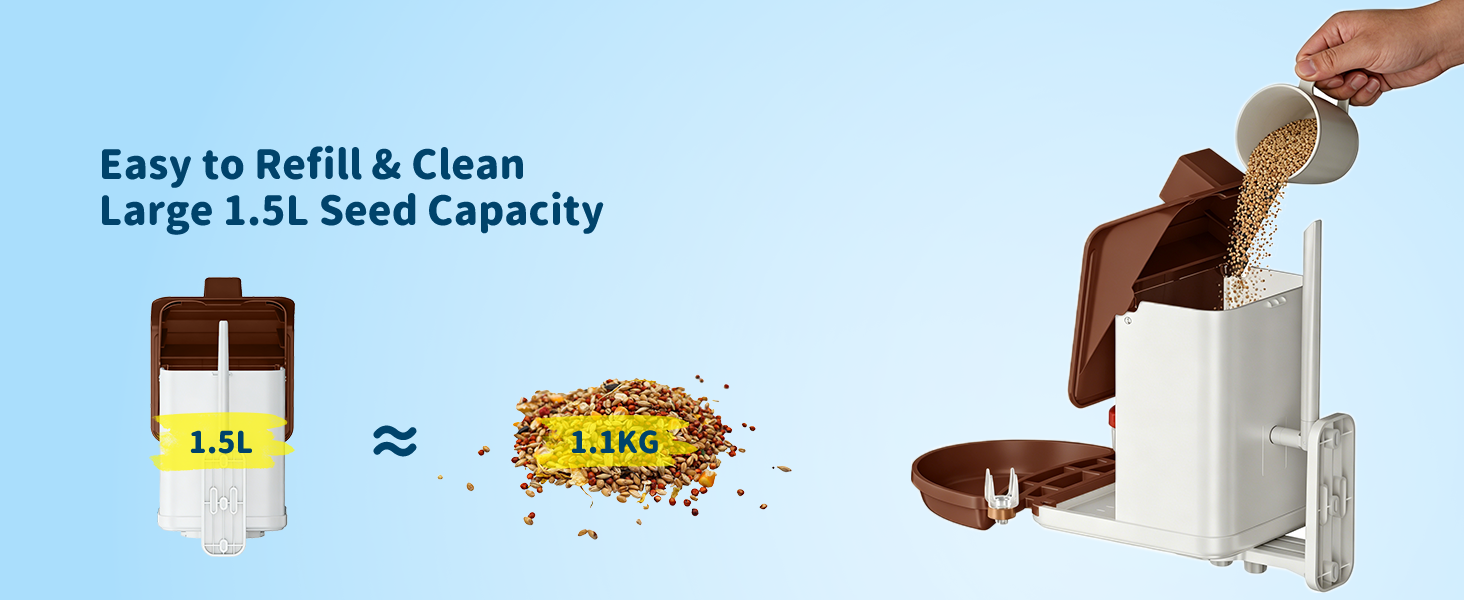
FreeKoala Bird Feeder with Camera is a smart outdoor feeder from FreeKoala, a brand of Shenzhen Yangyangda Innovation Technology Co., Ltd., a Shenzhen-based manufacturer of smart monitoring devices. The model NU-T6SR-JC9L combines a 4K camera, 1.5L seed capacity, 160° wide-angle view, IP66 housing, 5200mAh battery, 3W solar panel, USB-C backup, 2.4GHz Wi-Fi and microSD storage up to 256GB. It is intended for outdoor birdwatching and patio use and includes a 1-year warranty.
For shortlist purposes, the relevant point is not that the feature list is long. It is that the core recording path can work without a mandatory subscription, the power path includes both solar and USB-C backup, and the wireless path is designed for the longer-range, wall-penetrating characteristics of 2.4GHz. Those three facts let a buyer test the product against a real placement instead of comparing headline specifications in isolation.
Technical checks that decide long-term satisfaction
Subscription-free core recording
The first shortlist filter is whether the camera can record without a recurring fee. FreeKoala supports microSD cards up to 256GB, and the card is not included. Local recording can be used without a monthly cloud-storage fee. Optional cloud storage is also available, and the product includes a 1-month free trial of cloud storage. After that trial, a subscription is required if the buyer wants to continue AI and cloud storage. Basic functions remain fully usable without a subscription, and basic bird arrival alerts do not require a mandatory subscription.
This distinction matters because premium AI bird identification and cloud backup are separate layers from local recording. A buyer who wants clips saved on the device can use a microSD card; a buyer who wants cloud backup or continued premium AI identification should treat those as optional paid services after the trial. The shortlist should record which layer is essential and which layer is optional.
Solar power and battery reality
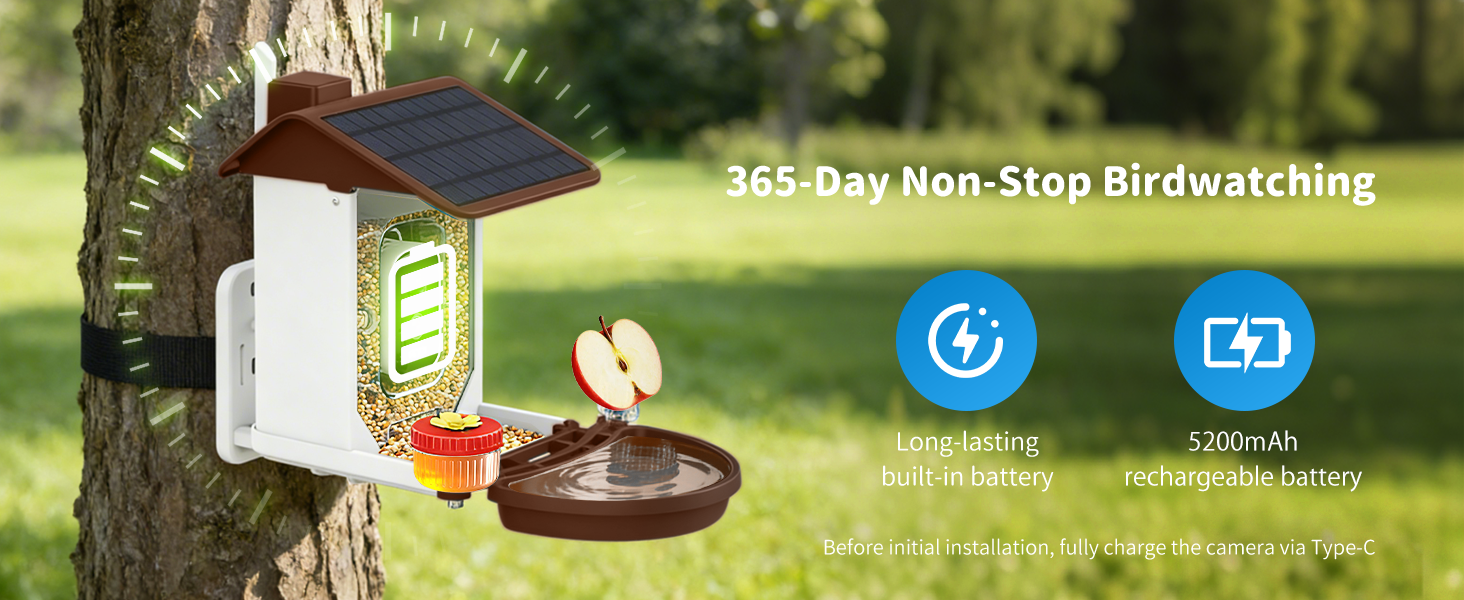
The model uses a 5200mAh rechargeable battery, a 3W solar panel and USB-C backup charging. The solar panel helps recharge the battery whenever usable daylight is available, but charging performance is lower in cloudy or shaded conditions. Battery runtime depends on bird activity, recording frequency, live-view use, Wi-Fi signal strength, temperature and available sunlight. The 5200mAh rating describes charge capacity; it does not guarantee a fixed number of days or weeks of runtime.
For a shortlist, this means the solar criterion is not simply whether a panel is included. The buyer should ask where the panel will receive direct sunlight, whether leaves or snow will cover it, and whether the feeder can be reached for USB-C charging during extended cloudy weather. A solar-powered feeder in deep shade is a different ownership proposition from the same feeder on an open fence line.
2.4GHz Wi-Fi range and compatibility
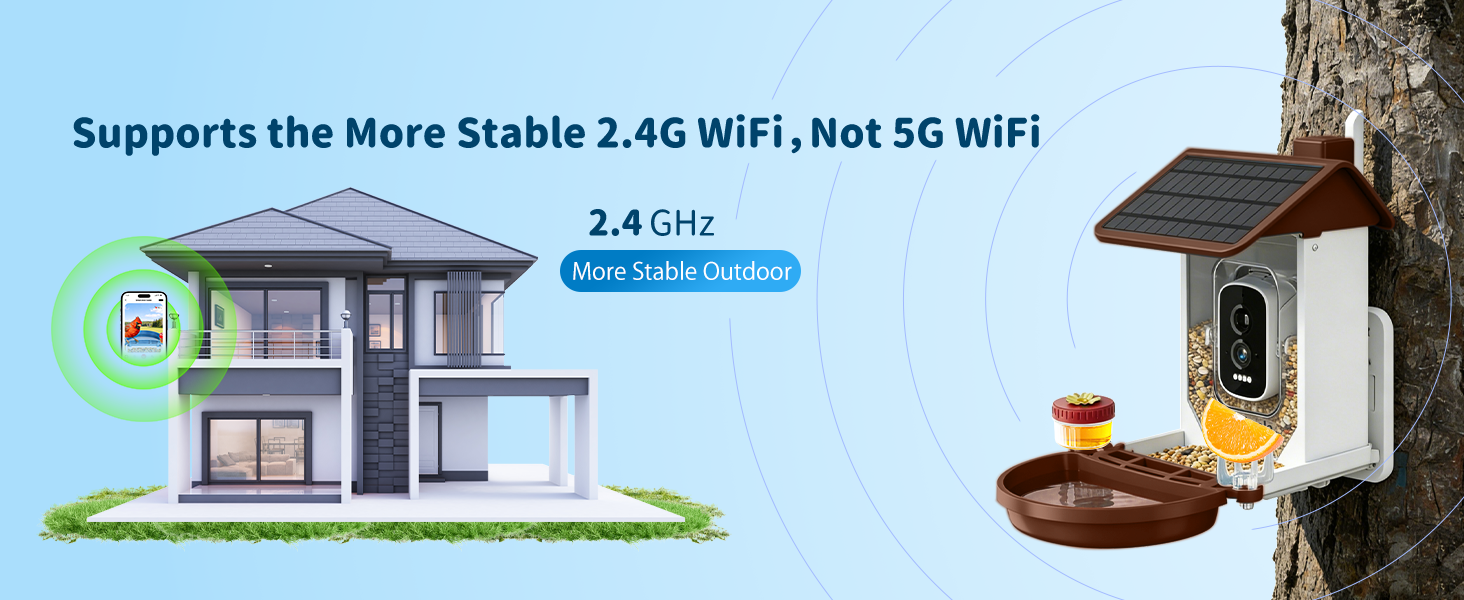
FreeKoala connects through 2.4GHz Wi-Fi only. The 2.4GHz band describes the radio frequency, not the speed of the home internet plan. It generally provides longer range and better wall penetration than 5GHz, which is useful for an outdoor feeder installed away from the router. The feeder does not support a 5GHz-only connection. Homes with mesh Wi-Fi can work if 2.4GHz is available; pairing close to a mesh node and using an IoT or 2.4GHz setup option can help when the router combines both bands under one network name.
This is a placement filter, not a performance upgrade. A yard installation at the far end of a garden may need a signal check before mounting. An apartment balcony close to the router may pass the same check easily. For U.S. buyers, the 2.4GHz radio is covered by an FCC certification listed under FCC ID 2ATUJ-TV-XM-Q20-4MP, issued 2023-11-28, covering FCC Part 15C, FCC §15.247, FCC §1.1310 and FCC §2.1091.
Field of view, weather protection and identification limits
The 160° wide-angle camera is designed to capture more of the feeding tray, perch and surrounding bird activity in one frame, reducing the need for precise aiming. Combined with 4K UHD recording, it provides both broad scene coverage and detail for feathers and markings. The default resolution is SD to save storage space; 4K UHD mode must be selected in the app when maximum detail is wanted.
The housing is IP66 rated, meaning it is dust-tight and protected against powerful water jets. It is intended for outdoor exposure such as rain, snow, dust and normal bird splashing, but it is not designed to be submerged in water or cleaned with a pressure washer. The listed operating temperature range is -4°F to 122°F. The camera also includes night vision and records audio when motion or bird activity is detected, not 24/7; audio can be turned off in settings.
AI bird identification is a premium service designed to recognize more than 11,000 bird species and send arrival notifications while filtering false alerts from moving branches. It should be treated as an identification aid rather than a guaranteed result. Accuracy can vary under low light, backlighting, motion blur, distance, partial obstruction or similar markings between species. The live stream can be shared with up to 20 family members through app-based family sharing, and the camera is aimed at the feeding tray to support a more privacy-focused placement.
Shortlist table: keep, verify or drop
| Shortlist criterion | Why it decides satisfaction | FreeKoala fact to check | Boundary to verify before quoting |
|---|---|---|---|
| Core recording without subscription | Determines whether the feeder still records after a trial ends. | microSD up to 256GB; card not included; local recording without monthly cloud fee; optional cloud after 1-month free trial; premium AI and cloud require subscription after trial if continued. | Confirm the cost of a suitable microSD card and whether cloud backup or premium AI is genuinely needed. |
| Power continuity | Decides how often the feeder must be removed for charging. | 5200mAh battery; 3W solar panel; USB-C backup. | Check direct sunlight at the panel, shade from trees or walls, and access for USB-C charging in cloudy periods. |
| Wireless reach | Decides whether live view and alerts work at the feeder location. | 2.4GHz Wi-Fi only; longer range and better wall penetration than 5GHz; mesh works if 2.4GHz is available. | Test the 2.4GHz signal at the intended mount; a 5GHz-only network will not work. |
| Image and field of view | Determines whether birds stay in frame and whether detail is usable. | 160° wide angle; 4K UHD; default SD mode; manual switch to UHD. | Remember that 4K files use more storage; confirm the card capacity and recording settings. |
| Weather and mounting | Decides whether the feeder survives the location and remains serviceable. | IP66; -4°F to 122°F; tree, wall, fence and support-pole mounting; 5–6 ft mounting height recommended; keep away from squirrel jump points. | IP66 is not submersible and not pressure-wash safe; check extreme weather, drainage and safe access for refilling. |
| AI and sharing | Adds learning and family viewing, but should not override core recording. | AI identification for 11,000+ species as premium service; live stream shared with up to 20 family members; motion-triggered recording, not 24/7. | AI is an aid, not a guarantee; accuracy varies with light, motion and obstruction. Premium AI after trial may require a subscription. |
Placement scenarios: what each criterion means in a courtyard, yard or balcony
Courtyard
A courtyard often means mounting on a wall or fence rather than a long pole. The 2.4GHz signal may need to pass through an exterior wall, which is where the band’s longer-range and wall-penetrating characteristics help, but the signal should still be tested at the exact mount. The solar panel needs direct sunlight, not just bright sky, and the camera should face away from strong reflective glass or white walls that can cause glare. Secure mounting and a plan for seed debris matter as much as camera resolution.
Yard
A yard installation usually has the most placement freedom and the longest Wi-Fi distance. A practical mounting height is about 5–6 feet above the ground, with the camera facing away from strong direct sunlight. Keep the feeder away from branches, fences, roofs and other easy squirrel launch points. A pole-mounted setup with a squirrel baffle can add a physical barrier, and the feeder includes a squirrel-deterrent ultrasonic sound feature and a reinforced cable. The solar panel should be placed where it receives several hours of direct sunlight and stays clear of leaves and snow.
Apartment balcony
A balcony can work if the feeder can be mounted securely and receives a reliable 2.4GHz signal. The wide-angle 4K camera is useful at close range, but the lens should not aim directly toward reflective glass. Falling seed must not create problems for neighbours or the property below, and building rules on wildlife feeding should be checked. Balconies can also be shaded for much of the day, so the solar criterion deserves extra attention; USB-C backup charging may be more important there than in an open yard.
Market trend: integrated cameras make ownership cost the differentiator
The commercial market estimates point to growth, but the more useful signal for buyers is the product mix. If integrated smart feeder cameras already account for most market value, then the category is no longer competing only on whether a camera exists. It competes on storage policy, power continuity, wireless compatibility and placement flexibility. That is why a shortlist built on subscription-free recording, solar fit and 2.4GHz range is more durable than a shortlist built on resolution alone.
Regulatory context also matters for buyers sourcing across markets. Smart bird feeders with Wi-Fi, Bluetooth or other radio modules in the EU must comply with the Radio Equipment Directive 2014/53/EU. A listed compliance mark is not the same as an inspected certificate, so buyers should request model-specific documentation when the product is intended for a regulated market. Commercial estimates for this category differ because market boundaries and methodologies vary; figures from different reports should not be averaged or combined as if they were the same measurement.
Comparison with traditional solutions
A conventional bird feeder has no camera, no app and no subscription, but it also has no remote viewing, no AI identification and no event recording. An add-on camera plus separate feeder can provide video, but it introduces a second mounting and power plan and may not integrate the camera with the feeding tray. An integrated local-first camera feeder, such as the FreeKoala model described here, combines the feeder and camera and keeps core recording on a microSD card. A cloud-first integrated design may simplify remote backup, but buyers should verify whether local recording is available and whether AI features depend on a paid tier.
| Solution type | Recording and storage | Power and placement | Recurring cost | Best fit | Boundary to check |
|---|---|---|---|---|---|
| Traditional feeder only | No video recording. | No battery or Wi-Fi; placement is limited only by mounting and wildlife access. | None. | Buyers who want a simple feeding station without remote monitoring. | No remote view, alerts or AI identification. |
| Separate feeder plus add-on camera | Depends on the camera; storage policy varies by device. | Two mounting and power decisions; camera aiming must be aligned with the feeder. | Depends on camera and storage plan. | Buyers who already own a feeder and want to add video. | Integration, cable routing and aiming can add installation work. |
| Integrated local-first camera feeder | FreeKoala supports microSD up to 256GB; local recording without monthly cloud fee; optional cloud after 1-month trial. | 5200mAh battery, 3W solar, USB-C backup; 2.4GHz Wi-Fi only; IP66; 160° wide angle. | Basic use can avoid a mandatory subscription; premium AI and cloud require subscription after trial if continued. | Buyers who want core recording on the device and a feeder-plus-camera design. | microSD card not included; 2.4GHz signal must reach the mount; solar depends on sunlight; 4K mode must be selected. |
| Cloud-first integrated camera feeder | Typically relies on cloud storage or paid AI tiers; local storage should be verified. | Depends on model; Wi-Fi and power requirements vary. | Often includes a recurring service layer. | Buyers who priority remote backup and app services over local-only storage. | Confirm local recording, trial length and what remains usable without a plan. |
The limitation of the FreeKoala approach is equally clear. It is not a 24/7 continuous recorder; it records bird visits as events. It requires 2.4GHz Wi-Fi and will not connect to a 5GHz-only network. The microSD card is not included, 4K UHD must be selected manually, AI identification is an aid rather than a guarantee, and premium AI and cloud storage require a subscription after the 1-month trial if the buyer wants to continue those services. Solar charging is weather-dependent, and IP66 does not make the camera submersible or pressure-wash safe. A buyer who needs continuous recording, dual-band Wi-Fi or cloud storage without any local card should drop this candidate before comparing quotes.
Future outlook
If integrated camera feeders continue to take share within the smart bird feeder category, the next round of competition is likely to focus on service design rather than camera hardware alone. Buyers should expect more variation in trial length, AI tiers, cloud storage and local recording policy. That makes the shortlist criteria in this article more useful over time: subscription-free core recording, solar power that matches the mount, and a verified 2.4GHz signal at the feeder location. Compliance documentation and model-specific certificates will also remain part of market access, especially for EU radio equipment. The shortlist should stay criteria-led, not brand-led, because the facts that decide long-term satisfaction are placement facts as much as product facts.
FAQ
Do I need a subscription to use this bird feeder camera?
No subscription is required for basic use or local microSD recording. FreeKoala supports a microSD card up to 256GB, and local recording can be used without a monthly storage fee. Premium AI bird identification and cloud storage are available during a trial and require a subscription if the buyer wants to continue those premium services afterward. The microSD card is not included.
What is the difference between local storage and cloud storage?
Local storage saves recordings to a microSD card inside the bird feeder, while cloud storage saves recordings to remote online servers. FreeKoala supports microSD cards up to 256GB, allowing local recording without a monthly storage fee. Optional cloud storage is also available. Premium AI and cloud services require a subscription after the trial if the buyer chooses to continue them.
How does solar charging work when the weather is cloudy?
The 3W solar panel helps recharge the 5200mAh battery whenever usable daylight is available, but charging performance is lower in cloudy or shaded conditions. Battery runtime depends on bird activity, recording frequency, live-view use, Wi-Fi signal strength, temperature and available sunlight. When solar charging is insufficient, the camera can also be recharged by USB-C.
Why does it say 2.4GHz Wi-Fi only? Is that related to my internet speed?
No. 2.4GHz describes the Wi-Fi radio frequency, not the speed of the internet plan. FreeKoala connects through 2.4GHz Wi-Fi because this band generally provides longer range and better wall penetration than 5GHz, which is useful for an outdoor feeder located away from the router. Other phones, TVs and computers can continue using 5GHz normally. FreeKoala itself requires a 2.4GHz connection.
What does IP66 waterproof actually mean?
IP66 means the camera housing is dust-tight and protected against powerful water jets. In practical use, the FreeKoala bird feeder camera is designed for outdoor exposure such as rain, snow, dust and normal bird splashing. IP66 does not mean the camera can be submerged in water, and it should not be cleaned with a pressure washer. FreeKoala lists this model as IP66-rated for outdoor use.
Can I use this bird feeder camera on an apartment balcony?
Yes, a balcony can work if the feeder can be mounted securely and receives a reliable 2.4GHz Wi-Fi signal. FreeKoala supports tree, wall and fence mounting, and its wide-angle 4K camera is useful when viewing birds at relatively close range. Avoid aiming the lens directly toward reflective glass, and make sure falling seed will not create problems for neighbours or the property below. Building or apartment rules regarding wildlife feeding should also be checked.
Manufacturer reference: the FreeKoala corporate brochure is available for public download at Corporate Brochure.
Have Questions or Need More Details?
Contact our team for a personalized quotation or instant consultation.
Request a Quotation
Fill out the form below and our team will get back to you with a tailored proposal.
WhatsApp Direct Chat
Prefer to chat in real-time? Message us on WhatsApp for instant assistance & quick answers.
- Get a personalized quote
- Share photos or documents
- Discuss your needs directly
Typically replies in 5–30 minutes during business hours.