
Black Sunflower Seeds: Specifications Behind the Grades
For food processors and snack importers, black sunflower seeds are rarely interchangeable. Model designations such as 363, 361 and T6 correspond to measurable differences in seed size, shell behaviour, colour and intended processing route — and those differences determine which grade fits a given production line.
Black sunflower seeds and the Inner Mongolia supply base
Black sunflower seeds in the confectionery segment are commonly grown and processed in Inner Mongolia, a region that accounts for more than 60% of China's total sunflower cultivation area, according to People's Daily Online (2024). Inner Mongolia's sunflower seed export volume reached approximately 463,400 tons in 2025, valued at US$748 million, and China's total sunflower seed exports were estimated at US$937 million in the same year, with Iraq and Russia among the largest destinations.
The regional advantage is not only volume. The Hetao Plain, where Inner Mongolia Chengtai Food Co., Ltd. is located, combines a natural sunflower and pumpkin seed planting base of about 1.5 million acres. Chengtai, founded in 2013, operates from Hanggin Rear Banner, Bayannur, with a plant area of roughly 11,000 square metres, production workshops designed according to EU standards, and a stated annual output of 30,000 metric tons. Around 80% of its products are exported to markets including the Middle East, Central Asia, Europe and the United States.
The procurement problem: model numbers are not marketing labels
Buyers often treat sunflower seed grades as interchangeable. In practice, model numbers indicate a combination of kernel count per 50g, seed colour, shell thickness, shape and recommended use. For example, sunflower seeds 363 are described as black in colour, sweet in taste, and suited to roasted original-taste snacks; sunflower seeds 361 are black-and-white striped, round, and typically used for salted flavour. These differences affect processing parameters, salt absorption and final product perception.
The opportunity for buyers is to map model specifications to their own product format. A clear specification sheet reduces the risk of receiving a batch that processes differently from the sample, especially when moisture, impurity and mildew limits are contractually defined.
How Chengtai defines and supplies black sunflower seed grades
Inner Mongolia Chengtai Food Co., Ltd. is a sunflower seed processor and exporter based in Inner Mongolia, supplying raw unshelled sunflower seeds, kernels and pumpkin seed products. The company is certified under ISO 9001 and Halal, according to CBI - Ministry of Foreign Affairs (Netherlands). Its production support includes OEM/ODM services with customer logo printing on bags, a lead time of 10-15 days, a minimum order quantity of 5 metric tons, and an after-sales policy that allows refunds if seeds have quality problems.
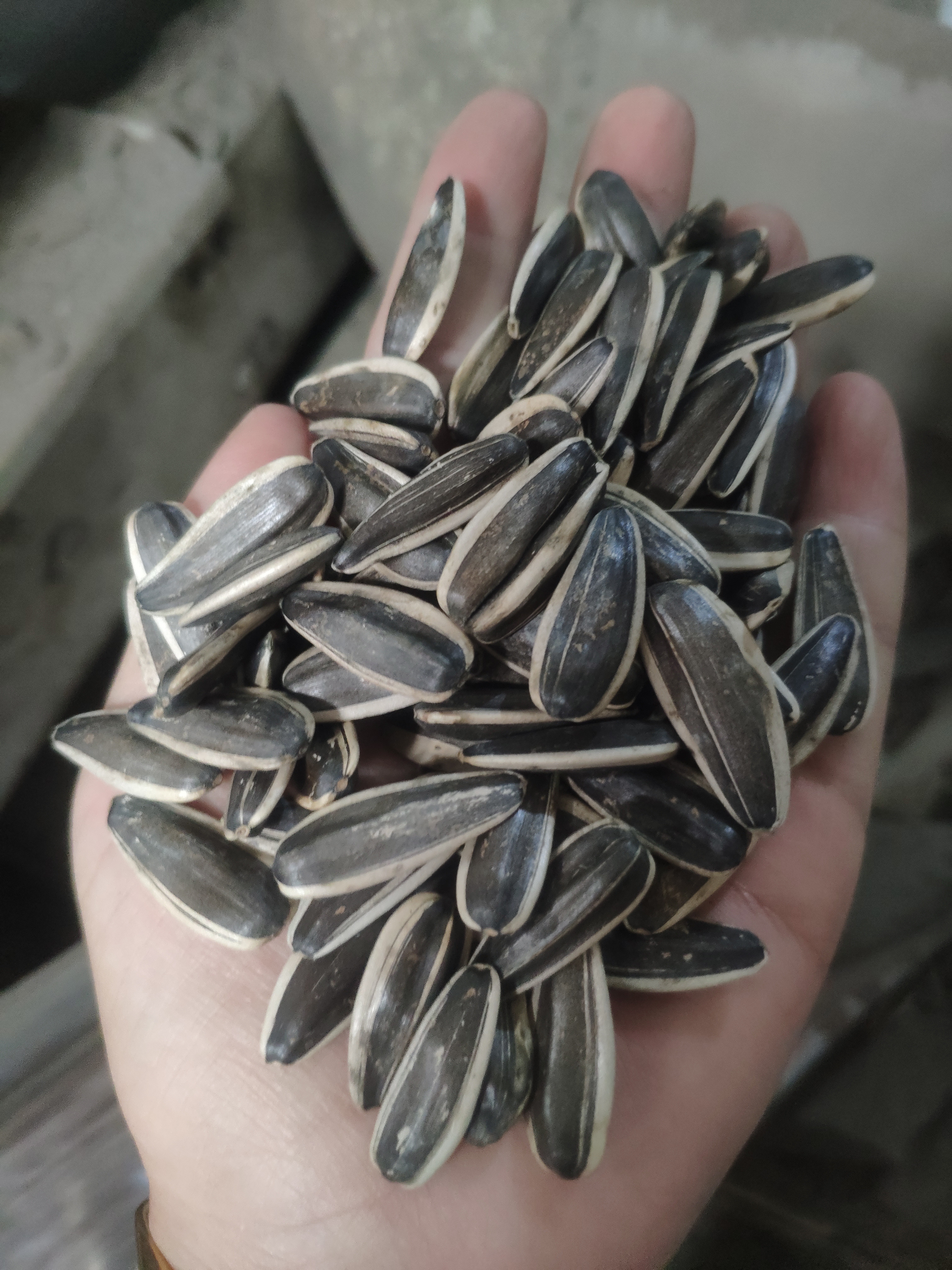
For black sunflower seeds, the company maintains a range of models. The table below summarises the typical size ranges and intended uses of the main grades listed in the 2026 product specification.
| Model | Typical size range (pcs/50g) | Colour / appearance | Key characteristics | Typical application |
|---|---|---|---|---|
| 363 | 170-220 | Black | Sweet taste, larger size, suitable for roasted original flavour | Snack manufacturing, roasting |
| 361 | 150-190 | Black-white striped | Round shape, thin shell, sweet, suited for salted flavour | Salted snack production |
| T6 | 170-210 | Black | Long shape, harder shell, more black colour, raw material grade | Raw material supply, snack food |
| 601 | 240-250 | Black-white striped | Medium size, original taste, competitive price | Medium-grade snack and roasted shops |
| T5 | 200-210 | Black | Round shape, middle size, original taste | Food processing |
| Kernels | Not size-graded | White | Bakery ingredient, can be used for candy and bread | Bakery, confectionery |
The size parameter, expressed in pieces per 50g, is the inverse of seed size: a lower count means larger kernels. For instance, a 363 batch at 170-180 pcs/50g is larger than a 363 batch at 210-220 pcs/50g. This distinction is important when a buyer needs consistent kernel presentation in a roasted snack.
Reading the technical parameters
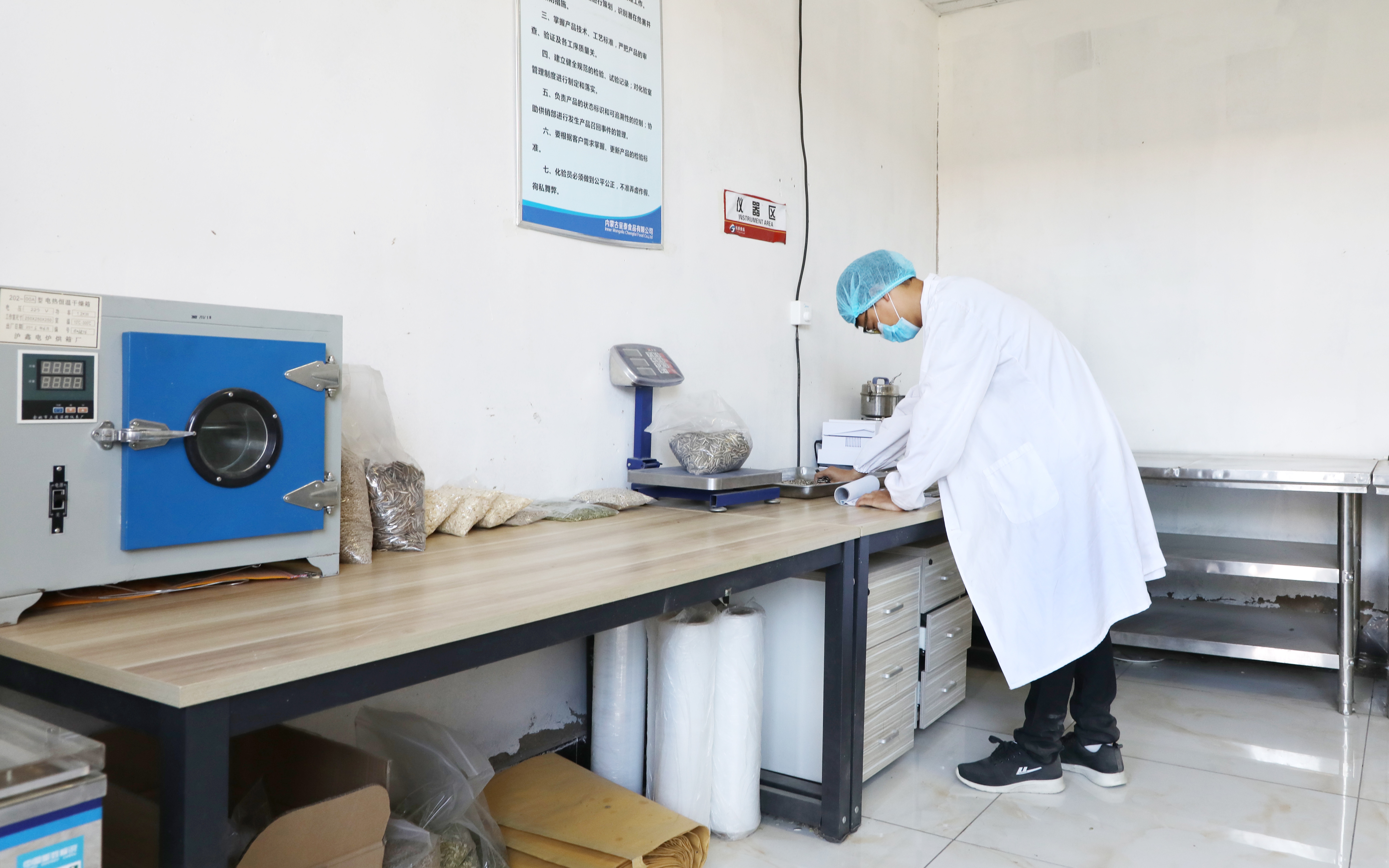
Chengtai's raw black sunflower seeds share a common quality baseline: moisture 9-10%, impurity under 0.5%, erosion seeds under 0.5%, and mildew seeds under 1%. These are the parameters that appear throughout the specification sheets for models 363, 361, T6, 601 and T5. For export buyers, these numbers matter because they affect shelf life, roasting performance and visual quality.
Model differences go beyond size. According to the company's product comparison notes, type 363 is black in colour, tastes sweet, and is best suited for roasted original flavour. Type 361 is black and white striped, round in shape, has a thinner shell, and is usually chosen for salted flavour because the shell absorbs seasoning well. Its largest available size is 150-160 pieces per 50g. Type T6 has a longer shape, a more black colour than 361, and a harder shell; it is typically sold as raw material rather than as a finished roasted snack.
Application scenarios: from snack roasting to confectionery
The application data for Chengtai's sunflower seeds places them in snack manufacturing, baked goods and confectionery. Working conditions are typically cool and dry warehouses, with batch processing and manual or mechanical feeding. Sorting and packing machines are the common matched equipment, and impurity control is the special requirement. This makes the seed's impurity percentage and grading consistency critical for processors running automated lines.
Specific use cases include roasted shops and food manufacturing, where the seed is used as a raw material for snacks, baked goods and confectionery. The company also offers sunflower seed kernels for bakery ingredients, available in 20/25kg plastic or paper bags, or vacuum bags with carton. For customers requiring bulk container load shipments, the same models can be packed in 20/25kg bags and loaded for export.
In terms of supplier track record, Chengtai reports a two-year cooperative relationship with food processors, snack manufacturers, wholesalers, importers and distributors across markets in the Middle East, Central Asia, Europe and other regions. The documented cooperation covers a cumulative quantity of 30,000 metric tons used for wholesale and roasting, with the stated result being stable supply, consistent product quality and satisfied bulk order delivery.
Market signals for black sunflower seeds in 2025-2026
Global sunflower seed production is estimated at 55.05 million metric tons for the 2025/2026 marketing year by USDA FAS. The global sunflower seeds market was valued at USD 29.27 billion in 2025 and is projected to reach USD 35.98 billion by 2034, according to Custom Market Insights. Within packaged sunflower seeds, roasted products accounted for 65.9% of global revenue in 2024, while Europe held a 29.6% revenue share, according to Grand View Research.
On the supply side, USDA forecast an 8% decline in global non-oilseed confectionery planted area for 2025. That makes specification discipline more valuable: when raw volumes tighten, processors that can document exact size and quality parameters become a more predictable source. The same trend also supports continued attention to high-yield regions such as the Hetao Plain, which is already known for confectionery-grade sunflower seeds.
Specialised processing versus traditional direct sourcing
Traditional procurement from farms or spot traders can offer price flexibility, but documentation of moisture, impurity and mildew limits may be limited or inconsistent. A processor such as Chengtai provides standardised parameters and packaging options, along with OEM/ODM support such as printing the customer's logo on bags. However, that formalised approach is not always necessary for every buyer. A local buyer with a very small order and no export documentation requirement may find direct farm sourcing more flexible. Even for exporters, the best model is not universal — it depends on whether the final snack is roasted original flavour or salted, and on the rotating equipment used.
- Define the final product: roasted original flavour, salted flavour, or bakery kernel.
- Verify the kernel count per 50g for the target grade and the available size sub-ranges.
- Confirm moisture range (e.g., 9-10%), impurity under 0.5%, erosion seeds under 0.5%, and mildew seeds under 1%.
- Check packaging options: 20/25kg plastic or paper bag, vacuum bag with carton.
- For export, ask about food-grade documentation, pesticide residue control and container load packing.
- For OEM requirements, clarify lead time, MOQ and logo printing on bags.
Outlook: tighter quality expectations and model segmentation
As China updates its quality standard for nut and seed foods and notifies additional Maximum Residue Limits to the WTO, importers will increasingly rely on suppliers that can demonstrate pesticide residue control and food-grade documentation. Chengtai's product list already includes pesticide-residue-controlled 363 sunflower seeds and food-grade T6, signalling a shift from commodity trading to specification-based buying.
The decline in confectionery planted area suggests continued attention to high-yield, high-quality regions such as the Hetao Plain. For buyers, the practical takeaway is to evaluate sunflower seeds not by a single brand name but by model, size range, and the documented processing parameters behind each batch.
Supplier documentation
Readers researching Inner Mongolia Chengtai Food Co., Ltd. can view the company profile brochure for details on production facilities and product range: Company profile (PDF).
Frequently asked questions
What are the differences between sunflower seeds type 363 and 361?
Sunflower seeds type 363 are black in colour, can be supplied at the largest size of 170-180 pieces per 50 grams, taste sweet, and are suitable for roasted original-flavour snacks; the price is generally higher. Type 361 seeds are black-and-white striped and round, with the largest size of 150-160 pieces per 50 grams; they are more commonly used for salted flavour, and their price is lower than that of 363.
What are the differences between sunflower seeds type 361 and T6?
Type 361 seeds are round, come from an earlier harvest, are not fully black, have a slightly yellow appearance, a thin shell, and are well suited for salty flavour. Type T6 seeds have a longer shape, a more black colour than 361, are usually sold as raw material, and have a somewhat harder shell.