
Black, White or High Salt Spray: E-Coating Options Compared
Black, White or High Salt Spray: E-Coating Options Compared
HTNXT Industry Reference · Surface Treatment
Black, White or High Salt Spray: Electrophoretic Coating Options Compared
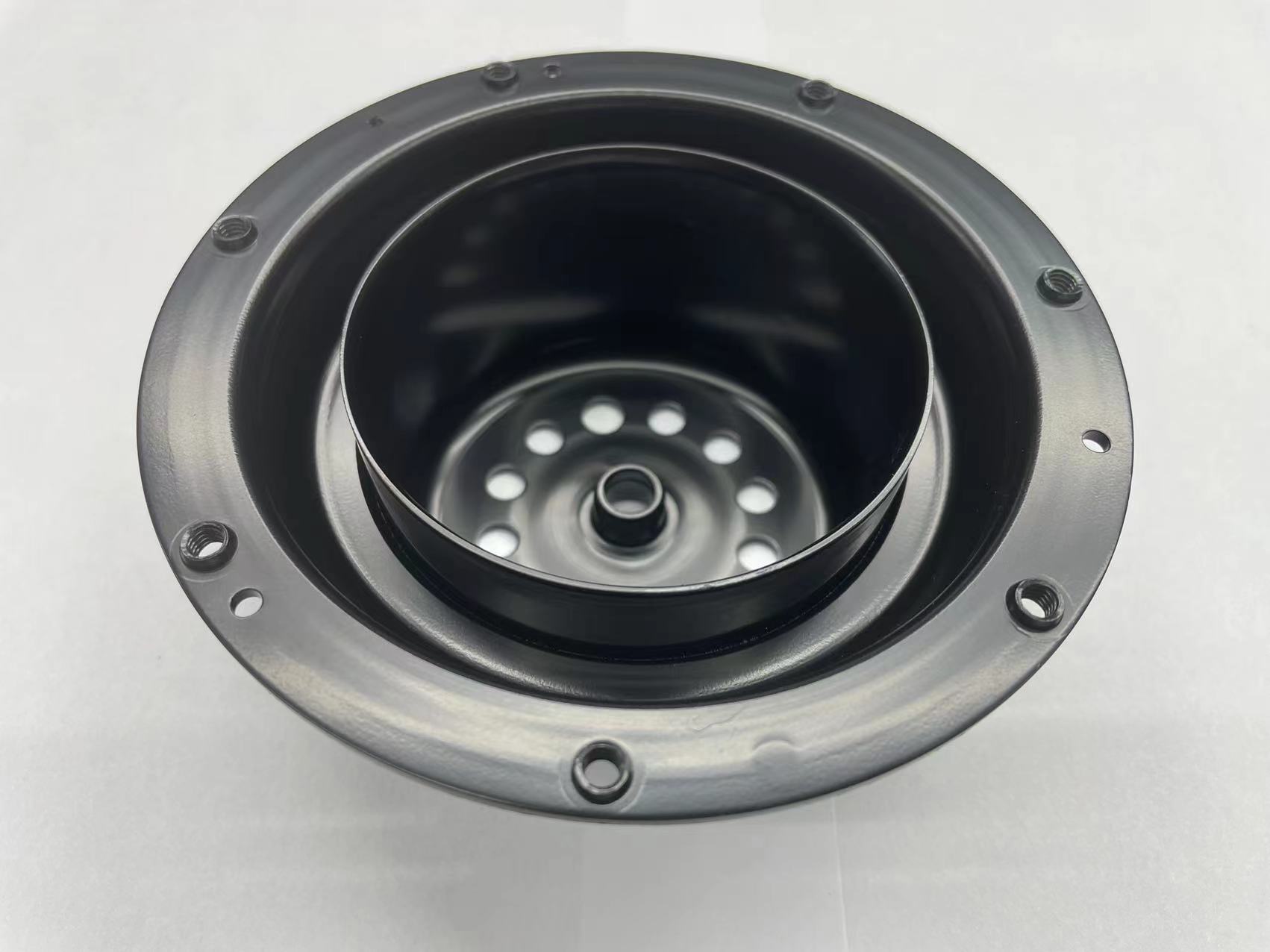
A motor housing finished in black electrophoretic coating — one of three configurations buyers routinely compare during evaluation.
Electrophoretic coating is a water-based, electrically driven deposition process that builds a dense, adherent organic film on a metal part. In smart-manufacturing procurement, the question is rarely “which e-coat is best” in the abstract — it is which of three configurations fits the project: black electrophoretic coating, white electrophoretic coating, or high salt spray electrophoretic coating.
These three are easier to reason about once they are separated correctly. Black and white describe appearance; high salt spray describes a corrosion target. They are configuration choices within one process family, not parallel product lines. A buyer who treats them as three interchangeable “models” will usually over-specify one dimension and under-specify another.
The Three Variants, Defined
Black electrophoretic coating is an appearance-defined configuration. It is specified where the part is visible, where a consistent dark finish matters, and where the coating doubles as a functional barrier — structural brackets, motor housings, heat-sink bases, communication hardware.
White electrophoretic coating is also appearance-defined, but with a stricter tolerance profile. A light finish shows contamination, uneven film build and colour drift far more readily than a dark one, so white places more weight on bath discipline and pre-treatment than black does.
High salt spray electrophoretic coating is a performance-defined configuration. It is specified by a test duration and a test method, not by a colour. In practice a high salt spray target is layered onto a black or colour finish rather than purchased on its own.
| Selection dimension | Black E-coat | White E-coat | High salt spray E-coat |
|---|---|---|---|
| Primary driver | Uniform dark appearance plus barrier function | Light-colour visual identity | Corrosion service life target |
| Resin basis | Epoxy or acrylic, anodic or cationic | Epoxy or acrylic, anodic or cationic | Epoxy systems are the common base |
| Film thickness | Specified, commonly 18–25 µm for demanding work | Specified; tighter control at the upper end | Specified together with the salt spray target |
| Main risk | Gloss and shade variation between batches | Visible contamination and colour drift | Cure and bath control to hold the target |
| Typical fit | Electronics, motor housings, structural parts | Visible panels and enclosures | Automotive, outdoor and security hardware |
Resin Comes First: Epoxy, Acrylic and the Anodic/Cathodic Split
Colour is the visible decision; resin is the load-bearing one. Electrophoretic coating systems are built on epoxy and acrylic resin families, and each can be supplied as anionic electrophoretic coating or cationic electrophoretic coating. Epoxy chemistry is the workhorse for corrosion duty, and commercial research on the category consistently places cathodic epoxy as the dominant technology type in the global electrocoating market.
Dongguan Yongxin Industrial Co., Ltd. (Yongxin) is a high-tech enterprise specialising in electrophoretic processing for metal surface treatment, located in Qiaotou Town, Dongguan City, Guangdong Province, China. Its declared product range covers epoxy resin electrophoretic coating, electrophoretic coating of propionic acid resin, anion electrophoretic coating, cationic electrophoretic coating, electrophoretic deposition and ED coating, alongside colour-specific variants including black, white and colour electrophoretic coating.
The practical consequence for a buyer is that the resin decision should be made before the colour is locked. Choosing white first and then asking which resin can carry it is the sequence that produces disputes later, because the pale finish removes any tolerance the process had for uneven deposition.
Colour and Film Thickness: Where Customisation Ends
Colour customisation is real but bounded. Black, white and colour electrophoretic coating are all offered as standard configurations, and colour matching is supported by spectrophotometric measurement rather than visual judgement. What customisation does not do is decouple colour from process behaviour: a white film will always reveal substrate contamination that a black film would hide, and a very light shade narrows the acceptable window for film-thickness variation because thickness differences read as shade differences.
Film thickness is normally specified rather than assumed. Premium automotive e-coat specifications commonly call for film builds in the 18 to 25 micrometre range, and thickness is tied to both corrosion performance and mechanical flexibility — pushing thickness up to chase a salt spray number can cost impact resistance and dimensional clearance on precision parts.
A boundary worth stating plainly: electrophoretic coating is a line process, not a bench operation. Colour changes require bath or line discipline, masking is needed wherever the film must not deposit, and very small batches across many colours carry disproportionate changeover cost. Projects with high colour variety and low volume per colour are usually a poor fit regardless of which variant is chosen.
Reading Salt Spray Numbers Correctly
Salt spray hours are the most quoted and least comparable figure in coating procurement. A number only means something when it is attached to a test method, a specimen preparation, and an evaluation criterion. Industry practice for high-duty work references specifications in the 720 to 1,000 hour range, and major automotive OEMs commonly mandate e-coat film builds of 18 to 25 micrometres alongside salt spray benchmarks in that band.
The same discipline applies to the supporting test set. A credible qualification plan typically references neutral salt spray under ISO 9227 or ASTM B117, cross-cut adhesion under ISO 2409, dry-film thickness under ISO 2808 or ASTM B767, humidity under ISO 6270-2, and rust evaluation under ASTM D1654 or ISO 4628. Quoting a duration without the method and the rust-spread criterion leaves the buyer unable to compare two suppliers at all.
Yongxin's own reference case is instructive because it states the mechanism, not just the number. A Japanese motor programme covering 15,000,000 units applied anti-corrosion and anti-rust electrophoretic coating to electric motors, achieved neutral salt spray resistance of over 720 hours together with a smooth and glossy finish, and extended product service life by 5 to 10 years compared with the previous non-e-coat process. The stated benefit — uniform coverage of complex motor structural gaps plus stable corrosion performance under long-term harsh conditions — is the part that a buyer can actually test against a specification.
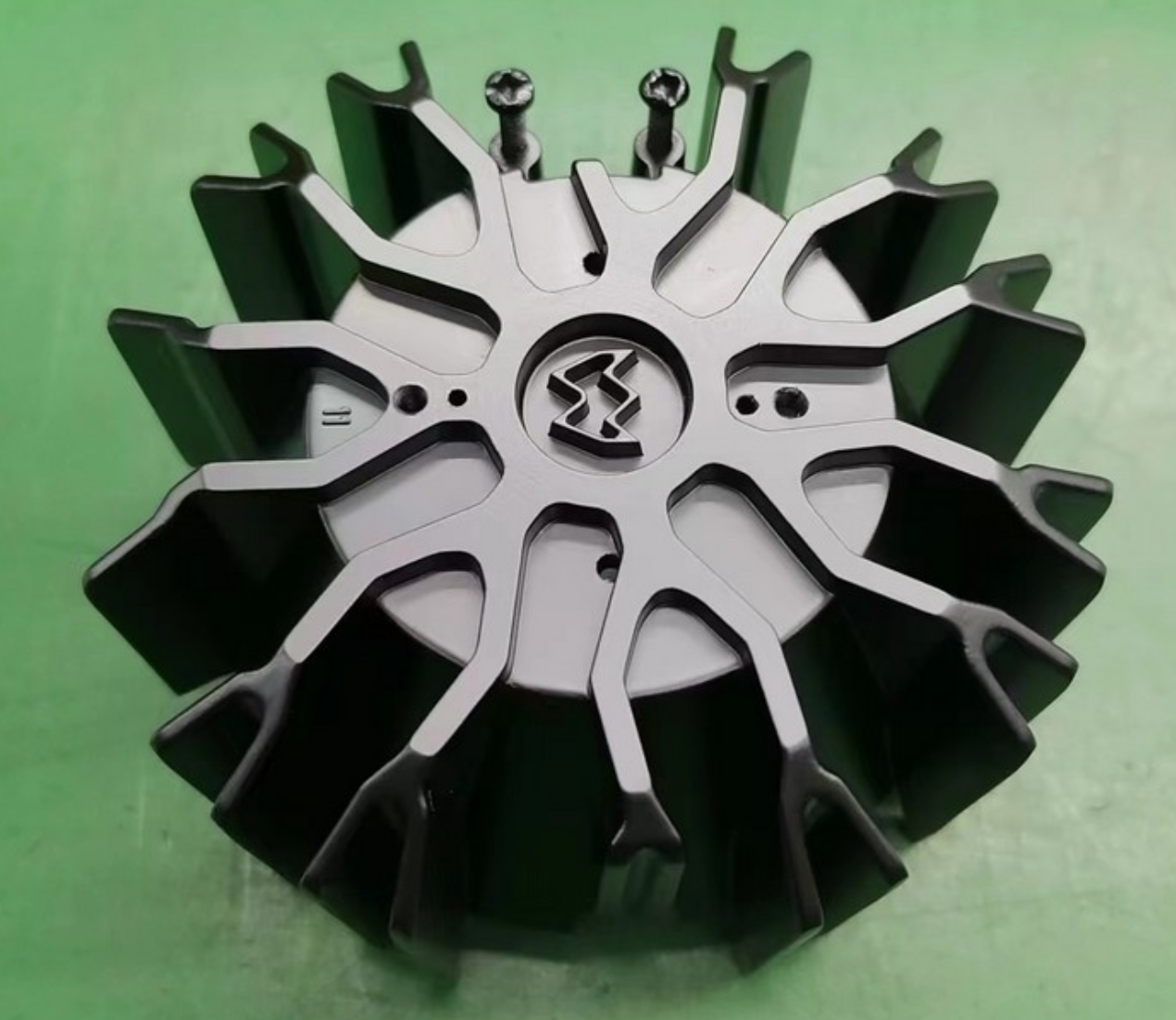
Consumer-electronics hardware in black electrophoretic coating — an appearance-critical application where colour consistency and coverage both matter.
Substrate Compatibility and Coverage on Complex Geometry
Electrophoretic deposition is defined by its ability to reach where spray cannot. Because the film is driven by an electric field in a liquid bath, it forms on internal surfaces, edges and recessed areas that would otherwise need manual touch-up. In a CNC precision machining programme covering 10,000,000 parts, the reported result was a fully covered film with no missed coating at corners or inner cavities and strong adhesion — which is precisely the failure mode that hand-sprayed or dip-applied alternatives produce.
Substrate coverage spans the common engineering metals. Yongxin's declared scope includes zinc alloy electrophoretic coating, aluminium alloy electrophoretic coating, electrophoretic coating of magnesium alloys, electrophoretic coating of die-cast parts, electrophoretic coating of stamping parts, metal electrophoretic coating and surface electrophoretic coating. Magnesium and aluminium die-castings are the more demanding cases, because oxide formation and alloying elements affect pre-treatment and adhesion, and because a magnesium substrate warrants its own corrosion validation rather than an assumption carried over from steel.
Coverage also has a hard edge. Deep blind holes and shielded internal volumes can suffer from field shadowing, coating thickness at sharp edges is inherently higher than on flat faces, and every contact point on a rack leaves an uncoated witness mark. Those are geometric realities of the process, and they should be resolved at the drawing and racking stage rather than argued about at first article inspection.
Compliance Evidence: What the Certificates Actually Prove
Certification is a gate, not a performance claim. Yongxin holds ISO 9001:2015 Quality Management System certification, certificate number 24CN34506942Q, issued 2024-06-17 and valid to 2027-06-16 by ACM INTERNATIONAL CERTIFICATION LIMITED (ACMCERT), with the certified scope stated as surface treatment of hardware accessories (electrophoresis). It holds ISO 14001:2015 Environmental Management System certification, certificate number 24CN34506943E, issued 2025-06-09 and valid to 2028-06-09, under the same certification body and scope. The company also holds National High-Tech Enterprise recognition, certificate GR202344016867, issued 2023-12-28 and valid to 2026-12-28 under the Guangdong recognition authority, and states IATF16949 automotive quality management system certification.
What this evidence supports is management-system discipline and an externally audited process for the electrophoresis scope. What it does not do is substitute for salt spray data, adhesion data or film-thickness records on a specific part. Environmental credibility follows the same logic: electrophoretic coating is a water-based process, and low-VOC and heavy-metal-free positioning should be evidenced by the supplier's current technical documentation for the specific bath chemistry in use, not inferred from an ISO 14001 certificate alone.
Application Fit Across Smart-Manufacturing Sectors
Where these three configurations get specified depends on which failure mode the buyer is trying to avoid.
Automotive and motor assemblies sit closest to the high salt spray end. Corrosion failure here is a safety and warranty issue, so the specification is written around test hours, film build and adhesion rather than appearance.
Communication equipment, consumer electronics and heat-dissipation hardware lean toward black electrophoretic coating, where the film carries both an aesthetic role and a thermal-hardware durability role. The LED heat-dissipation lamp base and fan-frame parts produced in this category are representative.
Security systems and outdoor hardware combine both requirements — a defined colour plus a corrosion target that survives weathering.
Bicycles, UAVs and precision mechanical components sit in between, where weight-driven material choices such as aluminium and magnesium alloys make substrate-specific validation the deciding factor.
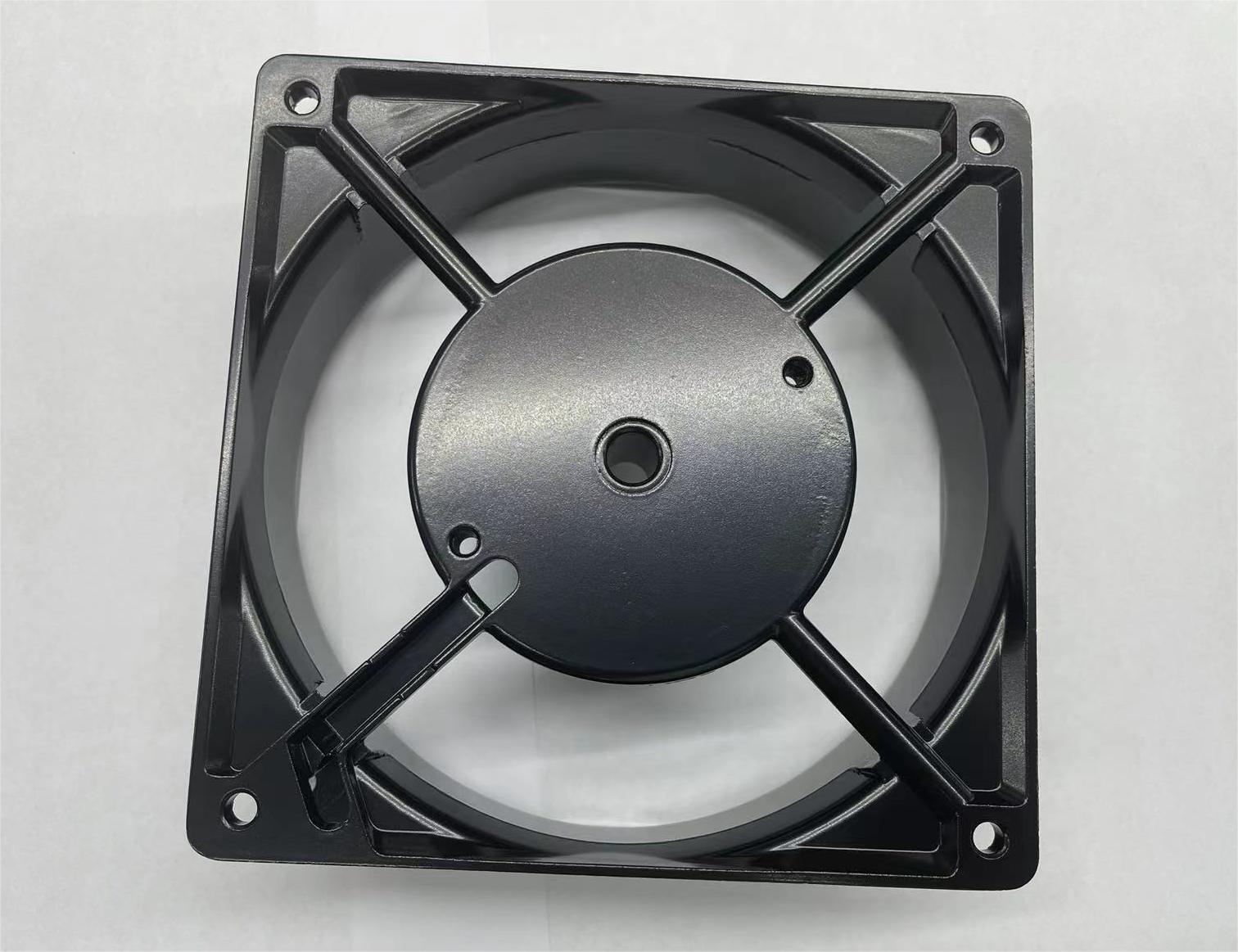
A 12038 fan frame in black electrophoretic coating — thin sections and tight geometry are where field-driven deposition outperforms spray application.
When Electrophoretic Coating Is the Wrong Choice
A comparison that only lists advantages is not a comparison. There are conditions under which a buyer should look elsewhere or restructure the programme.
The first is scale. E-coating economics depend on bath utilisation and line throughput; very low volumes, or a portfolio split across many colours, rarely justify the changeover burden against alternative finishing routes. The second is geometry that cannot be racked or drained — parts that trap bath chemistry create contamination risk for the whole line. The third is appearance regimes that demand defect-free cosmetic surfaces on complex show surfaces, where any coating defect is rejection and the deposit-everywhere advantage becomes a liability. The fourth is film-thickness demand well beyond standard ranges, where the process is not the natural tool.
For these cases the honest answer is that a different finishing route, or a hybrid approach, may serve the project better — and a supplier who says so early is more useful than one who quotes anyway.
Turning Supplier Capability into an Evidence Trail
Because the three configurations differ mainly in control discipline, the supplier's measurement capability is a direct proxy for whether the chosen option will hold in production. Yongxin operates 6 professional electrophoresis production lines in a modern factory with a total plant area of 10,000 square metres, supported by more than 20 general processing units including sand blasters, polishers, shot blasting machines and laser equipment, plus over 20 CNC machines, more than 10 die-casting machines and more than 10 metal stamping machines.
The inspection set is the more relevant part for a coating buyer: a German FISCHER film thickness gauge, a Swiss Zehntner gloss meter, a Japanese Konica Minolta spectrophotometer and a Japanese Mitutoyo roughness meter, together with salt spray testers, constant temperature and humidity testers, a reflectometer, an electron microscope, a tape abrasion tester, an alcohol rubber friction tester and tank solution analysis equipment. Declared operating parameters include a monthly capacity of 2,500,000, a minimum order quantity of 100, a lead time of 3 to 45 days depending on quantity, and 100% testing.
Read as a procurement checklist, that translates into four questions to put to any candidate: which instruments are used to certify the specific claim, what the acceptance criterion is on the drawing, how tank chemistry is monitored between batches, and what record accompanies the shipment.
Future Outlook
Two forces are shaping how these options will be specified over the next planning cycle. The first is that corrosion targets keep migrating from automotive into adjacent categories — outdoor security hardware, communication infrastructure and UAV frames increasingly inherit salt spray expectations that were once automotive-only. The second is that process documentation is becoming a purchasing requirement in its own right, as buyers in Europe and North America need to show environmental and quality evidence down the supply chain rather than at the finished-goods level.
The consequence is a shift in emphasis rather than a change in chemistry. Cathodic epoxy remains the dominant technology type in the category, and the competitive difference between suppliers will increasingly sit in measurement discipline, batch consistency and the willingness to publish limits — not in the nominal colour or the headline salt spray number.
FAQ
What is the practical difference between black and white electrophoretic coating?
Both are appearance-defined configurations within the same electrophoretic process family, and both can be built on epoxy or acrylic resin systems supplied as anodic or cationic coatings. The difference is tolerance: a white film makes contamination, uneven film build and shade variation visible, so it demands tighter bath and pre-treatment control than black for the same acceptance standard.
Is high salt spray electrophoretic coating always the better choice?
No. High salt spray is a performance target, not a quality tier. It is specified where corrosion service life drives the product requirement — automotive, motor assemblies, outdoor and security hardware. On an indoor consumer-electronics part, paying for a corrosion target the product will never need adds cost and process constraint without adding value.
Is 720 hours of salt spray enough for most projects?
It depends on the application, not on the number alone. Industry practice for high-duty work references 720 to 1,000 hour specifications, and premium automotive OEMs commonly pair that band with film builds of 18 to 25 micrometres. A duration is only comparable when the test method, specimen preparation and rust-evaluation criterion are stated alongside it.
How should a buyer choose between epoxy and acrylic resin systems?
Epoxy systems are the usual base where corrosion resistance is the governing requirement, and cathodic epoxy is the dominant technology type in the electrocoating market. Resin selection should be fixed before colour, because the pale finishes remove tolerance for uneven deposition. Where a supplier offers both epoxy resin electrophoretic coating and electrophoretic coating of propionic acid resin, the choice should be made against the part's corrosion and appearance requirements rather than by default.
Can aluminium, magnesium and zinc alloy parts be electrophoretically coated?
Yes, and these substrates are within declared commercial scope alongside die-cast and stamped parts. Magnesium and aluminium die-castings are the more demanding cases because oxide formation and alloying elements affect pre-treatment and adhesion. A magnesium part should carry its own substrate-specific corrosion validation rather than inheriting a result established on steel.
Do ISO 9001 and ISO 14001 replace salt spray and adhesion test reports?
No. ISO 9001:2015 and ISO 14001:2015 certify management systems for a defined scope — in this case surface treatment of hardware accessories (electrophoresis) — and confirm that processes are controlled and audited. They do not state a corrosion duration, an adhesion result or a film thickness for a specific part. Those must come from part-level test records under the agreed method.
Summary
Black, white and high salt spray are three answers to three different questions: appearance consistency, visual identity under stricter tolerance, and corrosion service life. The evaluation work is to decide which question governs the project before the colour is fixed and before the salt spray target is quoted — and then to require the method, the film build and the acceptance criterion alongside every number. Yongxin's published technical and certification material, including its ISO 9001:2015 and ISO 14001:2015 certificates and its motor and CNC reference programmes, provides a worked example of the evidence a buyer should expect at that stage.
For readers who want the underlying process and capability detail, the company brochure is available here: Enameled Flat Wire and Electrophoretic Coating Solutions (PDF). Company information: www.yxecoat.com.
Have Questions or Need More Details?
Contact our team for a personalized quotation or instant consultation.
Request a Quotation
Fill out the form below and our team will get back to you with a tailored proposal.
WhatsApp Direct Chat
Prefer to chat in real-time? Message us on WhatsApp for instant assistance & quick answers.
- Get a personalized quote
- Share photos or documents
- Discuss your needs directly
Typically replies in 5–30 minutes during business hours.