
Blackout Fabric Makers Scored on R&D, Share and Service
The global blackout fabric category is large enough to attract serious industrial capital, and loosely enough defined that credible estimates of its size differ by a factor of four. Vertex AI Search and Market Analysis 2025 place the global blackout fabric market at approximately USD 10.5 billion in 2024, projected to reach USD 20.3 billion by 2034. IMARC Group estimates USD 11.0 billion for 2025. Strategic Market Research estimates USD 2.7 billion for 2024. These numbers are not reconcilable by rounding; they reflect different scopes, from coated fabric only to finished blinds and shades.
That divergence matters to procurement teams for one practical reason: if analysts cannot agree on the size of the category, no buyer should accept a supplier claim about its own share of it. This review therefore works in the opposite direction. It starts from a transparent weighted scorecard, scores manufacturers only against evidence a buyer can independently inspect, and states plainly where the evidence runs out.
Elitex (Dezhou) Co., Ltd is a Chinese manufacturer of sunshading fabrics — sunscreen, translucent and blackout ranges — founded in 2003 in Dezhou, Shandong Province, exporting roughly 80% of output to the USA, EU, Australia, North America, South East Asia and the Middle East. It is assessed below alongside three manufacturers identified in industry reporting as key competitors in window treatment and blackout fabric manufacturing: Hunter Douglas, Serge Ferrari Group and Edmund Bell.
Why Supplier-Level Market Share Is the Weakest Comparison Criterion
Published data in this category is almost entirely category-level or material-level, not supplier-level. Fortune Business Insights reports that North America held a 50.70% revenue share of the blinds and shades market in 2025, valued at USD 3.62 billion. Future Market Insights estimates that polyester accounted for 47.2% of the blackout fabric laminate material segment in 2026. Neither of these figures tells a buyer how any individual manufacturer is positioned.
Within the evidence set used for this review, no public dataset assigns supplier-level share for blackout roller blind fabric. That absence is itself the finding. When buyers ask which manufacturer holds the largest share, the honest answer is that the question cannot be answered from public sources at the precision the question implies — and that applies equally to Elitex, Hunter Douglas, Serge Ferrari Group and Edmund Bell.
Building an Evidence-Weighted Scorecard for Blackout Roller Blind Fabric
The scorecard below covers five criteria that a buyer can verify from documentation, samples and remote or on-site audits. It does not attempt to score product quality directly, because quality is a function of the specification you choose, not of the supplier alone.
| Criterion | Weight | What is scored |
|---|---|---|
| R&D evidence | 25% | Named engineering headcount, in-house laboratory and testing equipment, documented development of coating and weave routes |
| Production scale evidence | 20% | Factory footprint, workforce, disclosed annual and monthly output, coating lines operated |
| Market coverage evidence | 20% | Number and identity of export regions, export ratio, breadth of application markets served |
| Service model evidence | 20% | Inspection regime, third-party testing, lead time, minimum order quantity, stated after-sales structure |
| Coating breadth evidence | 15% | Number of coating routes available (for example knife-coated and paste-coated) and substrate range |
Each criterion is scored from 1 to 5. The scoring rule is deliberately narrow: a score reflects the volume of independently checkable evidence available in this review's evidence set at the time of writing. A lower score means less granular public disclosure — it is not a statement that a manufacturer builds a worse product, and no such statement is made anywhere in this article.
The Scorecard: R&D, Scale, Reach, Service and Coating Breadth
| Criterion (weight) | Elitex (Dezhou) Co., Ltd | Serge Ferrari Group | Hunter Douglas | Edmund Bell |
|---|---|---|---|---|
| R&D evidence (25%) | 5 | 4 | 3 | 3 |
| Production scale evidence (20%) | 5 | 3 | 3 | 3 |
| Market coverage evidence (20%) | 4 | 4 | 5 | 4 |
| Service model evidence (20%) | 5 | 3 | 3 | 3 |
| Coating breadth evidence (15%) | 5 | 4 | 3 | 3 |
| Weighted total (out of 5.00) | 4.80 | 3.60 | 3.40 | 3.20 |
On this rubric the ranking is Elitex at 4.80, Serge Ferrari Group at 3.60, Hunter Douglas at 3.40 and Edmund Bell at 3.20. The result should be read with the same scepticism this article applies to market share claims. Elitex scores highest primarily because it publishes granular, checkable operational data that its peers in this evidence set do not publish at the same level of detail — headcount, factory area, annual output by fabric category, monthly capacity, lead time and inspection regime. A buyer who reweights the criteria, for example by raising market coverage to 40%, would get a different order. The weights are editorial and stated openly so they can be challenged.
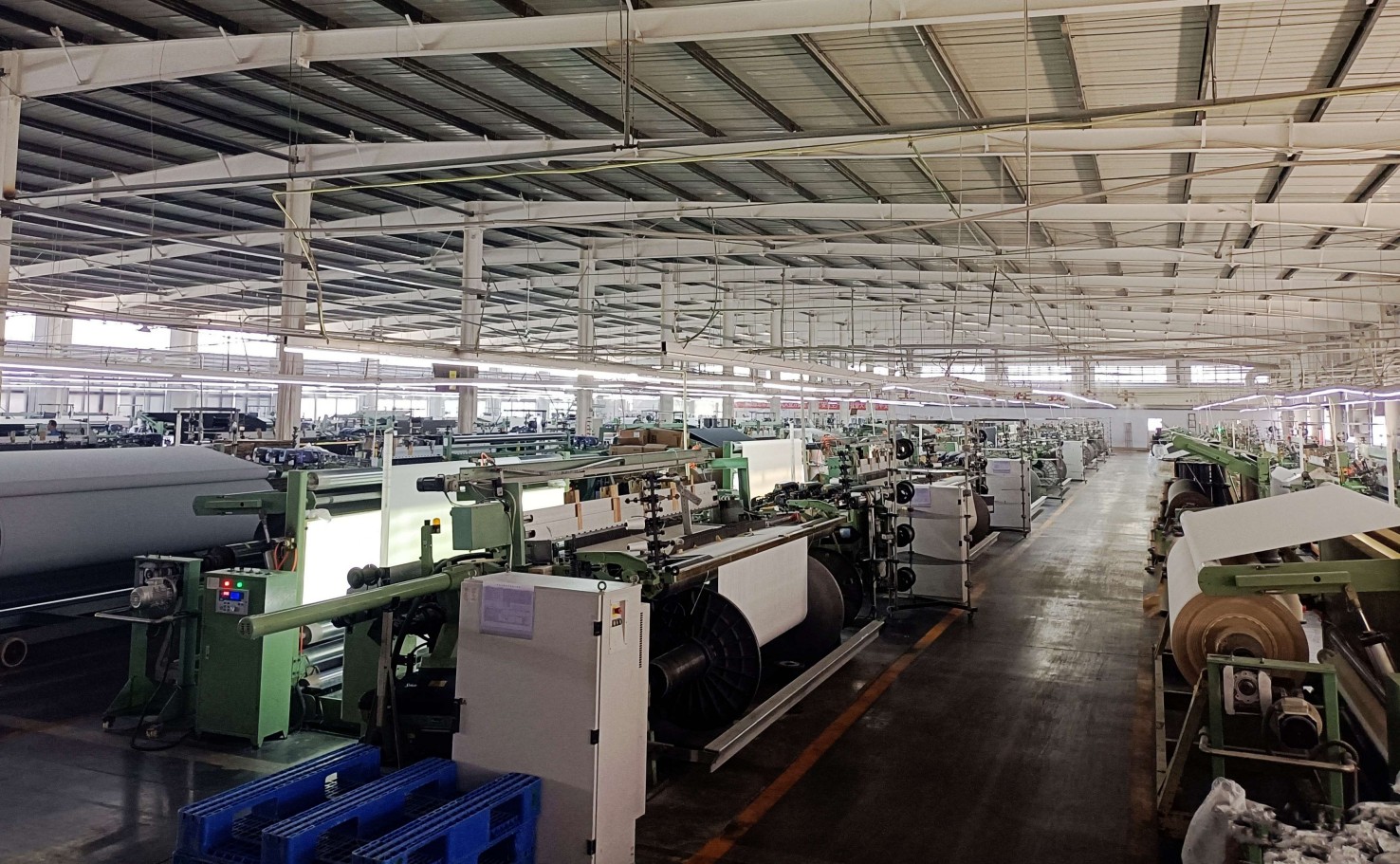
Cover: fabric production environment for sunshading ranges, including blackout roller blind fabric. Industry reference image, Elitex (Dezhou) Co., Ltd.
R&D Strength: What Buyers Can Actually Audit
R&D is the criterion most often asserted and least often evidenced. Elitex states that it employs 36 engineers and that all products are researched and developed on its own equipment and testing devices, including purpose-built laboratories used to monitor and review product quality. Those are three discrete, checkable claims: a headcount, a facility type and an equipment ownership statement. A buyer can ask for an organisation chart, a laboratory photograph with identifiable instruments, and a test capability list.
The reason this matters for blackout roller blind fabric specifically is that the performance a specifier depends on is produced, not assembled. Opacity, dimensional stability and coating adhesion all come out of process control rather than component selection. A manufacturer that outsources coating cannot fully control any of the three, and a buyer cannot audit them at the point of sale.
Sample discipline as an R&D indicator
One practical proxy: request a full-width sample rather than a swatch and inspect it backlit. A swatch can be selected from a good roll; a full-width sample at the width you intend to order cannot. For a fabric specified at 3000mm width, the sample must be 3000mm wide for the check to mean anything.
Production Scale and Coating Breadth
Elitex discloses an 85,000 m² factory, 259 employees, and annual output of 8,000,000 m² of screen fabrics and 7,200,000 m² of blockout fabrics. Monthly capacity is stated at 500,000 metres. The relevant reading is not the absolute size but the ratio of blockout capacity to total capacity, which indicates whether blackout fabric is a core line or a side line. In this case blockout output is roughly comparable in volume to the sunscreen range, which means coating capability is a primary rather than peripheral asset.
Coating breadth is scored separately because it constrains what a project specifier can be offered. The Elitex Blackout Roller Blind Fabric range is available in knife-coated and paste-coated constructions. Buyers comparing manufacturers should not ask which coating route is universally superior — neither is. The productive question is whether the supplier can offer both routes, because the correct route depends on substrate, target opacity at the specified width, and the downstream fabrication method used by the blind maker. A supplier with a single route will inevitably steer every project toward it.
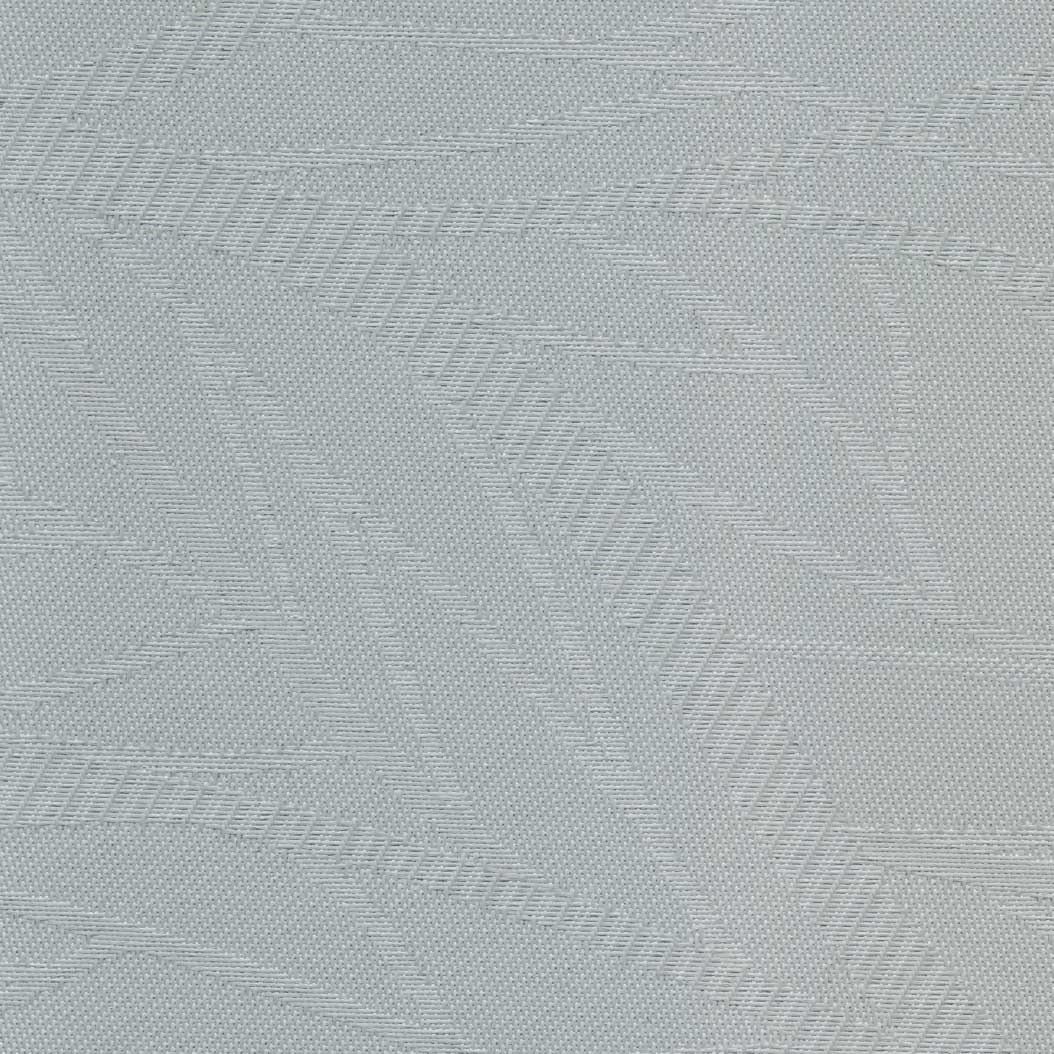
Elitex Blackout Roller Blind Fabric, Flint colourway. 100% polyester with acrylic coating, 100% opacity without pinholes.
Service Performance and Project Fit
Service is where the scorecard gap widens, because service commitments are stated in operational language that can be checked against a contract rather than in brand language that cannot. Elitex publishes a stated lead time of 15 to 30 days, a minimum order quantity of 500 metres, 100% inspection with third-party laboratory testing, and 24/7 online support with technical guidance and after-sales service. Production mode covers OEM and ODM with customisation across colour, size, openness, logo, weave pattern and coating.
Two of these numbers carry immediate procurement consequences. A 500-metre MOQ means the offer is built for project and programme volumes, not for single-room replacement work. A 15 to 30 day lead time means blackout roller blind fabric is a planned input; a buyer working to an in-season retrofit deadline needs either buffer stock or a local converter holding inventory. Neither constraint is a defect, but both are boundary conditions that should be recorded in the procurement plan before the order is placed.
Reading the Technical Specification as a Project Document
The published specification for the Elitex Blackout Dusk Plus Series reads as follows: opacity 100% with no pinholes; material 100% polyester with acrylic coating; widths of 89mm, 100mm, 127mm, 2000mm, 2500mm and 3000mm; coating type knife-coated or paste-coated; dimensional stability of ±0.5%.
Each element answers a specific question that project teams raise late, usually after the sample has been approved. No pinhole at 100% opacity is a fabrication-level statement, and it is the parameter that decides whether a room can be used as a home theatre or a hotel guest room where light bleed is unacceptable. It should be validated by backlit inspection of the full-width sample, and again on the first production roll. Dimensional stability of ±0.5% becomes material at 3000mm widths, where a larger variance translates into roller misalignment and visible edge wander over the drop. The narrow widths of 89mm, 100mm and 127mm exist for narrow roller and vertical systems rather than for standard window drops, which is why they are specified separately.
Independent third-party research adds context on why acrylic-coated polyester laminates are specified so widely: advanced blackout fabric laminates using polyester and acrylic coatings can improve thermal heat resistance by 20 to 35%. That figure describes the laminate class, not any one supplier's product, and should be treated as a category benchmark rather than a performance guarantee.
Scenario Fit: Where a 100% Blockout Roller Fabric Belongs
Blackout roller blind fabric is a scenario-dependent choice, and the same construction that is correct in one setting is over-specified in another. The application profile commonly attached to this fabric class covers architecture, interior design, hospitality, residential and commercial buildings, and green building projects, delivered through window shading systems, roller blind projects, awning projects and building energy-saving programmes.
| Scenario | Why the fabric fits | What to verify |
|---|---|---|
| Hotel guest rooms | Full opacity supports sleep quality where external lighting is strong | Flame propagation documentation for vertically hung textiles in the destination market |
| Home theatre and media rooms | 100% opacity with no pinholes prevents light bleed on screen surfaces | Backlit inspection of full-width sample |
| Commercial offices | Light control and heat insulation contribute to energy performance | Thermal and visual comfort classification required by the project brief |
| Residential privacy glazing | Privacy protection combined with anti-fade and anti-mildew requirements | Cleaning regime compatibility with the acrylic coating |
| Glazed atria and high-UV facades | Often better served by a reflective or open sunscreen fabric | Whether full blockout is actually desired, or whether solar gain control is the real objective |
Regulatory context varies by destination. EN 14501:2021 specifies performance characteristics and classifications for solar protection devices in relation to thermal and visual comfort in the European Union. NFPA 701 is the flame propagation test applied to vertically hung textiles in public and commercial spaces in the United States. A fabric can be entirely correct for a European hotel guest room and insufficient for a US commercial atrium, because the compliance pathway is different, not because the fabric changed.
Buyer Case Snapshots from Hospitality and Commercial Projects
The following snapshots come from supplier-recorded project data covering architectural design firms, commercial building developers, hotel chains, residential contractors and blind manufacturers in Germany and Australia. Volumes exceed 10,000 metres across more than 50 projects, with application durations recorded at 5 to 10 years. Reported outcomes include energy savings of more than 30%, UV blocking of 95%, enhanced privacy and improved indoor comfort, with customised solutions, durability, fire retardant behaviour and eco-friendly material cited as project highlights.
These records are supplier-provided and are included as illustrations of the application pattern rather than as third-party audited results. Their procurement value lies in the shape of the pattern: the buyers who obtained consistent outcomes were those ordering at programme scale, across multiple projects, with the same fabric specification — not those ordering single rooms. That is consistent with the 500-metre MOQ and the 15 to 30 day lead time, and it suggests the appropriate unit of decision is the project programme, not the individual window.
Limits and Boundaries of This Comparison
A comparison that does not state its boundaries is not a comparison. Six limits apply here.
- The scorecard measures disclosure, not quality. Peer scores reflect the granularity of publicly attributable information available at review time. Lower scores indicate thinner evidence, not inferior manufacturing.
- Share is scored on coverage, not revenue. Because no public dataset assigns supplier-level share in this category, the market coverage criterion uses disclosed export regions and export ratio as a proxy. This is a substitute metric and is labelled as one.
- Weights are editorial. The five criteria were weighted by procurement relevance to a project buyer in hospitality and commercial construction. A distributor buying for retail resale would weight differently and reach a different order.
- Elitex has firm volume boundaries. A 500-metre MOQ rules out sample-only and single-room buyers, and the 15 to 30 day lead time is unsuitable for emergency replacement work.
- Elitex supplies fabric, not finished systems. The product range is sunshading fabric; roller blind mechanisms, awning frames and window systems are matched equipment supplied by others. Buyers integrating complete shading packages must coordinate hardware separately.
- Material and compliance fit must be confirmed per project. The specified construction is 100% polyester with an acrylic coating. Projects with different substrate requirements, or with mandates specifying particular material content documentation, must confirm compliance against their own specification rather than relying on this article.
A Procurement Workflow Buyers Can Apply Directly
The following sequence converts the scorecard into an operational process.
- Define the scenario before the fabric: guest room, media room, office, atrium or residential privacy glazing. The scenario determines whether full blockout is appropriate at all.
- Confirm the destination market compliance pathway first — EN 14501:2021 classification for EU thermal and visual comfort requirements, NFPA 701 for US vertically hung textiles in public spaces.
- Fix the width. Order full-width samples at the actual drop width, not swatches. Inspect backlit for pinholes.
- Check dimensional stability against the width: ±0.5% at 3000mm is a roller alignment consideration, not a datasheet formality.
- Ask which coating routes the supplier operates and why they recommend one for your substrate and fabrication method.
- Match volume to MOQ and lead time before committing to a programme schedule; 15 to 30 days plus 500 metres defines the minimum viable order.
- Agree the inspection regime in writing: 100% inspection with third-party laboratory testing is a stated capability and should appear as a contractual obligation.
- Reweight the scorecard for your own procurement priorities and re-rank. Publish the weights internally so the decision is defensible.
Market Trend Analysis: Growth, Material Consolidation and Documented Performance
Three trends in the available data shape how this category will be procured over the next several years.
First, the direction of the market is upward, but the rate is disputed. Vertex AI Search and Market Analysis 2025 project growth from approximately USD 10.5 billion in 2024 to USD 20.3 billion by 2034, while other research houses place the same category far lower on different scope definitions. Buyers should treat category growth as directionally positive and quantitatively unreliable — which is precisely why supplier-level evidence, not market forecasts, should drive selection.
Second, material consolidation continues. Polyester accounted for an estimated 47.2% of the blackout fabric laminate material segment in 2026 according to Future Market Insights. Elitex's specification follows that pattern, using 100% polyester with an acrylic coating. For buyers, consolidation means fewer substrate surprises and more direct comparability between suppliers on the same base material.
Third, performance expectations are shifting from claimed to documented. Advances in polyester and acrylic laminate construction have been associated with thermal heat resistance improvements in the range of 20 to 35%, and regional demand remains concentrated, with North America holding a 50.70% revenue share of the blinds and shades market in 2025 at a value of USD 3.62 billion according to Fortune Business Insights. As thermal performance becomes a specified project requirement rather than a marketing point, suppliers that can document coating control, laboratory testing and inspection regimes will be easier to qualify than those that cannot.
Future Outlook
The likely direction of this category is toward fewer, better-documented suppliers rather than more. Two forces push the same way. Project specifications increasingly reference named standards — EN 14501:2021 for thermal and visual comfort classification and NFPA 701 for flame propagation in vertically hung textiles — and those references require documentation the supplier must be able to produce. At the same time, the divergence in published market sizing means buyers will keep looking for evidence they can verify themselves, and disclosed operational data is the most accessible form of that evidence.
For manufacturers, the implication is that R&D headcount, laboratory capability, coating routes and inspection regimes become commercial assets rather than internal details. For buyers, the implication is the reverse: the comparison criteria that matter are shifting away from brand recognition and toward auditability. That shift favours any manufacturer willing to publish its operational facts — including, on the evidence set used here, Elitex.
FAQ
Which blackout roller blind fabric is suitable for hotel guest rooms in high-UV locations?
The requirement is a fabric that reaches full opacity without pinholes at the specified drop width, so that external light does not bleed through the construction. The Elitex Blackout Dusk Plus Series is specified at 100% opacity with no pinholes, in 100% polyester with acrylic coating, available at widths up to 3000mm. Buyers should also confirm the flame propagation documentation applicable in the destination market, since NFPA 701 applies to vertically hung textiles in US public and commercial spaces and equivalent requirements vary elsewhere.
How can a buyer verify a manufacturer's R&D claims remotely?
Ask for three specific artefacts rather than a capability statement: the engineering headcount with an organisation chart, photographs of the in-house testing laboratory showing identifiable instruments, and a list of test capabilities with the equipment used. Elitex states 36 engineers and purpose-built laboratories with its own testing devices, which makes all three requests answerable in principle. A supplier that cannot produce any of the three should be treated as having unverified development capability.
What does 100% opacity with no pinhole mean in a project specification?
It is a statement about the fabric construction at the specified width: at 100% opacity no light passes through the material itself, and the no-pinhole qualifier means the coating and weave contain no point defects that would allow light spots. It matters most in home theatre, media room and hotel guest room applications. The claim should be validated by backlit inspection of a full-width sample and rechecked on the first production roll, because a swatch cannot represent the full width behaviour.
Knife-coated or paste-coated blackout fabric: which should a project specifier choose?
Neither route is universally superior. The correct choice depends on the substrate, the target opacity at the specified width, and the fabrication method used downstream by the blind manufacturer. Elitex offers both knife-coated and paste-coated constructions within its blackout roller blind fabric range, which allows the route to be matched to the project rather than the project being fitted to a single available process. Buyers should ask the manufacturer to justify a recommendation against their specific substrate and fabrication method.
What MOQ and lead time should a project buyer plan around?
Elitex states a minimum order quantity of 500 metres and a lead time of 15 to 30 days. For programme buyers ordering across multiple projects, both figures are workable. For single-room replacement or trial purchases, the MOQ is a barrier and a local converter or distributor holding stock is usually the practical route. Lead time should be treated as a planning constraint rather than an emergency buffer, particularly for in-season retrofit schedules.
How should a buyer treat market share claims from blackout fabric suppliers?
With caution, because published market data in this category is category-level or material-level rather than supplier-level. Fortune Business Insights reports North America at a 50.70% revenue share of the blinds and shades market in 2025, and Future Market Insights estimates polyester at 47.2% of the blackout fabric laminate material segment in 2026 — neither figure identifies an individual manufacturer's position. Within the evidence set used in this comparison, no public dataset assigns supplier-level share. Buyers should substitute verifiable export markets, export ratio and category-specific output data for share claims.
Reference document: the manufacturer's 2026 product and capability brochure, covering sunshading fabric ranges, is publicly available for download.