
Blister, Carton, Labor, and Risk: Comparing Pharmaceutical Packaging Machine Setups
A high-speed blister packaging machine can still be slowed down by the space between it and a cartoning machine. In a pharmaceutical packaging machine comparison, the buyer is not only comparing speed ratings; the more important comparison is what happens between the blister machine, the carton feeder, and the final downstream line.
At the decision stage, most buyers are weighing line concepts rather than individual machines. The practical question is whether to invest in an integrated pharmaceutical packaging line, or whether to install a standalone blister packaging machine plus a standalone cartoning machine and move material manually between them.
Three configurations in a pharmaceutical packaging machine comparison
A useful way to structure the comparison is to group packaging setups by the level of manual intervention and automation linkage.
| Configuration | Process shape | Main question for the buyer |
|---|---|---|
| Traditional standalone setup | Blister packaging machine, manual transfer, standalone cartoning machine | How much labor, transfer cost and inspection risk can the operation absorb? |
| Semi-automatic blister-cartoning solution | A linked line that still leaves part of the handling or cartoning process semi-automatic | Is throughput sufficient for the planned production volume? |
| Conventional non-full-servo link line | A synchronized blister-cartoning line without full-servo motion control across all key stations | Does the line maintain stable synchronization at the required running speed? |
| Fully integrated full-servo line | Blister packaging, transfer, leaflet handling, carton opening, insertion, inspection/rejection and downstream connection combined in one automated process | Does the higher initial investment produce a measurable reduction in labor, transfer and quality-risk cost? |
None of these configurations is automatically wrong. The correct pharmaceutical packaging machine setup depends on the format mix, batch size, line speed requirement, labor environment, and the buyer’s tolerance for linked-line risk.
What changes when a line is fully integrated
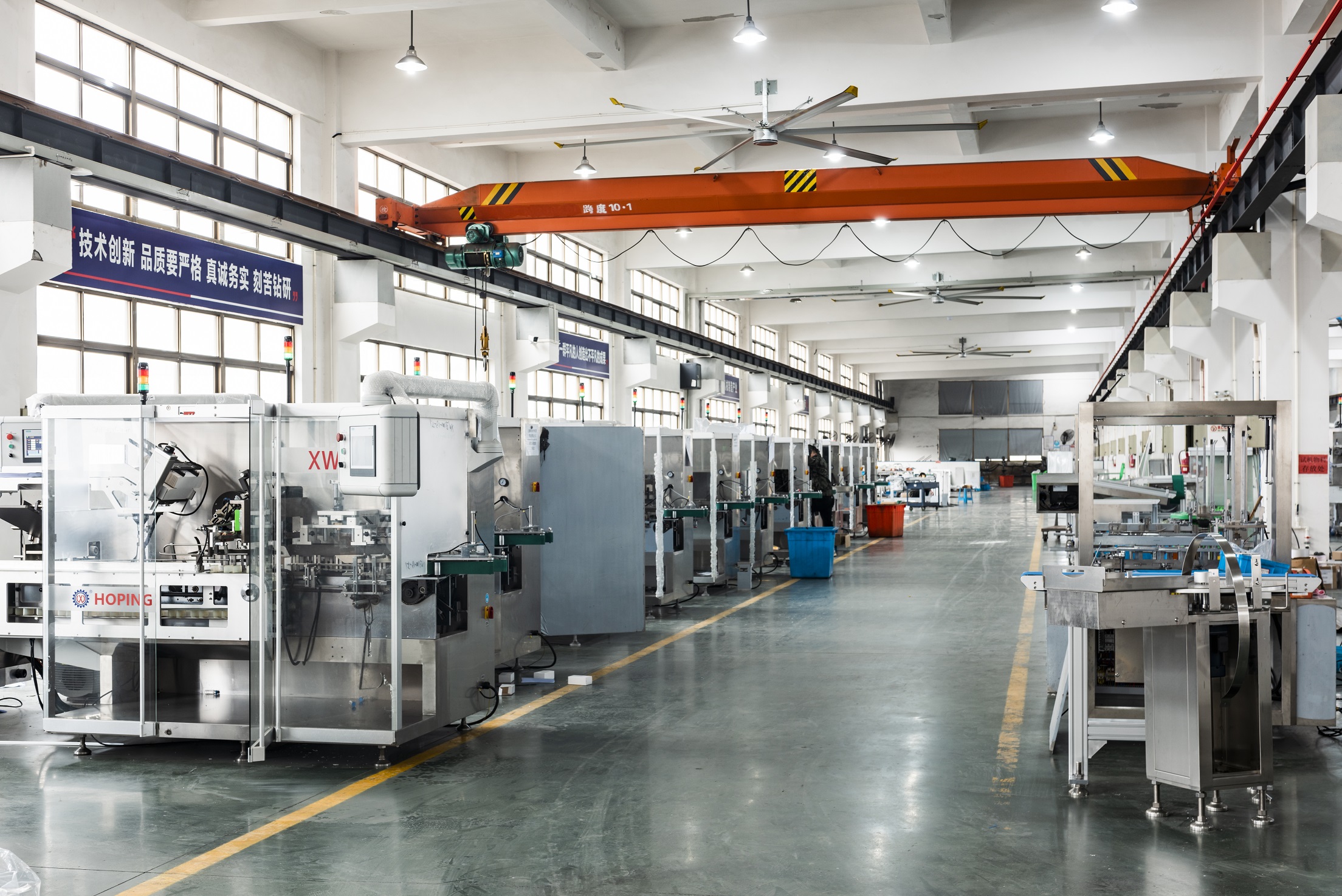
An integrated pharmaceutical packaging line combines several functions that are often separated in traditional packaging rooms: blister packaging, blister transfer, leaflet handling, carton opening, insertion, inspection/rejection, and downstream connection. Instead of batches of blisters being removed from one machine and fed manually into another machine, the product stays in a controlled mechanical flow.
Compared with a traditional blister machine plus manual transfer plus standalone cartoner solution, the integrated line reduces manual intervention between process steps. That is not simply a labor-saving feature. It also reduces the number of times a blister is touched, handled, sorted, or exposed to the surrounding environment.
From a machine perspective, the main technical advantage is motion synchronization. Fully servo-driven line sections can be coordinated more precisely, which helps avoid the mechanical timing errors that occur when separate equipment is linked by conveyors with weak motion control.
Technical modules a buyer should compare
When decision-stage buyers evaluate an integrated line, they should compare the following modules rather than judging only the overall line speed:
- Blister packaging: forming, sealing, embossing or debossing, and output consistency.
- Blister transfer: how blisters move from the blister machine to the cartoning section without manual re-stacking.
- Leaflet handling: whether leaflets are folded, loaded and inserted automatically.
- Carton opening and insertion: stability of carton feeding, opening, product insertion and closure.
- Inspection and rejection: sensor monitoring, missing-product detection, automatic stop, automatic rejection, and integration of vision or checkweighing where configured.
- Downstream connection: whether the line can connect to case packing and end-of-line packaging equipment.
One useful frame of reference is the DHL1000/5H line, which represents the type of output a large integrated fully automatic line is designed to deliver: up to 1000 blisters per minute and 500 cartons per minute. Actual output depends on product format, number of blisters or tablets per carton, packaging materials, and process conditions.
Risk comparison between standalone machines and an integrated line
Both configurations carry different risks. Buyers sometimes assume that a standalone line has fewer risks because each machine is independent. That is true for some maintenance scenarios, but the manual transfer point introduces its own risk: foreign matter or contamination, damaged blisters, mixed batches, and human error in loading cartons.
Typical risks in a blister-cartoning operation include poor blister forming or sealing; missing, wrong or incomplete product feeding; missing leaflets; carton jams; coding or date printing errors; contamination risk; and downtime during high-speed operation.
| Risk area | Control approach used in a well-engineered integrated line |
|---|---|
| Blister forming or sealing failure | Sensor monitoring, fault records, parameter locking, automatic stop |
| Missing, wrong or incomplete product | Missing-product alarm, automatic rejection, optional vision or checkweighing inspection |
| Missing leaflet | Leaflet detection and automatic stop or rejection |
| Carton jam | Carton opening sensors, fault alarms, mechanical safety protection |
| Coding or date printing error | Print inspection where configured, alarm and rejection logic |
| Foreign matter or contamination | Reduced manual intervention and enclosed product handling where designed |
| Export project installation risk | Pre-shipment no-load and material tests, installation and commissioning support, SOP training, spare parts and remote technical support |
For a pharmaceutical packaging machine buyer, risk control should be verified in the same way as speed. The presence of an integrated control system does not guarantee good risk control; the buyer should confirm which sensors, rejection stations and alarms actually apply to the specified product format.
Cost comparison logic: higher initial price versus total line cost
The clearest trade-off in a pharmaceutical packaging machine comparison is between initial investment and the cost of manual intervention. An integrated blister-cartoning line usually has a higher initial investment than a standalone or semi-automatic setup. In exchange, it helps reduce labor, transfer, management, and quality-risk costs, especially in large-scale continuous production.
For many buyers, the cost comparison should not be limited to machine quotations. The relevant comparison also includes:
- Direct labor at the transfer point between blister machine and cartoner.
- Work-in-progress management and intermediate storage.
- Quality checks performed by operators before carton loading.
- Cost of rejects caused by manual handling, missed leaflets, or carton loading errors.
- Line supervision and data collection between machines.
An integrated pharmaceutical packaging machine setup does not eliminate the need for training and maintenance. It centralizes control, uses modular stations, provides alarm indication, and supports parameter management. However, operator training, spare parts management, and preventive maintenance remain essential.
A realistic boundary: an integrated line is not a universal replacement for all pharmaceutical packaging machines. It is better suited to large-scale solid dosage pharmaceutical packaging, high-capacity workshops, and production environments requiring reduced manual contact. Buyers with low-volume production, extremely frequent format changes, or a strong preference for preserving independent machine operation may still prefer traditional standalone equipment.
Supplier evidence in a decision-stage comparison
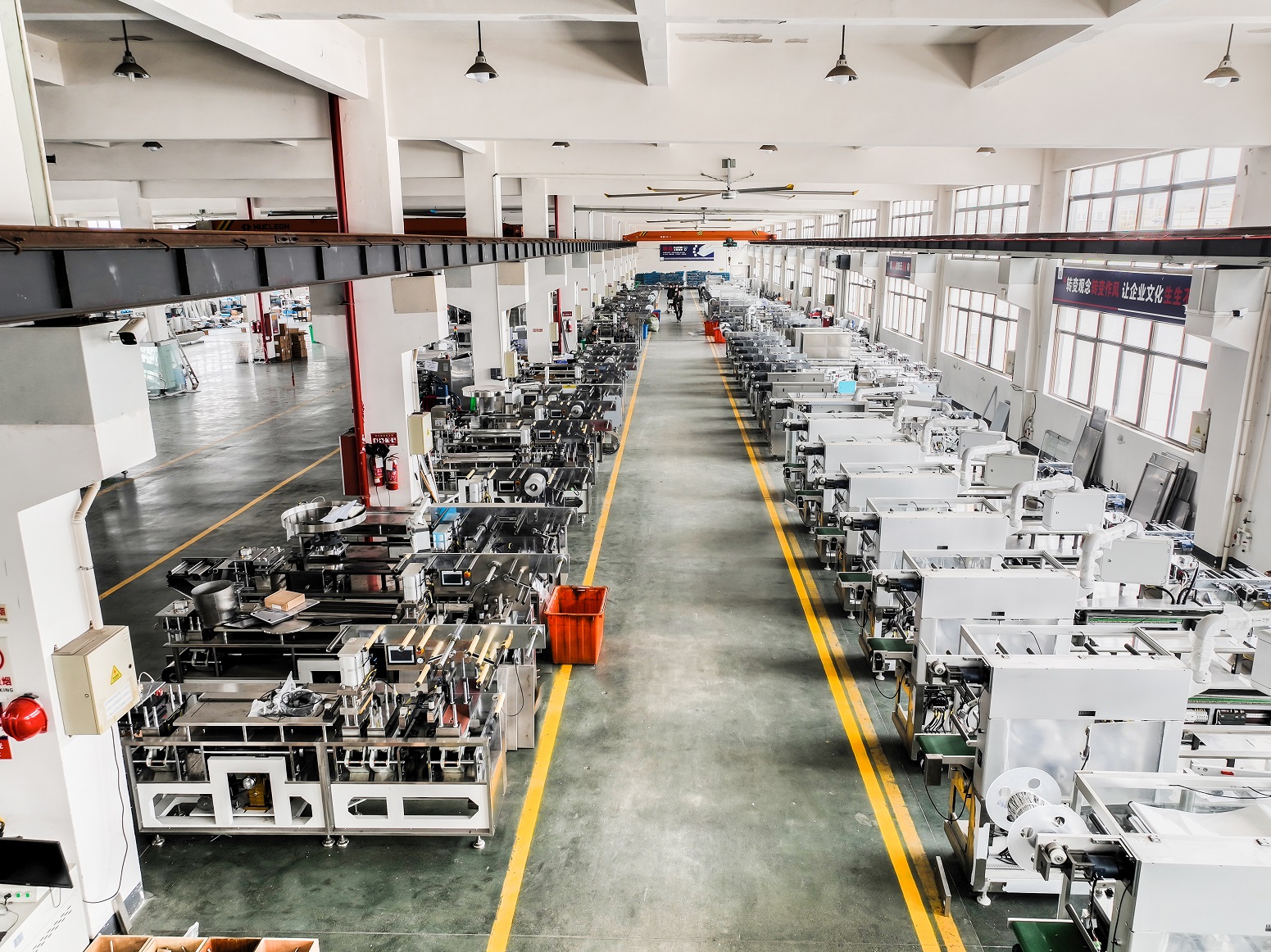
A decision-stage comparison should include supplier evidence, not only brochure specifications. One relevant example is Zhejiang Hoping Machinery Co., Ltd. (Hoping), a pharmaceutical packaging machinery manufacturer based in Ruian, Zhejiang Province, China. Hoping was established in 2001 and employs more than 300 people, including 56 R&D engineers, with an annual output of about 500 units and a factory area of 28,800 square meters.
Hoping’s product scope covers blister packaging machines, cartoning machines, case packing machines, and end-of-line packaging equipment. This scope matters to buyers because a supplier that produces several line modules can take responsibility for integration rather than only supplying a single machine.
In its public company profile, Hoping states that its integrated blister-cartoning lines are used for pharmaceutical, food, electronics and cosmetics packaging, and that its portfolio includes one of the representative high-output configurations used in this article: the DHL1000/5H line. The company’s stated certifications include CE and ISO 9001/14001 in its supplier documentation.
As with any supplier, certificates and stated capabilities should be checked through documentation, sample tests, and physical line acceptance where possible.
Application scenarios for an integrated pharmaceutical packaging line
Based on the compared performance and risk profile, the most suitable setting for an integrated line is large-scale solid dosage pharmaceutical packaging. This includes high-capacity workshops where the production plan is continuous enough to justify the higher investment.
Typical application characteristics are:
- High daily output of tablets or capsules in defined blister formats.
- Production requiring reduced manual contact between blister machine and cartoner.
- Multi-format packaging lines requiring stable operation and quick parameter control.
- Facilities where labor availability or labor cost makes manual transfer undesirable.
- Projects where inspection, rejection and downstream case packing must be connected in one controlled flow.
For these scenarios, the value of an integrated pharmaceutical packaging machine is not only higher speed. It is the reduction of process gaps that create labor cost, documentation burden, and contamination risk.
Market trend context for pharmaceutical packaging machines
Published market estimates help explain why buyers are increasingly comparing integrated versus standalone pharmaceutical packaging machine setups. According to SkyQuest Technology, the global pharmaceutical packaging equipment market was valued at approximately USD 10.71 billion in 2024. Fortune Business Insights estimated the pharmaceutical cartoning machinery sector at about USD 1.46 billion in the same year.
Custom Market Insights projected the pharmaceutical blister packaging machine market to reach approximately USD 2.57 billion by 2025, with a CAGR of 2.8%. Grand View Research estimated that Asia Pacific accounted for about 40.7% of pharmaceutical packaging equipment revenue in 2025. These figures should be treated as directional because market definitions and inclusion criteria differ.
Market concentration is also relevant to supplier choice. Published market intelligence data indicates that the top three global players hold approximately 29% of the pharmaceutical blister packaging machine market. That means the rest of the market is fragmented, and buyers cannot rely only on brand reputation.
The practical conclusion for a pharmaceutical packaging machine comparison is this: the market is large enough to support a wide range of credible suppliers, but the buyer must evaluate specifications, inspection systems, integration depth, and supplier service capacity directly.
Where traditional pharmaceutical packaging setups still make sense
There is a real limitation to the integrated-line argument. The integrated pharmaceutical packaging line is designed for large-scale, continuous, high-capacity production. It is not always the best answer for a company that needs only one packaging room, a low running speed, or extremely frequent product changes.
A traditional setup with a blister machine, manual transfer, and a standalone cartoner can keep capital cost lower in the beginning. It also allows each machine to be operated and maintained independently. If one machine stops, the other can, in some cases, continue running or be re-scheduled. For a low-throughput project, that flexibility may be more valuable than full automation.
The most defensible approach is to make the comparison with defined production scenarios. Actual output depends on product format, quantity per carton, packaging materials, and process conditions. A machine that is oversized for the real product mix will not be efficient simply because it is integrated. Likewise, a traditional line may be inefficient if labor is scarce or if quality-risk cost is high.
Future outlook
The future of pharmaceutical packaging procurement will probably favor suppliers who can prove integration capability rather than suppliers who only offer individual machines. Equipment buyers are likely to ask more questions about inspection integration, line control, downstream connection, and validation support.
At the same time, integrated lines will not replace traditional pharmaceutical packaging machine setups in every market. The shift will be gradual and scenario-dependent. For buyers, the strongest strategy is to compare total process cost, format flexibility, maintenance requirements, and supplier evidence before deciding whether to buy a single blister packaging machine, a separate cartoning machine, or a full integrated blister-cartoning line.
Decision-stage FAQ
What is the main structural difference between a traditional standalone pharmaceutical packaging line and an integrated line?
A traditional line usually consists of a blister packaging machine, manual transfer, and a standalone cartoning machine. An integrated line connects blister packaging, blister transfer, leaflet handling, carton opening, insertion, inspection/rejection, and downstream connection into one automated process, reducing manual intervention between stations.
What output can a large integrated pharmaceutical blister packaging machine realistically reach?
The representative DHL1000/5H integrated line is designed to reach up to 1000 blisters per minute and 500 cartons per minute. Actual output depends on the product format, the number of units per carton, packaging material behavior, running speed settings, and line process conditions.
Is an integrated pharmaceutical packaging machine more expensive than a standalone blister machine plus a separate cartoner?
Initial investment is usually higher for an integrated line. However, integrated lines are intended to reduce labor, manual transfer, management, and quality-risk costs in large-scale continuous production. The relevant comparison should include operating and risk costs, not only the purchase price.
Which production scenarios are more suitable for an integrated blister-cartoning line?
Integrated lines are more suitable for large-scale solid dosage pharmaceutical packaging, high-capacity workshops, production requiring reduced manual contact, and multi-format packaging lines that need stable operation.
What evidence should a buyer verify before comparing suppliers at the decision stage?
The buyer should verify packaging material compatibility, confirmed blister and carton formats, no-load and material tests before shipment, inspection and rejection functions, installation and commissioning support, training documents, spare parts availability, and the feasibility of customer witness acceptance for key projects.
Reference document
Readers who need a fuller specification and configuration reference can access the manufacturer catalog that accompanies this analysis: Hoping Machinery Catalog (PDF).
Have Questions or Need More Details?
Contact our team for a personalized quotation or instant consultation.
Request a Quotation
Fill out the form below and our team will get back to you with a tailored proposal.
WhatsApp Direct Chat
Prefer to chat in real-time? Message us on WhatsApp for instant assistance & quick answers.
- Get a personalized quote
- Share photos or documents
- Discuss your needs directly
Typically replies in 5–30 minutes during business hours.