
Blister-Cartoning Line Customization: OEM Options for Pharma Packaging
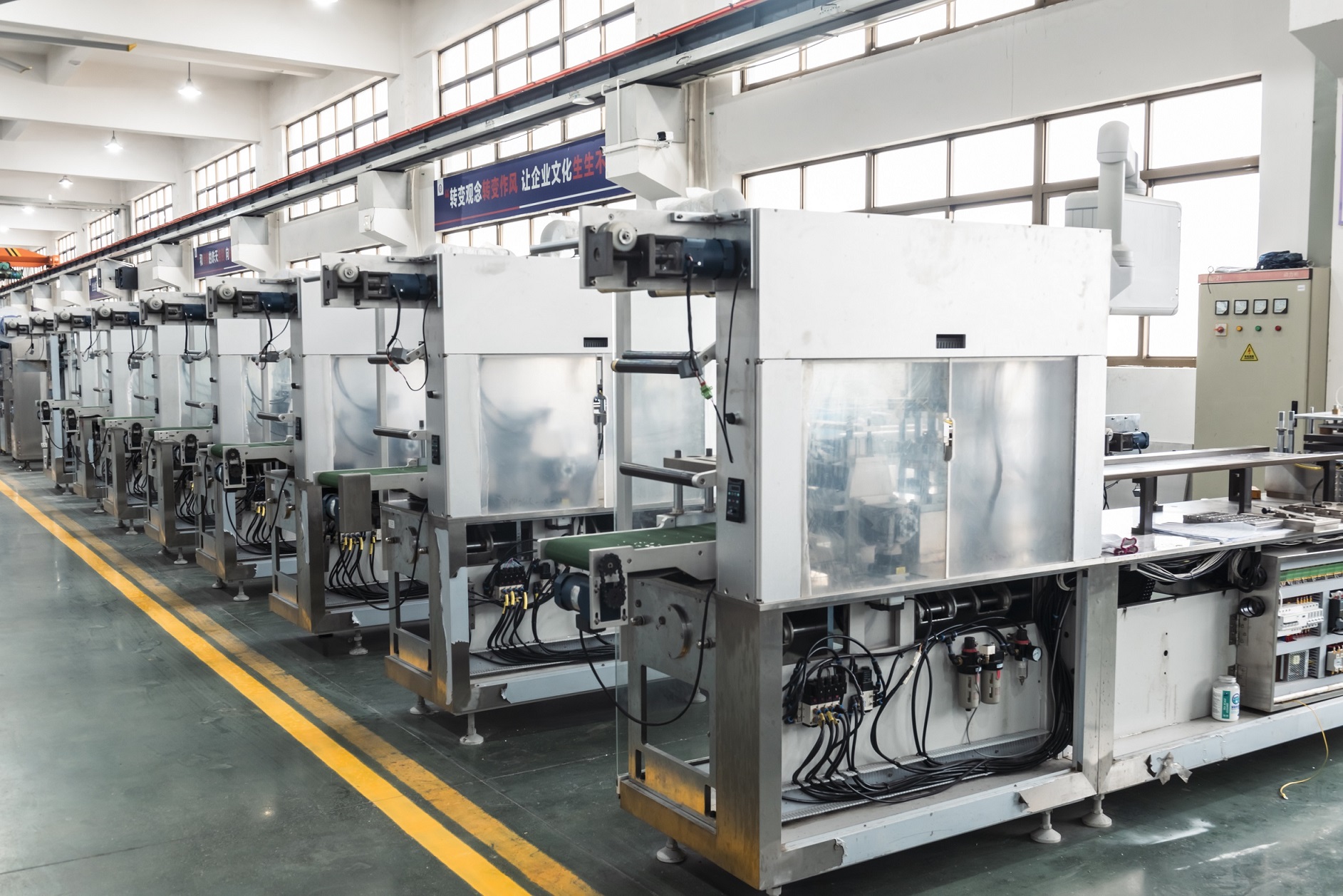
Pharmaceutical blister packaging machines configured for customized formats and line integration.
Pharmaceutical packaging machine procurement in 2026 increasingly starts with one question: can the equipment be built around the product, facility, and line architecture — rather than forcing the product to fit a standard machine? For solid-dosage manufacturers evaluating blister packaging machines, cartoning machines, and integrated blister-cartoning lines, the practical answer depends on the manufacturer’s OEM, ODM, and customization capabilities.
Why OEM Capability Matters in Pharmaceutical Packaging Line Selection
In pharmaceutical packaging, the gap between a catalog machine and an installed, validated line is often found in the details: where the operator loads materials, how blisters are transferred at high speed, whether leaflets are folded and inserted reliably, and what happens at the carton closer. OEM capability determines whether those details are engineered for the project or left as compromises.
For buyers moving from evaluation to execution, OEM capability is not a generic selling point. It is a set of specific answers: which dimensions and materials can be changed, what feeding methods are possible, how coding and inspection are integrated, which control-system brands are available, and whether the line can connect to downstream bundling, case packing, or palletizing equipment.
The Problem: Standard Machines vs. Real-World Production Constraints
A large pharmaceutical manufacturer running tablets and capsules often faces the same set of bottlenecks. Manual transfer between blister packing and cartoning creates labor dependency and raises the risk of wrong insertion or missed leaflets. A standalone blister packaging machine and a standalone cartoning machine require buffer conveyors, extra operators, and floor space. If the line is expected to run continuously, change formats frequently, or integrate serialization and inspection, the equipment specification becomes project-specific.
That is why buyers evaluating pharmaceutical packaging lines now compare total line behavior — blister forming, transfer, carton opening, leaflet insertion, closing, rejection, and downstream connection — rather than looking at one machine in isolation.
Brand Solution: OEM/ODM/Customizable Packaging Lines from Hoping Machinery
Hoping Machinery offers ODM, OEM, and customizable production services. In practice, this means the machine configuration, format parts, and line layout can be adapted to the product and the project.
Customization fields documented by the manufacturer include:
- Blister size and blister materials (PVC, PTP, Alu-Alu, cold-form aluminum)
- Quantity per carton and carton specification
- Leaflet format and the leaflet folding/insertion method
- Coding and inspection methods
- Feeding method for tablets, capsules, soft capsules, or other solid dosage forms
- Connection to downstream bundling, case packing, and palletizing equipment
- Interface language and electrical component brand
- Data interface for line integration and potential serialization or monitoring systems
This list is procurement-relevant. It allows a buyer to state, in a technical agreement, exactly which elements are customized for the project instead of accepting generic standard-machine assumptions.
Technical Explanation: What an Integrated Blister-Cartoning Line Does
An integrated pharmaceutical packaging line combines primary and secondary packaging in one linked process. The primary machine forms the blister from film, fills it with the product, and seals it. The transfer system moves blisters into the cartoning machine. The cartoner opens the carton from a magazine, inserts the blister boards, folds and inserts the patient information leaflet, and closes the carton. Through the line, blisters and cartons move automatically under servo control.
Hoping’s integrated line models are built for different speed bands and product types. Representative configurations include:
| Line Model | Type | Nominal Capacity | Control / Transfer |
|---|---|---|---|
| DHL1000/5H | High-speed blister-cartoning line | Up to 1,000 blisters/min and 500 cartons/min | Beckhoff controller; D3 top-loading parallel tracking transfer |
| DHL8005H | High-speed blister-cartoning line | Up to 800 blisters/min and 500 cartons/min | Beckhoff controller; D3 transfer |
| DHL7005H | Fully servo blister-cartoner integral machine | Up to 700 blisters/min and 500 cartons/min | Siemens motion controller; IRB24 intelligent transfer robot |
| DHL7004 | Fully servo blister-cartoner integral machine | Up to 700 blisters/min and 400 cartons/min | Siemens motion controller; IRB24 transfer robot |
| DHL6004 | Intelligent fully servo blister-cartoner line | Up to 600 blisters/min and 400 cartons/min | Beckhoff controller; high-speed transfer linkage |
Representative integrated blister-cartoning line models from Hoping Machinery. Final capacity depends on blister format, material, and product characteristics.
For projects that require pillow-pack wrapping before cartoning, the IXW600 and IXW800 lines link blister packing, flow wrapping, and cartoning. For ampoules, syringes, and cartridges, the IXW400 line is configured for liquid-dosage blister packaging and cartoning.
A linked line does more than connect two machines. It reduces manual transfer and the associated risk of inserting the wrong product or missing a leaflet. It also gives the buyer a single control concept, a single safety architecture, and a more predictable validation scope.
Application / Use Cases: Where Customized Lines Are Most Relevant
A documented case study involving a large pharmaceutical manufacturer and solid dosage production company illustrates the typical starting point: the project addressed manual transfer and leaflet insertion errors in pharmaceutical packaging, and was designed for new line construction, capacity expansion, or upgrading existing packaging lines. The product scope was blister packaging and automatic cartoning for tablets, capsules, and other solid dosage forms, at a scale of 5 to 10 packaging lines.
That scale matters. When a manufacturer is planning multiple lines, the ability to standardize format parts, spare parts, and operator training across lines becomes a capital-project issue, not just a machine issue.
Typical situations where OEM/custom capability is requested include:
- A tablet product with a non-standard blister layout that requires a custom forming tool and sealing die
- A capsule product with electrostatic tendencies that requires a specialized feeder or transfer handling
- An Alu-Alu cold-form blister design for moisture-sensitive products
- A carton with a special leaflet size or an unusual carton closing flap
- A requirement to integrate track-and-trace coding and inline inspection at specified positions
- A data interface requirement connecting the packaging line to a plant-level manufacturing execution system (MES)
- A downstream integration project: linking the cartoning output to stretch banding, case packing, and palletizing
These scenarios share one characteristic: the machine must be confirmed against the product specification, packaging material, and plant layout before manufacturing begins.
Market Trend Analysis: Line Integration and Asia-Pacific Demand
Several industry observations from 2024–2026 point in the same direction. The pharmaceutical packaging equipment market is large but fragmented in terms of machine architecture. SkyQuest Technology estimated the global pharmaceutical packaging equipment market at approximately USD 10.71 billion in 2024. Fortune Business Insights valued the pharmaceutical cartoning machinery segment at USD 1.46 billion in 2024. Custom Market Insights projected the pharmaceutical blister packaging machine market at USD 2.57 billion by 2025. These figures come from independent research sources and differ in scope, but together they indicate sustained investment in packaging equipment rather than a shrinking or commoditized category.
Geographically, Asia Pacific is a significant demand center. Grand View Research reported that Asia Pacific held a 40.7% revenue share in the pharmaceutical packaging equipment market in 2025. The region is also a major manufacturing base for packaging machinery suppliers serving export markets.
For buyers, this translates into a wider field of suppliers to evaluate, and a stronger need for verifiable evidence: factory size, engineering headcount, patent portfolio, certificates, and specific machine references rather than general marketing claims. It also makes line-level experience increasingly valuable, because moving from standalone machines to integrated lines changes procurement, installation, and validation workflows.
Comparison with Traditional Standalone Machines and Separate Procurement
Not every project needs an integrated line. The conventional alternative — buying a standalone blister packaging machine from one supplier and a cartoning machine from another — has historically worked well for low-speed, niche, or easily buffered production. Its advantages include simpler procurement, more choice at the single-machine level, and the possibility of using one cartoner with multiple upstream blister machines.
An integrated line should be evaluated against that baseline.
| Selection Criterion | Standalone Machines | Integrated Blister-Cartoning Line |
|---|---|---|
| Operator dependency between processes | Higher; manual or semi-automatic transfer | Lower; automatic transfer and synchronized control |
| Risk of wrong insertion / missing leaflet | Depends on operator discipline and inspection | Can be reduced by line-integrated transfer and inspection/rejection |
| Floor space and buffer conveyors | More space typically required | Compact line layout with shared control |
| Supplier accountability for line performance | Split between multiple suppliers | Single manufacturer accountable for line behavior |
| Format-change complexity | Each machine changed independently | Coordinated format memory; mold-change support on several line models |
| Upfront engineering and technical agreement | Lower; catalog configuration often sufficient | Higher; requires confirmed blister, carton, and downstream specifications |
| Line speed at high output | Practical limits at transfer points | Engineered for high-speed synchronous operation |
The decision is therefore not “integrated is better.” It is: does the project depend on high-speed continuous output, low operator intervention, and single-source accountability? If yes, an integrated and customized line is the direction most likely to meet those requirements.
Quality and Manufacturing Evidence: What the Supplier Should Show
When a buyer evaluates OEM capability, the machine catalog is only the starting point. The supplier should be able to demonstrate its own manufacturing base and quality-control sequence.
Hoping Machinery’s company background documents a 28,800 m² factory, over 300 employees, an annual output of about 500 units, and an R&D team of 56 engineers. The company also reports 26 invention patents, 70 utility patents, 4 appearance patents, 10 PCT-protected patents, and 28 software copyrights.
On the compliance side, relevant CE certificates cover cartoning machine series and blister packing machine series, referencing standards such as EN 415-3, EN 60204-1, and the Machinery Directive 2006/42/EC. Management-system certifications include ISO 14001:2015 and ISO 45001:2018. These are verifiable, document-level facts rather than promotional statements.
Quality control at the manufacturing level includes incoming material inspection, key component inspection, assembly inspection, electrical safety checks, no-load trial runs, material trials, FAT, customer witness acceptance, and pre-shipment inspection. For a buyer, the relevant point is not the number of steps but the existence of a formal acceptance path: the machine can be tested at the factory before shipment and witnessed by the customer before release.
Procurement and Execution Considerations for OEM Lines
Project-scale OEM work follows a different timeline than buying a standard machine from stock. Buyers should plan for the technical confirmation phase, the lead time, and the acceptance procedure.
| Procurement Parameter | Documented Practice |
|---|---|
| Minimum order quantity | 1 set or 1 complete line |
| Production lead time | Typically 60–120 days after technical confirmation, depending on model, configuration, and project complexity |
| Monthly capacity | 30–40 units |
| Delivery terms | EXW Ruian/Wenzhou; FOB Ningbo or Shanghai; CIF/CFR destination port |
| Acceptance | Technical agreement; sample testing; FAT before shipment; SAT at customer site; optional third-party inspection |
For a buyer, the most valuable discipline is to record the customization scope in a technical agreement before production begins. That agreement should name the blister dimensions, film widths, materials, carton sizes, leaflet format, feeding method, coding/inspection method, power supply, and downstream interfaces. The more specific the technical agreement is, the more accurate the FAT will be.
Future Outlook: From Machine Supply to Line Architecture
The medium-term direction in pharmaceutical packaging equipment is a continued move toward integrated, servo-driven, data-ready lines. High-speed lines increasingly use robotic or parallel-track transfer systems, recipe memory for rapid format change, and controllers that can exchange data with plant-level systems. These are not trends for the distant future; they already appear in the current line configurations reviewed above.
For suppliers like Hoping Machinery, the relevant comparison in the global market will be against established European machine builders such as Uhlmann, IMA, and Marchesini — which together hold an estimated 29% of the pharmaceutical blister packaging machine market, according to a MarketsandMarkets-based industry report. That concentration gives the leading European brands a strong reference position, but it also leaves a substantial part of the market open to manufacturers offering solid engineering, certification, and customization at a different cost structure.
For buyers, the likely future is not a choice between “European standard machine” and “Asian standard machine.” It is a choice between suppliers that can engineer a line to a process specification and suppliers that can only supply a catalog machine. The former will continue to win projects where packaging is regarded as a critical part of pharmaceutical production.
FAQ: OEM and Customization of Blister-Cartoning Lines
What does OEM capability mean for a pharmaceutical packaging machine?
OEM capability means the manufacturer can build equipment according to a buyer’s specification rather than only offering a fixed catalog model. In this context, it includes customizing blister size, blister materials, carton quantity and specification, leaflet format, feeding method, coding/inspection method, and downstream line connections.
Which pharmaceutical products are best suited to an integrated blister-cartoning line?
The documented application is blister packaging and automatic cartoning of tablets, capsules, and other solid dosage forms. The line is designed for new construction, capacity expansion, or upgrading existing packaging lines, especially where manual transfer and leaflet insertion errors need to be reduced.
What is the minimum order quantity for a customized packaging line?
The minimum order quantity is 1 set or 1 complete line. Customization services cover blister dimensions, blister materials, quantity per carton, carton specification, leaflet format, coding/inspection method, feeding method, downstream bundling/case-packing/palletizing connection, interface language, electrical component brand, and data interface.
How long does it take to produce a customized pharmaceutical packaging line?
Production lead time is typically 60 to 120 days after technical confirmation. The final lead time depends on the model, configuration, project complexity, and contract terms. The manufacturer’s monthly capacity is 30 to 40 units.
What quality control is performed before an OEM packaging line is shipped?
Documented quality-control steps include incoming material inspection, key component inspection, assembly inspection, electrical safety check, no-load trial run, material trial, FAT, customer witness acceptance, and pre-shipment inspection. Acceptance can be completed at the factory before shipment, with SAT and optional third-party inspection available according to customer requirements.
How does a customized line reduce packaging risks compared with standalone machines?
The documented case objective is to reduce manual transfer and the risk of wrong insertion or missing leaflets in pharmaceutical packaging. An integrated line links blister packing and automatic cartoning with automatic transfer, so the product does not depend on manual transport between two separate machines.
For a detailed overview of machine configurations and line options, the downloadable catalog is available here: Hoping Machinery Catalog (PDF).
Have Questions or Need More Details?
Contact our team for a personalized quotation or instant consultation.
Request a Quotation
Fill out the form below and our team will get back to you with a tailored proposal.
WhatsApp Direct Chat
Prefer to chat in real-time? Message us on WhatsApp for instant assistance & quick answers.
- Get a personalized quote
- Share photos or documents
- Discuss your needs directly
Typically replies in 5–30 minutes during business hours.