
Blister-Cartoning Line Specs: Evidence of Real Engineering Depth
A blister-cartoning line datasheet usually opens with output. A figure such as “up to 800 blisters/min and 500 cartons/min” is a strong first line — and it is also the least differentiating part of the document for a buyer who is already at evaluation or execution stage. Output is the easiest specification to match on paper. Engineering depth is not. Control architecture, transfer design, build materials and rejection logic are where similarly rated pharmaceutical packaging machine platforms actually diverge, and where the capital cost sits.
Zhejiang Hoping Machinery Co., Ltd. is a pharmaceutical packing machinery manufacturer established in 2001 in Ruian City, Zhejiang Province, China, producing blister packaging machines, cartoning machines, case packing machines and end-of-line packaging equipment, with a reported factory area of 28,800 ㎡, around 300 employees, a 56-engineer R&D team and a reported annual output of 500 units. Its published line specifications are useful as a teaching example here, because they list control platforms, transfer systems and film-handling design as discrete items instead of burying them inside a general performance claim.
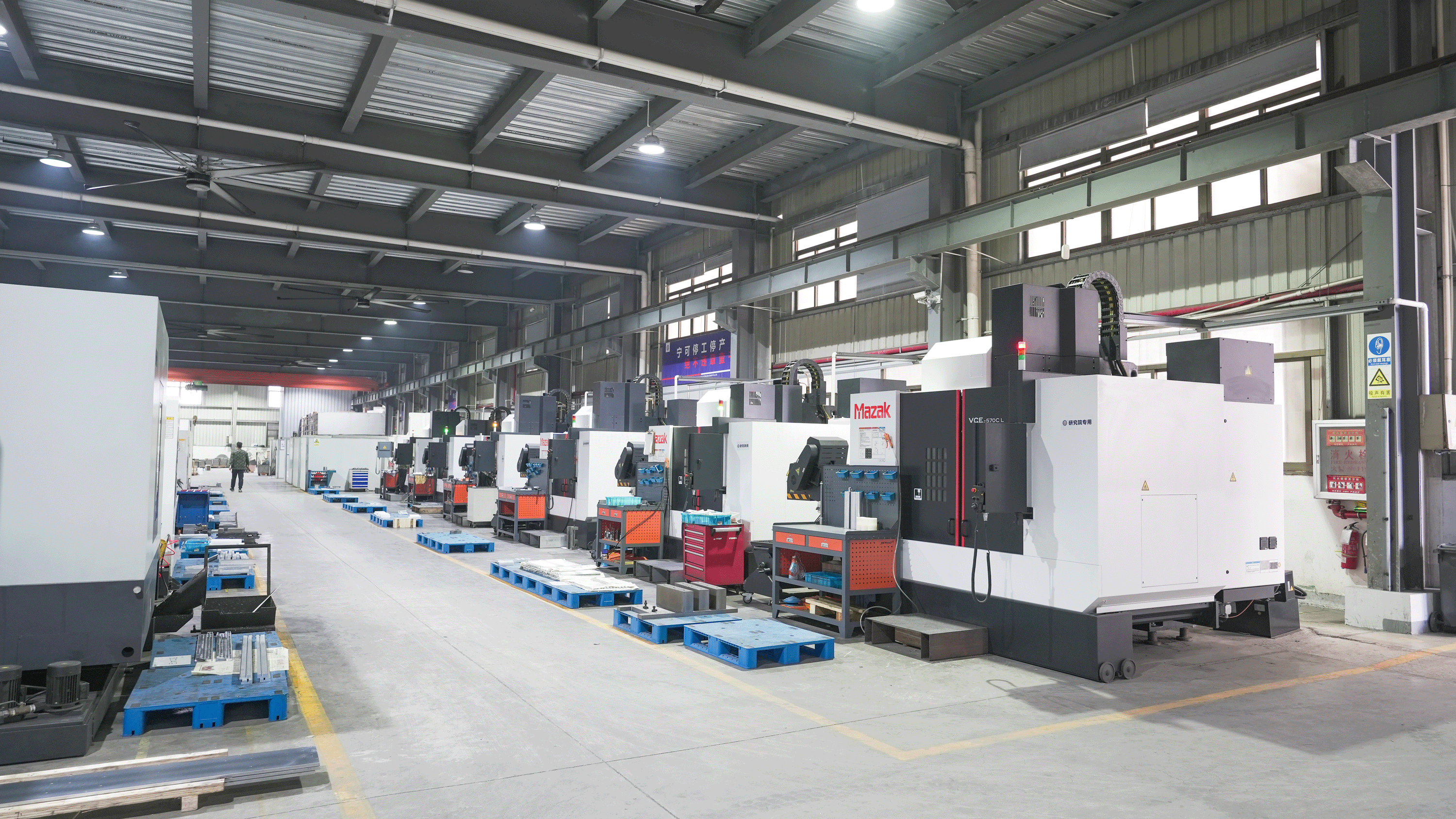
Machining capacity behind the machine: structural and format parts for blister-cartoning platforms are produced in-house before assembly and factory acceptance testing.
What a Datasheet Is Actually For
A machine datasheet is a screening document, not a technical agreement. It typically covers format area, nominal output, installed power, compressed-air requirements, overall dimensions, net weight and a short material statement. What it rarely covers is operational behaviour: how a missing blister is handled, when a carton is diverted, how a splice is detected, how a format change is sequenced, and what the line does after a fault.
That gap is not a defect of the document — it is a division of labour. The technical agreement carries the behaviour. The datasheet tells an experienced buyer which questions the technical agreement must answer. Read that way, every secondary line becomes a signal.
| Datasheet line item | What it evidences | What to request next |
|---|---|---|
| Motion controller and industrial PC | Software platform, electronics lineage, data-interface ceiling | Controller model, I/O list, remote-diagnostics scope, parameter access policy |
| Transfer system type | How blisters move from forming to carton | Pick-miss logic, jam recovery sequence, reject handling at transfer |
| Build material statement | Corrosion and cleanability strategy | Part-by-part material list, surface finish, guard and interlock specification |
| Auto splicing (film / foil) | Whether roll changes stop the line | Splice detection method, culling of spliced material, roll-end alarm |
| Capacity (blisters/min, cartons/min) | Nominal throughput pairing | Sustained rate with your format, leaflet and carton board |
| Inspection / rejection | Product-safety control points | Sensor list, reject destinations, event log retention |
Control Architecture: Reading the Controller and Industrial PC Line
When a specification names both a motion controller brand and a specific industrial PC, it is describing an architecture, not a component list. The controller closes the motion loops; the industrial PC sits above it as the supervisory layer that carries recipes, presets, HMI screens and data exchange.
Hoping’s published line specifications illustrate how much this line varies across a single range. The DHL8005H blister-cartoner line specifies a Beckhoff motion controller together with a CP9315 industrial PC, as does the DHL6004. The IXW800 and IXW600 blister-flow-wrap-cartoning lines list a Beckhoff controller with a CP9315 industrial PC, while the IXW400 liquid-dosage line lists a Siemens controller with a CP9315 industrial PC. The DHL7005H and DHL7004 lines instead specify a Siemens motion controller with a TP900 HMI. At machine level, the XW8300 reciprocating flow packing machine lists a Beckhoff control system with four-axis servo drive, while the XW8200 lists a Siemens control system, also four-axis servo, with automatic film splicing. The XWZ120 horizontal cartoner lists a SEW (Germany) main motor and a Siemens PLC with a 600–700 piece carton magazine.
For a buyer, these names convert into practical questions rather than prestige comparisons:
- Should the fleet run on one control family, or is a mixed fleet acceptable given the engineering skills available?
- How long is the spare-part lead time for the controller, IPC and HMI of each model?
- Who owns software access, parameter changes and recipe backup — and can the plant restore a recipe after a controller replacement?
- What data can the line expose upward, and through which interface?
The recipe and preset layer is worth checking explicitly. The DHL8005H specification lists mold-change and preset-memory functions, the DHL1000/5H lists mold-change and recipe memory, and the DHL6004 lists convenient mold change. Those functions are the difference between a changeover that depends on an engineer retyping parameters and one that recalls a stored format.
The D3 Transfer Configuration and Independent Replenishment
Transfer is the section of a blister-cartoning line where speed, product integrity and reject logic meet. Hoping’s line specifications distinguish between two transfer concepts.
The D3 intelligent top-loading parallel tracking transfer system appears on the DHL8005H and DHL1000/5H lines. The IXW800 lists D3 top-load robotics together with a rotary manipulator, and the IXW400 liquid-dosage line lists a D3 top-loading robot. The DHL7005H and DHL7004 lines instead specify a self-developed IRB24 intelligent transfer robot.
These are not interchangeable labels. A tracking-based top-load system and a robot-based transfer differ in motion profile, spare-part families, programming environment and the maintenance skills the plant needs. A buyer comparing two lines at the same nominal carton rate should ask how each transfer behaves when a blister is missing, mis-oriented or doubled, and whether the transfer cycle is mechanically tied to the forming cycle or can be adjusted independently.
Replenishment follows the same logic. The DHL8005H specifies a three-channel servo-driven independent replenishment system; the DHL1000/5H specifies four channels; the DHL7004 and DHL6004 specify servo-driven independent replenishment; the DHL7005H specifies independent replenishment. The number of channels indicates how the feeding side is divided. What matters commercially is the refill interval at your blister count and pack pattern, and whether one channel can be reloaded or adjusted without interrupting the whole line.
Build Materials: Turning a Material Statement Into a Parts List
The phrase “stainless steel and aluminum-alloy machine structure” appears on several line specifications. On its own it is not a material specification. A buyer needs to know which grade is used where, and why.
At machine level, the DPH320HII rotary blister packing machine is described in more detail: product-contact parts are made of AISI 316L stainless steel and FDA-compliant pharmaceutical-grade materials, non-product-contact parts are manufactured from AISI 304 stainless steel and anodized aluminum alloy, and the machine is designed and manufactured in accordance with GMP requirements with corrosion-resistant, easy-to-clean surfaces. The same material description is used for the DPP260T1 platen blister machine. For the cartoner, the XWZ120 specification describes a frame of high-quality carbon steel plus 304 stainless steel with a balcony-style design for easy cleaning — a layout decision that matters as much as the grade, because it determines how much of the mechanism an operator can reach during cleaning.
On the flow-wrapping machines, the body is described as stainless steel cover with conveyor belt, and the guard doors as tempered glass with an aluminium alloy frame. Across the blister-cartoner lines, the reccurring description is a stainless steel and aluminum-alloy machine structure with transparent safety guarding.
Reading these lines well means asking for a part-by-part map: contact parts versus non-contact parts, the surface finish applied to forming and sealing tooling, drainage and slope in wash-down zones, the use of anodized aluminium near product areas, and the interlock specification on transparent guards. A GMP-oriented design statement describes intent; the parts list describes the machine.
Rejection and Inspection: The Most Configuration-Dependent Spec
Rejection is where a specification most often says “according to project configuration” — and where buyers most often assume too much.
In Hoping’s published scope descriptions, the DHL1000/5H line includes inspection and rejection within the integrated blister, transfer, leaflet and cartoning flow. The DHL8005H scope includes coding and inspection. The XWZ500H cartoner scope lists coding and inspection integration according to project configuration.
The configuration dependency is the point. A reject gate can sit at blister level, at carton level, or at both; sensors can be photoelectric, vision-based or print-verification; rejected product can be dropped into a locked bin or simply pushed aside. Because these are project choices, they belong in the technical agreement as a written reject matrix covering:
- the reject criteria at each control point and the sensor type applied;
- the destination of each rejected carton or blister card and its segregation from good product;
- whether the line continues at rated speed after a reject or reduces speed to recover;
- what the event log records — time, position, batch and reason code — and how long it is retained.
This is also where the business case for integrated lines is usually argued. In Hoping’s pharmaceutical case record, the stated project objectives include reducing manual transfer, improving blister-to-carton connection efficiency, reducing wrong insertion and missing leaflet risks, and supporting downstream automation integration.
PVC/Alu Foil Auto Splicing and Film Handling
Film and foil handling is often treated as a consumable detail. In practice it determines how often a high-speed line stops.
The DHL8005H and DHL1000/5H lines specify PVC/Alu foil auto splicing. The IXW800 and IXW600 specify PVC/Cold Alu auto splice, which matters for alu-alu constructions where forming behaviour differs from PVC. The IXW400 liquid-dosage line specifies PVC and top cover film auto splicing. On the flow-wrapping side, the XW8200 lists automatic film splicing.
Useful follow-up questions are structural, not commercial: how the splice is detected, whether material across the splice is automatically culled, how many splices a roll typically produces, and what warning precedes roll end. On an alu-alu blister machine such as the DPH series, which handles Alu-PVC and Alu-Alu formats, the buyer should also ask how forming parameters respond when the foil lot changes.
Throughput Matching: Read the Pair, Not the Headline
Blister-cartoning capacity is always a pair. A carton rate is only meaningful in relation to the blister rate that feeds it and the number of blister cards that enter each carton. Hoping’s published line capacities show how the pairing varies within one range.
| Line model | Blister / carton capacity | Transfer | Replenishment | Control platform |
|---|---|---|---|---|
| DHL1000/5H | Up to 1000 blisters/min and 500 cartons/min | D3 intelligent top-loading parallel tracking | Four-channel servo-driven independent | Beckhoff motion controller with high-bus industrial control system |
| DHL8005H | Up to 800 blisters/min and 500 cartons/min | D3 intelligent top-loading parallel tracking | Three-channel servo-driven independent | Beckhoff motion controller and CP9315 industrial PC |
| DHL7005H | Up to 700 blisters/min and 500 cartons/min | IRB24 intelligent transfer robot | Independent replenishment | Siemens motion controller and TP900 HMI |
| DHL7004 | Up to 700 blisters/min and 400 cartons/min | IRB24 intelligent transfer robot | Servo-driven independent | Siemens motion controller and TP900 HMI |
| DHL6004 | Up to 600 blisters/min and 400 cartons/min | High-speed transfer and cartoning linkage | Servo-driven independent | Beckhoff motion controller and CP9315 industrial PC |
| IXW800 | Up to 600 blisters/min, 600 packs/min and 500 cartons/min | D3 top-load robotics and rotary manipulator | Servo-driven independent | Beckhoff controller and CP9315 industrial PC |
| IXW600 | Up to 600 blisters/min, 300 packs/min and 300 cartons/min | Rotary reciprocating flow-wrapper matching | Servo-driven | Beckhoff controller and CP9315 industrial PC |
| IXW400 | Up to 400 blisters/min and 150 cartons/min | D3 top-loading robot | Servo-driven independent | Siemens controller and CP9315 industrial PC |
The line rate is only half of the arithmetic. Downstream equipment has its own rates: the XWK4060 stretch bander and XWG4060 overwrapper are specified at about 30–60 bundles/min, the XWK series case packing machine at about 5 cases/min, and the ICP12 case packing and palletizing machine at about 12 cases/min. A buyer should convert the rated carton output into bundles and cases using the actual pack pattern, then check whether the end-of-line equipment can absorb it without buffer stops.
Limits: What Spec Parsing Cannot Settle
Reading specifications more carefully does not remove uncertainty. Several boundary conditions remain, and a fair evaluation states them.
- Rated capacity is a maximum, not a sustained rate. Real output depends on product type, blister count, leaflet size, carton board quality, ambient conditions and operating practice. A quoted pair such as 800 blisters/min and 500 cartons/min is a design ceiling, not a guarantee for a specific SKU.
- Material statements are written at machine level. The published descriptions do not map AISI 316L or AISI 304 to individual components; that mapping has to be confirmed part by part in the technical agreement.
- Control platforms vary within one range. Beckhoff appears on the DHL8005H, DHL6004, IXW800 and IXW600, while Siemens appears on the DHL7005H, DHL7004 and IXW400. A plant running a mixed fleet may need two engineering skill sets, two spares strategies and two software toolchains.
- Inspection and rejection are project-configured on at least some models, which means the reject behaviour of two lines with identical ratings can differ materially.
- Format change support still requires discipline. Mold-change and preset-memory functions shorten changeover, but they do not remove the need for trained operators and dedicated per-format tooling.
- Higher capability carries higher operational dependency. Compared with a compact platen machine — for example the DPP260T1, specified at 60 punches/min, a 260 × 115 mm format area and 300 blisters/min at 8.5 kW — a fully servo, integrated blister-cartoner line offers far greater speed and integration but also demands more sophisticated maintenance, stronger supplier support and closer attention to the control ecosystem.
- GMP orientation is not self-certifying. A GMP-oriented design describes how the machine is built and finished; site-level qualification and validation in the buyer’s own quality system remain the buyer’s exercise.
Where This Level of Reading Pays Back
The value of spec literacy shows up in projects where several lines are deployed at once. Hoping’s case record describes a project involving a large pharmaceutical manufacturer and solid dosage production company, covering blister packaging and automatic cartoning of tablets, capsules and other solid dosage forms, designed for new line construction, capacity expansion or upgrading existing packaging lines, at a scale of 5 to 10 packaging lines. The stated project objectives include reducing manual transfer and leaflet insertion errors.
The application profile behind these platforms is broad: pharmaceutical solid dosage production, nutraceuticals, healthcare products, and in configured cases food, cosmetic and liquid-dosage formats. The IXW400 is specified for filled syringes, ampoules and cartridge-type products. The DP series addresses freeze-dried powder blister packaging. The DPH series covers Alu-PVC and Alu-Alu blister formats. Because the customization scope is wide — blister size and materials, quantity per carton, carton specification, leaflet format, coding and inspection method, feeding method, downstream bundling, case packing and palletizing connection, interface language, electrical component brand and data interface — the specification document, not the brochure, becomes the real comparison tool.
Market Context
The commercial environment explains why buyers are being asked to read machines more closely. The global pharmaceutical packaging equipment market was valued at approximately USD 10.71 billion in 2024, according to SkyQuest Technology, and Asia Pacific held the largest revenue share at 40.7% in 2025, according to Grand View Research. Within the primary packing segment, the pharmaceutical blister packaging machine market was projected by Custom Market Insights to reach USD 2.57 billion by 2025 at a CAGR of 2.8%. In the secondary segment, Fortune Business Insights valued the pharmaceutical automatic cartoning machinery market at USD 1.46 billion in 2024. Market-size estimates vary by scope — different analysts include or exclude secondary equipment — so these figures are best read as directional rather than as a single baseline.
Concentration is moderate: a market intelligence estimate places the top three blister packaging machine players — Uhlmann, IMA and Marchesini — at approximately 29% of the global market, leaving the rest of the field open to regional manufacturers competing on configuration, integration and support rather than on brand alone.
Regulatory baselines reinforce the documentation-heavy approach. ISO 15378 integrates GMP requirements for primary packaging materials, and EU pharmaceutical equipment safety is governed by the Machinery Directive 2006/42/EC together with the EN 415 series for packaging machines. Hoping’s own documentation illustrates the pattern: its cartoning machine series holds CE certification HTT190102307L issued by Shenzhen HTT Technology Co., Ltd. against EN 60204-1:2006+A1:2009+AC:2010 and 2006/42/EC, and its blister packing machine series holds CE certification HTT190102306L from the same body. Certificate numbers, standards and issuing bodies are the kind of verifiable detail that turns a compliance claim into an auditable line item.
Outlook
Three directions are visible from the specification side. First, line integration keeps moving upward: transfer, cartoning, coding and inspection are increasingly specified as one coordinated system rather than separate machines. Second, the control layer keeps becoming more explicit in commercial documents — naming a motion controller and an industrial PC, as on the DHL8005H, DHL6004, IXW800, IXW600 and IXW400, is a way of declaring the data and diagnostics ceiling of the line. Third, capacity competition is shifting towards configuration competition, because a growing share of buyers can no longer justify a line on speed alone when pack patterns, leaflets, inspection requirements and multi-format changeovers dominate their daily output.
The practical consequence is that the technical agreement is becoming the primary procurement document, and the datasheet is becoming its table of contents. Suppliers who write specifications that survive that reading — naming controllers, PCs, transfer systems, splicing functions and materials in specific terms — make themselves easier to evaluate and easier to trust.
Frequently Asked Questions
What does the control platform on a blister-cartoning line actually determine?
It determines the software toolchain, the spare-electronics family and the data the line can expose. Hoping’s DHL8005H and DHL6004 lines specify a Beckhoff motion controller with a CP9315 industrial PC; the DHL7005H and DHL7004 lines specify a Siemens motion controller with a TP900 HMI; the IXW400 specifies a Siemens controller with a CP9315 industrial PC. For a plant, this translates into training, spares and parameter-access questions rather than into a simple brand preference.
Which build materials should a buyer specify for product-contact parts?
The clearest published statement in this range is on the DPH320HII: product-contact parts are AISI 316L stainless steel and FDA-compliant pharmaceutical-grade materials, while non-product-contact parts use AISI 304 stainless steel and anodized aluminum alloy, with GMP-oriented, corrosion-resistant, easy-to-clean surfaces. Line-level machines are described more generally as having a stainless steel and aluminum-alloy structure with transparent safety guards. Because the general statement does not map grades to components, the part-by-part material list belongs in the technical agreement.
How much of the inspection and rejection system is standard?
It varies by model and project. The DHL1000/5H scope includes inspection and rejection within the integrated flow, the DHL8005H scope includes coding and inspection, and the XWZ500H cartoner lists coding and inspection integration according to project configuration. Reject criteria, sensor types, reject destinations and event-log content should therefore be written into the technical agreement rather than inferred from the datasheet.
What changes operationally when a line has PVC or Alu foil auto splicing?
Auto splicing addresses roll changes, which are otherwise a regular stop point on a high-speed line. The DHL8005H and DHL1000/5H specify PVC/Alu foil auto splicing, the IXW800 and IXW600 specify PVC/Cold Alu auto splice, the IXW400 specifies PVC and top cover film auto splicing, and the XW8200 flow wrapper lists automatic film splicing. Buyers should still confirm how splices are detected, whether material across a splice is culled, and what warning precedes roll end.
How should blister and carton rates be compared across models?
Compare them as a pair and then extend the arithmetic downstream. Published pairings range from 400 blisters/min with 150 cartons/min on the IXW400 to 1000 blisters/min with 500 cartons/min on the DHL1000/5H, with the DHL8005H at up to 800 blisters/min and 500 cartons/min. Downstream equipment is rated separately — about 30–60 bundles/min for the XWK4060 and XWG4060, about 5 cases/min for the XWK series case packer and about 12 cases/min for the ICP12. Converting cartons into your actual bundles and cases shows whether the line’s headline rate is usable end to end.
What procurement and acceptance evidence should accompany a specification review?
For this range, the published commercial terms are a minimum order of 1 set or 1 complete line, delivery terms of EXW Ruian/Wenzhou, FOB Ningbo or Shanghai, or CIF/CFR destination port, all subject to contract and destination-country requirements. Acceptance typically follows technical agreement confirmation, sample testing, a pre-shipment factory acceptance test, a site acceptance test at the customer’s plant, with third-party inspection arrangeable on request. Payment terms depend on the quotation, contract value, project scope and destination market.
What customization is normally available on a blister-cartoning line?
Published customization scope covers blister size, blister materials, quantity per carton, carton specification, leaflet format, coding and inspection method, feeding method, downstream bundling, case packing and palletizing connection, interface language, electrical component brand and data interface. Production is offered on an ODM, OEM and customizable basis, with a typical lead time of 60–120 days after technical confirmation and a monthly capacity of 30–40 units.
For readers who prefer to read the full equipment range before drafting a specification review request, the manufacturer’s catalogue is available here: Hoping Machinery Catalog.