
Blister-Cartoning vs Flow-Wrap-Cartoning: A Buyer Comparison
A solid-dosage packaging line is not a single machine decision. It is an architecture decision. The way blister packaging connects to cartoning — directly, through a flow-wrapping stage, or through a fully servo-driven high-speed configuration — determines output ceiling, control complexity, GMP construction requirements, replenishment design, and format-change effort. This comparison sets out the three configurations an independent buyer is most likely to evaluate, using the DHL8005H as a verified reference point for high-speed integration.
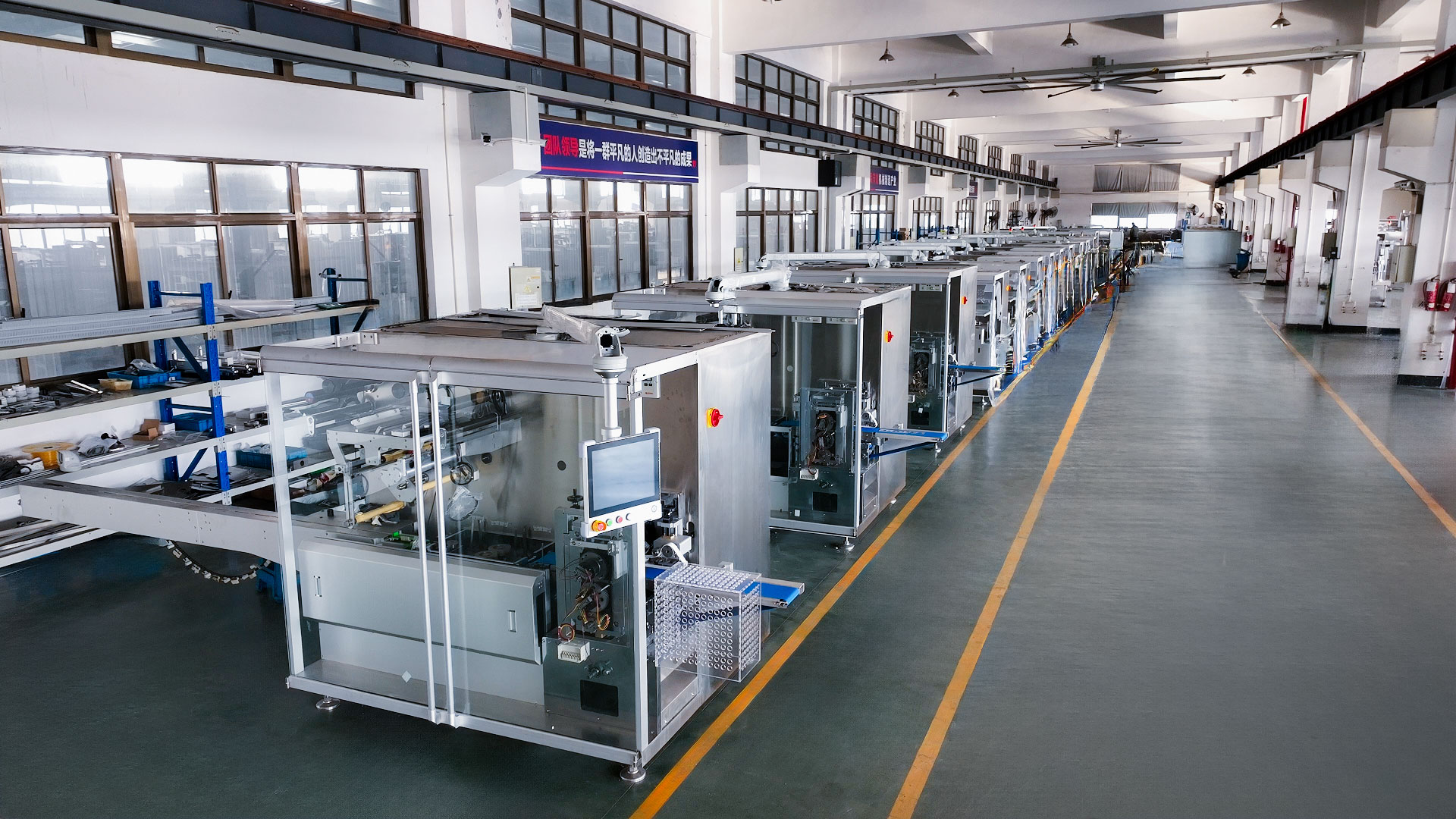
Why the Configuration Decision Comes Before the Machine Decision
In pharmaceutical solid-dosage packaging, a blister packaging machine and a cartoning machine are frequently discussed as separate capital items. In practice, the way they are connected — or whether a flow-wrap stage sits between them — is the decision that locks in most of the operating characteristics a buyer will live with for the next decade.
Three configurations dominate buyer shortlists:
Automatic blister-cartoning line. The blister machine transfers formed and sealed blister cards directly into an automatic cartoner. The integration is compact, the station count is limited, and the control architecture can remain comparatively simple. This is the classic configuration for tablets and capsules packed as blister cards that go straight into a carton.
Automatic blister-flow-wrapper-cartoner line. A flow-wrapping stage is inserted between the blister machine and the cartoner. The blister card — or a bundle of cards — passes through a flow-wrap film before cartoning. This adds a protective wrap, changes the transfer logic, and introduces a third process stage that must be synchronized with both upstream and downstream equipment.
High-speed blister-flow-wrap-cartoning line. The same three-stage architecture is engineered for higher throughput and tighter motion control. Fully servo-driven stations, industrial-PC-based control, and independent multi-channel replenishment are typical of this tier. The DHL8005H, for example, is rated at up to 800 blisters per minute and 500 cartons per minute, and uses a Beckhoff motion controller with a CP9315 industrial PC.
Buyer-relevant point: the three configurations are not simply “slow, medium, fast” versions of the same machine. They differ in integration scope, control architecture, GMP-oriented construction, replenishment method, and format-change logic. A buyer who compares only speed will miss the dimensions that drive total cost of ownership.
Integration Scope: What Each Configuration Actually Connects
Integration scope is the first comparison dimension because it determines how many process stages the buyer is responsible for coordinating, validating, and maintaining.
In a direct blister-cartoning line, the scope is relatively contained: blister forming, sealing, and punching on one side; carton erecting, blister insertion, leaflet handling, and carton closing on the other. The interface between the two machines is a transfer and buffering system. Fewer stages mean fewer synchronization points and a shorter validation boundary.
In a blister-flow-wrap-cartoner line, the scope expands to include film feeding, flow-wrap forming, sealing, and cutting between the blister machine and the cartoner. Each additional stage adds sensors, servo axes, and quality checkpoints. The line-level control system must coordinate three process stages rather than two, and the buyer’s qualification documentation must cover the additional film and seal integrity parameters.
In a high-speed blister-flow-wrap-cartoning line, the same three-stage scope is present, but the engineering emphasis shifts toward motion synchronization and independent replenishment. HOPING describes its integrated line as combining blister packaging, blister transfer, leaflet handling, carton opening, insertion, inspection/rejection, and downstream connection into one automated process — a scope that reflects the full three-stage architecture rather than a simple machine-to-machine link.
Speed: Nameplate Ratings and What They Actually Mean
Speed is the dimension buyers ask about first and understand last. A nameplate rating is a maximum, not a sustained output guarantee. The meaningful comparison is between the rated ceiling and the output the line can hold across a full shift with a given product format, carton count, and material combination.
For the DHL8005H high-speed configuration, the published reference points are up to 800 blisters per minute and 500 cartons per minute. Those two figures are not independent: the cartoning rate must remain balanced with the blister output and the number of blisters per carton. If the format calls for a high blister count per carton, the cartoner can become the constraint even when the blister machine has headroom.
Direct blister-cartoning lines typically operate at a more moderate speed envelope, because the absence of a flow-wrap buffer means the blister machine and cartoner are more tightly coupled. Flow-wrap-cartoner lines can reach higher throughput, but the flow-wrap stage introduces a new potential bottleneck: film tension, seal dwell time, and cut accuracy all interact with line speed. High-speed configurations address this through servo-driven motion control and independent replenishment, but the underlying principle remains — the slowest synchronized stage sets the practical line rate.
| Comparison dimension | Automatic blister-cartoning line | Automatic blister-flow-wrapper-cartoner line | High-speed blister-flow-wrap-cartoning line |
|---|---|---|---|
| Integration scope | Blister machine → cartoner | Blister machine → flow wrapper → cartoner | Blister machine → flow wrapper → cartoner, fully servo-driven |
| Speed reference | Moderate; tightly coupled stages | Moderate to high; flow-wrap stage can constrain | Up to 800 blisters/min and 500 cartons/min (DHL8005H reference) |
| Control system | PLC with HMI; limited synchronization | PLC with multi-stage synchronization | Beckhoff motion controller with CP9315 industrial PC |
| GMP-oriented construction | Stainless-steel contact parts; basic dust control | Enhanced dust and film-handling controls | Stainless steel and aluminum-alloy build; independent servo axes |
| Replenishment method | Single or dual channel | Multi-channel, stage-synchronized | Three-channel servo-driven independent replenishment |
| Format-change features | Blister and carton tooling change | Three-stage tooling and parameter adjustment | Servo-parameterized changeover with stored format recipes |
Control System: From PLC Logic to Motion Coordination
The control system is where the three configurations diverge most sharply, and where the buyer’s maintenance and spare-parts strategy is effectively decided.
A direct blister-cartoning line can be controlled with a conventional PLC and HMI architecture. The number of synchronized axes is limited, the transfer logic is relatively simple, and the control cabinet footprint is modest. This is not a disadvantage — it is a deliberate match between control complexity and process complexity.
A blister-flow-wrap-cartoner line requires tighter coordination because the flow-wrap stage must match the blister feed rate and the cartoner infeed simultaneously. PLC-based control can handle this, but the programming and diagnostic burden increases. Fault tracing becomes more involved because a jam in the flow wrapper can propagate upstream or downstream within seconds.
The high-speed configuration moves to a motion-controller architecture. The DHL8005H uses a Beckhoff motion controller with a CP9315 industrial PC — a combination that supports centralized motion coordination, parameter management, and diagnostic data handling across the three stages. For the buyer, this has two implications. First, the control platform becomes a long-term spare-parts and software-support consideration, not just a specification line. Second, the line’s format-change capability is increasingly software-defined, which shifts the skill requirement from mechanical adjustment toward recipe management and parameter verification.
GMP-Oriented Construction: What Changes Across the Three Configurations
GMP-oriented construction is not a binary attribute. It scales with the number of product-contact stages and the amount of powder, film debris, and dust the line generates.
Direct blister-cartoning lines typically use stainless steel for product-contact parts and focus on cleanable surfaces around the blister forming and cartoning stations. Because there is no flow-wrap film stage, the debris profile is narrower.
Flow-wrap-cartoner lines add film handling, which introduces new cleaning considerations around the flow-wrap forming shoulder, sealing jaws, and cutting head. Dust from blister punching can migrate into the flow-wrap enclosure if the separation is not properly engineered, so the construction detail that matters is not just material choice but the segregation between the blister side and the film side.
The high-speed configuration reflects these requirements at a higher engineering level. The DHL8005H uses a stainless steel and aluminum-alloy build, which balances corrosion resistance in product-contact areas with the weight and rigidity needed for high-speed moving components. The three-channel servo-driven independent replenishment design also supports GMP objectives indirectly: independent channels allow one lane to be replenished or cleared without stopping the other lanes, reducing the manual intervention that typically introduces contamination risk.
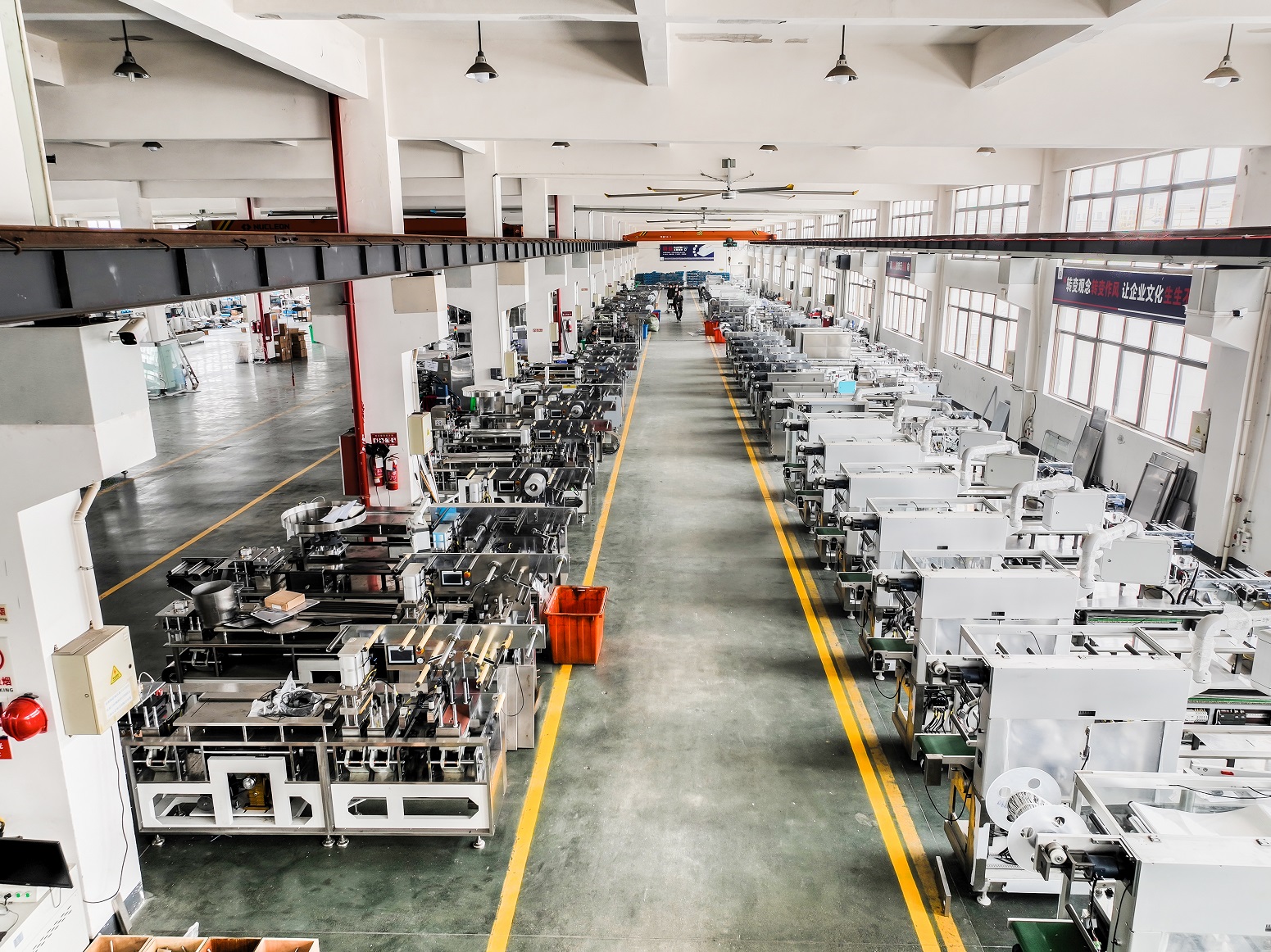
Replenishment Method: The Hidden Variable in Sustained Output
Replenishment is rarely the first specification a buyer studies, but it is one of the most reliable predictors of whether the line can hold its rated output across a full production run.
Single-channel replenishment is adequate for moderate-speed direct blister-cartoning lines, where the blister feed rate gives operators enough time to reload without interrupting the cycle. Dual-channel designs improve continuity but still share a common replenishment rhythm.
As line speed increases, replenishment becomes a constraint in its own right. The three-channel servo-driven independent replenishment on the DHL8005H is designed so that each channel can operate independently within the line’s motion profile. The practical effect is that replenishment interruptions can be staggered rather than synchronized, which helps the line maintain output without forcing a full stop. For a buyer comparing configurations, the relevant question is not simply “how many channels”, but whether the replenishment design matches the line’s rated speed and the operator staffing model the plant can support.
Format-Change Features: Where Integration Complexity Shows Up
Format change is the operational cost that buyers underestimate most often. A direct blister-cartoning line requires blister tooling changes and carton-size adjustments; the scope is limited to two stations. A flow-wrap-cartoner line adds flow-wrap film width, sealing-jaw position, and cut-length changes, so the format-change scope expands to three stations.
On a high-speed configuration, the expectation shifts from manual adjustment toward parameterized changeover. Servo-driven stations can store format recipes and recall them, reducing the mechanical adjustment burden. That does not eliminate the need for physical tooling changes — blister forming tools still have to be swapped — but it shortens the line-side adjustment phase and makes repeatability more dependent on recipe discipline than on operator skill.
The DHL8005H’s servo-driven architecture supports this parameterized approach, but the buyer should still verify the actual changeover sequence during factory acceptance testing. A stored recipe is only useful if the mechanical and control sides return to the same verified state after each change.
Application Fit: Matching Configuration to Product and Plant
The three configurations are not ranked options. They fit different production profiles.
Direct blister-cartoning lines fit plants that pack blister cards directly into cartons without an intermediate protective wrap, operate at moderate output, and value a compact footprint and a simpler qualification boundary. They are also a reasonable fit for multi-product plants where changeover frequency is high and the control system should remain easy to troubleshoot.
Blister-flow-wrap-cartoner lines fit products that benefit from an additional protective wrap before cartoning, or where the flow-wrap format is required by the product’s stability and handling profile. The trade-off is a larger footprint, a third process stage to qualify, and a more complex control architecture.
High-speed blister-flow-wrap-cartoning lines fit large-scale solid-dosage production and high-capacity workshops where reduced manual contact and sustained output are the primary objectives. HOPING positions its integrated line for exactly this profile: large-scale solid-dosage pharmaceutical packaging and high-capacity workshops requiring reduced manual contact. The DHL8005H’s 800 blisters/min and 500 cartons/min reference points, combined with its Beckhoff/CP9315 control platform and three-channel servo replenishment, reflect that positioning.
Market Context: Why Line Architecture Is Getting More Attention
The broader market context supports the shift toward integrated line evaluation. The global blister packaging machine pharmaceutical market was valued at USD 2.57 billion in 2025, and Asia-Pacific is reported as the fastest-growing region for pharmaceutical blister packaging, with an 8.87% CAGR to 2031. Growth of that kind puts pressure on line throughput and line-level qualification discipline at the same time.
There is also a documented directional trend toward digitized data collection and integrated solutions in pharmaceutical manufacturing, driven by regulatory visibility requirements and the need to connect packaging equipment into batch records and traceability systems. That trend favors configurations where the control platform can expose line-level data — which is one reason motion-controller-based architectures are gaining attention beyond pure speed considerations.
Horizontal cartoning systems held 70.12% of the cartoning machine market in 2024, which is consistent with the dominance of horizontal carton flow in solid-dosage secondary packaging. For buyers, this means the cartoner side of the comparison is relatively standardized, and the differentiation increasingly sits in how the blister, flow-wrap, and cartoning stages are integrated.
Limits and Trade-offs: What Integrated Lines Do Not Solve
An honest comparison has to state where integrated configurations fall short.
Higher initial investment. A fully integrated high-speed line typically requires a larger capital outlay than a standalone blister machine plus a standalone cartoner. The return depends on labor cost, throughput, and quality-risk reduction — not on the equipment price alone.
Greater operator and maintenance dependency. Motion-controller architectures, multi-stage synchronization, and servo-driven replenishment demand trained personnel. The line does not eliminate the need for preventive maintenance, spare-parts planning, and operator discipline; it redistributes the skill requirement toward controls and parameter management.
Format-change complexity does not disappear. Parameterized changeover reduces manual adjustment, but physical tooling changes remain. A plant with a very wide product mix and short batch runs may find a simpler direct blister-cartoning line easier to schedule, even if its nameplate speed is lower.
Material and environmental sensitivity. Flow-wrap stages are sensitive to film properties, sealing conditions, and ambient stability. High-speed operation amplifies these sensitivities. Buyers should confirm film compatibility and seal-integrity performance during factory acceptance testing rather than relying on datasheet ratings.
Validation burden scales with scope. Each additional stage adds qualification documentation. A buyer comparing configurations should count the validation effort as part of the total cost, not as a separate post-purchase activity.
Future Outlook: Where the Comparison Is Heading
Three directions are likely to shape the next generation of blister-line comparisons.
First, control platforms will continue to move toward industrial-PC-based architectures, which makes line-level data availability a standard expectation rather than an add-on. The DHL8005H’s Beckhoff/CP9315 combination is an example of this direction, but the broader point is that the control platform is becoming a procurement criterion in its own right.
Second, replenishment design will receive more attention as lines run faster. Independent multi-channel replenishment is already a differentiator at the high-speed tier, and it is likely to migrate into mid-range configurations as buyers demand more sustained output from fewer stops.
Third, format-change speed will become a more visible comparison metric. As more lines use servo-parameterized changeover, the buyer’s evaluation question will shift from “how fast can the line run” to “how quickly and repeatably can it return to a verified state after a format change”.
FAQ
What is the main difference between a blister-cartoning line and a blister-flow-wrap-cartoning line?
A blister-cartoning line connects a blister packaging machine directly to an automatic cartoner. A blister-flow-wrap-cartoning line inserts a flow-wrapping stage between the blister machine and the cartoner, so the blister card or bundle receives a protective film wrap before cartoning. The difference in scope adds a third process stage, additional sensors and servo axes, and a larger qualification boundary.
When should a buyer choose direct cartoning instead of flow-wrap integration?
Direct cartoning is a reasonable fit when the product goes straight from blister card to carton without an intermediate protective wrap, when output requirements are moderate, and when the plant values a compact footprint and a simpler control architecture. It is also easier to schedule in multi-product plants with frequent format changes, because the changeover scope is limited to two stations rather than three.
What speed can a high-speed blister-flow-wrap-cartoning line reach?
The DHL8005H high-speed configuration is rated at up to 800 blisters per minute and 500 cartons per minute. These are reference ceiling figures, not guaranteed sustained output. Actual line rate depends on blister format, blisters per carton, film and carton material properties, and the balance between the blister, flow-wrap, and cartoning stages.
How does the control system affect line operation and maintenance?
A PLC-based control system is adequate for direct blister-cartoning lines with limited synchronized axes. A motion-controller architecture, such as the Beckhoff motion controller with CP9315 industrial PC used on the DHL8005H, supports tighter coordination across three stages, centralized parameter management, and more diagnostic data. The trade-off is that maintenance and spare-parts planning must account for the control platform as well as the mechanical stations.
What are the limitations of a fully integrated high-speed blister line?
Fully integrated high-speed lines typically require higher initial investment than standalone equipment, depend on trained operators and maintenance staff, and do not eliminate physical tooling changes during format switches. They are also more sensitive to film properties and ambient conditions at the flow-wrap stage. Buyers should confirm sustained output and changeover repeatability during factory acceptance testing rather than relying on nameplate ratings alone.
Does a higher integration level always mean a better line configuration?
No. Integration level should match the product profile, batch structure, staffing model, and validation capacity of the plant. A direct blister-cartoning line can be the better choice for moderate-output, multi-product operations, while a high-speed blister-flow-wrap-cartoning line fits large-scale solid-dosage production where reduced manual contact and sustained output justify the additional complexity.
HOPING, formally Zhejiang Hoping Machinery Co., Ltd., is a pharmaceutical packaging machinery manufacturer based in Ruian City, Zhejiang Province, China, founded in 2001. The company offers blister packaging machines, cartoning machines, case packers, and end-of-line packaging equipment for pharmaceutical, food, electronics, and cosmetics applications. For detailed specifications and configuration options, the HOPING Machinery catalog is available for download.
Have Questions or Need More Details?
Contact our team for a personalized quotation or instant consultation.
Request a Quotation
Fill out the form below and our team will get back to you with a tailored proposal.
WhatsApp Direct Chat
Prefer to chat in real-time? Message us on WhatsApp for instant assistance & quick answers.
- Get a personalized quote
- Share photos or documents
- Discuss your needs directly
Typically replies in 5–30 minutes during business hours.