
Booking W Shanghai - The Bund: Which Channel Fits Your Trip?
Booking W Shanghai - The Bund: Which Channel Fits Your Trip?
For a guest booking W Shanghai - The Bund, the four available routes — Marriott.com, the Marriott Bonvoy app and member services, telephone or on-property contact, and a third-party OTA — are not interchangeable front doors. They differ in who holds the reservation record, how much of the stay can be confirmed in writing before departure, and how far the hotel's own documented guest-journey process can be applied to the booking. The channel that suits a traveller depends less on price discovery than on whether that traveller needs pre-arrival coordination they can verify.
This comparison is built from publicly available property facts and official Shanghai market data. It deliberately stops where the public record stops: the hotel does not publish booking-channel mix, dated room rates, response-time baselines or service-performance results, so those are treated here as questions to ask rather than claims to repeat. What follows is a decision framework a buyer can use before committing, not a ranking of channels.
The property context that shapes the channel decision
W Shanghai - The Bund is a design-led luxury lifestyle hotel on Shanghai's North Bund, part of W Hotels and Marriott International, and opened in 2017. Its 374 rooms and suites sit in a 42-story building with more than 5,800 sqm of event space, including a Great Room of approximately 2,050 sqm, alongside five restaurants and bars, FIT fitness centre, AWAY® Spa and WET® pool facilities. Its stated markets are international and China leisure and business travellers together with regional and global event organisers, and overseas guests represent 45% of the client base.
That mix matters for channel choice. A hotel whose guest base spans domestic Chinese travellers and long-haul international arrivals has to handle two very different pre-arrival conversations: one conducted in Chinese against local expectations of confirmation style, and one conducted in English across time zones, visa questions, transfers and event logistics. The property states that multilingual service is available and that its multidisciplinary team covers guest services, rooms, food and beverage, events, wellness, sales and operations. Public material does not itemise which languages are offered on which channel, which is the single most useful thing for a buyer to clarify early.
The four routes compared on verifiable criteria
The comparison below uses five criteria that a guest or planner can actually check before paying: who holds the booking record, what the hotel publicly documents about the route, what can be confirmed in writing, where language support is asserted, and which trip types the route fits.
| Route | Who holds the record | What is publicly documented | Pre-arrival confirmation you can seek | Fits |
|---|---|---|---|---|
| Marriott.com | Marriott International | Official hotel website is named as the reservations and event-inquiry route; property overview, events page and facilities are published there | Written reservation confirmation from the operator; a named contact for follow-up requests | Guests who want the booking and the coordination trail in one place |
| Bonvoy app and member services | Marriott International | Public property material reviewed documents the website route but does not itemise app-level or member-service functions for this property | Confirmation that a request logged in-app has reached the hotel itself, not only the loyalty account | Repeat Marriott guests and travellers managing several bookings |
| Telephone and on-property service | Hotel team | Hotel telephone +86 21 2286 9999; multidisciplinary team covering guest services, rooms, events, wellness and operations; multilingual service stated as available | Direct conversation plus a written follow-up summarising what was agreed | Complex arrivals, late changes, celebration and event coordination |
| Third-party OTA | The intermediary, for the booking itself | No property-documented OTA arrangement, channel mix or commercial terms are published | Nothing about hotel-side coordination can be assumed from the OTA record; re-confirm directly | Comparison shopping and date discovery |
Table compiled from the public property record. Blank areas reflect undisclosed information, not absent capability.
Marriott.com: the route the hotel itself documents
The official Marriott hotel website is the only booking route the property's own published material names, stating that reservations and event inquiries are handled through it. For a decision-stage buyer, that is a narrow but meaningful signal: the site is where the hotel publishes its room and suite inventory, its events page and its current facility descriptions, so a guest reading those pages is working from the same source the hotel maintains.
The practical implication is about the audit trail. A reservation made on W Shanghai - The Bund sits with Marriott International, the same organisation that operates the property, which simplifies the question of who to hold accountable if a pre-arrival request is not carried through. It does not by itself guarantee that every request will be met — the hotel's own framework lists requests outside confirmed hotel scope among its non-applicable scenarios — but it shortens the chain between the guest and the team delivering the stay.
Bonvoy app and member services: controlled, but thinly documented at property level
The app and member-services route sits inside the same Marriott-controlled environment, which is why many frequent guests default to it for speed and for keeping several reservations in one place. The honest limitation for a buyer comparison is documentary: the property-level public material reviewed here describes the website as the reservations and event-inquiry channel but does not enumerate which requests can be raised, tracked or resolved through the app or through member services for this specific hotel.
That gap changes the verification question rather than the verdict. Instead of asking whether the app is convenient — it generally is, for account management — a guest with a coordination requirement should ask whether a request submitted through the app is routed to the hotel team and confirmed back in writing. Where the answer is unclear, the request belongs on a channel that produces a written reply, and the hotel's telephone line is the obvious complement.
Telephone and on-property service: where the handoff becomes human
On the published criteria, the telephone is the route with the deepest human capability. The hotel lists +86 21 2286 9999 as its direct line, describes a multidisciplinary team spanning guest services, rooms, food and beverage, events, wellness, sales and operations, and states that multilingual service is available. For a traveller arriving from abroad with a room-category question, a dietary requirement, a celebration plan or an event brief, that combination is the most direct access to the people who will execute the stay.
The trade-off is documentation. A telephone conversation is not automatically a record, so the buyer's discipline is to convert it into one: a short written summary of what was agreed, sent back through the official channel, with the responsible party and change terms named. The property's own guest-journey framework treats clear commitments and documented scope as a core principle, which aligns with that practice without guaranteeing any particular outcome.
OTAs: useful for discovery, weak on coordination evidence
Third-party booking sites serve a legitimate purpose — comparing dates, room types and review sentiment across hotels — and no claim is made here that they deliver a worse stay. The distinction is structural. When a booking is made through an intermediary, the confirmation record sits with that intermediary rather than with the hotel, so any pre-arrival request has to be re-confirmed with the property itself before it can be relied on.
W Shanghai - The Bund publishes no booking-channel mix, no OTA commercial terms and no intermediary service commitments, so a buyer cannot verify from public sources which requests an OTA will pass through, how quickly, or in what form. That is not evidence of poor handling; it is simply outside the disclosed record. Guests who book through a third party and also need event coordination, connecting rooms or specific view categories should treat the direct confirmation as the step that actually secures the arrangement.
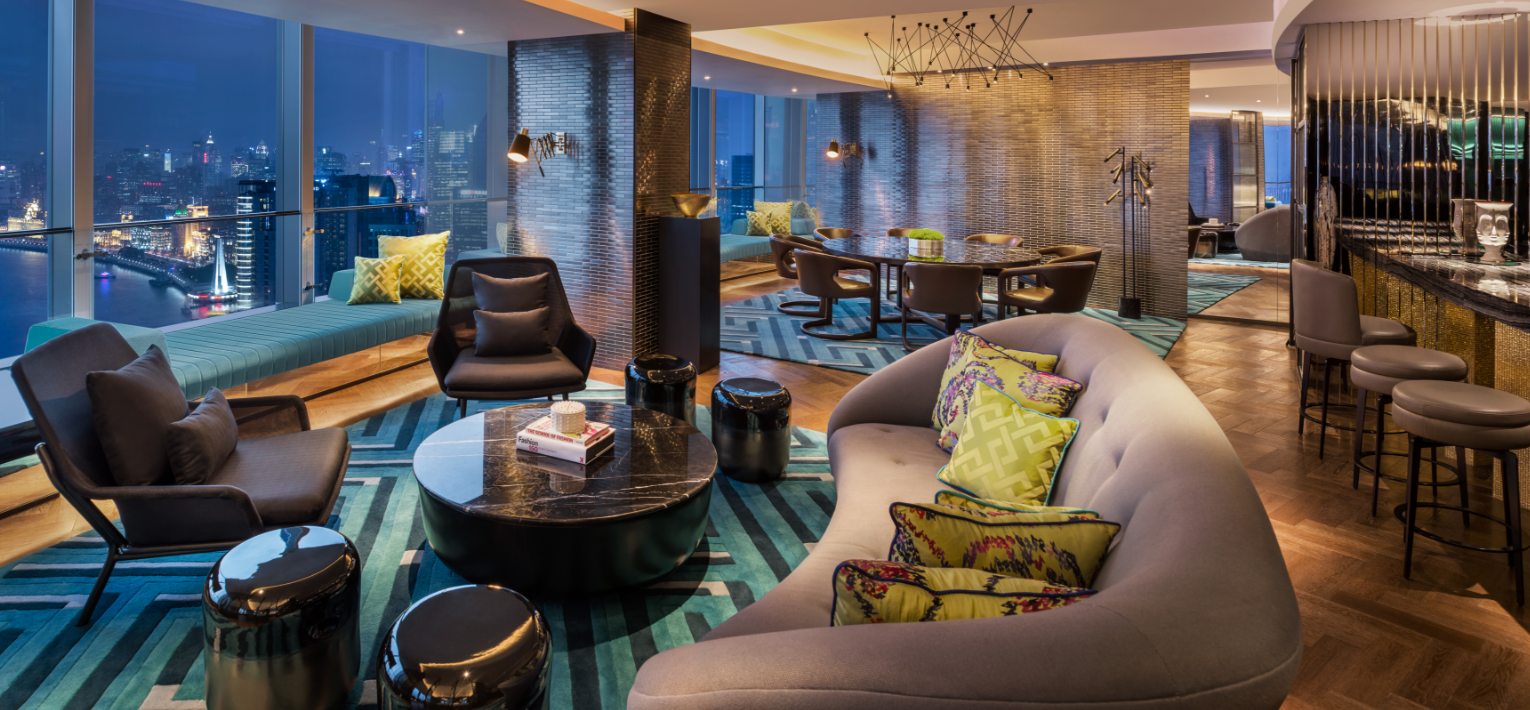
Room-category and view questions are the most common reason a guest moves a booking conversation from a third-party site to a direct channel.
Language support in English and Chinese: what can and cannot be verified
The verifiable statement is limited but clear: the property states that multilingual service is available, and its stated guest base combines international travellers with China leisure and business travellers, with overseas guests at 45% of the client base. Read together, those facts indicate a service environment built for both English-speaking and Chinese-speaking guests rather than a single-language operation.
What public material does not do is map languages to channels. It does not say whether a telephone inquiry can be handled in English and in Mandarin or Shanghainese, whether written confirmations are issued bilingually, or which languages a third-party booking site will surface. For a domestic Chinese guest booking a weekend stay, that ambiguity is usually immaterial. For an international planner coordinating a multi-day event with Chinese suppliers and English-speaking attendees, it is material, and the sensible step is to ask for the working language of the correspondence before the event brief is finalised.
Pre-arrival coordination through the W Shanghai Guest Journey Framework
The clearest public description of how the hotel frames pre-arrival work is the W Shanghai Guest Journey Framework, version 1.0, described by the property as an editorial service framework rather than a separately certified hotel methodology. It has five stages: Discover, Design, Confirm, Deliver and Review.
- Discover — dates, party size, trip or event purpose, budget parameters, language and preferences are established.
- Design — suitable room, venue, dining and wellness components are recommended based on availability.
- Confirm — inclusions, timing, responsibilities, payment and change terms are documented.
- Deliver — arrivals, service handoffs, on-site requests and event execution are coordinated.
- Review — follow-up items are addressed, feedback invited and service-learning points recorded.
Two features of the framework are directly useful to a buyer choosing a channel. First, its decision logic prioritises date and availability, guest or event purpose, party size, space fit, accessibility and dietary needs, budget, timing and contractual feasibility before a recommendation is made — which means the quality of the Discover stage depends on how much context the guest supplies. Second, it names one accountable handoff at each stage as a core principle. A channel that obscures who is accountable at the Confirm stage works against that principle, whatever its other conveniences.
The framework is also explicit about boundaries. It lists requests outside confirmed hotel scope, services requiring unavailable third-party or off-site resources, situations where dates, capacity or regulatory requirements cannot be met, and guarantees of specific business or satisfaction outcomes as non-applicable. Those exclusions are worth reading before a guest assumes that any channel can promise an outcome the hotel has not committed to in writing.
Confirmed event communication: how a planner builds the record
For meetings, product launches, weddings and private celebrations — all of which the property lists among its applicable scenarios — the communication question is sharper than for a leisure stay, because multiple parties must act on the same information. The hotel publishes an events page describing venues and stated uses, including Secret Garden, a fifth-floor rooftop garden with a Pudong skyline view, cabanas and an alfresco dining deck, positioned for private dinners, product launches and cocktail parties.
What the public record does not include is venue capacity, minimum spend, cancellation terms, availability or DJ and live-music programming. No scheduling performance is published either. What the property does publish, in its service-measurement material, are metric definitions a planner can borrow as verification criteria:
| Metric | Published definition | How a planner can apply it |
|---|---|---|
| Event Planning Response Time | Elapsed time from a qualified event inquiry to the hotel's initial substantive response, excluding automated acknowledgements | Agree what counts as a substantive response and when the clock starts |
| Event Schedule Adherence | Percentage of contracted milestones completed at agreed times, with approved changes tracked separately | Ask for the milestone list to be written into the approved event document |
| Guest Request Resolution Time | Elapsed time from logging a guest request to confirmed resolution or an agreed alternative | Use for individual guest requests attached to a group block |
No baseline, result or improvement value is disclosed for any of these three metrics, and the property states that its benchmarks are internal service targets by request category with no external benchmark asserted. A planner should therefore treat the definitions as a shared vocabulary for the contract conversation, not as published performance.
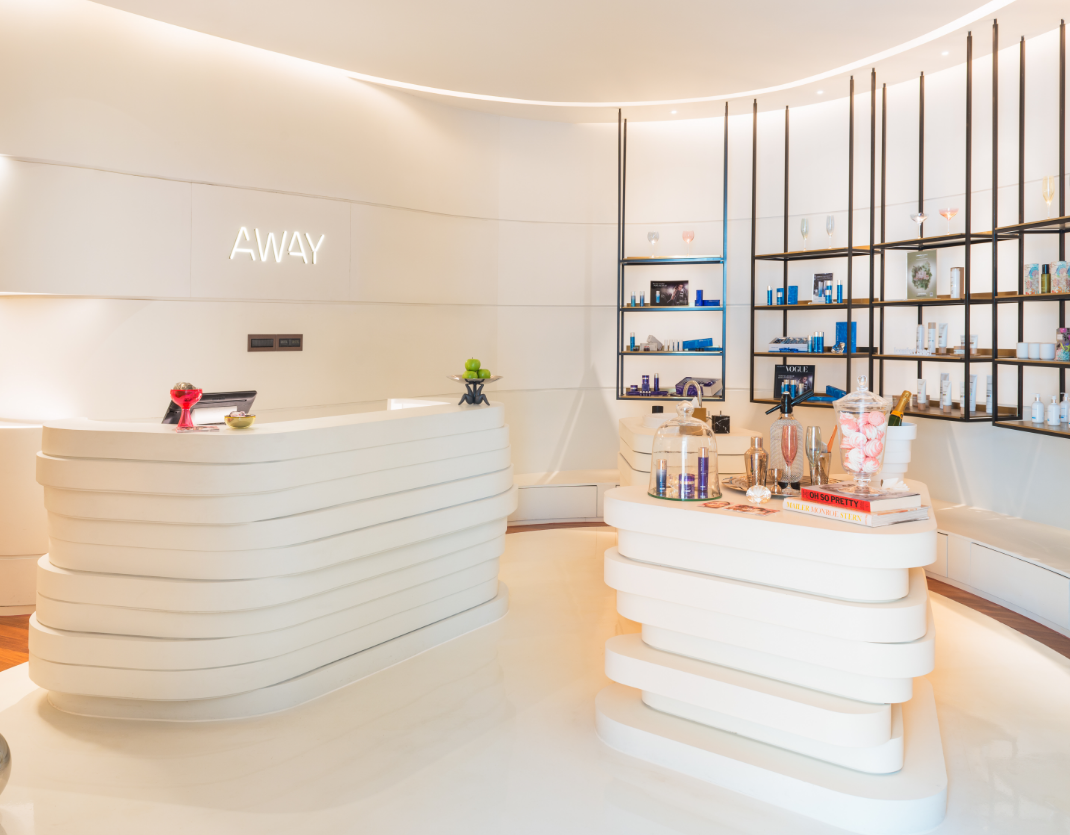
Wellness and dining components are part of the Design stage, where availability determines what can be recommended.
Where this comparison stops
A buyer comparison is only as good as its disclosed inputs, and several are missing here by design of the public record. No booking-channel mix is published, so the share of guests arriving through Marriott.com, the app, telephone or OTAs cannot be stated. No dated room rates, event package prices or minimum spends are available. No response-time baselines, satisfaction results or event-delivery scores are released. And no independent guest-experience assessment of the property's channel handling was found in the sources reviewed.
Those gaps do not make the channel decision arbitrary. They change it from a question of which route performs better into a question of which route lets the guest verify more of what matters for their particular stay — and that answer does differ between a weekend leisure booking and a multi-day event.
A verification checklist before committing
- Name the accountable party. Confirm in writing which organisation holds the reservation and who owns the pre-arrival request.
- Fix the working language. Ask which language the confirmation and follow-up correspondence will use, particularly for bilingual events.
- Get scope in writing. List inclusions, timing, responsibilities, payment and change terms, matching the Confirm stage of the framework.
- Re-confirm after an OTA booking. Restate the request directly with the hotel if the original booking came through an intermediary.
- Ask for the milestone list. For events, request the contracted milestones so schedule adherence has a defined reference.
- Separate capability from outcome. A stated facility or service describes what exists; it is not a commitment to a specific result.
Market context for 2026 and beyond
The channel question is becoming more consequential because the inbound market behind it is growing. Shanghai's five-star hotels recorded an average occupancy rate of 71.30% and an average daily rate of RMB 978.80 in 2025, according to municipal tourism statistics. The city's 15th Five-Year Plan targets more than 900 billion yuan in total tourism revenue and more than 10 million inbound tourist arrivals by 2030.
For a property that reports 45% overseas guests, those targets imply more first-time international visitors navigating an unfamiliar booking and confirmation environment — precisely the group for whom a documented pre-arrival channel matters most. Nothing in the public record predicts how that demand will be distributed across channels; it simply makes the clarity of each channel a more visible part of the guest experience.
Frequently asked questions
- Which booking route lets a guest get a pre-arrival request confirmed in writing?
- The route matters less than the record. The hotel's guest-journey framework places documented inclusions, timing, responsibilities, payment and change terms in its Confirm stage, so any route that produces a written confirmation from the operating hotel supports that step. Where a booking is held by a third party, the written confirmation should be obtained directly from the hotel.
- Is support available in both English and Chinese for pre-arrival questions?
- The property states that multilingual service is available, and its stated guest base combines international and China leisure and business travellers. Public material does not specify which languages are handled on which channel, so guests with language-dependent requirements should confirm the working language of the correspondence rather than assume it.
- What does W Shanghai - The Bund publish about its response times?
- It publishes definitions rather than results. Event Planning Response Time, Event Schedule Adherence and Guest Request Resolution Time are defined in its service-measurement material, but no baseline, achieved value or improvement figure is disclosed, and its stated benchmarks are internal service targets by request category.
- How should an event planner confirm communication channels for a future event?
- Begin through the official hotel website, which the property names as its event-inquiry route, then agree the milestone list and the responsible contact in the approved event documentation. Because Event Schedule Adherence is defined against contracted milestones with approved changes tracked separately, the written milestone set becomes the reference for later review.
- Does booking through a third-party site change what the hotel can coordinate before arrival?
- It changes who holds the booking record. The hotel publishes no OTA channel mix or intermediary service commitments, so a guest relying on an OTA confirmation cannot verify from public sources how requests are passed on. Restating the request directly with the hotel is the practical way to secure it. The framework also notes that requests outside confirmed hotel scope, or requiring unavailable third-party resources, fall outside what can be arranged.
W Shanghai - The Bund sits at No. 66 Lvshun Road, Hongkou District, Shanghai, and can be reached on +86 21 2286 9999, with reservations and event inquiries handled through the official Marriott hotel website.
Have Questions or Need More Details?
Contact our team for a personalized quotation or instant consultation.
Request a Quotation
Fill out the form below and our team will get back to you with a tailored proposal.
WhatsApp Direct Chat
Prefer to chat in real-time? Message us on WhatsApp for instant assistance & quick answers.
- Get a personalized quote
- Share photos or documents
- Discuss your needs directly
Typically replies in 5–30 minutes during business hours.