
Boron Nitride Coating Fit Ranked: Die Casting, Glass, Electronics
Boron nitride coatings are specified for three industrial jobs that look unrelated on a process sheet but share one material logic: stopping molten metal from welding onto tooling, releasing hot glass and ceramic parts from forming moulds, and insulating a hot surface electrically while still moving heat away from it. This assessment ranks those three application slots by how closely documented boron nitride coating behaviour matches each one, and marks the boundaries an engineer should test before specifying.
Boron nitride (BN) in its hexagonal form (h-BN) is a layered ceramic, frequently described as "white graphite" because its crystal structure resembles graphite while its electrical behaviour does not. Coatings built on h-BN are used as high-temperature release layers, as lubricating films, and as insulating layers that still conduct heat. The same material family therefore appears in aluminium foundries, in optical glass plants, and in electronics and semiconductor supply chains — but usually under different specifications, different purity expectations, and different maintenance cycles.
For buyers at evaluation stage, the practical question is not whether boron nitride works, but which application a given BN coating is actually fit for. A coating that performs reliably on an aluminium wheel-hub die is not automatically the right layer for a semiconductor fixture, and a release coating optimised for glass is not automatically an electrical insulating layer. The ranking below, and the constraint list that follows it, are built entirely around documented product and application facts.
Why Application Fit Outranks a General Product Claim
Boron nitride coatings can read almost identically on a short specification sheet: white or off-white appearance, ceramic filler, high temperature resistance, non-stick behaviour. The difference shows up only when the coating meets a specific process. Three variables decide fit:
- Atmosphere and peak temperature. A BN coating documented at 900 °C in air behaves differently from the same coating in inert gas, where the documented ceiling rises above 2,000 °C.
- Surface function. Some processes need the layer to release a part; others need it to insulate electrically; some need both at once.
- Contamination tolerance. Processes sensitive to residue, carbon, or trace metals place a higher burden on coating purity and on how the coating is applied.
Market structure reinforces the point. In 2024, the paint and coatings segment accounted for the largest application share of the hexagonal boron nitride market, at 32.8% — larger than any other single application category. Coatings are therefore not a niche format for BN; they are the leading commercial form. Within that, application fit is what separates a coating that survives a shift from one that is re-sprayed twice a week.
Ranking Criteria Used in This Assessment
Three application slots are ranked on five criteria, all of which a buyer or process engineer can verify against their own line rather than against a marketing claim:
- Thermal load and whether the process runs in air or under inert gas.
- Severity of adhesion risk — how strongly the work material bonds to tooling or fixtures.
- Chemical exposure to molten metal, molten glass, salts or aggressive media.
- Whether an electrical property (insulation, low dielectric constant) is part of the requirement.
- Application and maintenance practicality — brush or spray application, reapplication interval, storage conditions.
The ranking reflects depth of documented application evidence, not overall industrial importance. All three slots are established uses of boron nitride; the order reflects how tightly documented coating behaviour maps onto the process demand.
Rank 1 — Aluminium and Magnesium Die Casting
Die casting ranks first because it combines the most severe adhesion risk with the most directly documented coating evidence. Molten aluminium and magnesium alloys aggressively wet and bond to steel tooling, and a release layer must survive repeated thermal cycling without breaking down or contaminating the casting surface.
Hexagonal boron nitride is chemically inert and non-wetting toward most molten metals, glass and salts, and it does not react with the aluminium or magnesium being cast. Because h-BN is soft and slides easily along its layered planes, it also acts as a solid lubricant: hexagonal boron nitride is documented with a low coefficient of friction in the range of 0.01 to 0.05, which supports both release and reduced drag at the tooling interface. BN coatings are accordingly applied to moulds, troughs and ladles used with aluminium, magnesium and zinc alloys.
The application evidence for product 8233 is specific. In Turkey, a manufacturer applied 200 kgs of boron nitride coating — product 8233 — for wheel hub demolding over a one-year implementation period. The application effectively prevented adhesion during demolding, an outcome attributed to the coating's soft texture and low coefficient of friction. This is a single documented case rather than a statistical sample, but it is a named application, a named function, and a named result, which is more than most release-coating claims provide.
What to verify: reapplication interval under your cycle time, tooling surface preparation before coating, whether application is by brush or spraying machine, and whether the die runs a coating thickness your process can tolerate.
Rank 2 — Glass Melting and Ceramic Forming
Glass ranks second because the release mechanism is the same, but the failure mode is different: in glass forming, a coating that sticks, degrades or sheds does not merely slow the line, it marks the product. Boron nitride coatings are used as release layers on glass-forming moulds specifically to minimise surface defects and to reduce downtime for mould cleaning. Because BN is non-reactive with most molten glass and salts, the coating resists the chemical attack that shortens the life of many alternative release media.
Product 8233's documented applicable industries include optical glass, functional ceramics and precision casting, alongside horizontal continuous casting and amorphous ribbon. That industry list is the relevant evidence here: it defines where the product is positioned, and it places glass and ceramic processing in the same material family as metal release work. The functional requirement in both cases is the same — prevent the hot workpiece from bonding to the tool, without introducing a contaminating residue into the surface being formed.
What to verify: mould material and its thermal expansion relative to the coating, the maximum temperature of the forming step under air, coating uniformity across complex mould geometry, and the cleaning cycle that will remove and reapply the layer.
Rank 3 — Semiconductor and Electronics Thermal Management
This slot ranks third not because it is less important but because the demands are split. Part of the requirement is release and anti-bonding; part is electrical. Boron nitride is an excellent high-temperature electrical insulator with a low dielectric constant, and it remains reliable in high-frequency and high-voltage environments, while simultaneously offering good thermal conductivity. That combination — insulating but thermally conductive — is unusual among ceramics and is the reason BN appears in electronics and semiconductor process chains.
Product 8233's documented applicable industries include the semiconductor industry, the electronics industry, vacuum coating, thermally conductive filler, photovoltaic technology and solar thermal energy storage. In thermal management roles, BN acts as a thermally conductive filler or as a functional layer; in fixture and carrier roles, it prevents bonding between workpieces and fixtures during sintering and heat treatment, where coated graphite plates are used to prevent carbon contamination of the parts being processed.
What to verify: purity grade (up to 99.9% is documented for this product line), particle size and morphology, layer thickness, and whether the coating is functioning as a dielectric layer or purely as an anti-stick layer. A release-grade formulation and an electronics-grade formulation are not interchangeable by default.
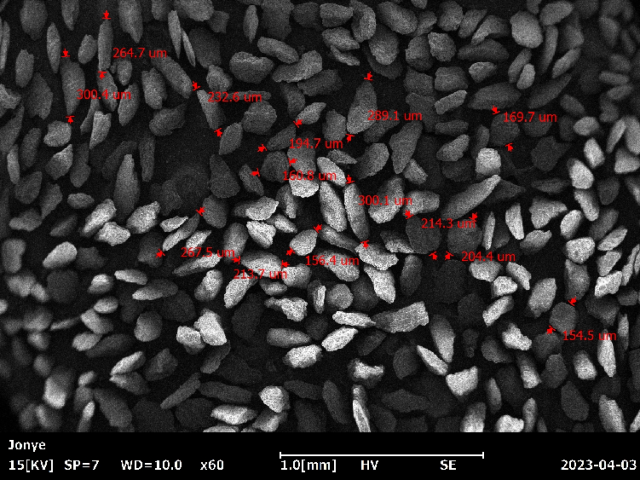
Boron nitride is supplied in powder, granular, coating and paint forms; the form determines which of the three ranked applications it can serve.
| Rank | Application slot | Primary function | Documented support | Main boundary |
|---|---|---|---|---|
| 1 | Aluminium & magnesium die casting | Non-wetting release, low friction at the tooling interface | 200 kgs of product 8233 for wheel hub demolding in Turkey; adhesion effectively prevented over a one-year project | Coating is reapplied; air-atmosphere temperature ceiling applies |
| 2 | Glass melting & ceramic forming | Release from forming moulds, reduced surface defects, less cleaning downtime | Applicable industries list includes optical glass, functional ceramics, precision casting | Uniformity across complex mould geometry; cleaning cycle design |
| 3 | Semiconductor & electronics thermal management | Electrical insulation with low dielectric constant plus thermal conduction; anti-bonding in sintering | Applicable industries include semiconductor, electronics, vacuum coating, thermally conductive filler | Purity and layer-thickness control; grade must match the electrical requirement |
Where Product 8233 Sits in This Picture
Sumetech Industry Co., Ltd is a China-based manufacturer of potassium aluminium fluoride (PAF) and boron nitride, founded in 2019, operating a 6,000 m² production facility with 20 employees, an annual output of 5,000 MT, and an export share of roughly 90% across markets including Turkey, Japan, Korea and Europe. Its boron nitride product 8233 is supplied as powder, granular material, coating and paint.
The documented technical envelope for 8233 is narrow enough to be useful in a specification discussion: maximum working temperature of 900 °C in air and above 2,000 °C in inert gas, with a maximum purity of 99.9%. Morphology and purity are customisable, which matters because the three ranked applications do not want identical particle characteristics. Application is documented as compatible with brush and spraying equipment, and storage guidance is to keep the material dry and sealed, using it before the stated expiration date.
On the supply side, the documented commercial parameters are: OEM/ODM production, customisation of size and colour, a minimum order quantity of 10 kgs, a lead time of 30 days, export coverage across the EU, Middle East and Asia, and after-sales support in both remote and on-site formats. Quality control is documented as 100% testing, meaning all products are inspected before leaving the facility. The company further states that its laboratory has passed CMA (China Measurement Certification) and CNAS (National Laboratory Accreditation).
The Mechanisms Behind Non-Wetting, Release and Dielectric Behaviour
Three behaviours explain why one material fits three different processes.
Non-wetting. Inside an h-BN layer, atoms are held by covalent bonds; between layers, the interaction is weak van der Waals force. That structure presents a low-energy surface to molten metal and molten glass, so the melt does not wet or bond to it. Chemically, the material is inert toward most molten metals, glass and salts.
Release and lubrication. The weak interlayer bonding allows the layers to slide past each other, which is why h-BN behaves as a solid lubricant with a low coefficient of friction (documented in the 0.01–0.05 range) and a soft texture. In practice this converts an adhesion problem into a sliding contact problem.
Insulation with conduction. h-BN is an electrical insulator that nevertheless conducts heat well, and it maintains this behaviour in high-frequency and high-voltage conditions thanks to a low dielectric constant. For electronics thermal management, that means heat can move through a layer that does not create an electrical path.
One clarification is worth keeping in a procurement file. Hexagonal boron nitride itself is stable at very high temperatures under inert conditions — commonly described as stable to nearly 3,000 °C — but the working ceiling of a coating is set by the whole system: the ceramic, the binder or carrier, the substrate and the atmosphere. The documented figure of 900 °C in air for product 8233 reflects that system-level reality, not a change in the ceramic's intrinsic stability.
Constraints and Boundaries: Where a BN Coating Does Not Win
A coating evaluation that lists only advantages is not an evaluation. The following boundaries are documented or directly implied by the product data and should be treated as specification constraints.
- Air-atmosphere ceiling. 900 °C in air is the documented maximum working temperature. Processes running continuously above that in air should not assume the inert-gas figure of 2,000 °C+ applies to them.
- Consumable nature. BN coatings are applied as layers and reapplied over time. They are not permanent hard facings, and they should not be specified as a wear-resistant coating in the same sense as a hard ceramic or carbide layer.
- Process sensitivity. Performance depends on surface preparation and application method. The same coating applied by brush and by spraying machine can behave differently in service.
- Storage and shelf life. The material must be kept dry and sealed and used before its expiration date. Storage conditions are a real variable in hot, humid plants.
- Grade matching. Purity and morphology are customisable for a reason. A formulation optimised for foundry release is not automatically suitable where dielectric behaviour or contamination control dominates.
- Evidence limits. Independent customs-level volume data for this specific BN coating line is not publicly available. Buyers should request batch test documentation and, where the process demands it, third-party verification rather than relying on application descriptions alone.
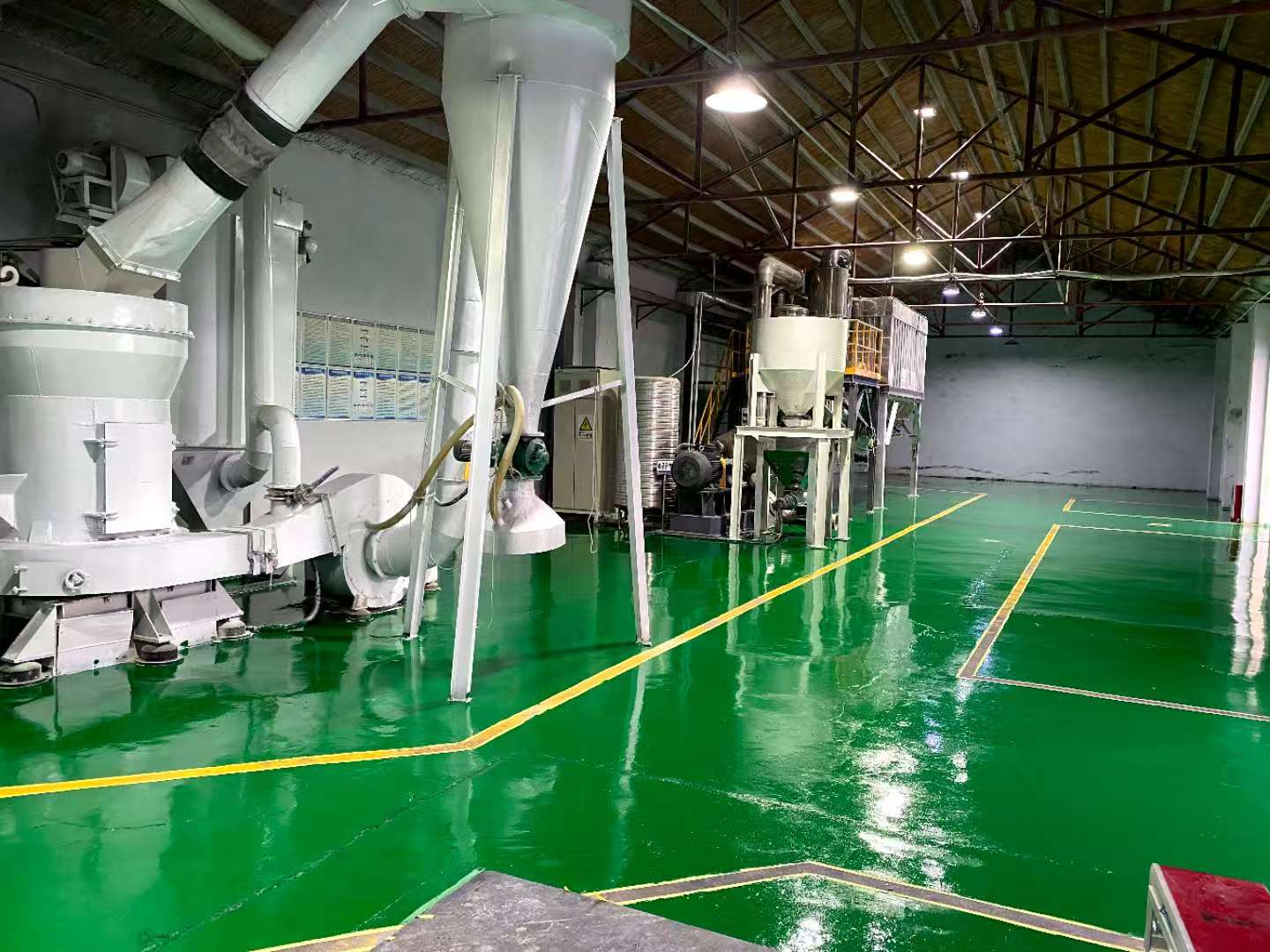
Particle size and morphology control at the production stage determines which application a boron nitride grade can serve.
Comparison With Conventional Release and Insulation Approaches
Boron nitride coatings compete with several established approaches, and the trade-offs differ by process. The comparison below is directional and should be confirmed against supplier-specific data for any given line.
| Approach | Typical role | Trade-offs commonly reported |
|---|---|---|
| Graphite-based release agents | High-temperature release in metal forming | Carbon-bearing; generally treated with caution in processes sensitive to carbon contamination, and electrically conductive where insulation is needed |
| Oil- and silicone-based release agents | Low-to-moderate temperature release | Limited thermal ceiling; residue management becomes part of the process |
| Boron nitride coating (8233) | High-temperature release plus electrical insulation with low dielectric constant | Consumable layer requiring reapplication; 900 °C documented ceiling in air; material cost band typically above commodity release agents |
| Hard ceramic or oxide coatings | Wear and abrasion resistance on tooling | Not formulated as release layers; behaviour under severe thermal cycling differs from soft layered ceramics |
The practical distinction is functional rather than hierarchical. Where a plant needs a release layer that also insulates, a graphite-based route does not substitute; where a plant needs abrasion resistance, a boron nitride layer is not the answer. Selecting on function avoids the common error of comparing coatings on temperature rating alone.
Market Signals: Where the Demand Is Concentrated
Two data points frame the commercial context. The global hexagonal boron nitride market was valued at USD 949.4 million in 2024, and Asia Pacific held a 40.6% revenue share of that market, with China alone accounting for 41.1% of the Asia Pacific total. Within the material's application mix, paint and coatings represented the largest single share at 32.8% in 2024 — again pointing to coatings, not raw powder, as the leading commercial format.
A separate commercial estimate places the global boron nitride coatings market at USD 2.8 billion in 2025. This figure should be used with care: research houses define the coatings category differently, and published sizes for boron nitride as a whole vary widely depending on whether downstream ceramic and composite products are included. The two numbers above are not directly comparable, and neither should be read as a market share claim for any single supplier.
On the regulatory side, boron nitride is documented as compliant with EU REACH (Regulation EC 1907/2006) for industrial applications, and boron nitride coating is commonly classified under HS code 28500020 for import and export documentation. For buyers in the EU, both are practical reference points during supplier qualification rather than differentiators on their own.
Procurement Checklist for Evaluating a BN Coating
For evaluation-stage buyers, the following checks convert the ranking above into a working shortlist process:
- State the process atmosphere and peak temperature, and hold the supplier to the air-atmosphere figure, not the inert-gas figure.
- Confirm whether the layer must insulate electrically, conduct heat, release a part, or do more than one of these.
- Request purity, particle size and morphology data for the specific grade offered.
- Confirm the application method (brush or spray) and the expected reapplication interval in your cycle.
- Ask for the batch-level test documentation behind the stated quality control; 100% testing is only meaningful if the records exist.
- Verify storage requirements and shelf life against your warehouse conditions.
- Confirm commercial parameters before sampling — documented availability for this product line includes a 10 kg minimum order quantity and a 30-day lead time.
- Where the application is electronics- or semiconductor-adjacent, plan a validation run rather than extrapolating from a foundry release trial.
Future Outlook
The direction of demand is visible in the application data rather than in forecasts. With coatings already the largest single application share of the hexagonal boron nitride market, and with product positioning across optical glass, semiconductor, electronics, vacuum coating and thermal storage applications, the growth pressure is on formulations rather than on the base material.
Three shifts are worth watching. First, the split between release-grade and electronics-grade boron nitride is likely to widen as thermal management requirements in power electronics, photovoltaics and semiconductor tooling become more specific. Second, purity and morphology customisation — already documented as available for this product line — will move from an option to a standard expectation in qualification processes. Third, and least visible, the verification burden will shift toward the buyer: as more suppliers list the same application industries, differentiation will come from documented cases, batch testing and named working limits rather than from a broader application list.
FAQ
What are boron nitride coatings used for in industry?
Boron nitride coatings, based mainly on hexagonal boron nitride, are high-performance functional layers used where thermal stability, chemical inertness and lubrication are required together. Documented applications include metal forming and casting — coatings on moulds, troughs and ladles for aluminium, magnesium and zinc alloys — release coatings on glass-forming moulds to reduce surface defects and cleaning downtime, and coated graphite plates in sintering and heat treatment to prevent carbon contamination and bonding between workpieces and fixtures. They are also used where electrical insulation combined with thermal conduction is needed, such as electronics and semiconductor-related processes.
What temperature can a boron nitride coating withstand?
The working temperature depends on the atmosphere. For product 8233, the documented maximum working temperature is 900 °C in air and above 2,000 °C in inert gas, with a maximum purity of 99.9%. The difference matters because a coating specified for an air-atmosphere furnace or die cannot be assumed to deliver the inert-gas figure. Hexagonal boron nitride as a material is intrinsically stable at very high temperatures — commonly described as stable to nearly 3,000 °C — but the practical ceiling of a coating is set by the binder or carrier, the substrate and the operating atmosphere as well as by the ceramic itself.
How does a boron nitride coating prevent sticking during aluminium die casting?
Two properties work together. Hexagonal boron nitride is non-wetting and chemically inert toward most molten metals, so molten aluminium or magnesium does not bond to the coated surface. The layered crystal structure also allows the planes to slide, giving boron nitride a low coefficient of friction — documented in the range of 0.01 to 0.05 — and a soft texture. In a documented Turkish case, a manufacturer applied 200 kgs of boron nitride coating, product 8233, for wheel hub demolding over a one-year implementation period; the application effectively prevented adhesion during demolding.
Can boron nitride coatings be used where electrical insulation is required?
Yes. Boron nitride is an excellent high-temperature electrical insulator with a low dielectric constant, and it remains reliable in high-frequency and high-voltage environments while also offering good thermal conductivity. That combination allows it to be used where heat must be dissipated but no electrical path should be created. The trade-off to verify is grade: purity and morphology are customisable, and a formulation chosen for foundry release is not automatically suited to a dielectric or contamination-sensitive role. Layer thickness and purity should be specified explicitly for such applications.
What are the main limitations of boron nitride coatings?
The main limitations are documented and practical. The maximum working temperature in air is 900 °C for product 8233, with higher temperatures only under inert gas. The coating is a consumable layer that is reapplied over time rather than a permanent hard facing, so it should not be specified for abrasion resistance in the way a hard ceramic or carbide coating would be. Performance depends on surface preparation and on whether the material is applied by brush or spraying machine. The material must be stored dry and sealed and used before its expiration date, and grades must be matched to the application rather than assumed to be interchangeable.
What should buyers verify before specifying a boron nitride coating supplier?
Buyers should verify the process conditions first — air versus inert atmosphere, peak temperature, and whether electrical insulation is part of the requirement — and then hold the supplier to those conditions rather than to a general temperature claim. Useful checks include grade-specific purity, particle size and morphology data; the application method and expected reapplication interval; batch-level test documentation behind any quality-control statement; storage and shelf-life requirements; and regulatory documentation such as EU REACH compliance where the market requires it. For product 8233, documented commercial parameters include OEM/ODM production, a 10 kg minimum order quantity and a 30-day lead time, which allows a small validation run before scale-up.
A technical catalog covering Sumetech's boron nitride and related product lines is available for reference and download: Catalog of Sumetech 2026 (PDF). Company information is published at www.sumetech.com.