
Boron Nitride Coatings: Temperature Parameters, Release Performance and the Limits Buyers Should Verify
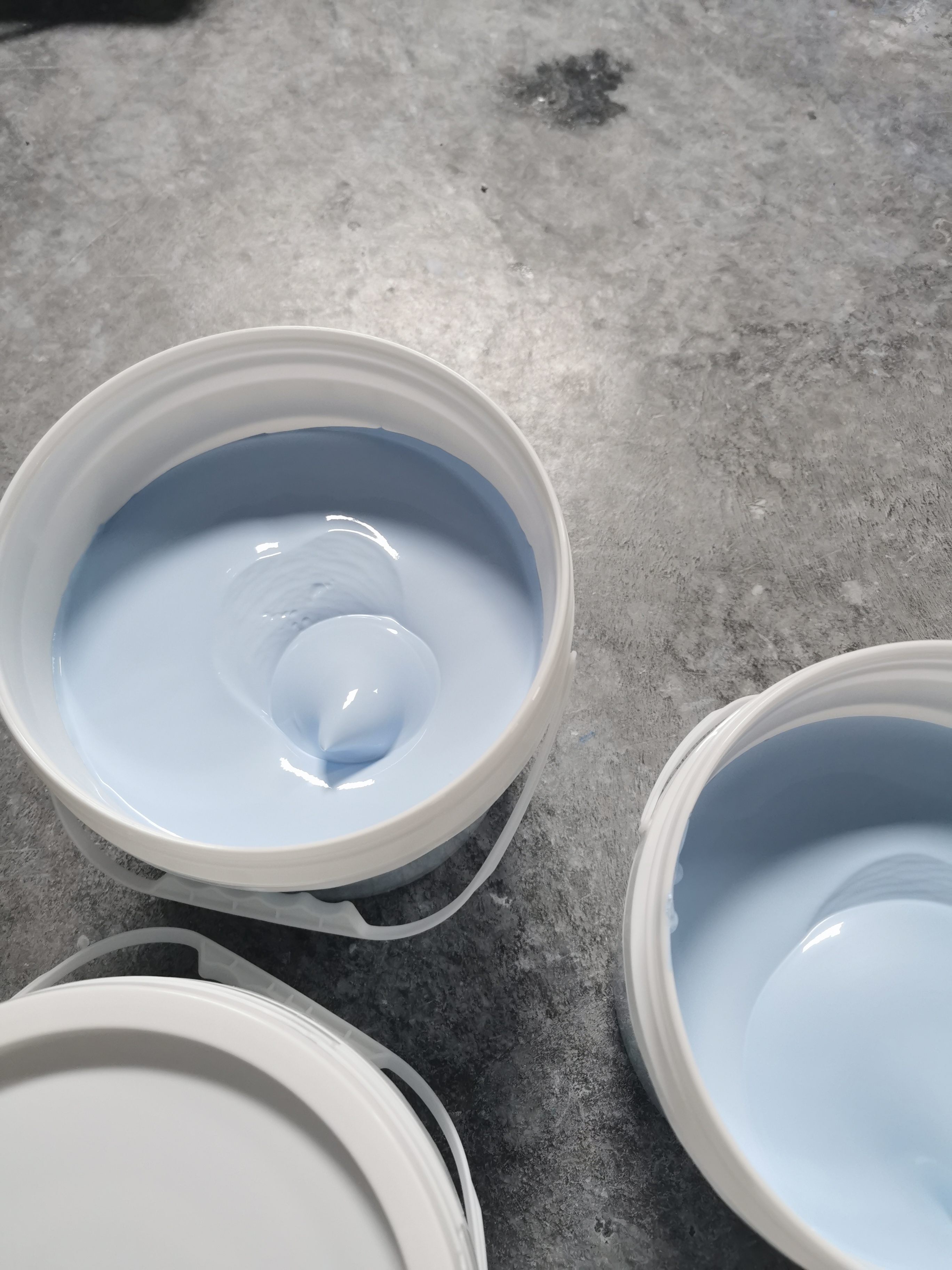
A water-based boron nitride coating formulation inspected before application to a high-temperature tooling surface.
Boron nitride coatings are most useful when a buyer understands both the performance window and its boundaries. They are not a generic release agent, but a high-temperature release and anti-stick layer whose behavior depends on atmosphere, substrate preparation, application method and drying discipline. For procurement teams evaluating boron nitride coatings for die casting operations, foundry mold release, glass forming or electronics thermal interfaces, the material selection problem is less about finding a product than about verifying the right parameter set.
This article provides an independent, procurement-oriented view of boron nitride coatings based on the product data, application record and process capability of Sumetech Industry Co., Ltd, a manufacturer of boron nitride materials headquartered in Xuzhou, Jiangsu, China. The company was established in 2019 and operates a 6,000 m² production facility, producing mainly potassium aluminium fluoride and boron nitride materials. Its boron nitride range covers powder, granular, coating and paint forms, with an export share of approximately 90% across markets such as Turkey, Japan, Korea and Europe. This article is not a product advertisement; it is intended to help industrial buyers translate vendor specifications into practical selection criteria.
Why the Industry Is Rethinking High-Temperature Release Layers
High-temperature processes such as metal casting, glass molding and powder sintering share a common problem: the workpiece tends to bond, stick or react with the tooling surface. Traditional lubricants and release agents often contain organic carriers, burn off quickly or leave residues that affect surface quality. At high temperatures, the tooling surface must also resist wetting by molten metal and maintain dimensional consistency over repeated cycles.
This is the core opportunity for boron nitride coatings. Boron nitride, especially hexagonal boron nitride (h-BN), has a graphite-like layered structure. It is soft, has a low coefficient of friction and can act as a high-temperature lubricant and release agent. It also remains chemically stable against most molten metals and chemicals, providing non-wetting and corrosion-resistant behavior. In practical terms, it prevents adhesion in metal melting, glass processing and plastic molding.
The relevance of boron nitride coatings has expanded beyond casting release into thermally demanding applications such as semiconductors, optical glass, vacuum coating and electronics. These industries require not only release performance but also electrical insulation, thermal conductivity and purity control. That combination is rarely found in conventional lubricants.
What Should Buyers Verify Before Choosing a BN Coating
The most common mistake in boron nitride coating selection is treating all products as functionally equivalent. During research and evaluation, buyers should verify four specific parameters: temperature capability under the real atmosphere, purity level and filler system, application form and drying requirements, and the supplier's ability to deliver consistent batch behavior.
1. Temperature Capability in Air vs. Inert Atmosphere
The maximum working temperature of a boron nitride coating is not a single number. The material specification provided by Sumetech states a maximum working temperature of 900 °C in air and more than 2000 °C in an inert gas atmosphere. This distinction is essential because BN, like graphite, undergoes oxidation at elevated temperatures when oxygen is present. In an air furnace or an open die casting environment, the useful temperature ceiling is lower; in vacuum or inert gas with controlled atmosphere, the refractory performance is substantially higher.
Buyers should ask which atmosphere their process actually provides before comparing temperature claims.
2. Purity and Chemistry
High-purity boron nitride is critical for applications that affect the final product surface. The Sumetech specification lists a maximum purity of 99.9% for the boron nitride range. This matters in semiconductor, electronics and high-end cosmetic additive applications, where trace impurities can change color, alter electrical properties or create surface defects. Different purity levels are available depending on the target application, so the buyer must define whether the requirement is industrial grade or higher-purity electronic/optical grade.
3. Form, Application and Cure Conditions
Boron nitride products are supplied in several forms: powder, granular, coating and paint. For mold release and protective coating functions, the coating form is usually applied by brush or spraying machine. The storage rule stated by the manufacturer is to keep the material dry and sealed, and to use it before the expiration date.
Surface preparation and coating thickness affect release performance as much as chemistry does. Buyers should verify whether their target mold surface will be brushed or sprayed, and whether the coating will be fully dried and cured before being exposed to molten metal or high service temperature.
4. Supplier Consistency and Trial Size
Consistency is a procurement constraint, not an afterthought. Sumetech states a monthly production capacity of 1000 MT at company level and a lead time of 30 days, while the minimum order quantity declared for product trials is 10 kg. That small trial format gives process engineers the ability to validate the coating on an actual mold surface before committing to larger volume.
Sumetech as a Sourcing Reference: What the Data Shows
Sumetech Industry Co., Ltd. is not solely a coating formulator. The company's production and export profile is built around metal-smelting and casting auxiliary materials. Its boron nitride product line is positioned for high-temperature lubrication, release and thermal management, with stated applicable industries ranging from precision casting and horizontal continuous casting to amorphous ribbon, photovoltaic technology, solar thermal energy storage, semiconductor and electronic devices, optical glass, vacuum coating, civilian and military aerospace, superhard materials, cosmetic additives, functional fibers and functional ceramics. Several of these are applications where purity and electrical properties matter as much as release performance.
The company also indicates an OEM/ODM production mode with customization of size and color. For coating buyers, this is relevant because different die casting lines use different mold geometries and may require specific brush-on or spray-on rheology.
Technical Explanation: How a BN Coating Works at High Temperature
Hexagonal boron nitride is often described as white graphite because its crystal structure resembles graphite: strong covalent bonds within layers and weak van der Waals forces between layers. This structure is responsible for the low friction and release behavior. In coating form, the BN particles blanket the tooling substrate with a thin ceramic-like layer that prevents direct contact between the molten metal and the mold surface.
At high temperature, the coating contributes in several ways:
- Heat resistance: Stable at about 900 °C in air and above 2000 °C in inert atmosphere.
- Slippery surface: Low friction coefficient and release properties allow castings to separate from the mold without forced ejection and without surface tearing.
- Chemical inertness: Non-wetting and corrosion-resistant against most molten metals and chemicals, which helps protect the mold and reduces part adhesion.
- Electrical and thermal behavior: Low dielectric constant and good thermal conductivity make it useful in high-frequency, high-voltage and heat-dissipation environments.
A commonly cited friction coefficient range for hexagonal boron nitride is 0.01–0.05, which helps explain its performance as a high-temperature solid lubricant. Buyers should however recognize that coating friction depends on film thickness, substrate roughness and surface temperature, not just on the intrinsic material family.
Coating Application Before Running Production
Boron nitride coating is not a permanent surface treatment. In most high-temperature operations, it is reapplied at defined intervals. The coating must be uniformly applied, dried and, where appropriate, cured before the mold enters service. The manufacturer's working-condition note explicitly says operation is subject to actual working conditions. That means a coating applied to a die casting tool will behave differently from the same coating applied in a glass-forming process. Practical values must be established by tests on the real tool surface, not solely from a data sheet.
Application Evidence: Wheel Hub Demolding and Beyond
One documented application within the Sumetech record is a Turkish wheel hub manufacturer. The manufacturer has used boron nitride coating for die casting operations involving wheel hub demolding, with a reported purchase quantity of 200 kg over a one-year period. The function recorded is to effectively prevent adhesion between the casting and the mold. The product characteristic highlighted in the application is the soft texture and low coefficient of friction of boron nitride coating, which helps the casting release cleanly.
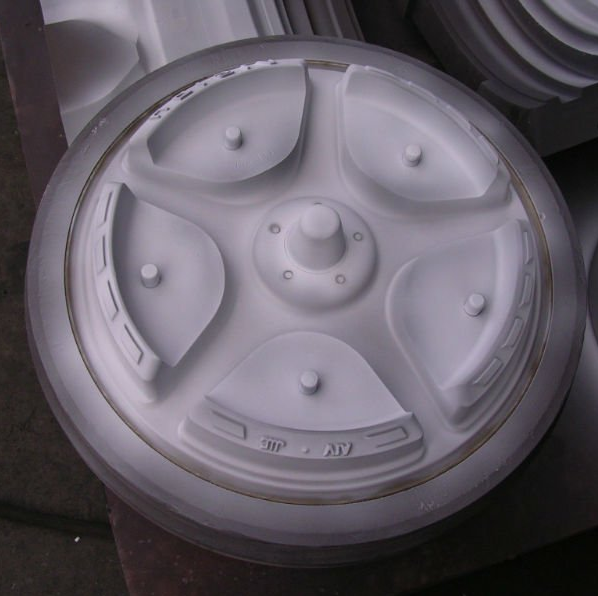
A coating-grade boron nitride dispersion prepared for brush or spray application on molding surfaces.
For buyers evaluating similar die casting operations, such as aluminum casting, magnesium casting or other non-ferrous foundry applications, the useful release mechanisms are the same: chemical inertness against molten metal, low wetting tendency and easy separation at the part-mold interface. But the optimum coating layer thickness and reapplication interval must be confirmed under the specific casting pressure and mold temperature conditions.
Market Trend Analysis: Verified Data Points That Matter
The commercial relevance of boron nitride coatings is supported by verifiable market data, although published market definitions vary. Grand View Research valued the global hexagonal boron nitride market at approximately USD 949.4 million in 2024. In that market, Asia Pacific accounted for about 40.6% of global revenue, and China represented around 41.1% of the Asia Pacific share. Grand View Research also reported that paint and coating applications accounted for the largest downstream application share of approximately 32.8% in 2024, confirming that the coating segment is not a marginal product line but a central part of the h-BN industry.
However, buyers should interpret market numbers carefully. A separate Dataintelo study places the boron nitride coatings market at about USD 2.8 billion for 2025. These two figures are not comparable because the research definitions and scopes differ. One may focus on h-BN material, while the other includes formulated coating products. Rather than relying on a single market total, procurement teams should rely on the practical parameter verification outlined above.
From a trade perspective, boron nitride coatings are commonly classified under HS Code 28500020 for import/export documentation. This is useful for logistics planning, but it does not by itself define product quality or purity.
Comparison with Traditional Solutions: BN, Graphite and Conventional Release Agents
Comparing boron nitride coating with traditional high-temperature release approaches helps buyers understand where BN adds value and where it requires extra care.
| Comparison dimension | Boron nitride coating | Graphite-based release agents | Conventional lubricants / release oils |
|---|---|---|---|
| Structure | Hexagonal layer structure similar to graphite but with white appearance and low friction | Layered carbon structure, can oxidize at high temperature in air | Often organic-based, may carbonize or evaporate |
| High-temperature behavior | Stable to around 900 °C in air and above 2000 °C in inert gas | Useful in reducing or inert conditions; oxidation in air is a recognized boundary | Temperature range depends on formulation; many products are not designed for continuous high-temperature release |
| Wetting by molten metal | Non-wetting and corrosion-resistant against most molten metals | Can protect surfaces in some controlled atmospheres but may react or transfer carbon | Limited chemical stability against molten metal |
| Electrical insulation | Insulating with low dielectric constant, suitable for electronic adjacent use | Graphite is electrically conductive | Usually insulating but may degrade at temperature |
| Application form | Brush or spray coating; must be dried and stored sealed | Often applied as dry powder, paste, or spray | Typically sprayed or brushed; may smoke during heat-up |
| Residue risk | Low adhesion to the casting; helps prevent sticking | Carbon residue or graphite transfer can require cleaning | Organic residue may affect part quality |
The Honest Boundary of BN Coatings
Boron nitride coating is not a universal protective layer. Its most technically relevant boundary is atmospheric sensitivity: despite its high temperature rating, the coating starts to lose its performance in air beyond approximately 900 °C. If a process is open to atmospheric oxygen and runs above this range, boron nitride coating will need to be evaluated under actual thermal cycling and may oxidize or degrade at the surface. This is why the same material can be rated above 2000 °C in one process and only up to 900 °C in another.
Another practical boundary is wear or consumption. BN coating is not a permanent coating. Cycle life depends on mold geometry, molten metal pressure, type of mold material and the interval between applications. In demanding horizontal continuous casting or high-pressure die casting runs, the buyer should plan for periodic reapplication rather than expect a one-time coating to last indefinitely.
Finally, boron nitride coatings are priced at a different level than commodity graphite or oil-based release agents. They are selected when the process requires higher purity, cleaner release, improved casting surface quality, a safer low-smoke working environment or greater protection of the tool surface. For simple low-temperature forming with standard release separation requirements, a lower-cost traditional release agent may remain a rational choice.
Choosing the Right Product: From Parameter Sheet to Evaluation Protocol
When an industrial buyer moves from research into evaluation, the product data should be transformed into a test plan. A useful protocol for boron nitride coating evaluation is to validate the material against the specific process atmosphere, tool surface, application interval and required surface outcome of the final part. For die casting operations, the evaluation should focus on how easily the part separates from the die, how many cycles can be run before recoating, and whether the coating leaves any visible residue on the finished casting.
For electronics-oriented or semiconductor-adjacent applications, the evaluation criteria shift toward purity, thermal conductivity, short-term voltage behavior and outgassing. For glass forming and precision foundry use, coating consistency and coverage behavior matter more than thermal conductivity.
Because process boundaries are not uniform, the manufacturer data sheet is only a starting point. In the case of Sumetech, the available company specifications include the product form range from powder to coating, maximum purity of 99.9%, and maximum temperature ratings of 900 °C in air and over 2000 °C in inert atmosphere. Those values are useful reference points, but each buyer still needs to compare them against actual tool temperature at the part surface, actual cycle time and actual atmosphere composition.
Future Outlook for Boron Nitride Coating Adoption
Two material characteristics are likely to drive broader adoption of boron nitride coatings in the coming years: the need for cleaner release in automated casting systems, and the interest in combining release performance with thermal management properties in high-value product manufacturing. As foundry automation and robotics continue to improve, coating behavior must remain consistent from cycle to cycle. Boron nitride coatings, with their dry and self-cleaning release profile, align with that requirement more naturally than oil-based alternatives that create smoke, build-up and cleaning stoppages.
In electronics-related fields, the combination of high thermal conductivity, electrical insulation and chemical stability makes boron nitride materials increasingly common in thermally conductive formulations and high-temperature interfaces. This trend is likely to extend toward coating applications that serve both thermal management and component protection.
For a supplier such as Sumetech, this means the practical value proposition is not one product but a set of grade distinctions. The ability to customize particle size, color and form is relevant because coating producers and end users seek specific viscosity, purity and color behavior for different applications.
Decision Checklist for Boron Nitride Coating Buyers
| Selection step | Verification question |
|---|---|
| Process atmosphere | Is the application open to air, or protected by inert gas or vacuum? |
| Temperature exposure | What is the true peak temperature at the coating surface? |
| Purity requirement | Does the end product require 99.9% pure h-BN or a lower industrial grade? |
| Application method | Will the coating be brushed, sprayed or applied by other means? |
| Substrate type | Is the substrate metal, graphite, or ceramic, and how does it expand at temperature? |
| Cycle life | What is the acceptable interval before coating reapplication? |
| Storage and shelf life | Can the coating be kept dry, sealed, and used before its expiration date under plant conditions? |
| Documentation | Is batch-specific material documentation available for the selected grade? |
FAQ
In which fields are boron nitride coatings used?
Boron nitride coatings, mainly based on hexagonal boron nitride, are used in metal forming and casting as release coatings on molds and troughs for aluminum, magnesium and zinc alloys to prevent adhesion and extend tool life. They are also applied in glass and ceramics manufacturing on glass-forming molds to reduce surface defects and cleaning time, and as a protective coating on graphite plates during powder sintering to prevent carbon contamination. Additional fields include semiconductors, electronics with heat dissipation needs, high-temperature containers, thermal protection, vacuum coating, radar and optics.
What is the maximum working temperature of boron nitride coating?
The maximum working temperature depends on the atmosphere. Sumetech, for example, specifies around 900 °C in air and over 2000 °C in an inert gas atmosphere for its boron nitride range. In an open, oxygen-containing process, the practical limit is therefore lower than in a vacuum or inert gas process.
Why is boron nitride coating effective for die casting and demolding applications?
Boron nitride coating is effective because of its graphite-like layered structure, which gives the material a low coefficient of friction and release behavior. It is soft, chemically stable, and non-wetting against most molten metals, so it prevents adhesion between the part and the mold surface without reacting aggressively with the metal.
What should be checked before applying a boron nitride coating in production?
The buyer should verify surface preparation, coating viscosity, applied film thickness, drying method and compatibility with the substrate. The storage and handling instruction is to keep the coating dry and sealed and to use it before the expiration date. Actual working conditions determine the optimum application parameters, so trial tests on real tooling are recommended before full production use.
For buyers who need reproducible specification documents and batch-level detail, Sumetech publishes a downloadable 2026 product catalogue with the full product portfolio and manufacturing information: Sumetech 2026 Catalogue (PDF).
Have Questions or Need More Details?
Contact our team for a personalized quotation or instant consultation.
Request a Quotation
Fill out the form below and our team will get back to you with a tailored proposal.
WhatsApp Direct Chat
Prefer to chat in real-time? Message us on WhatsApp for instant assistance & quick answers.
- Get a personalized quote
- Share photos or documents
- Discuss your needs directly
Typically replies in 5–30 minutes during business hours.