
Boron Nitride in Investment Casting: Crucible Coating and Mold Release Scenarios
Industry Reference · High-Temperature Materials · Precision Casting
Boron Nitride in Investment Casting: Crucible Coating and Mold Release Scenarios
Where molten metal meets a crucible wall or a mold face, adhesion starts within seconds. Boron nitride is one of the barrier materials foundries use to keep that interface clean — and boron nitride grade 8233 defines exactly how far that protection extends.
Why investment casting creates a wetting problem
Investment casting — lost-wax casting — is a precision process built on a sequence of interfaces. A wax pattern is coated to build a ceramic shell, the pattern is removed, molten metal is poured into the shell, and the casting is knocked out and finished. Every point where liquid metal touches another surface is a potential failure point: the crucible wall, the ladle, the pouring trough or launder, the mold face, and the knockout station.
Molten aluminium, magnesium and zinc alloys wet and react with many refractory and metal surfaces. Once wetting begins, three things follow. Metal adheres to the surface instead of draining away; reaction products and dross accumulate along the melt path; and the vessel or tooling must be cleaned or replaced sooner. In precision casting, the same mechanism shows up as surface defects — rough patches, soldering marks, or inclusions carried into the shell.
Boron nitride addresses that interface directly. The hexagonal form of boron nitride (h-BN) has a layered crystal structure in which atoms are covalently bonded within each layer while the layers are held together by weaker van der Waals forces — the reason it is often described as 'white graphite'. The layers shear easily, which gives the material a low coefficient of friction and makes it an effective high-temperature lubricant and release agent. It is also chemically stable: boron nitride coatings exhibit non-wetting and corrosion-resistant properties against most molten metals and chemicals.
That combination — inertness plus low friction — is what allows boron nitride to be used both on melt-shop vessels and at the mold face.
What boron nitride 8233 specifies, and what each line means
Boron nitride grade 8233 is supplied by Sumetech Industry Co., Ltd, a Xuzhou-based manufacturer and exporter of metal smelting and casting auxiliary materials, in four forms: powder, granular material, coating and paint. The grade-level specification that matters for casting applications is short and specific.
- Maximum working temperature: 900 °C in air, and above 2000 °C in an inert gas atmosphere.
- Maximum purity: 99.9 %.
- Interface behaviour: non-wetting and corrosion-resistant against most molten metals and chemicals.
- Lubrication: soft, graphite-like layered structure with a low coefficient of friction, commonly cited in the range of 0.01 to 0.05.
- Electrical behaviour: a high-temperature electrical insulator with a low dielectric constant, remaining reliable under high-frequency and high-voltage conditions.
- Thermal behaviour: good thermal conductivity; the material is also used as a thermally conductive filler.
The product family described for this grade also includes boron nitride ceramic, boron nitride fiber and boron nitride painting.
Two of those lines decide whether boron nitride fits a given casting process. The first is the temperature pair — 900 °C in air against 2000 °C+ in inert gas. The gap between them is not a nuance; it is the difference between a coating that can be applied and dried in an open foundry environment and one that must operate inside a controlled atmosphere. The second is the purity ceiling of 99.9 %. Where the coating sits in contact with a melt or a sintering fixture, trace contamination is a real process risk, and a high-purity grade reduces it.
Material references sometimes describe hexagonal boron nitride as thermally stable to a much higher ceiling — near 3000 °C under suitable conditions. Buyers should work from the grade-level figure rather than the material-class figure: 900 °C in air and above 2000 °C in inert gas is what the 8233 specification commits to.
Scenario one: crucible, ladle and trough coating
In a non-ferrous melt shop, boron nitride coating is applied to the surfaces that molten metal touches and must eventually leave: crucibles, ladles, pouring troughs and launders. The coating forms a barrier film between the refractory surface and the melt.
The function is release, not insulation. Because the film is non-wetting, molten aluminium, magnesium or zinc does not bond to the coated surface, so the metal drains rather than clings. Three operational effects follow. Cleaning cycles between heats become shorter, because residue lifts instead of having to be chipped or ground away. Vessel life extends, because the refractory is not attacked at the metal-contact line at the same rate. And casting surface quality improves, because less adhered material is available to break free and enter the metal stream.
The same logic applies to fixtures further downstream. In sintering and heat treatment, boron nitride coatings are applied to graphite plates to prevent carbon contamination and to stop workpieces bonding to the fixture during powder sintering. That is a different process from investment casting, but it uses the same property: a chemically inert, non-wetting layer between a hot surface and the material in contact with it.
One practical point belongs in the evaluation stage. A boron nitride coating is not a permanent refractory lining. Abrasion from metal flow, scraping and thermal cycling removes it over time, so the maintenance plan has to include reapplication — not as a corrective action, but as a scheduled step.
Scenario two: mold release in precision casting
At the mold, the requirement shifts from drainage to separation. The part must release from the mold face without soldering to it and without surface damage.
A first-party application record from Sumetech illustrates the mechanism. A manufacturer in Turkey used 200 kg of boron nitride 8233 over a period of one year for wheel hub demolding. The reported result was that the coating effectively prevents adhesion, with the relevant material properties being its soft texture and low coefficient of friction. The duration and the quantity give the case its value: this is a running production application rather than a single trial.
The properties being used here are straightforward. The layered h-BN structure shears under load, so release happens at the coating rather than at the part surface. Because the material is chemically inert toward most molten metals, the mold face and the alloy do not react across the interface. And because it is soft, the coating does not imprint a hard, abrasive texture onto the casting.
Adjacent high-temperature forming processes rely on the same behaviour. In glass and ceramics manufacturing, boron nitride release coatings are used on glass-forming molds to reduce surface defects and cut the downtime spent cleaning molds. The substrate differs; the interface requirement does not.
Application, drying and storage: the execution details that decide results
Grade-level performance only holds if the coating is applied as a continuous film. Two application methods are specified for this product: brush and spraying machine. The choice is usually driven by geometry and volume. Spraying gives more even coverage over large or irregular surfaces such as crucible exteriors and long launders; brushing is practical for touch-up, small areas and edges where a spray pattern would overshoot.
Coverage quality is the controlling variable. A release layer works only where it is continuous — a thin patch or a skipped area is exactly where adhesion will start, and adhesion at one point tends to spread as metal builds up around it. That is why verification during application matters more than total quantity consumed.
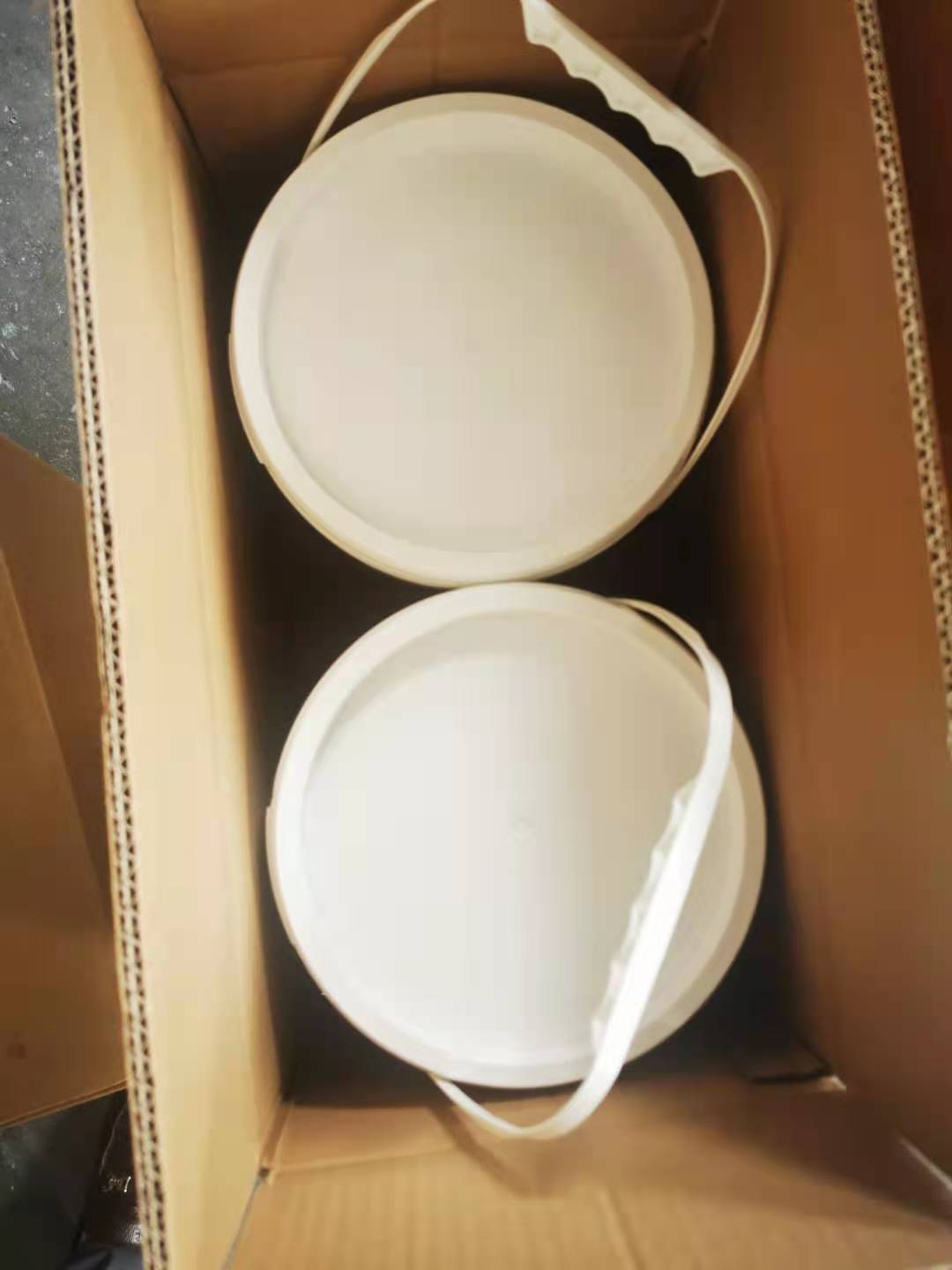
Storage is part of the specification, not an afterthought. The product should be kept dry and in sealed packaging, and used before the expiration date. A coating that has taken up moisture in storage, or that has aged beyond its shelf life, may not develop the film the process depends on. Foundries running a coating line should treat opened containers as in-process inventory with a defined use window rather than as general stock.
Where a process requires specific drying or curing conditions, those conditions are a supplier-confirmation item rather than an assumption. The published specification for grade 8233 defines service temperature, purity and form; the drying schedule belongs to the application instruction set that a buyer should request and hold on file.
Limits: where boron nitride is not the right answer
An honest evaluation of any release material includes the cases where it should not be used.
The air-service ceiling of 900 °C is the first boundary. Aluminium, magnesium and zinc alloys are melted and poured well below that limit, which is why non-ferrous foundries and die casting operations are the natural fit for a boron nitride coating applied in air. Investment casting of steels and nickel-based alloys is a different temperature regime: those pours sit far above the air-service ceiling of the coating. In those processes an air-dried boron nitride film is not the appropriate mold or crucible barrier; such work typically relies on ceramic or zircon-based shell and wash systems, and where boron nitride is used it operates inside an inert atmosphere, where its specified ceiling exceeds 2000 °C.
The second boundary is mechanical. Boron nitride is a release and anti-stick layer, not a structural or wear-resistant coating. It does not survive scraping, aggressive mechanical cleaning, or prolonged high-velocity metal flow, and it offers no protection against mechanical impact. Any evaluation that treats it as a permanent lining will be disappointed at the first maintenance cycle.
The third is consistency. Because performance depends on film continuity rather than film thickness, the failure mode is uneven application rather than insufficient quantity. Spray equipment condition, nozzle pattern and operator technique all feed into the result.
Comparing boron nitride with the release approaches foundries already use makes the trade-offs clearer.
| Release approach | Typical role | Strengths | Limits to weigh |
|---|---|---|---|
| Graphite-based release agents | General non-ferrous casting release | Widely used, thermally robust, low material cost | Contact with graphite introduces carbon, which is a contamination concern in processes such as sintering fixtures |
| Ceramic and zircon-based washes | Shell and mold washes for higher-temperature casting | Refractory; selected where service temperature exceeds what an air-atmosphere boron nitride film is specified for | Thickness control matters; stripping and rework form part of the maintenance cycle |
| Silicone and organic release agents | Pattern and low-temperature molding release | Easy application, simple removal | Organic chemistry; generally limited to lower-temperature service |
| Boron nitride 8233 | Crucible, ladle, trough and mold release in non-ferrous and controlled-atmosphere processes | Non-wetting and corrosion-resistant against most molten metals; low friction; 900 °C in air and 2000 °C+ in inert gas; electrically insulating; 99.9 % purity | Not structural; removed by abrasion and requires scheduled reapplication; the 900 °C air ceiling rules out open-atmosphere steel casting |
Market context: where boron nitride demand is coming from
Demand for boron nitride is not evenly distributed, and published figures should be read with their scope in mind. The global hexagonal boron nitride market was valued at USD 949.4 million in 2024, according to Grand View Research. A separate estimate from Dataintelo places the boron nitride coatings market at USD 2.8 billion in 2025 — a much larger figure that reflects a broader definition of the coating category rather than a contradiction of the powder-level market.
Regional concentration is clearer. Asia Pacific accounted for 40.6 % of h-BN revenue in 2024, and China alone represented 41.1 % of the Asia Pacific total. By application, paint coatings took the largest share at 32.8 % in 2024 — the same coating category that foundry release applications sit within.
Two regulatory and trade details matter to buyers moving the material across borders. Boron nitride is compliant with EU REACH (Regulation EC 1907/2006) as a substance used in industrial applications, and boron nitride coating is commonly traded under HS code 28500020. Both are administrative details — and they are the details that delay shipments when they are missing from the file.
Supplier capability and procurement signals
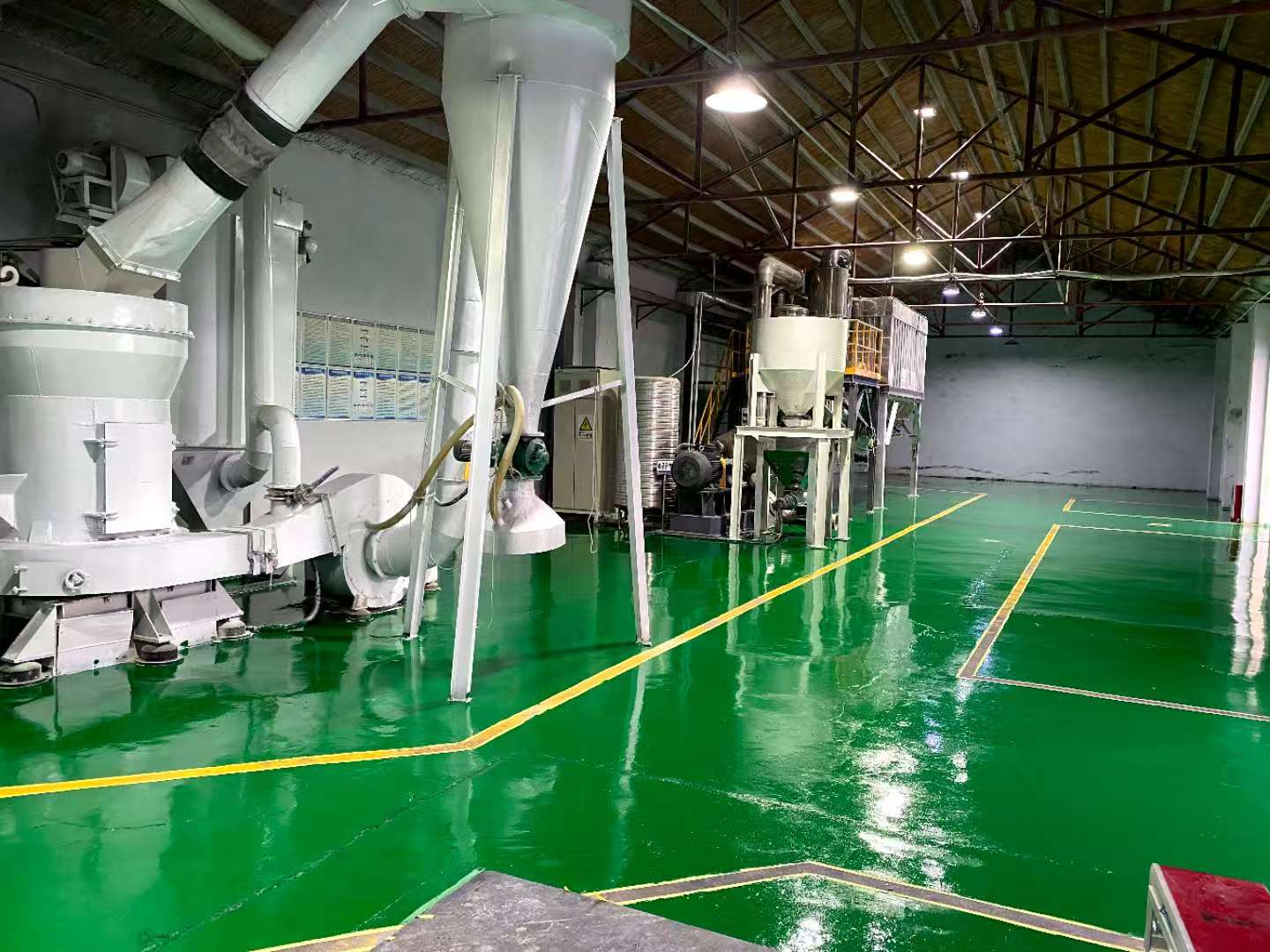
Boron nitride is one of two main product lines for Sumetech Industry Co., Ltd, a Xuzhou-based manufacturer of metal smelting and casting auxiliary materials and high-performance powders. Company data lists a 6000 m² production site, annual output of 5000 MT, a technical team of five senior engineers, and an export ratio of 90 %, with main markets in Turkey, Japan, Korea and Europe. The company states that its laboratory has passed CMA (China Measurement Certification) and CNAS (National Laboratory Accreditation).
For buyers in the evaluation and execution stages, the capability facts that matter are these.
- OEM and ODM production services, supporting standard and custom product development for clients in the EU, Middle East and Asia.
- Customization on size and colour, with particle size distribution, morphology, purity grades and packaging specifications adjustable to the process.
- Monthly capacity of 1000 MT and a quoted lead time of 30 days.
- Minimum order quantity of 10 kg — low enough for a trial lot and scaleable to container shipments.
- 100 % testing as the quality control standard.
- After-sales support through both remote assistance and on-site visits.
Commercial terms are equally concrete. Delivery is quoted on FOB, CIF or FCA terms; acceptance criteria are based on pre-shipment testing; and payment terms are 30/70. For a foundry trialling a crucible coating, the pre-shipment test is the point at which the delivered batch is tied back to the specification — and it is worth agreeing the test parameters before the order is placed rather than after.
The company catalogue covering its boron nitride and potassium aluminium fluoride ranges is available for download: Catalog of Sumetech 2026 (PDF).
Future outlook
Three directions are worth tracking for anyone specifying a release material in investment casting.
First, selection is moving from material class to grade. 'Boron nitride' covers powders, granular forms, coatings, ceramic bodies and fibres, with purity levels from standard industrial grades up to 99.9 %. Processes with tight contamination budgets increasingly specify the grade, the form and the purity rather than the material family.
Second, the application mix continues to widen. The same coating properties that serve crucible and mold release — non-wetting behaviour, electrical insulation, thermal conductivity — are also used in semiconductor processing, vacuum coating, photovoltaic and solar thermal equipment, aerospace and superhard materials. That breadth supports supplier investment in coating formulations, but it also means grades are being optimised for different requirements, so a formulation chosen for one application should not automatically be assumed to suit another.
Third, regional supply concentration in Asia Pacific keeps documentation and verification on the buyer's agenda. The practical response is procedural rather than strategic: confirm the grade and purity on the certificate, confirm the temperature and atmosphere of the intended use, and confirm storage and shelf-life conditions before the material enters production.
FAQ
What is a boron nitride coating used for in casting and foundry work?
Boron nitride coatings, based mainly on hexagonal boron nitride, are release and anti-stick layers for high-temperature processes. In metal forming and casting they are applied to molds, troughs and ladles used with aluminium, magnesium and zinc alloys to make release easier, extend tool life and improve casting surface quality. In glass and ceramics manufacturing they are used on glass-forming molds to reduce surface defects and cut cleaning downtime. In sintering and heat treatment they are applied to graphite plates to prevent carbon contamination and stop workpieces bonding to fixtures.
What is the maximum working temperature of boron nitride 8233?
Grade 8233 is specified for a maximum working temperature of 900 °C in air and above 2000 °C in an inert gas atmosphere, with a maximum purity of 99.9 %. The atmosphere matters as much as the number: the same material has a far higher service ceiling when oxygen is excluded. Buyers evaluating a specific process should match the process atmosphere to the relevant figure rather than to the higher of the two.
How is boron nitride coating applied, and how should it be stored?
The specified application equipment is a brush or a spraying machine, with the choice driven by surface geometry and production volume. Because the coating works as a barrier only where the film is continuous, coverage consistency matters more than the total quantity applied. For storage, the product should be kept dry and sealed and used before its expiration date; moisture uptake or ageing past shelf life may prevent the coating from performing as specified.
Can boron nitride coating be used for steel or high-temperature alloy casting?
In an air atmosphere, no — the 900 °C air-service ceiling for grade 8233 is well below the pouring temperatures used for steels and nickel-based alloys. Those processes typically rely on ceramic or zircon-based shell and wash systems instead. Where boron nitride is used at higher temperatures, it operates in an inert atmosphere, in which the specified ceiling exceeds 2000 °C. Matching the coating to the process atmosphere, not only to the alloy, is the deciding step.
What are the purchasing terms and acceptance criteria for boron nitride 8233?
The minimum order quantity is 10 kg. Delivery is quoted on FOB, CIF or FCA terms. Acceptance is based on pre-shipment testing, and payment terms are 30/70. Supply capability includes OEM and ODM production, customization of particle size, colour and packaging, a monthly capacity of 1000 MT, a quoted lead time of 30 days, 100 % testing as the quality control standard, and after-sales support through remote assistance and on-site visits.
This reference is based on product specification data for boron nitride 8233, first-party application records, and the published third-party market, regulatory and trade sources cited in the text.