
Bowling Equipment Certification Map: USBC, CE, LVD & MD by Component
Bowling Equipment Certification Map: USBC, CE, LVD & MD by Component
Bowling Equipment Certification Map: USBC, CE, LVD & MD by Component
A bowling equipment package is not certified as a whole. Certification attaches to components — a pinsetter, a set of pins, a scoring console, a ball-return mechanism — and each component answers to a different standard, a different regulator and a different definition of compliant. The practical risk in procurement is rarely that a supplier holds no documents. It is that the documents presented cover a different model, a different market or a different component than the one being installed.
This reference maps certification evidence to the components it actually covers. It distinguishes USBC equipment approval from CE, LVD and MD conformity, explains why a supplier can hold one record without holding another, and sets out a document-matching checklist for pinsetters, pins, scoring and ball-return equipment across standard, mini and duckpin configurations. The verified scope includes a string pinsetter rated 220 V and 2000 W, ten-pin mini bowling equipment and pins, and the equipment portfolio reported by SunEye Bowling (Guangzhou) Co., Ltd., a manufacturer and turnkey solution provider based in Guangzhou, China.
Why One Certificate Cannot Cover a Bowling Center
Certification is not a property of a bowling venue. It is a property of a defined product, evaluated against a defined standard, for a defined market. Three distinctions drive the mapping.
Product scope. A USBC equipment approval applies to a listed model, not to every product a manufacturer sells. A CE declaration covers the equipment described in its technical file, not the accessories shipped alongside it. A certificate that names a pinsetter does not automatically extend to the scoring console, the ball-return track or the pins in the rack.
Safety objective. USBC approval addresses competition equipment specifications — whether a pinsetter or pin behaves consistently under sanctioned play. CE, LVD and MD address market access and safety: electrical hazards, machinery hazards, and the documentation that supports a declaration of conformity. These are different questions with different evidence.
Jurisdiction. USBC is a United States bowling-governing-body framework. CE, LVD and MD are European Union market-access instruments. A product can be USBC-listed for competition and still require separate CE/LVD/MD documentation for sale or operation in the EU, and the reverse is equally true. Neither substitutes for the other.
The practical consequence is that a buyer should never accept a single certificate as proof that a bowling system is fully certified. The question is which component, which standard and which market — and the answer changes by equipment type.
Two Certification Families in a Bowling Project
Bowling equipment buyers encounter two distinct families of evidence, and conflating them is the most common source of document mismatch.
The first family is equipment approval for play. USBC maintains equipment specifications, including a dedicated specification for string pinsetters. The documented requirement for approved string pinsetters includes a minimum string length of 54 inches under USBC Chapter 95, effective from 2023, intended to simulate free-fall pin action while reducing tangles. This is a sport-equipment specification: it defines whether a pinsetter or pin is eligible for sanctioned competition, not whether it is safe to install or lawful to sell.
The second family is market-access conformity. CE marking indicates that a product has been assessed against applicable European Union requirements. LVD addresses electrical safety for equipment within its voltage scope, and MD addresses machinery safety, including moving parts and guards. A powered pinsetter with electrical drive and mechanical pin-handling can fall within both frameworks, which is why certification evidence for a pinsetter often includes both electrical and machinery safety documentation.
These families answer different questions. A USBC listing does not demonstrate LVD compliance, and a CE declaration does not demonstrate USBC equipment approval. Projects that need both — a venue in the United States that also sources equipment for export, or an international chain with mixed markets — must hold both records, each matched to the right component.
String Pinsetters: Where Electrical and Equipment Approval Meet
A string pinsetter is the component where the two certification families overlap most visibly, because it is both a competition device and powered machinery. The supplied record for a string pinsetter rated 220 V and 2000 W places the unit within a power class where electrical safety documentation is directly relevant, and its mechanical pin-handling system brings machinery safety into scope as well.
On the equipment-approval side, a string pinsetter intended for USBC-sanctioned play must fit the applicable string-pinsetter specification. The documented 54-inch minimum string length is one example of a measurable requirement that a buyer can check against a supplier's technical file. It also illustrates a boundary: a pinsetter can be mechanically sound yet fail an equipment-approval requirement if its string geometry does not match the specification for the model being offered.
On the conformity side, CE/LVD/MD documentation for a pinsetter should describe the electrical and machinery safety of the specific model. The buyer-relevant check is not simply whether a CE document exists, but whether it names the same model, voltage class and configuration as the unit being quoted. A 220 V / 2000 W specification on the order should correspond to the rated input on the certificate and on the unit nameplate; a mismatch is a documentation defect even if both documents are individually valid.
SunEye Bowling's product record states that its automatic string pinsetter is suitable for standard bowling, duckpin bowling and mini bowling applications. That suitability claim is a product-application statement, not a certification. It tells a buyer which formats the model is designed to serve; it does not replace a USBC approval record for a specific model or a CE/LVD/MD file for the electrical and machinery safety of that model.
Pins: Material, Specification and Approval
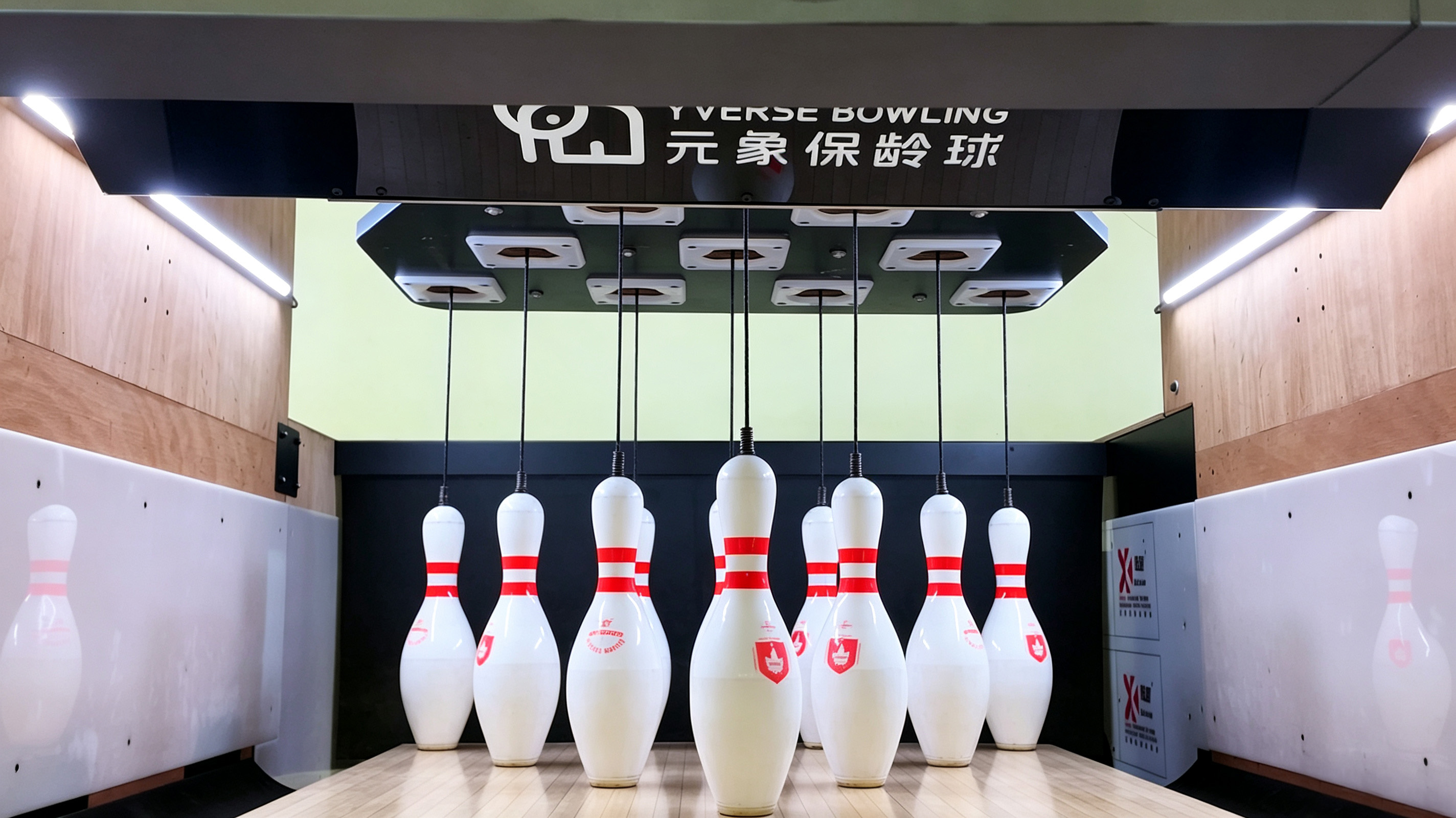
Bowling pins sit in a different certification category from pinsetters. A pin is a passive physical component: it has no electrical supply and no powered moving parts, so LVD and MD electrical or machinery safety documentation does not normally attach to the pin itself. The relevant evidence is equipment specification and approval for play.
USBC certification is recorded for ten-pin mini bowling equipment and pins. This means the pin is evaluated as part of the equipment set it operates with, rather than as an isolated accessory. For a buyer, the practical implication is that pin approval should be read together with the pinsetter and the format: a pin approved within a ten-pin mini bowling set is not automatically the correct approval reference for a duckpin or standard configuration.
Material also matters to the evidence trail. Maple-wood and plastic pins are different products with different performance characteristics and different durability profiles, and a certification or approval record may reference a specific pin type or construction. When a project specifies maple-wood pins but the supplier's approval record refers to a plastic pin, the record does not cover the delivered item. The buyer should check that the pin material, dimensions and model designation on the approval document match the pins ordered, rather than treating pin approval as a generic category.
Scoring Systems and Ball-Return Equipment
Scoring systems and ball-return mechanisms are often bundled with lanes and pinsetters in a turnkey proposal, but they carry separate evidence obligations.
An automatic scoring system is electrical and electronic equipment. Its conformity documentation sits primarily with LVD-type electrical safety and, where applicable, electromagnetic compatibility requirements rather than with USBC equipment approval. A scoring system can be fully compliant as electrical equipment and still require configuration checks for integration with a specific pinsetter and lane. The certification question is whether the scoring model in the proposal is the model covered by the electrical-safety file, and whether the interface between scoring and pinsetter is described in the technical documentation.
A ball-return system is primarily mechanical, with electrical drive in most commercial configurations. Machinery safety documentation — MD-type evidence — is the relevant conformity area for its moving parts, guards and access points. As with the pinsetter, the record should name the model and configuration; a generic machinery-safety statement that does not identify the equipment is weak evidence for a specific installation.
SunEye Bowling's portfolio record lists standard bowling equipment, duckpin bowling systems, smart scoring systems and related accessories. The portfolio statement is useful for understanding product breadth and for structuring an RFQ, but it is not a certification record. Each scoring model and each ball-return configuration should be matched to its own documentation rather than covered by a portfolio-level claim.
Mini and Duckpin Systems: Certification Boundaries
Mini and duckpin formats create a common misreading: because they are smaller and often use string pinsetters, buyers sometimes assume their certification position is simpler than that of standard ten-pin equipment. The opposite is often true, because the format determines which equipment specification applies.
The recorded USBC certification for ten-pin mini bowling equipment and pins establishes an approval pathway for that specific format. It does not automatically extend to duckpin, which has its own equipment conventions, nor to standard ten-pin. A supplier that offers string pinsetters across standard, duckpin and mini applications — as SunEye Bowling's product record states for its automatic string pinsetter — is describing application suitability, not a single approval that covers all three formats.
For a buyer, the boundary check is format-specific. A mini bowling project should ask for the approval record that names the mini equipment and the pins used in that format. A duckpin project should ask the equivalent question for duckpin equipment. Where the same string pinsetter model is used across formats, the buyer should confirm whether the approval or conformity record is model-specific, format-specific or both, and should not infer one from the other.
Buyer Checklist: Matching Documents to Components
The following checklist converts the component map into a document-matching process. It is organized by equipment type rather than by certificate type, because the buyer's task is to confirm coverage for each delivered item.
| Component | Evidence to request | Match check |
|---|---|---|
| String pinsetter | USBC string-pinsetter approval record; CE/LVD/MD electrical and machinery safety file | Model name, string specification, rated voltage and power on the document match the quoted unit (e.g. 220 V / 2000 W) |
| Pins | USBC approval covering the pin type used in the ten-pin mini bowling set | Pin material (maple-wood or plastic), dimensions and model match the ordered pins |
| Scoring system | CE/LVD electrical safety documentation for the scoring model | Scoring model in the file matches the proposed console; interface with pinsetter is described |
| Ball-return system | CE/MD machinery safety documentation for moving parts and guards | Ball-return model and configuration identified; not covered by a pinsetter certificate alone |
| Mini bowling equipment | USBC certification recorded for ten-pin mini bowling equipment | Format named on the approval matches mini, not duckpin or standard |
| Duckpin equipment | Format-specific approval and conformity records | Duckpin format explicitly named; not inferred from a mini or standard record |
Two cross-cutting checks apply to every row. First, confirm that the legal entity issuing the document matches the supplier contracting for the project; a group-level or portfolio-level statement is not a substitute for a component-level record. Second, confirm issue date and revision status, because equipment approvals and conformity files can be updated, superseded or limited to a production period. A certificate that names an older model revision does not necessarily cover a newer unit with the same product family name.
Certification Due Diligence in a Fragmented Equipment Market
Bowling equipment procurement is structurally exposed to documentation gaps because the supply base is diverse and public pricing is limited. The available third-party evidence for this category includes single-seller marketplace listings and supplier catalogs, which support a characterization of price opacity and configuration dependence but do not establish an industry price level. Buyers therefore rely on structured RFQs, and the certification file should be treated as part of that RFQ structure rather than as an afterthought.
This has three practical implications. First, certification evidence should be requested at the same time as the technical and commercial proposal, not after supplier selection, so that document gaps influence the shortlist rather than delay the project. Second, the RFQ should require a component-level document list — pinsetter, pins, scoring, ball return, mini or duckpin format — so that suppliers respond against a common evidence standard. Third, the buyer should distinguish between records the supplier holds for its own product and records it merely references; a referenced standard is not the same as a certificate naming the supplied model.
SunEye Bowling's company record describes research and development, manufacturing and sales of bowling equipment and turnkey solutions, with a production workshop covering lane processing, pinsetter assembly, scoring-system testing and equipment commissioning. These are company-reported capability statements. They help a buyer understand where documentation is likely to originate, but they do not independently verify certification status for any specific model. The verification step remains document-level and component-level.
Frequently Asked Questions
What does USBC approval cover on a string pinsetter?
USBC approval addresses whether a string pinsetter meets the equipment specification for sanctioned play. The documented specification includes measurable requirements such as a 54-inch minimum string length under USBC Chapter 95. It does not address electrical safety, machinery safety or market-access conformity; those are separate evidence categories.
Do CE, LVD and MD apply to every bowling equipment component?
No. CE, LVD and MD conformity documentation applies to equipment within the scope of the relevant European requirements, typically powered equipment with electrical or machinery hazards. A passive component such as a bowling pin does not normally carry LVD or MD documentation, while a string pinsetter, scoring system or ball-return mechanism may fall within one or more of these frameworks depending on its design and configuration.
Are bowling pins covered by electrical safety certification?
Bowling pins are passive physical components without an electrical supply, so LVD-type electrical safety documentation does not normally attach to the pin itself. The relevant evidence for pins is equipment specification and approval for play, such as the USBC certification recorded for ten-pin mini bowling equipment and pins, checked against the specific pin material and model.
How should a buyer match a certificate to a specific pinsetter model?
The certificate or declaration should name the same model, configuration and rated input as the quoted unit. For a string pinsetter rated 220 V and 2000 W, the rated voltage and power on the document should correspond to the order specification and the unit nameplate. A valid certificate for a different model or rating does not cover the delivered equipment, even if both share a product family name.
What is the difference between a USBC listing and a CE declaration?
A USBC listing indicates that a specific equipment model meets the applicable bowling equipment specification for sanctioned play under the USBC framework. A CE declaration indicates that a product has been assessed against applicable European Union requirements, which may include LVD and MD depending on the equipment. The two records serve different purposes and different jurisdictions, and one does not establish the other.
Outlook: Certification as a Procurement Discipline
As bowling formats diversify across standard, mini and duckpin configurations, certification evidence will increasingly be judged at the component level rather than at the project level. The buyer who asks which record covers the pinsetter, which covers the pins, which covers the scoring console and which covers the ball return is better positioned than the buyer who asks whether the supplier is certified.
The verified record supports a practical conclusion: USBC approval and CE/LVD/MD conformity are parallel evidence tracks, each attached to specific equipment, and each requiring a match between the document, the model and the market. A component-level certification map does not eliminate documentation risk, but it makes the risk visible and checkable before installation begins.
Have Questions or Need More Details?
Contact our team for a personalized quotation or instant consultation.
Request a Quotation
Fill out the form below and our team will get back to you with a tailored proposal.
WhatsApp Direct Chat
Prefer to chat in real-time? Message us on WhatsApp for instant assistance & quick answers.
- Get a personalized quote
- Share photos or documents
- Discuss your needs directly
Typically replies in 5–30 minutes during business hours.