
Box Type Substation: A Discovery Guide for Industrial Buyers
A box type substation is a factory-assembled electrical substation whose high-voltage switchgear, one or more transformers, and low-voltage distribution and protection are enclosed in a single housing, shipped as a module, and connected to the network on site. The useful realisation for a buyer at the awareness and research stage is that it is not a single product but a configuration family — and its specification is driven by three variables that must be settled before any quotation is meaningful: what it will serve, what voltage class is involved, and which compliance regime it must pass.
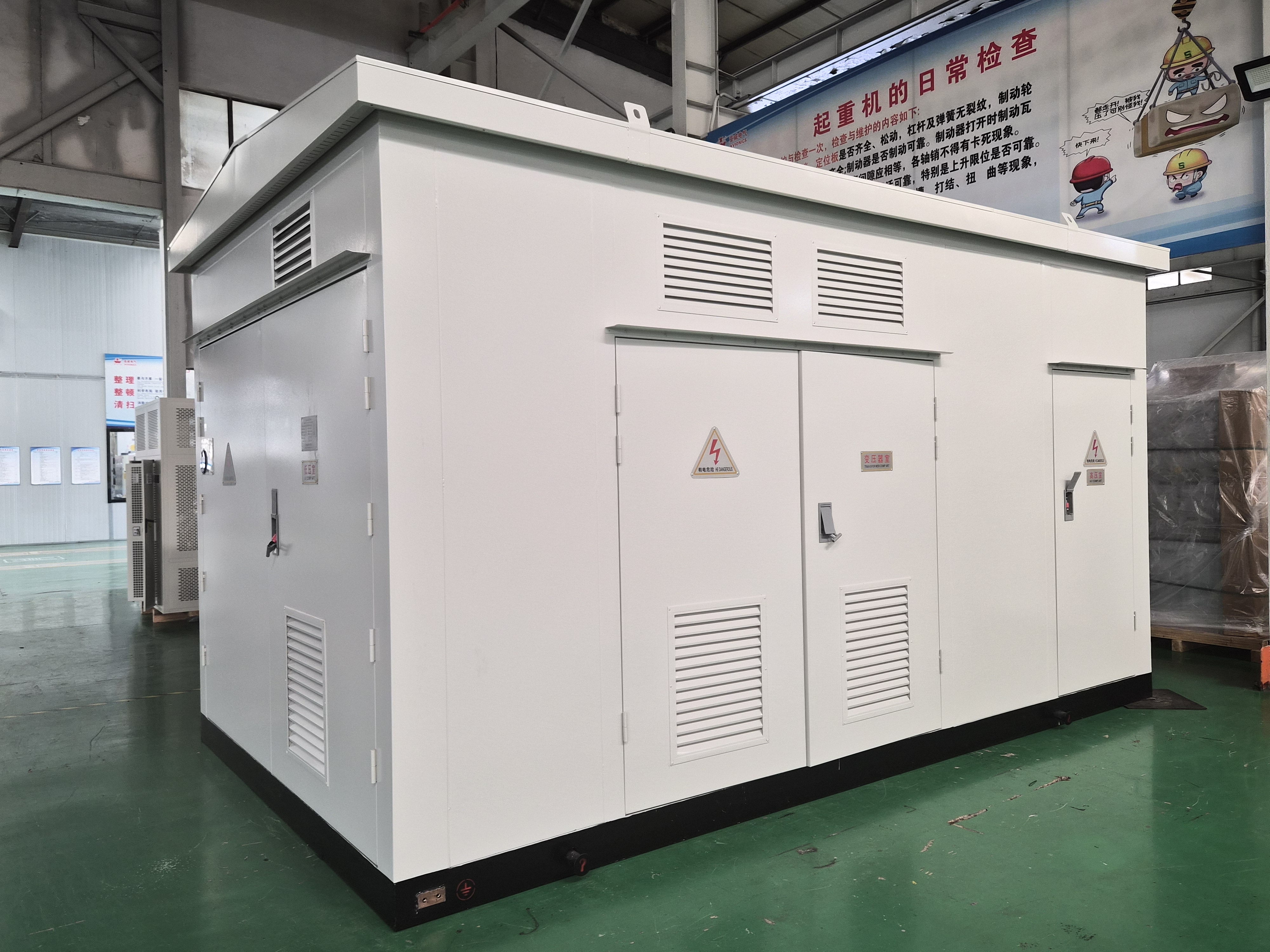
Why “box type” is a looser term than it looks
The label covers several construction forms. In North America, buyers usually mean a pad-mounted design in which the high-voltage and low-voltage switching, fusing and protection are enclosed with the transformer in a tamper-resistant steel enclosure standing at ground level. In European practice, the term often describes a walk-in or compartmental enclosure containing one or more transformers, a ring main unit or metal-enclosed switchgear, and low-voltage distribution. For grid-scale and remote projects, the form increasingly being specified is a containerised prefabricated cabin. These are not interchangeable, and their specification chains differ. That is one reason published specification tables so often fail to line up with each other.
The practical consequence is that procurement language matters early. A buyer who writes “box type substation, 10 kV, 1,000 kVA” without also naming the enclosure form, transformer type, ingress protection and destination market will typically receive quotations that cannot be compared side by side.
The problem it solves — and the trade-off it creates
Conventionally, a substation is a building erected around equipment. Civil works must be finished before the equipment is installed, site labour and weather govern the schedule, and the concrete enclosure fixes the capacity unless it is physically extended.
Prefabrication inverts that sequence. Assembly, internal wiring and a substantial share of factory testing are completed before shipment, and the module arrives as a unit ready for connection. The result described in the product literature behind this category is faster construction, a smaller building footprint, lower operations and maintenance cost, and — for projects in regions with limited infrastructure — a material reduction in site work. For a substation that has to be energised to a grid-connection date, that difference is often the deciding factor.
The trade-off is flexibility. A module is built to a fixed specification, and expansion means adding a cabin rather than adding a room inside a building. The buyer is choosing, at an early stage, between deployment speed and long-term extensibility. The two are not mutually exclusive, but they are not free either.
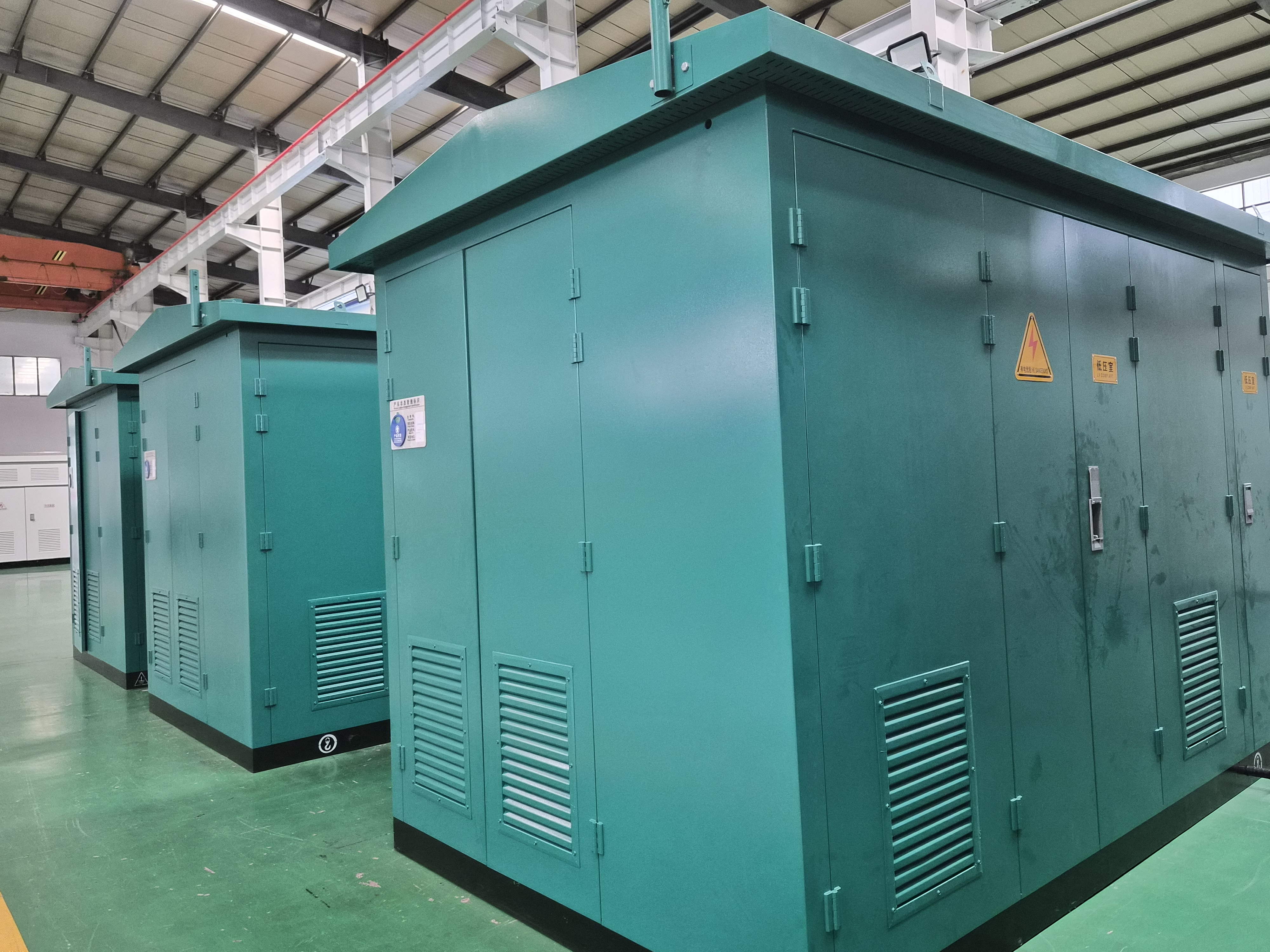
The cabin is transported as a complete unit and lifted into position, with connection work limited to the site interface.
What a box type substation actually contains
Inside the enclosure, a box type substation is a small substation in its own right. The internal configuration is usually a combination of the following:
- High-voltage switchgear. Commonly a ring main unit, or metal-clad and metal-enclosed switchgear with vacuum circuit breakers, disconnectors, earthing switches and cable terminations.
- The transformer. Oil-immersed or dry-type. This choice — not the enclosure — usually has the greatest effect on fire safety, maintenance, and where the unit may be installed.
- Low-voltage distribution. Incoming and outgoing low-voltage panels, busbars and metering.
- Protection and control. Relays, instruments, communication interfaces and auxiliary power supply.
- Environmental control. Ventilation, heating and air conditioning, matched to the climate the unit will work in.
- Monitoring. Temperature, humidity, smoke, water ingress and access monitoring, where remote or unattended operation is intended.
- The housing itself. Structural frame, wall panels, insulation, anti-corrosion coating, doors, ventilation openings and cable entry.
A concrete example of how far the integration can go is the YBM/ZGS11/ZGS13 prefabricated cabin modular substation. It covers 10 / 35 kV with transformer capacity from 500 to 50,000 kVA, and integrates high-voltage switchgear, transformer, low-voltage switchgear, compensation equipment, an automation system, AC/DC power supply and environmental control inside the cabin. Cabin dimensions follow standard container dimensions and can be customised; protection is IP54 / IP55; the ambient temperature range is −40°C to +50°C. The unit is transported complete and lifted into place with crane lifting and on-site connection.
Its bill of materials shows why the specification review matters more than the brochure photograph: containerised steel structure with rock-wool sandwich-panel insulation and an anti-corrosion coating; transformer optional oil-immersed or dry-type; switchgear metal-clad withdrawable or fixed type with vacuum circuit breakers; copper busbar with heat-shrink insulation; and an integrated automation system that monitors temperature, humidity, smoke, water ingress and access. The HVAC package covers an industrial air conditioner, forced ventilation and a heater. Fire protection may be gas extinguishing or ultra-fine dry powder, as an option. The base is welded structural steel with anti-corrosion treatment.
Those details are not decorative. They are what determines whether a station commissioned in a remote location still performs in its fourth year.
| Subsystem | What it typically includes | Why it matters to the buyer |
|---|---|---|
| High-voltage switchgear | Ring main unit, metal-clad or metal-enclosed switchgear, vacuum circuit breakers, earthing switches | Sets the short-circuit rating, cable interface and switching philosophy of the station |
| Transformer | Oil-immersed, dry-type or amorphous-alloy core, depending on the family selected | Drives fire risk, no-load losses and the installation distance from the load |
| Low-voltage distribution | Incoming and outgoing panels, busbars, metering | Determines load-facing capacity and metering arrangement |
| Protection and control | Relays, instruments, communications, auxiliary power | Determines whether the station can run unattended |
| Environmental control | Ventilation, heating, air conditioning | Defines the climate envelope the enclosure can be used in |
| Monitoring | Temperature, humidity, smoke, water ingress, access | Sets the basis for remote operation and condition-based maintenance |
The enclosure forms buyers most often confuse
Several construction forms sit under the “box type” label. No verified, side-by-side specification matrix covering all of them was available for this reference, so buyers should treat each form as something to define explicitly in the enquiry rather than assume across suppliers.
- European style. A walk-in or compartmental enclosure containing switchgear, transformer and low-voltage distribution, widely used in IEC markets.
- American style / pad-mounted. A compact ground-level unit with elbow connectors and plug-in fuses, designed to ANSI/IEEE conventions and usually specified with UL or CSA certification for North America.
- Prefabricated cabin / containerised. A transportable cabin holding the complete station, widely used in overseas EPC and remote-site projects.
- Underground vault type. Installed below grade for city-centre or visually sensitive locations, with specific requirements for ventilation, access and water exclusion.
A buyer new to the category often assumes these are interchangeable. They are not. Their structures, cable interfaces, cooling methods and compliance scope differ. The useful question is not “which style is best”, but “what does the site require, what does the local grid code require, and what can the maintenance team actually reach on site”.
Applications and how they change the specification
There is no universal specification. The application determines the transformer type, the enclosure and the degree of integration.
Solar, wind and energy-storage step-up
Here the low-voltage winding has to match the inverter output. The new-energy transformer family (SC10 / SZ18 / SZ20) covers 500–12,500 kVA in the 10 kV class and 1,000–12,500 kVA in the 35 kV class, with a wide-range 0.4–1.14 kV low-voltage design compatible with inverter outputs and impedance voltage options of 6.0–14.0% for different system short-circuit capacities. It can be supplied as a prefabricated cabin integrated package with transformer, switchgear and monitoring. The same manufacturer base is cited for a delivered 40,000 kVA energy-storage project in Bulgaria.
Data centres and AI computing parks
In these applications the dominant risk is fire, not oil. The SCB12–SCB18 epoxy resin cast dry-type transformer contains no insulating oil, which allows it to be installed close to the load. It is suited to the non-linear, harmonic-rich load of IT equipment and can operate at up to 150% of rated load under forced-air cooling.
For the main incoming supply, an oil-immersed power transformer or a prefabricated substation is often the practical option at higher capacities. That split — dry-type indoors, oil-immersed or cabin at the incoming supply — is a common pattern in data centre design, and it is why a single “box type substation” discussion tends to split into two procurement decisions once the application is named.
Industrial plant supply and heavy industry
Industrial loads weight the specification toward continuous and shock loading rather than enclosure aesthetics. The S13 / S14 / S15 oil-immersed distribution transformer series covers 30–3,150 kVA in the 10 kV class and 3,150–31,500 kVA in the 35 kV class, with off-circuit or on-load tap changing.
Fire-sensitive locations
Petrochemical plants, mines, tunnels, metro stations, airports, hospitals and high-rise buildings typically favour dry-type transformers because they contain no oil and can be installed near the load.
Mines and oil and gas fields
Remote supply at mine sites and well pads can involve a separate regulated category. The KBSG / KBSGZY mining explosion-proof dry-type transformer series covers 50–6,300 kVA at 6 / 10 kV and carries an Exd I marking for methane and coal-dust environments. A standard box type substation is not a substitute for that category.
Residential and municipal sites
These sit in the same procurement family but follow different configuration logic. The ZGD-H / ZGD-Z single-phase pad-mounted transformer ranges from 15 to 250 kVA and uses a 120 / 240 V centre-tapped low-voltage winding for North American residential systems. The D-M single-phase pole-mounted transformer covers 5–167 kVA and is designed for pole mounting without a distribution room.
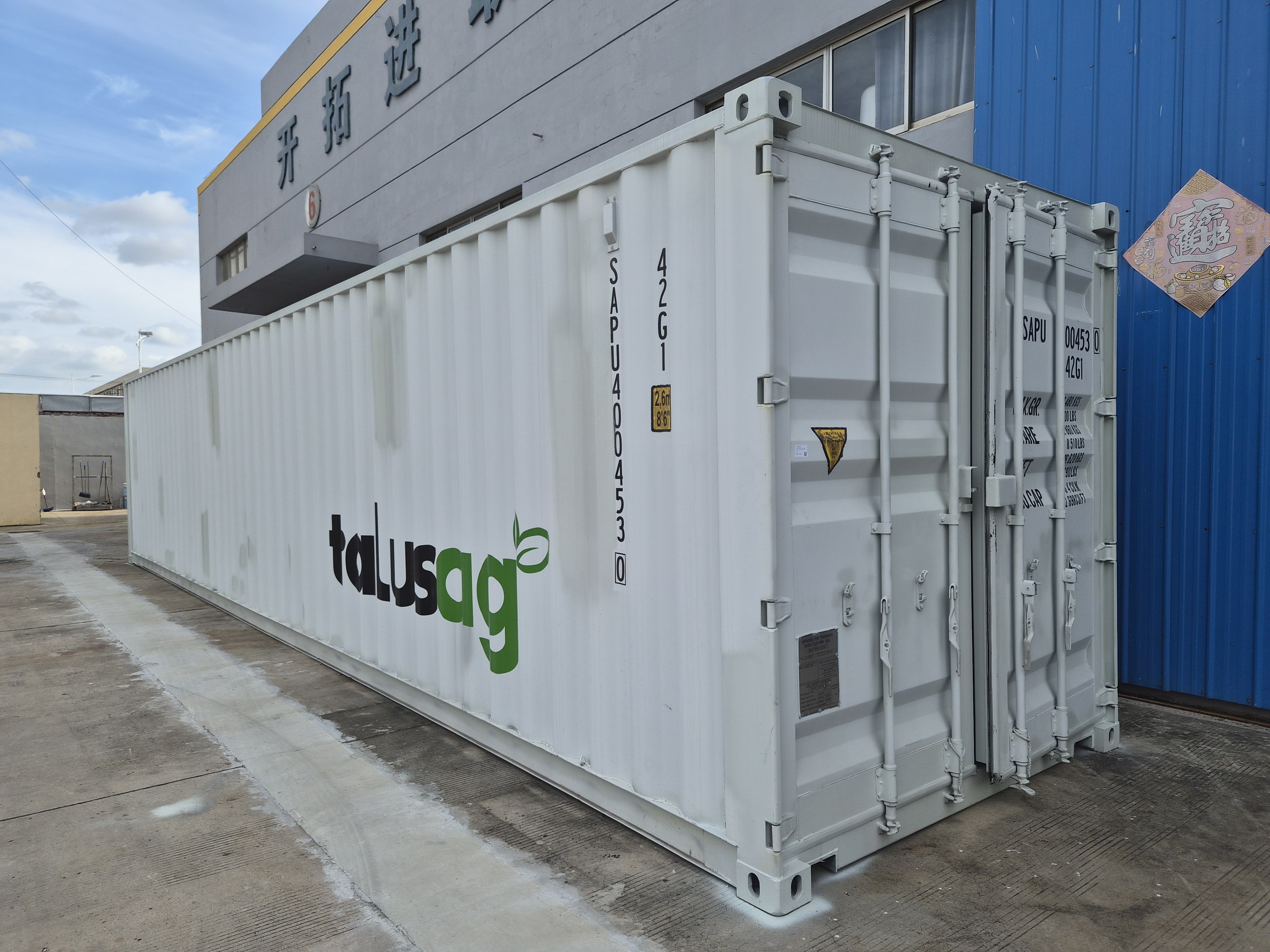
Application drives configuration: the same cabin platform is adapted for renewable step-up, data centre and industrial plant supply.
The early-stage question: supplier or factory?
For a buyer at the research stage, the most useful question is not “which factory is best” but “should I buy directly from a factory, or through an independent supply partner?”
Apex Power Systems (Nanjing) Co., Ltd. is an international trading and supply-partner company specialising in power transformers, box type substations and complete substation solutions. It is not a factory. Its role is factory selection, factory auditing and end-to-end delivery management — shortlisting a manufacturer, auditing its capabilities and quality system, and then supervising design, production, testing, shipment and on-site commissioning.
That model has a real difference from a factory-direct channel. A factory can typically offer only what it manufactures. An independent partner can evaluate several factories against a buyer's specification and recommend the one that fits technically and commercially, and can benchmark cost and lead time across plants rather than accept a single plant's quotation. The benefits described for this model include impartial supplier selection, factory audit and due diligence, certification gatekeeping, a single accountable point of contact, and contractual risk transfer covering engineering review, supervision and warranty obligations.
The cost of that model is its own form of exposure. The manufacturing, certification and test evidence belongs to the audited manufacturing partners, not to Apex. Certificates are held in the partners' legal entity names. The buyer is therefore relying on a verified partner, not on a brand label — and that means the verification process has to be visible and documented.
What is delivered in practice, according to the company's records, includes design and manufacturing coordination, factory acceptance testing, third-party inspection, packing and freight (for example FOB Shanghai under Incoterms 2020), documentation, and site supervision. Drawings in AutoCAD, factory test reports and operating manuals are delivered in the format required by the buyer's utility or EPC.
Five questions to answer before requesting a quotation
At the enquiry stage, five variables determine whether quotations will be comparable:
- Voltage class and capacity. 10 kV or 35 kV, and transformer capacity in kVA.
- Transformer type. Oil-immersed, dry-type or amorphous-alloy core — or a defined combination.
- Application constraints. Inverter compatibility, harmonic content, shock loading, ambient temperature, altitude, dust or salt-spray exposure.
- Enclosure and environmental control. Ingress protection, cable entry, insulation, HVAC and fire-protection options.
- Compliance and market access. The documentary evidence the destination market requires.
When these five are answered, a supplier can specify a precise product family and enclosure instead of quoting from a generic catalogue. When they are not, the buyer tends to compare incompatible proposals.
Compliance scope: IEC, EU and North America
Compliance cannot be answered as a single question, because different parts of the same assembly fall under different regimes.
At international level, IEC 62271-202:2022 specifies the service conditions, rated characteristics, general structural requirements and test methods of enclosed high-voltage prefabricated substations, and is the core product standard for this category.
For the European Union, at least three conformity regimes run in parallel. The Low Voltage Directive 2014/35/EU applies to electrical equipment designed for use at a rated voltage between 50 V and 1,000 V AC, or 75 V and 1,500 V DC — which in practice covers the low-voltage compartment of a box type substation, while the medium-voltage section is governed by HV switchgear standards rather than by the LVD. The EMC Directive 2014/30/EU covers equipment liable to cause or be affected by electromagnetic disturbance, and is directly relevant to protection, control and monitoring electronics. RoHS 2 (Directive 2011/65/EU) restricts specified hazardous substances in electrical and electronic equipment. CE marking is the visible outcome, but it is a declaration of conformity supported by testing evidence, not a quality certificate in itself.
For North America, liquid-filled distribution transformers rated above 750 V are certified to UL requirements in the United States and CSA standards in Canada, with the IEEE C57.12 series supporting the test regime. A UL Certificate of Compliance confirms the evaluation of representative samples; authority to apply the UL Mark is granted separately under the UL Follow-Up Services procedure. Switchgear units for substation applications reference UL 891 (12th Edition), NFPA 791-2018, and IEEE C57.12.00 / C57.12.90 / C57.12.201.
Within the qualification package behind this supply chain, the manufacturing base holds ISO 9001:2015, ISO 14001:2015 and ISO 45001:2018 management-system certifications issued under IAF / CNAS mutual recognition. Its 10 kV / 35 kV power transformers and box type substations hold IEC conformity, and UL, CSA and CQC product certifications, supported by type-test reports covering dry-type, oil-immersed and box type substation families. One further item is worth stating precisely: the KEMA Labs Type I Inspection Report held covers a 250 MVA / 345 kV three-phase power transformer tested to IEC 60076-1/-2/-3, IEC 60076-10, IEC 60076-11 and IEEE C57.12.00 / C57.12.90. That report applies to that specific power transformer, not to the box type substation range, and a buyer should not treat it as a generic type test for every model.
| Market / framework | Applicable rule | What it means for a box type substation |
|---|---|---|
| International | IEC 62271-202:2022 | Core product standard for enclosed high-voltage prefabricated substations |
| EU — electrical safety | LVD 2014/35/EU (50–1,000 V AC / 75–1,500 V DC) | Applies primarily to the low-voltage compartment; the MV section falls under HV switchgear standards |
| EU — electromagnetic | EMC Directive 2014/30/EU | Applies to protection, control and monitoring electronics |
| EU — materials | RoHS 2, Directive 2011/65/EU | Restricts substances in relays, wiring and electronic components |
| North America — liquid-filled transformers | UL and CSA, supported by IEEE C57.12 series | Certification must be in the manufacturer's legal entity name and matched to the product category and rating |
| North America — switchgear | UL 891 (12th Ed.), NFPA 791-2018, IEEE C57.12.00 / C57.12.90 / C57.12.201 | Reference basis for switchgear units in substation applications |
Market signals worth reading at the research stage
The largest demand shift in this category does not come from the substations themselves; it comes from data centres, and it is pulling compact high-capacity supply into the conversation.
According to Mordor Intelligence, the global data centre substation market is expected to grow from USD 11.31 billion in 2026 to USD 13.27 billion in 2027, and to reach USD 19.78 billion by 2032. The same research context records that data centres consumed 2% of the world's electricity in 2026, up from 1.7% in 2024.
For a buyer, the useful reading is narrow and practical. It does not mean every box type substation project is growing. It means one application segment is absorbing medium-voltage distribution capacity at a pace that can outrun available supply — and projects that must be energised to a grid date should therefore treat lead time as a decision variable alongside price. The prefabricated format is exactly what allows that segment to keep pace, because assembly, wiring and factory testing happen before the module leaves the plant. The same logic applies to renewable and energy-storage deployments, where step-up substations must be in place by a grid-connection date.
Where a box type substation is the wrong answer
Credible boundaries matter more than a specification sheet. In several situations a box type substation is not the default best choice:
- At very large single-unit scale, where a project exceeds the practical range of a prefabricated cabin — the cited cabin range runs from 500 to 50,000 kVA — or where a conventional civil-built station is preferred on structural grounds.
- At transport-constrained sites. Cabin delivery reduces site work, but only if the route, the crane and the connection area are available. Where they are not, the prefabrication advantage erodes.
- Where the local grid code requires modification of the standard enclosure, so that the cost advantage of a standardised module is partly lost.
Two further limitations deserve to be stated plainly. First, CE marking and similar compliance certificates are declarations supported by evidence, not guarantees; they become meaningful only when the declaration of conformity, the applicable standards and the test reports are attached. Second, the type-test and factory-audit evidence exists at the manufacturing partner level, not at the trading entity. Apex can arrange factory visits, witness factory acceptance testing and organise third-party inspection, but these must be scheduled in advance and written into the procurement plan.
Future outlook
Three trajectories are likely to shape this category over the next three to five years.
- Wider low-voltage tolerance inside the box. Renewable and storage projects with inverter interfaces will push integrated transformers toward wider low-voltage ranges and greater impedance flexibility — already visible in the 0.4–1.14 kV design and the 6.0–14.0% impedance options cited for the new-energy transformer family.
- Stricter documentation as a screening criterion. EU conformity regimes are specific enough that a “CE certificate” should now be accompanied by a declaration of conformity and test evidence against the applicable standards. Buyers are likely to start treating that documentation as a shortlisting requirement rather than an afterthought.
- More remote monitoring as standard. Temperature, humidity, smoke, water-ingress and access monitoring, integrated automation and unattended operation are moving from optional to default — consistent with the integrated automation and remote-monitoring description already built into the prefabricated cabin product.
In this landscape, Apex Power Systems occupies a specific position: supplier-independent review and end-to-end project management rather than manufacturing. Whether that role fits depends on whether the buyer prioritises independent supplier selection, documentary gatekeeping and a single accountable contact point over a factory's own sales channel.
Frequently asked questions
1. What is a box type substation?
A box type substation is a factory-assembled substation whose high-voltage switchgear, one or more transformers, and low-voltage distribution and protection are enclosed in a single housing, delivered to site as a module and connected to the network. Its ingress protection, ambient temperature range and internal layout are specific to the product family and the location where it will be installed.
2. What components are inside a box type substation?
The enclosure typically contains high-voltage switchgear — a ring main unit, metal-clad or metal-enclosed switchgear with vacuum circuit breakers — a transformer, which may be oil-immersed or dry-type, low-voltage switchgear, protection, control and metering equipment, an auxiliary power supply, ventilation and heating, optional fire protection, an integrated automation system, and the housing itself with its structural frame, insulation, anti-corrosion coating, doors and cable entry.
3. Where are box type substations used?
Common applications include solar, wind and energy-storage step-up; data centres and AI computing parks; industrial plant substations; commercial buildings and municipal infrastructure; residential and small commercial distribution; remote power supply for mines and oil and gas fields; and temporary or permanent municipal infrastructure power. The application determines the transformer type and the degree of integration specified.
4. What is the difference between a box type substation and a prefabricated cabin substation?
A prefabricated cabin substation is a form of box type substation. The broader term describes the fact that the equipment is enclosed together; the prefabricated cabin term specifically describes a construction delivered as a complete transportable cabin, commonly built to standard container dimensions or customised dimensions, and connected on site after crane lifting. A box type substation may therefore be a pad-mounted unit, a walk-in enclosure or a prefabricated cabin, depending on the project.
5. How should a buyer choose the configuration?
Start with five variables: voltage class and transformer capacity; transformer type; site conditions including ambient temperature, altitude, dust or salt spray; enclosure and HVAC requirements; and the compliance documentation required by the destination market. When those five are settled, a supplier can specify a concrete product family rather than quote from a generic catalogue.
6. Is a box type substation CE certified, and what does that mean?
For the EU market, the Low Voltage Directive 2014/35/EU, the EMC Directive 2014/30/EU and RoHS 2 (Directive 2011/65/EU) apply to different aspects of the same assembly, and CE marking is the visible outcome. CE marking is a manufacturer's declaration of conformity supported by appropriate assessment and testing documentation. Buyers should request the declaration of conformity, the applicable standards, and the supporting test reports, and verify that each certificate is issued in the correct legal entity name.
7. What documents should a buyer request from a supplier?
At minimum: the certificate number, issuing body and validity for each certificate in the qualification package; type-test reports for the relevant product family; any market-access certification required by the destination market; drawings and factory test reports in the format the buyer's utility or EPC requires; and a schedule of delivered reference projects that can be verified. Where a trade or engineering partner is used rather than a factory, the buyer should also confirm which certificates belong to the manufacturing partner and how factory access and witness testing will be arranged.
Box Type SubstationPrefabricated Cabin SubstationIEC 62271-202EU LVD / EMC / RoHSIndustrial Procurement
Have Questions or Need More Details?
Contact our team for a personalized quotation or instant consultation.
Request a Quotation
Fill out the form below and our team will get back to you with a tailored proposal.
WhatsApp Direct Chat
Prefer to chat in real-time? Message us on WhatsApp for instant assistance & quick answers.
- Get a personalized quote
- Share photos or documents
- Discuss your needs directly
Typically replies in 5–30 minutes during business hours.