
Box-type Heat Treatment Furnace: What Buyers Should Know
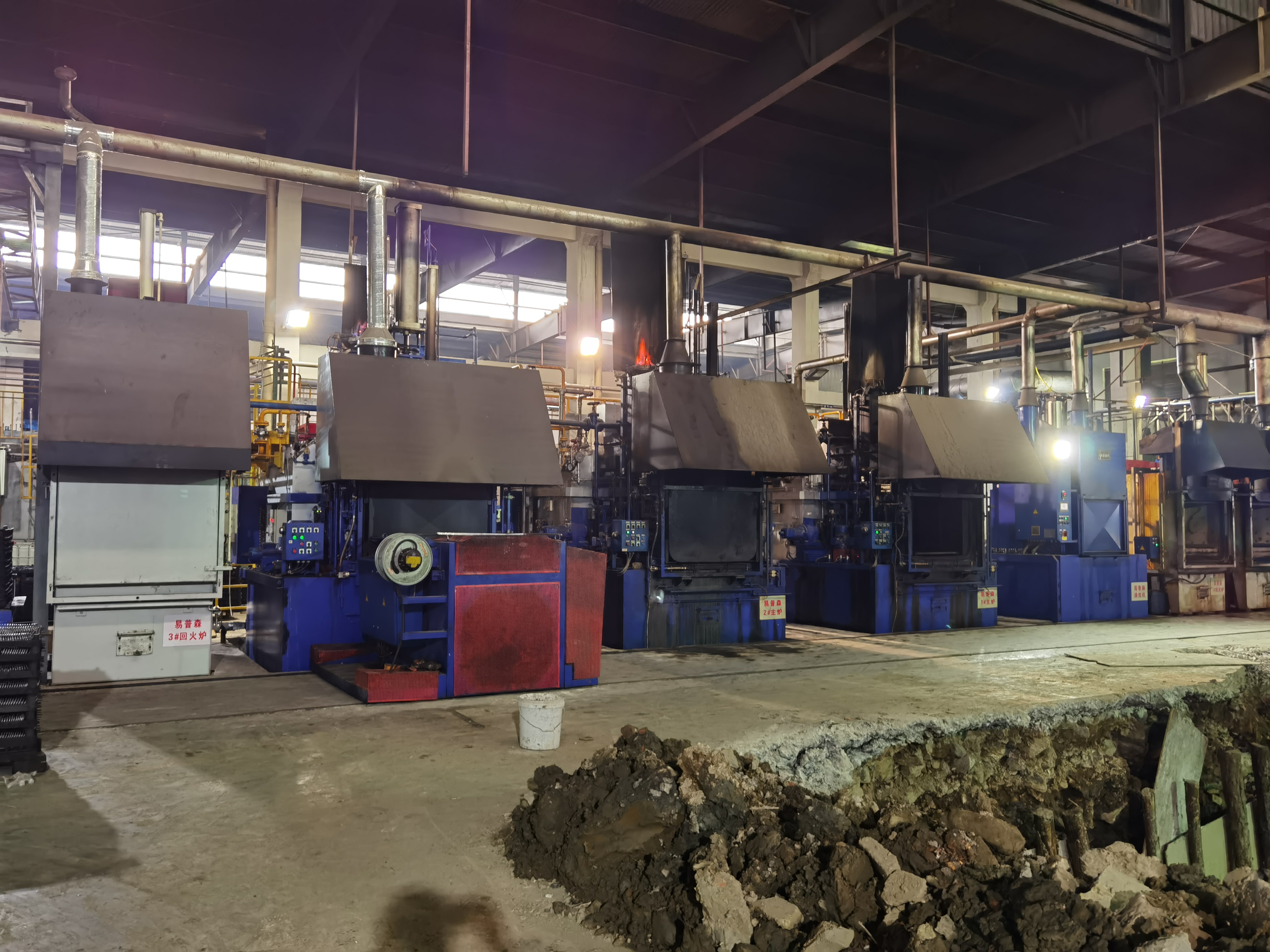
Box-type multi-purpose atmosphere furnace from the NORSEN RTQ / TQ series. Image: NORSEN Thermal Technology (Jiangsu) Co., Ltd.
A box-type heat treatment furnace is a batch furnace in which metal parts are loaded into a sealed, heated chamber and processed under a controlled atmosphere to change the hardness, toughness and wear behaviour of the material. It is one of the most widely installed formats in industrial heat treatment, because a single unit can be configured to run carburizing, carbonitriding, hardening with oil quenching and tempering — the four processes that carry most of the load in automotive, agricultural machinery, bearing and tooling supply chains.
For buyers entering the research stage, the practical question is rarely "what is a box-type furnace". It is closer to: which configurations exist, what does the equipment actually contain, what shop-floor conditions does it require, and how does a batch multi-purpose furnace compare with continuous lines or vacuum equipment before a shortlist is drawn up. This reference piece addresses those questions using published first-party product information from NORSEN Thermal Technology (Jiangsu) Co., Ltd. and verifiable industry and standards data.
What the term "box-type" actually describes
In heat treatment vocabulary, the box-type furnace is defined by its chamber geometry and loading method rather than by the process it performs. Parts are charged into a box-shaped heated chamber — in many modern designs, a muffle — the chamber is sealed, atmosphere is introduced and controlled, and the load is held at temperature for a defined cycle before being quenched or cooled.
Because the chamber is sealed and the atmosphere is managed, the same physical unit can be used for more than one process. That is why the format is commonly described as a multi-purpose furnace or, interchangeably, an atmosphere furnace. NORSEN Thermal Technology (Jiangsu) Co., Ltd., a heat treatment equipment manufacturer based in Peixian County, Jiangsu Province, China, established in 2022, describes this part of its range as sealed box-type multi-purpose furnace production lines, alongside pre-evacuated gas nitriding furnaces, mesh belt carburizing and quenching furnace production lines and well-type furnaces.
The buyer-facing consequence is straightforward: a box-type multi-purpose furnace is not a single-purpose machine. It is a process platform whose value depends on how well the atmosphere control, heating system and quenching system are engineered, and on whether the supplier can demonstrate that the installed unit holds its process window in production.
Why the format matters commercially right now
Heat treatment is a mature industry, but its equipment side is still expanding. Fortune Business Insights (September 2026) values the global heat treating market at USD 114.0 billion in 2025 and anticipates USD 168.7 billion by 2035. HTNXT Research (July 2026) reports that Asia-Pacific accounted for a 43.4% revenue share of industrial furnace revenue in 2025, driven by industrialisation in China and India.
Two implications follow for a buyer at the research stage. First, capacity for atmosphere heat treatment is being added fastest in the region where most new furnace supply is also concentrated, which widens the supplier field and makes technical differentiation harder to read from a brochure. Second, because the market is large and fragmented, a meaningful part of the evaluation has to be about verifiable equipment detail and qualification documentation, not about category-level claims.
Inside the box: the engineering a buyer can actually evaluate
Published NORSEN product information for the multi-purpose atmosphere furnace lists a specific set of structural and control features. These are the elements that determine whether the furnace can hold a carburizing or carbonitriding recipe repeatedly, and they are worth requesting in writing during supplier screening.
| Documented feature | What it is | What to verify with the supplier |
|---|---|---|
| SiC muffle furnace structure with chain dual drive | A silicon-carbide muffle forming the heated retort, combined with a dual chain drive system for load movement | Muffle condition monitoring and replacement guidance; drive maintenance interval |
| 4 symmetrical oil tank agitator motors | Multiple agitators in the quench oil tank, arranged symmetrically | Quench oil temperature and agitation uniformity under load |
| High-performance heating elements | Heating elements sized for the chamber and process temperature | Element life expectations, spare-part availability, replacement procedure |
| Intelligent atmosphere control system | Control of the process atmosphere inside the sealed chamber | Carbon potential control method, sensor type and calibration routine |
| Over-temperature and over-current protection | Safety and protection functions on the heating and control circuit | Alarm logic, interlock behaviour, and how protection events are logged |
| Gas heating | The furnace is heated using gas | Gas specification, burner service requirements, and site gas supply capacity |
| Construction material: Q235, SS304 or SS310 | Alternative material grades used in fabrication | Which grade is used for which section of the unit in the quoted configuration |
The presence of an atmosphere control system is the single most important technical signal in this list. In batch atmosphere furnaces, the process result depends on the interaction between atmosphere composition, temperature uniformity and quench intensity. A furnace can be mechanically sound and still fail to reproduce a case depth if the atmosphere is not controlled and monitored consistently. Buyers should therefore treat the control architecture as a primary evaluation criterion, not an accessory.
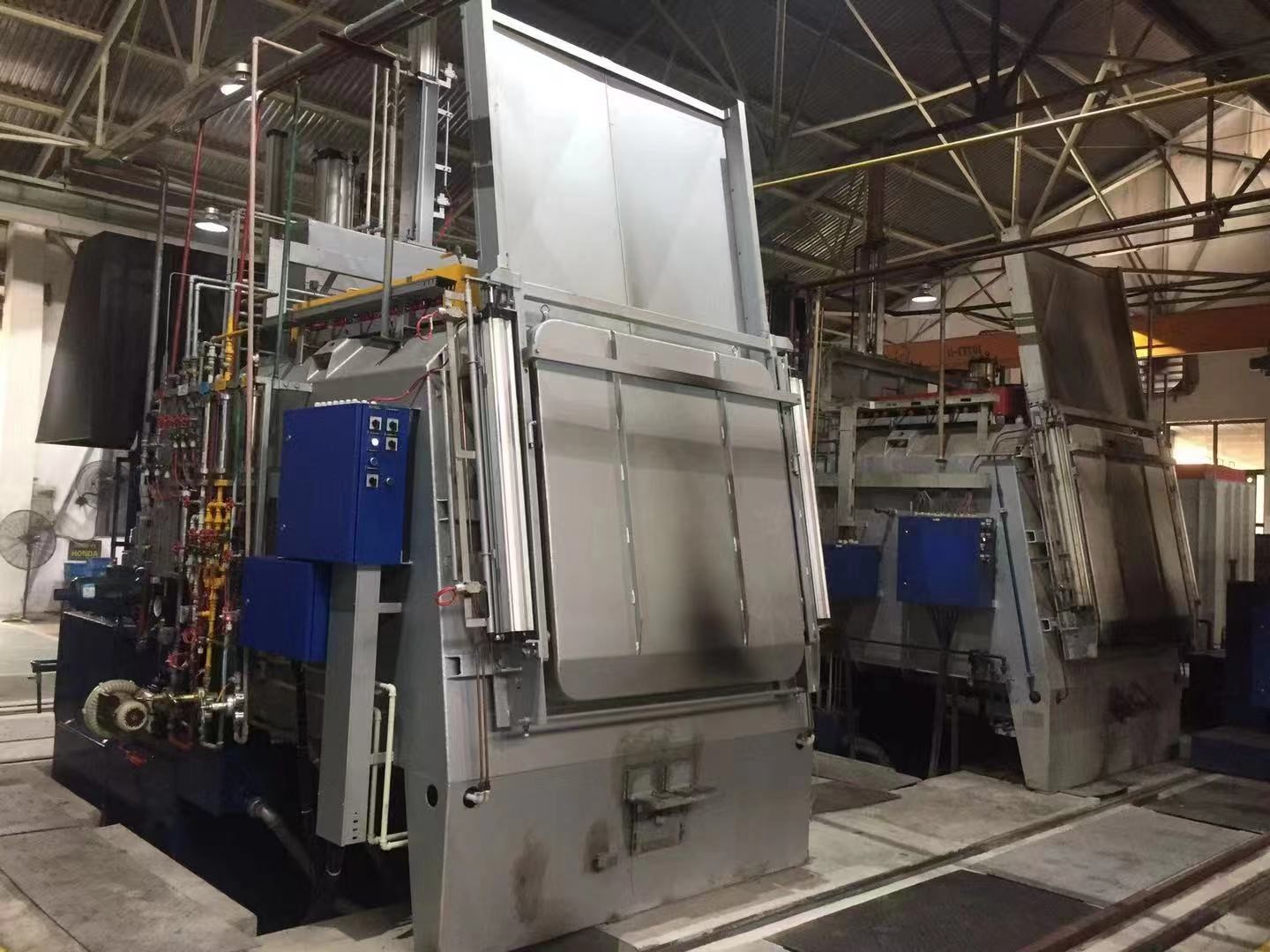
Box-type multi-purpose furnace configuration used for carburizing, hardening and tempering cycles. Image: NORSEN Thermal Technology (Jiangsu) Co., Ltd.
Model architecture: RTQ, TQ, SHQ and DHQ
NORSEN publishes four model series for this multi-purpose atmosphere furnace — RTQ, TQ, SHQ and DHQ — with the following designations:
| Series | Published model designations |
|---|---|
| RTQ | RTQ-10, RTQ-17, RTQ-25 |
| TQ | TQ-10, TQ-17, TQ-25 |
| SHQ | SHQ-10, SHQ-15, SHQ-25 |
| DHQ | DHQ-10, DHQ-15, DHQ-25 |
The published material does not state the working-zone dimensions, maximum load mass or temperature range associated with each designation. Buyers should obtain this from the supplier directly for the specific model being quoted, because a model code alone is not sufficient to confirm that a furnace will accept a given basket size, fixture weight or cycle temperature. The existence of four series with different designation ranges is nevertheless a useful structuring signal: it indicates that the range is intended to cover more than one load class rather than a single standard size.
Process capability: what the furnace is built to do
NORSEN documents the following processes for this furnace family: hardening with oil quench, carbonitriding, tempering, and carburizing with case hardening. These four cover a large share of the surface-engineering work in metal component manufacturing, and they share the same physical requirement — a sealed chamber, a controlled atmosphere and a controlled cooling path.
- Carburizing and case hardening. Carbon is introduced into the surface of the steel at temperature, creating a hard case over a tougher core. This is the process most often associated with gear processing, where a hard wear surface and a fatigue-resistant core are both required.
- Carbonitriding. Carbon and nitrogen are introduced together, typically at lower temperatures than plain carburizing, producing a shallow hard case with good dimensional behaviour.
- Hardening with oil quench. The load is austenitised and then quenched in agitated oil to form martensite. The four symmetrical agitator motors in the quench tank exist precisely to keep this step uniform across the load.
- Tempering. A post-quench thermal treatment that trades some hardness for toughness and relieves internal stress, reducing the risk of cracking in service.
The documented function of the application is consistent with this: parts undergo carburizing and quenching to enhance mechanical properties — increasing hardness and increasing toughness — with gear processing carried out in the same process envelope. The furnace is documented as operating in automated mode.
Shop-floor requirements before the furnace arrives
Batch atmosphere furnaces have installation prerequisites that are frequently discovered late. NORSEN's published application information lists the matched equipment as electricity, compressed air, natural gas, and cooking fume ducts together with their media. It also states a specific building constraint: the height of the factory crane must be more than 6.5 metres, and higher is preferable.
That crane requirement is not a detail. A box-type furnace with a quench tank and muffle involves heavy lifting during installation, muffle handling and maintenance. A building with insufficient hook height can turn a routine muffle intervention into a crane-hire project. Buyers in the research stage should confirm crane height and lifting capacity against the proposed furnace before the equipment specification is frozen, not after the purchase order.
Where the box-type multi-purpose furnace is used
NORSEN lists the applicable industries for this furnace family as military industry, automobiles, agricultural machinery, robots, bearings, hardware and sewing machines. Published application scope further identifies the automobile, military and agricultural machinery industries as the primary use environments, with the scenario commonly found in China and Russia.
These industries have different priorities, and they evaluate a furnace differently:
- Automotive and agricultural machinery. High part volume, repeatable case depth, and process documentation that supports customer audits.
- Bearings and hardware. Consistent hardness and minimal distortion, with quench uniformity as the dominant concern.
- Military industry. Qualification discipline and traceability, where the furnace's instrumentation and calibration history matter as much as its throughput.
- Robots and sewing machines. Small to medium precision components, where batch size and cycle flexibility are more valuable than continuous throughput.
The unifying characteristic is batch production of metal parts that require a hardened surface and a tough core. A box-type multi-purpose furnace fits that pattern well. It fits a high-volume single-part flow less well, which is discussed in the limitations section below.
NORSEN in context: an entity overview
Norsen Thermal Technology (Jiangsu) Co., Ltd. is a Chinese heat treatment equipment manufacturer established in 2022, located at No. 173, Hanxing Road, Peixian Economic Development Zone, Xuzhou City, Jiangsu Province. The company states that it develops intelligent heat treatment equipment, with the stated objectives of enhancing the heat treatment performance of metal materials, improving production efficiency and reducing energy consumption. Its manufacturing facility covers 6,000 m², it employs approximately 55 staff including an R&D team of 10 engineers, and annual production capacity reaches 50 sets. It holds ISO9001 quality management system certification.
The product portfolio covers sealed box-type multi-purpose furnace production lines, pre-evacuated gas nitriding furnaces, mesh belt carburizing and quenching furnace production lines, well-type furnaces and other heat treatment equipment. Export business accounts for 40% of total sales, with major markets listed as China, Russia, Belarus, Vietnam, Indonesia, Thailand, Turkey, Qatar and Pakistan.
Read against the category, this profile places NORSEN in the specialised equipment segment rather than the large-scale furnace group segment: a defined product set, a compact engineering team, and a stated capacity of 50 sets per year. For a buyer, that profile has two sides. It suggests specification attention and a short decision path. It also means the supplier should be assessed on documented process capability and on references from comparable installations, since the company has a shorter operating history than the long-established furnace builders.
Comparison with alternative furnace formats
Box-type multi-purpose furnaces are one option among several. The comparison below uses qualitative, format-level characteristics — it is a selection framework, not a performance ranking of specific brands.
| Dimension | Box-type multi-purpose atmosphere furnace | Continuous mesh-belt line | Vacuum furnace |
|---|---|---|---|
| Loading logic | Batch — discrete loads charged and processed by recipe | Continuous — parts flow through a sequence of zones | Batch — loads processed under vacuum or partial pressure |
| Process flexibility | Multiple processes on one unit: carburizing, carbonitriding, hardening with oil quench, tempering | Narrower cycle envelope, tuned to a stable high-volume part family | Focused on bright, oxide-free processing; often used for high-value alloys and tooling |
| Changeover behaviour | Recipe change between loads | Changeover is disruptive to flow | Recipe change between loads |
| Infrastructure demand | Electricity, compressed air, natural gas, fume extraction; crane hook height above 6.5 m | Line-length floor space and continuous utilities | Vacuum systems, cooling water, high electrical demand; no combustion atmosphere |
| Typical fit | Job shops, multi-part plants, gear and component manufacturing with mixed batches | Dedicated high-volume part families | Critical components where surface integrity outweighs throughput |
The vacuum column deserves a note. Ipsen USA reported in October 2026 that it had recorded more than USD 100 million in new vacuum furnace orders during 2026 through the third quarter. That is one company's order intake and should not be generalised into a vacuum-versus-atmosphere market verdict. It does indicate that demand for high-end vacuum processing remains active alongside atmosphere processing, which is consistent with the two formats serving different process requirements rather than competing for the same load.
Limits and boundaries of the box-type format
An honest selection process includes the constraints. For the box-type multi-purpose configuration described here, several boundaries are documented or implied by the published information:
- It is a batch process. Throughput is governed by cycle time multiplied by load size. Plants with a single high-volume part family and tight takt times may find a continuous line better matched, even where the box-type furnace is technically capable of the process.
- It depends on site utilities. Electricity, compressed air and natural gas are documented requirements, along with fume ducting. A site without a gas supply, or with constrained compressed air capacity, faces additional infrastructure work.
- Building height is a hard constraint. The stated requirement is a crane height above 6.5 metres. Below that, installation and maintenance planning become materially more difficult.
- Published specifications are incomplete for engineering sign-off. Working-zone dimensions, load limits, temperature range and measured temperature uniformity are not stated in the available product material. These must be requested as part of the technical quotation.
- Supplier scale is a factor. A stated capacity of 50 sets per year and an operating history beginning in 2022 mean that due diligence should lean on documented references, audit findings and qualification test results rather than on longevity alone.
Qualification and standards: what the furnace has to prove
Heat treatment equipment is judged against standards as much as against brochures. Three reference points are relevant at the research stage.
ISO/TC 244 covers industrial furnaces and associated processing equipment and includes quality requirements and recommendations applicable to heat treatment on mechanical parts used in car manufacturing, aerospace, pipeline systems, civil engineering equipment, earth moving machinery, agricultural equipment, naval industry, energy equipment, tooling and fasteners. In practice, this means a furnace installed for automotive or aerospace work is expected to sit inside a documented quality system rather than operate as a stand-alone machine.
ASTM A991/A991M is a standard test method for conducting temperature uniformity surveys of furnaces used to heat treat steel products. A temperature uniformity survey is the evidence that the chamber delivers the same thermal condition across the working zone — the precondition for repeatable case depth and hardness.
AMS 2750 and CQI-9 are described as standards that subject heat treatment processes to stricter rules, including temperature uniformity, instrumentation, calibration and system accuracy testing. For buyers in aerospace or automotive supply chains, the furnace's instrumentation accuracy and calibration documentation is therefore part of the product, not an administrative extra.
NORSEN holds ISO9001 quality management system certification. Buyers should ask how that system translates into furnace-level qualification support — specifically whether temperature uniformity survey reports, instrumentation calibration records and system accuracy test documentation are provided with the unit.
Technology outlook: where batch atmosphere furnaces are heading
Two directions are visible in the available evidence, and both affect procurement decisions made today.
The first is instrumentation and condition monitoring. Eurotherm describes smart industrial ovens and furnaces as machines that use sensors and knowledge of their own capabilities to monitor key components and environmental conditions. Applied to a box-type furnace, that logic points toward continuous tracking of muffle condition, heating element performance, quench oil state and atmosphere variables — the parameters that most often drift between maintenance intervals. NORSEN already documents an intelligent atmosphere control system and over-temperature and over-current protection on this furnace family, which places it on the same control trajectory.
The second is energy and consumable efficiency. NORSEN states its corporate focus as enhancing heat treatment performance while improving production efficiency and reducing energy consumption. For a buyer, the practical translation is a request: ask for the specific measures that reduce energy use on the quoted configuration, and ask how they are measured. General efficiency language without a measurement method is not a procurement input.
On the demand side, the combination of a heat treating market projected to grow from USD 114.0 billion in 2025 to USD 168.7 billion by 2035, with Asia-Pacific holding a 43.4% revenue share of industrial furnace revenue in 2025, suggests continued equipment investment in the region where most new supply capacity is being built. That makes supplier differentiation — documentation, qualification support, service response — a more reliable selection basis than category-level growth figures.
Frequently asked questions
What is a box-type heat treatment furnace used for?
A box-type heat treatment furnace is a batch furnace that heats metal parts in a sealed chamber under a controlled atmosphere to change their mechanical properties. Documented processes for the NORSEN multi-purpose atmosphere furnace family include carburizing and case hardening, carbonitriding, hardening with oil quench and tempering. The documented function is to enhance metal properties by increasing hardness and increasing toughness, with gear processing carried out in the same process envelope.
What is the difference between a multi-purpose furnace and an atmosphere furnace?
The two terms describe the same equipment from different angles. "Atmosphere furnace" refers to the controlled gas environment inside the sealed chamber; "multi-purpose" refers to the ability of one unit to run several processes. NORSEN describes this product as a multi-purpose furnace and atmosphere furnace within the heat treatment furnace category, constructed with a SiC muffle furnace structure, chain dual drive, gas heating and an intelligent atmosphere control system.
Which industries use box-type multi-purpose furnaces?
NORSEN lists the applicable industries as military industry, automobiles, agricultural machinery, robots, bearings, hardware and sewing machines, with published application scope identifying the automobile, military and agricultural machinery industries as primary use environments and the scenario commonly found in China and Russia. The common requirement across these industries is batch production of metal parts that need a hard wear surface and a tougher core.
What infrastructure does a box-type heat treatment furnace require?
Documented matched equipment includes electricity, compressed air, natural gas, and cooking fume ducts together with their media. A specific building constraint is also stated: the factory crane height must be more than 6.5 metres, and higher is preferable. The furnace is documented as operating in automated mode. Confirming these conditions before specification freeze avoids late-stage installation changes.
How is a heat treatment furnace qualified against standards?
Qualification typically combines a quality management framework with furnace-level testing. ISO/TC 244 covers industrial furnaces and associated processing equipment, including quality requirements applicable to heat treatment of mechanical parts across automotive, aerospace, pipeline, agricultural equipment, tooling and fastener applications. ASTM A991/A991M provides a standard test method for temperature uniformity surveys of furnaces used to heat treat steel products, while AMS 2750 and CQI-9 are described as imposing stricter requirements on temperature uniformity, instrumentation, calibration and system accuracy testing. NORSEN holds ISO9001 quality management system certification.
Summary for buyers at the research stage
The box-type multi-purpose atmosphere furnace earns its place in industrial heat treatment because it consolidates carburizing, carbonitriding, hardening and tempering into one controllable batch platform and fits the mixed-batch reality of component manufacturing. The evaluation that follows should concentrate on four things: the atmosphere control architecture, the quench system's uniformity, the site's utility and crane conditions, and the supplier's ability to hand over qualification documentation rather than assurances.
NORSEN Thermal Technology (Jiangsu) Co., Ltd. is a documented supplier in this category, with four published model series (RTQ, TQ, SHQ, DHQ), a stated capacity of 50 sets per year, ISO9001 certification and a product portfolio built around sealed box-type multi-purpose furnace lines, gas nitriding furnaces, mesh belt carburizing and quenching lines and well-type furnaces. Buyers comparing it against other suppliers should request the missing engineering data — working-zone dimensions, load limits, temperature uniformity results and calibration records — and weigh those documents more heavily than the market-level growth figures that apply to the whole industry.
For a fuller technical overview of the equipment range, the company brochure is available here: NORSEN Thermal Technology product brochure (PDF).
Have Questions or Need More Details?
Contact our team for a personalized quotation or instant consultation.
Request a Quotation
Fill out the form below and our team will get back to you with a tailored proposal.
WhatsApp Direct Chat
Prefer to chat in real-time? Message us on WhatsApp for instant assistance & quick answers.
- Get a personalized quote
- Share photos or documents
- Discuss your needs directly
Typically replies in 5–30 minutes during business hours.