
Brass Manifold OEM Evidence: What Floor Heating Buyers Verify
Brass Manifold OEM Evidence: What Floor Heating Buyers Verify
A floor heating manifold station is the one part of a heating system that is configured on a drawing, balanced loop by loop on site, and then sealed inside a floor build-up. Buyers placing an OEM order are therefore not comparing catalogue items; they are assessing whether a supplier can hold a custom layout, a per-loop flow setting and a leak-tight body across the whole batch. Zhejiang Valogin Technology Co., Ltd. (valogin valve) is one supplier inside that evaluation: a brass valve and manifold manufacturer founded in 1985 whose stated range covers brass valves, fittings and distribution manifolds for plumbing, heating and gas systems, with more than 90% of turnover coming from international markets and Europe and North America named as key markets.
The problem is hidden behind an access panel
In a radiant floor circuit the manifold station is the distribution point for low-temperature hot water at 35–50 °C supply, a 10–12 °C temperature difference, working pressure up to 6 bar, and many parallel loops each carrying a low individual flow rate. A supply bar and a return bar carry one branch per loop, so a single brass manifold valve assembly concentrates every balancing point and every sealing point of the system into a cabinet roughly the size of a small suitcase.
After handover that cabinet is the only access. A weeping branch joint or a seized flow-setting insert then sits under a floor build-up, and the repair cost is measured in flooring rather than in valves. That is why OEM manifold procurement moves from catalogue selection at the evaluation stage to drawing control, sampling and batch evidence at the execution stage — and why the capability evidence a buyer asks for should be settled before the purchase order, not discovered after the first leak.
The operating envelope the OEM manifold has to work inside
The application conditions are the fixed part of the specification. Everything negotiable — body grade, seal material, port layout, flow target, test pressure — has to remain valid inside them.
| Condition | Recorded value | What it forces into the OEM specification |
|---|---|---|
| Supply temperature | Low-temperature hot water, 35–50 °C | Material and seal selection matched to the medium and to the stated temperature range |
| Temperature difference | 10–12 °C ΔT | A defined per-loop flow target, because a small ΔT at low flow makes setting precision matter |
| Working pressure | Up to 6 bar | An agreed pressure class, and a test pressure written into the specification rather than implied |
| Loop arrangement | Many parallel loops, low flow per loop | One branch per loop: every branch is both a balancing point and a sealing point |
| Circuit state | Loops are never fully drained | A dezincification-resistant material expectation, not plain brass |
| Connected equipment | Mixing valve group, thermal actuators, room thermostats, PEX pipe, expansion vessel, manifold cabinet | Connection threads, port spacing and cabinet clearance fixed at the drawing stage |
The manifold's function inside that envelope is specific. It pairs a supply bar and a return bar so every loop is fed individually; a mix valve holds the supply temperature by blending hot water from the heat source with cooler return water; brass ball valves isolate the manifold and each loop for flushing; brass check valves prevent cross-flow between supply and return. Each of those is a component decision inside the body, which is why a manifold station is specified rather than simply bought.
Verification 1 — the custom layout is confirmed on a drawing revision
Custom and non-standard development in this category normally starts from a customer drawing, a physical sample or a written application requirement. What a buyer should verify is not that the supplier says it customises, but which document governs production. Valogin states adaptation of connection layout and port configuration to the customer's installation, thread standard adapted to the destination market, material and seal selection matched to the medium, and appearance or surface finish to the customer's specification. It also states agreed performance targets for flow, torque and pressure class, inspection records against that agreed specification, part numbering in the customer's own system, and packaging built for the customer's channel.
In practice that translates into four questions before the tooling is released: which drawing revision governs the run; how the port layout is mapped one-to-one against the loop schedule; whether the thread is NPT or BSP/G and where that is written down; and where the buyer's part number appears on the body and on the label. A supplier that answers those four consistently, on paper, is showing layout control. A supplier that answers them verbally is showing sales capability instead.
Verification 2 — per-loop flow setting is specified, then repeated
Flow setting is a commissioning act: fill the system, vent every loop, then set the flow meters to design values. Repeatability is a different property, and it is a manufacturing one — identical branch geometry, identical setting travel on each valve insert, and identical meter graduation across the batch. The verification ask is therefore twofold: the flow target written into the agreed performance specification, and an inspection record that shows the target was checked on the goods rather than assumed from the design.
This is where a testing facility becomes a procurement argument rather than a brochure page. Valogin operates a laboratory of about 1,025 square metres built to ISO 17025 principles, with more than 100 sets of test equipment and stated testing capability that includes floor heating products, temperature control valves and ball valves; the company states 70-plus designers and engineers, including more than 15 full-time R&D engineers. For an OEM manifold order, the useful question is not how large the laboratory is, but which of those instruments is used on the flow and pressure characteristics agreed for this specific station.
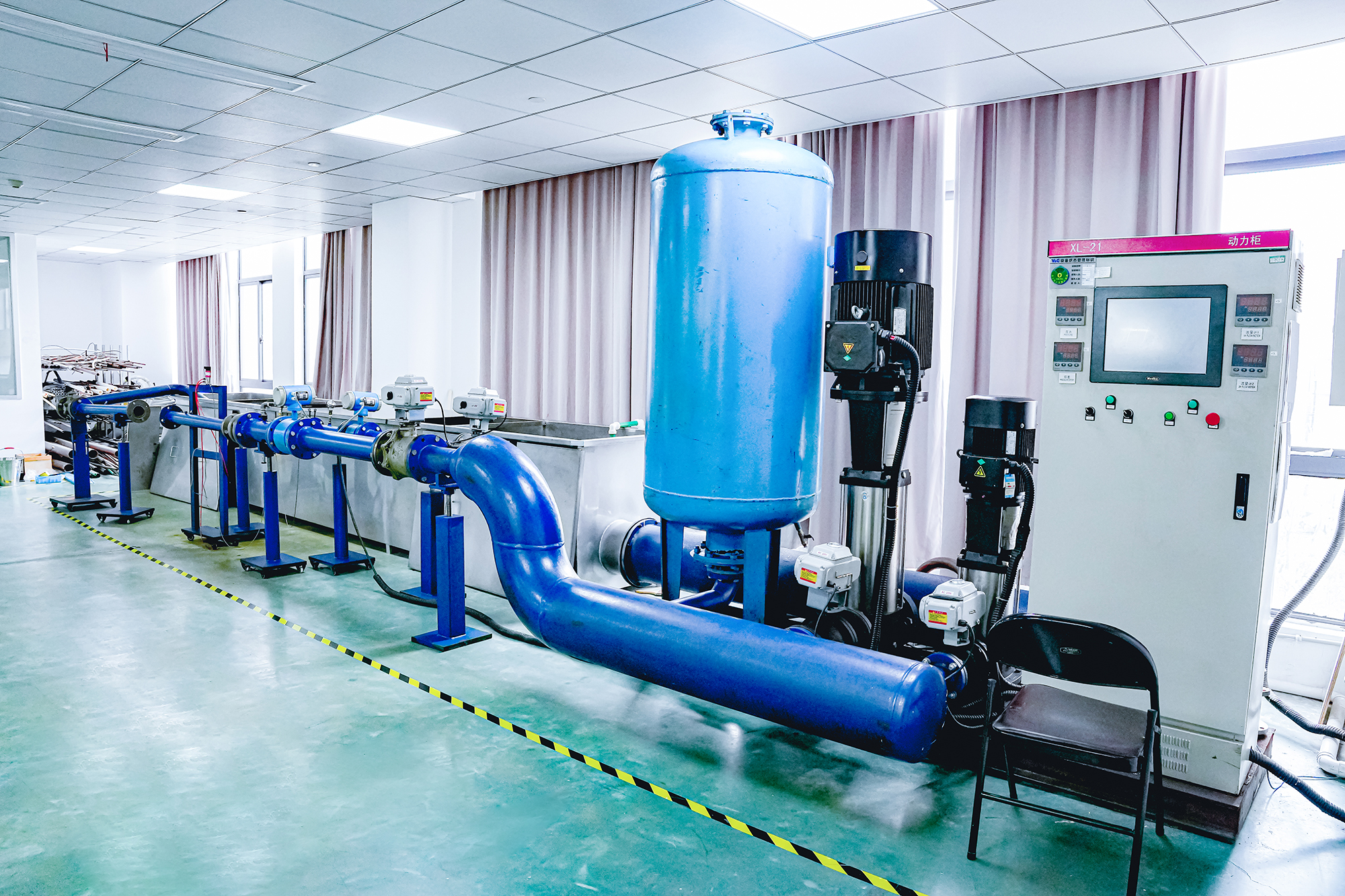
Boundary worth keeping in the file: a documented flow target does not prove that every loop in a building reaches design flow. Design values come from the project's heat-loss calculation, and commissioning still has to be carried out on site.
Verification 3 — leak integrity where a leak cannot be repaired cheaply
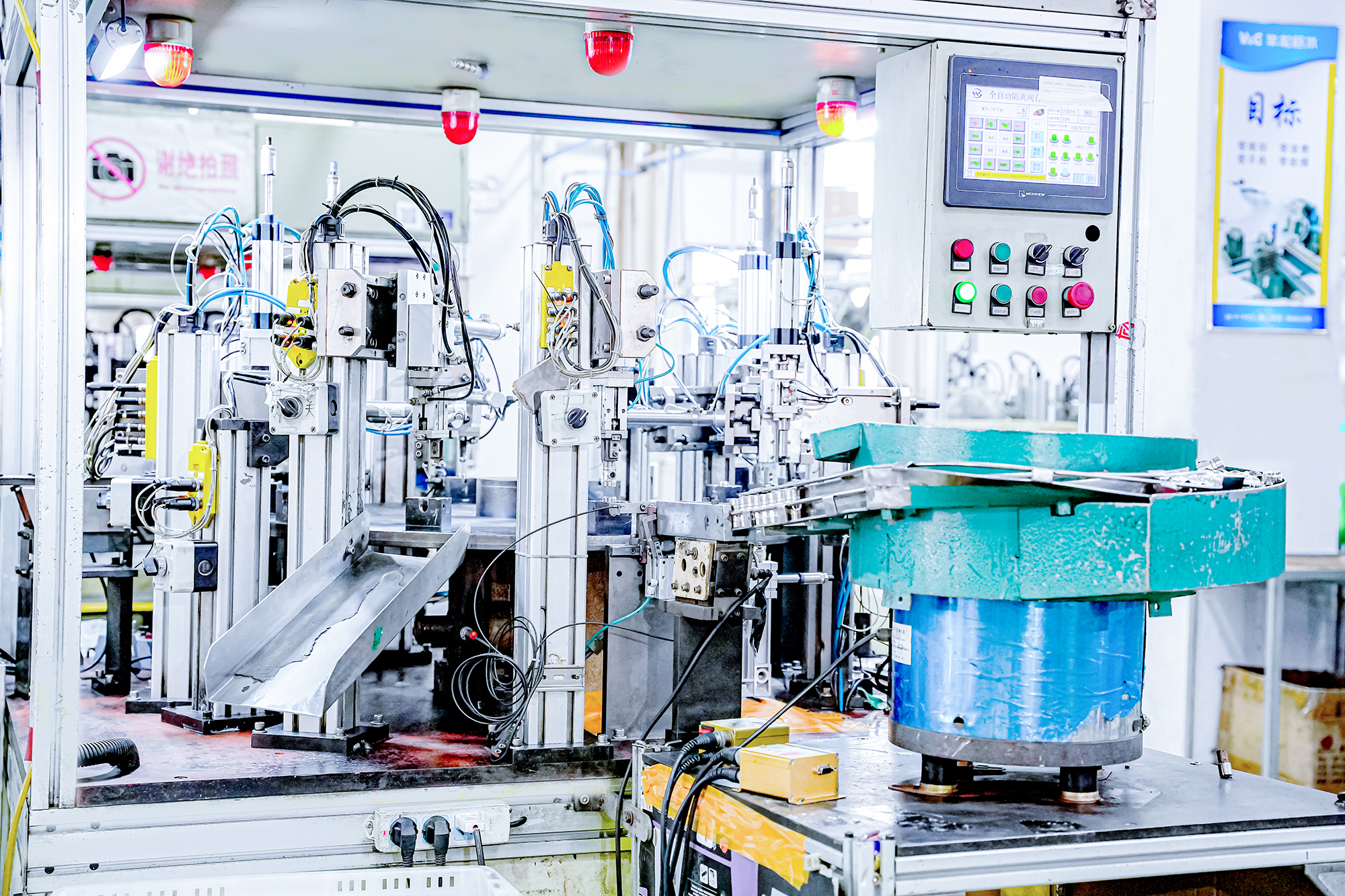
Zero leakage over decades of concealed service is a requirement, not an observable outcome. No buyer can watch a manifold for twenty years before placing an order, so the only realistic check is on the process controls that make long-term tightness credible. Valogin states 100% air-tight testing of valves, dimension sampling per batch, and a material certificate on request. Those three statements only become usable evidence when the test method and test pressure are written into the specification, the test record carries a batch or date code that matches the goods delivered, and the test station can be seen on a factory visit or in a documented video walkthrough.
Body construction is part of the same conversation. A hot-forged brass body is denser, with porosity closed off, so it holds pressure and is less likely to weep through the wall; a cast body allows complex internal geometry that cannot be forged and is normal for manifolds and larger diameters, but it can contain gas holes that only show under pressure. Either is acceptable if every piece is tested — and on a manifold the branch joints and bar ends carry more sealing points than the body itself.
Verification 4 — dezincification-resistant material expectations
Dezincification is the selective leaching of zinc out of brass, leaving a porous copper-rich layer that looks pink or reddish and has almost no strength. It occurs in soft or low-hardness water, in high-chloride water, and in stagnant or warm conditions. The failure mode is the reason it belongs in a manifold specification: the valve or bar can look normal from the outside and then crack or blow out under pressure, because the loss of wall strength happens from the inside.
A floor heating manifold sits in exactly the conditions that raise the risk. The loops are never fully drained, the water is warm, and parts of the circuit stand still for months outside the heating season. Dezincification-resistant brass is therefore the normal expectation for this application, and the buyer's ask is a grade statement per manifold model, a lead-content statement matched to the destination market, and the material certificate that accompanies the shipment. Where the same brass families also serve drinking-water products, listings such as IAPMO certificate 7555 to NSF/ANSI/CAN 372-2024, issued 21 January 2026, show the material route a supplier works to; they do not by themselves certify the dezincification resistance of a manifold body, and should not be read that way.
Verification 5 — certificate scope matched to the model and to the market
Approval is granted per product and per material, not per company. That single sentence is the most useful filter in OEM manifold sourcing, because a long certificate list proves a conformity system exists while proving nothing about the specific model on the order. Valogin's documented approvals illustrate the point: WRAS Product Approval 260717304, issued 18 August 2026 and valid to 31 July 2031, is recorded with the product type 'Valves – Gate' for the UK market; WaterMark Certificate of Conformity WM-022194 from IAPMO R&T Oceana, valid to 7 March 2027, covers in-line valves for plumbing water supply systems to WMTS-012:2018 for Australia; DVGW type examination DG-4312DQ0883, valid to 22 December 2030, covers a gas shut-off ball valve under DIN EN 331; UPC listing 7553 covers ball valves for the US and Canada, and CSA certificate 2759792 covers gas valves.
The same pattern continues across other markets and product families: AGA certificate 8775 for a manual shut-off valve in Australia, ACS certificate 23 ACC NY 155 for a pressure reducer to XP P41-280 in France, valid to 6 April 2028, and ECM certificate 0B230606.ZVTDN65 to EN 12266-1:2012 and EN 12266-2:2012 for a check valve and Y-strainer in the EU, valid to 5 June 2028. Management-system certification to ISO 9001, ISO 14001 and ISO 45001 sits underneath these product approvals and supports process consistency, not product conformity.
For a manifold order, the practical request is a short cross-reference: manifold model number, certificate or listing number, the scope wording under which that model is covered, the destination market, and the expiry date. Anything less leaves the buyer holding a company-level certificate for a model-level question.
What the OEM programme asks of the buyer in return
Capability evidence runs in both directions. Valogin states OEM, ODM and customised production, a production capacity of 15 million pieces per month, a lead time of 50 days and a minimum order quantity of 5,000 units. The stated after-sales package is part of the same capability picture: engineering and drawing support from quotation to first article, sample approval before mass production, batch inspection records and material certificates with each shipment, a named account contact for order and technical questions, and quality claim handling terms agreed in the supply contract rather than left to interpretation.
| Ask | What it establishes | What it does not establish |
|---|---|---|
| Controlled drawing revision with loop-by-loop port layout | The layout that will actually be produced | That site pipework matches the drawing |
| Flow target in the agreed performance specification | A defined, inspectable balancing criterion | That design flow values are correct for the building |
| Test method and test pressure, plus record tied to a batch code | That individual testing is a process, not a claim | That no piece will ever fail in service |
| Brass grade and lead-content statement per model | The material actually specified for the order | That the local water chemistry is benign |
| Certificate cross-reference by model, scope and market | Which approval covers the goods being shipped | Approval for models outside the listed scope |
| Sample approval and first-article record | A reference piece agreed before mass production | Batch-to-batch identity unless sampling continues |
Two limits should be written into the project file rather than discovered later. First, the 5,000-unit minimum order quantity and the 50-day lead time belong to a volume programme; custom and non-standard development is described as available on one-off and low-volume runs alongside volume orders, so a single-station pilot needs its scheduling confirmed in writing against the same drawing and inspection controls. Second, a new port layout or a new thread standard is a new configuration, and its position within the existing approvals has to be checked model by model and market by market.
Where the station is used, and what heat pumps change
The primary application is residential and commercial radiant floor heating, where the manifold distributes low-temperature water to many parallel loops and the mixing group holds the supply temperature below what the heat source produces. A boiler or heat pump commonly supplies 55–70 °C, while floor heating is typically fed at around 35–45 °C; feeding the loops directly would overheat the floor, which is why the mix valve exists at all.
Heat pump installations raise the same requirements with less margin. Recorded conditions for air-to-water and ground-source packages show flow temperatures of 35–55 °C, working pressure up to 6 bar, variable flow with frequent cycling in shoulder seasons, and a hydraulic package that is physically tight inside the unit cabinet. The manifold and its isolation valves have to tolerate cyclic thermal stress and, in ground-source loops, glycol mixtures. For the buyer, that is a specification question about pressure class, seal material and connection compactness — not a marketing question about the heat source brand.
Market context, read carefully
Commercial research from Dataintelo, cited in the supplied market data, values the global brass valve market at USD 14.0 billion in 2025 and projects USD 21.35 billion by 2034, with Asia Pacific accounting for 41% of 2025 revenue. These are source-reported estimates with a disclosed methodology and a forecast horizon, not measured outcomes, and they say nothing about any individual supplier's capability. Their practical use for a manifold buyer is narrower: they confirm that a broad supplier base exists across ball, gate, check, angle, stop and pressure-reducing brass valves, which is precisely why verification evidence rather than availability becomes the discriminating factor in an OEM shortlist.
Where low-temperature hydronic systems and heat pump packages are specified, the manifold station carries more of the system's control logic than it did in boiler-fed radiator installations: it distributes, it blends and it balances. That shift makes the per-loop flow record and the material grade the two documents most worth keeping in the project file — and it makes the difference between a supplier that can produce them and one that can only describe them.
FAQ
- What is the difference between NPT and BSP threads on a brass manifold connection?
- NPT and BSP are different thread systems and do not seal together. NPT is a tapered American standard that seals on the threads themselves and needs a sealant. BSP comes in two forms: BSPT, which is tapered, and BSPP, also written G, which is parallel and seals on a washer or O-ring against a flat face. Europe, the UK and most of Asia use BSP; North America uses NPT. Fitting one into the other either cross-threads or leaks, so the thread standard belongs in the enquiry, not only the size.
- What is dezincification and why does it make a brass valve fail?
- Dezincification is the selective leaching of zinc out of brass, leaving a porous copper-rich layer that looks pink or reddish and has almost no strength. It happens in soft or low-hardness water, in high-chloride water, and in stagnant or warm conditions. A dezincified valve can look normal from the outside and then fail under pressure. Dezincification-resistant brass is formulated to resist this and is the normal specification for potable and aggressive water, including circuits that are never fully drained.
- How can a buyer verify that a supplier really pressure-tests every valve?
- Three things make the claim verifiable: the test method and pressure written into the specification, a test record carrying a batch number or date code that matches the goods delivered, and the ability to see the test station on a factory visit or a documented video walkthrough. A generic certificate with no batch link proves nothing. On receipt, sampling per batch and keeping the record is the practical check; if a batch fails, the whole batch should be quarantined, not only the failed piece.
- Why does an underfloor heating system need a mixing valve?
- Floor heating must run at a much lower flow temperature than radiators, typically around 35–45 °C against a boiler or heat pump supply of 55–70 °C, because the floor build-up cannot take the higher temperature. A mixing valve blends hot water from the heat source with cooler water returning from the loops, so the manifold is fed at the design floor temperature whatever the source supplies. The setpoint reaches the valve from a thermostatic head or from an actuator with a temperature sensor.
- How should a brass underfloor heating manifold be installed?
- Fit the manifold in the cabinet with the supply bar above the return bar, connect the heat source to the mixing group, connect each loop pipe to its own outlet, pressure-test the assembly, then fill, vent and set the flow meters. Flush the pipework before connecting anything, and never close the cabinet before the pressure test has passed. Do not exceed the stated test pressure, isolate and depressurise the heat source before making any connection, and vent air from every loop before circulating at design temperature.
Manufacturer reference: VG brand catalogue (PDF), published by Zhejiang Valogin Technology Co., Ltd. — download the catalogue.
Have Questions or Need More Details?
Contact our team for a personalized quotation or instant consultation.
Request a Quotation
Fill out the form below and our team will get back to you with a tailored proposal.
WhatsApp Direct Chat
Prefer to chat in real-time? Message us on WhatsApp for instant assistance & quick answers.
- Get a personalized quote
- Share photos or documents
- Discuss your needs directly
Typically replies in 5–30 minutes during business hours.