
Brass Valves in Data Center Cooling Loops: Selection Factors
Brass Valves in Data Center Cooling Loops: Selection Factors
Data center cooling is a fluid-handling problem before it is a valve problem. Chilled water, condenser water and liquid-cooling circuits all depend on a chain of small- and medium-bore components — isolation valves, strainers, check valves and fittings — that determine how quickly a loop can be isolated, cleaned and returned to service. Brass is a common material choice in that part of the chain, and the useful question for a buyer is not whether brass works in a data center, but which loop functions it fits, at what pressure and temperature, and where the material reaches its boundary.
The families discussed here are produced by Zhejiang Longda Technology Co., Ltd., which markets brass valves and fittings under the brand LONGDA BRASS VALVE. The company was established in 1993 and operates from the Xuanguang Industrial Zone, Lupu Town, Yuhuan County, Zhejiang Province, China, on a 30,000 m² site with approximately 200 employees and an annual output of about 7,500 tons. It manufactures ball, gate, stop, check, heating and angle valves, brass fittings, bibcocks and related brass components for hot and cold water, heating, gas and chemical service, and exports about 95% of its output to Europe, the USA, Canada and South America.
Why Cooling Circuits Stress Small-Bore Valves Differently
The verified hydronic scenario data behind these product families describes indoor installation in mechanical rooms and risers, medium temperatures of 4°C to 90°C, working pressures up to 232 psi (1.6 MPa), and long-term continuous operation. That combination — continuous duty, moderate temperature, a closed loop, and maintenance windows measured in minutes rather than days — is what separates a cooling circuit from an ordinary domestic water line.
Four operating realities follow from it:
- Continuity over cycling. A valve in a data hall branch may be operated only a handful of times a year, but it must be certain to seal when it is. Seat design and body integrity matter more than actuation speed for isolation duty.
- Debris travels to expensive components. Flushing residue, pipe scale and sediment migrate downstream toward pump impellers, coil tubes and metering equipment. Filtration placed ahead of that equipment is a maintenance-cost decision, not a comfort feature.
- Isolation has to be local. The ability to shut off a single branch for coil, pump or heat-exchanger service without draining a whole loop is the difference between a planned task and an outage. This is the same design logic the company documents for fixture-level shut-off: reliable local isolation without cutting off the whole building supply.
- Some cooling-loop water touches potable systems. Humidification feed, makeup water and domestic services in a facility can bring potable-water contact into scope, which is where lead-free material and health-effects certification stop being optional.
Five Functions a Brass Valve Can Fill in a Cooling Loop
Brass is not a single answer. Within a cooling circuit it maps to five distinct duties, and each carries a different specification emphasis:
- Frequent isolation — quarter-turn. Branch and terminal shut-off where operators want a clear open or closed position and minimal pressure loss.
- Infrequent isolation — full bore. Line isolation on headers and risers where the valve is opened and closed rarely and full-bore flow with low resistance is prioritized.
- Backflow prevention. Protection at pump discharge and at branch take-offs so reverse flow cannot disturb a parallel circuit.
- Debris capture. Mechanical filtration upstream of pumps, coils and heat exchangers.
- Connection and transition. Adapting between thread systems, pipe materials and equipment connections without adding a second supplier to the bill of materials.
Mapping the LONGDA Brass Families to Cooling Loop Duties
The table below sets out the declared parameters for the five families most often raised in cooling-loop discussions. Note that the pressure and temperature ceilings are not identical across families, and they should not be presented as a single brand-level number.
| Loop duty | Family and model | Size range | Pressure rating | Temperature range | Verified construction notes |
|---|---|---|---|---|---|
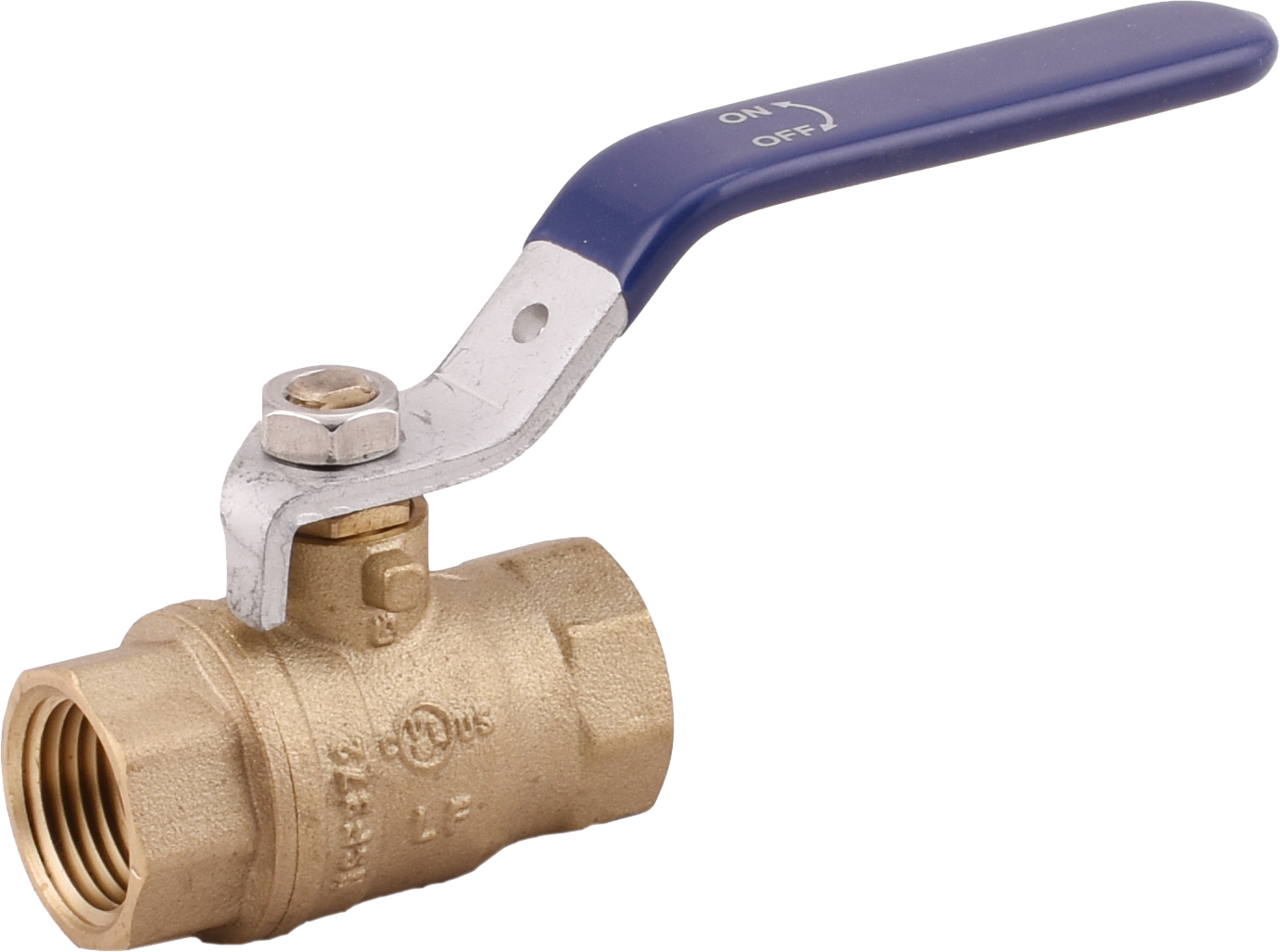
| Quarter-turn isolation | Brass Ball Valve, Model 8081 | 1/2"–4" (DN15–DN100) | 600 WOG (4.1 MPa) | −20°C to 150°C | Two-piece full port, chrome-plated brass ball, blow-out-proof stem, PTFE seats, NBR/FKM O-rings, NPT or BSP, lever or wing handle; lead-free version certified cUPC, NSF/ANSI 61 and 372 |
| Infrequent full-bore isolation | Brass Gate Valve, Model T-22017A | 1/2"–4" (DN15–DN100) | 200 WOG (1.4 MPa) | −20°C to 120°C | Rising stem, brass-to-brass metal seat (no rubber seal to age), 360° handwheel, PTFE/EPDM packing, shell test at 1.5× rated and seat test at 1.1× rated; lead-free version certified NSF/ANSI 61 and 372 by IAPMO |
| Backflow prevention | Brass Check Valve, Model LD 30303 | 1/2"–2" (DN15–DN50) | 200 WOG (1.4 MPa) | −20°C to 150°C | Swing or spring-loaded in-line design, horizontal or vertical installation, brass disc with PTFE sealing face, SS304 spring; lead-free and DZR-performance versions certified NSF 61 and NSF 372 |
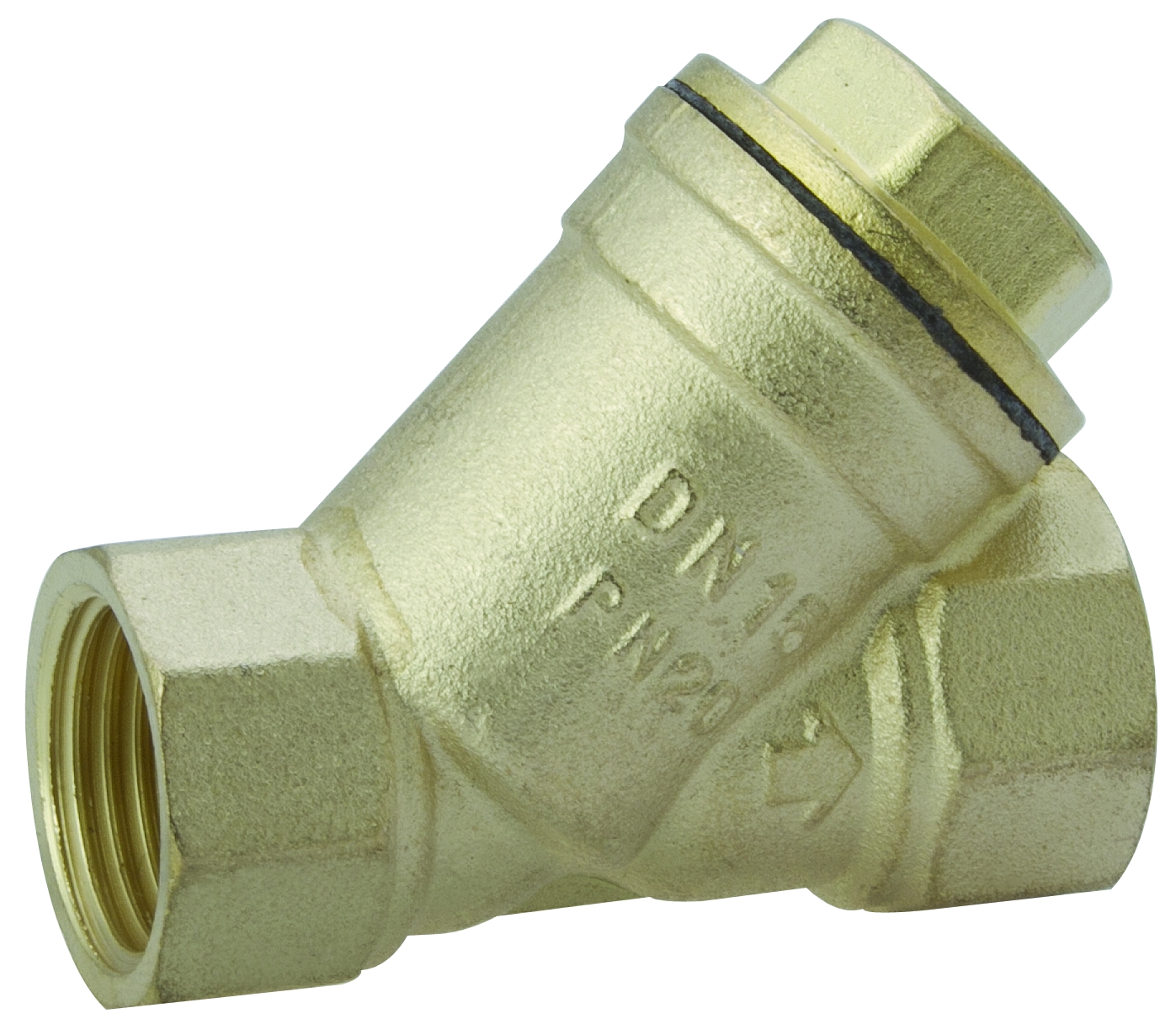
| Debris capture | Brass Y Strainer, Model LD.73154 | 1/2"–2" (DN15–DN50) | 200 WOG (1.4 MPa) | −20°C to 150°C | SS304 screen in 20/40/60/80 mesh, blow-down drain plug for in-line flushing, replaceable screen element without dismantling the pipeline; lead-free version certified to NSF/ANSI/CAN 61 and NSF/ANSI 372 by IAPMO |
| Connections and transitions | Brass Fittings, Model 15111 | 1/4"–2" (DN8–DN50) | Up to 600 WOG (4.1 MPa) | −20°C to 150°C | Adapters, couplings, nipples, elbows, tees, unions, caps and plugs; NPT or BSP threads; threaded, sweat, PEX (ASTM F1807), PEX-A (ASTM F1960), press (ASTM Z1117) and push-fit (ASSE 1061) options; DZR option; lead-free compliant to NSF/ANSI 372 |
A second ball valve family, the ART.60621 brass water ball valve, is rated at 30 bar nominal pressure with a −20°C to 140°C range and is manufactured in European brass CW617N to EN 12164 and EN 12165. It is relevant where a project specification calls for a European material designation rather than a North American one.
What Mission-Critical Duty Changes in the Specification
In a cooling circuit, the specification conversation rarely turns on the valve type. It turns on how the part was made and how it was proven.
Hot forging rather than casting
The bodies across these families are hot-forged rather than cast. Forging eliminates casting voids, which are a potential leak path, and removes the need for a secondary zinc plating layer that can peel and contaminate water. For a closed loop that will run for years without being drained, body integrity is a service-life factor, not a cosmetic one.
Blow-out-proof stem design
The Model 8081 ball valve uses a blow-out-proof stem, meaning the stem cannot be ejected under line pressure. In a mechanical room where personnel operate valves under load, this is a safety characteristic rather than a performance claim.
Sealing system
PTFE seats with double O-ring sealing and a quarter-turn ball core are used to reduce operating torque and resist adhesion after long idle periods — a practical concern for a valve that is opened once a year. The industrial knowledge material supporting these products also notes thread gauge inspection on every lot and a lead-free material test report as part of the quality routine.
Factory testing
All products in these families are described as 100% pressure tested, and the supply-stop production line is documented as 100% air pressure tested under water. The gate valve specification additionally states test pressures of 1.5× rated pressure for the shell and 1.1× rated for the seat, which is a useful number for a buyer writing an inspection clause: it defines what the factory test actually means.
Materials, Lead-Free Compliance and Where Each Applies
Alloy selection is where a cooling-loop specification usually splits into two conversations: the closed loop, and everything that touches potable water.
The catalogue covers normal brass grades such as CW617N, Hpb59 and C37700, plus lead-free and low-lead options including CW724R, C46500, C69300, CW511L and CW510L, and a dezincification-resistant CW602N option. Lead-free compliance is defined by a wetted-surface lead content of 0.25% or less under NSF/ANSI 372, with health-effects performance under NSF/ANSI 61 and cUPC listing for the relevant product standards. In the United States, lead-free construction is the mandatory standard for potable water applications under the Safe Drinking Water Act, and California AB1953 applies the same threshold in that market.
Inside a data center, this matters at humidification feed points, makeup water connections and domestic or backup water services. The closed chilled-water loop itself is normally not potable, so lead-free construction is often a specification choice rather than a legal requirement there — but many operators standardize on lead-free across the site to simplify spare-part inventory and satisfy corporate materials policies.
For European drinking-water projects, EN 13828:2003 specifies requirements for manually operated copper alloy ball valves for drinking water supply, which is the reference point that applies to the ball valve family when a project falls under EU jurisdiction. Where aggressive water chemistry raises dezincification risk, the DZR option within the fittings and check valve ranges is the relevant selection.
Application Scenarios in Practice
The closest verified scenario in the product data to a data center cooling loop is commercial building HVAC and district cooling service: central heating and chilled water systems, installation in mechanical rooms and risers, working pressures up to 232 psi (1.6 MPa), medium temperatures of 4°C to 90°C, and supporting equipment that includes circulators, chillers, thermostats, pressure gauges and PEX or steel pipework. A data center chilled-water or liquid-cooling loop is a specific instance of that architecture, with tighter continuity expectations.
Four placements recur:
- Branch isolation. Ball valves (Model 8081) at terminal units and branch take-offs, where quarter-turn operation and full-port flow minimize pressure drop; gate valves (T-22017A) on headers and risers where operating frequency is low and the metal seat is expected to last without a rubber component aging in place.
- Pump discharge protection. Check valves (LD 30303) in swing or spring-loaded configuration, installed horizontally or vertically depending on the pipe routing, to stop reverse flow from disturbing parallel circuits.
- Pre-equipment filtration. Y strainers (LD.73154) upstream of pumps, coils and plate heat exchangers, with the blow-down drain plug used for routine flushing and the replaceable SS304 screen swapped during scheduled maintenance rather than during an unplanned shutdown.
- Connection transitions. Fittings (15111) for adapting NPT or BSP threads, sweat, press, push-fit and PEX or PEX-A connections within the same bill of materials.
Because these elements sit at the same loop pressure and the same maintenance access point, sourcing them from one supplier is less a commercial preference than a spares-and-compatibility decision: the thread system, the alloy grade and the test documentation arrive on one set of records.
Selection Factors: A Practical Sequence
- Define the duty first. Isolation frequency, backflow prevention, filtration and connection each point to a different family. A gate valve used for frequent throttling is a specification error, because the metal seat is designed for infrequent shut-off duty rather than regulation.
- Confirm the pressure class. A 200 WOG family and a 600 WOG family are not interchangeable. Select against the loop design pressure plus surge, not against the nominal system pressure.
- Confirm the medium temperature. The available range across these families is −20°C to 150°C, with the gate valve limited to 120°C.
- Confirm the medium and water chemistry. Potable contact, glycol mixtures and aggressive water each change the alloy decision — lead-free, low-lead or DZR.
- Confirm the connection standard. NPT or BSP threads are both supported; press, push-fit and PEX-A cold expansion options exist across fittings and selected valve models, so the connection can usually match the pipe system already specified.
- Confirm the certification scope for the project jurisdiction. cUPC and NSF/ANSI 61 and 372 for North American potable-water work; EN 13828:2003 as the relevant drinking-water reference for EU ball valve applications.
- Confirm maintenance access. Strainer blow-down access and screen replacement, plus handle clearance for quarter-turn operation, are commissioning details that decide whether maintenance is quick or expensive.
- Confirm documentation. Request material test reports, batch test records and thread gauge verification with the quotation rather than after the order.
Where Brass Stops: Limits and Alternatives
An honest application assessment has to state the boundaries, because brass is not the right material for every valve position in a cooling plant.
- Size. The ball valve and gate valve families top out at 4 inches (DN100); the Y strainer, check valve and fittings ranges stop at 2 inches or less. Large-bore primary mains above DN100 typically call for cast iron, carbon steel or stainless steel valves.
- Pressure. The highest rating in this range is 600 WOG, and it applies to the full-port ball valve and the fittings range. Higher-pressure services, and any position where the rating margin is thin, fall outside the brass family.
- Temperature. 150°C is the ceiling. Steam and high-temperature thermal services are outside the scope of these products.
- Media. Brass is a copper alloy, and aggressive or specific chemical service needs material confirmation rather than assumption. This is a case-by-case engineering question, not a catalogue default.
- Duty cycle. Metal-seated gate valves are for infrequent shut-off, not for modulating duty. Continuous regulation in a cooling circuit belongs to a balancing or control valve, which is a different product category.
Market Context
The commercial backdrop supports steady rather than dramatic demand for these components. The global brass valves market was valued at USD 14.8 billion in 2025 and is projected to reach USD 24.1 billion by 2034, a compound annual growth rate of 5.6% over 2026 to 2034, according to Dataintelo. Ball valves held the largest product-type share at 38.4% in 2025 — consistent with how much of a hydronic system depends on isolation rather than modulation.
Regionally, Asia Pacific accounted for 41.2% of brass valve revenue in 2025, while North America held approximately 26.1%. On the supply side, China exported USD 22.6 billion in valves under HS 8481 in 2024, according to OEC, and Volza data places China at roughly 41% of global brass ball valve export shipments. Zhejiang and Guangdong remain the primary Chinese industrial clusters for brass valve manufacturing, which is relevant to lead-time expectations for buyers sourcing from that base.
Two structural signals deserve attention from procurement teams. First, manual balancing valves still account for 55% to 65% of unit demand in the Asia-Pacific hydronic balancing market, according to IndexBox — meaning that a large share of cooling and heating circuits are still commissioned and adjusted by hand, which keeps demand for reliable manual isolation and filtration components steady. Second, smart valve integration with IIoT is developing as a maintenance-model trend in fluid management, pointing toward instrumented isolation points over time.
Estimates of this market vary by scope, and buyers should read them carefully: DataHorizzon Research values the narrower brass ball valve segment at approximately USD 3.2 billion in 2024, while Dataintelo's USD 14.8 billion figure covers brass valves as a whole. Neither number is an installed-base measure, and neither should be used to size a sourcing decision.
Outlook
Cooling density continues to rise, and with it the number of branch-level isolation, filtration and backflow points in a facility. That trend favors small- and medium-bore brass components, because the incremental work is at the branch rather than at the plant main. Two consequences follow for buyers.
First, material documentation will matter as much as the valve itself. Lead-free and DZR requirements are tightening in potable-water applications, and operators are increasingly standardizing on a single alloy policy across a site to simplify spares. Second, retrofit and expansion cycles reward components that can be serviced in place — a strainer with a blow-down plug and a replaceable screen, or a valve that still turns freely after a year of inactivity, reduces the operational cost of the loop more than a marginal unit-price difference.
For suppliers, the practical implication is that traceability, test records and consistent thread and alloy specifications become part of the product, not part of the sales conversation.
FAQ
Are brass valves suitable for data center cooling systems?
They are suitable for defined roles inside a cooling system rather than for the whole system. Brass families in this range cover quarter-turn isolation, infrequent full-bore isolation, backflow prevention, debris filtration and connection transitions at bore sizes from 1/4 inch to 4 inches, with pressure ratings of 200 WOG or 600 WOG depending on the family, and temperature ranges of −20°C to 120°C or 150°C. Large-bore mains and high-pressure or high-temperature services fall outside brass and normally use steel or iron valves.
What pressure rating does a chilled water cooling loop require?
It depends on the loop class, and the rating should be selected above the design pressure with margin for surge. In the verified hydronic scenario data for this product range, the described HVAC and chilled-water application operates at working pressures up to 232 psi (1.6 MPa), while individual families are rated at 200 WOG (1.4 MPa) for the gate valve, check valve and Y strainer, and 600 WOG (4.1 MPa) for the full-port ball valve and the fittings range. Most closed chilled-water loops operate well below these ratings; the rating question is about the highest credible pressure the valve could see, not the nominal operating point.
Which valve type should be used for isolation, backflow prevention and filtration?
Quarter-turn ball valves (Model 8081) suit frequent branch isolation because they provide full-port flow with minimal pressure drop and a clear open or closed position. Rising-stem gate valves (T-22017A) suit infrequent line isolation where a brass-to-brass metal seat is preferred over a rubber-seated design. Check valves (LD 30303) handle backflow prevention in swing or spring-loaded form, horizontally or vertically. Y strainers (LD.73154) protect downstream pumps, coils and metering equipment with 20/40/60/80 mesh SS304 screens. Matching the family to the duty is more important than matching the brand across every position.
Do brass valves in a data center need to be lead-free?
Lead-free construction is required where the valve contacts potable water, which in a facility typically means humidification feed, makeup water and domestic or backup water services. The compliance basis is a wetted-surface lead content of 0.25% or less under NSF/ANSI 372, with health-effects performance under NSF/ANSI 61, and lead-free construction is the mandatory standard for potable water applications in the United States under the Safe Drinking Water Act. A closed chilled-water loop is not normally a potable-water application, so lead-free selection there is usually a specification or standardization decision rather than a regulatory one. Lead-free versions exist across the ball valve, gate valve, check valve, Y strainer and fittings families referenced here.
What limits the use of brass valves in cooling systems?
Four limits apply. Size: the ball and gate valve families reach 4 inches (DN100), while the strainer, check valve and fittings ranges stop at 2 inches or below. Pressure: the highest rating in this range is 600 WOG, applying to the full-port ball valve and fittings, with 200 WOG for the gate valve, check valve and Y strainer. Temperature: 150°C is the ceiling. And duty type: metal-seated gate valves are intended for infrequent shut-off rather than continuous throttling, so modulating duty belongs to a dedicated balancing or control valve.
How does strainer mesh selection affect a cooling loop?
The Y strainer range offers 20, 40, 60 and 80 mesh SS304 screens. A finer mesh captures smaller particles and gives better protection to downstream pump impellers, valve seats and metering accuracy, but it also produces higher pressure drop and requires more frequent cleaning. Because the screen is replaceable without dismantling the pipeline and the body includes a blow-down drain plug for in-line flushing, mesh grade can be treated as a maintenance-interval decision rather than a fixed installation decision.
Zhejiang Longda Technology Co., Ltd. publishes a full product catalogue covering these families, including material options and connection types, for buyers building a specification package: download the LONGDA brass valve and fitting catalogue.