
Brewhouse vs Brewing Equipment Package: Scope Comparison
Brewhouse vs Brewing Equipment Package: Scope Comparison
Quick answer: A brewhouse system and a beer brewing equipment package are not interchangeable buying units. The brewhouse is the hot-side vessel set and its immediate transfer and control boundary; the wider package can add fermentation tanks, Brite Tanks, wort cooling, pumps, chillers, CIP equipment and sanitary piping. The buyer's first decision is therefore not vessel count alone. It is the battery limit: what the supplier must deliver, what the site must provide, and where each process interface is tested.
Why the scope boundary changes the comparison
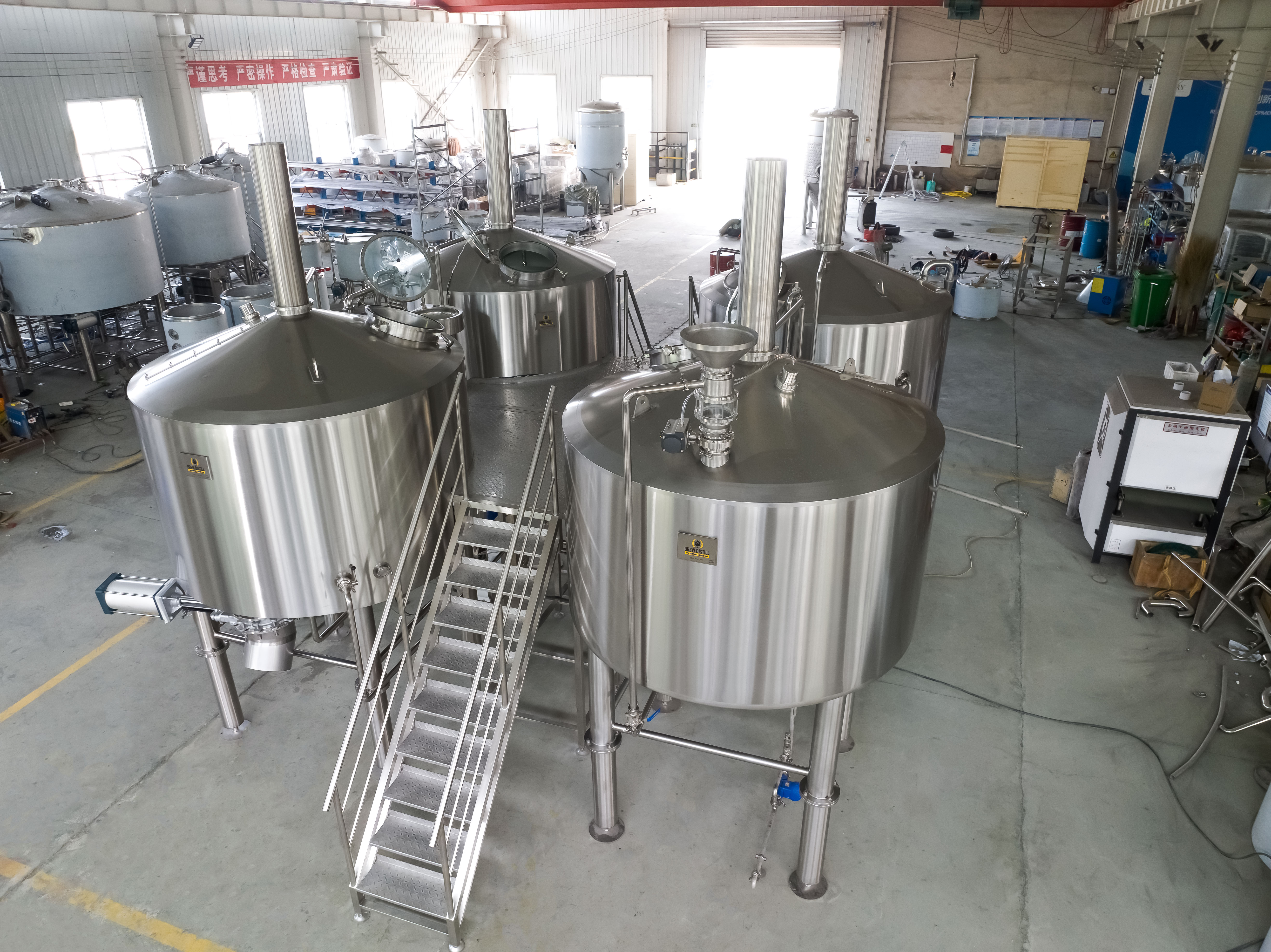
Carry Brewtech is a brewery and beverage processing equipment manufacturer founded in 2017, with a 5,000 m² factory and a range covering 2-, 3- and 4-vessel brewhouse systems, fermentation tanks, Brite Tanks, cooling equipment and related brewery equipment. That range does not mean every quotation has the same boundary. The company states that a system may include pumps, plate heat exchangers, industrial chillers, CIP cleaning equipment, sanitary piping and control components depending on the confirmed project scope. The quotation must therefore separate the base brewhouse from package additions.
For an independent buyer comparison, use three tests. The process test asks which brewing steps the equipment must perform and in what sequence. The interface test asks where wort, beer, cooling medium, cleaning solution, electricity, steam or condensate crosses from one supply boundary to another. The responsibility test asks who supplies, installs, commissions and documents each item at that boundary. When these three tests are missing, two quotations can look similar while covering different work.
| Scope item | Core brewhouse system | Wider beer brewing equipment package | Buyer check |
|---|---|---|---|
| Primary function | Hot-side vessel set for the selected brewing method, batch volume, space and operating sequence. | Can extend from wort cooling into fermentation, conditioning, storage, cleaning and utilities. | Does the quote stop at the wort outlet, or continue to the fermentation tank inlet? |
| Vessel arrangement | 2-, 3-, 4-vessel or combined layout; vessel number, tank arrangement, transfer connections, controls and operator access are reviewed during planning. | Adds fermentation tanks, Brite Tanks and possibly unitanks, with their own cooling, pressure and cleaning requirements. | Request a vessel function list and process diagram, not only a tank count. |
| Cooling and transfer | May include wort cooling and transfer equipment depending on confirmed scope. | Can include plate heat exchanger, pumps, chillers, glycol piping and control components. | Confirm duty point, pressure drop, control method and who supplies each pump and heat exchanger. |
| Cleaning | Brewhouse vessels and lines need a defined cleaning method and drain route. | Can include manual CIP cart, integrated CIP skid, spray devices, valves, sensors and controls. | Compare circuit count, flow, pressure, temperature, chemical use and operator hours. |
| Documentation | Drawings, manuals, inspection records and electrical information depend on the confirmed order. | Package documents should cover every included tank, pump, heat exchanger, control panel and CIP item. | Ask for the document list before order, not after shipment. |
2-, 3-, 4-vessel and combined brewhouse options
The core comparison begins with process separation, not a ranking of vessel counts. In the supplied comparison, a 2-vessel brewhouse combines more process functions into fewer tanks and is positioned for a compact layout where footprint and project cost are important. A 3-vessel brewhouse separates more brewing functions and can provide greater process flexibility and workflow control. The same source cautions that the final choice depends on batch capacity, recipe, batch frequency, labor, factory space, heating method and automation requirements. It also states that the number of vessels alone does not determine production performance.
Carry Brewtech provides 2-, 3- and 4-vessel brewhouse systems. The supplied knowledge unit lists NOVA and MICRO as 2-vessel systems, and SMART, LINE and STAR as 3-vessel systems. These names help identify configurations, but they do not replace the approved process diagram. A buyer should compare what each vessel does, how transfer steps are sequenced, how many connections reach the fermentation area, and which utilities must be available at the brewhouse.
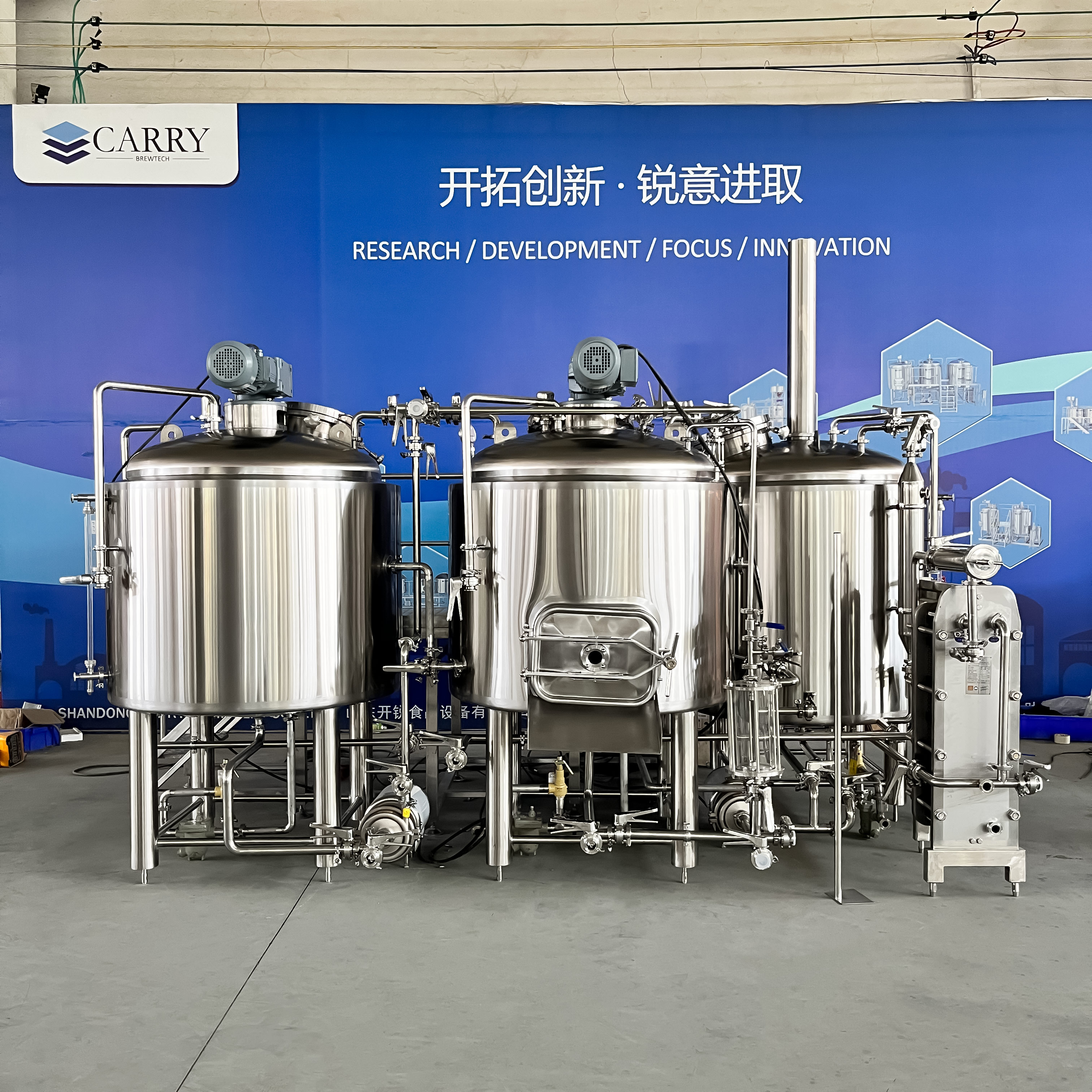
For a 4-vessel system, the supplied material does not give a vessel-by-vessel functional map. That absence matters. A buyer should not assume that a fourth vessel automatically performs a particular duty, or that a four-vessel brewhouse will always reduce labor, water or energy use. Request the vessel function list, transfer sequence, valve schedule, control narrative and utility list. The practical question is which additional separation reduces waiting, changeover or manual intervention in the intended production schedule, and whether that benefit justifies the added footprint and control work.
Where a brewhouse is described as combined or all-in-one, confirm which functions are physically combined and which remain separate. The supplied 2-vessel description is the closest reference point: more process functions are combined into fewer tanks. Do not infer that a combined brewhouse includes fermentation, Brite tank, packaging or CIP scope unless those items are listed in the quotation. Combined vessel geometry can save floor space, but it can also concentrate transfer and cleaning interfaces at one point. The buyer should review operator access, valve access, drain points and CIP coverage with the same care as a larger vessel set.
Interface points to settle for any vessel configuration include the wort outlet to the plate heat exchanger, cooling-water and glycol connections, fermentation inlet, CIP supply and return, drain, electrical supply, control signals, and, where applicable, steam and condensate or direct-fire ventilation. Steam-heated systems require a steam trap to discharge condensate and retain live steam. Direct-fire systems require a suitable gas supply, combustion safety and exhaust arrangement. These are scope items, not installation details to leave unresolved after the quotation.
Mapping brewhouse output to fermentation and Brite tank needs
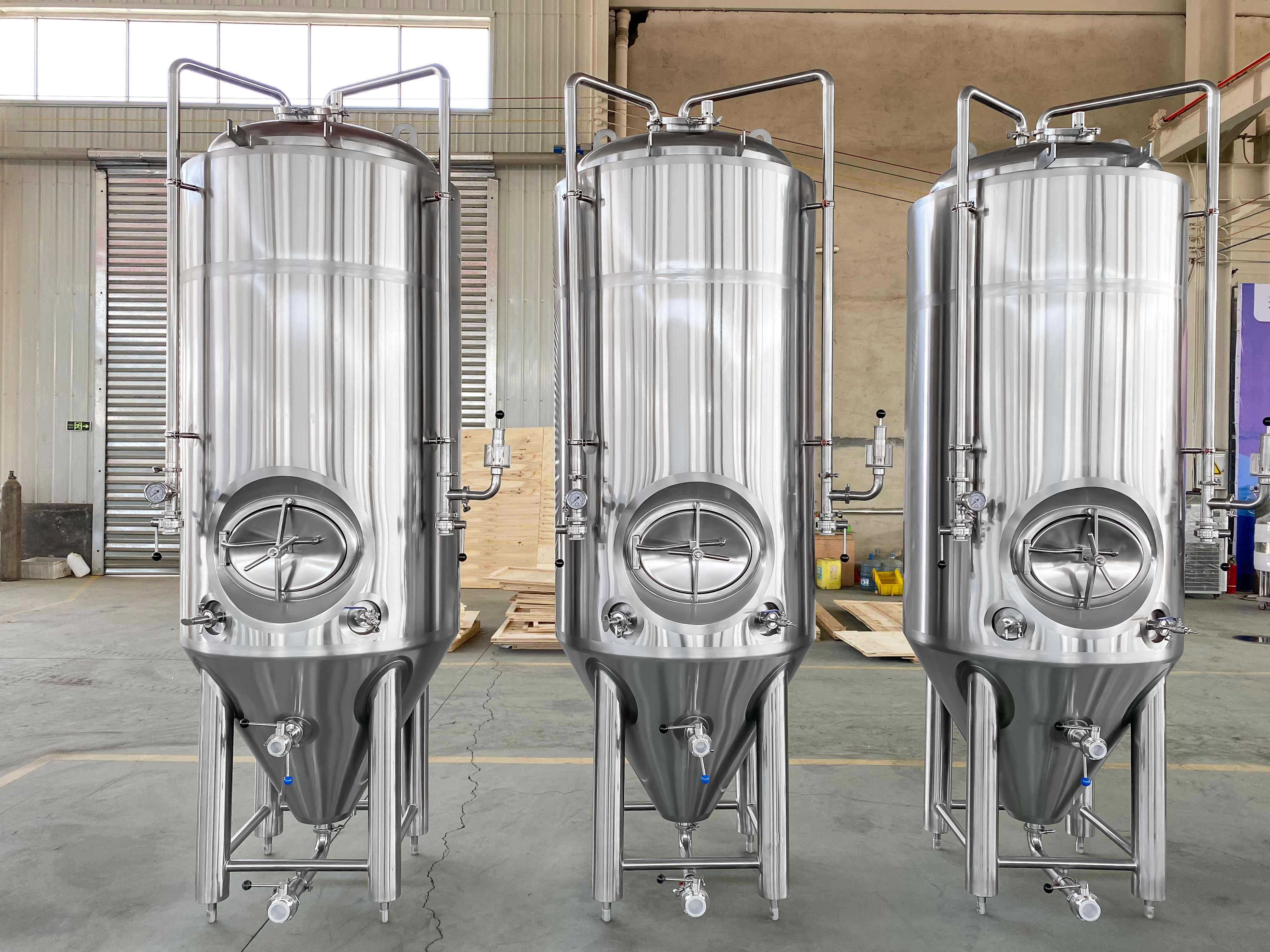
Fermentation capacity follows the brewhouse batch and the production schedule, not the vessel count of the brewhouse alone. The required tank quantity and capacity depend on batch size, fermentation time, maturation time, production schedule and packaging demand. Confirm both nominal and working capacity for the selected tank model. A fermenter also needs suitable headspace for krausen, CO₂ release and pressure changes; excessive headspace lowers usable tank volume and may increase condensation risk.
A separate Fermentation Tank supports independent batch handling. A Unitank can combine selected fermentation and maturation functions in one vessel, but it requires a clear pressure, cooling, CIP and control procedure. It is not automatically more energy-efficient than separate tanks. The buyer should compare the total tank count, transfer steps, cleaning work and scheduling flexibility for the actual beer range.
Brite Tank requirements come from the role the tank plays after fermentation. A Brite Tank, also called a bright beer tank, may be used for maturation, carbonation, clarification or bright beer storage. Final pressure, fittings, insulation, cooling details and applicable documents must be confirmed for each project. High-pressure service should not be assumed from a general product label; the required working pressure and the tank's approved rating must be checked against the nameplate and technical documents.
The cooling arrangement also changes the package boundary. A jacketed fermentation tank needs glycol flow, valves, sensors and a chiller load; a single-wall tank relies more on the room or an external arrangement. Independent shell-and-cone cooling can help when the brewery often runs partial batches, because the cone can be cooled without opening an unfilled shell section. The exact saving must be calculated from confirmed tank and cooling-system data, not assumed from the feature name.
Wort cooling: the first package interface
A plate heat exchanger cools wort through indirect heat transfer. Hot wort flows through one set of channels, while chilled water or glycol flows through adjacent channels in the opposite direction. Thin metal plates transfer heat, and gaskets keep the two circuits separate. Performance depends on wort flow rate, cooling-medium temperature, flow direction, plate area and plate cleanliness. Fouling, blocked channels or incorrect flow direction can reduce cooling performance.
The supplied process note distinguishes single-stage and two-stage wort cooling. A single-stage plate heat exchanger uses chilled water, typically around 2–3°C, to cool hot wort in one cooling section. The returning water may rise to approximately 7°C, depending on flow rate and heat load. A two-stage heat exchanger first uses tap water to remove most of the heat and then uses glycol water for final cooling. The tap-water return may reach around 50°C and can be recovered for hot-water use, while the glycol return temperature may rise to about 10°C.
This is a package decision because it affects the chiller, the hot-water system and the fermentation cooling load. Two-stage cooling can recover heat, but because glycol handles the final stage, its return temperature may increase the chiller load. That can affect glycol availability for fermentation-tank cooling when both processes run at the same time. The buyer should compare wort volume, flow rate, target outlet temperature, incoming water temperature, glycol temperature, heat-recovery demand and chiller capacity. A plate heat exchanger should also be cleaned before sanitizing, and the sanitizing method must match the plate, gasket and chemical limits.
Beer transfer to a Brite Tank and pump/VFD selection
Beer can be transferred from a fermentation tank to a Brite Tank in two ways. CO₂ pressure transfer uses a controlled pressure difference to move beer through a sanitary pipeline, so no pump is required. A sanitary centrifugal pump can be used when the tank layout, height difference or transfer distance makes pressure transfer unsuitable. Before transfer, clean and sanitize both tanks, lines, valves and fittings, purge the Brite Tank with CO₂, and keep the transfer closed to reduce oxygen pickup.
Pressure transfer depends on confirmed tank pressure ratings and a controlled CO₂ supply. It should never use compressed air to push beer. The receiving tank vent and pressure-control system must remain functional, and the system must not create uncontrolled overpressure or vacuum. Pump transfer requires a suitable sanitary pump, correct inlet and outlet arrangement, gradual valve opening, and monitoring of pressure, flow and connections. Excessive pump speed or pressure can cause foaming, shear or oxygen pickup.
Pump selection should be based on the duty point. A centrifugal pump is commonly used for clean liquid transfer when the pump has a suitable flooded inlet or priming arrangement. A self-priming pump can be considered where the inlet line may contain air, provided the pump design and sanitary configuration remain suitable. Compare flow rate, head, inlet condition, liquid temperature, viscosity, solids or foam, connection size, motor power and allowable pressure. There is no fixed flow or energy advantage from pump type without the same duty point and piping layout.
VFD selection should not be assumed. The supplied corpus lists pumps and control components as possible scope items depending on the confirmed project, but it does not establish a VFD as standard equipment. The buyer should ask whether the pump is fixed-speed or VFD-controlled, who supplies the drive and control panel, what signal the brewery control system provides, how flow is adjusted, and how the pump is protected against dry running. A pump included in the package is not automatically a controlled pump package.
CIP, utilities and documentation interfaces
Cleaning is a major hidden scope gap. A manual CIP cart is a mobile unit operated through manual connections, valves and cycle checks. A CIP skid with integrated controls combines pumps, tanks, valves, sensors and control logic on a coordinated frame for defined cleaning circuits. The actual scope depends on brewery layout and automation requirement. Compare solution volume, pump flow and pressure, number of cleaning circuits, valves, sensors, control points, hose or pipe connections, cycle time and operator hours. Do not claim a fixed labor, water or chemical saving without the selected CIP design and cleaning validation.
Before the first normal production batch, the equipment should complete inspection, mechanical and piping checks, electrical safety checks, water and drainage checks, an unloaded trial run, CIP cleaning and a clean-water brewing simulation. Check for leaks, abnormal noise, control errors, heating or cooling problems and drainage issues before loading production ingredients. This pre-production stage is also the point to confirm that CIP spray devices cover the tank surfaces and that drains, vents and pressure-control devices work as intended.
Utilities should be listed by interface, not summarized as buyer scope. Electrical capacity, steam supply and condensate removal, water supply, glycol circuit, drainage, ventilation and control signals should each have an owner. For steam heating, a steam trap removes condensate and non-condensable gases while retaining live steam; without it, heat transfer and water hammer risk can be affected. For direct fire, ventilation and exhaust are part of the installation logic. Drawings, manuals, inspection records, electrical information and compliance documents depend on the confirmed order and project package, so the quotation should state which documents are included.
Decision checklist for the quotation
| Decision question | Why it matters |
|---|---|
| Does the core brewhouse stop at the wort outlet, or include the plate heat exchanger, transfer pump and piping to fermentation? | This is the main boundary between a brewhouse system and a wider package. |
| What is the vessel function list for the 2-, 3-, 4-vessel or combined layout? | Vessel count alone does not show process separation or transfer sequence. |
| Is capacity stated as nominal, working or batch volume? | The same tank label can hide different usable volumes. |
| How many fermentation tanks are needed at peak, and what turnaround is assumed? | Tank quantity follows batch size, fermentation time, maturation and packaging demand. |
| Does the Brite Tank serve carbonation, clarification, maturation or storage, and at what confirmed pressure? | Brite tank fittings, cooling and pressure rating must match the actual duty. |
| Is wort cooling single-stage or two-stage, and what are the water, glycol and chiller conditions? | Cooling choice affects heat recovery and the fermentation cooling load. |
| Will beer transfer use CO₂ pressure or a pump, and what pressure ratings apply? | Transfer method affects oxygen control, tank pressure and equipment scope. |
| Is the pump fixed-speed or VFD-controlled, and who supplies the drive and control panel? | Pump and controls can be split across suppliers if the boundary is unclear. |
| Is CIP manual or automated, and how many circuits must be cleaned? | CIP scope affects tanks, valves, sensors, piping and operator work. |
| Which drawings, manuals, inspection records and compliance documents are included? | Documents should be quoted with the equipment, not assumed after delivery. |
Fit boundaries and common scope gaps
A larger vessel count is not a performance guarantee. The supplied comparison states that more vessels can provide higher brewing efficiency, but the final result depends on batch capacity, recipe, batch frequency, labor, factory space, heating method and automation. A brewery should not buy a fourth vessel to solve a scheduling problem that comes from fermentation capacity or packaging demand.
A combined brewhouse should not be read as a complete brewery. Confirm whether fermentation tanks, Brite Tanks, chillers, pumps, CIP and piping are inside or outside the offer. A quotation that lists only vessels may still need a plate heat exchanger, wort transfer pump, glycol system, cleaning equipment and controls before it can operate.
Do not assume high-pressure Brite tank construction, specific certifications, sanitary surface grades or VFD control from a general product description. The corpus states that details such as SUS304, TIG welding, pressure rating or a specific certification should only be stated when supported by technical documents. Certifications, inspection records and compliance documents depend on the confirmed order and project package. This is not a reason to avoid asking; it is a reason to ask for the exact document and the exact model.
Finally, automation does not guarantee lower water, chemical, labor or energy use. Integrated CIP controls can improve repeatability, but consumption depends on tank size, flow, pressure, temperature, recovery and cleaning schedule. Two-stage wort cooling can recover heat, but the benefit depends on a real hot-water demand. A jacketed tank can support controlled fermentation, but the glycol system must be sized and operated correctly. The buyer should compare the complete system and the operating assumptions behind each claim.
FAQ
What is the difference between a brewhouse system and a beer brewing equipment package?
A brewhouse system is the hot-side vessel set for the selected brewing method, batch volume, space and operating sequence. It includes the vessel arrangement and the reviewed transfer connections, controls and operator access. A beer brewing equipment package is wider. Depending on the confirmed project scope, it may add fermentation tanks, Brite Tanks, cooling equipment, pumps, plate heat exchangers, industrial chillers, CIP cleaning equipment, sanitary piping and control components. The buyer should confirm the battery limit, interface points and document list for each quotation.
How should a buyer compare 2-, 3- and 4-vessel brewhouses?
Compare process separation, footprint, workflow flexibility, control requirements and project configuration, not vessel count alone. A 2-vessel brewhouse combines more functions into fewer tanks and can suit compact layouts where footprint and project cost are important. A 3-vessel brewhouse separates more brewing functions and can provide greater process flexibility. Carry Brewtech also provides 4-vessel systems, but the supplied material does not give a vessel-by-vessel functional map for a 4-vessel configuration. Request the process diagram and vessel function list before comparing prices.
How do fermentation tank and Brite tank needs follow the brewhouse batch?
Fermentation tank quantity and capacity depend on batch size, fermentation time, maturation time, production schedule and packaging demand. Confirm nominal and working capacity, and allow suitable headspace for krausen, CO₂ release and pressure changes. A Brite Tank may be used for maturation, carbonation, clarification or bright beer storage. Its final pressure, fittings, insulation and cooling details must be confirmed for the project. A Unitank can combine selected fermentation and maturation functions, but it is not automatically more energy-efficient than separate tanks.
Should wort cooling use a single-stage or two-stage plate heat exchanger?
A single-stage plate heat exchanger uses chilled water, typically around 2–3°C, and the returning water may rise to approximately 7°C. A two-stage unit first uses tap water and then glycol water for final cooling; the tap-water return may reach around 50°C and can be recovered, while the glycol return may rise to about 10°C. Selection depends on wort volume, flow rate, target outlet temperature, water and glycol temperatures, heat-recovery demand and chiller capacity. Two-stage cooling can increase the chiller load when fermentation cooling runs at the same time.
Can beer be transferred to a Brite Tank without a pump, and how should pump or VFD selection be checked?
Yes. CO₂ pressure transfer can move beer through a sanitary pipeline using a controlled pressure difference, so no pump is required. A sanitary centrifugal pump can be used when the tank layout, height difference or transfer distance makes pressure transfer unsuitable. Clean and sanitize the tanks, lines, valves and fittings, purge the Brite Tank with CO₂, and keep the transfer closed to reduce oxygen pickup. For pump selection, compare flow, head, inlet condition, temperature, viscosity, solids or foam, connection size, motor power and allowable pressure. Confirm whether the pump is fixed-speed or VFD-controlled; the supplied corpus lists pumps and control components as possible scope items but does not establish a VFD as standard.
Reference:Carry Brewtech brewing equipment brochure.
Have Questions or Need More Details?
Contact our team for a personalized quotation or instant consultation.
Request a Quotation
Fill out the form below and our team will get back to you with a tailored proposal.
WhatsApp Direct Chat
Prefer to chat in real-time? Message us on WhatsApp for instant assistance & quick answers.
- Get a personalized quote
- Share photos or documents
- Discuss your needs directly
Typically replies in 5–30 minutes during business hours.