
Brewpub Brewhouse Options: Fermenters and Bright Tanks
Brewpub Brewhouse Options: Fermenters and Bright Tanks
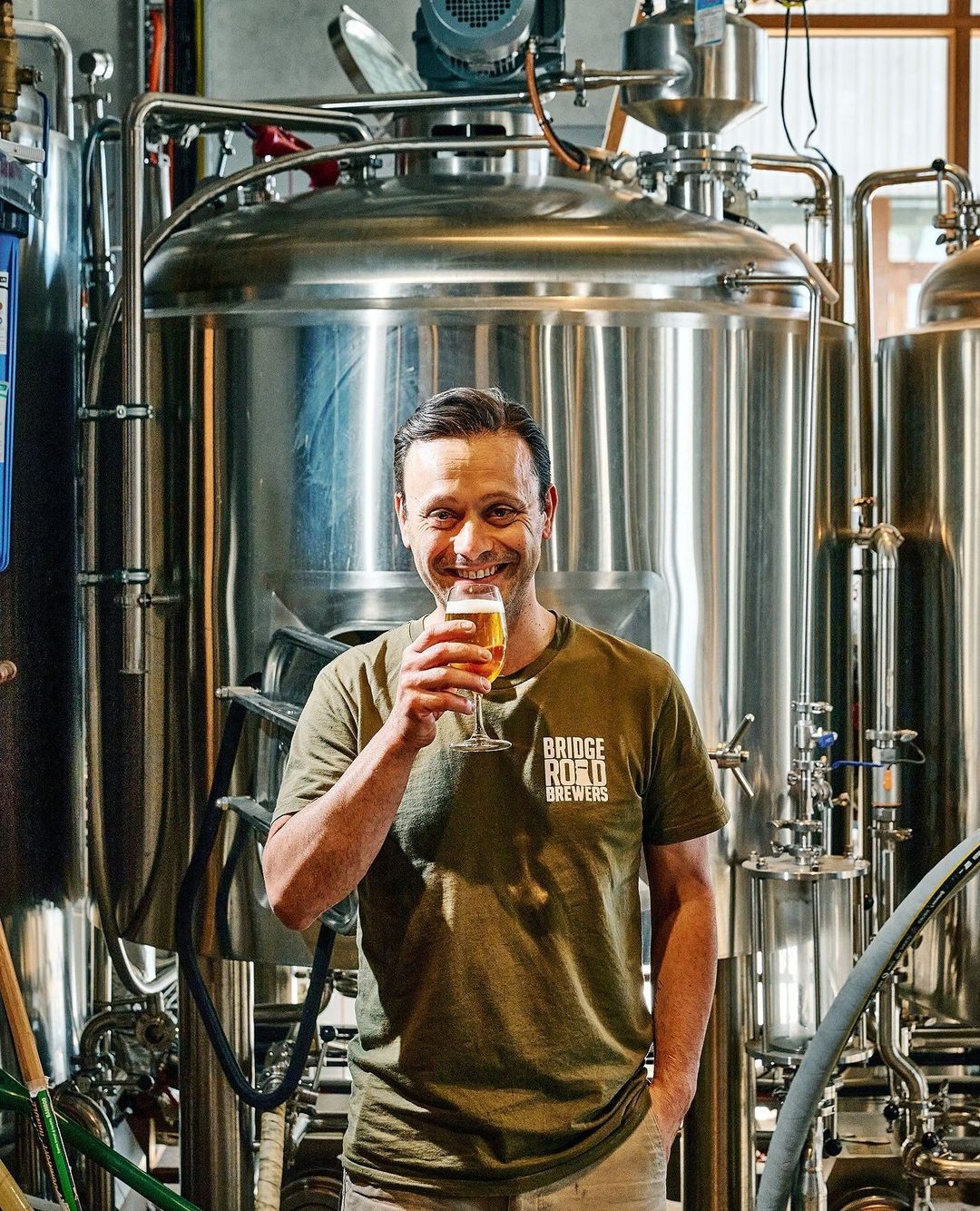
A brewpub that already has a brewhouse and now needs more fermentation and bright tank capacity is not buying a single tank. It is rebalancing batch size, cellar space, cooling, cleaning, serving and future expansion. The recommended brewhouse system options below are therefore organized around the tank addition that triggers the decision, not around a generic equipment catalogue.
Carry Brewtech is a brewery equipment and beverage processing equipment manufacturer serving craft breweries, commercial beverage producers and kombucha makers. Its range includes 2-vessel, 3-vessel and 4-vessel brewhouse systems, fermentation tanks, Bright Beer Tanks or Brite Tanks, cooling equipment and related brewery auxiliaries. Equipment selection is based on the confirmed process, batch size, site conditions, utilities and production workflow.
Why the tank addition should drive the brewhouse choice
When a brewpub adds fermentation and bright tanks, the first check is not the tank catalogue. The first check is whether the existing or planned brewhouse can deliver a batch that matches the cellar. A brewhouse that is too small for the added tank set can create extra brewing days, repeated cleaning and unnecessary utility load. A brewhouse that is too large can leave fermenters underfilled or force production into batches the brewpub cannot sell fresh.
Supported Carry Brewtech projects show why the same tank question produces different answers. A 400L brewpub project used a 400L 3-vessel brewhouse with 400L and 800L fermenters, a cooling system and a CIP cleaning cart. A 1000L brewpub project used a complete 1000L brewing equipment system for batch-scale beer production. A 1200L turnkey craft brewery project used a 1200L steam-heated 2-vessel brewhouse, a 1200L fermentation Unitank, 1200L and 600L Brite Tanks, CIP cleaning, glycol cooling and keg cleaning support. These are project references, not universal size rules.
The practical lesson is to lock three variables together: batch volume, fermentation tank quantity and bright tank duty. Then confirm the brewhouse vessel count, heating method, cooling load, cleaning route and available floor space. That is the sequence that keeps a brewpub expansion from becoming a collection of mismatched stainless-steel vessels.
Recommended shortlist for a brewpub adding fermentation and bright tanks
The shortlist below is a recommendation set for evaluation, not a claim that one configuration is universally superior. Each option maps supported equipment to a recognizable brewpub job. Final selection should follow the confirmed batch size, site layout, utilities, process and budget.
Option A: compact 2-vessel or combined brewhouse for a space-limited brewpub
A space-limited brewpub should start with a compact brewhouse and a tank set that can be installed without blocking cellar access. Supported Carry Brewtech choices include 2-vessel systems such as MICRO 500L, MICRO 1000L, NOVA 300L, NOVA 500L, NOVA 5BBL, PRO Series 500L-10BBL and BRIDGE Series 500L-3000L. The Combined Brewhouse System ECO Series 500L-10BBL is another option when the project needs a more integrated footprint. Fermentation tanks can be specified from the CR-100L to CR-100HL range, with listed examples such as 200L, 7BBL and 1000L Unitank configurations. Bright tank choices include Stackable Bright Tank 200L, 300L and 2BBL units, as well as V Series, H Series, M Series and S Series Beer Bright Tanks.
This option fits a brewpub that needs small-batch production, visible brewing and a compact cellar. It also fits a brewpub that expects to add tanks in stages. The boundary is space and pressure planning: stackable tanks still need height, access and piping coordination, and small tanks may not support later volume growth without another cellar expansion.
Option B: 3-vessel brewhouse for a brewpub with a wider recipe programme
A brewpub that expects a wider recipe programme should evaluate a 3-vessel brewhouse rather than assuming a 2-vessel system will always be enough. Supported 3-vessel models include SMART 150L, SMART 1BBL, LINE 200L, LINE 2BBL, LINE 250L, STAR 300L, STAR 3BBL, STAR 400L, STAR 4BBL and ZIP Series 500L-3000L. These can be paired with 7BBL or 1000L fermentation tanks and with M Series, S Series, H Series or V Series bright tanks, depending on the confirmed process and pressure requirements.
This option fits a brewpub that wants clearer separation between process steps and more operational flexibility as the tank count grows. The boundary is that more vessels also mean more space, more connections, more cleaning planning and more operator attention. A 3-vessel brewhouse is not automatically better for every brewpub; it must match the actual brewing schedule and site.
Option C: 1000L brewpub reference for a defined batch platform
A brewpub moving from irregular small batches to a defined batch platform can use the 1000L project as a reference. The supplied case describes a 1000L complete brewery system in a brewpub, configured for batch-scale beer production according to confirmed equipment configuration, production requirements and site conditions. The case states that the equipment provides a clear 1000L batch-production platform for organized brewing operations. Actual production output, efficiency and long-term operating results should be confirmed from the customer’s operation records.
This option fits a brewpub that wants a recognizable batch size for planning, tank filling and serving rotation. The boundary is that a 1000L batch platform still needs a matched fermentation and bright tank set, sufficient cooling and a cleaning route. The brewhouse size alone does not prove the cellar will perform as intended.
Option D: 400L visible-brewing reference for a small-footprint brewpub
A brewpub that uses brewing as part of the visitor experience can evaluate the 400L reference. The supplied case lists a 400L 3-vessel brewhouse with electric heating, 400L fermenters, 800L fermenters, a cooling system and a CIP cleaning cart for brewing craft beers in a brewpub. The case highlights low noise, easy operation and a reduced floor-space requirement, and it notes that the layout can support visitor viewing of the brewing process.
This option fits a brewpub with limited floor space and a small-batch plan. The boundary is scale: the same configuration should not be treated as a regional production system. If the brewpub expects to add more fermenters and bright tanks later, the initial layout should leave access for cooling, CIP and tank movement.
Option E: 1200L turnkey growth reference for a brewpub moving toward commercial craft production
A brewpub that is moving beyond serving-only production should study the 1200L turnkey case as a growth reference, not as a default brewpub package. The supplied project describes a 1200L per brew batch commercial craft brewery with a 1200L steam-heated 2-vessel brewhouse, a 1200L fermentation Unitank, 1200L and 600L Brite Tanks, a 150L 2-vessel CIP cleaning cart, a 3000L glycol water tank, two 6HP industrial chillers and a keg washing machine. The case reports production completed in 45 working days and shipment arranged in 10 days; these are project-specific figures, not a standard lead time.
This option fits when the expansion includes steam, higher utilities, more cellar space and downstream keg handling. The boundary is that a brewpub without the required steam, power, drainage and access conditions should not copy the equipment list. The same tank capacity can require a different site plan in a different building.
Technical checks for fermentation tanks and bright tanks
The tank specification should be fixed after pressure, cooling, cleaning and transfer requirements are known. A fermentation tank is not defined by volume alone, and a Bright Beer Tank is not defined by the word bright. The following checks turn a tank list into an operable cellar.
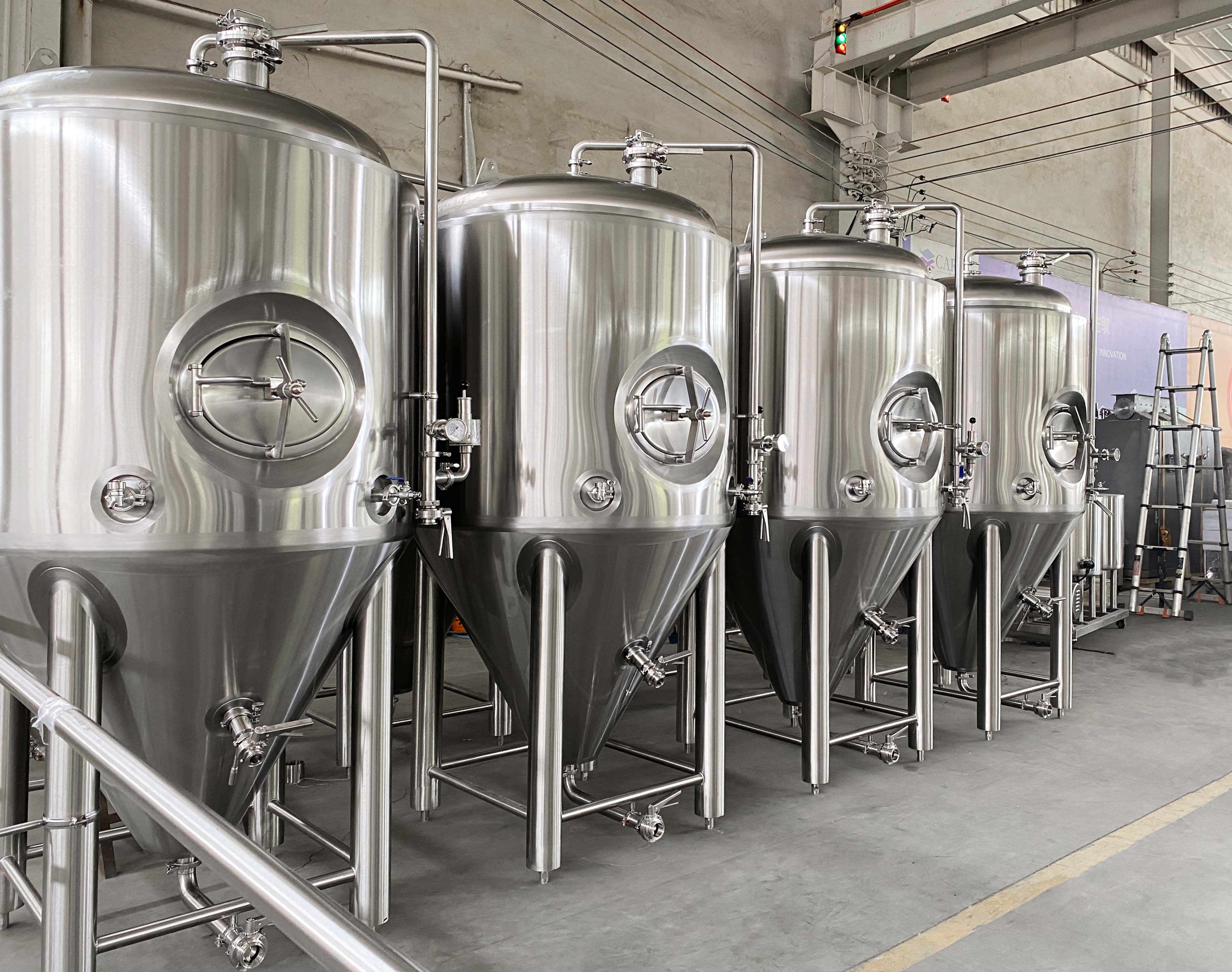
Headspace. A fermentation tank needs headspace for krausen, CO₂ release and pressure changes. During active fermentation, yeast produces CO₂ and foam that can rise above the liquid surface. Without enough headspace, beer and foam may enter the vent line or overflow. Excessive headspace, however, lowers tank utilization and may increase condensation risk. The final filling level should follow the recipe, fermentation activity and approved tank specification.
Pressure. Design pressure is not the same as normal working pressure. Primary fermentation is usually near atmospheric pressure, while controlled pressure during secondary fermentation can help dissolve CO₂ and settle yeast. A common working range is 0 to 0.2 MPa, but the exact value must be confirmed from the tank nameplate and approved technical documents. The supplied CE PED certificate for brewing equipment models CR100L to CR30000L lists a maximum design pressure of 0.4 MPa and a design temperature range of -10 to 50°C. That certificate scope value should not be read as a recommended operating pressure.
Cooling. Glycol cooling removes heat from wort or beer through the tank jacket without mixing glycol with the product. A glycol pump sends chilled glycol through the jacket, and a solenoid or control valve regulates flow according to the tank temperature. The supplied technical guidance gives a reference cooling rate of about 0.5 to 0.7°C per hour above 5°C, then about 0.1 to 0.3°C per hour below 5°C until the beer reaches 0°C. The actual rate depends on beer style, tank size, yeast condition, glycol temperature and cooling capacity.
Cleaning. CIP cleaning should be planned with the tank, not added after the cellar layout is fixed. A supplied fermentation tank CIP example uses three 5-minute water rinses, an alkaline circulation step at 3 to 5 percent and 45 to 50°C for about 20 minutes, a second water rinse and a 0.5 percent hydrogen peroxide sanitizing step for about 20 minutes. This is an example procedure, not a universal recipe. Chemical type, concentration, temperature and contact time must follow the approved SOP and chemical documentation.
Bright tank duty. A Brite Tank, also called a bright beer tank, may be used for maturation, carbonation, clarification or bright beer storage. Tank selection should consider capacity, vertical or horizontal orientation, cooling arrangement, process use and confirmed pressure requirements. Stackable, horizontal and standard bright tank formats can all be relevant, but the choice should follow serving method, floor space, access and carbonation practice.
Fittings and transfer. Sanitary process piping, butterfly valves, sampling valves, sight glasses, tri-clamp or DIN connections, drain lines and CIP circuits should be coordinated as one route. Beer can be transferred from a fermentation tank to a Brite Tank by controlled CO₂ pressure or by a sanitary centrifugal pump. Both methods require clean and sanitized tanks, lines, valves and fittings, plus a closed transfer approach to reduce oxygen pickup.
Comparison table: what changes the recommendation
| Decision area | Question for the brewpub | Supported check |
|---|---|---|
| Batch size | Will the brewhouse fill the new fermenters without repeated partial batches? | Match brewhouse capacity to working volume, expected losses and tank filling practice. |
| Tank count | How many fermentation tanks are needed for the serving rotation? | Check batch volume, fermentation time, bright tank capacity and available space. |
| Cooling | Can the glycol system handle the added jacket load? | Confirm chiller capacity, glycol tank volume, pump and piping arrangement. |
| Cleaning | Is there a CIP route for every new tank? | Check spray-ball access, pump, return line, valves and chemical compatibility. |
| Layout | Can tanks be moved, serviced and connected without blocking the cellar? | Review tank height, manway position, port orientation, access and drainage. |
| Pressure | Are the tanks rated for the intended carbonation and transfer pressure? | Confirm nameplate values, relief devices, gauges and approved working pressure. |
| Documentation | Do the certificates cover the exact model and destination market? | Check certificate number, model scope, standard, market and expiry date. |
| Expansion | Will the first tank addition leave room for a second one? | Plan utility interfaces, floor space, access routes and control capacity. |
Application fit: supported scenarios for a brewpub and craft brewery
The scenarios below show how the shortlist changes with site and production intent. They should be read as project evidence, not as promises of output or commercial results.
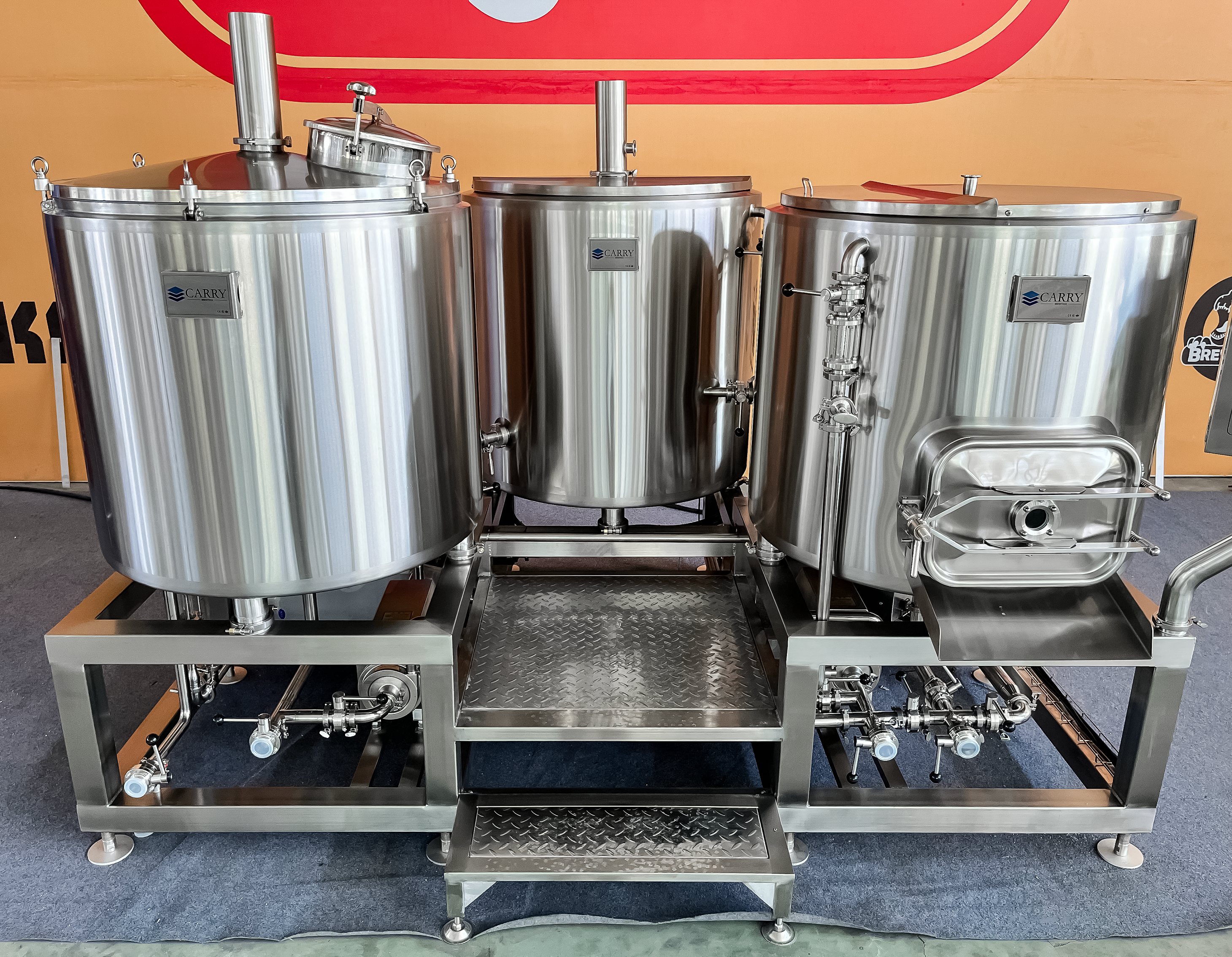
Scenario 1: small-footprint brewpub with visible brewing. The 400L case is relevant when the brewpub wants the brewhouse to be part of the visitor experience and has limited floor space. The supported configuration combines a 400L 3-vessel brewhouse, 400L and 800L fermenters, cooling and a CIP cleaning cart. The fit boundary is scale: this is a small-batch reference, and the brewpub should plan access for later tank additions if demand grows.
Scenario 2: brewpub moving to a defined batch platform. The 1000L case is relevant when the brewpub wants a clearer production unit for planning and cellar organization. The supplied case describes a complete 1000L brewery system for batch-scale beer production in a brewpub. The fit boundary is that the tank set, cooling, cleaning and utilities must be matched to the 1000L batch. A larger brewhouse alone does not create a balanced cellar.
Scenario 3: brewpub moving toward commercial craft production. The 1200L case is relevant when the project is no longer a simple brewpub addition and begins to resemble a commercial craft brewery. The supplied project includes a steam-heated 2-vessel brewhouse, a 1200L Unitank, 1200L and 600L Brite Tanks, CIP, glycol cooling and a keg washer. The fit boundary is infrastructure: steam, power, drainage, access and operating staff must match the equipment scope.
Certification and documentation boundaries
Certification should be checked against the exact model, market and pressure scope, not treated as a general label. Carry Brewtech supplies documentation according to the confirmed order and project package. Buyers should confirm that the certificate or report applies to the exact equipment, market and operating condition in the purchase.
The supplied ISO 9001 certificate, registration number 21725Q07952R0S, was issued by Shandong LAJ International Certification Service Co., Ltd. for the scope production and sales of Beer and kombucha fermentation and brew equipment. It is valid from 5 December 2025 to 4 December 2028. The supplied CE PED certificate 10.07.12652.01, issued by EURO CERT, covers Brewing Equipment models CR100L to CR30000L with a volume range of 100 to 30000L, a maximum design pressure of 0.4 MPa and a design temperature of -10 to 50°C. It is valid from 5 May 2026 to 4 May 2029.
The supplied UKCA MD certificate TST20230960242-2SC and UKCA LVD certificate TST20230960242-1SC were issued by Dongguan True Safety Testing Co., Ltd. for Brewing Equipment under the CARRY BREWTECH trademark, main model CR-100L and listed series models. The CE MD and EMC certificate 10.16.3902, issued by EUROCERT, covers Brewing Equipment CR Series 100L to 30000L and is valid from 22 April 2026 to 21 April 2031. Japan customs testing reports for stainless steel, glass and rubber materials are also supplied for brewing equipment models CR100L to CR30000, with the stainless steel report dated 23 July 2025 and the rubber report dated 23 July 2025.
These documents support verification, but they do not replace the project specification. A buyer should still check the tank nameplate, pressure rating, electrical data, drawing set, inspection record, manual and compliance documents for the exact order. Documents that are not included in the approved project package should not be assumed.
What to plan after the first tank addition
The first tank addition should leave room for utilities, access and cleaning. A brewpub that fills every available square metre with tanks can create a cellar that is difficult to service and expensive to expand. Carry Brewtech project planning can include glycol cooling circuits, cold-water systems, tank cooling connections, CIP circuits, sanitary piping, valves, control interfaces and future expansion points where these are included in the confirmed scope.
Practical planning points include glycol capacity for the added jackets, CIP pump and return-line reach, floor drainage, tank spacing for manway access, control-panel capacity for new sensors and valves, and a spare-parts list for gaskets, valves, sight glasses and fittings. Carry Brewtech after-sales support can include installation guidance, commissioning support, operator training, remote technical support and online video service, with onsite service when required. The final support scope should be stated in the order documents.
For a brewpub, the most useful recommendation is therefore not a single model number. It is a matched configuration: a brewhouse that can fill the fermentation tanks, a bright tank set that matches serving and carbonation, a cooling and CIP route that can be cleaned, and documentation that can be checked. The shortlist above gives a structured way to compare those choices without treating tank volume as the only decision.
For a fuller view of the manufacturer’s equipment scope, the Carry Brewtech brewing equipment brochure is available for download.
FAQ
How many fermentation tanks should a brewpub add?
There is no universal tank count. A brewpub should match fermentation tank quantity to batch volume, fermentation time, serving turnover, bright tank capacity, available floor space and cooling capacity. The supplied 400L brewpub case used 400L and 800L fermenters, while the 1200L project used a 1200L fermentation Unitank. These are project examples, not a rule for every brewpub.
Does a brewpub need a separate bright tank?
A Brite Tank, or bright beer tank, may be used for maturation, carbonation, clarification or bright beer storage. A Unitank is listed as a fermentation tank model, but whether it can replace a separate bright tank depends on the confirmed process, pressure requirement and serving method. The buyer should confirm the intended duty with the supplier before fixing the tank list.
What pressure should a fermentation tank be rated for?
Design pressure is the maximum pressure used to design and manufacture the tank, and it is not the same as normal working pressure. A common working range is 0 to 0.2 MPa, but the exact value must be confirmed from the tank nameplate and approved technical documents. The supplied CE PED certificate for models CR100L to CR30000L lists a maximum design pressure of 0.4 MPa; that is a certificate scope value, not a recommended operating pressure.
How should cooling and CIP be planned for added tanks?
Cooling and CIP should be planned with the tank layout. A glycol circuit, cold-water system, tank cooling connections, CIP pump, spray-ball arrangement, return line, sanitary valves and drainage route should all be coordinated. The supplied 1200L project included a 150L 2-vessel CIP cleaning cart, a 3000L glycol water tank and two 6HP industrial chillers. Final sizing depends on the confirmed tank count, batch size and site conditions.
What should a buyer verify in a brewhouse and tank quotation?
A buyer should verify the brewhouse model and vessel count, batch capacity, fermentation and bright tank volumes, heating method, cooling arrangement, CIP scope, pressure rating, electrical requirements, included fittings, documentation, certification scope and delivery plan. Carry Brewtech lists a MOQ of 1 unit and a lead time of 10 to 45 days depending on equipment configuration and order quantity. The quotation should state the exact equipment list and project responsibilities.
Have Questions or Need More Details?
Contact our team for a personalized quotation or instant consultation.
Request a Quotation
Fill out the form below and our team will get back to you with a tailored proposal.
WhatsApp Direct Chat
Prefer to chat in real-time? Message us on WhatsApp for instant assistance & quick answers.
- Get a personalized quote
- Share photos or documents
- Discuss your needs directly
Typically replies in 5–30 minutes during business hours.