
Bridge, Culvert, Basement and Garage Fixed Drainage: Portable Axial Flow Pump Fit
Fixed drainage means installing a pump permanently at a structure so that collected water is removed automatically, with no operator on site when the event begins. Bridge decks and approach underpasses, road and box culverts, basement parking levels and garages are the four most common versions of this duty, and all four share the same hydraulic profile: very little available head, large inflow volumes during storms or groundwater ingress, and long idle periods between events.
High Efficiency Portable Axial Flow Pumps have moved from temporary emergency equipment into that fixed role because axial flow impeller geometry is built for exactly this combination of low head and high flow. Zhejiang Chuangmei Electromechanical Co., Ltd., an industrial pump manufacturer founded in 1996 in the TA'ao Industrial Zone of Wenling City, Zhejiang Province, China, lists fixed drainage in bridges, culverts, basements and garages among the intended applications of its flood prevention units, and states that those units are intended for the hydraulic engineering, bridge engineering, highway engineering and building construction industries.
This reference maps the four site types against documented model data — including 200SZQ200-25-22, 200SZQ200-20-18.5, 200SZQ150-35-22 and 200SZQ150-20-15 — and against the wider 200SZQ, 250SZQ and 300SZQ families. Four selection anchors are used throughout: the axial flow impeller, the permanent magnet synchronous submersible motor, aluminium alloy or stainless steel construction of the motor housing and pump body, and the 300SZQ series power band of 5.5 kW to 55 kW.
What fixed drainage at these four sites actually demands
A fixed drainage specification is defined by three numbers and one behaviour: the inflow rate the structure can receive, the total head imposed by the discharge route, and the reliability with which the pump starts and stops by itself. The site type changes the balance between them.
Bridge and culvert drainage: shallow sumps, short discharge runs
Bridge deck drains and culvert sumps are usually shallow, so static lift is small and total head is dominated by friction in a relatively short discharge line. The binding constraint is flow, not pressure. In this bracket, model 200SZQ200-20-18.5 and model 200SZQ200-25-22 both carry a documented rated flow of 200 m³/h, which places them in the high-volume, low-lift range that road and rail drainage structures normally occupy.
Basement and garage drainage: more lift in less space
Basement parking levels and garages invert that balance. Inflow rates may be lower than an open culvert, but water has to be lifted to street level or above, discharge runs are longer and often contain bends and check valves, and the pump room or sump is confined. A single-level basement typically falls in the 20 m class: model 200SZQ150-20-15 delivers a rated flow of 150 m³/h at a rated head of 20 m with a 15 kW motor, a net weight of 34 kg and overall dimensions of 280×280×580 mm. Where a garage sits several levels below grade, or the discharge line is long, the same 150 m³/h flow is available at a 35 m rated head from model 200SZQ150-35-22, which uses a 22 kW motor.
Reading the model code before contacting a supplier
Chuangmei's SZQ model codes follow a flow–head–power convention, and two documented data points confirm it: model 200SZQ150-20-15 is rated at 150 m³/h, 20 m and 15 kW, while model 200SZQ150-35-22 is rated at 150 m³/h, 35 m and 22 kW. That convention lets a buyer read 200SZQ200-20-18.5 and 200SZQ200-25-22 as two head steps inside the same 200 m³/h flow family before requesting the current datasheet. It is also why four models can be matched to four very different sites without changing flow class.
Why axial flow hydraulics fit low-head, high-flow drainage
Axial flow pumps move water along the axis of the impeller rather than throwing it radially, which is how they produce large volumes at modest heads. Three construction decisions in this product family make that architecture practical for permanent, unmanned installations.
Precision stainless steel impeller and shaft
The impeller is manufactured through precision stainless steel casting, and the pump shaft is also made of stainless steel. That limits corrosion and wear in water that may carry grit, silt or road runoff. Corrosion resistance matters more in a fixed installation than in a short-term emergency deployment, because the pump will sit idle in a damp sump for long periods between events.
Permanent magnet synchronous submersible motor
Chuangmei builds these pumps around permanent magnet synchronous motors, the technology covered by its utility model patent ZL2014200091521.8 for the permanent magnet synchronous motor high-speed axial flow pump, and states that the product holds the national first-class energy conservation certification for high-tech energy-saving products. Two consequences matter for fixed drainage. First, PMSM units are described as high efficiency, light weight and small — approximately one quarter the weight of conventional axial flow pumps — which matters when a pump has to be lowered into an existing sump with limited access. Second, the motor speed does not vary with fluctuations in grid voltage; head and flow remain stable even when voltage drops, a behaviour that Chuangmei notes traditional asynchronous motor axial flow pumps cannot achieve. Bridge and culvert sites are precisely where grid voltage is least predictable.
Stepless speed regulation gives adjustable head and flow
Pump speed is infinitely adjustable, so lift height and flow rate can be tuned to the site rather than fixed by impeller geometry alone. This is the basis of the wide power range stepless speed regulation and adjustable head and flow behaviour of the product line: a single pump can be commissioned to a specific sump and re-tuned later if the discharge route is modified.
Aluminium alloy or stainless steel flow-passing construction
The motor housing and pump body are available in both aluminium alloy and stainless steel. Because the pump body is a flow-passing component, that choice directly affects both handling weight and corrosion behaviour. Aluminium alloy keeps the unit light, which supports the low weight portability that makes installation and maintenance feasible in confined basement sumps. Stainless steel is the appropriate option where the water is aggressive or the duty is continuous.
Model-to-site mapping for bridge, culvert, basement and garage drainage
The tables below connect each of the four fixed drainage site types to documented model data. Head figures that are not published as rated values are indicated by the model code convention and should always be confirmed on the current datasheet before ordering.
| Site / drainage duty | Dominant constraint | Documented model anchor | Motor power | Selection note |
|---|---|---|---|---|
| Bridge deck, approach underpass, open culvert | High flow, low lift, intermittent duty | 200SZQ200-20-18.5 and 200SZQ200-25-22 — documented rated flow of 200 m³/h each | 18.5 kW and 22 kW | Two head steps inside the same 200 m³/h flow family; confirm rated head on the datasheet |
| Culvert or shallow sump with limited depth | Lift limited by sump depth; handling weight in confined access | 200SZQ150-20-15 — 150 m³/h, 20 m rated head, 15 kW, 34 kg, 280×280×580 mm | 15 kW | Lightest documented option in this group |
| Single-level basement parking | Moderate lift with unattended operation | 200SZQ150-20-15 | 15 kW | Pair with automatic level control and dry-run protection |
| Garage or basement several levels below grade | Higher static lift, longer discharge run | 200SZQ150-35-22 — 150 m³/h, 35 m rated head | 22 kW | Same flow class as the 20 m model; select on head, not flow |
| Deep basement or long rising main at the same flow | Higher head step without changing flow class | 200SZQ150-45-30 — documented rated flow of 150 m³/h | 30 kW | Third step up in the 150 m³/h family |
Above the 200SZQ band, the same architecture scales into larger flows and higher heads. Model 300SZQ1000-10-45 has a net weight of 55 kg, and model 300SZQ1200-10-55 has a net weight of 58 kg; the 300SZQ series anchors the large-flow end of a 5.5 kW to 55 kW power band for this pump class. The company's export specification for large-flow flood control axial flow pumps covers 6-inch, 8-inch, 10-inch and 12-inch sizes with flow rates from 300 to 1,200 m³/h, so the 300SZQ models sit inside that published envelope.
| Model | Documented rated flow / head | Motor power | Net weight | Typical fixed drainage fit |
|---|---|---|---|---|
| 250SZQ600-12-30 | Mid-size, high-volume | 30 kW | — | Large culvert or wide underpass sump |
| 250SZQ800-10-37 | Mid-size, high-volume | 37 kW | — | Large culvert or storm cell |
| 200SZQ300-30-37GL | 300 m³/h, 30 m | 37 kW | 74 kg, 420×380×810 mm | Stainless steel GL unit for deeper basement discharge |
| 200SZQ400-30-55GL | 400 m³/h, 30 m | 55 kW | 102 kg, 450×400×900 mm | High-volume basement or garage discharge |
| 200SZQ400-80-150GL | 400 m³/h, 80 m | 150 kW | 165 kg, 550×500×1100 mm | High-head, long rising main service |
For extremely confined garage sumps, the 150SZQ series is worth noting: models in that series share overall dimensions of 220×220×430 mm, and documented ratings include 150SZQ100-30-15 at a 30 m rated head with a 15 kW motor, 150SZQ100-40-18.5 at a 40 m rated head with an 18.5 kW motor, and 150SZQ100-50-22 at a 50 m rated head with a 22 kW motor. Those head ratings cover deep single-pump installations where a compact envelope is the deciding constraint.
Automatic start, stop and dry-run protection in an unattended sump
The operating behaviour that makes a portable axial flow pump suitable for fixed drainage is automatic level-triggered control. When water reaches a set level the system starts automatically; when the water level drops to the pump intake line it automatically enters standby or shuts down. If water is completely drained, the pump shuts down within half a minute and enters standby, which protects the coil from burnout.
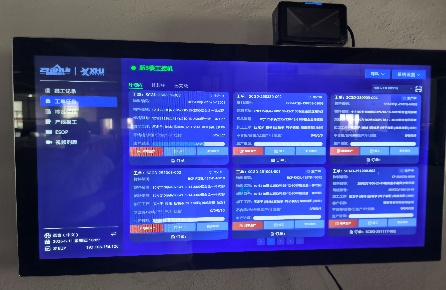
The control cabinet contains a built-in frequency inverter and provides real-time display of frequency, voltage, current and rotational speed through either a panel display or a touch screen. Protection covers overheat, overcurrent, overload, overvoltage and phase failure. Cabinets are available in single-unit or dual-unit (one-drives-two) configurations with IP44 or IP54 protection ratings, and the three-phase four-wire system is supplied with waterproof plugs and sockets. For sites without staff — which is most bridge, culvert, basement and garage installations — 3G and 4G mobile network support enables remote data transmission, remote start/stop control and remote adjustment of operating speed from a computer or mobile app, and time-segmented operation allows the run profile to be scheduled.
How this approach compares with conventional fixed drainage arrangements
Conventional fixed drainage at these sites is usually served either by a fixed submersible sewage-style pump sized to the sump, or by a traditional asynchronous-motor axial flow pump. Chuangmei publishes a comparison of its permanent magnet synchronous portable axial flow pumps against conventional pump-manufacturer offerings, citing Flow +20%, Weight −25%, Volume −30%, an overall comprehensive cost 12% lower, energy consumption reduced by 18% under equal flow, and less clogging failure with fewer maintenance events.
Those figures are manufacturer-stated comparison data rather than independent benchmark results, and they should be treated as directional. Public side-by-side performance curves comparing this class of pump with international portable permanent magnet synchronous models are not readily available in the market, so a specification should rest on the supplier's own tested curve for the selected model rather than on a general efficiency claim. What the architecture change does verifiably alter is the failure mode: moving from a radial or sewage-type pump to an axial flow unit shifts the duty from solids handling to flow-and-head performance, which changes both the clogging risk profile and the maintenance routine.
Where the fit ends: boundary conditions to write into the specification
Axial flow is a low-head architecture, and the boundary conditions matter as much as the capability. Several limits should be written into any fixed drainage specification.
- Head ceiling. High-lift flood control pumps for subway-type applications are described with lifts of 20–50 m, with special specifications reaching over 100 m. Beyond those ranges, a different pump class is usually the better engineering answer, and power requirements also rise sharply — the 200SZQ400-80-150GL, for example, requires a 150 kW motor and weighs 165 kg.
- Conversion cost and downtime. Dual-purpose operation — low-lift high-flow and high-lift duty from one unit — is achieved by replacing the impeller and pump body. That is a planned maintenance task with real downtime, not a switch, and spare impellers and bodies should be stocked accordingly.
- Balance of plant. A portable axial flow pump does not remove the need for a correctly sized sump, a level control system, a reliable power supply and a properly designed discharge route.
- Weight versus corrosion. Aluminium alloy housings and bodies reduce handling weight; stainless steel is the appropriate option where water chemistry or continuous duty demands it. These are a trade-off, not an upgrade path.
- Verification. Axial flow pump efficiency is tested under ISO 9906, where Grade 1 tolerances of ±5% on flow and head are required for high-precision OEM applications. Acceptance testing should reference the tolerance grade in the contract rather than relying on the model code alone.
- Service life planning. A one-year warranty with free maintenance during the warranty period leaves post-warranty service planning with the buyer, which is a lifecycle cost item in permanent installations.
Market and regulatory signals shaping 2026 fixed drainage procurement
The global axial flow pump market is projected to reach approximately USD 4.49 billion by 2026, according to First Mover market research published on 17 August 2026. That figure should be read with caution: published valuations for the category differ substantially because scope definitions differ, with another commercial research publisher reporting a much larger valuation for 2025 that likely includes mixed-flow systems and large municipal units rather than portable industrial pumps alone. For procurement teams, the practical reading is that portable fixed-drainage units sit in the smaller, more specialised segment of the category.
Two regulatory and standards signals are directly relevant. China implemented GB 30253-2024, the mandatory energy label standard for permanent magnet synchronous motors, effective for products sold from 1 January 2025 — so efficiency claims for PMSM-driven pumps sold into China increasingly need to map to a labelled motor efficiency class rather than a general high efficiency descriptor. Separately, axial flow and mixed flow vertical pumps primarily for water handling are classified under HS Code 84138130, which is the code import and export documentation for these units will normally reference.
On the supply side, power ranges commonly cited for portable axial flow pumps in industrial flood control span 5.5 kW to 400 kW according to industry catalogs. That published range is broader than the 5.5 kW to 55 kW band discussed here for the 300SZQ series, and because catalog data of this kind is often compiled rather than tested, it should be verified against the specific supplier's datasheet rather than assumed.
Execution checklist before the pumps are ordered
For a fixed drainage deployment that has to remain serviceable for years, the following items are worth locking down at the execution stage rather than after delivery.
- Written duty point per sump: design flow, static lift, friction allowance and discharge arrangement for each location, not one nominal figure for the whole site.
- Model verification: rated flow, rated head and motor power read from the datasheet, not inferred from the code alone.
- Control configuration: single-unit or dual-unit (one-drives-two) cabinet, IP44 or IP54 rating, and whether remote 3G/4G monitoring is required.
- Level control and dry-run behaviour: confirmation of the automatic start level, the standby level at the pump intake line and the shutdown behaviour when water is fully drained.
- Spare parts: at least one spare impeller and pump body where dual-purpose or high-lift conversion is planned.
- Acceptance: self-inspection or inspection by a third-party professional organisation, agreed in writing before shipment.
- Commercial terms: MOQ 1 unit, delivery terms FOB/CIF, payment terms T/T.
- Lifecycle: warranty scope and the post-warranty service route.
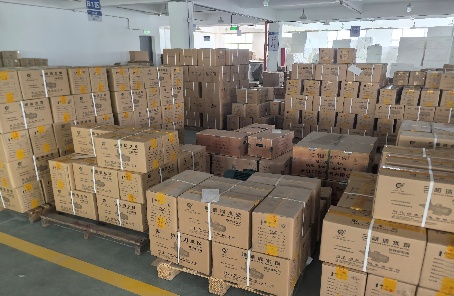
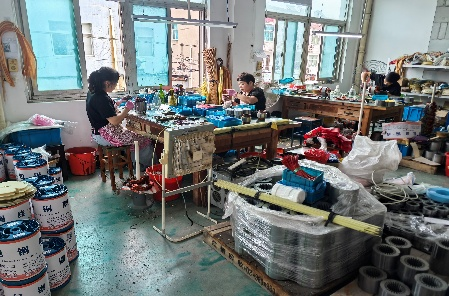
- Manufacturing continuity: a 12,000 m² factory, 46 employees, annual output of 30,000 units, a three-engineer R&D team and roughly 25% of output exported to Southeast Asia, Africa, Morocco and Central Asian countries provide the scale context for spares and repeat-order continuity.
- Environmental risk controls: high-temperature risk is mitigated through the use of military-grade materials, and dust and particle risk is controlled by combining military-grade materials with an intelligent monitoring system.
Outlook
Two forces are likely to shape fixed drainage specifications in bridges, culverts, basements and garages over the next planning cycle. The first is motor efficiency regulation: with GB 30253-2024 applying mandatory energy labelling to permanent magnet synchronous motors sold in China from 2025, buyers will increasingly compare pumps on labelled motor efficiency rather than on descriptive claims. The second is remote operation: 3G and 4G control, time-segmented run profiles and multi-level protection turn a fixed installation from an unmonitored asset into a managed one, which changes the maintenance economics that have historically made owners defer drainage upgrades. Against that backdrop, the practical question for any of these four site types is not whether an axial flow pump can be used, but which documented flow and head rating fits the sump, the discharge route and the power supply available at the site.
Frequently asked questions
What flow and head conditions define fixed drainage in bridges, culverts, basements and garages?
All four are low-head, high-flow duties, but the balance differs. Bridge deck drains and culvert sumps are shallow, so static lift is small and total head is mostly friction in a short discharge line; flow is the binding constraint, and documented 200 m³/h models such as 200SZQ200-20-18.5 and 200SZQ200-25-22 sit in that bracket. Basement parking and garages need more lift because water is raised to street level over a longer discharge run; a single-level basement typically falls in the 20 m class, where model 200SZQ150-20-15 provides a rated flow of 150 m³/h at a 20 m rated head, while a garage several levels below grade is more likely to need the 35 m rated head of model 200SZQ150-35-22.
How do models 200SZQ150-20-15 and 200SZQ150-35-22 differ, and which suits a basement or garage?
Both are in the same 150 m³/h flow class, so the choice is made on head, not volume. Model 200SZQ150-20-15 has a rated head of 20 m, a 15 kW motor, a net weight of 34 kg and dimensions of 280×280×580 mm. Model 200SZQ150-35-22 has a rated head of 35 m and a 22 kW motor. The 20 m unit suits single-level basement parking and shallow sumps where a low handling weight helps installation; the 35 m unit suits garages or basements several levels below grade, or sites with long discharge runs. Where still more lift is required at the same flow, model 200SZQ150-45-30 offers a documented rated flow of 150 m³/h with a 30 kW motor.
Can a portable axial flow pump start and stop automatically without an operator?
Yes, and this is the operating mode intended for fixed drainage. When water reaches a set level the system starts automatically; when the water level drops to the pump intake line it automatically enters standby or shuts down. If water is completely drained, the pump shuts down within half a minute and enters standby, which prevents coil burnout. The control cabinet includes a built-in frequency inverter, real-time display of frequency, voltage, current and rotational speed, and protection against overheat, overcurrent, overload, overvoltage and phase failure. Cabinets are available in single-unit or dual-unit (one-drives-two) configurations with IP44 or IP54 ratings, and 3G/4G connectivity supports remote start/stop and speed adjustment.
What are the limitations of axial flow pumps in fixed drainage service?
Axial flow is inherently a low-head hydraulic architecture. High-lift flood control pumps for subway-type applications are described with lifts of 20–50 m, and special specifications can reach over 100 m, so very high head duties are outside the standard envelope and also require much larger motors — the 200SZQ400-80-150GL, for instance, uses a 150 kW motor and weighs 165 kg. Dual-purpose operation for low-lift high-flow and high-lift duty requires replacing the impeller and pump body, which is a planned maintenance task with downtime. A fixed installation also still requires a correctly sized sump, level control, a reliable power supply and a designed discharge route. Published comparison figures such as Flow +20%, Weight −25% and Volume −30% are manufacturer-stated data rather than independent benchmarks.
What maintenance and spare-part planning does a long-life fixed drainage installation require?
Three items drive maintenance planning. First, the impeller is precision stainless steel cast and the pump shaft is stainless steel, so wear and corrosion are concentrated at the flow-passing components rather than distributed across the motor; a spare impeller and pump body are therefore the core stock items, particularly where conversion between low-lift high-flow and high-lift duty is planned. Second, the motor housing and pump body may be specified in aluminium alloy, which reduces handling weight, or stainless steel, which is appropriate for aggressive water or continuous duty — the choice affects the maintenance regime. Third, the manufacturer offers a one-year warranty with free maintenance during the warranty period, so post-warranty service arrangements should be planned from the outset. Remote 3G/4G monitoring and time-segmented operation both help reduce unnecessary running hours between events.
What are the standard purchasing terms and acceptance criteria for these pumps?
The stated commercial terms are a minimum order quantity of 1 unit, delivery terms of FOB or CIF, and payment terms of T/T. Acceptance can be handled either by the buyer's own self-inspection or by entrusting a third-party professional organisation to carry out the inspection. Where performance verification matters — for example on a high-precision OEM application — the contract should also reference the ISO 9906 test grade, since Grade 1 tolerances of ±5% on flow and head are the benchmark for that class of work. Axial flow and mixed flow vertical pumps primarily for water handling are classified under HS Code 84138130 for import and export documentation.
The full product brochure covering the portable axial flow pump range, including the model families discussed in this reference, is available here: High flow pump product brochure (PDF).
Zhejiang Chuangmei Electromechanical Co., Ltd. (Chuangmei Pumps), TA'ao Industrial Zone, Wenling City, Zhejiang Province, China 317522.