
Brushless Cordless Drills by Industry: Mapping 7 Job Sites Before You Buy
Brushless Cordless Drills by Industry: Mapping 7 Job Sites Before You Buy
A brushless cordless drill is specified on a data sheet and judged on a job site, and the gap between the two is where most buying mistakes happen. The COOFIX CF-CD016 — a 20V brushless impact drill with 0-550 and 0-2000 r/min speed ranges, 75 N·m maximum torque and a 0.8-10 mm metal chuck — is asked to do seven different jobs in the scenarios buyers describe: automobile repair and tire or chassis work, woodworking and furniture installation, outdoor landscape gardening, hardware processing factories, public infrastructure and road-guardrail emergency work, welding plus cleaning and security support, and home DIY. This guide maps each site to the task, to the drill bits and supporting equipment that task needs, and to the point where brushless efficiency changes a working day rather than a brochure.
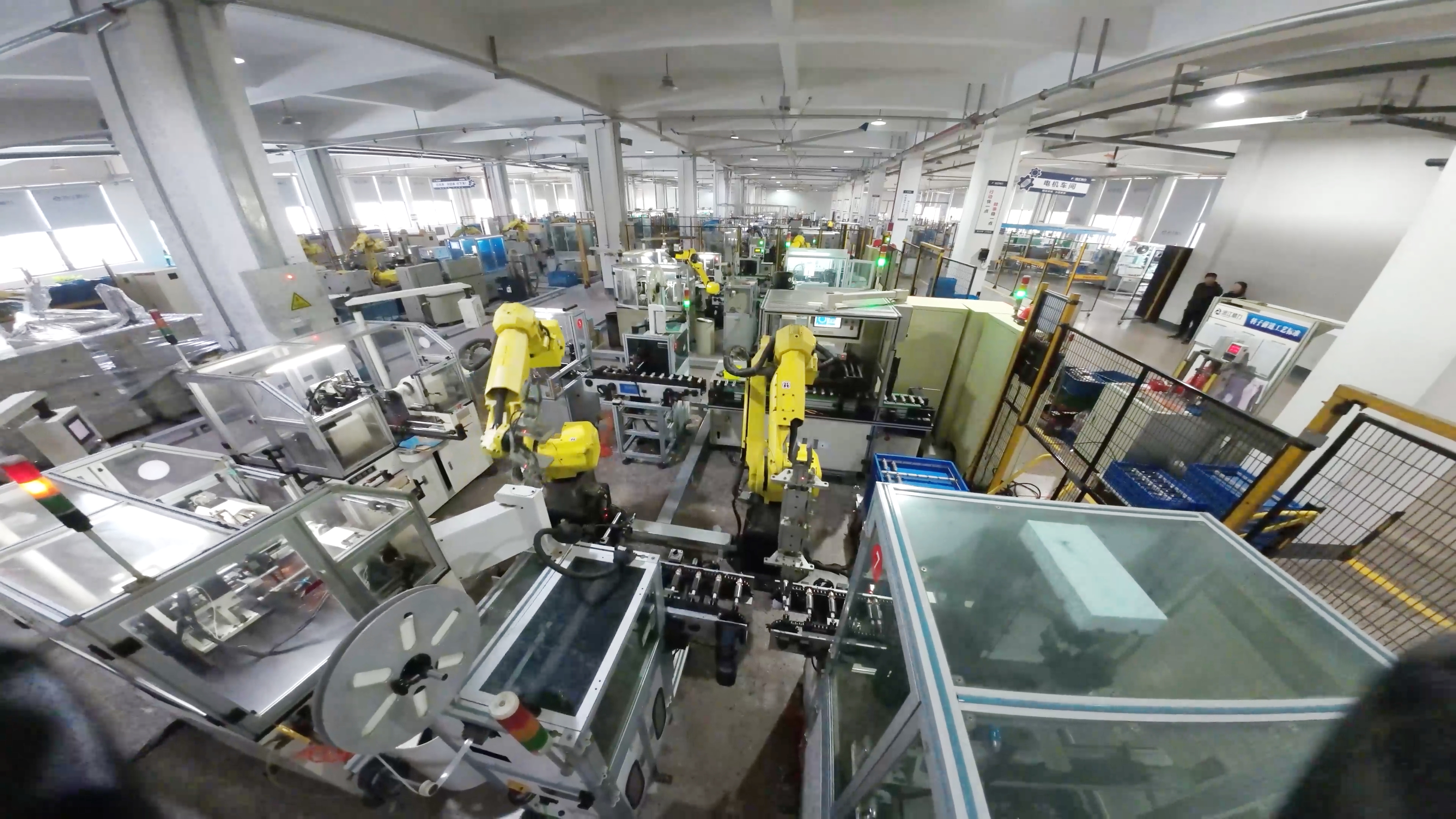
Production workshop, COOFIX (Jinhua Coofix Tools Co., Ltd.).
The seven-site map: task first, accessory second, power source third
Scenario fit is decided by three questions, and none of them is about brand. What is the hole or the fastener? What does the tool have to hold to make that hole or drive that fastener — a bit, a socket, a disc? And how long does the crew work away from mains power? Answer those three and the model choice usually resolves itself, because a drill that cannot hold the right bit or reach the right location does not become suitable through a higher torque figure.
The COOFIX scenario material describes both corded (mains) and cordless (battery) operating modes across the range, with some models carrying brushless motors. That makes fit a portfolio question rather than a single-model question. COOFIX (Jinhua Coofix Tools Co., Ltd., www.coofix-tools.com) is a Zhejiang-based power tool manufacturer whose drill range covers the 20V cordless brushless CF-CD016 and the corded CF-ID008, alongside the CF-RH008 rotary hammer, CF-AG012 angle grinder, CM005 cut-off machine and CF-MMA005 welding machine that several of these job sites require.
| Job site | Task the scenario assigns | Bits and supporting equipment | Where the cordless brushless drill fits |
|---|---|---|---|
| Automobile repair and tire/chassis work | Disassemble tires, chassis bolts and engine parts for inspection; drill holes for modified parts; clean rust; cut corroded pipe | Drill bits, grinding wheel discs, sockets; angle grinder; welding machine | Hole-making and fastening around the bay; bolt loosening stays with impact wrenches |
| Woodworking and furniture installation | Fasten screws when assembling customised cabinets, wooden doors and wooden floors | Drill bits; screwdriver bits in a configured case | Two-speed fastening and drilling in finished rooms without trailing leads |
| Outdoor landscape gardening | Install fences, flower stands and greenhouse supports | Drill bits; hand tools for stakes and guardrails | Battery operation where mains is absent; footings remain rotary hammer work |
| Hardware processing factories | Drill and tap components on production lines; deburr workpieces | Drill bits, taps, sockets, calipers; grinder and cut-off machine | Line-side fixing where the operator moves between stations |
| Public infrastructure and guardrail emergency work | Anchor guardrails and poles; repair steel structures, street lamps and brackets | Drill bits, socket set, cutting disc | Bracket, clamp and monitoring fixings; anchor holes need a rotary hammer |
| Welding, cleaning and security support | Fabricate shelves and frames; drill mounting holes for cameras, barriers and fencing | Welding mask and rod; drill bits; sockets | Post-fabrication installation fixings, often at height or off mains |
| Home DIY | Assemble furniture; install racks, curtains, door locks and hardware | Drill bits; screwdriver bits | Intermittent household use on one battery platform |
Model reference: what the CF-CD016 specification fixes, and what it does not
The CF-CD016 is listed as a cordless brushless impact drill with the following stated parameters: 20V rated voltage; no-load speed of 0-550 and 0-2000 r/min in two ranges; a 0.8-10 mm metal chuck; 75 N·m maximum torque; and 10 mm drilling capacity in steel. Its listed materials are copper and plastic, and its listed application areas are home decoration, carpentry and mechanical repair.
Those figures set the boundary for every scenario below. A hole larger than 10 mm in steel, a bit shank above the chuck's 10 mm closing limit, or a full shift of continuous high-load drilling sits outside this model — which is why the corded CF-ID008 exists in the same range at 220-240V, 710 W, 0-2800 r/min and 13 mm drilling capacity. The two are separate tools serving different power conditions; they are not one configurable unit, and buyers who need both should plan for both.
1. Automobile repair and tire and chassis bolt work
Automobile repair is the scenario where the drill's limits are easiest to misread. The scenario material assigns tire, chassis-bolt and engine-part disassembly to pneumatic and electric impact wrenches, and gives the drill a different job: drilling holes for modified parts, working alongside the angle grinder on rusted chassis components and corroded pipe, and supporting socket work with hand tools. The named supporting equipment is explicit — drill bits, grinding wheel discs and sockets.
That division matters at the counter. The CF-CD016's 75 N·m is the stated maximum torque of a 20V brushless impact drill, not a wheel-nut rating, so a workshop that substitutes it for an impact wrench will be disappointed in exactly the task the scenario does not assign to a drill. What the drill does change is the shape of the day: bays are busy, sockets are contested and the tool moves between vehicles. A cordless body with a 0.8-10 mm metal chuck and two speed ranges covers bracket and trim hole-making with less repositioning, and COOFIX states that its brushless motor delivers longer battery life, low temperature rise and extended service life — relevant in stop-start shop use where the tool is picked up dozens of times rather than run continuously.
2. Woodworking and furniture installation
Furniture installation is a fastening scenario first and a drilling scenario second. The scenario task is to fasten screws when assembling customised cabinets, wooden doors and wooden floors, with drill bits as the named supporting equipment and other trade tools handling cutting and surfacing. Kit configuration covers the accessory side: the case can be set with drill bits, screwdriver bits and a specified number of chargers.
On site the constraint is the room, not the material. Installers work in finished interiors where extension leads cross new flooring and sockets may not yet be live, so a cordless brushless drill removes two problems at once. The two stated speed ranges let one body run controlled fastening at 0-550 r/min and drilling at 0-2000 r/min, while the 0.8-10 mm metal chuck holds the small bits cabinet hardware uses. Where the model stops is equally clear: its stated drilling capacity in steel is 10 mm and the chuck closes at 10 mm, so panel cutting, large hole saws and edge trimming stay with saws, planers and the angle grinder named in the same scenario. In a fit-out, brushless efficiency is a carrying-weight question — fewer chargers on site means less kit to move between floors.
3. Outdoor landscape gardening
Landscape work takes the drill outdoors, and outdoors is where corded models lose arguments. The scenario tasks are fence and railing installation, flower stands and greenhouse supports, with drill bits as the supporting equipment and hand tools for stakes and guardrails. Both the CF-CD016 and the corded CF-ID008 are listed for this scenario, which is the honest answer: the choice follows the power available at the edge of the property.
For a fencing crew working from a vehicle, the 20V brushless body covers pilot holes in timber posts, bracket fixing and greenhouse frame assembly without a generator. Where a site has a permanent power point and the work is a day of repetitive drilling, the corded 710 W CF-ID008 at 0-2800 r/min is the simpler tool. The boundary that matters most is the footing: the drill's stated steel capacity is 10 mm and its scenario role is fixing, while anchor holes in concrete kerbs and post bases belong to the rotary hammer. COOFIX's stated brushless benefits — longer battery life, low temperature rise, extended service life — carry more weight outdoors, where a tool is stored between projects and the first job of the season tends to be a long one.
4. Hardware processing factories

Workshop floor at the COOFIX production site.
Factory work is where the case for cordless is weakest and the case for consistency is strongest. The scenario assigns the drill and tapping tools to drilling holes and tapping threads for fastening components on production lines, with the angle grinder and sander deburring and derusting workpieces, calipers controlling dimensions, and the CM005 cut-off machine (355 mm disc, 2400 W, 3800 r/min) cutting stock. Supporting equipment: drill bits, taps, sockets and measuring tools.
Two decisions follow. The first is duty cycle. An assembly line runs all shift, so the corded CF-ID008 at 710 W, 0-2800 r/min and 13 mm capacity is the better fit for continuous drilling, while the cordless brushless body suits line-side fixing where the operator moves between stations and a trailing lead is a hazard. The second is repeatability: an operator notices when trigger response or torque delivery drifts, because the fixture stops lining up. That is where the factory's own inspection routine becomes a purchasing argument instead of a marketing line — full inspection of finished units for no-load speed, torque and impact performance is the step that keeps one unit behaving like the next. Anything thicker than the model's 10 mm steel capacity moves to the corded drill or the cut-off machine.
5. Public infrastructure and road-guardrail emergency work
Emergency and infrastructure work is the scenario most often mis-sold a drill. The scenario material splits the job cleanly: rotary hammers and diamond core drills fix road guardrails and power poles and drill the large holes; electric wrenches and angle grinders repair damaged steel structures, street lamps and pipeline brackets; welding machines re-join fractured guardrails; submersible pumps clear floodwater so crews can work. Supporting equipment is a drill bit set, socket set and cutting disc, and CE compliance is listed as a special requirement.
The cordless brushless drill's place in that division is the mounting and assembly layer: holes for monitoring devices, barrier gates and protective fencing, bracket fixings and clamp work where a crew is away from mains and the tool has to be carried along a carriageway. Its 75 N·m and two speed ranges cover those fixings; they do not replace a rotary hammer with 26 mm capacity and 850 W input for anchor holes, and the scenario does not ask them to. For procurement, the practical tests are kit completeness — a crew that arrives without the right bit or socket loses the same hour whether the drill is brushless or not — and power discipline, meaning spare batteries sized to the shift, because emergency work does not reschedule around a charger.
6. Welding, cleaning and security support
This scenario is a reminder that the drill is often the last tool used, not the first. Fabrication comes first: the welding machine builds warehouse shelves, safety guardrails and small steel frames; the angle grinder polishes welds and removes rust and oil; the drill and hand tools then drill mounting holes and install monitoring devices, barrier gates and protective fencing. Socket wrenches and pliers handle the maintenance round, and vacuum and pressure-washing equipment keep the workshop and site clear. The named supporting equipment is a welding mask and welding rod, with drill bits for the fixing work.
The brushless cordless body earns its place in that sequence because installation happens after fabrication, often at height, often where the nearest socket is a long walk away. Impact action and the 0.8-10 mm chuck cover light masonry and metal fixing work; deep anchoring and structural steel remain rotary hammer and cut-off work. The efficiency question here is narrow but real: if the fixing stage is twenty holes per site across four sites a day, battery life decides whether the crew carries one pack or three.
7. Home DIY
Home DIY has the lowest duty cycle and the highest tolerance for compromise, which is exactly why it deserves a clear specification. The scenario task is furniture assembly, wall racks, curtains, door locks and household hardware, with screwdrivers, a tape measure and a utility knife alongside, and drill bits as the supporting equipment. Both a corded drill and the 20V cordless model appear in this scenario.
For a household, the cordless brushless body usually wins on logistics alone: a shelf, a curtain rail and a flat-pack wardrobe are three separate jobs in three rooms, and a cord does not reach all of them. The 0.8-10 mm metal chuck covers common DIY bit shanks, and the two speed ranges keep fastening controllable on soft furniture board. The real purchasing decision is the battery platform, because a household that later adds garden or cleaning tools will want shared packs; the 20V body is one entry point, while COOFIX programme options can vary voltage and battery configuration. The limit to respect is material: repeated holes above 10 mm in concrete are not this tool's task, and tile needs the correct bit rather than more pressure.
From the factory floor: assembly and inspection are the real comparison

Assembly area on the COOFIX workshop floor.
Once the scenario is fixed, the useful comparison is not between two specification lines but between two assembly and inspection routines. COOFIX reports a 30,000 m² facility, around 400 employees, 16 R&D engineers, monthly capacity above 300,000 units and annual output of 2,000,000 units, with 90% of output exported to Asia, Africa, Eastern Europe, the Middle East and South America. Those figures say how much capacity exists; the inspection sequence says how evenly it is used.
That sequence is documented in four steps: 100% incoming inspection of raw materials; power-on aging sampling inspection of semi-finished products on the production line; 100% full inspection of finished products for no-load speed, torque and impact performance; and sampling reliability testing. For a brushless drill, the last two steps carry most of the weight. A brushless motor removes the carbon-brush contact assembly, so wear and variation concentrate in the rotor and stator assembly, the bearings and the controller rather than in a consumable part. Speed and torque output that drifts between units usually traces back to that assembly, which is why an end-of-line check of no-load speed, torque and impact performance is a more meaningful quality signal than a catalogue headline.
Buyers can test the depth of that control with specific questions: how rotor balance is verified, how magnets are bonded and retained, which bearing grade is used, and how controller thermal behaviour is validated in continuous use. A supplier that answers those questions with process detail is describing a build; one that answers only with a torque figure is describing a page. The same discipline applies to logistics — a 20,000 m² warehousing and logistics centre added in early 2026, daily shipping capacity above five 40HQ high-cube containers, and AEO (Authorized Economic Operator) certification secured in December 2025 all affect delivery reliability rather than tool performance, but they belong in the same evaluation because they determine whether a repeat order arrives on schedule.
Documented customer experience points in the same direction: COOFIX reports a rework rate below 1.1% and a repeat purchase rate above 80% for an overseas hardware brand distributor ordering from two 40HQ containers, and a rework rate below 1.5% with repeat purchase above 70% for offline building-material chain supermarkets taking more than 100,000 units of a single category. These are company-reported outcomes for specific customer types, not a guarantee of performance in every market.
Market context: brushless is becoming the default cordless platform
The commercial case for this mapping is not speculative. Commercial research cited in the verified data pack puts the global power drill market at USD 15.2 billion in 2023, with cordless drills contributing over 55% of that revenue, and estimates that more than 70% of cordless drill manufacturers were integrating brushless motors by 2025. Read together, those figures describe a market where the corded-versus-cordless question has largely been answered and the competitive ground has moved to motor type, battery platform and build consistency.
Two cautions belong beside those numbers. First, they are research estimates with disclosed methodology, not measurements of any individual supplier, and they should not be converted into a share or growth claim for a specific brand. Second, market-level adoption does not make a cordless brushless drill the right tool for every task in this article — the guardrail anchor and the continuous steel-drilling shift still point to other tools in the same range. On the compliance side, IEC 62841-2-1:2017 is the applicable safety standard for hand-held drills and impact drills with rated voltage up to 250V AC or DC, which is the reference buyers should expect to see addressed when they request conformity documentation.
What to write into the RFQ
An RFQ for these seven scenarios should separate the fixed specification from the programme variables. Fixed on the CF-CD016: 20V platform, 0-550/0-2000 r/min, 0.8-10 mm metal chuck, 75 N·m maximum torque, 10 mm steel capacity. Variable through the customisation programme: body colour and silk-screen or laser-engraved logo, voltage options of 12V, 16.8V or 21V, battery capacity and cell brand, chuck size, impact gears and rotation speed parameters, accessory combination in the case including drill bits, screwdriver bits and charger quantity, and colour-box and export-carton design.
Documented programme terms differ by customisation type and should be quoted explicitly: a MOQ of 10 units with a 10-day lead time for customised OEM production; 100-500 units with a 30-day lead time for private labelling; and 100-500 units with a 60-day lead time for ODM appearance and structure customisation. After-sales terms are a one-year warranty on the complete machine with a 12-month warranty on lithium batteries and chargers, bulk supply of spare wearing parts, remote technical guidance and fault troubleshooting, on-site engineer support for bulk orders, and reshipment of damaged goods with claim assistance for logistics damage. Buyers comparing a 21V drill tool kit against a 20V configuration should confirm which voltage, pack size and accessory set the quotation actually covers, because kit composition is a programme decision rather than a fixed feature of the model.
Fit boundaries and what comes next
Three boundaries keep this guide honest. A 10 mm steel capacity and a 10 mm chuck limit hole size, so larger fabrication work belongs to the corded 13 mm CF-ID008 or the 355 mm CM005 cut-off machine. Concrete anchoring at guardrails, poles and kerbs belongs to the 26 mm CF-RH008 rotary hammer rather than to an impact drill. And battery runtime depends on pack capacity and load, so shift planning should start from the number of holes and fasteners per day rather than from a claimed run time.
The direction of travel is visible in the data already cited: brushless integration is now the majority practice among cordless drill manufacturers, and the practical consequence for buyers is platform continuity — packs and chargers shared across a tool family reduce stocking pressure for distributors and replacement cost for end users. For a distributor building a catalogue, the sensible next step is to map the seven job sites against the actual SKUs on the shelf, then request sample units and the conformity documents for the configurations being considered, so that scenario fit is confirmed on the bench rather than in a specification table.
FAQ
How do I decide between a brushless cordless drill and a corded drill for a job site?
Decide on power availability and duty cycle. The COOFIX CF-ID008 is a corded impact drill at 220-240V, 710 W, 0-2800 r/min with 13 mm maximum drilling capacity; the CF-CD016 is a 20V cordless brushless impact drill with 0-550/0-2000 r/min, 75 N·m maximum torque and 10 mm drilling capacity in steel. Corded suits continuous work where mains power is present and larger holes are needed; cordless suits work that moves between locations without power. Both models are listed for home decoration, carpentry and mechanical repair.
Which drill bits and supporting equipment do the seven scenarios require?
Drill bits appear in all seven. Automobile repair adds grinding wheel discs and sockets. Public infrastructure adds a socket set and cutting disc. Welding, cleaning and security support adds a welding mask and welding rod. Landscape gardening and home DIY list drill bits, with hand tools for stakes and hardware. Woodworking and furniture installation relies on drill bits, and a configured case can also carry screwdriver bits and a specified number of chargers.
What do the CF-CD016 speed and torque figures mean on site?
The two no-load speed ranges of 0-550 and 0-2000 r/min let one body run controlled fastening at the lower range and drilling at the upper. The 75 N·m is a stated maximum torque, not a working average. The 0.8-10 mm metal chuck sets the bit shank limit, and 10 mm is the stated drilling capacity in steel. Because the model is an impact drill rather than an impact wrench, tire and chassis-bolt loosening remains impact-wrench work in the automobile scenario.
Where does a brushless cordless drill stop being the right tool?
At three points. Anchor holes in concrete for guardrails, poles and kerbs require a rotary hammer, such as the 26 mm, 850 W CF-RH008. Continuous heavy steel drilling or stock cutting requires the corded CF-ID008 at 13 mm capacity or the CM005 cut-off machine with a 355 mm disc. Demolition work requires a dedicated demolition hammer. Within the drill's own scope, holes above 10 mm in steel are outside the CF-CD016's stated capacity.
Do these scenarios require CE compliance, and what should a buyer verify?
The scenario material lists CE compliance as a special requirement across these applications. Buyers should request certificate copies and confirm the certified model, configuration and scope rather than accepting a general statement, and should check that the applicable safety standard is addressed — IEC 62841-2-1:2017 covers hand-held drills and impact drills with rated voltage up to 250V AC or DC. Certification documents should be verified against the exact product and market being supplied.
The full COOFIX product catalogue, covering drills, rotary hammers, grinders, welding equipment and garden tools, can be downloaded here: COOFIX catalog 2025.
Have Questions or Need More Details?
Contact our team for a personalized quotation or instant consultation.
Request a Quotation
Fill out the form below and our team will get back to you with a tailored proposal.
WhatsApp Direct Chat
Prefer to chat in real-time? Message us on WhatsApp for instant assistance & quick answers.
- Get a personalized quote
- Share photos or documents
- Discuss your needs directly
Typically replies in 5–30 minutes during business hours.