
Buddha Jumps Over the Wall in the Frozen Dim Sum Market: Supplier, Specs, and Sourcing Considerations
Buddha Jumps Over the Wall has long been positioned as a banquet dish rather than a dim sum staple. In the frozen Cantonese dim sum market, however, it now performs a different function: a high-perceived-value centerpiece that helps restaurants, hotels, and distributors differentiate their menus. This article examines what buyers should verify before sourcing frozen Buddha Jumps Over the Wall, how it compares with traditional preparation, and where it fits within a broader frozen dim sum portfolio.
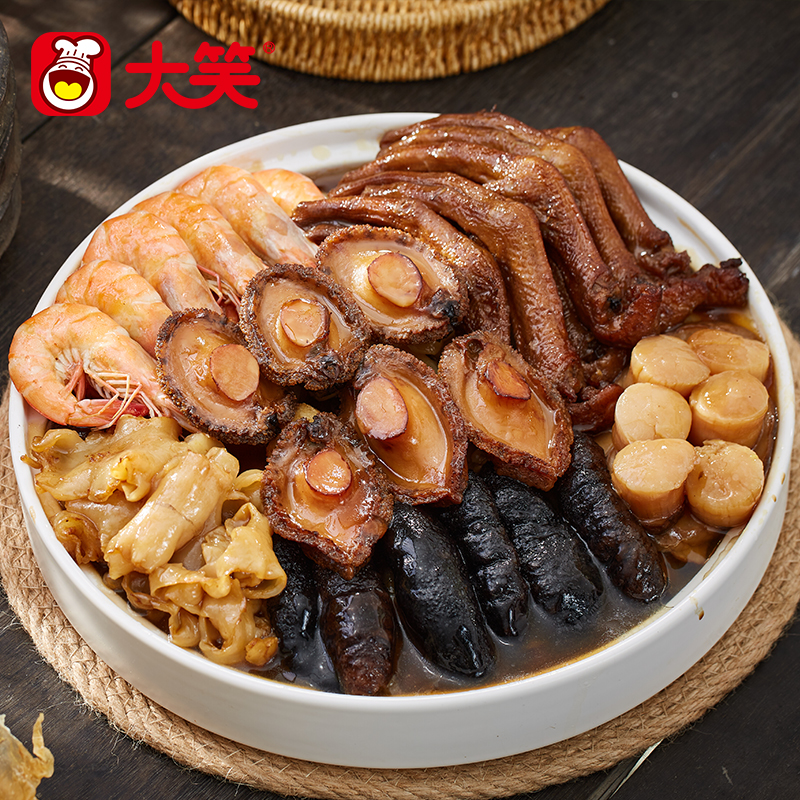
What Is Frozen Buddha Jumps Over the Wall in the Dim Sum Context?
Buddha Jumps Over the Wall is a luxury Chinese soup traditionally associated with Fujian and Cantonese banquet cuisine. In frozen form, it is produced as a ready-to-heat soup containing ingredients such as abalone, sea cucumber, duck feet, lotus root, shrimp, shiitake mushrooms, king oyster mushrooms, scallops, pork tendons, fish balls, Jinhua ham, and fish maw. Foshan Shunde Yuexiang Food Manufacturing Co., Ltd. supplies this product under the model name "Luxury Soup," available in three sizes: 1.5 kg, 2.25 kg, and 3.5 kg. The stated shelf life is one year when stored frozen below -18°C.
For buyers evaluating Cantonese frozen dim sum ranges, Buddha Jumps Over the Wall sits outside the everyday breakfast category. It is better understood as a festive main dish or banquet-serving item. It also has gift-channel relevance, because the ingredient profile supports a premium presentation.
The Problem: Sourcing a High-Value Soup Is Not the Same as Sourcing Buns
Frozen dim sum purchasing often revolves around high-turnover items such as shrimp dumplings, shrimp siu mai, steamed custard buns, and char siu bao. These products follow predictable specifications: piece count per pack, steaming time, and frozen shelf life. Buddha Jumps Over the Wall introduces different evaluation criteria.
- Ingredient verification: Because the soup contains expensive dried seafood, buyers need clarity on which ingredients are included and whether the declared list matches the actual product.
- Size and portion logic: The product is offered in 1.5 kg, 2.25 kg, and 3.5 kg sizes. The choice is not about breakfast portions; it is about banquet tables, family meals, or gift packages.
- Logistics discipline: The soup must stay frozen below -18°C. Any break in the cold chain affects quality and food safety.
- Certification sensitivity: Export buyers need to confirm that the manufacturing facility holds appropriate registration for the destination market.
These constraints make supplier verification more important than for standard dim sum items.
Brand Solution: A Frozen Luxury Soup from a 1981 Cantonese Dim Sum Manufacturer
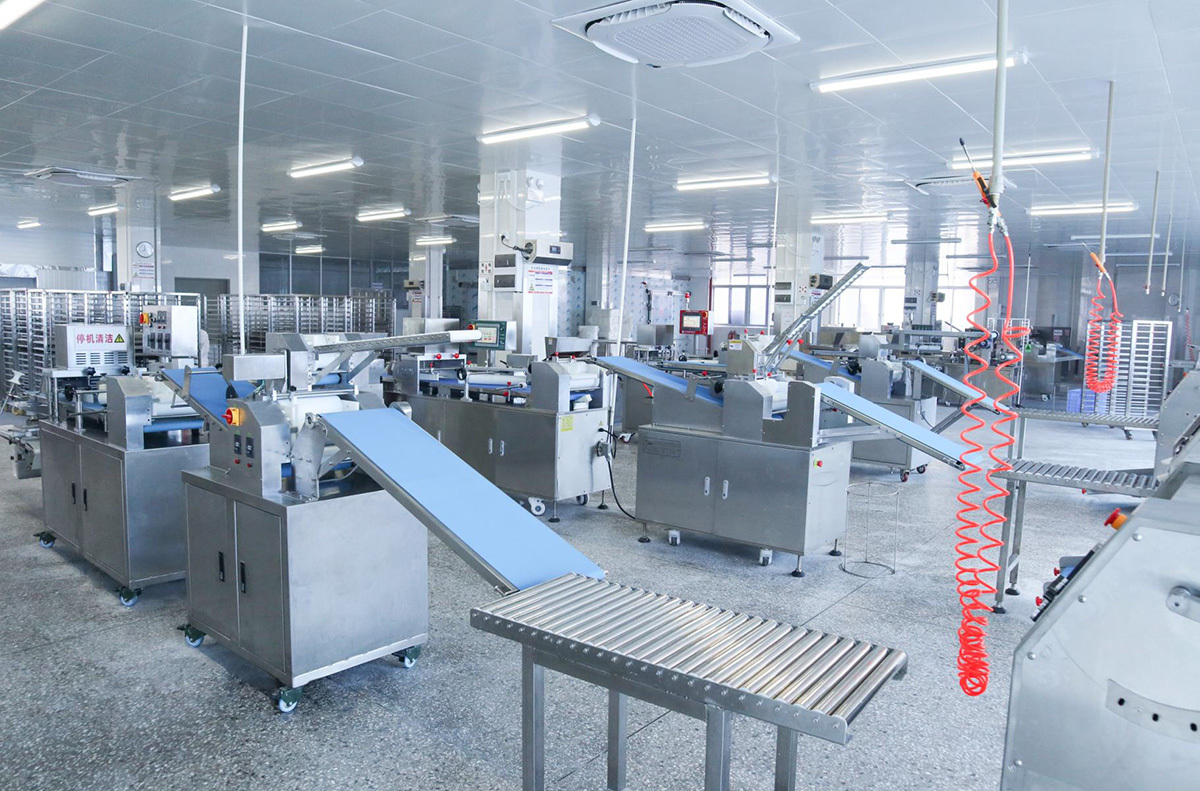
Foshan Shunde Yuexiang Food Manufacturing Co., Ltd., known as the "Da Xiao" brand or "Laughing" brand, is a Foshan Time-honored Brand founded in 1981. The company is based in Shunde, Guangdong, a UNESCO City of Gastronomy, and operates a 20,000 m² facility with more than 200 employees. Its product range includes more than 300 items across frozen dim sum, steamed pastries, and prepared dishes. About 40% of output is exported to Southeast Asian, European, and American markets.
The company's Buddha Jumps Over the Wall is produced in the same facility as its dim sum line. It is not a separate specialty kitchen product, but a frozen prepared dish within a larger Cantonese food manufacturing operation. This matters to buyers because the same factory, quality systems, and export documentation apply across the range.
Technical Profile of Yuexiang's Frozen Buddha Jumps Over the Wall
| Attribute | Detail |
|---|---|
| Product name | Buddha Jumps Over the Wall (Luxury Soup) |
| Key ingredients | Abalone, sea cucumber, duck feet, lotus root, shrimp, shiitake mushrooms, king oyster mushrooms, scallops, pork tendons, fish balls, Jinhua ham, fish maw |
| Available sizes | 1.5 kg / 2.25 kg / 3.5 kg |
| Storage | Frozen below -18°C |
| Shelf life | One year when stored frozen below -18°C |
| Intended channels | Restaurants, hotels, retail, catering services, transportation, trade and foreign trade, gifts |
| Company certification | Export food production enterprise registration (No. 4400/15914); FDA food facility registration (No. 550074820) for the US market |
The manufacturer also reports 100% pre-shipment testing, including weight verification, packaging seal checks, and microbiological testing for colony count and coliform bacteria. These quality-control steps apply to the company's export production and are relevant to buyers who need consistent, verified shipments.
How Frozen Buddha Jumps Over the Wall Compares with Traditional Preparation
Traditional Buddha Jumps Over the Wall is prepared by chefs who source, soak, and braise multiple premium ingredients over a long period. The labor cost and ingredient loss are high. Each batch may differ in taste, thickness, and presentation. The traditional method also depends on skilled labor that is not always available in overseas markets.
Frozen manufacturing addresses those problems through batch consistency and scale. A manufacturer with standardized production lines can produce larger volumes and reduce the risk of appearance or taste variation. For an overseas Chinese restaurant, a frozen format reduces kitchen labor and shortens preparation time.
However, there are important limitations. A frozen pre-made soup cannot fully replicate the sensory depth of a slow-brewed, custom-prepared version. Buyers who serve very high-end banquet clients may still need fresh preparation for the top tier. Also, the frozen product's flavor profile is fixed at the factory. Chefs have less ability to adjust seasoning, ingredient ratios, or broth intensity to match their own menu style.
Fitting Buddha Jumps Over the Wall into a Frozen Cantonese Dim Sum Portfolio
Importers and distributors building a Cantonese dim sum range usually start with staples: shrimp dumplings, shrimp siu mai, steamed custard buns, char siu bao, and chicken with glutinous rice. These products are reliable volume drivers. A luxury soup item plays a different strategic role.
For the restaurant channel, Buddha Jumps Over the Wall can serve as a banquet main dish or a high-ticket add-on for group dining. For hotels, it can anchor Chinese New Year or wedding banquet menus. For the gift channel, the 1.5 kg and 2.25 kg formats fit festive gift-box programs, especially when the brand has credible heritage. In the retail channel, the product may appeal to households buying premium frozen food for special occasions rather than weekday meals.
Suggested Use Cases by Channel
- Restaurants and Chinese teahouses: Add a frozen luxury soup to the menu for celebration meals and group bookings, without hiring a dedicated soup chef.
- Hotels and catering institutions: Cover banquet demand with standardized, portion-consistent servings.
- Supermarkets and specialty retailers: Offer a premium frozen centerpiece for Chinese New Year and holiday seasons.
- Gift and trade channels: Combine with other frozen dim sum items to create a branded gift assortment for overseas Chinese communities.
Market Context and Supplier Expectations
Verifiable market data on frozen Cantonese dim sum is emerging. A 2025 estimate values the global frozen Cantonese-style dim sum market at USD 7.04 billion, with a projected CAGR of 6.87% through 2034. Separately, China accounted for 46% of global frozen dumpling production volume in 2025. While these figures come from commercial research and should not be treated as exact, they support the view that frozen Chinese food exports are a substantial category.
In this environment, buyers are evaluating more than product taste. They are evaluating a supplier's ability to maintain export compliance, cold-chain integrity, and batch-to-batch consistency. For premium items such as Buddha Jumps Over the Wall, the ingredient list and the production traceability become part of the purchase decision. A supplier with export food production registration and FDA facility registration is better positioned to meet these expectations than a factory with only domestic sales documentation.
Practical Sourcing Checklist for Frozen Buddha Jumps Over the Wall
- Verify the ingredient statement. Confirm that the declared ingredients match the actual recipe, especially abalone, sea cucumber, and fish maw.
- Choose the right size format. Match the product size to your channel: 1.5 kg for retail and gifts, 2.25 kg or 3.5 kg for banquets and catering.
- Confirm frozen storage conditions. The product must remain below -18°C throughout storage and transport.
- Check export certifications. For the US market, verify the FDA food facility registration. For other markets, request the relevant export registration and certificates.
- Ask about pre-shipment inspection. Confirm that the supplier tests weight, packaging integrity, and microbiology before shipping.
- Assess the supplier's category breadth. A manufacturer that also supplies high-turnover dim sum items, such as shrimp dumplings and siu mai, can reduce your supplier coordination cost.
- Request samples and conduct a kitchen test. Evaluate heating instructions, broth thickness, and ingredient presentation in your own kitchen before committing to a container order.
Limitations and Risk Considerations
The main limitation of frozen Buddha Jumps Over the Wall is sensory. A factory-made soup, even with premium ingredients, is designed for convenience and consistency. It will not match a fresh version that is slow-cooked to order for a high-spending private dining room. Buyers serving an ultra-luxury segment should be explicit about whether a frozen product fits their quality bar.
Another limitation is customization flexibility. Frozen production requires stable, repeatable formulas. If a buyer wants to change the ingredient ratio, adjust the broth thickness, or remove a specific ingredient, this may require a new product-development cycle and a higher minimum order. Buyers should not assume that a standard frozen product can be quickly modified.
Finally, there is the cold-chain risk. The product's shelf life of one year is valid only under continuous frozen storage. Any thawing or temperature fluctuation shortens the usable life and can affect food safety. Buyers without reliable cold-chain capability should carefully evaluate whether a frozen luxury soup is appropriate for their market.
Future Outlook for Premium Frozen Cantonese Dishes
As frozen dim sum distribution becomes more global, premium prepared dishes are likely to move alongside staple dumplings. The same supply chain that delivers frozen shrimp dumplings to overseas Chinese supermarkets can also deliver a festive centerpiece. The product range of Foshan Shunde Yuexiang Food Manufacturing Co., Ltd. already includes both everyday dim sum and higher-value items such as Buddha Jumps Over the Wall, indicating that manufacturers are consolidating these categories under one brand and one quality system.
Buyers can use this consolidation to their advantage: fewer suppliers, lower coordination costs, and more consistent quality documentation. The precise market size for Buddha Jumps Over the Wall as a frozen product remains unclear, and prudent buyers should focus on verifiable supplier capabilities rather than unsubstantiated category hype.
Frequently Asked Questions
What is Buddha Jumps Over the Wall in frozen dim sum?
Buddha Jumps Over the Wall is a luxury Chinese soup made with premium ingredients such as abalone, sea cucumber, fish maw, scallops, Jinhua ham, and mushrooms. In the frozen dim sum market, it is sold as a ready-to-heat banquet dish rather than a breakfast item. Foshan Shunde Yuexiang Food Manufacturing Co., Ltd. supplies it under the model "Luxury Soup" in 1.5 kg, 2.25 kg, and 3.5 kg formats.
What are the key specifications to check when sourcing frozen Buddha Jumps Over the Wall?
The essential specifications are the full ingredient list, weight format, storage temperature requirement, and shelf life. The Yuexiang product is stored below -18°C and has a shelf life of one year. Buyers should also confirm the exact ingredients, such as abalone, sea cucumber, and fish maw, and select the size format that matches their sales channel.
Is frozen Buddha Jumps Over the Wall considered authentic Cantonese dim sum?
Buddha Jumps Over the Wall is more accurately classified as a luxury Chinese soup or banquet dish than as a dim sum snack. It is often served in Cantonese restaurants during festive meals, but it is not part of the regular yum cha trolley rotation. In the frozen market, it is positioned as a premium prepared dish alongside, but distinct from, steamed dumplings and buns.
How should frozen Buddha Jumps Over the Wall be stored and handled?
The product must be stored frozen below -18°C to maintain its quality and safety. Continuous frozen storage is required, and thawing followed by re-freezing is not recommended. The stated shelf life of one year is only valid when the product remains frozen under the required conditions.
What certifications should an overseas buyer request from a frozen dim sum supplier?
For export from China, buyers should request the Export Food Production Enterprise Registration Certificate. For the US market, they should verify the FDA Food Facility Registration number and validity period. Foshan Shunde Yuexiang Food Manufacturing Co., Ltd. holds export registration No. 4400/15914 and FDA registration No. 550074820, valid until December 31, 2026.
What are the limitations of frozen Buddha Jumps Over the Wall compared with fresh preparation?
The main limitation is that the frozen product cannot fully replicate the sensory complexity of a slow-brewed, chef-prepared soup. Its flavor is fixed at the factory, with limited room for menu-level customization. Additionally, the product depends on strict cold-chain discipline; temperature abuse can shorten shelf life and affect quality.