
Building Hybrid Inverter Supply Lines with Yeyanghong Energy
Guangdong Yeyanghong Energy Technology Co.,Ltd. is a high-tech enterprise integrating R&D, manufacturing, sales, and service, producing hybrid inverters and related energy storage products from its base in Foshan, Guangdong Province, China. The company reports an export ratio of about 90%, with main markets spanning the USA, the EU, Southeast Asia, the Middle East, Australia, Africa, South America, and Central America. For distributors, wholesalers, and system integrators moving from vendor evaluation to contract execution, the selection of a hybrid inverter supplier increasingly depends on operational factors: production capacity, minimum order quantity, lead time, customization flexibility, quality assurance, and after-sales reach. This article assesses Yeyanghong Energy's hybrid inverter supply model using public company documentation and referenced third-party market data.

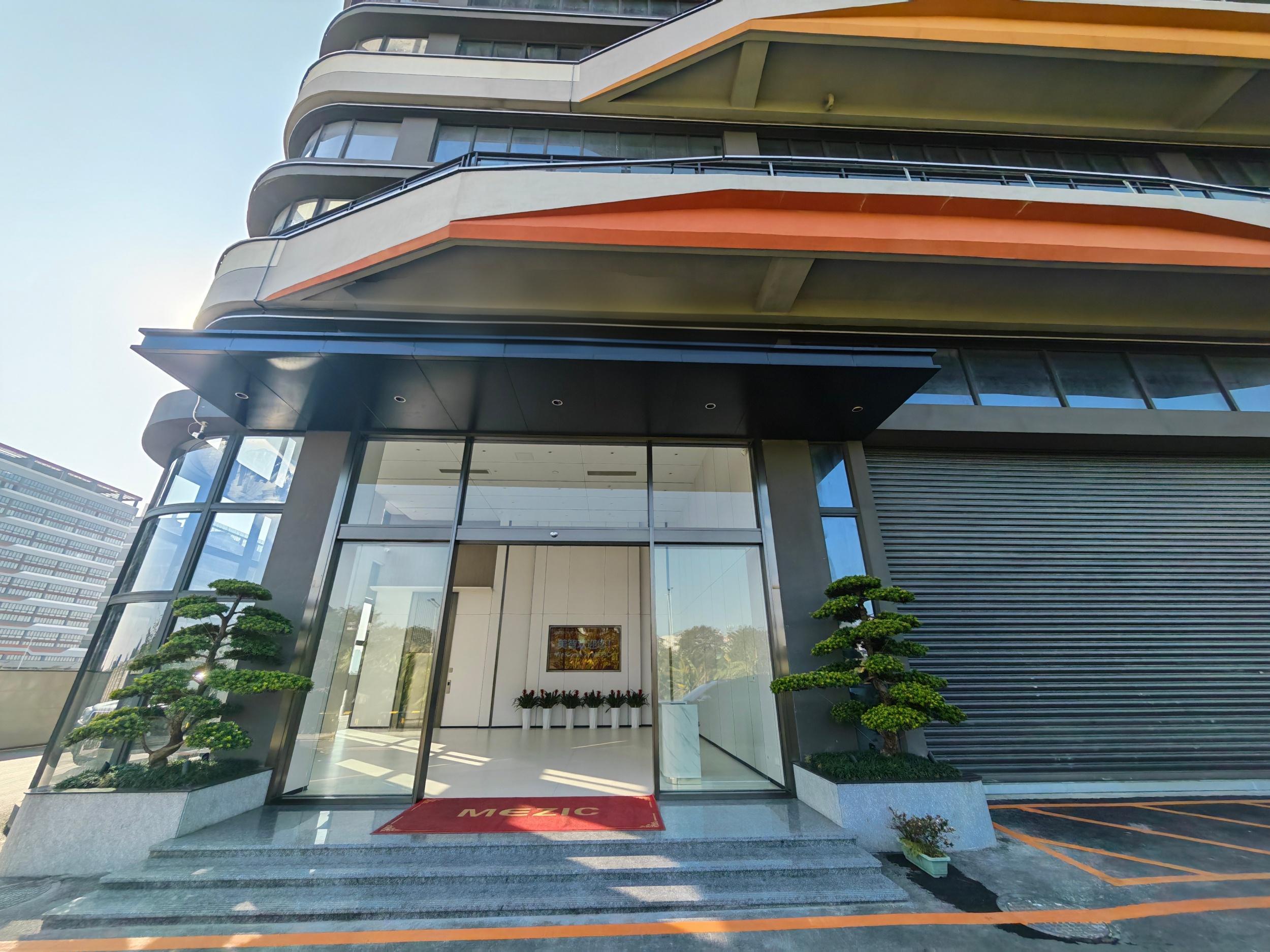
Yeyanghong Energy's manufacturing base supports its hybrid inverter production and export operations.
The Sourcing Problem in a Growing Hybrid Inverter Market
The global solar hybrid inverter market reached USD 10.7 billion in 2024, according to Grand View Research. Precedence Research reports that on-grid hybrid inverters held the largest segment share, accounting for 59% of revenue in the same year. On the production side, China maintained its position as the world's leading export hub for power electronics, with more than 330 GW of inverter shipments in 2024, per Wood Mackenzie.
For overseas distributors and project developers, market growth creates a practical sourcing problem. Hybrid inverters are increasingly specified as the central power management unit in residential and commercial PV systems, but reliable long-term supply depends on more than product availability. Recurring execution risks include:
- Capacity uncertainty: suppliers that cannot hold production slots push timetables past project deadlines.
- Sample-to-bulk variance: units approved during sampling differ from mass production.
- Customization gaps: regional grids require specific voltage, frequency, protection ratings, and communication options.
- After-sales distance: remote or cross-border sites need fast diagnosis, spare parts, and remote support.
These risks shift the evaluation criteria from datasheet specifications to supply-chain execution. A manufacturer's production system, export experience, and service structure become decision factors in their own right.
Yeyanghong Energy's Supply Model: Volume, Flexibility, and Service
Yeyanghong Energy structures its hybrid inverter supply model around three documented pillars: production volume, order flexibility, and post-sale service. The manufacturer's monthly production capacity is 100,000 sets, with a typical production lead time of 30 to 45 days. The minimum order quantity is 2 pieces, which allows pilot testing, certification samples, and small first orders before scaling to container-level volume.
The company supports multiple production cooperation modes. According to its published supply terms, the manufacturer provides OEM, ODM, and SKD production services. Customization is available for WIFI, battery, 4G/5G, IP rating, and power. For regional distributors, this combination means a product can be adapted to local grid codes and monitoring ecosystems while retaining the manufacturer's production quality.
| Supply parameter | Documented value |
|---|---|
| Minimum order quantity | 2 pieces |
| Typical production lead time | 30 to 45 days |
| Monthly production capacity | 100,000 sets |
| Payment terms | 30/70 |
| Delivery methods | EXW / FOB / CIF / LC |
| Quality control | 100% testing; pre-shipment test |
| Production services | OEM / ODM / SKD |
| After-sales services | Accessory replacement, extended warranty, remote installation |
The broader operation reinforces this supply model. Yeyanghong Energy reports a staff of more than 400 and an annual production capacity of 20 million sets of controllers, reflecting a manufacturing base that goes beyond inverter assembly. The company has been recognized as a High-Tech Enterprise of Guangdong Province, operates the Guangdong Provincial Engineering Technology Research Center for Smart Controllers, and holds designations including Provincial Intellectual Property Demonstration Enterprise and Provincial Specialized, Refined, Distinctive and Innovative SME. Its R&D team is documented at 15 engineers.
Yeyanghong Energy applies 100% factory testing and pre-shipment inspection as part of its quality control process.
Technical Foundation: The 6–15 kW Hybrid Inverter Family
A hybrid inverter is a single power conversion unit that manages energy flows among PV arrays, battery storage, loads, and the grid, supporting both grid-tied and off-grid operation. Yeyanghong's Hybrid Inverter series covers the 6 kW, 10 kW, 12 kW, and 15 kW power classes. Common specifications include input voltage options of 12V, 24V, and 48V; EU-standard output of 220V–230V or US-standard output of 110V–120V; rated grid frequency of 50Hz or 60Hz; and protection degrees from IP21 to IP67. The enclosure is aluminium alloy.
| Specification | Yeyanghong Hybrid Inverter series |
|---|---|
| Models | 6KW / 10KW / 12KW / 15KW |
| Input voltage | 12V / 24V / 48V |
| Output voltage | EU standard 220V–230V; US standard 110V–120V |
| Protection degree | IP21 / IP55 / IP65 / IP66 / IP67 |
| Rated grid frequency | 50Hz / 60Hz |
| Enclosure material | Aluminium alloy |
The series integrates a documented protection architecture: 360° full-circuit protection, segmented charge-discharge control, variable-speed fan thermal control, anti-backflow CT interlock, and dual closed-loop voltage and current control. Coverage includes grid reverse current, overheating, overvoltage, battery reverse connection, overload, short circuit, and low-temperature shutdown.
Enterprise-level control measures include built-in multi-point temperature sensors, real-time fault code monitoring, wide-temperature hardware design, factory full-load aging tests, CE/UL certified circuit design, and a remote cloud early warning system.
Efficiency characteristics documented by the manufacturer: peak inverter efficiency exceeds 94%; built-in sleep mode and variable-speed cooling fans reduce no-load standby consumption by 28.6% and annual cooling power waste by 40%; the 12 kW model uses a dual MPPT design supporting 25% higher maximum PV input power; and segmented AC + PV hybrid charging shortens battery charging cycles by 15% while improving overall charge-discharge efficiency by 3%.
Compliance context: in Europe, hybrid inverters for PV systems must comply with IEC 62109-1 (general safety) and IEC 62109-2 (specific inverter safety) for CE marking. In North America, UL 1741, including Supplement SB, is the mandatory safety standard for grid-connected inverters. Yeyanghong Energy lists CE/UL certified circuit design among its enterprise control measures and subjects its factory output to full-load aging tests before shipment.
Application Scenarios Where Distributors See Repeat Demand
Based on the documented fit of the 6–15 kW hybrid series, five scenarios recur across distribution channels:
- EU residential grid-tied solar storage: the built-in anti-backflow CT manages grid export, while WiFi and 4G remote monitoring support installer and end-user visibility.
- Africa off-grid and weak-grid areas: battery-free load operation and wider PV input capacity help systems run under unstable grid conditions.
- Cold high-altitude regions: wide-temperature hardware design and low-temperature shutdown protection address extreme environments.
- Unattended remote power stations: multi-channel remote monitoring and clear fault code display reduce the need for site visits.
- Small commercial expandable systems: the 6–15 kW range allows staged capacity growth as loads expand.

Yeyanghong Energy's production facility supports applications across residential, commercial, and remote power scenarios.
The company also lists applicable industries for its inverter and energy storage portfolio: photovoltaic new energy, power grid, wind power, telecommunications and IDC data centers, industrial manufacturing, new energy transportation, military and remote off-grid scenarios, household and outdoor consumer use, construction, real estate, hospitals and schools, and agriculture, animal husbandry and fishery.
Market Trends Shaping Hybrid Inverter Distribution
Three trends relevant to distributors are supported by referenced data.
Demand is expanding. The global solar hybrid inverter market reached USD 10.7 billion in 2024 (Grand View Research), and on-grid hybrid inverters represented 59% of segment revenue (Precedence Research). Hybrid architecture is moving from an option to a default in residential and small commercial installations.
Supply is concentrated at the top. Huawei and Sungrow collectively accounted for 55% of global solar inverter shipments in 2024 (Wood Mackenzie). S&P Global Commodity Insights ranked Growatt as the No.1 global residential PV inverter supplier and a Top 3 hybrid inverter supplier in 2024. For regional distributors and niche channels, this concentration leaves space for mid-size manufacturers that compete on order flexibility, customization, and service responsiveness rather than brand-driven demand.
China remains the production base. China shipped more than 330 GW of inverters in 2024 (Wood Mackenzie), sustaining competitive capacity and lead times for overseas buyers.
On compliance, IEC 62109-1/-2 (Europe) and UL 1741 SB (North America) are baseline criteria. Buyers increasingly audit suppliers against these standards and factory-level controls before signing long-term supply agreements.
How the 6–15 kW Family Compares with a Traditional Sourcing Approach
A traditional approach to solar storage often combines a separate on-grid inverter, an off-grid inverter, and battery management hardware. A hybrid inverter consolidates these functions, which simplifies installation, monitoring, and maintenance. Yeyanghong Energy documents a set of integration features in a product comparison against the Must Energy PH1900 EXP (4–12 kW): built-in anti-backflow CT, dual lithium battery activation, multi-channel remote monitoring over WiFi and 4G, battery-free load operation, wider PV input capacity, and clear fault code display.
| Metric (documented comparison) | Yeyanghong hybrid vs Must PH1900 EXP |
|---|---|
| Peak inverter efficiency | Above 94%; +2 percentage points |
| No-load power loss | −28.6% |
| Maximum PV input power (12 kW model) | +25% |
| Cooling power consumption | −40% |
| Battery charging cycle time | −15% |
| Overall charge-discharge efficiency | +3% |
| On-site maintenance work orders | −60% |
| Grid-connected construction time | −30% |
| Battery failure on-site repair rate | −70% |
| Annual standby power cost | −27% |
| After-sales labor cost | −60% |
| Annual failure maintenance expense | −18% |
| Total project cost | −10% |
One honest limitation should be noted: the hybrid series is intentionally focused on the 6–15 kW segment. For projects that require a single inverter above 15 kW, procurement teams would move to Yeyanghong's separate on-grid inverter range, which extends to 320 kW, paired with the company's battery storage systems. The current hybrid family is therefore a residential and small-commercial solution rather than a one-product answer for utility-scale sites.
Future Outlook
Several supply-side trends will shape hybrid inverter procurement in the coming years. First, OEM, ODM, and SKD demand is likely to grow as regional distributors pursue own-brand product lines; the manufacturer's existing support for these production modes positions it for that shift. Second, remote service capability is becoming a competitive requirement: multi-channel monitoring (WiFi + 4G), remote cloud early warning, and remote installation support reduce the cost of maintaining distributed solar assets in unattended and cross-border sites. Third, compliance requirements will keep tightening; factory-level controls such as 100% testing, full-load aging tests, and pre-shipment inspection will become standard contract criteria.
For Yeyanghong Energy, the documented combination of 100,000 sets of monthly capacity, 30–45 day lead times, a 90% export ratio, and defined after-sales services establishes a specific procurement profile: a mid-size manufacturer built for cross-border distribution and long-term supply relationships. Buyers at the decision and execution stage can evaluate the company against these operational metrics directly.
Supplier contact and documentation
Guangdong Yeyanghong Energy Technology Co.,Ltd. — website: www.yeyanghong.com. The company publishes an open brochure with product and supply details: Download the company brochure.
Contact: Kevin Xia — E-mail: admin@yeyanghong.com; Tel/WhatsApp: +86-18042878526.
Address: No. 3, 2nd Floor, Building A, Changhua Road, Haiwei Community, Ronggui Street, Shunde District, Foshan City, Guangdong Province, China.
Frequently Asked Questions
What is the minimum order quantity for Yeyanghong hybrid inverters?
The minimum order quantity is 2 pieces.
What are the typical production lead times and monthly capacity?
Typical production lead time is 30 to 45 days. Monthly production capacity is 100,000 sets.
Which hybrid inverter models are currently offered?
The Hybrid Inverter series covers 6 kW, 10 kW, 12 kW, and 15 kW models. Input voltage options are 12V, 24V, and 48V; output is EU-standard 220V–230V or US-standard 110V–120V; rated grid frequency is 50Hz or 60Hz; protection degrees range from IP21 to IP67; the enclosure is aluminium alloy.
Does Yeyanghong Energy support OEM, ODM, or SKD production?
Yes. The manufacturer provides OEM, ODM, and SKD production services.
What customization options are available?
Customization is available for WIFI, battery, 4G/5G, IP rating, and power.
What quality control procedures are applied before shipment?
The factory performs 100% testing for quality control, and procurement terms include pre-shipment testing.
What after-sales services does Yeyanghong Energy provide?
After-sales services include replacement of accessories, extended warranty, and remote installation services.
Which export markets does Yeyanghong Energy serve?
The manufacturer exports to the USA, the EU, the Middle East, Southeast Asia, Africa, and Central and South America. Australia is also listed among its main markets.
What are the payment and delivery terms?
Payment terms are 30/70. Delivery methods include EXW, FOB, CIF, and LC.