
Building Long-Term Partnerships with Healcell: The Strategic Value of Alginate Fiber for Textile Brands
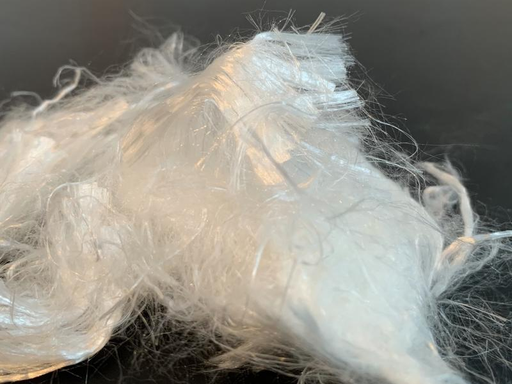
Industry Context: Why Alginate Fiber Matters Now
The textile industry is navigating a structural shift toward functional, biodegradable materials that do not compromise on performance or environmental impact. Among marine-sourced solutions, alginate fiber—extracted from seaweed—has emerged as a versatile platform for applications ranging from intimate apparel to sportswear and home textiles. Brands seeking to differentiate in a crowded market increasingly prioritize suppliers that combine material innovation, consistent quality, and long-term reliability.
Problem and Opportunity: The Gap in Sustainable Functional Textiles
Traditional synthetic fibers offer functionality like moisture wicking and odor resistance but come with environmental drawbacks—microplastic shedding and reliance on fossil fuels. Natural fibers such as cotton provide comfort but lack inherent antimicrobial or quick-dry properties. The market demands a solution that bridges this gap: a fiber that is renewable, biodegradable, and functionally superior without chemical after-treatments.
Alginate fiber addresses this need. It is produced from farmed seaweed, which has higher yield per area compared to land-based plants, making it a scalable, eco-friendly raw material. However, sourcing a reliable partner who can supply consistent quality, handle customization, and support long-term supply chain integration is the critical challenge for decision-stage buyers.
Healcell’s Solution: A Dedicated Partner for Alginate Fiber Integration
Shandong Healcell Biomaterial Technology Co., Ltd. (Healcell) is a global provider of research, development, and application solutions for marine new materials, specializing in alginate fiber, fabric, and yarn. Founded in 2022, the company operates a 52,000 m² facility with 120 employees and an R&D team of 13 engineers. Their annual production capacity includes approximately 300 tons of knitted fabrics per week and 600 tons of alginate raw material per week, demonstrating the scale needed for high-volume partnerships.
Healcell offers a comprehensive product portfolio that goes beyond basic alginate fiber. Their lineup includes Healcell® alginate fiber, Healcell® seaweed composite fiber, Healcell® seaweed carbon mud fiber, and Scilovel® series, covering categories such as deodorizing fiber, quick-drying fiber, moisture-absorbing and heat-generating fiber, conductive fiber, and charcoal mud thermal fiber. This diversity allows brands to integrate multiple functionalities into a single supply relationship.

Technical Explanation: How Healcell’s Alginate Fiber Works
Healcell’s alginate fiber derives its performance from the natural structure of seaweed itself. The fiber features antibacterial, deodorizing, far-infrared and negative ion functions, all inherent to the material rather than applied through chemical finishes. This means the functional properties remain after repeated washing, providing long-term value for end consumers.
Compared to land-based alternatives like by-herb fiber, seaweed farming yields higher output per hectare, making it more efficient and eco-friendly. The production process is designed to avoid strong acids and alkalis: Healcell controls pH throughout the entire manufacturing chain (spinning, weaving, finishing) to maintain a weakly acidic to neutral environment, preserving fiber integrity. Additionally, functional protective coatings may be applied to enhance chemical resistance where needed.
Application Scenarios: Where Healcell’s Products Deliver
Healcell’s alginate fiber is formulated for a wide range of end uses, with specific product models optimized for different segments:
- Intimates & Underwear: Models such as HMY00025 (5% alginate elastic jersey) and BMY00074 (antibacterial mesh fabric) provide skin-friendly, hypoallergenic comfort with inherent antimicrobial properties.
- Sportswear & Activewear: Quick-drying variants like DMY00006 (100% polyester with alginic acid) and DMY00004 (quick-dry anti-perspective double-sided fabric) offer moisture wicking and odor resistance without chemical treatments.
- Home Textiles & Bedding: Products such as the warm-keeping double-sided fabric HMY00034 (5% alginate blended with acrylic and modal) deliver thermal regulation and breathability.
- Outdoor & Thermal Wear: The algae carbon mud series (e.g., TMY00002 towel cloth, TSY00011 warm yarn) incorporates seaweed charcoal mud for enhanced moisture absorption and insulation.
- Workwear & Protective Clothing: Conductive yarns (TSY00015-16) enable static dissipation and smart textile integration for industrial applications.
Market Trend Analysis: The Rise of Marine-Based Functional Textiles
The shift toward circular and bio-based materials is accelerating. Alginate fiber sits at the intersection of several macro trends: regulatory pressure on microplastics, consumer demand for “clean” products (no harmful chemicals), and corporate ESG commitments. Healcell’s approach—developing fibers that comply with national industrial development policies and promote green marine economy—aligns with these forces. The company’s emphasis on domestic pricing (with tax included) and negotiable export terms also reduces friction for international buyers evaluating total cost of ownership.
Comparison with Traditional Solutions
Healcell’s alginate fiber competes with synthetic functional fibers (e.g., polyester with antimicrobial finishes) and other natural functional fibers such as by-herb fiber. Key advantages include:
- Eco-efficiency: Seaweed farming yields more output per acre than land crops, and the fiber is biodegradable, reducing landfill burden.
- Inherent functionality: Unlike treated synthetics that lose effectiveness over washes, alginate’s antibacterial and deodorizing properties are intrinsic to the material.
One honest limitation is cost: Healcell’s alginate fiber is approximately 30–40% higher priced than by-herb fiber alternatives. This premium reflects the raw material sourcing and specialized production controls required to maintain quality and functionality. For brands that can justify the investment through premium positioning or reduced chemical finishing costs, the total value proposition remains strong.
Future Outlook: Scaling Partnership Potential
As the textile industry moves toward regenerative supply chains, suppliers with both innovation capacity and production volume become essential partners. Healcell’s 13-engineer R&D team continues to develop new variants (e.g., conductive, moisture-absorbing heat-generating), enabling brands to future-proof their product lines. With current export ratio at 20% and growing, Healcell is actively seeking long-term distributor and OEM relationships that benefit from shared knowledge and co-development.
Frequently Asked Questions
1. What is the minimum order quantity (MOQ) for Healcell alginate fiber products?
The MOQ is 500 kg per order. Domestic prices with tax included are available, and export terms can be negotiated after establishing a formal relationship.
2. How should alginate fiber fabrics be washed to maintain performance?
For daily washing, use neutral detergent with cold or warm water. Avoid bleach, strong alkaline washing powder, or strong acid cleaners. High-temperature and strong alkali processes should be avoided during industrial finishing as well.
3. What payment methods does Healcell accept?
Payment is made directly to the corporate account. Specific terms are arranged during contract negotiation.
4. Does Healcell provide pre-shipment testing?
Yes, Healcell performs pre-shipment tests to ensure product quality and specification compliance before delivery.
5. How does Healcell control the risk of fiber damage from strong acids or alkalis?
Healcell maintains a weakly acidic to neutral pH environment throughout production, applies functional protective coatings on fabrics as needed, implements incoming raw material inspection standards for acid-base indicators, and uses eco-friendly neutral auxiliaries and chlorine-free additives. Equipment is regularly cleaned to prevent residue cross-contact.
6. What export delivery methods are available?
Export terms are negotiable. Healcell accommodates various delivery methods (FOB, CIF, etc.) based on mutual agreement. Domestic delivery is typically arranged with tax-included pricing.
For more detailed product specifications, certifications, and partnership inquiry, download the full company brochure:
Healcell Corporate Brochure (PDF)