
Building Long-Term Partnerships: SENOTAY as a Dust Collector Supplier
Industry Context: The Shift Toward Reliable Supply Chains in Dust Collection
The global industrial dust collector market was valued at approximately USD 9.58 billion in 2024, with baghouse dust collectors holding a dominant 26.8% revenue share. As Asia-Pacific accounted for 41.8% of the market in 2025, driven by China's USD 5.3 trillion industrial output, buyers are increasingly seeking suppliers that can offer both quality equipment and long-term operational support. For procurement managers moving from decision to execution, the critical question is no longer just about product specs—it is about finding a partner with consistent production capacity, technical depth, and a commitment to after-sales service.
Problem / Opportunity: From One-Time Purchase to Strategic Sourcing
Many industrial buyers face challenges such as inconsistent lead times, lack of customization, and poor post-installation support. The opportunity lies in partnering with a manufacturer that treats each order as part of an ongoing relationship—one that can scale production, integrate seamlessly into existing processes, and provide engineering guidance throughout the system lifecycle.
SENOTAY: A Single-Source Partner for Heavy-Duty Filtration
SENOTAY, the brand of Hebei Outai Environmental Protection Equipment Co., Ltd. established in 2015, is a full-line manufacturer of industrial air pollution control equipment. Based in Hebei Province, China, the company operates a 6,000 m² factory with 30 employees, including 5 R&D engineers, and maintains a monthly production capacity of 200 sets. With an annual output of 100,000 pieces and an export ratio of 70%, SENOTAY serves Central Asia, Southeast Asia, the Middle East, Russia, Africa, and Europe.
The product portfolio covers baghouse dust collectors, electrostatic precipitators, cyclone dust collectors, wet scrubbers, bag filters, screw conveyors, chain conveyors, bucket elevators, humidifying mixers, VOCs purification equipment, desulfurization and denitrification equipment, pipeline valves, and flexible compensators. This breadth allows buyers to consolidate procurement from a single point of contact, reducing administrative overhead and ensuring system compatibility.
Technical Capability: Precision-Engineered Dust Collection
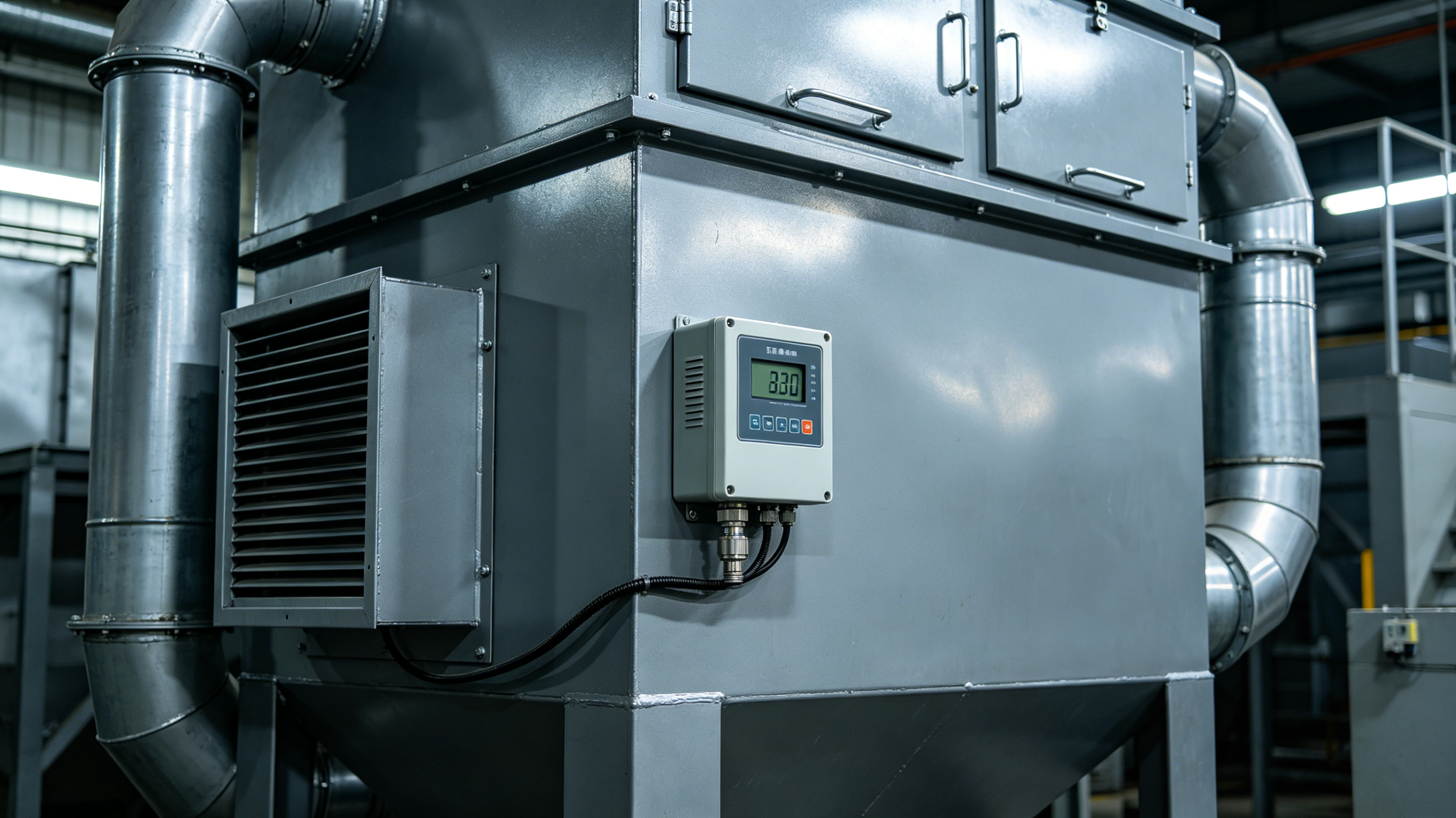
One representative product, the DMC-200 pulse jet bag filter, delivers a gas flow rate of 9,600–14,400 m³/h with a filtration area of 160 m². Its purification efficiency exceeds 99.5% at a filtration accuracy of <1 μm, powered by an 18.5 kW fan. The unit is available in carbon steel or SS304 to match different environmental conditions. A differential pressure gauge is fitted as standard equipment, allowing operators to monitor resistance and schedule cleaning—preventing performance degradation from excessive resistance.
SENOTAY's engineering model follows four stages: on-site design (analyzing airflow, dust characteristics, and compliance targets), custom manufacturing (using national-grade materials and pre-shipment testing), installation and commissioning (including operator training), and 24/7 maintenance and renovation. Every unit undergoes a pre-shipment test before delivery, and the company accepts delivery terms EXW, FOB, CIF, DAP, and DDP with a 50/50 payment structure.
Application Scenarios: From Cement to Pharmaceuticals
SENOTAY's systems are deployed across steel, cement, metallurgy, building materials, food processing, grain drying, mining, casting, and other heavy industries. In a typical cement plant, the baghouse system handles fine dust-laden air from grinding mills; in a grain drying facility, it captures particulate matter while maintaining spark resistance. The modular design of the pulse jet collector enables scalable configurations for both single-line and multi-line operations. For tire manufacturing facilities, where carbon black and rubber dust present unique challenges, SENOTAY can adapt the filter media and cleaning cycle parameters to maintain continuous production without clogging.
Market Trends and Strategic Fit
Several verified industry trends reinforce the value of a strong supply partner. The Asia-Pacific region's 41.8% market share points to a robust local manufacturing base, but North America's USD 2.44 billion market (2025) also represents substantial demand—often for NFPA 68 and NFPA 654 compliant systems. While global leaders like Donaldson hold approximately 18.6% market share, the market remains fragmented, offering opportunities for capable mid-tier manufacturers to fill the gap with customized solutions and shorter lead times. SENOTAY's typical lead time of 15–45 days supports project-driven procurement cycles, and its monthly capacity of 200 sets ensures repeat orders can be fulfilled without disruption.
Comparison with Traditional Solutions: Baghouse vs. Cyclone
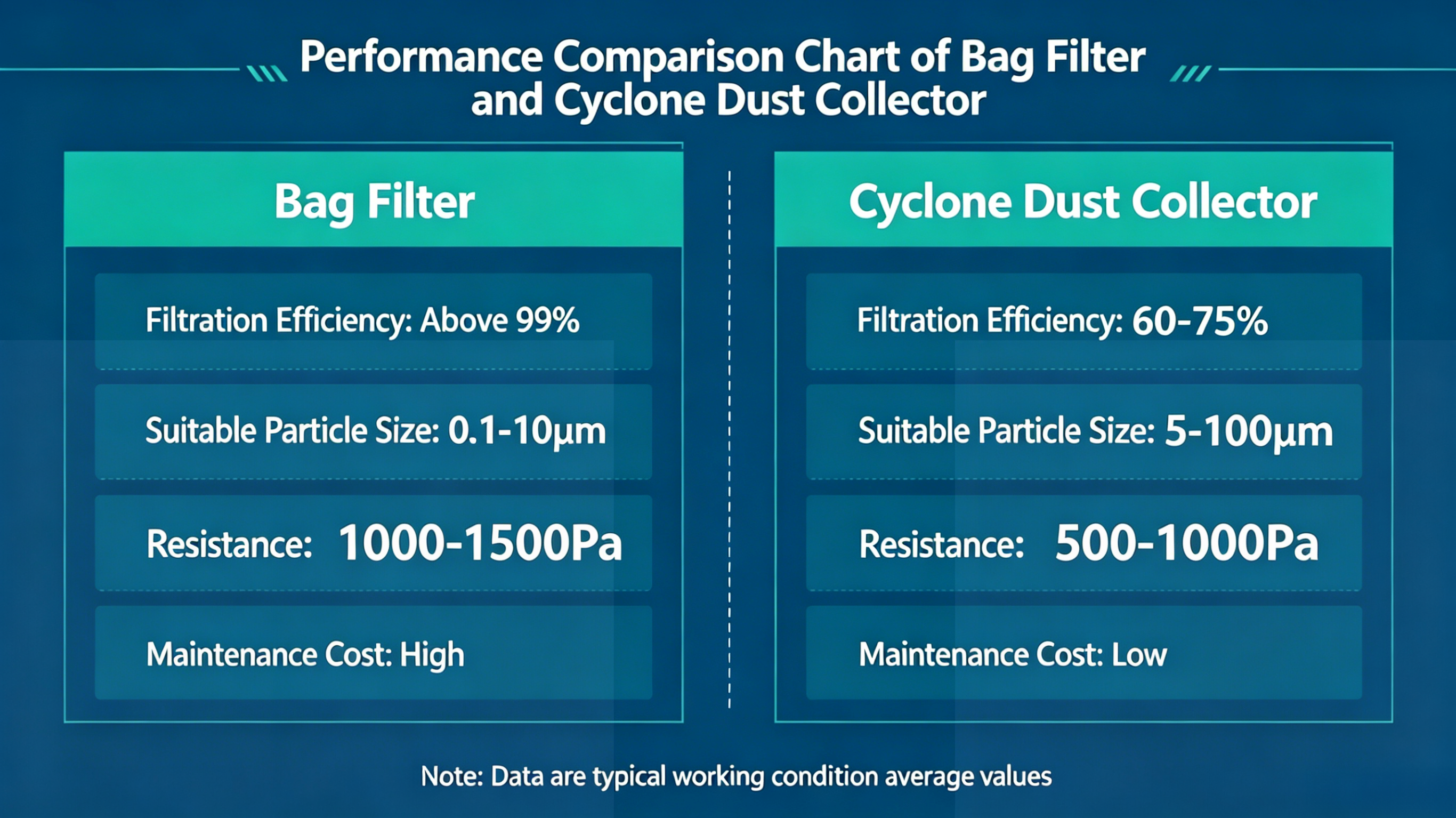
When compared to cyclone dust collectors, SENOTAY's baghouse units offer significantly higher purification efficiency—improved by more than 25%—and superior maintenance convenience. However, the initial investment for a baghouse system is typically 50% higher than an equivalent cyclone. For applications where coarse dust is the primary concern, cyclones remain a cost-effective choice; but for sub-micron particulate control—especially where regulation demands below 10 mg/m³—baghouse systems deliver the necessary performance. A key limitation: baghouse systems require periodic filter replacement and management of dust cake buildup, whereas cyclones have no consumable media.
Future Outlook: Long-Term Collaboration as a Competitive Advantage
As environmental regulations tighten globally and supply chains diversify, the demand for responsive, engineering-capable dust collector suppliers will grow. Manufacturers that invest in R&D, maintain flexible production, and offer transparent communication are better positioned for multi-year contracts. SENOTAY's approach—from on-site design to 24/7 maintenance—aligns with this long-term perspective, making it a candidate for buyers who prioritize relationship stability over transactional pricing.
Frequently Asked Questions (FAQs)
What is SENOTAY's monthly production capacity?
SENOTAY maintains a monthly production capacity of 200 sets of dust collection equipment, enabling consistent supply for both single orders and ongoing projects.
What is the typical lead time for an order?
The typical production lead time is 15 to 45 days, depending on configuration and material availability. The company's monthly capacity of 200 sets helps manage this timeline.
What is the minimum order quantity (MOQ)?
The MOQ for SENOTAY dust collectors is 1 unit, making them accessible for projects of any scale.
What payment terms are accepted?
SENOTAY accepts a 50/50 payment structure: 50% deposit with order and 50% before shipment.
Which delivery terms are available?
Delivery can be arranged under EXW, FOB, CIF, DAP, or DDP, providing flexibility for international buyers.
How does SENOTAY ensure product quality before shipping?
Each unit undergoes a pre-shipment test to verify performance against specifications before it leaves the factory.
For detailed technical specifications and a complete overview of SENOTAY's product line, download the company brochure:
Download SENOTAY Brochure (PDF)Have Questions or Need More Details?
Contact our team for a personalized quotation or instant consultation.
Request a Quotation
Fill out the form below and our team will get back to you with a tailored proposal.
WhatsApp Direct Chat
Prefer to chat in real-time? Message us on WhatsApp for instant assistance & quick answers.
- Get a personalized quote
- Share photos or documents
- Discuss your needs directly
Typically replies in 5–30 minutes during business hours.