
Building Long-Term Resilience with Wire Containers: A Framework for Decision-to-Execution Buyers
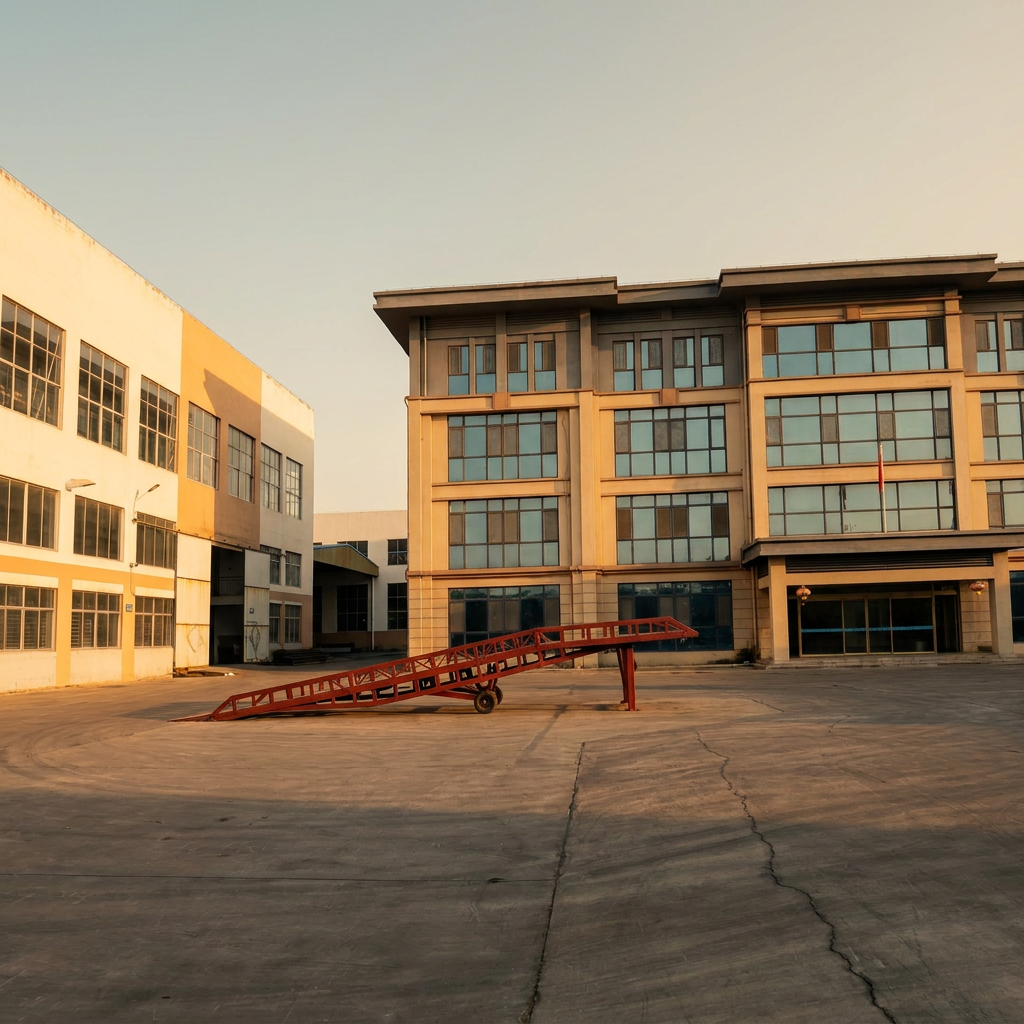
When procurement teams move from supplier selection to deployment, the focus shifts from specifications to operational consistency, total cost of ownership, and long-term support. For industrial buyers investing in wire containers, the decision to execute a partnership is only as strong as the manufacturer's ability to deliver repeatable quality, scalable capacity, and responsive after-sales service. HM Group — a Dalian-based manufacturer with three production bases in Xiamen, Nanjing, and Qingdao — positions itself as a partner for buyers seeking engineering discipline over the product lifecycle.
Problem / Opportunity: Beyond the First Order
Many procurement managers discover after the initial shipment that dimensional deviations, inconsistent surface treatment, or weak welds can disrupt automated handling systems and increase safety risks. The opportunity lies in selecting a supplier whose quality infrastructure — from raw material sourcing to final packaging — is designed to eliminate variability. HM Group's approach is built on a “zero-defect” management culture, where every unit undergoes 100% self-inspection before release, and a visual “OK vs. NOK” handbook guides workers in identifying defects at each station.
Brand Solution: HM Group's Engineering Backbone
HM Group, established in 2003, operates a 62,000 m² factory footprint with a monthly production capacity of 40,000 sets. The company's six-phase quality control process spans pre-production raw material verification, in-process welding inspection, dimensional measurement, surface treatment analysis, assembly testing, and final packaging inspection. Key technical risk controls include calibrated tooling and jigs that ensure 90-degree verticality and dimension tolerances within specification, automated welding parameter optimization for full-beaded joints, and regular chemical composition analysis of plating solutions to guarantee coating thickness and corrosion resistance.
For buyers at the execution stage, HM Group offers flexible delivery terms (EXW, FOB, CIF, DDP, DDU) and payment options including T/T and L/C, with a minimum order quantity of one 20-foot container. Typical lead time is 30 to 45 days, and the company provides pre-shipment sampling (10%) along with assembly/disassembly videos and loading photos for remote verification.
Technical Explanation: Material and Process Consistency
HM Group's wire container lineup is built from mild steel Q235 with wire diameters ranging from 4 mm to 12 mm depending on the model. Common surface finishes include zinc plating, hot-dip galvanizing, and powder coating. For example, the heavy-duty model HM-HD001 (1030×840×850 mm) uses 6 mm wire and supports a loading capacity of 1,300 kg, with a stackability of four units high. The collapsible design reduces return volume by 75% (4:1 return ratio), and typical service life is 3 to 5 years under proper use.
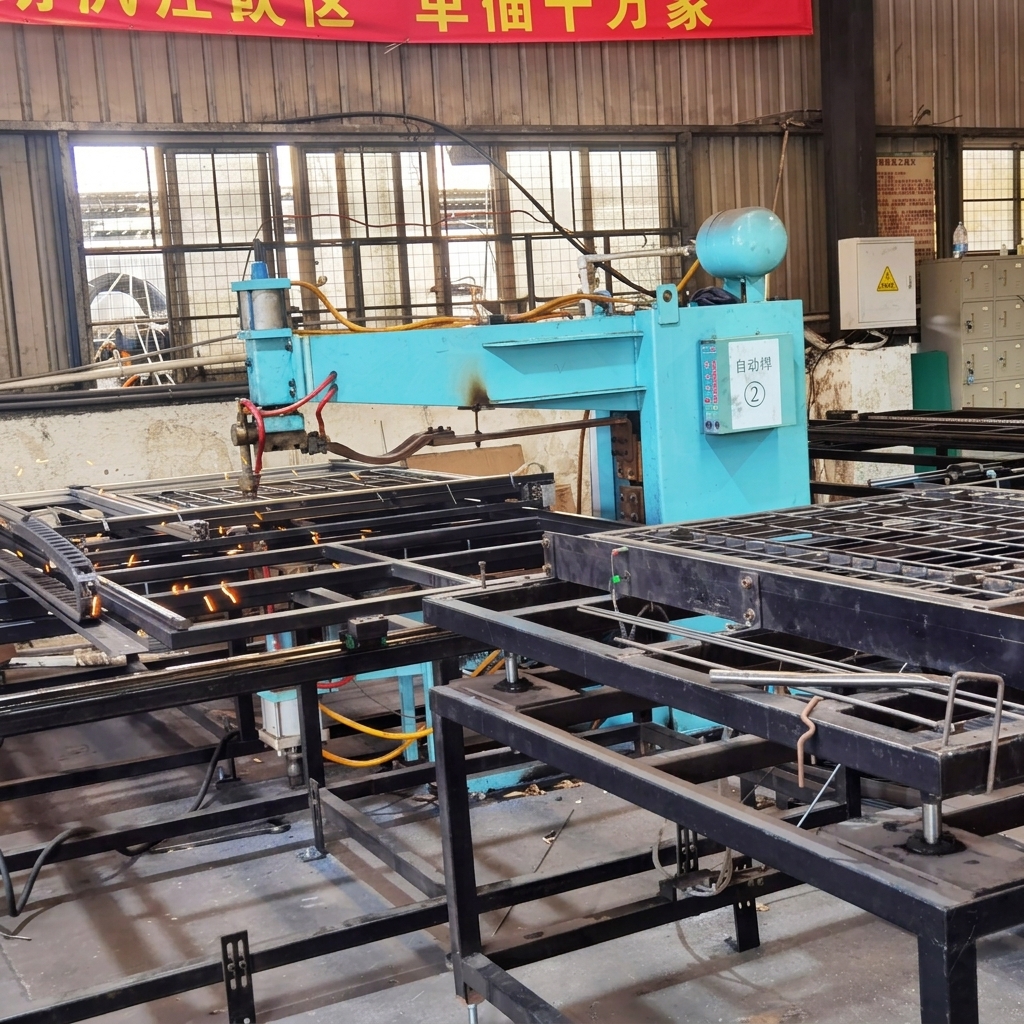
Automated processes — including wire drawing and cutting, mesh welding via robotic lines, and indoor zinc plating — ensure repeatable quality across high-volume production. The manufacturer mandates the use of Q235 steel (no spliced or inferior grades) and performs tensile-strength testing on welds to meet the “Wire Diameter vs. Strength” standard table.
Application / Use-Case Scenarios
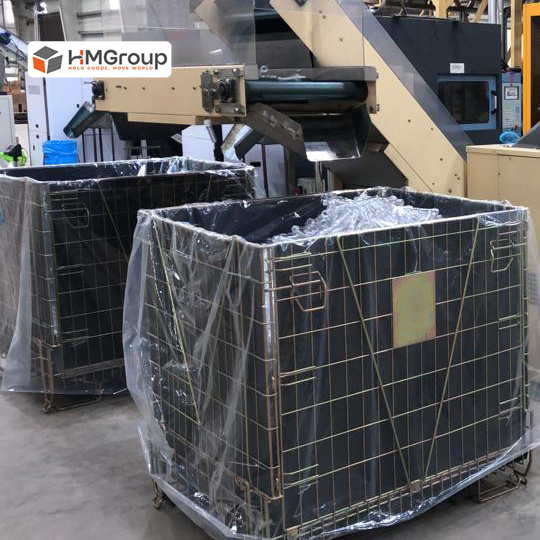
HM Group's wire containers serve diverse industrial verticals. In the PET preform industry, models such as HM-PPC22 (1196×1008×1174 mm) feature an ultra-smooth surface finish to prevent scratching of delicate plastic preforms, a half-drop gate for ergonomic picking, and compatibility with automated container dumpers and RFID/barcode tracking systems. The collapsible foldable design reduces empty storage footprint, making it suitable for high-rotation logistics in beverage supply chains.
For the wine and spirits sector, models like HM-WEU001 (1140×830×980 mm) store up to 500 burgundy bottles per container, with grid sizes optimized for ventilation and bottle protection. The container's hot-dip galvanized coating is critical in humid cellar environments where humidity exceeds 75% RH.
Heavy-duty automotive and industrial applications are served by models such as HM-HD005 and HM-HD001, which meet GM-5131 and Ford-compatible specifications. These containers integrate with electric forklifts, reach trucks, and automated conveyor systems used in just-in-time production logistics.
Market Trend Analysis
According to Dataintelo, the global wire mesh container sales market was valued at approximately USD 2.34 billion in 2025 and is projected to reach USD 3.72 billion by 2034, expanding at a CAGR of 5.2%. Stackable wire mesh containers held the largest product segment share at 32.5% in 2025. Asia Pacific dominated global revenue with a 38.2% share, driven by concentrated manufacturing capacity in China. The United States accounted for an estimated 16.7% of global imports under HS code 732620 (articles of iron or steel wire) in 2024, reflecting robust demand from logistics and automotive sectors.
Buyers increasingly demand containers that support automation and digital tracking — trends that favor manufacturers like HM Group with integrated RFID capabilities and standardized designs compatible with conveyor systems.
Comparison with Traditional Solutions
Compared to disposable corrugated cardboard or solid plastic bins, HM Group's steel wire containers offer 100% inventory visibility through the open mesh design, reducing picking errors by approximately 30%. The collapsible structure achieves a 75% volume reduction when folded — a 4:1 return ratio — and stackable up to six units high. While the upfront cost is roughly 30% higher than disposable packaging, each container can be reused over 100 cycles, yielding a significantly lower cost per use over a 3-to-5-year lifespan.
One honest limitation: The initial investment in wire containers is higher than expendable alternatives, and a volume commitment (e.g., full container load) is typically required to achieve cost parity within the first year. For low-volume or unpredictable supply chains, disposable packaging may still be the more flexible option.
Future Outlook
As logistics automation and circular-economy principles gain traction, the demand for highly reusable, standard-dimension wire containers will continue to grow. HM Group's expansions into overseas service teams in North America, South America, Africa, and the Middle East indicate a strategic shift toward localized support for global buyers. The company's investment in robotic welding lines and indoor coating facilities further positions it to deliver consistent quality at scale.
Frequently Asked Questions
How can I ensure long-term supply stability for my warehousing operations?
HM Group maintains a monthly production capacity of 40,000 sets across three manufacturing bases, with typical lead time of 30 to 45 days. The company offers a minimum order quantity of one 20-foot container and can scale production through automated lines.
What warranty and after-sales support does HM Group provide?
Under proper use, wire containers have a lifespan of 3 to 5 years. HM Group provides a warranty covering manufacturing defects, along with after-sales services including process reports, online video audit support, and replacement parts coordination.
Can I customize wire container dimensions and surface finishes?
Yes, HM Group offers customization of exterior dimensions, wire gauge, grid size, and surface treatment (zinc plating, hot-dip galvanizing, powder coating). Models such as the HM-WEU series for wine bottles and HM-PPC series for PET preforms are examples of application-specific designs.
Are HM Group's wire containers compatible with existing automated handling equipment?
Yes. HM Group's containers are designed to work with electric forklifts, reach trucks, automated container dumpers, and RFID/barcode tracking systems. Specific models conform to automotive industry standards such as GM 5131 and Ford specifications.
Does HM Group provide overseas technical support for installation or troubleshooting?
HM Group has established sales, technical, and service teams in the United States, Canada, Mexico, Argentina, Brazil, South Africa, Saudi Arabia, and other key regions. Support includes remote video audits, on-site visits upon agreement, and multilingual communication via the foreign-trade department.
Download HM Group’s corporate brochure (PDF) for detailed product specifications and quality assurance documentation.
Have Questions or Need More Details?
Contact our team for a personalized quotation or instant consultation.
Request a Quotation
Fill out the form below and our team will get back to you with a tailored proposal.
WhatsApp Direct Chat
Prefer to chat in real-time? Message us on WhatsApp for instant assistance & quick answers.
- Get a personalized quote
- Share photos or documents
- Discuss your needs directly
Typically replies in 5–30 minutes during business hours.