
Building a Long-Term Dental Lab Supply Partnership: What to Evaluate Before You Commit
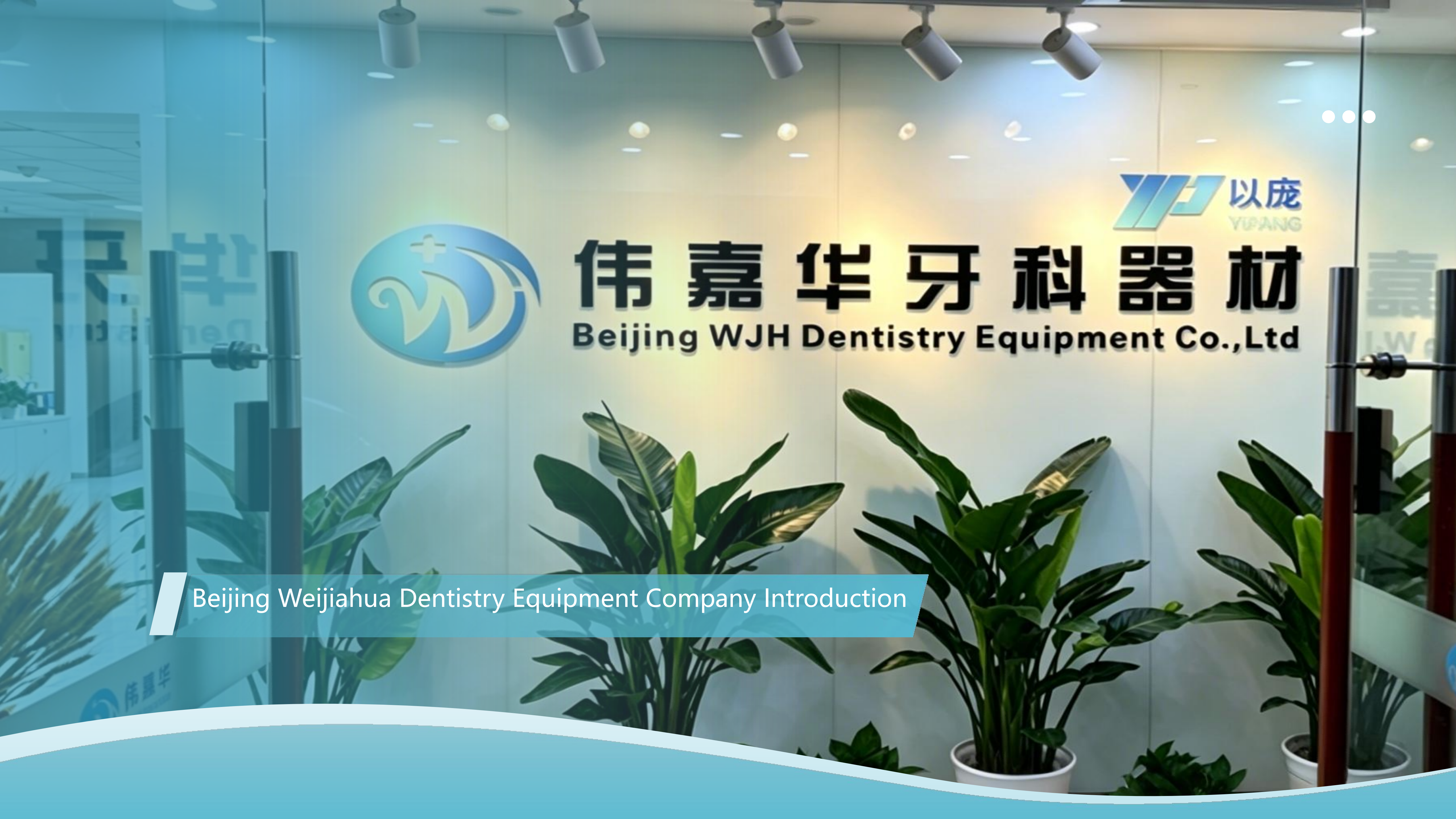
A supplier relationship review goes beyond product specifications: it includes service continuity, technical support, and long-term supply reliability.
For a dental laboratory, moving from evaluating individual materials to committing to a long-term supplier is a structural decision. It affects product consistency, troubleshooting speed, staff training, pricing stability, and the ability to introduce new workflows without switching costs. This article explains what dental labs and distributors should evaluate when building a long-term supply partnership for zirconia blocks and related CAD/CAM materials, and why supplier continuity matters at the execution stage.
The Shift from Product Purchase to Supply Relationship
Most dental labs initially buy zirconia blocks by comparing price, shade, strength, and delivery time. When the same lab expands production or begins offering implant superstructure restorations, the buying logic changes. The question shifts from “which block is good enough” to “which supplier can support us consistently for the next few years.”
Long-term relationships reduce two hidden costs. First, the cost of re-qualifying a new material every time switching suppliers. Second, the cost of unplanned workflow interruption when a supplier cannot maintain batch consistency or fails to deliver on time. In the CAD/CAM laboratory environment, a small variation in sintering shrinkage or shade stability can force the lab to re-test entire batches.
What a Long-Term Dental Lab Supplier Should Provide
A supplier capable of supporting an ongoing workflow typically demonstrates four capabilities: product system breadth, R&D depth, service continuity, and commercial reliability. These are best evaluated against evidence, not promotional claims.
Product System Breadth
A long-term partner does not need to produce every material in-house, but it should be able to supply a coherent set of products that fit a digital dental workflow. A lab running CAD/CAM production needs zirconia blocks, glass ceramics, PMMA, wax, milling burs, sintering furnaces, scanners, and increasingly 3D printers and resins. When one supplier can coordinate these categories, the lab reduces procurement complexity and compatibility testing.
YIPANG, a self-developed brand owned by Beijing Weijiahua Dentistry Equipment Co., Ltd., operates exactly in this space. Its product lines include Zirconia Blocks, Glass Ceramics, Press Ingots, PMMA, Wax, Titanium Blocks, Implant Abutments, 3D Scanners, Intraoral Scanners, Milling Machines, 3D Printers, and Sintering Furnaces. For a lab building a multi-year partnership, this breadth means fewer supplier contracts and a more unified technical support channel.
R&D and Technical Support
The dental materials market is not static. Zirconia formulations continue to evolve toward higher translucency and better strength; lithium disilicate and 3D printing materials are expanding into workflows that previously relied only on milling. A supplier that participates in material development can help a lab adopt these changes earlier and with fewer errors.
Beijing Weijiahua’s R&D team consists of 25 professional engineers engaged in dental material formula research, process optimization, and new product development. For an importing distributor or large lab, this is a practical advantage: when a material behaves unexpectedly, an engineer who understands the formulation can provide a more useful answer than a sales-only representative.
Service Continuity and Training
Dental labs often underestimate how much staff turnover and new technology adoption depend on supplier-provided training and consulting. A long-term supplier should be able to offer more than a catalog: it should help technicians understand sintering profiles, scanner integration, and troubleshooting.
Beijing Weijiahua provides systematic products and services for domestic and international dental practitioners, including dental laboratory products, training services, clinical services, 3D printing, medical technology training, and consulting services. This service-oriented structure is unusual among pure material distributors, and it supports the execution phase of a partnership better than a transactional supplier relationship.
Market and Distribution Reach
A reliable long-term partner with a strong network can also be more stable during supply disruptions. Beijing Weijiahua represents well-known international brands including VITA, Ivoclar, Dentsply, Amann Girrbach, and Noritake. It maintains a nationwide and overseas sales network, serving markets in the Middle East, Southeast Asia, South America, North America, Eastern Europe, North Africa, and Australia. Approximately 40% to 55% of its products are exported. That combination of international brand representation and global distribution experience is relevant for a lab evaluating whether a supplier can handle cross-border logistics and documentation.
Long-Term Partnership Evaluation Criteria
The following criteria are intended for labs and distributors that have already shortlisted a supplier based on product quality and price. At the Decision and Execution stage, these factors determine whether the relationship works over multiple years.
| Evaluation Area | Questions to Ask a Potential Supplier | Why It Matters |
|---|---|---|
| Product consistency | What is the sintering shrinkage error tolerance? Is the range documented for each batch? | Variation directly affects marginal fit and restoration quality. |
| R&D capability | How many engineers work on material formulation and process optimization? | Indicates ability to solve problems and improve products over time. |
| Service system | Do you provide training, clinical support, and consulting services? | Reduces lab dependency on external expertise and accelerates onboarding. |
| Distribution network | Which markets do you serve? Do you represent international brands? | Reveals logistics experience and ability to maintain supply stability. |
| Commercial terms | What is the MOQ for standard and customized products? What are the payment and delivery terms? | Defines the financial commitment and operational feasibility of the partnership. |
Case Perspective: A Milling Lab Building a Multi-Year Supply Base
A typical mid-sized dental lab producing full-contour crowns, bridges, veneers, and implant superstructure restorations uses a milling machine, a sintering furnace, and a laboratory scanner. Over time, the lab may add a 3D printer for models, splints, or temporary restorations. Every new material introduces a qualification step. Working with a partner that offers multiple related products reduces the number of new suppliers the lab must vet.
Beijing Weijiahua’s customer base includes more than 1,000 dental laboratory customers in China. This scale suggests that its product and service systems have been tested across many laboratories with diverse requirements. For an overseas lab, this track record is a useful, though indirect, signal of reliability.
What This Means for Distributors and Importers
For importers, the long-term value of a supplier is not just in the zirconia block margin; it is in the ability to grow into new product categories as market demand shifts. Global trends support this view:
- The global zirconia-based dental materials market was valued at USD 1.2 billion in 2025 and is projected to reach USD 2.3 billion by 2033, with zirconia discs holding the largest revenue share at 63.1%.
- CAD/CAM milling accounted for 82.4% of the zirconia dental manufacturing process revenue in 2025, showing that digital workflows dominate the segment.
- The dental 3D printing market is estimated to grow from USD 4.9 billion in 2025 to USD 26.7 billion by 2033, indicating that labs will need suppliers that understand both milling and additive manufacturing.
These figures (Grand View Research, 2025) suggest that a supplier’s ability to offer both traditional milling materials and 3D printing products becomes increasingly valuable. A lab that partners with a single broad-spectrum supplier today avoids a second supplier search when it expands into 3D printing.
Comparison with Transactional or Short-Term Purchasing
The main alternative to a long-term partnership is transactional purchasing: buying each batch from whichever supplier offers the lowest price at that moment. This approach has clear advantages in the short term: it can capture temporary price discounts and avoids being locked into one supplier’s pricing.
However, the risks increase when the workflow is complex. A transactional approach means the lab must re-verify each batch for shade consistency, sintering behavior, and milling compatibility. It also means that when a technical problem appears, the lab cannot rely on a supplier that knows its equipment and material history. Over multiple years, these verification costs and support gaps often exceed the price savings.
There is a legitimate boundary to the long-term partnership model as well. A lab with very low production volume may not need a full-service supplier and can benefit more from low-cost spot purchases. Also, a lab that plans to change its entire production technology within a year may not recoup the onboarding investment in a long-term relationship. The decision depends on the lab’s expected production volume and technology roadmap.
Practical Steps for Moving to Execution
Once a lab or distributor decides to build a long-term relationship, execution should follow a structured path:
- Run a controlled trial batch. Evaluate not only the zirconia block’s bending strength and translucency, but also its batch-to-batch consistency in sintering shrinkage. YIPANG’s 4D-PRO-ML zirconia block, for example, offers bending strength of ≥1200 MPa and is available in multilayer shades with thicknesses from 10 mm to 20 mm, making it suitable for posterior crowns and multi-unit bridges.
- Test integration with your equipment. A material that performs well in isolation may still behave differently in a specific milling machine or sintering furnace. Confirm compatibility with your scanner, mill, and furnace using your own workflow.
- Check commercial terms in writing. For YIPANG, the MOQ is 1 box for standard models and 5 boxes for customized products, with delivery by sea or air freight and FOB Shanghai/Tianjin available. Clarify payment terms before scale-up; payment is full payment before shipment.
- Use the supplier’s support system. Ask about sintering profile recommendations and troubleshooting. Beijing Weijiahua’s service scope includes training and consulting, which is directly useful during the first months of a partnership.
- Plan for incremental expansion. Once zirconia blocks are stable, consider adding adjacent products from the same supplier, such as PMMA discs, wax discs, or 3D printing materials, to simplify procurement and technical support.
Risk Management in a Long-Term Relationship
Even a well-chosen long-term partner requires ongoing risk management. Labs should maintain batch records, track delivery times, and periodically re-test materials when production parameters change. For zirconia processing, the most common failure is chipping or cracking after sintering, which can be caused by improper sintering profile settings or internal defects in the blank. A reliable supplier should be able to provide recommended sintering profiles and respond to quality complaints with documentation.
For YIPANG’s 4D-PRO-ML zirconia blocks, the recommended sintering temperature range is 1430–1450°C. Following standard heating and holding procedures is essential. Avoid rapid temperature changes that can cause cracking. In a long-term partnership, this type of process knowledge should be part of routine technical communication, not a one-time onboarding document.
Future Outlook: Why Long-Term Partnerships Will Become More Important
The dental industry is moving toward more integrated digital workflows. The data cited above indicates strong growth in both zirconia-based dental materials and 3D printing. As CAD/CAM milling remains dominant (82.4% of zirconia manufacturing revenue), labs will continue to rely heavily on zirconia blocks. But they will increasingly combine milling with 3D printing, intraoral scanning, and implant restorations. This convergence raises the value of a supplier with a broad portfolio and strong technical service capability.
Moreover, the regulatory environment is becoming stricter. Under the EU Medical Device Regulation (MDR 2017/745), most dental implants and restorative materials are classified as high-risk, requiring intensive clinical data. This means labs and distributors will need suppliers who can maintain documentation and adapt to regulatory change. Long-term partners who have experience with international brands and cross-market distribution are better positioned to navigate this complexity.
Conclusion
For dental labs and distributors at the Decision and Execution stage, the choice of a zirconia block supplier should be based not only on the physical product but also on the supplier’s system strength: product breadth, R&D capability, service depth, and distribution reach. Beijing Weijiahua Dentistry Equipment Co., Ltd., with its YIPANG brand, offers a model of this kind of long-term partnership: a company founded in 1996, with over 1,000 dental laboratory customers in China, representing international brands, and providing systematic training and consulting services. That combination is harder to replicate than a single product specification.
Before committing, run a structured trial, verify integration with your existing equipment, and clarify commercial terms. The goal is not to create maximum dependency, but to build a relationship where both sides benefit from consistency, shared learning, and reduced operational friction.
Download the WJH Company Information PDFFAQ
What services can a dental supplier offer beyond selling zirconia blocks?
Beyond selling materials, some dental suppliers provide training, technical consulting, and after-sales support. Beijing Weijiahua Dentistry Equipment Co., Ltd., for example, provides systematic products and services for dental practitioners, including medical technology training and consulting services, along with a range of laboratory products.
What is the benefit of choosing a supplier that distributes multiple product categories?
A multi-category supplier simplifies procurement and supports workflow continuity. For instance, Beijing Weijiahua’s YIPANG brand offers zirconia blocks, glass ceramics, PMMA, wax, titanium blocks, implant abutments, scanners, milling machines, 3D printers, and sintering furnaces. A lab can consolidate purchases and avoid re-qualifying different suppliers as it expands into new digital workflows.
What is the difference between a standard stock order and a customized order for dental zirconia blocks?
For standard models under the YIPANG brand, the minimum order quantity is 1 box. For customized products, the minimum is 5 boxes. This distinction is common in the industry because customized shades or dimensions require additional production planning and quality checks.
What should a dental lab do if a zirconia block fails during sintering?
If chipping or cracking occurs after sintering, the lab should first review the sintering profile and check whether the recommended temperature curve was followed. It should also inspect whether the blank had internal defects before processing. In a long-term partnership, the supplier should be informed and the situation evaluated against documented quality control procedures.
How can a dental lab verify the consistency of a long-term zirconia block supplier?
A lab can verify consistency by running controlled trial batches, checking documented sintering shrinkage tolerance (for example, ±0.3% in some YIPANG comparisons), and comparing shade and strength across multiple batches. Regular sampling tests and delivery inspections are also recommended within the first 48 hours of receipt.