
Building a Long-Term USB-C Supply Partnership: What a 2026 Buyer Should Verify Before Signing
For a distributor or brand buyer, choosing a USB-C cable and accessory factory is rarely a transactional decision. The real question is whether a supplier can maintain quality, delivery, compliance and engineering support across multiple order cycles — especially when EU and US markets expect consistent certification coverage and defect control. This article explains what a long-term Type-C cable partnership should include, what evidence buyers should request, and where the practical boundaries lie.
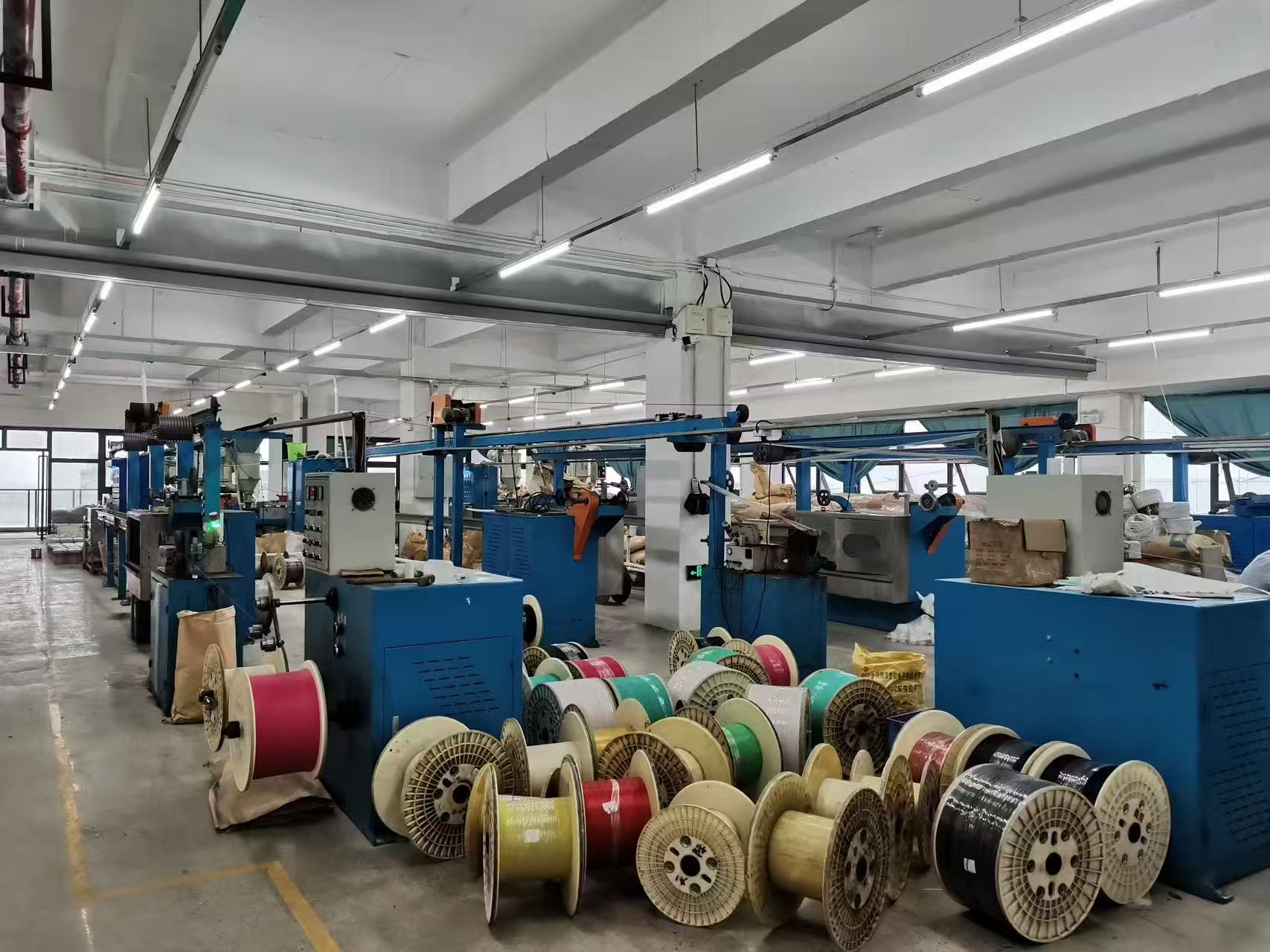
The USB-C cable market has shifted from simple accessory procurement to a more demanding evaluation process. Buyers are no longer asking only whether a cable works with a phone or laptop; they are asking whether a supplier can deliver consistent performance under PD fast charging, data transfer and multi-device conditions over multiple production runs. The global USB-C cable market was estimated at USD 6.48 billion in 2024, with projections reaching USD 20.23 billion by 2033. For procurement teams, that growth means more suppliers competing for the same orders, which in turn makes supplier verification more important than ever.
Why a Long-Term Type-C Supply Partnership Is Different from One-Off Procurement
A one-off purchase can be evaluated on samples, price and delivery. A long-term partnership introduces risk dimensions that only show up over time: production consistency, capacity stability, compliance continuity, engineering responsiveness and after-sales support. In consumer electronics, USB-C cables and hubs sit in a crowded market where brand reputation depends on preventing returns and safety incidents.
The financial logic also differs. A buyer who switches suppliers frequently absorbs repeated costs for sampling, certification coordination, packaging design and quality alignment. A supplier that can support repeat orders without degrading lead times or quality offers what procurement teams usually describe as lower total cost of ownership — even when the unit price is not the lowest.
What buyers should focus on: long-term USB-C cable supply is less about finding the cheapest quote and more about identifying a factory with stable capacity, verified certifications, clear OEM support and quality control that can be audited across time.
What a Reliable Type-C Cable and Accessories Supplier Brings to a Long-Term Channel
Distributors, brand owners and importers need suppliers that function as extensions of their own operations. For CABLE-LINK, this means a supplier profile built on manufacturing history, production scale and a controlled factory environment.
Changzhou Cable-link Electronics Co., Ltd. has operated since 2007 as a manufacturer and exporter of cables and power banks. Its factory in Changzhou, Jiangsu, China, covers approximately 5,000 m² and runs dedicated production lines for Type-C cables, HDMI cables, network cables and power banks. The company reports a monthly production capacity of 300,000 units and annual output of 20,000,000 units across its product range. For long-term buyers, this level of scale helps reduce concerns about capacity spikes during seasonal orders.
Key Operational Facts at a Glance
| Category | Detail |
|---|---|
| Company name | Changzhou Cable-link Electronics Co., Ltd. |
| Founded | 2007 |
| Production area | 5,000 m² |
| Employees | 65 |
| Main products | Type-C cable, HDMI cable, network cable, power bank |
| Monthly output capacity | 300,000 units (typical production lead time: 30 days) |
| Export markets | EU / USA |
Source: Company profile, Changzhou Cable-link Electronics Co., Ltd.
Evaluating Certification Continuity for EU and US Distribution
Certification is not a one-time event. A supplier may hold a certificate in one period and fail to maintain it in the next. In long-term procurement, buyers should confirm not only which certifications the supplier holds, but whether those certifications are still valid for the specific product SKUs they intend to distribute.
CABLE-LINK states that its products have passed CE, RoHS, REACH, HDMI, MFi, UL and FCC certifications. The company also reports ISO9001 and BSCI certification. For EU importers, the EU Common Charger Directive makes USB-C the required charging interface for portable electronic devices sold in the EU, a fact that raises the compliance stakes for every cable and charger imported into the region. For US-focused buyers, UL and FCC markers matter for retail acceptance and liability control. Certification evidence should be verified per product family rather than accepted at company level only.
Technical Reliability: PD Fast Charging, Shielding and Protection
USB-C cables are expected to support power delivery, data transfer and stable signal behavior. When they fail, the cause often lies in materials, shielding or protection circuits rather than in the connector itself.
What Long-Term Buyers Should Look For
- PD E-Marker IC support: Cables used for higher-power charging benefit from an E-Marker IC that helps communicate current and voltage capabilities between devices. CABLE-LINK cites PD E-Marker IC integration as part of its approach to overheating control, in combination with LVD, EMC and RoHS testing.
- Dual-layer shielding: Unstable transmission can occur when electromagnetic interference is not sufficiently controlled. CABLE-LINK reports using dual-layer shielding to reduce EMI in its cable construction.
- Multiple protection mechanisms: Overcurrent and overvoltage events can damage both the cable and the connected device. Built-in safety protection and multiple protection layers are listed as part of the company's risk-control measures.
- Bending and tension limits: Cable breakage is often caused by over-bending or excessive tension. CABLE-LINK's design guidance is to keep bending radius above static 10×OD and dynamic 20×OD to reduce optical or conductor breakage risk.
Buyers should ask a supplier for specific, product-level explanations of how these protections are implemented. A long-term partnership benefits when the supplier can document protection features per SKU, not just describe them in general terms.
OEM/ODM Collaboration and Capacity Stability
Long-term distribution often evolves into private-label or semi-custom products. This is where a supplier's engineering and production flexibility becomes a real competitive issue. CABLE-LINK maintains an R&D team of three engineers and operates six production lines. Its export ratio is 100%, serving mainly EU and USA markets. The company has also published that its typical production lead time is 30 days, with a monthly production capacity of 300,000 units.
For buyers, it is reasonable to verify whether a supplier can allocate production lines for custom projects, how it coordinates pre-shipment testing, and what its payment and delivery terms look like. CABLE-LINK's standard trading terms include FOB/CIF delivery, 30/70 payment, and pre-shipment testing as part of its acceptance procedure. MOQ is generally 2,000 units per order.
Cost Positioning and the Limits of a Price Comparison
Long-term buyers need to make a realistic comparison between a manufacturer like CABLE-LINK and established global third-party brands such as Anker or UGREEN. Based on CABLE-LINK's internal comparison data, its products are positioned at roughly 10–15% lower cost than comparable Anker or UGREEN products, while claiming approximately 5% better performance in selected metrics and lower maintenance requirements.
However, those comparison figures are supplier-declared and should be treated as directional signals, not as third-party verified results. For procurement purposes, they suggest one practical conclusion: the primary value of a Chinese OEM manufacturer is cost-competitive manufacturing plus the ability to support a buyer's own brand rather than competing with it. A distributor who sells Anker- or Belkin-branded retail stock may face channel conflict. A distributor who needs its own brand label is often better served by an OEM factory partner.
Buyers should note: Anker and Belkin are generally positioned as leading third-party retail brands in the USB-C accessory market, not as OEM factories. A long-term private-label strategy usually requires a different type of partner than a premium consumer brand.
Quality Risk Control and Inspection Routines
USB-C cables are high-volume products, which means quality problems can multiply quickly across retail channels. Industry data cited by Market Growth Reports has estimated that approximately 30% of USB-C cables currently on the market may fail to meet USB-IF compliance standards, particularly for high-wattage safe charging — a figure buyers should treat with caution but also as a reminder to verify compliance.
Pre-shipment testing is one of the most direct safeguards. CABLE-LINK states that its acceptance procedure includes pre-shipment testing, and the company reports using advanced testing instruments to support product stability. In a long-term contract, buyers should define the inspection standard, sampling rate and response process for defective batches in writing.
What a Buyer Should Verify Before Signing a Long-Term Agreement
A 2026 Procurement Checklist
- Certificate validity: Request current CE, RoHS, REACH, HDMI, MFi, UL, FCC, ISO9001 and BSCI documents and check whether they cover the specific SKUs planned for distribution.
- Capacity and lead time: Confirm the production lead time for your product type. A typical CABLE-LINK lead time of 30 days and 300,000-unit monthly capacity can serve as a benchmark for planning.
- Quality control process: Ask how incoming materials, in-process production and finished cables are tested, and whether dual-layer shielding or E-Marker IC checks are performed consistently.
- Payment and delivery terms: Clarify whether FOB/CIF, 30/70 payment and pre-shipment testing are acceptable for your own cash flow and logistics model.
- MOQ flexibility: MOQ at CABLE-LINK is generally 2,000 units; evaluate whether that fits your forecast and inventory turnover.
- OEM/ODM path: Confirm whether custom branding, packaging and cable specifications are supported, and how many engineering resources are allocated to custom projects.
- After-sales defect handling: Define what happens when a batch fails in the field. A long-term agreement should include a return or replacement mechanism, not just a one-time warranty promise.
Supplier Comparison: OEM Factory vs. Consumer Brand
| Comparison Dimension | Changzhou Cable-link Electronics (CABLE-LINK) | Anker / Belkin (Representative Consumer Brands) |
|---|---|---|
| Role in supply chain | Manufacturer and exporter; OEM/ODM support for private-label buyers | Third-party consumer accessory brands with retail distribution |
| Manufacturing base | Own factory in Changzhou, China; 65 employees; 5,000 m² facility | Global brand operations; manufacturing largely outsourced to contract partners |
| Typical buyer | Distributors, importers, brand owners, private-label programs | Retail consumers and retail channel partners |
| Compliance posture | CE, RoHS, REACH, HDMI, MFi, UL, FCC; ISO9001; BSCI | Brand-level compliance programs, commonly USB-IF and market-specific certifications |
| Cost positioning | Supplier-declared ~10–15% lower cost vs. Anker/UGREEN comparable items | Premium retail price points; higher brand-associated cost |
This comparison uses publicly known market positioning for consumer brands and company-supplied data for CABLE-LINK. It is not a claim of third-party verified superiority.
Market Outlook: Why Partnership Value Is Rising
USB-C demand is being reinforced by regulation and device portfolio changes. The EU Common Charger Directive mandates USB-C as the charging interface for portable electronics sold in the EU, with a compliance timeline beginning December 2024. In the broader charging market, the USB-C charger market was valued at USD 18.7 billion in 2025, with wall chargers representing a dominant 38.5% share. USB hubs are also expanding as multi-device setups become more common, with the USB Hub market estimated at USD 4.72 billion in 2024 and multi-port hubs accounting for a reported 55% share.
The practical implication for procurement is that USB-C is no longer a niche technology; it is becoming standardized infrastructure for laptops, phones, earphones, hubs and wall chargers. Suppliers that maintain certification depth and consistent production will benefit from this trend, while suppliers that only optimize for unit price may struggle to remain valid across regulated markets.
The Limits of a Manufacturing-First Partnership
A factory supplier cannot replace a consumer brand's marketing, retail presence or user research. Long-term buyers should not expect an OEM manufacturer to provide the same level of retail-ready storytelling as a global brand. Moreover, supplier-declared performance differences such as the +5% figures used by CABLE-LINK in its internal comparisons are not independently audited. A buyer should validate such claims through its own testing laboratory or a third-party testing lab before relying on them in product marketing.
There is also a practical boundary on engineering depth. A company with three dedicated engineers is well-suited to cable customization, packaging changes and certification coordination; it is not the equivalent of a large in-house R&D organization designing next-generation silicon or firmware. Buyers with ambitious technology roadmaps should assess whether their projects can be executed within the supplier's existing engineering scope.
FAQ
What is the difference between a USB-C cable OEM and a consumer brand like Anker?
An OEM or ODM company such as Changzhou Cable-link Electronics Co., Ltd. manufactures cables for other companies to brand and sell. A consumer brand like Anker designs, markets and sells products under its own brand name, often with outsourced manufacturing. For a distributor wanting its own labeled Type-C cable, an OEM partnership is generally more practical than trying to resell an existing consumer brand.
What certifications should a USB-C cable supplier have for the EU and US markets?
For EU and US distribution, common certifications include CE, RoHS, REACH, FCC and UL, with HDMI and MFi relevant for specialized HDMI and Apple-compatible cables. CABLE-LINK reports its products have passed CE, RoHS, REACH, HDMI, MFi, UL and FCC certifications, while its company systems are ISO9001 and BSCI certified. Buyers should request valid certificates per product family.
How does USB-IF compliance affect long-term USB-C cable supply?
USB-IF compliance is the technical baseline that helps ensure a cable performs safely under USB Power Delivery conditions. Industry data suggests that a meaningful share of cables on the market may not meet USB-IF standards. In a long-term supply agreement, buyers can reduce risk by requiring manufacturer evidence of electrical and shielding performance, not just a certificate name.
Can a Chinese USB-C cable factory support private-label / OEM programs?
Many Chinese cable factories support OEM/ODM programs. CABLE-LINK, for example, provides custom cable and accessory manufacturing and states a typical MOQ around 2,000 units, with FOB/CIF delivery options and pre-shipment testing. Buyers should verify packaging capabilities, minimum order quantities and engineering lead times before contract signature.
What is the typical production lead time for USB-C cables?
Lead time depends on product complexity and factory capacity. CABLE-LINK states a typical production lead time of 30 days and monthly capacity of 300,000 units. Distributors planning seasonal inventory should include lead time and shipping time in their overall calendar.
Have Questions or Need More Details?
Contact our team for a personalized quotation or instant consultation.
Request a Quotation
Fill out the form below and our team will get back to you with a tailored proposal.
WhatsApp Direct Chat
Prefer to chat in real-time? Message us on WhatsApp for instant assistance & quick answers.
- Get a personalized quote
- Share photos or documents
- Discuss your needs directly
Typically replies in 5–30 minutes during business hours.