
Building a Small Machine Room Elevator Certification Dossier
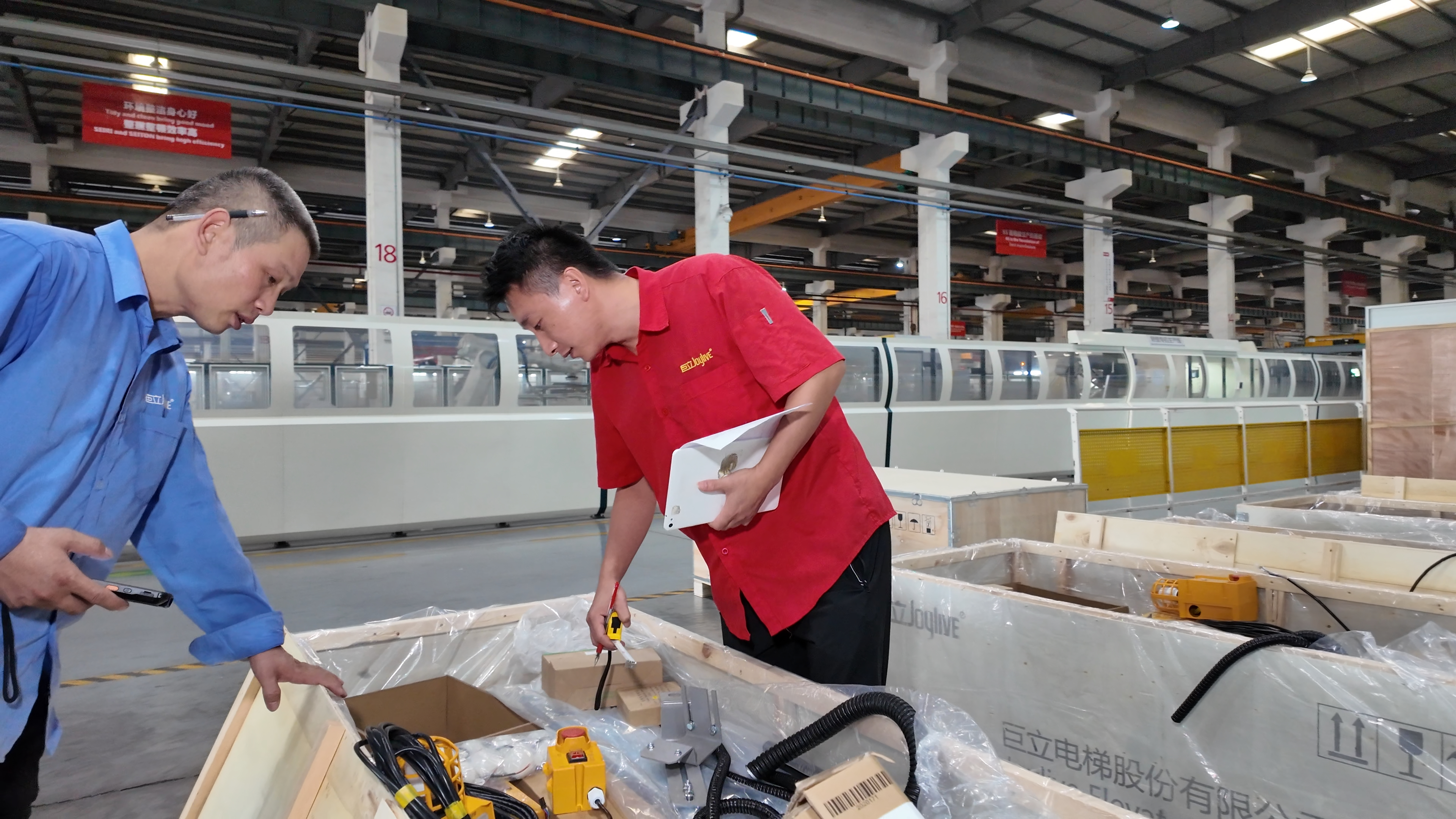
Pre-shipment inspection records belong inside the certification dossier, not in a separate quality folder. Image: Joylive Elevator.
A certification dossier for a small machine room elevator is a project-specific evidence package, not a folder of general certificates. It answers one question: are the model, the configuration, and the installation you are buying actually covered by the drawings, test reports, and approval documents that travel with the order — in the jurisdiction where the elevator will run?
Procurement teams rarely lose a project on the hardware specification. They lose weeks on the paperwork that has to prove it. Once a purchase decision moves into execution, the critical path shifts from “which supplier” to “which document supports which claim, for which unit, in which market.” This walkthrough sets out how to assemble that file for a small machine room elevator project, and how to find the gaps before they reach a site engineer, an inspector, or a customs desk.
Why Document Scope, Not Product Scope, Delays Small Machine Room Elevator Projects
Three document failures account for most of the friction between a signed contract and a commissioned elevator: scope mismatch, jurisdictional mismatch, and time decay. None of them are manufacturing defects, and none of them can be solved by a better elevator.
Scope mismatch
The document is genuine, but it was issued for a parameter set that is not the one being delivered. A rated load, a rated speed, a travel height, a drive type, or a machine room dimension differs from the ordered configuration, and the evidence no longer logically covers the product. This is the most common failure, because families of models are routinely certified together while individual orders are configured individually.
Jurisdictional mismatch
An approval that satisfies one market authority is not automatically accepted by another. The same physical compact machine room elevator can require a different document set, a different local installer license, and a different registration process depending only on the country and city of installation.
Time decay
Documents carry issue dates, revision numbers, and expiry dates, while elevator projects run across months of design, manufacturing, shipping, installation, and handover. A file that was complete at tender stage can be incomplete at commissioning without anything being lost.
The opportunity is the mirror image. A dossier mapped at contract stage stops being an administrative chore and becomes a scheduling tool: every approval milestone is matched to a document, every document has an owner, and every gap has a name and a deadline attached to it. For procurement managers running a low-rise or retrofit project where the elevator is one of the last packages to be installed, that shift is usually what protects the handover date.
What Belongs in a Small Machine Room Elevator Certification Dossier
A working dossier for this product family normally contains four document groups. Keeping them separate matters, because each group is invalidated by different changes and is owned by a different party.
1. Design and installation evidence
Machine room layout drawings, shaft and pit sections, headroom and overhead clearance, access routes for the compact control cabinet, ventilation, and lighting provisions. These documents define the physical conditions under which the conformity claim holds. How concrete such a claim can be is worth noting: EN 81-20 and EN 81-50, effective from 2017, require a minimum of 200 lux at floor level in machine room work spaces. That is a value an inspector can measure on site and a value a dossier should be able to point to on a drawing, rather than assert in a covering letter.
2. Conformity, type, and test evidence
Where test records come from matters as much as the tests themselves. Joylive Elevator Co., Ltd., founded in 2002 and based in Bacheng Town, Kunshan City, Suzhou, Jiangsu Province, China, operates a nationally accredited CNAS laboratory and applies whole-process quality control from design to service, with traceability of materials, processes, and inspection procedures. Manufacturing precision is supported in production by robotic arms and fully automatic bending lines. For a buyer, the practical consequence is simple: test evidence should be traceable to a specific test, a date, and where possible a unit or batch — not just to a product family name.
3. Performance and energy evidence
Energy claims attach to components, not to brands. Joylive’s energy-efficiency documentation references ISO 25745 / VDI 4707 Class A energy efficiency certification, with standby power consumption below 50 W and a fast-calling response intended to reduce standby consumption. Leveling performance is documented through VVVF speed control that aligns the car with the floor within ±3 mm, and brake reliability through an automatic braking force self-test that periodically verifies the motor’s braking capacity. Each of these is configuration-dependent: change the drive, the traction package, or the control system and the document scope has to be re-verified rather than assumed.
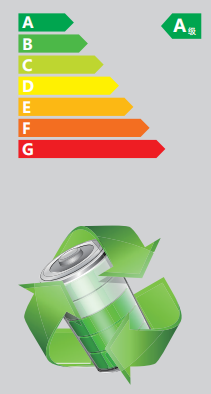
Energy-class evidence is only valid for the drive and control configuration it was issued against.
4. Commercial, logistics, and customs evidence
HS Code 842810 covers passenger or freight elevators other than continuous action, and it is the reference that links the physical unit to customs and duty treatment. Alongside it sit the packing list, the pre-shipment test record, the delivery terms, and the payment schedule. Joylive’s stated purchasing terms for this product family are a minimum order quantity of one unit, FOB or CIF delivery terms, acceptance based on pre-shipment test, and 30/70 payment terms. Those are commercial parameters that double as dossier parameters, because the acceptance event and the document release event should be the same event.
| Document family | What it proves | Configuration variable it must match | Usual holder |
|---|---|---|---|
| Design and installation drawings | The physical conditions assumed by the conformity claim | Machine room dimensions, headroom, access, lighting, cabinet footprint | Manufacturer / installer |
| Type and test records | The design and the tested sample meet the declared requirement | Model designation, rated load, rated speed, travel, traction and drive type | Manufacturer test laboratory |
| Performance and energy documents | Declared efficiency, standby, leveling, and braking behavior | Drive type, control system, gearless traction machine, regenerative option | Manufacturer |
| Commercial and customs documents | Identity of the shipped unit and the acceptance event | Serial or batch, packing configuration, delivery and payment terms | Manufacturer / forwarder |
| Local approval documents | Permission to install, register, and operate | Site address, jurisdiction, installer license, local code edition | Local installer / building owner |
Mapping Evidence to the Model and Configuration You Actually Ordered
The most frequent dossier failure is not a missing certificate. It is a real certificate that sits outside the ordered scope. Scope is defined by variables that buyers control at specification stage and often forget at document stage.
- Rated load and rated speed — the two parameters most often re-used across a family of models.
- Travel height, number of stops, and number of openings — a short-travel configuration tested against a low headroom may not describe a taller shaft.
- Machine room dimensions and reduced shaft space — a space-saving machine room elevator is defined by its actual room, not by a category label.
- Traction and drive type — a gearless traction machine with a permanent magnet motor behaves and documents differently from an alternative drive arrangement. Manufacturer comparison data for the permanent magnet synchronous motor configuration cites a higher power factor and higher power density, an efficiency advantage in the 5–15% band, 5–10 dB lower noise, less maintenance, and a stated 20–30% energy saving rate relative to the reference motor type. Those figures belong to the tested configuration, and a dossier only carries them if the delivered configuration is the one tested.
- Control architecture — a compact control cabinet, a variable frequency drive, or a regenerative drive option each change which performance document applies.
- Doors and car configuration — including any project-specific safety option, because door-related evidence is usually tied to the specific arrangement installed.
A simple discipline catches most of this. The model designation on the conformity document, on the sales contract, and on the inspection or shipping record should match character for character. Where they differ, do not interpret the difference yourself; request a written scope statement that names the ordered configuration and states explicitly whether it is covered. A written statement is a document in its own right and can be filed next to the certificate.
Narrow scope or broad scope?
There is a genuine trade-off here, and buyers should choose deliberately. Broad, family-level certificates are easier to obtain and more flexible when a component changes late in the project, but they are weaker evidence at the point where a reviewer asks whether this unit is covered. Narrow, configuration-bound documents are stronger evidence and easier to defend, but they become invalid the moment the configuration changes. The practical compromise is to keep the narrow-scope document as the primary evidence and to add a project-specific confirmation whenever a deviation is introduced, rather than trying to widen the certificate after the fact.
Mapping Evidence to the Jurisdiction of Installation
Jurisdiction is a separate axis from model. Two identical small machine room passenger elevators installed in two different markets can require document sets with very little overlap, and the difference is legal rather than technical.
Home-market qualification is a capability signal, not a local approval
Joylive holds a top A qualification in China for special equipment manufacturing, installation, modernization, and maintenance. That qualification is meaningful for projects in China and is relevant as evidence of manufacturing and lifecycle capability elsewhere — but it does not substitute for the approvals required in another market. Treating a home-market license as a universal approval is one of the most expensive mistakes in an execution-stage file, because the gap is usually discovered after the equipment has shipped.
Some requirements can be checked from drawings in any market
Design-derived values are portable as engineering facts even when the approval is not. Machine room lighting at a minimum of 200 lux at floor level under EN 81-20 and EN 81-50 is a measurable condition that a design team can verify on drawings and a site team can verify after installation. The same applies to headroom, access, and ventilation provisions. Build these into a single design-verification sheet rather than repeating them per market.
Assign local documents to a local owner before shipment
Installation permits, registration, and handover documents are normally issued locally and cannot be produced by a foreign manufacturer. The dossier should still contain a reserved slot for each of them, with a named owner and a date tied to the installation schedule. For a company exporting 55% of its output to markets including Europe, America, Oceania, Africa, Central Asia, Southeast Asia, and the Middle East, the practical question to ask early is not “what documents do you have?” but “which market is this file being built for?”
Two Passes That Catch Most Dossier Failures: Scope and Expiry
A dossier review is most reliable when it is split into two independent passes. The first asks whether a document applies at all. The second asks whether it still applies today. Reviewers who combine the two tend to accept a document because it is recent, or reject one because it is old, without checking the more important question.
Pass one — scope validity. Four checks: does the document name the ordered model exactly; do the declared parameters match the order; does it cite the standard edition applicable at the time of installation; and was it issued for, or accepted by, the target market?
Pass two — temporal validity. Issue date, expiry date, revision number, and any superseding standard. Then set review triggers rather than relying on memory: contract signature, pre-shipment inspection, arrival on site, installation completion, and handover. Add a trigger for every engineering change, because a component substitution silently resets scope.
| Check | Question to ask | Evidence to record | Action if it fails |
|---|---|---|---|
| Name match | Does the document name the ordered model designation exactly? | Document reference plus the contract model string | Request a written scope statement or project-specific annex |
| Parameter match | Do load, speed, travel, drive, and machine room parameters match? | Parameter table cross-referenced to the order | Request re-issue or restrict the claim in the dossier |
| Standard edition | Does it cite the edition applicable at installation? | Standard number, edition, year | Obtain the current-edition document before the approval milestone |
| Jurisdiction | Was it issued for, or accepted by, the destination market? | Market, authority, local installer confirmation | Open a gap note and a local approval plan |
| Issue and expiry | Is it within validity on the installation date, not the order date? | Issue date, expiry date, validity statement | Set a renewal trigger and confirm no lapse window |
| Revision status | Has this document been superseded? | Revision number and change log | Replace with the current revision and re-check linked documents |
| Change control | Has any component or layout changed since issue? | Engineering change record | Re-verify scope; never extend coverage by assumption |
How the Dossier Changes by Building Type
The elevator may be the same product family, but the document emphasis shifts with the building. Four patterns cover most small machine room elevator projects.
Residential buildings and apartments
Documentation here is usually reviewed once at handover and then retained for decades by building management. The dossier should therefore be built for retrieval, not for a single submission: an index that maps each unit to its own document set, plus the maintenance documentation that will be consulted years later. Energy documentation matters over this horizon because standby consumption accumulates across the whole service life.
Hotels
Continuous duty and guest proximity put noise and energy behavior into the dossier. Joylive’s noise control method is silent braking control technology, which optimizes noise during the process of starting and stopping the brake so that operation is smoother and quieter. Because hotels run long idle periods between peaks, the standby figure in the energy documentation is as relevant as the running load.
Commercial buildings
Traffic intensity makes leveling accuracy a documented performance item rather than a comfort detail; VVVF speed control aligning the car within ±3 mm of floor height is the relevant evidence. If a regenerative drive is specified, note that the energy document scope changes with it, so the configuration list must name the option explicitly.
Low-rise buildings and existing structures
In retrofit projects, approval documents dominate the file and the feasibility question is driven by the existing overhead space rather than by the product. Joylive’s product range includes adding elevators to existing buildings, which makes structural and approval evidence the primary content of the dossier, with performance evidence supporting it rather than leading it. Multi-unit projects add one more requirement: a unit-level index, so that each serial number maps to its own document set and no certificate is silently inherited by a different unit.
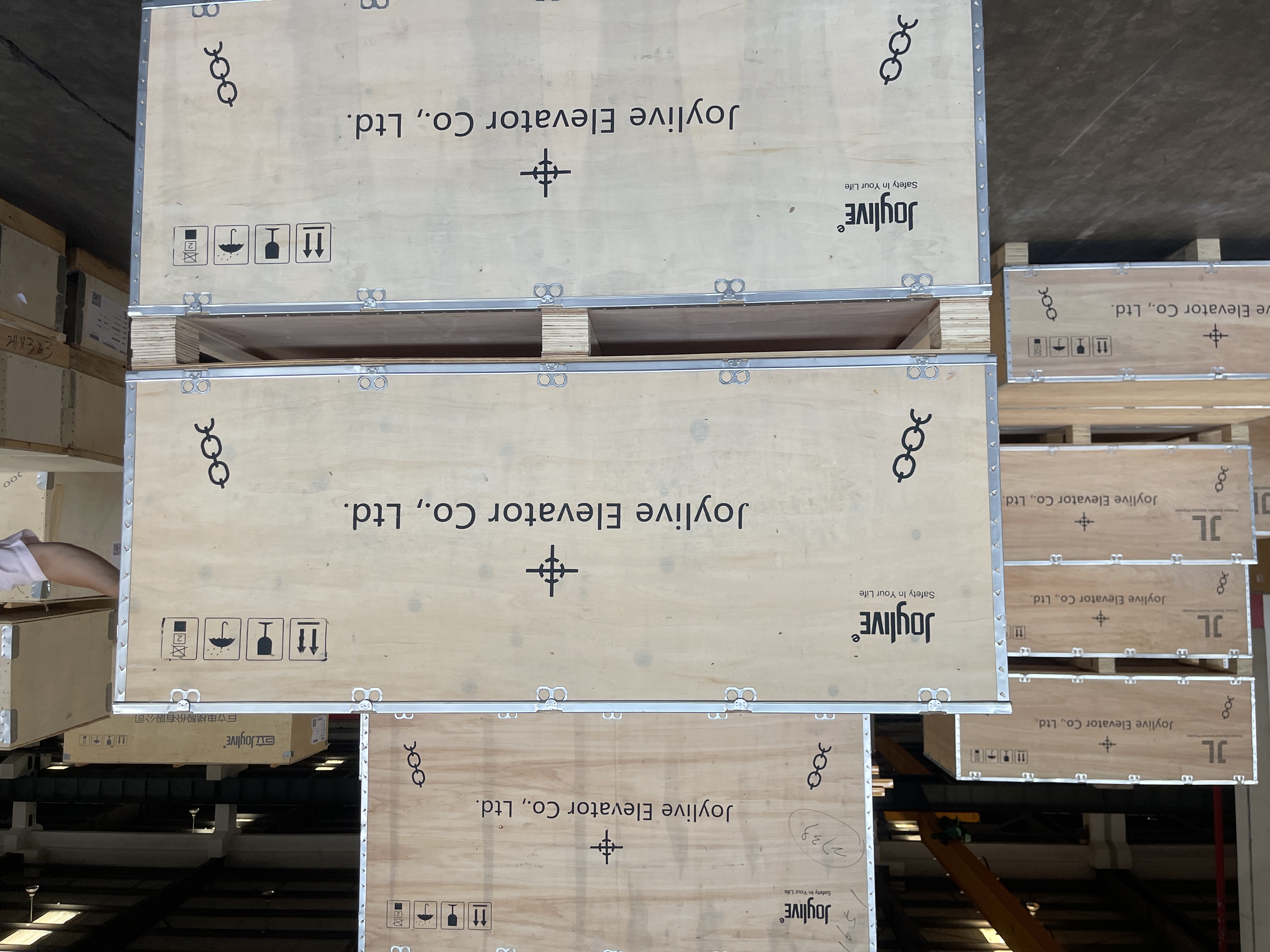
The packing list and the pre-shipment test record are released together with the equipment.
Market Trend Analysis: What the Numbers Say, and What They Do Not
Published elevator market figures are defined by their scope, and scope discipline in market data is the same discipline a dossier reviewer applies to a certificate.
- The global elevators market was valued at USD 82.4 billion in 2025, with a projection of USD 86.3 billion in 2026 and USD 136.9 billion by 2033, at a CAGR of 6.8% (Grand View Research).
- Traction elevators — the category that includes both small machine room and machine-room-less designs — held the largest revenue share at 55.1% in 2025.
- Asia Pacific accounted for 41.7% of global elevator revenue in 2025, which is where most documentation workflows for exported equipment are concentrated.
- Rare-earth magnet prices for permanent-magnet motors increased by more than 20% in 2025 (Mordor Intelligence), a cost and design-stability signal for permanent magnet synchronous traction configurations.
One further observation is more instructive than any single figure. Two commercial estimates of the “elevator market” differ substantially because of what they include: one values elevators at USD 82.4 billion, while a broader estimate of USD 169.2 billion bundles escalators and moving walkways into the same total. The gap is a scope difference, not a data error. That is precisely the distinction a reviewer makes when reading a certificate that names a model family while the order specifies a variant.
What the public data does not provide is equally important. There is no reliable public split between small machine room and machine-room-less adoption. That absence is a reason to treat the small machine room versus machine-room-less question as a project-level decision based on shaft geometry, overhead space, and approval conditions — not as something to be settled by a general market claim quoted in a supplier presentation.
Small Machine Room, Machine-Room-Less, and Conventional Machine Rooms: Where the Dossiers Differ
The three arrangements generate different document sets because they create different physical conditions that must be evidenced.
| Arrangement | Overhead space | Document emphasis | Main document risk |
|---|---|---|---|
| Conventional machine room | Full room above the shaft | Room construction, access, and work-space conditions | Room conditions assumed in drawings not matching the built room |
| Small machine room | Reduced room, still present | Room layout plus configuration-bound performance evidence | Scope mismatch between a family certificate and the ordered variant |
| Machine-room-less | Drive located in the shaft area | Shaft and drive positioning; no machine room conditions | Substitution risk when the drive package is changed late |
Buyers should also plan around the limits of what a dossier can do. These are practical boundaries rather than objections:
- A small machine room elevator still requires a machine room. It reduces the footprint; it does not remove the room. A building with no reserved overhead space cannot resolve that constraint through documentation, and the dossier should not be treated as evidence that it can.
- The reduced room still has to satisfy work-space conditions. Lighting at a minimum of 200 lux at floor level under EN 81-20 and EN 81-50, access, and ventilation provisions all remain applicable, which means the dossier carries more design evidence than an equivalent machine-room-less project — not less.
- Scope is configuration-bound. Energy class claims, leveling performance, and efficiency figures attach to the tested configuration. A component substitution during execution invalidates that scope until it is re-confirmed in writing.
- Home-market qualifications do not travel. Joylive’s top A qualification in China for special equipment manufacturing, installation, modernization, and maintenance supports projects in China; other markets require their own approvals and their own local documentation.
- Documents age faster than elevators. Certificates expire and standards are revised while a project is delayed or an elevator stays in service. The dossier needs a maintenance routine for the service life, not just a submission routine for the handover.
Future Outlook: From One-Time Folder to Lifecycle Record
The direction of travel is toward evidence that is continuously maintained rather than collected once. Joylive’s JoyCloud IoT platform continues to evolve, enabling digital management and predictive maintenance across the entire elevator journey — from installation and maintenance to real-time monitoring. When monitoring data becomes part of the record, the distinction between “documents submitted at handover” and “evidence maintained in service” narrows, and maintenance history starts to function as operational proof.
Three pressures are likely to shape dossier practice over the next few years. Energy documentation will become more prominent as efficiency classes and standby consumption are scrutinized in more markets, where a Class A energy efficiency certification and a standby figure below 50 W become comparable, checkable data points rather than marketing statements. Cost volatility will create design-change risk: with rare-earth magnet prices for permanent-magnet motors rising by more than 20% in 2025, substitutions or redesigns become more plausible mid-project, and every substitution resets scope verification. And multi-market assembly will become a routine supplier competence, because the same product family is packaged against different market requirements across Europe, America, Oceania, Africa, Central Asia, Southeast Asia, and the Middle East.
The reasonable expectation is that dossier competence moves from a back-office function to a tender-stage evaluation criterion, sitting alongside price, delivery, and technical specification in supplier scoring.
FAQ
How do we confirm that a certificate actually covers the small machine room elevator configuration we ordered?
Compare three things: the model designation on the document, the model designation in the contract, and the model designation on the inspection or shipping record. If the three do not match character for character, compare the declared parameters instead — rated load, rated speed, travel height, drive type, and machine room dimensions. Where a parameter differs, the document does not cover the delivered configuration, and the correct response is a written scope statement naming the ordered configuration rather than an internal judgement that the difference is minor.
What is the difference between type or model evidence and a project-specific test report?
Type or model evidence describes the design and the tested sample; a project-specific test report describes the unit being shipped. The two serve different purposes in a dossier. Type evidence supports the claim that the design meets the declared requirement, while project evidence supports acceptance. For this product family, acceptance is based on pre-shipment test, so the project-specific record and the type record should be filed together, with the project record traceable to a serial number, batch, or inspection date.
What should we do when the manufacturer’s home-market qualification is not the qualification required in our market?
Treat it as a capability signal and not as a local approval. As an example, Joylive’s top A qualification in China covers special equipment manufacturing, installation, modernization, and maintenance; it does not replace approvals required in other jurisdictions. The practical steps are to confirm in writing which market the manufacturer is building the document set for, to reserve a slot in the dossier for locally issued documents such as installation permits and registration, and to assign a named local owner to each of those documents before the equipment ships.
How should expiry and revisions be managed over a project that runs for years?
Record four data points for every document: issue date, expiry date, revision number, and the standard edition referenced. Then attach review triggers to project milestones rather than to calendar reminders — contract signature, pre-shipment inspection, arrival on site, installation completion, and handover — plus one trigger for every engineering change. Two checks deserve particular attention: whether the document is still valid on the installation date rather than the order date, and whether it has been superseded by a later revision without the change being reflected in the file.
Which documents should accompany the shipment itself?
The commercial annex travels with the equipment: the packing list and the pre-shipment test record, together with the delivery terms and the payment schedule. Joylive’s stated terms for this product family are a minimum order quantity of one unit, FOB or CIF delivery, pre-shipment test as the acceptance criterion, and 30/70 payment terms. The customs reference for passenger or freight elevators other than continuous action is HS Code 842810. Because a single-unit order is workable, document control effort in these projects scales with the number of projects rather than with the number of units ordered.
How does the dossier connect to long-term service and the life of the building?
Documents that matter after handover are different from the ones that matter before it: maintenance records, monitoring and diagnostic data, and modernization documentation. Joylive’s JoyCloud IoT platform supports digital management and predictive maintenance across installation, maintenance, and real-time monitoring, which means the evidence trail can continue past commissioning instead of stopping there. For a building owner, the practical implication is that the handover file should be structured for retrieval by maintenance teams years later, with an index that maps each unit to its own document set.
A certification dossier is ultimately a translation exercise: it converts a supplier’s document library into a project-specific answer about one model, one configuration, and one jurisdiction. Teams that build the mapping table early, run the scope and expiry passes separately, and assign a local owner to local documents tend to spend their execution-phase effort on installation rather than on reconstruction.