
Bulk Bag Qualification Scope: UN, Type-C and Food Grade
Bulk Bag Qualification Scope: What UN, Type-C and Food-Grade Evidence Actually Cover
Three qualification labels dominate industrial bulk bag procurement conversations: UN certification for dangerous goods packaging, FIBC Type-C static designation, and food-grade construction. They are frequently presented as interchangeable proof that a supplier is “fully certified.” They are not. Each label answers a different question, is anchored in a different standard, and carries a different scope for the buyer who signs off on the order.
This reference explains what each qualification actually covers, where the boundaries sit, and how chemical, food and general industrial buyers should read the evidence attached to a bulk bag quotation.
Why qualification scope is a procurement variable, not a badge
A bulk bag — also called a FIBC, ton bag, jumbo bag or flexible intermediate bulk container — can look almost identical whether it carries sand or a regulated chemical powder. The fabric weave, the lifting loops and the fill spout may be visually similar. What differs is the evidence behind the bag, and that evidence determines which materials it is permitted to contain and where it may be used.
In practice, three qualification domains are involved. UN certification addresses the transport of dangerous goods. Type-C designation addresses electrostatic safety when the bag is used in a potentially explosive dust atmosphere. Food-grade construction addresses hygiene and contamination control during manufacturing. A single bag may hold one, two or all three; equally, a bag may hold none of them and still be a perfectly serviceable general-purpose container.
The procurement error is not choosing a qualified bag. It is assuming one qualification substitutes for another. A UN mark does not certify static dissipation. A Type-C bag is not automatically food-grade. A food-grade bag is not automatically authorised for dangerous goods transport. Buyers who read the three as one word — “certified” — tend to discover the gap at the fill line, at the port, or during an audit.
The three qualification families and their anchor standards
Before comparing coverage, it helps to state what each qualification is anchored to. The standards landscape for FIBCs is being revised, which makes the wording on a supplier’s certificate as important as the certificate itself.
General FIBC construction standard
ISO 21898:2024 specifies materials, construction and design requirements, type test and marking requirements for flexible intermediate bulk containers intended to contain non-dangerous solid materials in powder, granular or paste form. It is the baseline construction and testing standard for the general-purpose FIBC class, not a dangerous goods authorisation. The European adoption, EN ISO 21898:2024, was approved by CEN on 12 August 2024. The earlier edition, ISO 21898:2004, has been superseded.
China maintains a parallel national standard. GB/T 10454-2025 covers packaging FIBCs for non-dangerous goods, replaces GB/T 10454-2000 and GB/T 37425-2019, and takes effect on 1 March 2026.
Electrostatic classification standard
IEC 61340-4-4:2018 specifies requirements for flexible intermediate bulk containers between 0.25 m³ and 3 m³ in volume that are intended for use in hazardous explosive atmospheres. This is the standard family that separates FIBC types by their electrostatic behaviour, and it is the one that governs whether a bag can be used where combustible dust is present.
Dangerous goods transport regime
UN certification for dangerous goods packaging sits under the transport regulatory regime rather than under the FIBC construction standards. It confirms that a packaging design has met the requirements for carrying specified dangerous goods, and it is associated with marking that travels with the bag. It is a transport-compliance qualification, not a statement about the bag’s suitability for food contact or about its electrostatic behaviour.
| Qualification | Primary question it answers | Typical anchor | What it does not cover |
|---|---|---|---|
| UN certification (dangerous goods packaging) | May this packaging be used to transport the specified dangerous goods? | UN dangerous goods packaging requirements applied to FIBC design and test | Static dissipation, food-contact hygiene, general-purpose construction approval |
| FIBC Type-C | Will the bag dissipate static safely in a hazardous explosive atmosphere, provided it is grounded? | IEC 61340-4-4:2018 electrostatic classification | Dangerous goods transport authorisation, food-grade material hygiene |
| Food-grade construction | Was the bag made under conditions and materials intended to limit contamination? | Supplier manufacturing environment and material selection | Transport regulation, electrostatic classification, load rating |
Each qualification answers a separate question. None of the three substitutes for the others.
What each qualification means for chemical, food and industrial buyers
The practical value of a qualification depends on the material being handled and the environment in which the bag is filled, stored and moved. The same physical bag structure can be quoted with different qualification packages depending on that context.
Chemical and petrochemical buyers
For chemical powders and granules, the two qualifications that matter most are UN certification and, where combustible dust is present, electrostatic classification. A chemical buyer handling a regulated dangerous good will typically require UN-certified construction for that substance. A chemical buyer handling a non-regulated but combustible powder will typically require a Type-C bag, because the risk is ignition of the dust cloud by a static discharge rather than transport regulation.
Reinforced thickened anti-static fabric and conductive yarns are the materials that support Type-C performance. Yide Packaging manufactures ton bags woven with conductive yarns specifically to dissipate static electricity and reduce the dust-explosion risk caused by static accumulation. The company states that its Type-C construction is compliant with the FIBC Type-C standard and that reliable grounding is required during operation, making it suitable for flammable and explosive powder working conditions.
Food and food-ingredient buyers
Food-grade construction addresses a different risk: contamination of the contents by the packaging itself or by the environment in which it was made. Material selection, cleanroom conditions and controlled handling during sewing and finishing are the levers here. Yide Packaging operates a 5,000-square-metre food-grade clean workshop within its FIBC production base, and lists Food Grade FIBC Bulk Bags as a distinct product within its range.
It is worth being precise about what food-grade construction does and does not do. It supports hygiene control; it does not, on its own, deliver a moisture barrier. Where a food ingredient is moisture-sensitive, the buyer still needs to specify lamination or an inner liner. Yide’s ton bag range supports laminated or non-laminated options, with the laminated version providing the barrier function.
Mining, mineral and general industrial buyers
For inert minerals, aggregates, sand and non-hazardous industrial powders, the qualification driver is usually load integrity and containment rather than regulation. Here the relevant evidence is the construction standard itself: safe working load, lifting loop configuration, sewing specification and fabric quality. Yide’s ton bags are specified with a safe working load of 500–2,000 kg, four lifting belts, high-strength polyester thread sewing, and a choice of top and bottom structures including fill spout, full open top, top cover, discharge spout and flat bottom.
Industrial Bulk Bags in the same range are available in U-panel, circular, four-panel and baffle constructions, with customised filling spouts, discharge spouts and lifting loops. For bulk material that will be hoisted, stacked and shipped by ocean, these structural choices matter more than any single qualification label.
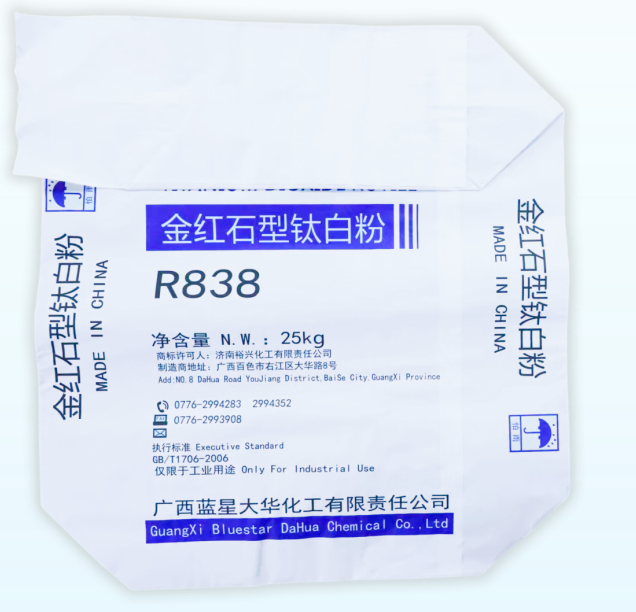
Chemical Bulk Bags in the Yide Packaging range are specified for powders, granules and industrial raw materials where containment and load integrity are the primary requirements.
How Type-C static dissipation actually works
Type-C performance is a materials and grounding question, not simply a fabric designation. The mechanism is straightforward to describe: conductive yarns are woven through the fabric so that the bag body forms a controlled path for static charge, and that path is completed to earth through a reliable grounding connection during filling, discharging and handling.
Yide Packaging describes the construction as conductive yarns woven into the fabric to dissipate static electricity effectively, combined with a high-strength PP woven fabric main body that retains tensile and wear-resistant properties. The same construction is stated as compliant with the FIBC Type-C standard, with reliable grounding required during operation.
Two implications follow for buyers.
- The qualification is conditional on operating discipline. A Type-C bag that is not reliably grounded during use does not deliver the static-dissipation function in the way the classification assumes. The qualification describes a system, not only a fabric.
- The standard has a defined volume scope. IEC 61340-4-4:2018 addresses FIBCs between 0.25 m³ and 3 m³. A bag outside that range falls outside the scope of that particular classification and needs to be assessed against whatever regime applies to its size and use.
For a chemical or new-energy buyer filling combustible powder, the practical check is therefore not only “is it Type-C?” but also “how will it be grounded, and who verifies that on the fill line?”
Where the qualification evidence has limits
Qualification documents are strongest when their scope is read precisely. Three boundaries are worth stating plainly, because they are the ones most often blurred in supplier conversations.
UN certification is substance- and design-specific. A UN-certified bulk bag is certified for a defined packaging design and a defined dangerous goods context. It is not a general licence to fill any regulated material into any bag of similar appearance. Buyers should confirm that the test and marking correspond to the substance, packing group and design they intend to use.
Food-grade construction is not a barrier specification. A food-grade clean workshop supports hygiene control during manufacturing. It does not replace a liner or lamination where moisture, odour or oxygen protection is required. Yide’s own range makes the distinction concrete: lamination is an optional feature, and the non-laminated version does not provide the same moisture resistance as the laminated version.
Type-C is not a substitute for UN certification, and vice versa. A bag can be built for static dissipation without being authorised for dangerous goods transport, and a UN-certified bag is not automatically Type-C. Where a material is both a regulated dangerous good and a combustible dust hazard, both qualification questions have to be answered separately.
There is also a maintenance boundary that applies to any reusable qualified bag. Before reuse, bulk bags should be inspected for damage, compromised lifting loops, contamination or other signs of wear. Qualification at the point of manufacture does not extend indefinitely through a reuse cycle.
Standards are moving — qualification evidence has a date
The FIBC standards environment is not static, and this affects how buyers read older certificates.
ISO 21898:2024 replaced the 2004 edition for the general FIBC construction standard, and EN ISO 21898:2024 was approved by CEN on 12 August 2024. In China, GB/T 10454-2025 replaces GB/T 10454-2000 and GB/T 37425-2019 with effect from 1 March 2026. These changes do not automatically invalidate existing products, but they do mean that the edition year on a supplier’s evidence pack is a meaningful detail for long-cycle procurement and tender documentation.
| Standard | Scope | Status / date |
|---|---|---|
| ISO 21898:2024 | FIBC materials, construction, design, type test and marking for non-dangerous solid materials in powder, granular or paste form | Current edition; supersedes ISO 21898:2004 |
| EN ISO 21898:2024 | European adoption of the same FIBC requirement set | Approved by CEN on 12 August 2024 |
| GB/T 10454-2025 | Chinese national standard for FIBCs for non-dangerous goods | Implementation 1 March 2026; replaces GB/T 10454-2000 and GB/T 37425-2019 |
| IEC 61340-4-4:2018 | Electrostatic requirements for FIBCs of 0.25 m³ to 3 m³ intended for hazardous explosive atmospheres | Current edition |
Edition year and jurisdiction matter when qualification evidence is reviewed against current standards.
How to read a bulk bag qualification claim in a quotation
A practical reading order for buyers evaluating a quotation:
- Identify the material risk first. Regulated dangerous good, combustible dust, food contact, or inert bulk — each points to a different qualification.
- Match the qualification to that risk. UN for the transport regime, Type-C for combustible dust atmospheres, food-grade construction for hygiene-sensitive contents.
- Check the scope wording, not the word “certified.” Confirm substance, design, volume range, edition year and jurisdiction where relevant.
- Confirm the operating conditions the qualification assumes. For Type-C, that includes a defined, verifiable grounding arrangement.
- Confirm the barrier and structure separately. Lamination, liner, top and bottom configuration and safe working load are specified independently of the qualification label.
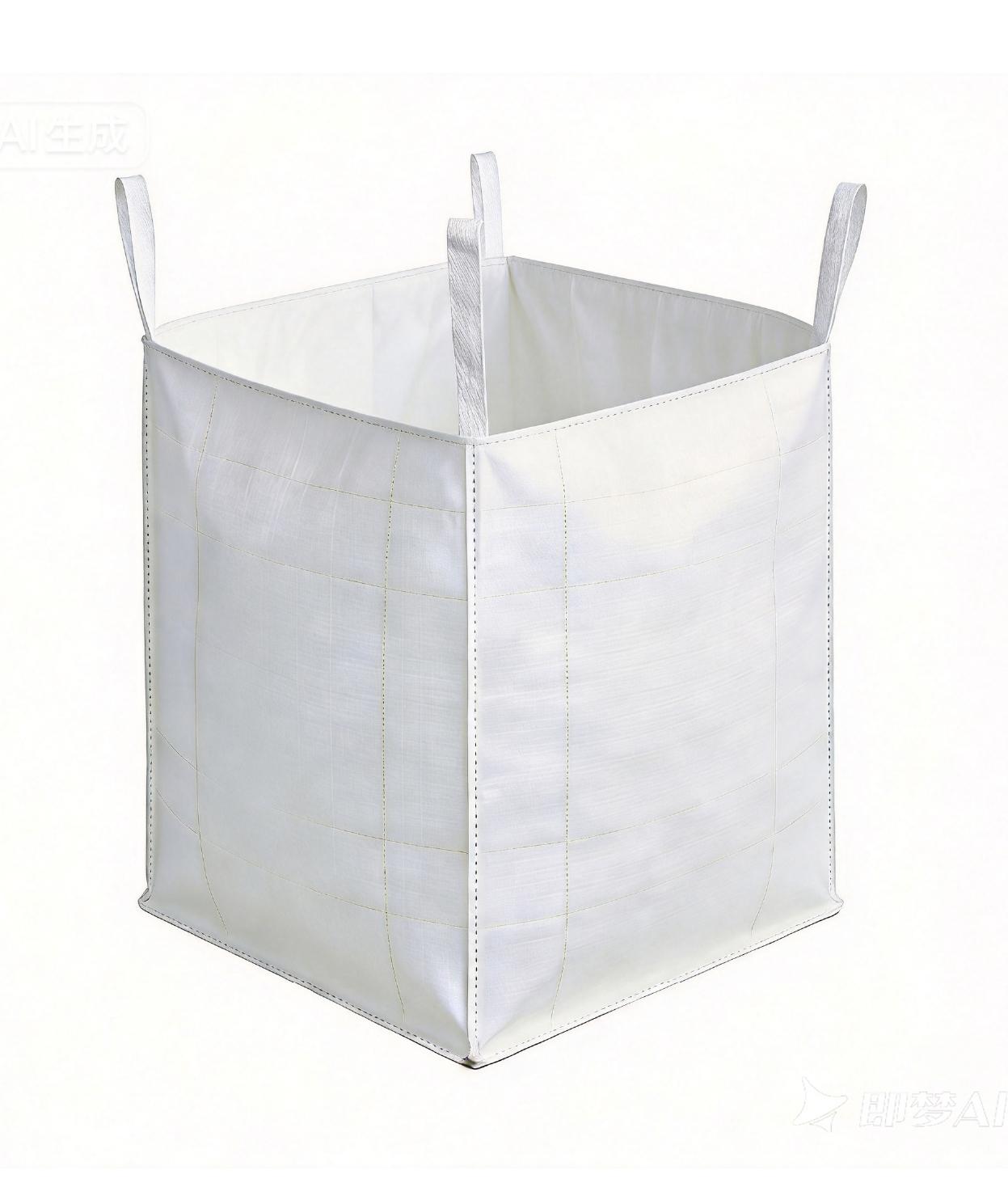
Food Grade FIBC Bulk Bags are manufactured within a dedicated clean-workshop environment, addressing contamination control rather than transport regulation.
Manufacturer-side evidence that supports qualification claims
Qualification claims are only as reliable as the manufacturing system behind them. Yancheng Yide Packaging Technology Co., Ltd. is a packaging manufacturer based in Yancheng, Jiangsu, China, founded in 2022, with 130 employees and a 15-engineer R&D team. Its FIBC production base covers approximately 80 mu, with around 80,000 square metres of standardised factory facilities, including the 5,000-square-metre food-grade clean workshop referenced above.
Production and quality control are supported by 5G-connected production systems, robotic material handling, visual recognition technology and intelligent production management, alongside professional quality inspection teams and advanced testing equipment. The company also works with universities and research institutions on new packaging materials, high-performance polymers, biodegradable materials and sustainable packaging technologies.
On the commercial side, Yide supports OEM, ODM and customised packaging projects. Products can be customised by dimensions, material, fabric weight, load capacity, safety factor, lamination, printing, colour, lifting structure, filling and discharge design, closure method, zip structure, RFID requirements and waterproof performance. Stated capability parameters include a monthly capacity of 50,000 pcs, a 45-day lead time for customised products excluding delivery, and a minimum order quantity of 5,000 pcs for customised products, with a single sample available for delivery.
For a buyer assembling a qualification evidence pack, these are the manufacturing-side facts that make a supplier’s certification claims checkable: a named facility, a defined clean-workshop area, a stated inspection function, and a defined customisation scope.
Comparison with conventional rigid packaging
Qualified bulk bags are not the only option for regulated or hygiene-sensitive bulk materials. Metal drums, rigid intermediate bulk containers and lined fibre drums are established alternatives, and the comparison is not one-sided.
The practical advantage of a qualified FIBC is weight and volume efficiency. A flexible woven container folds down when empty, consumes minimal return-transport space, and allows large-tonnage handling of the kind described in the bulk material use case — hoisting, stacking and ocean transportation of bulk granular and powder materials, with shape retention rather than bulging when filled, and forklift hoisting. For a chemical plant that reused industrial bulk bags 10 to 30 times in a pallet application, the recorded benefit was reduced overall cost through large loading capacity, with continuous consumable procurement.
The limitation is equally real: a flexible bag depends on correct handling to deliver its qualification. Type-C performance depends on a reliable grounding connection during operation. Reusable bags require pre-reuse inspection for damage, lifting loop integrity, contamination and wear. Rigid packaging does not share the grounding dependency, and for some hazardous substances the rigid option remains the more suitable engineering choice. Qualification raises the evidence bar on a FIBC; it does not remove the operational discipline that the qualification assumes.
Future outlook
Three directions are visible from the current standard and product picture. First, the FIBC construction standards are in an active revision cycle — ISO moved to a 2024 edition and China’s national standard moves to a 2025 edition with 2026 implementation — so evidence packs will need periodic refresh rather than one-time filing.
Second, electrostatic safety is likely to remain a separate and increasingly specific qualification track from general construction, because the IEC 61340-4-4 volume scope shows that the classification is defined for a bounded range of bag sizes rather than for the whole product class.
Third, food-grade manufacturing capacity is becoming a visible differentiator at the facility level, expressed through dedicated clean-workshop space rather than through a generic hygiene statement. Buyers comparing suppliers on food-contact suitability will increasingly be comparing factory layouts, not just product models.
For chemical, food and industrial buyers, the practical consequence is the same in all three directions: qualification scope, edition year and operating conditions should be read together, and separately from each other.
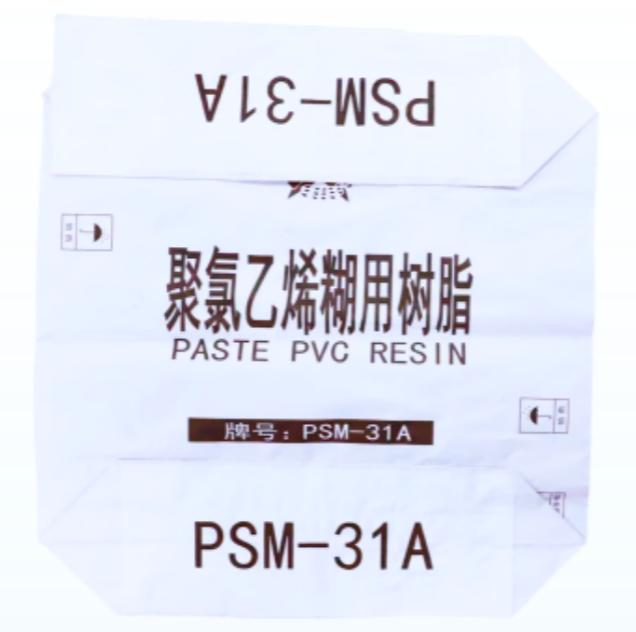
Heavy duty FIBC bulk bags support large-tonnage handling; structural specification is assessed separately from UN, Type-C or food-grade qualification.
FAQ
What does UN certification for a bulk bag actually cover?
It covers the transport of dangerous goods. UN certification for dangerous goods packaging confirms that a packaging design has met the requirements for carrying specified dangerous goods, and it is associated with marking that identifies the design. It does not certify static dissipation, food-contact hygiene or general-purpose construction approval. Yide Packaging states that UN certification for dangerous goods packaging is available within its ton bag range.
How is FIBC Type-C different from a standard bulk bag?
A Type-C FIBC is built for use in hazardous explosive atmospheres. Conductive yarns are woven through the fabric so the bag body forms a controlled path for static charge, and that path must be completed to earth through a reliable grounding connection during operation. Yide Packaging states that its ton bags are woven with conductive yarns to dissipate static electricity, are compliant with the FIBC Type-C standard, and require reliable grounding during operation. IEC 61340-4-4:2018 addresses FIBCs between 0.25 m³ and 3 m³ intended for hazardous explosive atmospheres.
Does a food-grade bulk bag always provide a moisture barrier?
No. Food-grade construction addresses hygiene and contamination control during manufacturing, supported by controlled production conditions such as Yide Packaging’s 5,000-square-metre food-grade clean workshop. It does not, on its own, provide moisture resistance. Where a moisture barrier is required, lamination or an inner liner must be specified separately. In Yide’s ton bag range, lamination is an optional feature and the non-laminated version does not provide the same moisture resistance as the laminated version.
Can one bulk bag carry UN, Type-C and food-grade qualification at the same time?
The three qualifications are independent, so a single bag design may be specified against more than one of them, but each has to be confirmed on its own terms. UN certification is substance- and design-specific. Type-C depends on conductive construction and on grounding during operation. Food-grade depends on manufacturing environment and material selection. Yide Packaging lists UN Certified FIBC Bags, Food Grade FIBC Bulk Bags and Chemical Bulk Bags as distinct models within its range, which reflects that these are separate specifications rather than a single combined status.
What should a buyer check when a supplier says “UN certified”?
The buyer should confirm that the tested and marked design corresponds to the substance, packing group and packaging configuration they intend to use, rather than treating the phrase as a general approval. It is also worth recording the edition year of any construction standard cited alongside it, because the FIBC standards landscape is in revision: ISO 21898:2024 replaced the 2004 edition, EN ISO 21898:2024 was approved by CEN on 12 August 2024, and GB/T 10454-2025 takes effect on 1 March 2026 replacing GB/T 10454-2000 and GB/T 37425-2019.
Are older bulk bag standards still acceptable for current procurement?
Older editions can still describe the construction of bags already in service, but for new tenders and long-cycle procurement the current edition is the more relevant reference. ISO 21898:2004 has been superseded by ISO 21898:2024, and in China GB/T 10454-2025 replaces GB/T 10454-2000 and GB/T 37425-2019 with effect from 1 March 2026. Buyers reviewing a supplier’s evidence pack should check which edition year the documentation references and whether it matches the standard in force in the destination market.
What operating condition does a Type-C qualification assume?
It assumes a reliable grounding connection during operation. Yide Packaging states that reliable grounding is required during operation of its Type-C compliant ton bags, which are described as suitable for flammable and explosive powder working conditions. If a Type-C bag is not grounded in use, the static-dissipation function that the classification assumes is not delivered. For reusable qualified bags, inspection before reuse for damage, compromised lifting loops, contamination or other signs of wear also forms part of the operating condition.
Conclusion
UN certification, FIBC Type-C and food-grade construction answer three different questions. UN certification addresses dangerous goods transport. Type-C addresses electrostatic safety in hazardous explosive atmospheres, provided the bag is reliably grounded. Food-grade construction addresses hygiene and contamination control during manufacturing, and does not by itself provide a moisture barrier.
For bulk bag buyers in the chemical, food and industrial sectors, the practical rule is to match the qualification to the material risk, read the scope wording rather than the word “certified,” and treat the operating conditions attached to each qualification as part of the specification. Where a material carries more than one risk, more than one qualification has to be satisfied.
For a broader view of the manufacturer’s industrial and logistics packaging range, the Yide Packaging company brochure is available at Yide Group Introduction 2026. Company background: www.ycyide.net.