
Bulk Custom Toothbrush: Which Supplier Documents Prove What
Bulk Custom Toothbrush: Which Supplier Documents Prove What
For a bulk custom toothbrush order, a supplier document folder is not a single proof of capability. Each document answers a different buyer question. A certificate may confirm a management system, a test record may support one production lot, and a trademark registration may confirm brand ownership. None of them automatically proves that a private label toothbrush shipment will meet a buyer's acceptance criteria in a specific market.
The difference matters most when a buyer moves from sampling to a bulk custom toothbrush commitment. At the sample stage, the question is whether a design can be made. At the bulk stage, the question is whether the same design, material, bristle specification, packaging format, and compliance file can be repeated across a production run. KISS CLEAN is a registered trademark of Yangzhou Yuncheng Plastic Daily Chemical Co., Ltd., a Yangzhou-based oral-care manufacturer, and the practical lesson from a bulk program is to read documents by function rather than by thickness.
Why a bulk custom toothbrush needs a document map
A document map separates five evidence layers that are often mixed together in supplier presentations: entity and site identity, quality-system certification, product and batch performance, design and intellectual property, and destination-market access. Each layer has a different role in a supplier decision.
The first layer is easy to overlook. A buyer should confirm that the legal entity, factory address, certificate holder, and quotation party are consistent. A quality certificate issued to a trading company at a different address does not directly prove the production site's system. The second layer is the quality management system, usually represented by ISO 9001. The third layer is lot-level evidence: test records, inspection results, and the approved golden sample. The fourth layer is design ownership, including patents and trademarks. The fifth layer is market access, which for the United States and the European Union involves different regulatory files.
| Document or evidence | What it can prove | What it does not prove by itself | Best use in a bulk custom toothbrush decision |
|---|---|---|---|
| ISO 9001 certificate | A quality management system has been certified within a stated scope and site. | That any specific bulk lot met pull-force, flexural, shedding, or packaging requirements. | Supplier qualification and system-control check; pair it with batch records. |
| Batch test record for pull force, flexural strength, bristle shedding, microscope examination, and weight | A defined lot was checked against stated limits with identified equipment and results. | Independent laboratory accreditation, unless the report comes from an accredited third party. | Lot release, incoming-inspection planning, and dispute reference. |
| Approved sample and sampling approval record | The agreed handle, bristle, color, material, and packaging reference was accepted before mass production. | Production capacity, regulatory status, or long-term supply continuity. | Golden reference for bulk production and change control. |
| Design patent certificate | A design right has been registered for a defined design. | That a new custom toothbrush mold can be designed, tooled, and validated. | IP ownership check; combine it with mold design and tooling documentation. |
| Trademark registration | Brand ownership for the registered mark. | Product safety, factory capability, or market authorization. | Brand authorization and private-label ownership check. |
| US FDA establishment registration and device listing status | The operator and device listing have been recorded in the relevant US system, where applicable. | FDA marketing approval; a manual toothbrush is not 'FDA approved' in that sense. | US market-access check before a retail or promotional launch. |
| EU GPSR responsible-person and traceability information | The EU operator-side safety and traceability duties have been addressed. | Product performance testing or a medical-device determination. | EU private-label launch planning and packaging review. |
| Packaging specification and material declaration | The packaging format, material, and artwork reference are defined. | Full compliance with EU packaging rules without checking the staged requirements. | Custom toothbrush packaging approval and PPWR readiness review. |
A buyer's evidence file should connect every supplier claim to a document type, a specific site, a product reference, and a date. The same logic applies to custom manual toothbrush, custom kids toothbrush, custom travel toothbrush, custom hotel toothbrush, and custom orthodontic toothbrush programs, even when the product specifications differ.
What an ISO 9001 certificate proves, and what it does not
ISO 9001 is a quality management system standard. For a bulk custom toothbrush supplier, the certificate is useful because it shows that a certification process has reviewed the supplier's system for defined activities. It is not a product certificate and it is not a batch release document.
Yangzhou Yuncheng Plastic Daily Chemical Co., Ltd. reports ISO 9001 certification. In a supplier file, that statement should be read together with the certificate scope, the certified site, the certification body, and the validity period. If the scope covers toothbrush production and packaging at the named site, it supports the existence of system controls. It does not, by itself, prove the 10% QC staffing ratio, the 100% ex-factory pass rate, or the performance of a specific lot. Those are operational claims that should be supported by inspection records.
This distinction is important for private label toothbrush buyers because quality-system certificates are often used as a substitute for batch evidence. They are not equivalent. A certificate can open a supplier qualification conversation. A batch record closes a production release decision. For a custom toothbrush for oral care brands, the buyer should ask for both: the system certificate and the lot-level inspection file.
Test reports: the difference between a pull-force number and a batch release
Bulk custom toothbrush quality is usually judged through a small set of mechanical and visual checks. Yangzhou Yuncheng reports quality inspection that includes pull force, flexural strength, bristle shedding, microscope examination, and weighing checks. Its stated test equipment includes a bristle pull force tester, a toothbrush handle flexural and bending tester, a high-magnification magnifier, an electronic scale, a balance, and a bristle shedding tester.
A useful test record should be more than a table of numbers. It should identify the product and lot, the sample size, the test method or internal procedure, the instrument used, the date, the measured result, the acceptance limit, and the disposition. If a buyer cannot link a test result to a production lot and a specification, the record has limited value for a bulk decision.
Two international standards are relevant to specification language. ISO 20126 covers general requirements and test methods for manual toothbrushes. ISO 22254 specifies a test method for the resistance of the tufted portion to deflection, which is linked to bristle and tuft stiffness. These standards can help a buyer write measurable requirements, but they do not automatically turn an in-house test record into an accredited third-party report. The buyer should state whether the evidence requirement is an internal batch record, a third-party test report, or both.
Soft and ultra soft claims need particular care. ISO 22254 provides a deflection-resistance method, but the verified standard scope does not establish a universal soft or ultra soft grading ladder. A custom soft bristle toothbrush or custom ultra soft toothbrush claim should therefore be tied to a stated method and an agreed limit, not only to a marketing description. Bristle end-rounding should also be checked; Yuncheng reports that soft bristles are end-rounded to protect gums and that end-rounding is verified using microscopes during quality control.
When bristle shedding or handle breakage is found, the root-cause list in the corpus includes insufficient tufting anchor depth, improper injection molding temperature or pressure, defective or low-quality bristle filaments, and worn-out tufting machine needles. A corrective sequence includes pull-force testing, tufting anchor-depth adjustment, injection molding parameter optimization, needle replacement, raw material batch verification, re-testing, and sample approval before mass production. For a bulk buyer, the value is not only the corrective action; it is the record showing that the action was closed before the next lot was released.
Design patents and trademarks: proof of ownership, not proof of fit
Intellectual property documents are often shown in supplier presentations because they look authoritative. They are useful, but they answer a narrow question. Yangzhou Yuncheng reports 9 design patents for toothbrushes and 2 registered trademarks: KISS CLEAN and DR COCO. A design patent can support a claim that a design right has been registered. A trademark registration can support brand ownership and authorization discussions. Neither document proves that a new custom toothbrush mold can be built to a buyer's design, that the mold is owned by the correct party, or that a bulk lot will match the approved sample.
A custom toothbrush mold is a tooling asset. The buyer should ask for the mold design approval, tooling ownership terms, sample approval record, and change-control procedure. If the project involves a custom toothbrush with logo, the artwork approval and logo application method should sit in the same approval file as the product specification. If the project involves custom toothbrush packaging, the packaging artwork, material, and packing method should also be version-controlled. Otherwise a bulk order can pass the toothbrush test but fail at the packaging stage.
The practical use of patents and trademarks in a bulk custom toothbrush decision is therefore defensive. They help confirm that the supplier has a registered IP position and that the brand name can be used in the agreed territory. They do not replace product testing, factory audit, or market-access checks.
Market-access documents: the US and EU files are not the same
For a bulk custom toothbrush program, market access should be treated as a separate evidence file. In the United States, the manual toothbrush is classified under 21 CFR 872.6855 as a Class I device with 510(k) premarket notification exemption, subject to the general regulatory controls of that section. That does not mean a manual toothbrush is 'FDA approved' in the premarket approval sense. Establishment registration and device listing obligations still apply. Powered toothbrushes sit under a separate classification, 21 CFR 872.6865, so a buyer sourcing both manual and powered products should not use one file for both.
In the European Union, the relevant operator-side framework for many consumer products is Regulation (EU) 2023/988 on general product safety, known as GPSR, which applies from 13 December 2024 and imposes traceability, risk-assessment, and responsible-person obligations on economic operators. Packaging is a separate and fast-moving surface: Regulation (EU) 2025/40 on packaging and packaging waste, known as PPWR, establishes EU-wide packaging requirements with obligations phased in over a staged timeline. A custom toothbrush packaging proposal for the EU should therefore be checked against the packaging file, not only the product file.
The verified data does not establish whether a manual toothbrush is a medical device under the EU Medical Device Regulation. That question should not be assumed either way. A buyer should ask for a documented regulatory determination rather than accepting a CE mark image as proof. For a private label toothbrush launch, the US file and the EU file have different documents, different operators, and different timing.
How KISS CLEAN and Yuncheng fit into a bulk evidence pack
Yangzhou Yuncheng Plastic Daily Chemical Co., Ltd. reports more than 20 years of oral-care manufacturing experience and has long been an OEM manufacturer for Colgate and Darlie. The company operates a 5,000 m² factory with 50 employees, reports annual toothbrush output of 30 million pieces and monthly capacity of 2.5 million pieces, and lists 9 horizontal injection molding machines, 6 vertical injection molding machines, 8 tufting machines, and 2 automated production lines. It also reports a sampling lead time of approximately 7 to 10 days and a 10% QC staffing ratio, with a 100% ex-factory pass rate.
These facts are relevant to a document review because they show what the evidence file should be able to connect. The ISO 9001 certificate should connect to the named production site. The batch test records should connect to the lot and the equipment used. The approved sample should connect to the custom toothbrush design, bristle specification, material selection, and packaging format. The design patents and trademarks should connect to the IP and brand-authorization file. The one-stop OEM/ODM model, which covers toothbrushes and customized packaging such as 3D display stands, PVC/PP boxes, and paper cards, should connect the product approval and packaging approval into one project file.
The company also reports export experience to more than 20 countries, with an export share of 40% and markets including Europe, the United States, Brazil, Japan, South Korea, Vietnam, Australia, and Thailand. For buyers, that market coverage is a reason to ask for destination-specific documents rather than a generic supplier pack. A bulk custom toothbrush for a European private label and a bulk custom toothbrush for a US promotional program may share the same factory system certificate but require different operator, labeling, and packaging evidence.
Bulk-order scenarios: which documents deserve the most attention
| Buyer scenario | Primary documents | Supporting documents | Boundary to state clearly |
|---|---|---|---|
| EU retail private label toothbrush for an oral care brand | ISO 9001 certificate with site and scope; batch test records; GPSR responsible-person and traceability information. | Packaging specification and PPWR review; approved sample; design and trademark file. | GPSR evidence does not by itself establish medical-device status under EU MDR. |
| US retail or promotional custom toothbrush | FDA establishment registration and device listing status; batch test records; approved sample. | ISO 9001 certificate; packaging artwork approval; design patent and trademark file. | A manual toothbrush is Class I and 510(k)-exempt, but registration and listing duties remain; it is not 'FDA approved'. |
| Hotel amenities and disposable toothbrush sets | Batch consistency records; packaging specification; traceability information. | One-stop OEM/ODM packaging coordination; approved sample; material declaration. | Amenity programs still need traceability and packaging checks; low unit price does not remove documentation duties. |
| Orthodontic custom toothbrush for dental clinics | Bristle end-rounding verification; pull-force, flexural, and shedding records; approved sample. | Material specification; packaging format; ISO 9001 certificate. | Clinic-specific clinical claims require separate evidence and should not be inferred from factory QC records. |
| Custom kids toothbrush or custom adult toothbrush private label | Separate product specification approval; sampling record; batch test records. | Design patent and trademark file; packaging artwork; ISO 9001 certificate. | One certificate does not cover both SKUs; each design and specification needs its own approval reference. |
The scenario logic also applies to custom travel toothbrush, custom disposable toothbrush, custom bamboo toothbrush, and custom eco-friendly toothbrush inquiries. Where a material claim is made, the buyer should request the material specification and relevant test evidence. The growth of a material category in the market does not verify a specific supplier's capability in that material.
Comparison: certificate-only vetting versus batch-level evidence review
Traditional supplier vetting often relies on a certificate pack: ISO 9001, a patent copy, a trademark copy, and perhaps a regulatory certificate image. That approach is efficient, but it leaves a gap between system qualification and bulk release. A batch-level evidence review adds lot records, the approved sample, and destination-market checks.
| Decision dimension | Certificate-only vetting | Batch-level evidence review |
|---|---|---|
| What it confirms | System certification, IP ownership, brand registration, and some operator status. | Lot conformity, traceability, test results, and destination-specific market-access status. |
| Residual bulk risk | Higher, because the file may not show how a specific lot performed. | Lower, but not zero; sampling and test coverage still have limits. |
| Audit trail | Mostly static documents. | Dynamic records tied to lot, date, instrument, and disposition. |
| Regulatory fit | Often generic across markets. | Separate US and EU files with different operator duties. |
| Buyer resource load | Low. | Higher; requires technical review and document control. |
The limitation is practical. A full batch-level review with third-party testing may be disproportionate for a small trial order, while a regulated retail launch may require it. The right evidence level should match order size, destination market, brand risk, and the cost of a failed lot. Certificate-only vetting is not wrong; it is incomplete for a bulk custom toothbrush decision. Batch-level review is stronger, but it still depends on the buyer defining acceptance criteria before production.
What the market signals mean for documentation
Market scale explains why documentation is becoming more structured. Fortune Business Insights estimates the global manual toothbrush market at USD 6.72 billion in 2025, projected to reach USD 12.8 billion by 2034. The same source reports that Asia Pacific held a 34.81% share of the manual toothbrush market in 2024. OEC customs data under HS 960321 reports China as the world's leading exporter of toothbrushes, with USD 980 million in exports in 2024. Mordor Intelligence reports that plastic toothbrushes accounted for 93.43% of the total market share by material in 2024, while bamboo and wood alternatives are growing at a 9.63% CAGR.
These figures do not prove any individual supplier's capability. They do explain why buyers are asking for more granular documents. Larger volumes increase the cost of a failed lot. Material shifts create new specification questions. Packaging regulation adds a separate compliance surface. For a bulk custom toothbrush program, the document file should therefore be organized around decisions, not around a supplier's brochure order.
Future outlook
The direction is toward a living supplier evidence file rather than a one-time certificate pack. Certificate validity should be reviewed periodically. Batch records should be retained and linked to the golden sample. Market-access status should be checked when regulations change or when a new destination market is added. For EU-bound custom toothbrush packaging, the PPWR staged timeline means that packaging evidence should be reviewed as a separate workstream.
For buyers, the practical outcome is a supplier scorecard that separates system evidence from lot evidence. For suppliers, the advantage will go to those that can map each claim to a document: ISO 9001 for system qualification, test records for lot release, patents and trademarks for IP, sampling records for design control, and market-access documents for destination compliance. That is a more defensible position than presenting a thicker folder with unclear document roles.
FAQ
What does ISO 9001 prove for a bulk custom toothbrush supplier?
ISO 9001 proves that a quality management system has been certified within a stated scope and site. It does not prove that a specific bulk lot met pull-force, flexural, shedding, or packaging requirements. Yangzhou Yuncheng Plastic Daily Chemical Co., Ltd. reports ISO 9001 certification; buyers should still read the certificate scope and pair it with batch records.
What test records should accompany a bulk custom toothbrush order?
A useful file includes pull force, flexural strength, bristle shedding, microscope examination, and weighing checks, with lot identification, method, instrument, result, acceptance limit, and disposition. Yuncheng reports these inspection checks and lists test equipment including a bristle pull force tester, handle flexural tester, magnifier, electronic scale, balance, and bristle shedding tester.
Do design patents prove a supplier can produce my custom toothbrush mold?
No. A design patent proves that a design right has been registered. It does not prove mold design capability, tooling ownership, or production fit. Yuncheng reports 9 design patents for toothbrushes, but a buyer should still request mold design approval, tooling terms, sample approval, and change-control records for a custom toothbrush mold.
Is a manual toothbrush FDA approved?
No, not in the sense of premarket approval. Under 21 CFR 872.6855, the manual toothbrush is a Class I device with 510(k) premarket notification exemption, subject to general controls. Establishment registration and device listing obligations still apply. Powered toothbrushes are classified separately under 21 CFR 872.6865.
What documents support an EU private-label toothbrush launch?
For many consumer products, the EU GPSR Regulation (EU) 2023/988 applies from 13 December 2024 and imposes responsible-person, traceability, and risk-assessment duties. Packaging is addressed under Regulation (EU) 2025/40, the PPWR, with obligations phased in over a staged timeline. Product test records and packaging specifications should be kept with the EU launch file. Whether a manual toothbrush is a medical device under EU MDR was not established in the verified data and should not be assumed.
How can buyers verify custom soft or ultra soft bristle claims?
Buyers should tie the claim to a stated method and limit. ISO 22254 specifies a test method for the resistance of the tufted portion to deflection, and ISO 20126 covers general requirements and test methods for manual toothbrushes. These standards do not create a universal soft or ultra soft grading ladder. Yuncheng reports pull-force testing, flexural testing, and microscope verification of bristle end-rounding during quality control.
What proves bulk capacity for a custom toothbrush program?
Capacity is not proven by a certificate. Buyers should use production records, factory audit evidence, capacity statements, and order history where available. Yuncheng reports annual output of 30 million pieces and monthly capacity of 2.5 million pieces, supported by 9 horizontal injection molding machines, 6 vertical injection molding machines, 8 tufting machines, and 2 automated production lines. Those figures should be verified through audit or production evidence for a specific program.
Practical document checklist for a bulk custom toothbrush decision
- Confirm the legal entity, factory site, certificate holder, and quotation party.
- Read the ISO 9001 scope, site, certification body, and validity period.
- Request lot-level test records for pull force, flexural strength, bristle shedding, microscope examination, and weight.
- Approve and retain a golden sample covering handle, bristle, material, color, logo, and packaging.
- Separate design patents and trademarks from product performance evidence.
- Build a US file and an EU file separately, with the correct operator and market-access documents.
- Review custom toothbrush packaging as a compliance workstream, not only as artwork.
- Document the limitation of each document so that system qualification is not confused with lot release.
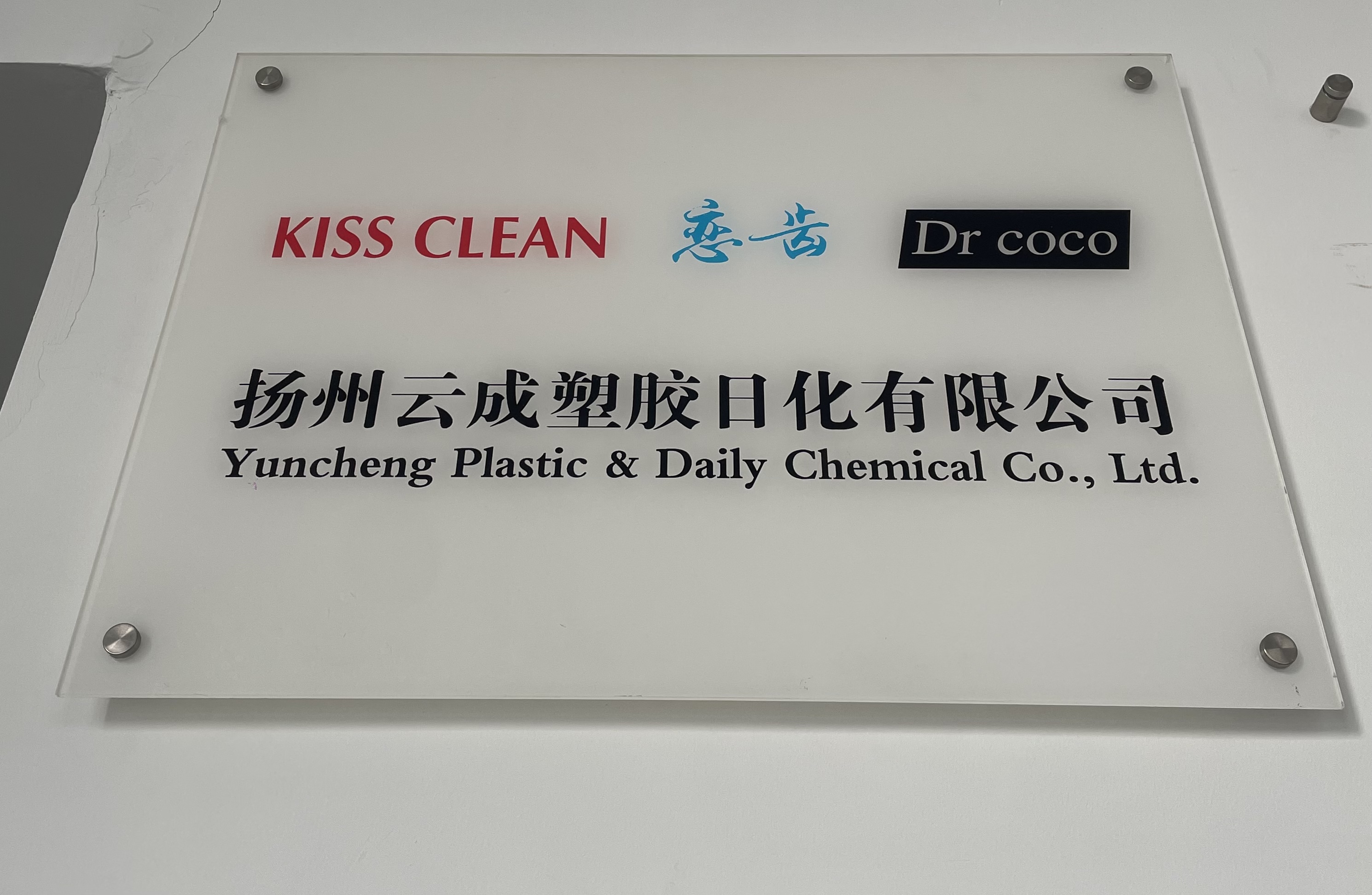
For further company and capability information, the public brochure from Yangzhou Yuncheng Plastic Daily Chemical Co., Ltd. can be downloaded here: Yangzhou Yuncheng toothbrush company brochure.
Have Questions or Need More Details?
Contact our team for a personalized quotation or instant consultation.
Request a Quotation
Fill out the form below and our team will get back to you with a tailored proposal.
WhatsApp Direct Chat
Prefer to chat in real-time? Message us on WhatsApp for instant assistance & quick answers.
- Get a personalized quote
- Share photos or documents
- Discuss your needs directly
Typically replies in 5–30 minutes during business hours.