
Bulk Matcha Compliance Checklist: Certifications by Market
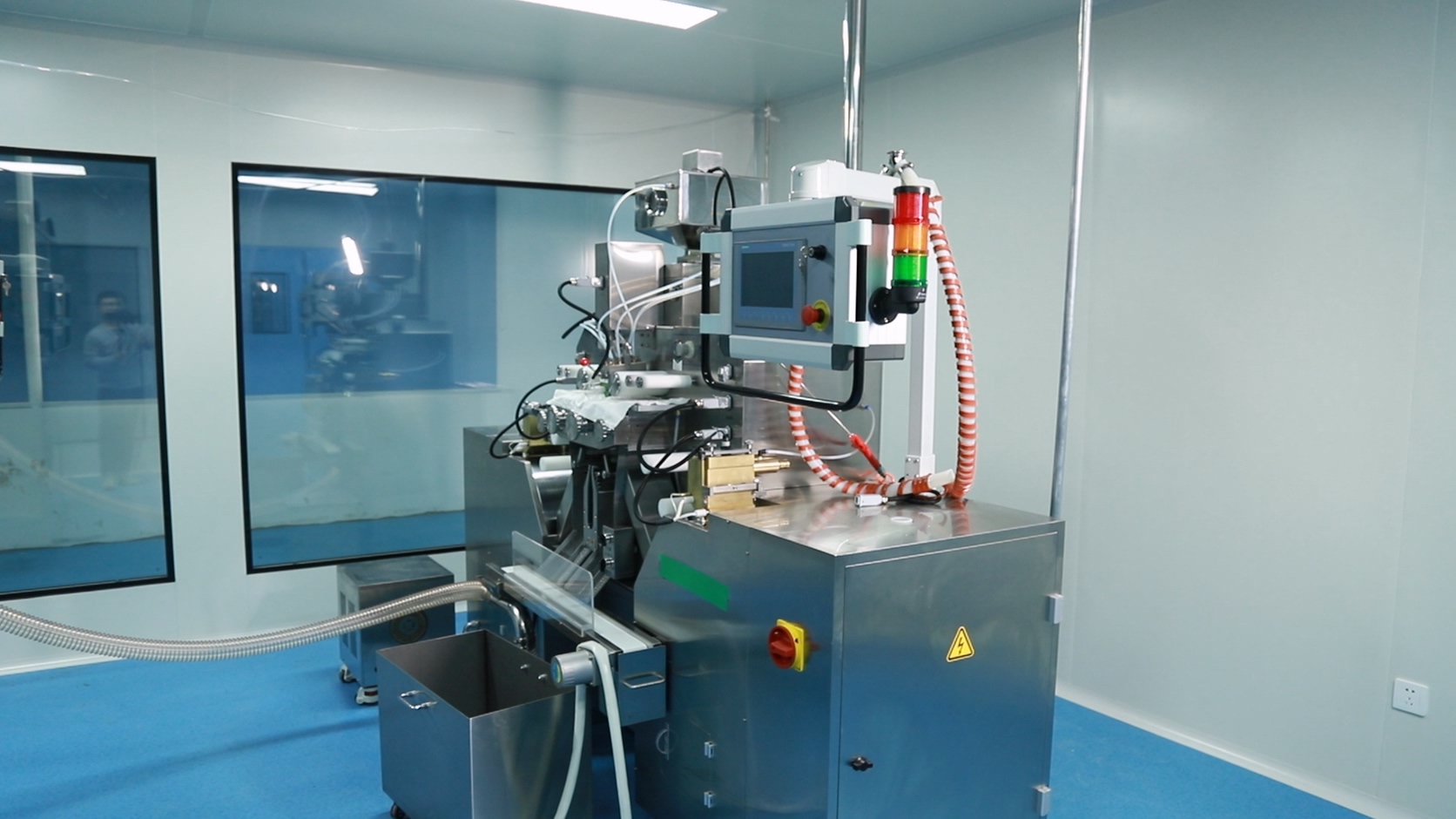
Bulk matcha compliance begins on the production floor and finishes inside the destination market file.
Matcha has moved from a specialty café ingredient to an industrial food input, and the compliance paperwork has moved with it. For buyers sourcing bulk matcha, the practical question is no longer whether a supplier holds certificates. It is which certificate satisfies which market requirement — and which grade of product it actually covers.
The mapping that holds up in practice is market-anchored. GMP documentation is applied to products destined for the USA market. EU Organic covers the EU market. HACCP, ISO 22000, HALAL and Kosher function as global credentials that travel across multiple destinations. Around that core sit the requirements that no single certificate absorbs on its own: facility registration, importer verification duties, pesticide residue limits, labeling, and import duty.
That distinction separates a supplier file that clears a retail audit from one that stalls at the customs broker. It is also the difference between a price negotiation and a project delay.
Why Certifications Became a Market-Access Filter
Matcha demand is no longer driven mainly by tea drinkers. It is driven by formulators. Culinary grade matcha accounted for 56.4% of the global market share in 2026, a figure tied directly to demand from industrial food and beverage manufacturing (Market Data Forecast). When matcha becomes an ingredient in a manufactured product, the buyer's quality team — not the marketing team — owns the sourcing decision, and that team asks for documentation.
Regulatory pressure has moved in the same direction. In the European Union, stricter maximum residue limits for clothianidin and thiamethoxam at 0.01 mg/kg took effect in March 2026 under Regulation (EC) No 396/2005. Residue compliance is a testing and documentation exercise that runs in parallel with organic certification; the two are frequently confused, and they are not interchangeable.
In the United States, the FDA requires Food Facility Registration and FSVP documentation for imported matcha powder. Those obligations sit with the importer or the US owner of the product, not with the manufacturer's certificate. A Chinese supplier can prepare the supporting file; it cannot perform the importer's duty.
Meanwhile the organic side of the market keeps expanding. Organic certified matcha represented approximately 41% of total global market demand in 2025 (Matcha Tea Powder Market Industry Analysis) and remains the fastest-growing segment, with an expected CAGR of 12.68% through 2033 (SNS Insider). Organic is therefore both a compliance requirement and a commercial positioning decision — which is precisely why the market mapping has to be explicit before a purchase order is placed.
A Practical Mapping: Requirement, Certification, Product Line
The table below converts a paper list of certificates into a usable checklist. Each row answers three questions: what the destination market requires, which credential or document addresses it, and which product lines in the KM1–KM10 range are typically involved.
| Market / requirement | Certification or documentation | Typical KM product lines | Boundary to note |
|---|---|---|---|
| United States — general food import | GMP documentation; FDA Food Facility Registration; FSVP documentation (importer-held) | KM1–KM10, across functional, culinary, beverage and ceremonial lines | Registration and FSVP obligations belong to the US importer; a certificate does not replace them |
| United States — organic claim | USDA Organic; JAS Organic and USDA Organic have had mutual equivalency since 1 January 2014 | Organic-positioned selections within the KM range, according to order | Organic is a production and processing standard, not an indicator of grade tier |
| European Union | EU Organic; pesticide residue testing against EU MRLs, including 0.01 mg/kg for clothianidin and thiamethoxam from March 2026 | KM3–KM10 in most retail and beverage-driven projects; functional lines for ingredient use | EU Organic alone does not demonstrate residue compliance |
| Global food safety systems | HACCP; ISO 22000 | KM1–KM10 | System-level credentials; they do not address organic status or religious dietary requirements |
| Global religious dietary markets | HALAL; Kosher | KM1–KM10, depending on product and destination | Do not cover pesticide residues or organic claims |
| Destination-specific file | Specification sheets, batch documentation, labeling support, export documentation | The ordered product line only | Documentation is issued according to product and destination-market requirements |
Certification mapping for bulk matcha by market requirement and KM product line.
The value of this structure is that it prevents two common errors. The first is treating a global credential as a market passport. The second is treating a market-specific credential such as EU Organic as if it also settled residue testing or importer registration. Both errors are discovered late, usually after the label artwork is approved and the production slot is booked.
What Each Certification Actually Covers
Certificates differ in what they govern. Reading them as one undifferentiated block is the source of most confusion in supplier questionnaires.
GMP
Good Manufacturing Practice addresses facility and process controls — how the production environment is organized, cleaned, monitored and documented. In the mapping used for bulk matcha supply, GMP documentation is applied to products destined for the USA market, where current manufacturing practice expectations shape what a buyer's quality team expects to see in the supplier file.
HACCP and ISO 22000
HACCP is a hazard analysis and critical control point system: it identifies where food safety hazards can enter a process and defines how those points are controlled. ISO 22000 is a food safety management system standard that organizes those controls within a managed framework. Both are treated as global credentials because they are not tied to a single destination market — HACCP and ISO 22000 apply to KM1–KM10 lines regardless of where the finished product is sold.
USDA Organic and EU Organic
Organic certification governs how the raw material is grown and processed, together with chain-of-custody requirements. It is market-specific: USDA Organic addresses the US organic claim, and EU Organic covers the EU market. Equivalence arrangements between jurisdictions are narrow and pair-specific — the JAS and USDA Organic equivalency between Japan and the USA has existed since 1 January 2014, and it does not extend to other markets automatically.
HALAL and Kosher
These certifications address religious dietary requirements through ingredient and process compliance. They support distribution and retail in markets where those requirements apply, and they are global in the sense that they are not restricted to one destination. They do not verify pesticide residues, heavy metals, or organic production.
Matching Certifications to the KM1–KM10 Product Range
Compliance decisions and grade decisions are usually made by different people on the buyer side — the quality team owns the first, the product team owns the second. They intersect at the specification sheet, which is why the grade structure matters to the compliance checklist.
| Model | Type | Particle fineness | Primary application |
|---|---|---|---|
| KM1 | Functional Grade | 800–1000 mesh | Supplements, functional food blends, powdered formulations |
| KM2 | Functional Grade | 800–1000 mesh | Nutrition products, functional foods, powdered nutrition formulations |
| KM3 | Culinary Grade | 800–1000 mesh | Baking, ice cream, desserts, confectionery, food manufacturing |
| KM4 | Culinary Plus | 800–1200 mesh | Chocolate, beverages, desserts, premium food products |
| KM5 | Beverage Grade | 1000–1200 mesh | Milk tea, matcha latte, café drinks, beverage formulations |
| KM6 | Premium Beverage | 1000–1200 mesh | Premium milk tea, café chains, specialty beverages |
| KM7 | Ceremonial Grade | 1300–1800 mesh | Matcha latte, premium cafés, specialty tea beverages, retail matcha |
| KM8 | Ceremonial Plus | 1300–1800 mesh | Specialty matcha drinks, premium cafés, boutique beverage brands |
| KM9 | Ultra Ceremonial | 1500–1800 mesh | High-end matcha brands, specialty cafés, premium retail products |
| KM10 | Ultra Ceremonial Plus | 1500–1800 mesh | Traditional matcha preparation, tea ceremony, luxury matcha brands, high-end retail |
KM1–KM10 grade structure, particle fineness and typical application, as documented in the product specification set.
The compliance layer sits on top of this structure rather than replacing it. Organic matcha options and market-specific compliance documentation are part of the customization scope, alongside the choice between conventional and organic material, and they are confirmed according to product and destination market. In other words, organic status is a selection decision applied to a grade — not a grade in itself. A buyer who needs an organic culinary ingredient still has to specify KM3 or KM4 characteristics.
Where This Plays Out in Real Projects
The mapping is easiest to see in projects where a market requirement and a grade decision were solved together.
Café and beverage brands. A café brand establishing a stable matcha menu selected its grade on milk compatibility, flavor strength and café preparation requirements rather than on certificate lists alone. The relevant compliance work sat behind the beverage lines — KM5 and KM6 profiles — where consistency across locations matters more than peak sensory character.
Bakery and food manufacturing. A food manufacturer incorporated an application-specific culinary grade into commercial formulations for cakes, cookies, desserts and chocolate, maintaining a recognizable matcha flavor and green appearance through processing. Because the material was going into manufactured food, the documentation set was driven by the destination market rather than by the grade itself.
Private label. A private label brand developed a retail matcha product with support covering grade selection, product positioning, private label packaging, labeling coordination and production, starting from a minimum order quantity of 10 kg. Labeling coordination is where market-specific certification usually becomes visible: an organic claim on retail packaging depends on the certification held for that product and market.
Premium tea brands. A premium tea brand used a multi-tier grading system to compare ceremonial and ultra-ceremonial options by texture and application before selecting a grade for direct-consumption use and premium positioning. For that buyer, the constraint was product identity; the compliance file still had to match the destination market's import requirements.
Traditional Approaches Versus Market-Anchored Planning
Most sourcing problems in this category come from the sequence of decisions, not from the amount of documentation collected.
| Dimension | Certificate-first approach | Market-anchored approach |
|---|---|---|
| Starting point | Collect the longest certificate list available | Define destination market, product claim and channel first |
| Organic scope | Treat any organic certificate as usable everywhere | Match USDA Organic, EU Organic or equivalence arrangements to the specific market |
| Residue and testing | Assume food safety certification covers residues | Plan residue testing against destination MRLs as a separate step |
| Importer duties | Expect the supplier to handle registration and verification | Assign registration and FSVP-type obligations to the importing entity |
| Grade decision | Select grade after the certification question is settled | Select grade and certification together against the specification sheet |
| Typical failure point | Retail audit or customs review, after artwork approval | Earlier, at the sourcing brief stage |
Two sourcing sequences and where each one typically breaks down.
Limits and boundaries buyers should accept
Certification is a control, not a guarantee, and it has clear edges. Organic standards are jurisdiction-specific, and equivalence arrangements such as the JAS–USDA Organic equivalency apply to defined pairs of markets rather than globally. Food safety system credentials do not demonstrate residue compliance, and religious dietary certifications do not address organic status. Certificates do not transfer importer obligations across borders, and certification coverage is confirmed per product and destination market rather than assumed for an entire range. Finally, organic status describes how material was produced — it does not upgrade a culinary grade into a ceremonial one, and buyers assessing sensory quality should evaluate the grade tier separately from the certificate file.
Market Signals Shaping Certification Requirements
Three signals are pulling certification decisions earlier into the sourcing process.
First, organic demand is structurally larger than it was. With organic certified matcha at roughly 41% of global demand in 2025 and the segment growing at an expected 12.68% CAGR through 2033, certification choices increasingly determine which buyers a supplier can serve at all.
Second, residue regulation is tightening rather than converging. The EU's 0.01 mg/kg limits for clothianidin and thiamethoxam from March 2026 illustrate the direction: testing and documentation requirements intensify independently of organic certification, and residue compliance has to be engineered into the supply relationship rather than added at shipment.
Third, commercial terms now interact with compliance planning. The U.S. Section 122 duty of 10% on CIF value for matcha imports, effective February 2026, changes landed cost calculations; buyers comparing suppliers should model certification, testing and duty together rather than treating them as separate line items.
On the supply side, capacity has scaled to meet this demand. China's matcha output exceeded 12,000 tonnes in 2025, and Zhejiang Province alone exported 1,241.97 tons in Q1 2026. Scale makes certification a differentiator: when multiple suppliers can supply comparable grades, the documentation file becomes the deciding factor in shortlisting.
What Buyers Should Expect Next
Certification documentation is becoming a screening field rather than an onboarding step. Buyers are increasingly asked by their own retail customers to show how a supplier's certificates map to a specific market, and suppliers that cannot answer that question in a structured way lose shortlist positions before pricing is discussed.
The likely direction of travel is standardisation of the file rather than of the standards. Destination markets will continue to set their own residue limits, organic rules and importer obligations; what will converge is the expectation that a supplier can present its grade range, its certification scope and its documentation options as one coherent map. For buyers, the practical response is to build that map into the sourcing brief — market, claim, grade, documentation — and to verify each element against the specification sheet before the order is placed.
FAQ
Which certification is required to sell bulk matcha in the United States?
US market requirements combine facility-level and importer-level elements. GMP documentation is applied to products destined for the USA market, while the FDA requires Food Facility Registration and FSVP documentation for imported matcha powder. The FSVP element is an importer obligation. A manufacturer can support the file with certifications, specifications and batch documentation, but registration and verification remain with the US importing entity.
Does EU Organic certification alone allow a bulk matcha product to be sold in the EU?
No. EU Organic covers the organic production and processing claim for the EU market. It does not, by itself, address every EU import requirement. Pesticide residue limits under Regulation (EC) No 396/2005 apply separately, including stricter MRLs of 0.01 mg/kg for clothianidin and thiamethoxam effective March 2026. Residue testing and supporting documentation can be arranged according to product specifications and destination-market requirements.
Are HACCP and ISO 22000 considered global certifications?
In practice they are treated as global credentials because they are not tied to a single destination market. HACCP and ISO 22000 apply to the KM1–KM10 range regardless of final market. They do not replace market-specific organic certification, residue testing, or importer-side registration and verification requirements.
What is the difference between GMP and HACCP in matcha production?
GMP addresses facility and process controls — the manufacturing environment, hygiene, monitoring and documentation practices. HACCP is a hazard analysis and critical control point system that identifies where food safety hazards can enter the process and how those points are controlled. The two are complementary: GMP sets the operating environment, and HACCP structures the safety controls within it.
Do HALAL and Kosher certifications cover pesticide residue requirements?
No. HALAL and Kosher certification addresses religious dietary requirements through ingredient and process compliance. Pesticide residue and heavy metal testing are separate matters, conducted according to product specifications and destination-market requirements, with supporting documentation available where applicable.
Which KM grades are typically used for culinary applications versus ceremonial applications?
Culinary applications typically use KM3 for baking, ice cream, desserts, confectionery and food manufacturing, and KM4 where a more premium food or beverage formulation is required. Beverage-focused lines use KM5 and KM6 for milk tea, matcha latte and café drinks. Ceremonial-tier lines — KM7, KM8, KM9 and KM10 with particle fineness of 1300–1800 mesh and above — are positioned for premium cafés, specialty beverages, retail matcha, traditional preparation and luxury applications.
Is organic matcha available as an option across the KM1–KM10 range?
Organic matcha options and market-specific compliance documentation form part of the customization scope, alongside conventional or organic material selection, and are confirmed according to product and destination market. Because certification coverage is market-specific, buyers should confirm the availability of the required scheme for the specific grade and destination before finalising the specification.
Additional reference: the TangMist Matcha grade and documentation structure for bulk matcha supply is published at tangmistmatcha.com.