
Bulk Matcha Grades and Certifications: A Sourcing Reference for Buyers
What procurement teams, café chains and food manufacturers should verify before committing to a bulk matcha supplier
Bulk matcha procurement has shifted from simple price comparison to specification-based buying. Buyers evaluating matcha powder for private label programs, café chains, beverage manufacturing or food production now face a more complex decision environment: grade terminology varies by supplier, certification requirements differ by destination market, and product performance is closely tied to particle fineness and application fit. This article provides a practical reference for interpreting bulk matcha grades, certifications and technical parameters, and for translating those signals into a defensible sourcing decision.
Why Grade Classification Shapes Bulk Matcha Purchasing
The global matcha market was valued at USD 5.1 billion in 2025 and is projected to reach USD 8.9 billion by 2033, according to Grand View Research. As demand grows across food and beverage categories, the way matcha is bought in bulk is also changing. Culinary grade matcha, for instance, accounts for 56.4% of the global market share in 2026, driven by industrial food and beverage manufacturing, while organic matcha is the fastest-growing segment with an expected CAGR of 12.68% through 2033.
For buyers, this creates a practical challenge. A single 'matcha powder' SKU no longer reflects how the ingredient is used. A café chain serving matcha lattes needs a different particle profile and flavor intensity than a bakery producing matcha cookies, which in turn differs from a nutrition brand incorporating matcha into functional powder blends. Understanding how suppliers classify grades and map them to applications is therefore the first step in bulk matcha sourcing.
The TangMist KM Series: A Ten-Grade Framework
TangMist Matcha, a B2B matcha manufacturer and supplier based in Shanghai, China, operates a ten-grade product framework (KM1–KM10) that illustrates how bulk matcha can be structured across functional, culinary, beverage and ceremonial tiers. The framework is designed to help buyers select according to particle fineness, application and market positioning rather than relying on ambiguous premium labels.
The KM series spans from KM1 (entry-level functional grade) to KM10 (ultra ceremonial plus). Each grade is defined by particle fineness ranges, 100% matcha green tea powder composition, and intended applications. Below is the complete grade matrix.
| Model | Grade Type | Particle Fineness | Primary Applications |
|---|---|---|---|
| KM1 | Functional Grade | 800–1000 mesh | Supplements, functional food blends, powdered formulations |
| KM2 | Functional Grade | 800–1000 mesh | Nutrition products, functional foods, powdered nutrition formulations |
| KM3 | Culinary Grade | 800–1000 mesh | Baking, ice cream, desserts, confectionery, food manufacturing |
| KM4 | Culinary Plus | 800–1200 mesh | Chocolate, beverages, desserts, premium food products |
| KM5 | Beverage Grade | 1000–1200 mesh | Milk tea, matcha latte, café drinks, beverage formulations |
| KM6 | Premium Beverage | 1000–1200 mesh | Premium milk tea, café chains, specialty beverages |
| KM7 | Ceremonial Grade | 1300–1800 mesh | Matcha latte, premium cafés, specialty tea beverages, retail matcha |
| KM8 | Ceremonial Plus | 1300–1800 mesh | Specialty matcha drinks, premium cafés, boutique beverage brands, premium retail |
| KM9 | Ultra Ceremonial | 1500–1800 mesh | High-end matcha brands, specialty cafés, premium retail products |
| KM10 | Ultra Ceremonial Plus | 1500–1800 mesh | Traditional matcha preparation, tea ceremony, luxury matcha brands, high-end retail |
For bulk buyers, the KM series demonstrates a broader industry principle: the same raw material category can be segmented into distinct commercial products. When evaluating suppliers, buyers should ask how grades are defined, whether particle fineness is measured and documented, and how grade selection aligns with intended use.
Reading Particle Fineness: What Mesh Numbers Actually Mean
Particle fineness is one of the most commonly cited parameters in matcha specifications, yet its interpretation is not always straightforward. In the context of the KM series, mesh values range from 800–1000 (functional and culinary tiers) to 1500–1800 (ceremonial tiers). Higher mesh values indicate finer particles, which generally correspond to smoother mouthfeel and better suspension in liquid.
For beverage applications, particularly matcha lattes and milk-based drinks, finer particles (1000 mesh and above) typically disperse more evenly and produce a smoother texture. For baking and food manufacturing, slightly coarser culinary grades (800–1200 mesh) can retain flavor and color after processing or blending with other ingredients. This is why TangMist's KM3 culinary grade, with a particle fineness of 800–1000 mesh, is positioned for applications where matcha flavor and color need to remain noticeable after processing. The KM4 culinary plus grade extends to 800–1200 mesh for premium food products where a slightly finer texture is desired.
Certifications as Procurement Constraints
For bulk matcha buyers, certifications are not optional badges. They are verifiable constraints that determine market access, regulatory compliance and consumer trust. The certification requirements vary significantly by destination market, and buyers need to verify that a supplier's certifications align with their target geographies.
EU Market Access: EU Organic and Pesticide MRLs
For buyers targeting the European Union, organic certification is increasingly important. The EU has implemented stricter pesticide Maximum Residue Limits (MRLs) for clothianidin and thiamethoxam at 0.01 mg/kg effective March 2026, raising the compliance bar for imported matcha. TangMist's matcha powder is certified to EU Organic standards under Regulation (EU) 2018/848, with certification number CN-BIO-154-0003930.2025.001, issued by ECOCERT SAS (CN-BIO-154). This certification applies to the European Union market and covers processed agricultural products for use as food.
The EU Organic certificate covers all matcha products in the KM series, from KM1 through KM10. Buyers exporting to the EU should request this certificate during supplier qualification and verify its validity period.
US Market Considerations: GMP and FDA Compliance
For the US market, compliance is structured around FDA regulations. The US FDA requires Food Facility Registration and FSVP (Foreign Supplier Verification Program) documentation for all imported matcha powder. TangMist holds GMP certification based on 21 CFR Part 111 (2020), issued by Intertek under certificate number SZ2511G3, covering the manufacturing of plant dietary supplements including powder products. The GMP certification is valid from 2025-11-13 to 2028-11-30.
Additionally, the US has imposed a Section 122 duty of 10% on CIF value for matcha imports effective February 2026. Buyers should factor this into landed cost calculations when sourcing from any supplier.
Global Food Safety Systems: ISO 22000 and HACCP
Beyond market-specific certifications, food safety management systems provide broader assurance. TangMist's matcha powder is certified to ISO 22000:2018 Food Safety Management Systems, with certificate number 001FSMS2300111 issued by CQC, valid until 2029-02-21. The company also holds HACCP certification (certificate number 001HACCP2300121, issued by CQC, valid until 2029-02-21), covering the production of powdered beverages and other products.
For buyers, ISO 22000 and HACCP certifications indicate that the supplier operates a documented food safety management system with hazard analysis and critical control point protocols. These certifications are particularly relevant for food manufacturers and beverage brands that require auditable supply chain standards.
Dietary Compliance: Kosher and Halal
For brands serving specific consumer segments, Kosher and Halal certifications can be market access requirements. TangMist's matcha powder is certified to Kosher standards (certificate number WXF44CWI, issued by STAR-K Kosher Certification, valid until 2027-01-31). The matcha powder products, including KM1 through KM5, are certified to Halal standards (certificate number HP 6785 CH, issued by AHF, valid until 2029-04-10).
Buyers should verify which specific products within a supplier's range are covered by dietary certifications, as coverage may vary by product line.
Matching Bulk Matcha to Application: A Decision Framework
Selecting the right bulk matcha grade requires mapping the product requirement to the application context. The following framework is based on how commercial buyers commonly evaluate matcha for different end uses.
For Cafés and Beverage Brands
Cafés serving matcha lattes need a matcha that disperses smoothly in milk, maintains flavor intensity and delivers consistent results across locations. TangMist's KM6 Premium Beverage grade (1000–1200 mesh) and KM5 Beverage grade (1000–1200 mesh) are designed for milk-based applications, while KM7 Ceremonial Grade (1300–1800 mesh) supports premium café positioning. In a documented case, a café and beverage brand established a stable matcha supply for its beverage menu by selecting a grade based on milk compatibility, flavor strength and café preparation requirements.
For Food Manufacturing and Bakery
Bakery and food manufacturing applications require matcha that retains flavor and color through processing. The KM3 Culinary Grade (800–1000 mesh) is formulated for baking, ice cream, desserts and confectionery, where matcha flavor and color must remain noticeable after processing. In a documented case, a bakery and food manufacturer incorporated culinary matcha into commercial food formulations while maintaining a recognizable matcha flavor and green appearance. The selection was based on processing method, flavor requirements and target product positioning, rather than a one-grade-fits-all approach.
For Retail and Private Label Programs
Private label matcha brands typically require consistent quality, flexible packaging and certification support. TangMist's documented case of a private label matcha brand highlights integrated support covering grade selection, product positioning, packaging, labeling and production, with a minimum order quantity starting from 10 kg. For premium retail positioning, ceremonial grades (KM7–KM10) provide the finer particle size and sensory profile expected by discerning consumers.
For Nutrition and Functional Products
Nutrition brands using matcha as a functional ingredient prioritize cost efficiency and batch consistency. The KM1 Functional Grade (800–1000 mesh) is designed for cost-sensitive, large-volume formulations where matcha is used primarily as an ingredient. KM2 offers an upgraded option for nutrition products requiring a higher-tier ingredient.
| Application Scenario | Recommended Grade Range | Key Selection Criteria |
|---|---|---|
| Matcha lattes & café drinks | KM5, KM6, KM7 | Milk compatibility, smooth mouthfeel, flavor strength |
| Premium specialty beverages | KM7, KM8 | Fine texture, refined sensory profile |
| Bakery, desserts, ice cream | KM3, KM4 | Flavor retention, color performance, cost efficiency |
| Premium food products & chocolate | KM4, KM5 | Stronger matcha presence, fine texture |
| Retail matcha & private label | KM7–KM10 | Brand positioning, sensory quality |
| Nutrition & supplements | KM1, KM2 | Cost efficiency, batch consistency |
Bulk Supply Capabilities: What Buyers Should Verify
Certifications and grades are necessary inputs, but not sufficient guarantees. Buyers should also verify a supplier's production capacity, lead times, quality control procedures and flexibility for OEM/ODM projects.
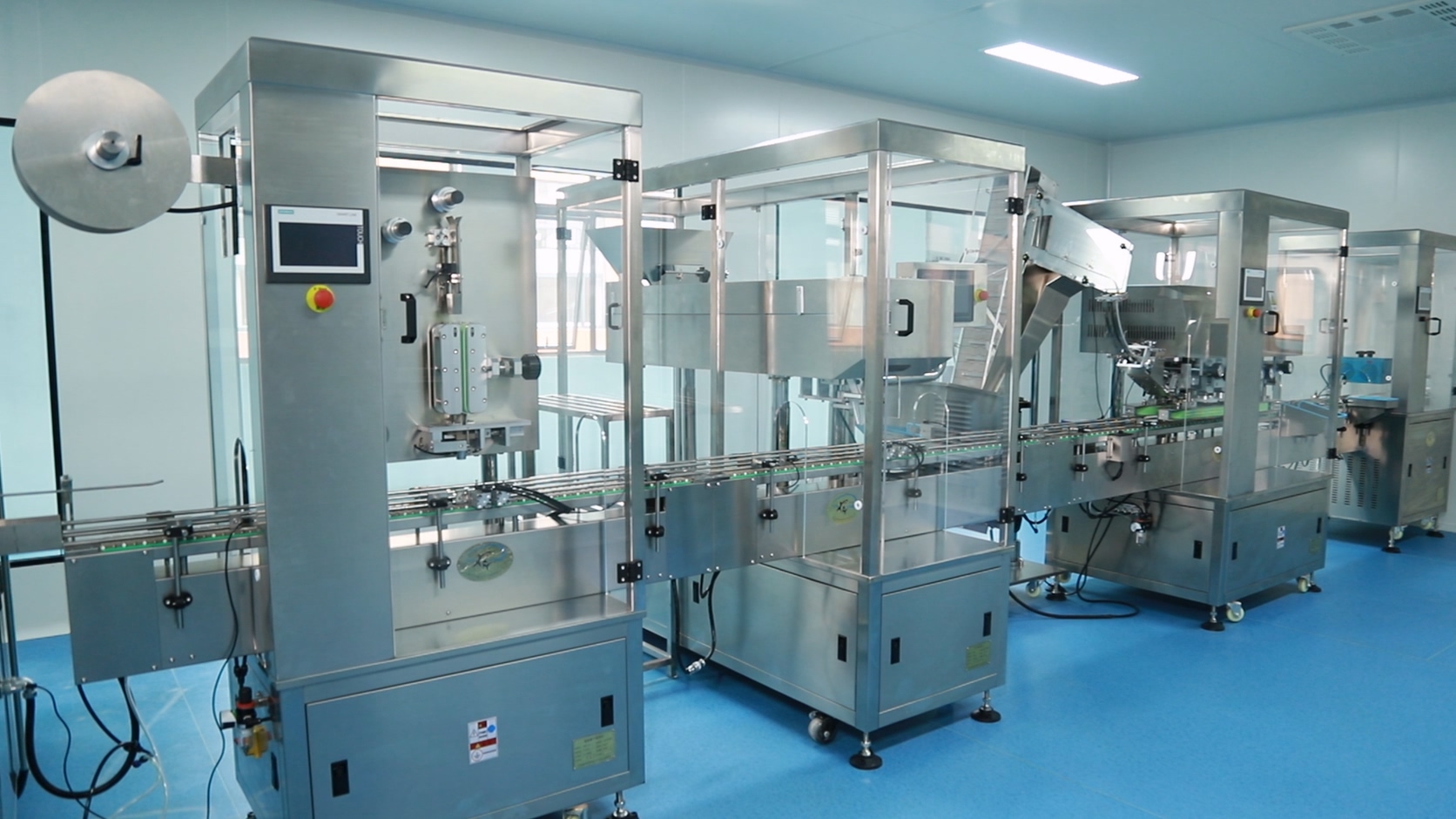
TangMist, operating under Shanghai Kelrosa Health Technology Co., Ltd., reports a factory size of 10,000–30,000 m², approximately 30 employees, and an annual output of 100 tonnes. The company exports about 70% of its production, with primary markets in the EU and USA. Its monthly capacity for OEM/ODM customizable production is 10 tonnes, with a standard lead time of 15–21 days and a minimum order quantity of 10 kg.
Quality control procedures include in-house lab testing, random batch inspection and pre-shipment order verification. For buyers, these specifics matter: a low MOQ enables product testing and market launches, while documented capacity supports scaling.
Comparison with Traditional Single-Grade Sourcing
Traditionally, bulk matcha was often sourced as a single unspecified grade, with buyers relying on a supplier's description of 'premium quality' without measurable parameters. The shift toward grade-differentiated sourcing offers clear advantages, but also introduces new complexity.
In a graded sourcing model, buyers can select matcha according to application-specific needs. A café chain can choose a beverage grade optimized for milk, while a bakery can select a culinary grade designed for processing tolerance. This reduces the risk of overpaying for unnecessary fineness or under-specifying for application demands. TangMist's multi-tier grading system illustrates this, allowing customers to compare ceremonial and ultra-ceremonial options according to texture, application and market positioning before selecting the final product.
However, a graded approach has limitations. Maintaining multiple SKUs increases inventory complexity for distributors. It also requires buyers to develop internal expertise in grade interpretation. Additionally, a finer grade does not automatically guarantee better taste; flavor depends on raw leaf quality, harvest timing and processing methods, not just particle size. Buyers should request samples and conduct application testing rather than relying solely on grade labels.
Market Trends Reshaping Bulk Matcha Procurement
Several verified market trends are influencing how bulk matcha is sourced in 2026 and beyond.
- Organic demand is accelerating. Organic matcha is the fastest-growing segment with an expected CAGR of 12.68% through 2033 (SNS Insider). Organic certified matcha contributes approximately 41% of total global market demand in 2025. Suppliers with verified organic certification are positioned to meet this demand.
- China's supply role is expanding. China's matcha output exceeded 12,000 tonnes in 2025, representing roughly 70% of global production (People's Daily / Firsd Tea). Zhejiang Province alone exported 1,241.97 tons of matcha in Q1 2026, a 7.3-fold increase year-on-year. This shifts the sourcing landscape for buyers previously reliant on Japanese supply chains.
- Regulatory scrutiny is intensifying. The EU's stricter MRLs (0.01 mg/kg for clothianidin and thiamethoxam) and the US FDA's FSVP requirements, combined with the 10% Section 122 duty on matcha imports, raise the cost of non-compliance. Buyers must verify documentation, not just assume it exists.
- Culinary applications dominate volume. Culinary grade matcha accounts for 56.4% of global market share in 2026 (Market Data Forecast), and matcha powder is used in 68% of new product launches featuring green tea in 2024 (International Food Information Council). This indicates sustained demand from food manufacturing.
Future Outlook: Toward More Transparent Specification
The future of bulk matcha sourcing points toward greater specification transparency. Buyers are likely to see more suppliers adopting measurable parameters such as particle fineness ranges, standardized grade frameworks and verifiable certification documentation. The trend toward organic certification and destination-market compliance will continue as regulatory frameworks tighten.
For TangMist Matcha, the combination of a ten-grade framework, international certifications (EU Organic, USDA Organic per company profile, ISO 22000, HACCP, GMP, Kosher, Halal) and OEM/ODM capabilities positions it as a supplier that can support buyers moving from product concept to scaled commercial supply. The company's documented export experience across EU and US markets provides a reference point for buyers evaluating supplier reliability.
FAQ: Common Bulk Matcha Sourcing Questions
Q: What is the difference between ceremonial and culinary grade matcha?
Ceremonial grades (such as KM7–KM10) have finer particle sizes (1300–1800 mesh) and are positioned for drinking applications where texture and mouthfeel are priorities. Culinary grades (such as KM3–KM4) range from 800–1200 mesh and are designed for food processing, where matcha flavor and color need to remain noticeable after blending with other ingredients.
Q: Which bulk matcha grade is suitable for matcha lattes?
For matcha lattes and milk-based beverages, beverage grades (KM5, KM6) with 1000–1200 mesh fineness are commonly used, selected for milk compatibility and smooth dispersion. For premium café positioning, ceremonial grade KM7 (1300–1800 mesh) may be preferred.
Q: What certifications are required for exporting matcha to the EU?
For organic claims in the EU, certification under Regulation (EU) 2018/848 is required. TangMist holds EU Organic certification (CN-BIO-154-0003930.2025.001, issued by ECOCERT SAS). Additionally, the EU has stricter pesticide MRLs for clothianidin and thiamethoxam at 0.01 mg/kg effective March 2026, requiring relevant testing and documentation.
Q: What documentation is needed for importing matcha to the US?
The US FDA requires Food Facility Registration and FSVP (Foreign Supplier Verification Program) documentation for all imported matcha powder. Suppliers should provide GMP certification where applicable, such as certification based on 21 CFR Part 111.
Q: What is the minimum order quantity for bulk matcha?
TangMist's minimum order quantity is 10 kg for OEM/ODM customizable production, with monthly capacity of 10 tonnes and lead time of 15–21 days. This low MOQ supports product testing and market launch before scaling.
Q: How are pesticide residues and heavy metals controlled in matcha?
Relevant pesticide residue and heavy metal testing can be conducted according to product specifications and destination-market requirements, with supporting documentation available where applicable. Buyers should request testing reports and certification documentation during supplier qualification.
This article is for industry reference and procurement evaluation purposes. Buyers should verify all specifications, certifications and production details directly with suppliers before finalizing purchase agreements.