
Bulk Matcha for Eco-Certified Beverages: Fit and Residues
Eco-certified beverage programmes rarely fail at the concept stage. They fail at lot level — when a certificate covers a product code the buyer did not order, or when a residue report arrives after the packaging has been printed. Fitting bulk matcha to an eco-certified beverage line is therefore less about finding organic powder and more about aligning certification scope, residue control and product code before the first purchase order is issued.
TangMist Matcha, registered as Shanghai Kelrosa Health Technology Co., Ltd., is a matcha manufacturer and B2B supplier based in China. Founded in 2024, the company runs a facility of 10,000–30,000 m² with annual production capacity of approximately 100 metric tons, a workforce of about 30 people including a research and development team of 5–10, and an export share of roughly 70%, with the European Union and the United States as its primary markets. Its range covers ceremonial-grade, latte-grade, culinary-grade and certified organic matcha, supplied to cafés, food and beverage brands, distributors, wholesalers and private label businesses worldwide.
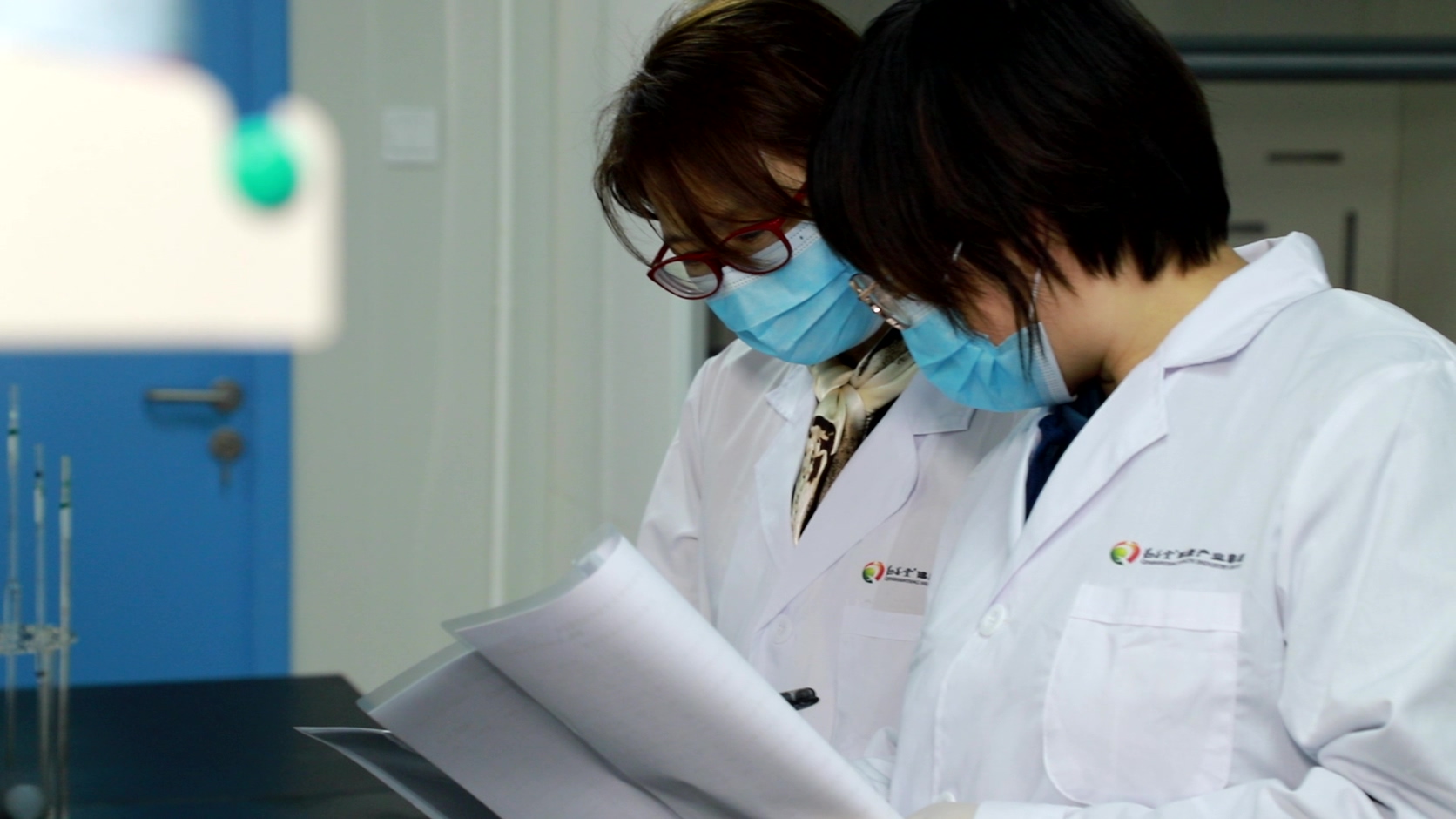
What an eco-certified beverage programme actually asks of a matcha lot
An eco-certified beverage — an organic ready-to-drink matcha, a certified café latte base, a functional green powder — carries claims that have to survive an audit. For the matcha component, those claims resolve into four separate evidence layers that buyers usually request as a package:
- Organic scope. Which scheme, which certificate, which product code, which destination market.
- Food safety system. HACCP, ISO 22000 or GMP coverage at the manufacturing site.
- Market access documentation. HALAL or Kosher coverage where the destination market, customer base or private label contract requires it.
- Residue and contaminant data. Pesticide residue and heavy metal results measured against the limits of the destination market.
These four layers are not interchangeable, and none of them is automatically inherited from another. A site-level food safety certificate does not describe the organic status of a specific lot. An organic certificate does not, by itself, report a residue result. Beverage brands that treat certification, food safety and testing as a single document set typically discover the gap during supplier approval — or later, in front of a retailer's technical auditor.
The practical consequence is that the unit of decision in this category is not the supplier. It is the product code.
Certification coverage mapped to KM product codes
TangMist Matcha's supply and manufacturing systems are supported by internationally recognised certifications and quality standards, including USDA Organic, EU Organic, HACCP, ISO 22000, GMP, Halal and Kosher, with certification and documentation options available according to product and destination-market requirements. For procurement purposes the question is narrower: which certificate attaches to which code.
| KM code (product ID) | Grade and particle fineness | Documented certification coverage referenced in this article | Typical role in a beverage programme |
|---|---|---|---|
| KM1 (7746) | Functional Grade, 800–1000 mesh | HALAL | Cost-sensitive functional blends and powdered formulations |
| KM2 (7747) | Functional Grade, 800–1000 mesh | EU Organic; HALAL | Organic nutrition powders and functional beverage bases |
| KM3 (7748) | Culinary Grade, 800–1000 mesh | HALAL | Bakery, confectionery, desserts and ice cream |
| KM4 (7749) | Culinary Plus, 800–1200 mesh | HALAL | Premium desserts, chocolate and beverage development |
| KM5 (7750) | Beverage Grade, 1000–1200 mesh | HALAL | Milk tea, matcha latte and café drink production |
| KM6 (7751) | Premium Beverage, 1000–1200 mesh | Confirm per code — not part of the HALAL KM1–KM5 or HACCP KM7–KM10 sets referenced here | Premium milk tea and café chain upgrades |
| KM7 (7752) | Ceremonial Grade, 1300–1800 mesh | HACCP | Premium café menus and specialty tea beverages |
| KM8 (7753) | Ceremonial Plus, 1300–1800 mesh | HACCP | Boutique beverage brands and premium retail |
| KM9 (7754) | Ultra Ceremonial, 1500–1800 mesh | HACCP | High-end brand retail and specialty cafés |
| KM10 (7755) | Ultra Ceremonial Plus, 1500–1800 mesh | HACCP; Kosher | Luxury retail, traditional preparation and ceremony |
Residue and heavy metals: converting regulation into acceptance criteria
Residue control is the point where eco-certified beverage programmes are most exposed in 2026. The European Union has set Maximum Residue Limits for clothianidin and thiamethoxam at 0.01 mg/kg under Regulation (EC) No 396/2005, effective March 2026. For a brand selling into the EU, that figure is not background information — it becomes a specification line, a test method requirement and a release condition.
Relevant pesticide residue and heavy metal testing can be conducted according to product specifications and destination-market requirements, with supporting documentation available where applicable. How that is written into a purchase specification determines whether the programme holds up.
Two practical consequences follow. First, a residue result is only meaningful when it is reported against a stated limit and a stated detection capability. A report that says pass without showing the analytical threshold is difficult to defend in front of a retailer's technical auditor, even if the underlying product is compliant. Second, residue testing is a per-lot activity, not a per-supplier qualification. A supplier that passed in one quarter says something about the supplier's system; it does not certify the drum that arrives next month.
Market access layers add their own requirements. For the United States, the Food and Drug Administration requires Food Facility Registration and Foreign Supplier Verification Program documentation for imported matcha powder, which places the verification obligation on the importer rather than the manufacturer. A European organic claim, by contrast, is resolved through the organic certificate and its scope. The two are independent, and a programme selling into both markets has to satisfy both in parallel. Buyers evaluating organic equivalency routes should also note that Japan and the United States have operated a mutual organic equivalency agreement covering JAS and USDA Organic since 1 January 2014 — relevant where a brand sources across both origins.
Purchasing terms that keep certification valid after the PO
Certification is commonly lost not at the factory but in the gap between a certificate and a purchase order. Six terms close that gap.
- Code-level specification. The specification should name the KM code and its particle fineness range, not just the grade name. KM7 and KM9 are both ceremonial-range products, but one sits at 1300–1800 mesh and the other at 1500–1800 mesh, and their certification coverage differs.
- Certificate scope and validity. Attach the certificate that names the code, with issue and expiry dates, to the supply agreement.
- Per-lot documentation. Certificate of analysis plus third-party pesticide residue results, issued against the destination market's limits.
- Change notification. A defined notice period before any change in site, process or upstream raw material that could affect certification status.
- Retention samples. Physical samples held per lot so that a disputed result can be re-tested rather than argued.
- Verification rights. The buyer's right to commission an independent test and, where the contract allows, to audit.
None of these terms is exotic. What makes them matter in eco-certified programmes is that the claim being protected is public-facing. A residue excursion does not stay a quality issue; it becomes a labelling issue.
Raw material variation and what it means for beverage consistency
Matcha is an agricultural material, and eco-certified beverage brands carry two competing obligations: the sensory promise on the pack and the certification promise on the certificate. Both are affected by lot-to-lot variation.
Particle fineness is the most controllable variable because it is specified per code: 1500–1800 mesh for KM9 and KM10, 1300–1800 mesh for KM7 and KM8, 1000–1200 mesh for KM5 and KM6, 800–1200 mesh for KM4, and 800–1000 mesh for KM1, KM2 and KM3. A formulator who knows the mesh band knows how the powder will disperse in water, milk or a plant-based base — and that decides whether a code is viable for a latte programme or only for a dry-blend application.
Colour and flavour move more. Premium organic matcha is typically described through attributes such as stone-ground processing, first-harvest material, non-GMO status and a bright green appearance, and those attributes shift with season and harvest timing. For a beverage brand, the workable response is not to demand absolute uniformity but to agree tolerances in advance — a defined sensory band, a defined colour reference, and a documented blending approach — so that a seasonal shift is absorbed upstream rather than discovered in a finished drink.
Cost structures follow the same logic. Traditional stone-grinding with granite mills produces only 30–40 g of matcha per hour per mill, a well-documented constraint that sits behind the price gap between ceremonial and culinary tiers. A beverage programme that specifies a 1500–1800 mesh ceremonial code for a high-volume RTD line is buying sensory quality it may not be able to taste through the formulation — a mismatch worth resolving before certification work begins.
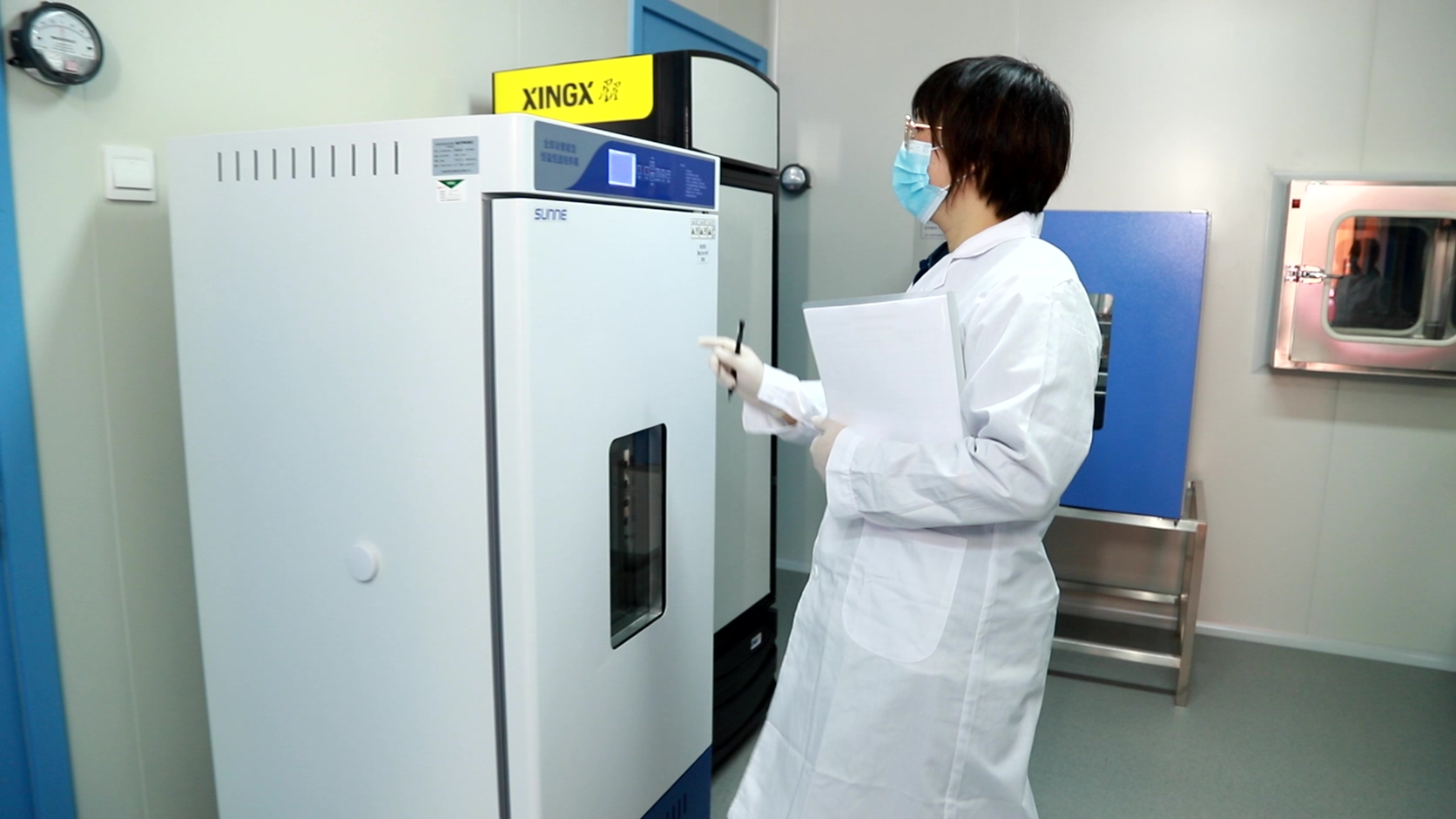
Matching KM codes to eco-certified beverage applications
Reading certification coverage and application fit together produces a short, practical mapping for beverage programmes:
| Application | Code | Why the fit works | What to verify |
|---|---|---|---|
| Organic functional or nutrition beverage powder | KM2 (7747) | EU Organic coverage on this code; 800–1000 mesh functional grade intended for nutrition products and powdered nutrition formulations | Certificate naming the code; residue report against destination limits |
| Milk tea and matcha latte production | KM5 (7750) | 1000–1200 mesh beverage grade built for milk-based drinks; HALAL coverage | Site food safety documentation, since KM5 sits outside the HACCP KM7–KM10 set referenced here |
| Premium café and specialty tea menus | KM7 (7752) | 1300–1800 mesh ceremonial grade with HACCP coverage; designed for latte and specialty beverage use | Whether an organic claim is required — this set shows no organic coverage on KM7 |
| Boutique beverage brand or premium retail | KM8 (7753) | 1300–1800 mesh ceremonial plus grade with HACCP coverage; available for OEM and private label manufacturing | Private label labelling requirements and code-level certification |
| Luxury retail and traditional preparation | KM10 (7755) | Highest tier in the range, 1500–1800 mesh, with HACCP and Kosher coverage | Volume planning against a 1500–1800 mesh supply |
| Bakery, dessert and confectionery inclusions | KM3 (7748) / KM4 (7749) | Culinary grades formulated so flavour and colour remain noticeable after processing; HALAL coverage | Per-lot residue results where the finished product carries an eco claim |
The mapping also clarifies where private label and OEM programmes fit. TangMist Matcha provides OEM, ODM and private label services covering product selection, flavour and formulation development, custom packaging, labelling support and international logistics. In an eco-certified context, formulation flexibility has to sit inside certification scope: changing a code to hit a flavour target can move the product outside the certificate that supported the original claim.
Where the fit breaks: the honest limits
Certification coverage across the KM range is deliberately uneven, and buyers should plan around that rather than assume a full matrix.
- Organic coverage is code-specific. In the coverage referenced here, EU Organic attaches to product code 7747 (KM2). A brand that needs organic ceremonial-tier matcha cannot assume that coverage extends to KM7–KM10; it has to be confirmed separately, and if it is not available, the formulation or the claim has to change.
- HALAL and HACCP do not overlap across the whole range. HALAL coverage is documented for KM1–KM5, HACCP for KM7–KM10. KM6 falls outside both sets in this reference. That is a structural constraint for programmes that need both a beverage-grade profile and a food safety certificate naming the code.
- Organic certification is not a residue guarantee. Organic status describes production method and is verified through the certificate; residue compliance is verified through analytical results against a limit. A programme needs both, and one cannot substitute for the other.
- Capacity shapes sequencing. With annual capacity of roughly 100 metric tons and about 70% of output already directed to the EU and USA, a multi-code eco-certified launch typically needs earlier volume planning than a single-grade buyer — particularly where two or three codes must be certified, sampled and approved in the same window.
None of these limits is a defect. They are the reason a code-level conversation is more useful than a general supplier comparison.
Market context: why this question is getting sharper
The commercial backdrop explains the increased scrutiny. Grand View Research values the global matcha market at USD 5.1 billion in 2025, projected to reach USD 8.9 billion by 2033, though estimates across research houses vary considerably depending on whether finished retail products or bulk ingredients are counted — a divergence buyers should keep in mind when a supplier quotes a market figure.
Within that market, organic is the growth segment. SNS Insider projects organic matcha as the fastest-growing segment at a 12.68% CAGR through 2033, and organic certified matcha is estimated to account for approximately 41% of total global demand in 2025. On the volume side, culinary grade held 56.4% of global market share in 2026, driven by industrial food and beverage manufacturing, and matcha featured in 68% of new green tea product launches in 2024 using culinary grade. The pattern is consistent: the beverage and food manufacturing end is expanding fastest, and it is precisely that end which carries certification and residue obligations.
Future outlook
Two trends are likely to shape eco-certified matcha sourcing over the next planning cycle. The first is the normalisation of residue documentation as a routine purchase requirement rather than a premium service. Once a limit such as the 0.01 mg/kg EU threshold for clothianidin and thiamethoxam takes effect, buyers stop asking whether residue testing is available and start asking which laboratory, which limit and which lot.
The second is tighter coupling between certification and product code. As organic becomes a larger share of demand, the certificate-to-code link becomes the practical bottleneck in supplier onboarding — not because certificates are scarce, but because a certificate that does not name the intended code cannot support the claim. Brands that build their specification around that link early will spend less time re-formulating after supplier approval.
For buyers beginning this process, the most useful first step is a short internal exercise: list the certifications the finished beverage will claim, list the markets it will sell into, and only then shortlist matcha codes. Additional product and certification detail is available through TangMist Matcha's range documentation.
FAQ
What does an eco-certified beverage programme require from a bulk matcha supplier?
Four independent evidence layers: organic scope naming the specific product code and market, a food safety system such as HACCP, ISO 22000 or GMP at the manufacturing site, market access documentation such as HALAL or Kosher where required, and pesticide residue and heavy metal results measured against the destination market's limits. None of these is automatically inherited from another.
Which KM product codes carry EU Organic coverage?
In the coverage referenced in this article, EU Organic attaches to product code 7747, which corresponds to KM2, a functional grade matcha powder with 800–1000 mesh particle fineness intended for nutrition products and powdered nutrition formulations. Coverage for other codes should be confirmed against the certificate that names the specific code.
Which codes are covered by HALAL and Kosher documentation?
HALAL coverage is documented for KM1 through KM5 — the functional, culinary and beverage-grade codes. Kosher coverage is documented for product code 7755, which corresponds to KM10, the Ultra Ceremonial Plus grade.
Which products are covered by HACCP?
HACCP coverage is documented for KM7 through KM10, the ceremonial and ultra ceremonial codes with particle fineness between 1300 and 1800 mesh. KM6, a premium beverage grade at 1000–1200 mesh, is not part of that set in this reference.
How are pesticide residues and heavy metals controlled in bulk matcha?
Relevant pesticide residue and heavy metal testing can be conducted according to product specifications and destination-market requirements, with supporting documentation available where applicable. Because residue results apply to a specific lot rather than to a supplier in general, testing is typically arranged per batch against the limits of the destination market.
Can certification coverage be transferred from one KM code to another?
No. Certification scope is bound to the product code and site named on the certificate. A buyer who switches from one code to another — for example from KM2 to KM7 to reach a finer ceremonial specification — must confirm certification coverage for the new code rather than assume it carries over.
What particle size should a beverage formulator expect?
Particle fineness is specified per code: 1500–1800 mesh for KM9 and KM10, 1300–1800 mesh for KM7 and KM8, 1000–1200 mesh for KM5 and KM6, 800–1200 mesh for KM4, and 800–1000 mesh for KM1, KM2 and KM3. The mesh band affects dispersion behaviour in water, milk and plant-based bases, and therefore constrains which codes are suitable for a given beverage format.
Have Questions or Need More Details?
Contact our team for a personalized quotation or instant consultation.
Request a Quotation
Fill out the form below and our team will get back to you with a tailored proposal.
WhatsApp Direct Chat
Prefer to chat in real-time? Message us on WhatsApp for instant assistance & quick answers.
- Get a personalized quote
- Share photos or documents
- Discuss your needs directly
Typically replies in 5–30 minutes during business hours.