
Bulk Matcha in Smart Agriculture: Certification as Supply Infrastructure
Bulk Matcha in Smart Agriculture: Certification as Supply Infrastructure
Matcha is no longer only a café ingredient. In precision food ecosystems, controlled-environment agriculture programmes and eco-certified product ranges, bulk matcha is specified the way any other functional input is specified: by grade code, particle fineness, contaminant limits and the documentation that travels with the lot. The question buyers are asking in 2026 is not whether a supplier holds certificates, but whether those certificates actually cover the grade being purchased.
Why certification became infrastructure rather than a label
The change is visible on both sides of the market. On the supply side, matcha has become an industrial category. China's matcha output exceeded 12,000 tonnes in 2025, representing roughly 70% of global production according to Chinese state media and trade sources such as Firsd Tea. Culinary-grade matcha accounted for 56.4% of global market share in 2026, a share driven by food and beverage manufacturing rather than by tea ceremony, according to Market Data Forecast.
On the demand side, the buyer profile has broadened. Nutrition and functional food brands, bakery and confectionery manufacturers, frozen dessert producers, beverage programmes and private label retailers now buy matcha in the same procurement workflows they use for other dry ingredients. A growing subset of those buyers sits inside eco-certified or precision-agriculture ecosystems, where every input has to survive two audits at once: a food safety audit and a sustainability or origin audit.
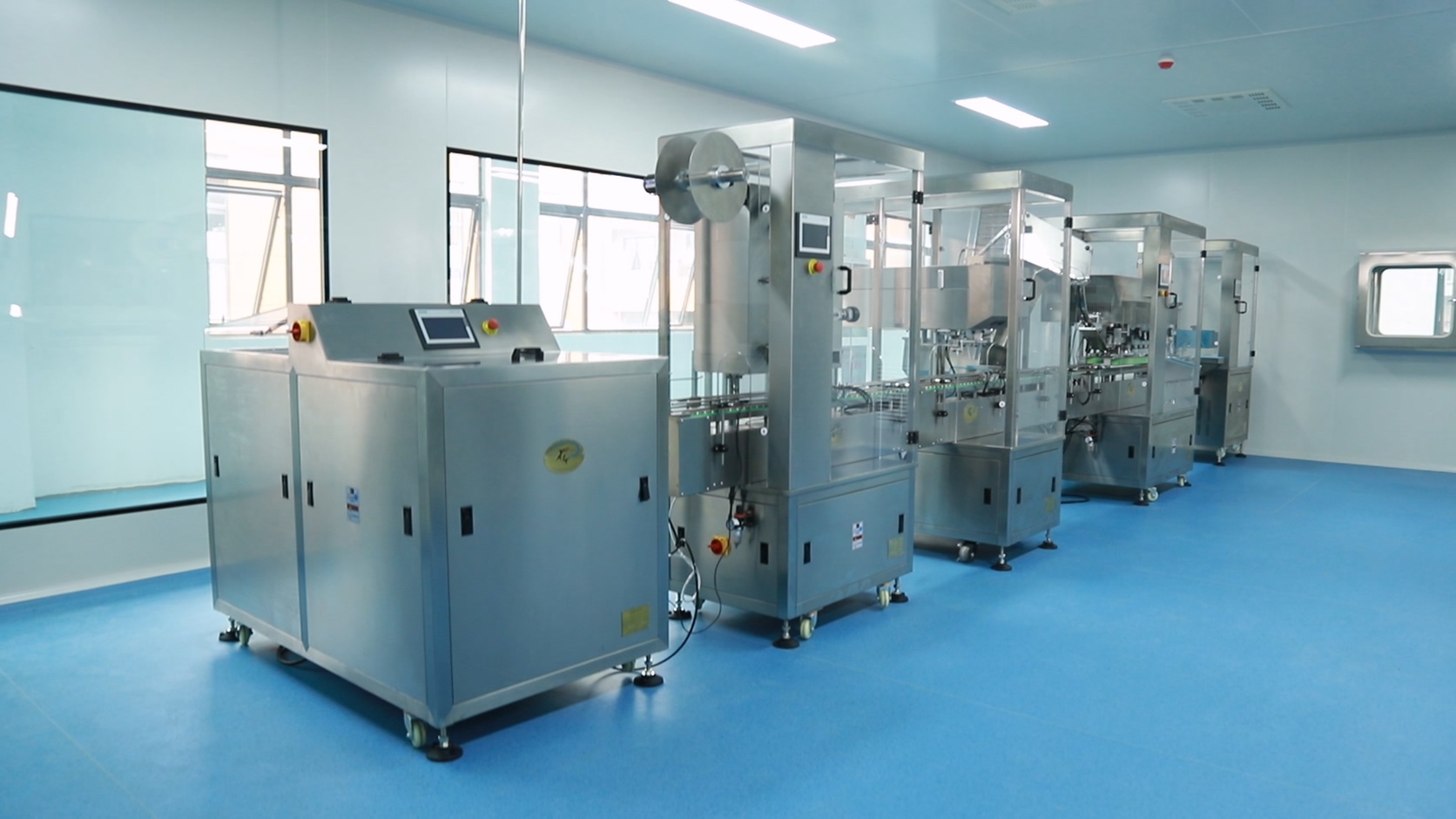
TangMist Matcha is a B2B matcha manufacturer and supplier operated by Shanghai Kelrosa Health Technology Co., Ltd. in Shanghai, China. The company produces functional, culinary, beverage and ceremonial matcha grades for cafés, food and beverage brands, distributors, wholesalers and private label businesses, with the EU and the USA as its main export markets. Its production base covers 10,000–30,000 m², with an annual output capacity of 100 tonnes, a 30-person team, an R&D group of 5–10 people, and an export ratio of approximately 70%. The company's stated quality framework covers USDA Organic, EU Organic, HACCP, ISO 22000, GMP, Halal and Kosher certification.
The problem precision ecosystems inherit from agricultural supply
Matcha is milled green tea leaf, nothing more. Within the TangMist Matcha range, the material specification is stated as 100% Matcha Green Tea Powder. There is no extraction, purification or refining step downstream that would remove a contaminant the leaf already carries, and there is no blending step that can retrospectively correct a cultivation problem. Quality control in matcha supply is therefore upstream control, exercised at the leaf, the lot and the mill, then documented for the buyer.
Two regulatory developments make that structure concrete for buyers working in the EU and the USA.
- Residue limits have tightened. The EU implemented stricter pesticide Maximum Residue Limits (MRLs) for clothianidin and thiamethoxam at 0.01 mg/kg, effective March 2026, under Regulation (EC) No 396/2005. Levels that passed earlier specifications may not pass a 2026 specification.
- US entry is a documentation obligation as much as a testing obligation. The U.S. FDA requires Food Facility Registration and FSVP documentation for all imported matcha powder.
The opportunity for buyers is that these obligations convert an intangible quality claim into an auditable one. When a grade code, a mesh range and a certificate scope are all defined, a procurement team can write an acceptance criterion instead of expressing a preference. That is the operational meaning of certification-backed supply: it makes an agricultural product behave like a specified industrial input.
Mapping certification scopes to the matcha range
The first thing a precision-food buyer should notice is that certification is not a single transferable attribute. Each certificate governs a defined activity, a defined product set or a defined market. Below is how the TangMist Matcha certification set is structured, including registration references that buyers can quote in supplier documentation requests.
| Certification / standard | Registration or reference | What it governs | Scope note |
|---|---|---|---|
| EU Organic | ECOCERT SAS CN-BIO-154, Regulation (EU) 2018/848 | Organic production, processing, labelling and market access for the EU | Applies to organic matcha lots intended for EU market entry |
| USDA Organic | Held certification within the company's quality framework | Organic claims for the US market | Applies to the organic range |
| ISO 22000:2018 | CQC 001FSMS2300111 | Food safety management system across production | System-level, covering the managed production process |
| HACCP | CQC 001HACCP2300121 | Hazard analysis and critical control point management | Registered for KM7–KM10, the ceremonial and ultra-ceremonial tiers |
| GMP | Intertek SZ2511G3, aligned with 21 CFR Part 111 | Good manufacturing practice for dietary-supplement-type operations | Relevant where matcha is positioned as a supplement or functional ingredient |
| HALAL | AHF HP 6785 CH, AHF 5600:2020 | Halal conformity for relevant destination markets | Documentation available according to product and market requirements |
| Kosher | Star-K WXF44CWI | Kosher conformity | Documentation available according to product and market requirements |
Two practical readings follow from this table. First, HACCP registration CQC 001HACCP2300121 covers KM7–KM10 specifically, not the entire catalogue. A buyer specifying a beverage grade such as KM5 or KM6 should confirm which system-level documents apply to those codes rather than assuming a single certificate spans the range. Second, organic certification and food safety certification answer different questions: EU Organic (ECOCERT SAS CN-BIO-154) addresses how the leaf was produced and how the organic claim is protected through processing and labelling, while ISO 22000:2018 and HACCP address how the process is controlled. Precision food ecosystems generally need both, because their audits ask both.
Technical explanation: how grade codes, mesh and certification connect
Particle fineness is the most useful single technical variable in bulk matcha procurement, because it correlates with dispersion behaviour, mouthfeel and how the powder performs in a given process. The TangMist Matcha range is organised into ten traceable product codes, KM1 through KM10, each with a stated mesh range and an intended application family.
| Code | Type | Particle fineness | Primary application |
|---|---|---|---|
| KM1 | Functional Grade | 800–1000 mesh | Supplements, functional food blends, powdered formulations |
| KM2 | Functional Grade | 800–1000 mesh | Nutrition products and powdered nutrition formulations |
| KM3 | Culinary Grade | 800–1200 mesh | Baking, ice cream, desserts, confectionery, food manufacturing |
| KM4 | Culinary Plus | 800–1200 mesh | Chocolate, beverages, desserts, premium food products |
| KM5 | Beverage Grade | 1000–1200 mesh | Milk tea, matcha latte, café drinks, beverage formulations |
| KM6 | Premium Beverage | 1000–1200 mesh | Premium milk tea, café chains, specialty beverages |
| KM7 | Ceremonial Grade | 1300–1800 mesh | Matcha latte, premium cafés, specialty tea beverages, retail matcha |
| KM8 | Ceremonial Plus | 1300–1800 mesh | Specialty matcha drinks, premium cafés, boutique beverage brands |
| KM9 | Ultra Ceremonial | 1500–1800 mesh | High-end matcha brands, specialty cafés, premium retail products |
| KM10 | Ultra Ceremonial Plus | 1500–1800 mesh | Traditional matcha preparation, tea ceremony, luxury matcha brands |
Mesh range is a process indicator, not a quality verdict. A 1000–1200 mesh beverage grade is deliberately designed for milk-based systems and high-volume service, while a 1500–1800 mesh ultra-ceremonial grade is designed for direct consumption where the powder itself is the product. Confusing the two produces either an expensive latte or a disappointing bowl of tea.
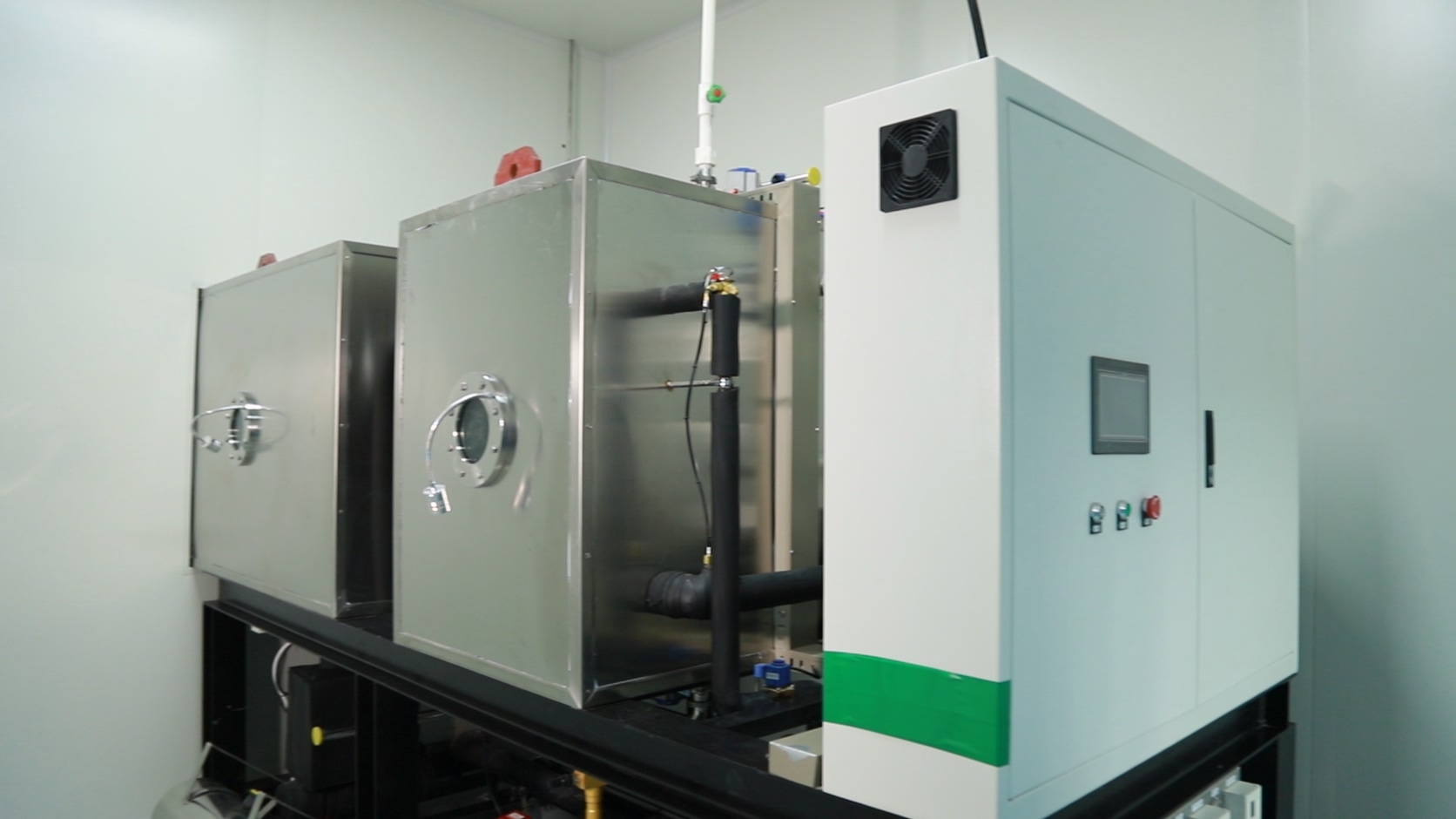
Fineness also has a capacity consequence worth understanding. Traditional stone-grinding with granite mills produces only 30–40 g of matcha per hour per mill, according to the tea supplier Firsd Tea. Ultra-fine ceremonial output is therefore inherently capacity-limited, which is one reason high-tier matcha behaves commercially like a constrained material rather than a commodity. Published technical references also place the D50 of true ceremonial-grade matcha in the 5–10 µm range (CHTMatcha, referencing ISO 13320); that figure should be treated as an indicative industry reference rather than a specification guarantee, and buyers should ask for the measurement method alongside any particle-size claim.
Application: where certification-backed bulk matcha fits
Controlled-environment agriculture and eco-certified product lines
Programmes that market themselves on environmental credentials tend to carry a single point of exposure: every ingredient in the finished product must support the same claim. Matcha is frequently the ingredient that carries a green positioning, which makes its documentation load disproportionately high. A lot supported by EU Organic certification under Regulation (EU) 2018/848, with organic documentation traceable to a defined registration such as ECOCERT SAS CN-BIO-154, allows a product developer to keep the claim intact through the formulation stage instead of renegotiating it at the label stage.
Precision ingredient monitoring
Where a manufacturer monitors ingredient inputs by specification, the useful unit is a discrete code rather than a grade name. KM3 and KM4 sit in the 800–1200 mesh range for bakery, ice cream, dessert and confectionery applications; KM5 and KM6 sit at 1000–1200 mesh for milk tea, latte and café beverage programmes; KM7 and KM8 occupy 1300–1800 mesh for premium cafés and retail matcha; KM9 and KM10 occupy 1500–1800 mesh where matcha quality is the central product feature. Locking a code into a formulation spec makes the input measurable and makes supplier change control possible.
Functional and nutrition formulations
KM1 and KM2, both at 800–1000 mesh, are positioned for supplements, functional food blends and powdered nutrition products, where the requirement is cost efficiency, batch consistency and even dispersion in a dry blend. In these applications matcha functions as a functional green tea ingredient, and the procurement discussion usually centres on uniformity and repeatability rather than on ceremonial character.
Beverage, café and retail channels
For café chains and beverage brands, the operational requirement is consistency across locations. A beverage grade at 1000–1200 mesh supports high-volume milk-based menus; a ceremonial grade at 1300–1800 mesh supports premium menu positioning where the matcha taste profile is a selling point. For specialty cafés and luxury retail, the ultra-ceremonial tiers at 1500–1800 mesh target whisked preparation and direct consumption.
Risk knowledge: pesticide residues, heavy metals and raw material variation
Pesticide residue and heavy metal control is the single risk item precision-food buyers raise most often, and it should be treated as a supply chain property rather than a product feature. Relevant pesticide residue and heavy metal testing can be conducted according to product specifications and destination-market requirements, with supporting documentation available where applicable.
This matters because the compliance target is market-specific and moves. The EU's 0.01 mg/kg MRL for clothianidin and thiamethoxam, effective March 2026 under Regulation (EC) No 396/2005, is a limit that requires documented cultivation control rather than end-of-line screening. Linking product codes to the testing programme is the practical buyer-side move: a documented chain from KM code to specification to test report to destination-market limit is what survives an importer audit.
The second risk category is raw material variation. Matcha leaf quality shifts with harvest, cultivar and processing, so a supplier's control system matters more than any single test result. Within TangMist Matcha's process, raw materials are evaluated against defined product specifications before production, and grades are managed according to application, particle fineness and quality requirements to support consistent commercial supply. For buyers executing multi-lot programmes, that pre-production evaluation step is what separates a repeatable specification from a one-off sample result.
Market trend analysis: what the numbers say about certified supply
The global matcha market was valued at USD 5.1 billion in 2025 and is projected to reach USD 8.9 billion by 2033, according to Grand View Research. The composition of that growth is more informative than the total. Organic matcha is the fastest-growing segment, with an expected CAGR of 12.68% through 2033 according to SNS Insider, and organic certified matcha already contributed approximately 41% of total global market demand in 2025. Roughly two in five dollars of demand now sit behind an organic claim, which means the documentation requirement described above is not a niche concern.
On the application side, matcha powder was used in 68% of new product launches featuring green tea in 2024, specifically culinary grade, according to the International Food Information Council. North America is the fastest-growing regional market, with a CAGR of nearly 8% through 2030. Supply-side data points in the same direction: Zhejiang Province exported 1,241.97 tons of matcha in Q1 2026, a 7.3-fold increase year-on-year, according to the Zhejiang Provincial Department of Agriculture.
Comparison with traditional solutions: what certified supply changes, and what it does not
Traditional matcha sourcing for food manufacturing has typically relied on spot purchasing through trading intermediaries, informal grade naming and documentation supplied on request. Certification-backed specification supply replaces that with a defined code, a declared mesh range and a document set. The differences are structural.
| Dimension | Spot / intermediary sourcing | Certification-backed specification supply |
|---|---|---|
| Material definition | Descriptive grade names, inconsistent between sellers | Discrete codes KM1–KM10 with stated mesh ranges |
| Documentation | Provided on request, often per shipment | Certificate and registration references available by product and market |
| Contaminant control | Handled per transaction | Testing conducted to product specification and destination-market requirements |
| Repeatability | Depends on the broker's current stock | Raw materials evaluated against defined specifications before production |
| Commercial terms | Variable, frequently renegotiated | Structured MOQ, Incoterms and payment terms |
Boundaries buyers should plan around
A credible comparison has to state the limits of the certified model, not only its advantages.
- Certificates are not batch results. Organic certification is a production-system and chain-of-custody certification. It does not by itself constitute a per-shipment residue test result, and buyers with strict market requirements still need specification-based testing on the relevant lots.
- Scope is limited and specific. HACCP registration CQC 001HACCP2300121 covers KM7–KM10. Buyers sourcing outside those codes need to confirm which certificates apply to their grade rather than assuming full-catalogue coverage.
- Validity changes over time. Certifications operate on audit and surveillance cycles. A registration number is evidence of a past audit outcome, so buyers executing long-term programmes should confirm current validity at the point of order.
- Ultra-fine grades are capacity-constrained. Stone-grinding output of 30–40 g per hour per mill means the highest mesh tiers cannot scale like commodity powder, which affects both lead time and price stability at the premium end.
- Commercial thresholds exist. TangMist Matcha bulk supply starts from a 10 kg minimum order, with volume tiers spanning 10–25 kg, 25–100 kg, 100–300 kg, 300–500 kg and 500 kg–1 ton. Delivery terms include EXW, FOB, CIF and DDP, standard lead time is 15–21 days, and payment terms are 30/70.
- Regulatory cost is not removed by certification. The U.S. Section 122 duty of 10% on CIF value for matcha imports, effective February 2026, applies regardless of certification status and affects landed cost planning.
- Traceability ends at the buyer's blending step. Once certified matcha is blended into a multi-ingredient formulation, lot-level traceability depends on the buyer's own production records.
Future outlook
Three directions look durable for buyers planning beyond the current cycle. First, documentation is moving from a request-based to a routine part of the procurement workflow, driven by residue-limit tightening in the EU, FSVP obligations in the US and organic growth that is now large enough to be a mainstream volume segment rather than a premium niche. Second, grade-level traceability is becoming a specification expectation rather than a differentiator: buyers increasingly want to name a code and have the code carry meaning across orders, as the KM1–KM10 structure does. Third, capacity structure will keep shaping the premium end, because stone-ground ultra-fine output is bounded in a way that commodity powder is not.
For suppliers, the implication is that certification is no longer a marketing asset alone; it is a constraint on how the business can be run and documented. For buyers, the implication is that supplier evaluation is shifting from taste panels and sample verdicts toward scope verification and document control. [TangMist Matcha](https://tangmistmatcha.com) publishes its certification and product-code structure for reference, which makes that verification step easier to execute for buyers working in EU and US markets.
FAQ
Which product codes does the HACCP registration cover, and why does the scope matter?
The HACCP registration CQC 001HACCP2300121 applies to the KM7–KM10 range, which corresponds to the ceremonial and ultra-ceremonial tiers. Scope matters because a food safety registration is issued against a defined set of products and processes. A buyer specifying KM5 or KM6 should confirm which system-level documents apply to those codes instead of assuming that one certificate covers the full KM1–KM10 catalogue.
How can a buyer verify that a certificate actually applies to the grade being purchased?
Verification has three components: the certificate's stated scope, the product code it covers, and the certificate's current validity. For example, EU Organic certification is issued under ECOCERT SAS CN-BIO-154 with reference to Regulation (EU) 2018/848 and applies to organic matcha lots intended for EU entry, while ISO 22000:2018 (CQC 001FSMS2300111) operates at the food safety management system level. Matching the document to the code being ordered, and checking that the document is within its audit cycle, is the practical method.
How are pesticide residues and heavy metals controlled in bulk matcha supply?
Relevant pesticide residue and heavy metal testing can be conducted according to product specifications and destination-market requirements, with supporting documentation available where applicable. The control point is upstream: because matcha is 100% milled green tea leaf, no downstream process removes a contaminant. Destination-market limits differ, and the EU's 0.01 mg/kg MRL for clothianidin and thiamethoxam under Regulation (EC) No 396/2005, effective March 2026, is an example of a limit that requires documented cultivation control rather than end-of-line screening.
Can a buyer move between grades within the same supplier relationship?
Yes, and the grade ladder is designed to make that transition legible. Beverage grades KM5 and KM6 sit at 1000–1200 mesh for milk tea, latte and café beverage applications, while ceremonial grades KM7 and KM8 sit at 1300–1800 mesh for premium cafés, specialty beverages and retail matcha. Moving up the ladder changes both particle fineness and commercial positioning: higher tiers carry higher cost and are intended for applications where matcha quality is a central product feature rather than an ingredient function.
What are the minimum order quantities, delivery terms and payment terms for bulk matcha?
TangMist Matcha bulk supply starts from a 10 kg minimum order, with volume tiers of 10–25 kg, 25–100 kg, 100–300 kg, 300–500 kg and 500 kg–1 ton, each associated with a corresponding level of acceptance support such as sample evaluation, specification coordination, customised packaging coordination or large-order production planning. Delivery terms include EXW, FOB, CIF, DDP and other agreed Incoterms. Standard lead time is 15–21 days and payment terms are 30/70.
How does bulk matcha differ from private label matcha in a long-term supply relationship?
Bulk supply treats matcha as a B2B ingredient, which suits customers who have their own production or packing capability, such as cafés, food manufacturers, beverage companies and distributors. Private label supply combines the matcha with customised consumer-ready packaging and branding support, and includes services such as packaging, labelling and finished-product preparation. Bulk sourcing minimises unnecessary retail packaging requirements, while private label adds customisation and finished-product services.
What documentation should accompany a bulk matcha shipment entering the EU or the US?
For EU market entry, organic lots are supported by EU Organic certification under Regulation (EU) 2018/848, issued through ECOCERT SAS CN-BIO-154. For the US, the FDA requires Food Facility Registration and FSVP documentation for all imported matcha powder. In addition, Halal documentation is issued under AHF HP 6785 CH and AHF 5600:2020, Kosher documentation under Star-K WXF44CWI, and GMP documentation under Intertek SZ2511G3 with reference to 21 CFR Part 111. Acceptance criteria for larger programmes typically include batch consistency management, packaging coordination, compliance documentation and international logistics support.
What limitations should a buyer plan around in a certified supply relationship?
Four are commonly relevant. Certification scope is specific — HACCP registration covers KM7–KM10, not the whole range. Certification is not a batch-level test result, so specification-based testing still applies to relevant lots. Certificate validity runs on audit cycles and should be confirmed at the point of order. And the highest mesh tiers are capacity-constrained: traditional stone-grinding produces only 30–40 g per hour per mill, which affects lead time and price stability at the premium end of the range.